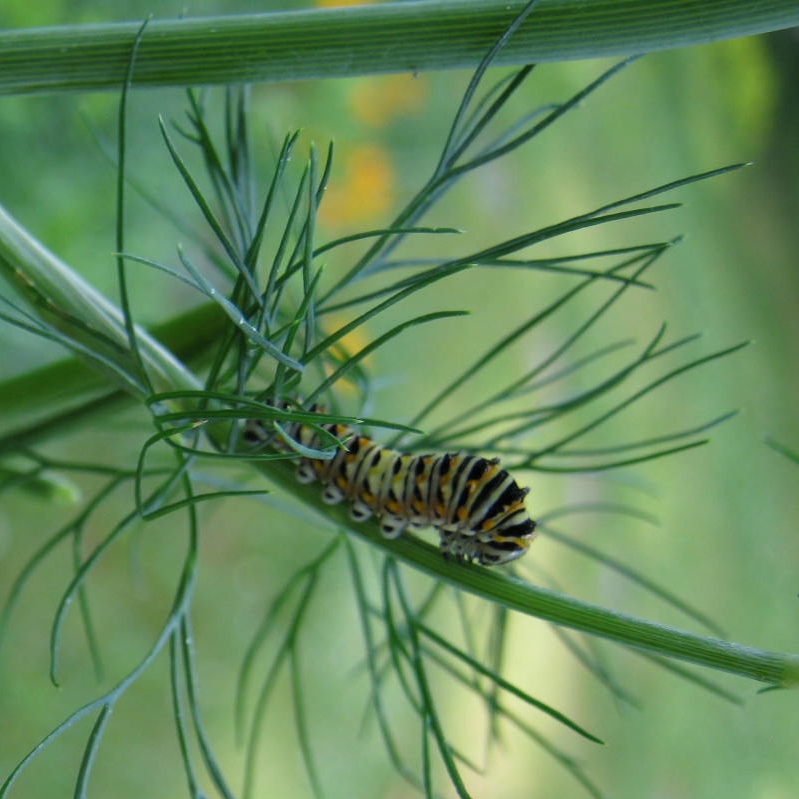
Today, I had strange companions along for the ride as I drove to Red Bank Battlefield. Ten caterpillars, mid-sized in their cycle, rode along to become residents of the Butterfly House. The fennel plants collapsed a bit in the heat, but the caterpillars did well.
The house has many butterflies, chrysalis, and caterpillars. The interior is filled with dozens of nectar and host plants.
The volunteers (Butterfly Whisperers) were pleased to welcome and make room for the new residents. The jar holding the fennel sprigs they were feasting on was placed beside a beautiful fennel plant growing in the house.
It gives me great joy to think of all the visitors receiving a bit of pleasure as they watch the butterflies throughout their life cycle.
The Revolutionary War Battlefield, now a historic park, is located on the banks of the Delaware River. Philadelphia’s skyline is in view to the right of the park.
I had a rude awakening to one of the perils butterflies and caterpillars face. In mid-spring, expecting the butterfly chrysalis to hatch at some point, I brought the butterfly houses out to the porch and hung them from the ceiling. One day, checking them, I saw a delicate wasp of some sort had gotten inside the house and was trapped. Being a bit of a bleeding heart, I shooed the wasp out and felt I had done my good deed for the day. Wrong.
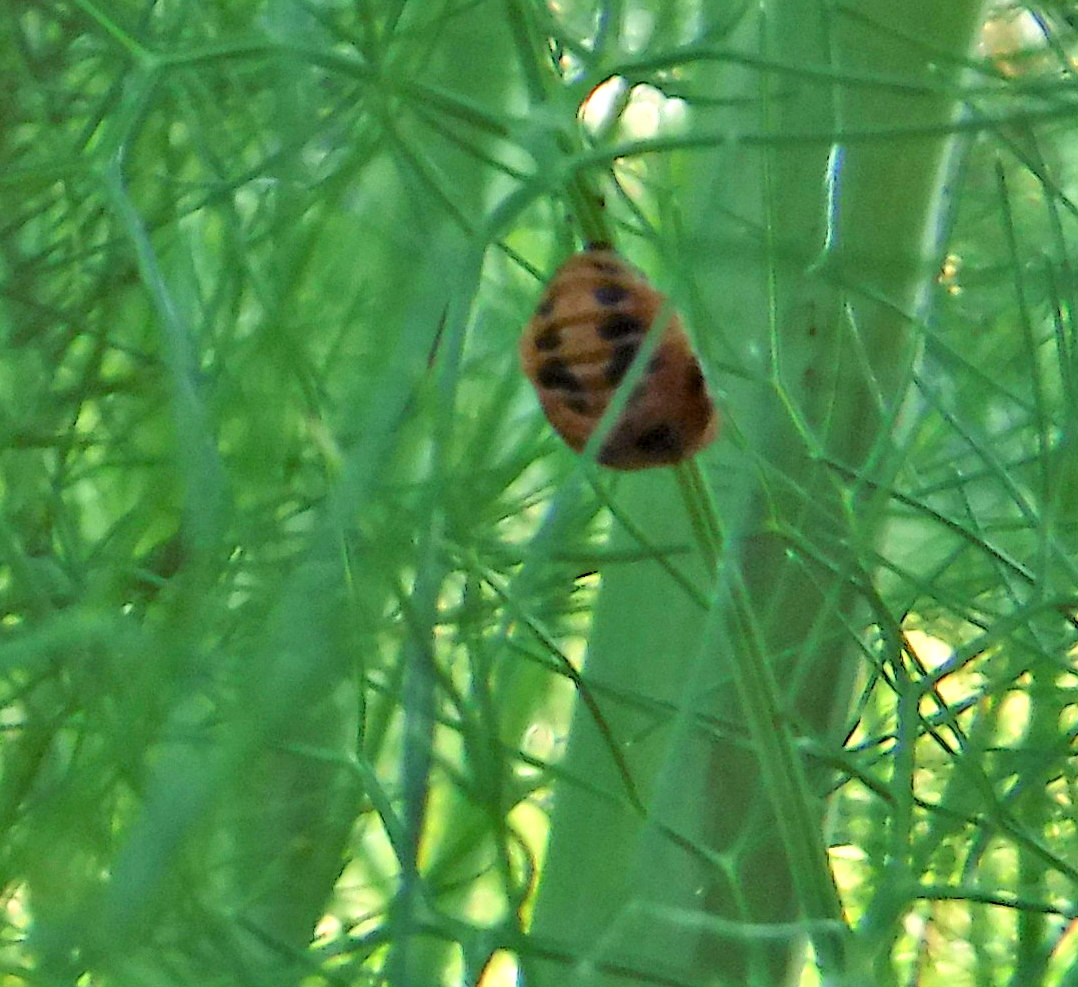
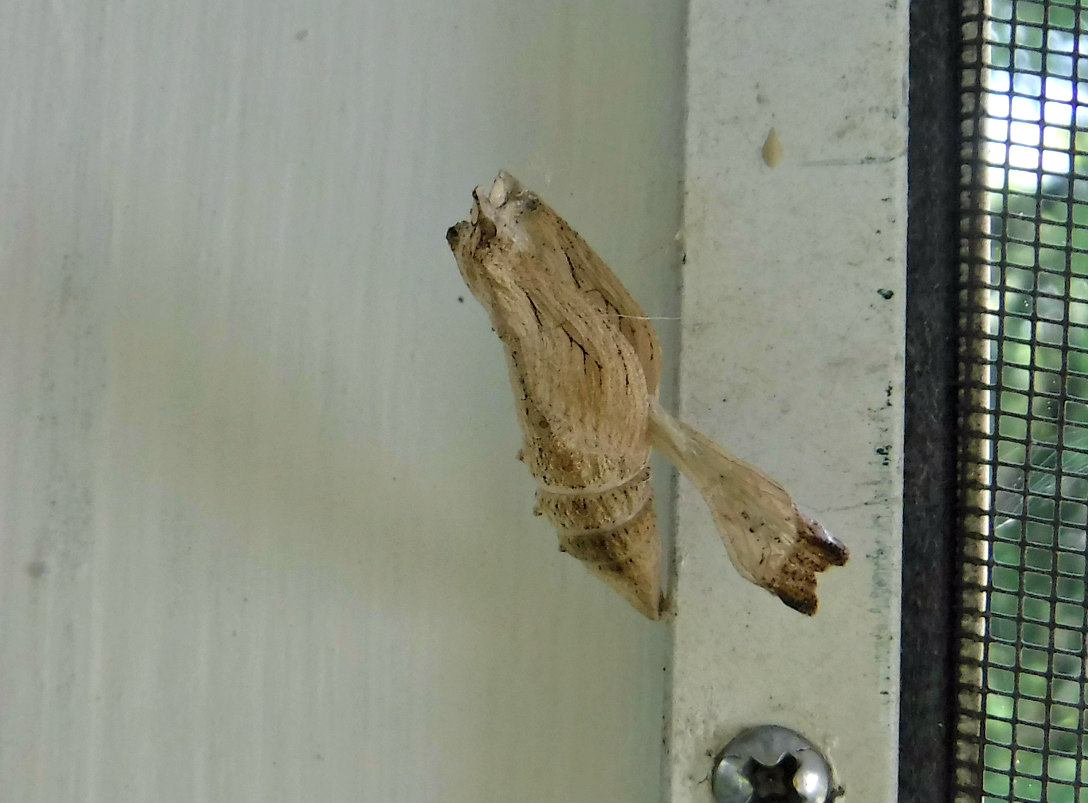
Two more wasps, surprisingly to me, also found a way into the house. I let these out also. Afterwards, I looked at the seven chrysalis on the sides. What! There was some type of hole in the sides of a few. I knew some parasite had attacked them.
When another wasp suddenly appeared in the house, I knew that it would not appeal to my softheartedness; I squashed it.
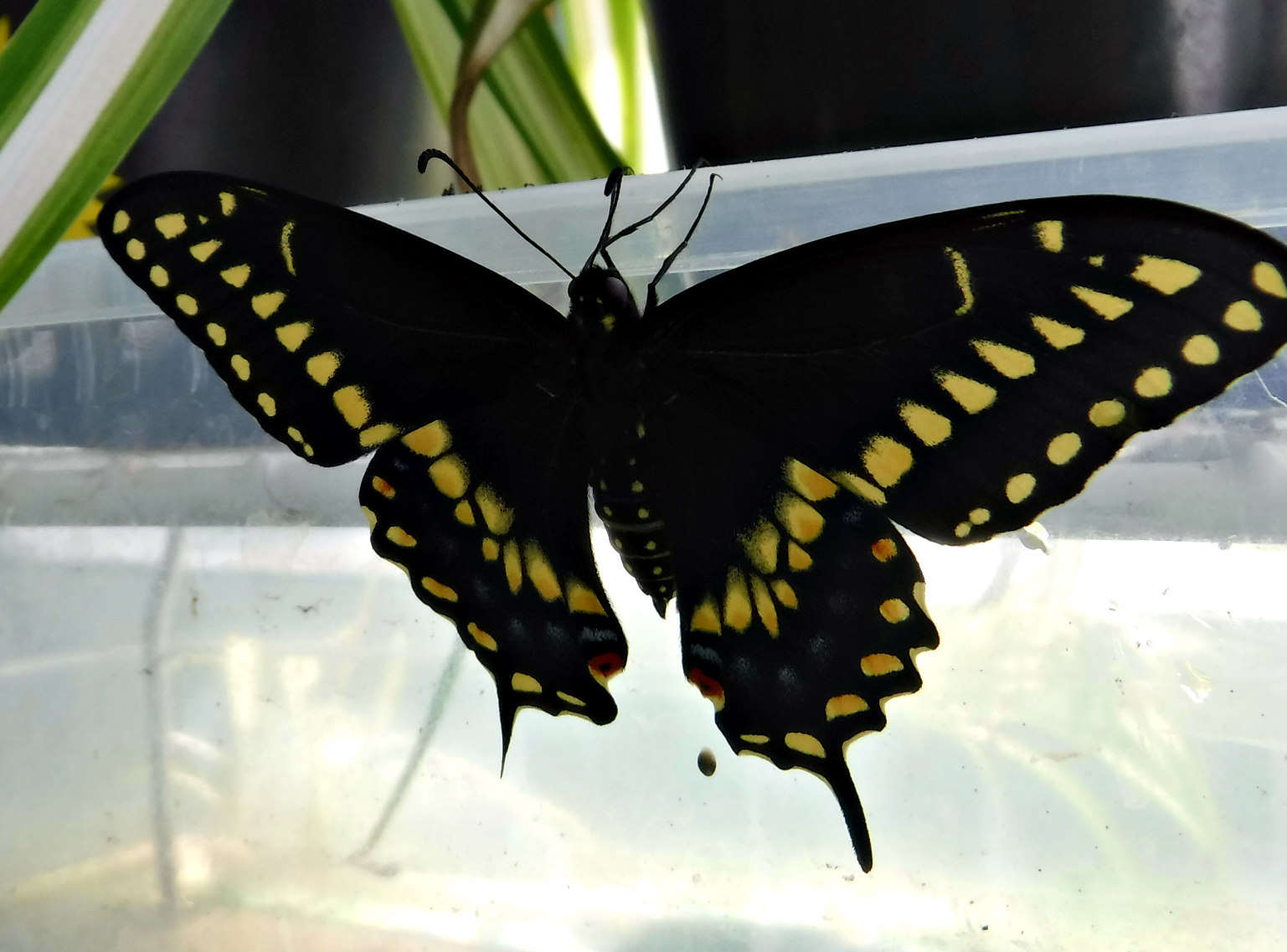
Trogus Pennator Wasps eat the swallowtail caterpillars from the inside out and emerge from the chrysalis. I can attest to the truth of this remark. Three overwintered chrysalis have opened in the past week or two, and beautiful Black Swallowtails have taken wing after the long wait. I have seen them fluttering over the fennel plants, and sure enough, I found several of the tiny eggs on inspection.
This weekend, small caterpillars appeared. I have twelve safely in one of two, new butterfly houses. I have also kept the older one from last year. Now that I have seen one of the parasitical threats they face firsthand, I will redouble my efforts and save as many as I can manage.
I will be keeping a 2024 Butterfly Diary. The link is here: Butterfly Diary 2024. It can also be found at the top of the blog page in the bar beneath the title. I will try to create a sidebar link too. Thanks so much for following the butterflies with me.
Cannibalism fix – When I found two newly hatched caterpillars on the same leaf, I knew I could not let the pair continue sharing the space. The dilemma: how to move one to another leaf without causing injury by touching it? I prepared another leaf by making two small cuts in the flesh. I then cut away one of the caterpillars with the leaf intact and inserted the ends of this piece into the cuts on the other. I’m sure my explanation sounds a bit convoluted, so I’m glad to have a photograph too. Success! You can see the caterpillar adjusted and moved on to the surface of the new leaf.
Another problem is how to clean the butterfly house. The bottom becomes discolored due to water spills and caterpillar frass (waste). I purchased another house to have a switch-out option. After all the caterpillars/butterflies completed their cycles, I washed the dirty house with a heavy stream of water from the hose and then hung it on the clothesline to be sanitized by bright sunshine. I didn’t use any type of soap or cleaner, only fresh water; butterfly feet are ultra-sensitive and chemicals of any kind can be detrimental to their thriving.
At some point milkweed leaves will begin to dry up when separated from the main plant. When this begins to happen I place a fresh leaf beside the one beginning to dry and the caterpillars move to the fresher food source.
To thwart the flies that prey on caterpillars I concocted these fly traps. Many recipes can be found on the Internet. I used water, with a bit of vinegar, sugar and soap. My solution did work. Unfortunately, foliage beneath it died when it overturned. I have some bare spots on my grass where I set the traps. I think an animal knocked them over. Parasitic wasps prey on caterpillars too, but since I bring them in before they are big enough to be of interest to the wasps, so far at least, I haven’t had a caterpillar in the butterfly house afflicted by wasp eggs.
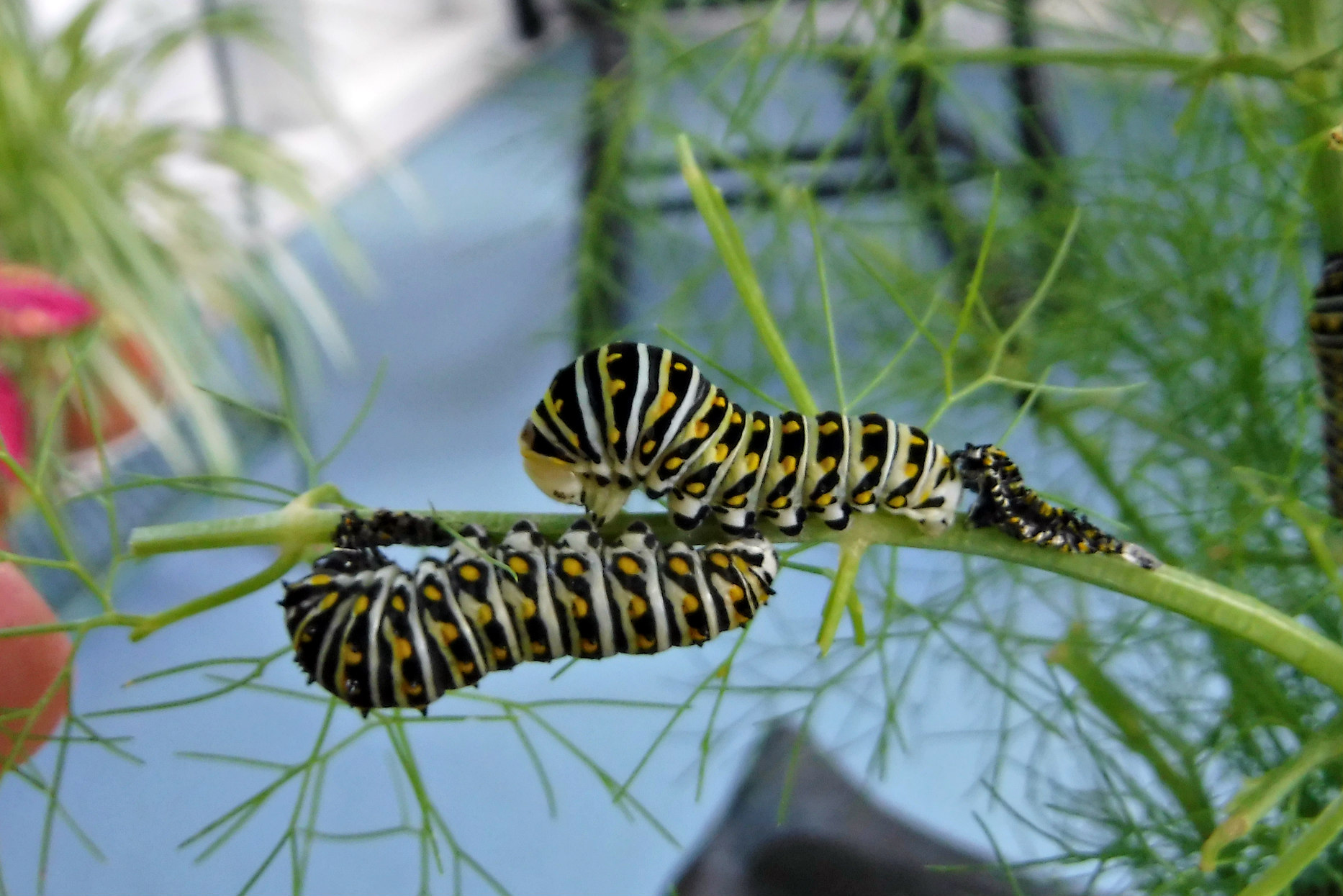
A better title for this post would be “EATING, EATING, EATING!” The caterpillars don’t lose their appetites after they are moved into the shelter of the porch. Voracious eaters, they will take large bunches of fennel down to the stem in one day.
Before trying to save every caterpillar you see, consider if you have enough host plant for them to feed on. A few year’s ago I found some late caterpillars in Autumn. I ran out of the host plant quickly, so I went to the store and bought an organic dill plant. Little did I know that organic herb plants are often treated with organic control products. The caterpillars did not thrive. Although, these treatments will not harm humans, and are considered organic, they are deadly to caterpillars.
The black cloth beneath the vases is there to capture the frass, or in easy to understand terms, the caterpillar poop. You will be completely amazed at how much they excrete. It is hard, and bounces, so be prepared to find it in unexpected places. I put a piece of garden cloth beneath the vases and that seems to help keep it in control, and also is easy to shake out into the garden beds.
The caterpillars shed their skins several times as they grow. You can see the shedding behind the top caterpillar along the stem. They also rest for periods of time, then wake up and begin again, “Eating, eating and more eating!
As soon as I see the first Black Swallowtail butterfly flitting around the yard I begin to check the fennel plant for eggs.
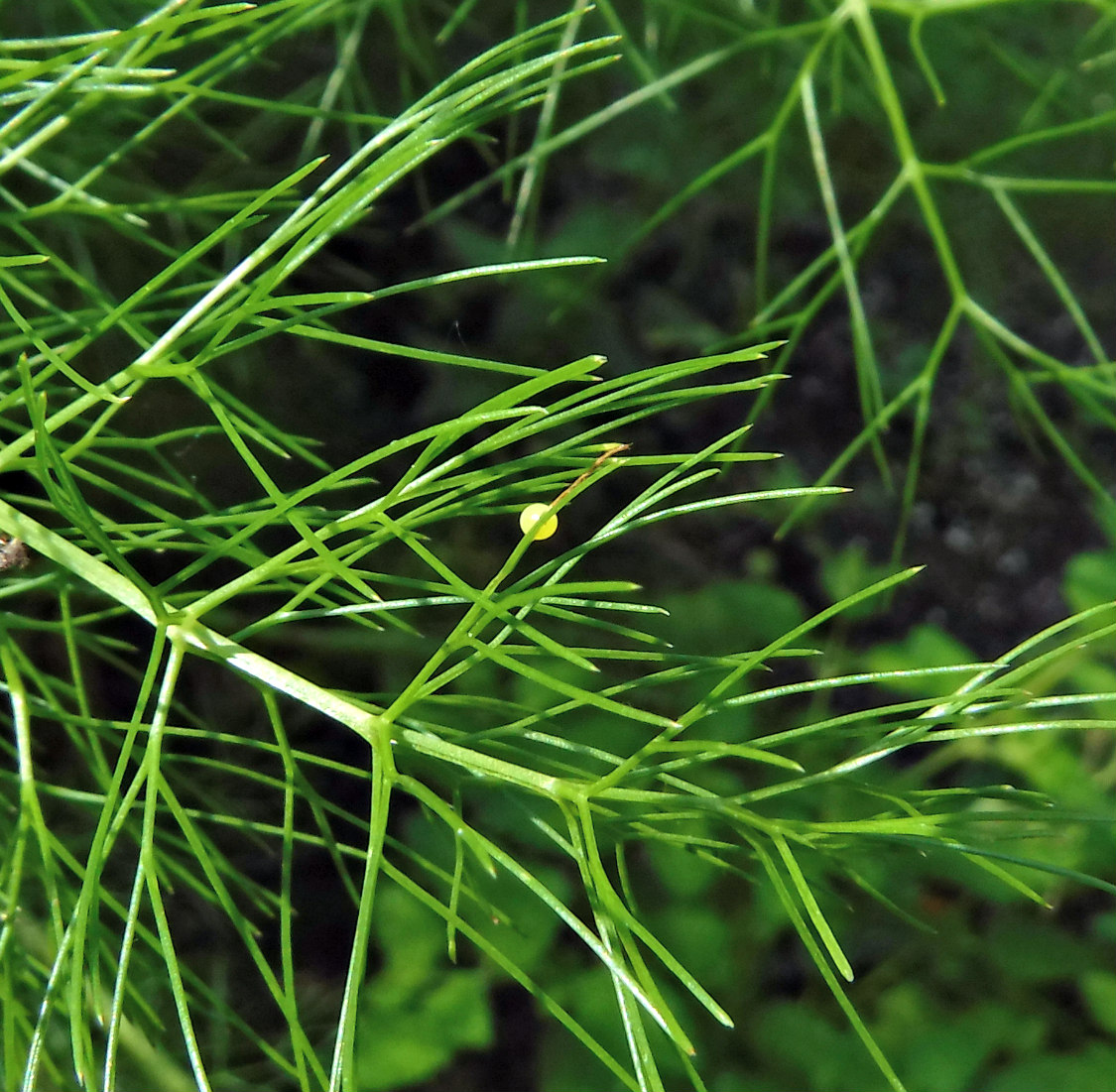
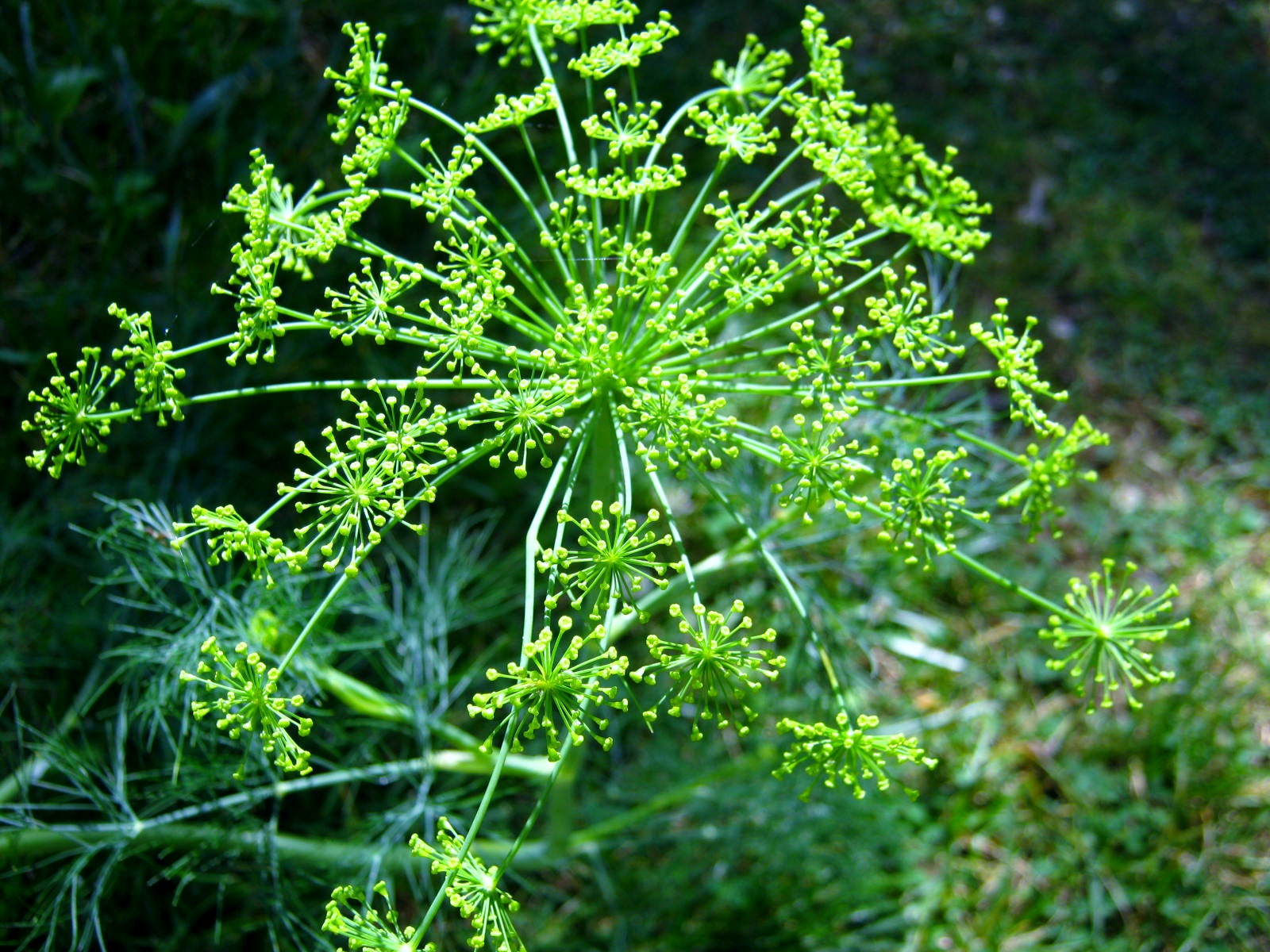
Without my reading glasses on, I would never spy the rounded yellow eggs on the thin fronds of fennel. Dill, Parsley, Rue, and Fennel are a few of my garden plants that are host plants for Black Swallowtails.
When the eggs hatch, and I find small caterpillars on the plants, I bring them onto the back porch for safekeeping. You might wonder why I don’t leave them on the plant and let nature take its course. The answer is the predator bugs that share the same leafy fennel plant. Ladybug larva coexist and quickly eat anything else they find on the plant. Praying mantis babies also roam the leafy green fronds. Small spiders are a threat to newly hatched caterpillars. I know from experience, if I don’t remove the caterpillars when I first see them, the next day the numbers will be greatly diminished, even to the point of none to be found.
Before I gather the caterpillars, I always have vases of water ready to hold the host plant of fennel. Most importantly, I cover the top of the vase with some sort of barrier to keep the small cats from drowning, Unfortunately, I know from experience, they often wander into the water if the opening is left uncovered. I use garden cloth and a single rubber band. A small hole snipped in the center allows me to insert the fennel. At the start of their feeding, one frond of fennel will be enough. They will soon need several stems a day as they progress through their instars: a period of time between the caterpillar molting.
To water the fennel without removing the covering, I use a spouted water bottle that easily adds a few inches of water. The fennel is a very thirsty plant. It will stay fresh for days if the water level in the vase is kept near the top.
I never pick the small caterpillars up with my fingers when transporting them to the vased fennel. They are extremely small and easily crushed. Instead, I pull the strand of fennel they are munching on away from the plant and place it amongst the fronds of vased fennel on the porch. I check back several times a day to make sure the caterpillar has transferred to the fresher fronds.
The caterpillars will go through several instar phases on this first piece of fennel. When the fennel begins to get dry or is eaten away by the caterpillars, I fill a second, sometimes also a third vase, and place it close beside the first so that the fennel mixes into the first bunch. As they eat, and the first fennel dries up, the caterpillars move onto the fresher plants.
A great resource for Black Swallowtail Butterflies can be found on the site: Butterfly Fun Facts.
My Dill plant has been doing incredibly well…until…yesterday. The plant is being decimated, and instead of me doing my usual stomping about and muttering about insect and animal pests I am doing a happy dance. Why you may ask?
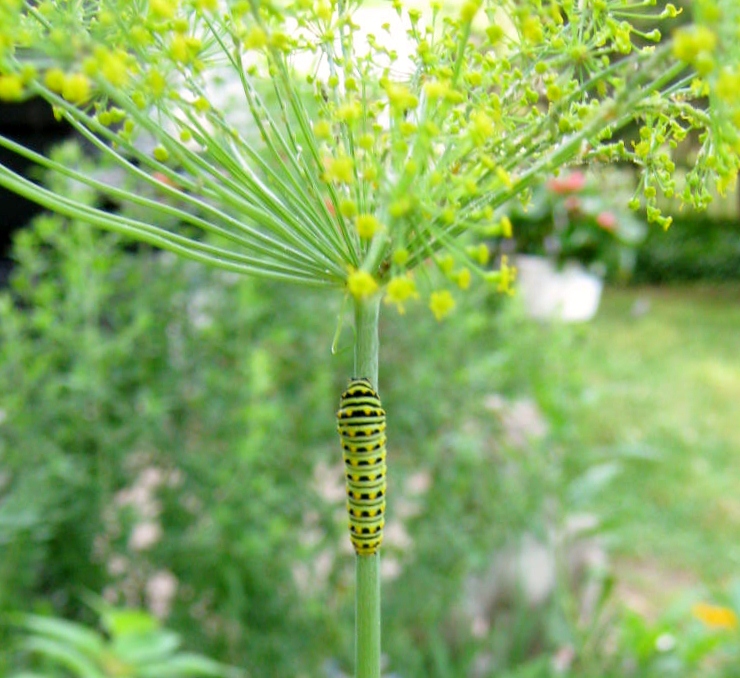
Because under the umbrella of blossoms I spotted a Black Swallowtail Caterpillar. Oh Happy Day! On closer inspection I found five more, and I am sure there were many more in the surrounding garden that I did not see.
The caterpillars are small, only about an inch long at most, but they are voracious, fast growing, and I am sure in a few weeks I will be seeing many Black Swallowtail Butterflies flitting around my yard. I must have my camera ready at all times. I can’t wait.