I purchased the Baker Creek Seed Catalog from their website, Baker Creek Seeds, a few weeks ago. The 530-page magazine/catalog arrived in my mailbox and has been a source of delight anytime I open its pages. The illustrations and variety of seeds are stellar. I enjoyed reading about the employees featured on the pages and the founders’ children. I was also very touched by the inclusion of beautiful quotes and Bible verses on the pages.
I can’t wait to try a few of the new varieties and plan to peruse every page over the next few weeks.
Here is my testimonial about Baker Creek Seeds. Baker Creek Seeds is my number one choice for the best, most reliable, and perfect customer service seed company. Shipping is free and quick. All items are perfectly packaged and include a packet of free seeds. If you have a gardener on your Christmas list, consider giving them a Baker Creek Seeds catalog.
One of my first memories of outdoor fun is chasing fairy wishes. I associate my parents and Mom’s cousin, whom I called Aunt Norma, with my first recollection of fairy wishes. The premise behind catching one was the fulfillment of a wish. Upon capturing the wish in your hand, you whispered your hope or dream, and then, and this was important, you had to let it go again.
The beautiful fairy wishes in the photograph were captured as they unfurled from a milkweed pod in my back garden. Anyone, who has read my blog for any length of time, knows I am a bit obsessed with helping butterflies thrive in my garden. I grow common milkweed as a host plant for Monarchs, fennel, dill, parsley, and rue for Black Swallowtails.
My prayer is that God helps me ride the winds of the written word, just like a milkweed wish, to spread the Good News of Salvation and His Love far and wide.
Jesus said to him, “I am the way, the truth, and the life. No one comes to the Father except through Me.
The beautiful moss spores are my choice for The Cosmic Photo Challenge/What’s Flowering Where You Are? Before the recent snowstorm, I grabbed my camera and took a woodland walk. I was amazed at the vivid green of the mosses and lichens. In places where the sun shone through the branches, I noticed some of the mosses had already sent up spore capsules. I’m going to stretch and say these are a type of bloom.
If I had to rate these moss spores for beauty between 1-10, they would receive a 10+ from me.
Skunk cabbage has also emerged in the dead of winter. Here are some of the ‘knobs’ before the snow covered them. I read an amazing fact on the PFEIFFER NATURE CENTER site: some skunk cabbage plants can be over 100 years old. Wow, I will feel a bit more awe over them when I take my next woods walk.
Next time when I become a bit winter-worn and weary over the cold weather, I’ll remind myself of those skunk cabbages never giving up.
As always, lichen on fallen branches are a welcome touch of green.
Whatsoever is Lovely? Definitely the small and delicate bits of green I found in the woods. I wish I could have a large garden plot filled with mosses and lichens in the winter.
Brightly hued-flowers surround me at any venue I visit this time of year. I love them but also enjoy the simplicity of Paperwhite blooms. The fragrance is authentic Spring at the beginning of Winter. The flowers are small, the size of a half-dollar, but they have a strong and resilient scent. Mine have been blooming for several days and they still are very fragrant.
It is gratifying that all the work involved in forcing the bulb was done for me. I purchased the plant already growing, near bloom, and anchored in a sturdy bulb vase. My responsibility has been nothing more than enjoying the beautiful scent.
In another room, I have a Hyacinth bulb beginning to grow. I have done some tweaking to bring this flower into bloom. In early September I bought the bulbs. There are five in all, and I placed them in their package in my refrigerator produce drawer. When I put the bulb in a vase with the water level just touching the bottom, the roots quickly began to grow. I’ll update the blog when the plant blooms.
Whatsoever is lovely in my life this week is flowers blooming in November, filling my home with sweet fragrance.
Writers have written many an eloquent word and quote about the beauty of fragrant flowers, and although the quote below doesn’t specifically mention fragrance, I like the image it suggests. How fragrant life would be if we looked at the whole world as a garden.
“If you look the right way, you can see that the whole world is a garden.” — Frances Hodgson Burnett, The Secret Garden
We stopped at the local grocery store on Saturday to pick up a few things. As we walked through the parking lot, a voice called, “Are you hungry?” We turned and saw a fellow townie and an old elementary schoolmate of mine. This person has always been so very generous to us. When we had a pond, he brought me beautiful fish for it, and once, he carried a hefty landscaping rock into our yard. He watched over work done on our sidewalks and front yard when we had to have repairs.
Our friend asked us if we had a bag, and we said yes, and he said bring it over to my truck. We did, and he filled our bags to overflowing with sweet potatoes and the most beautiful cauliflower and broccoli I have ever seen. We had the vegetables that evening steamed lightly until tender. Oh my goodness, they were not only beautiful but scrumptious. My favorite was the purple cauliflower and the chartreuse broccoli. Do you see as I do and find the broccoli resembles small Christmas Trees when separated? I will find and grow the broccoli seeds next year. Thank you so much to our generous friend.
Postscript: I looked up this broccoli, and it is called Romanesco Broccoli. It is considered less bitter and a bit nutty in taste compared to regular broccoli. It also can be nibbled on raw and is perfect for a holiday Charcuterie tray.
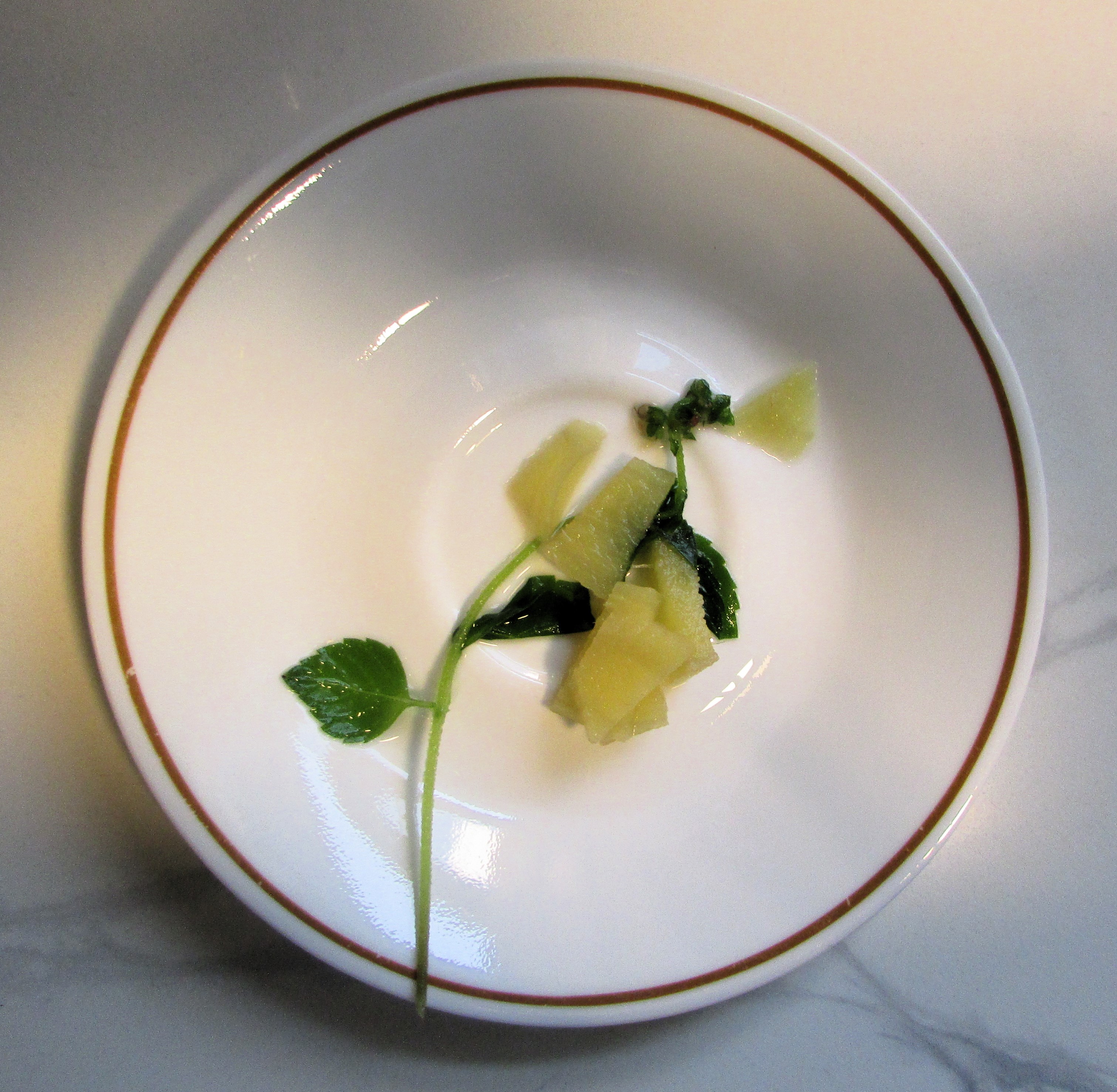
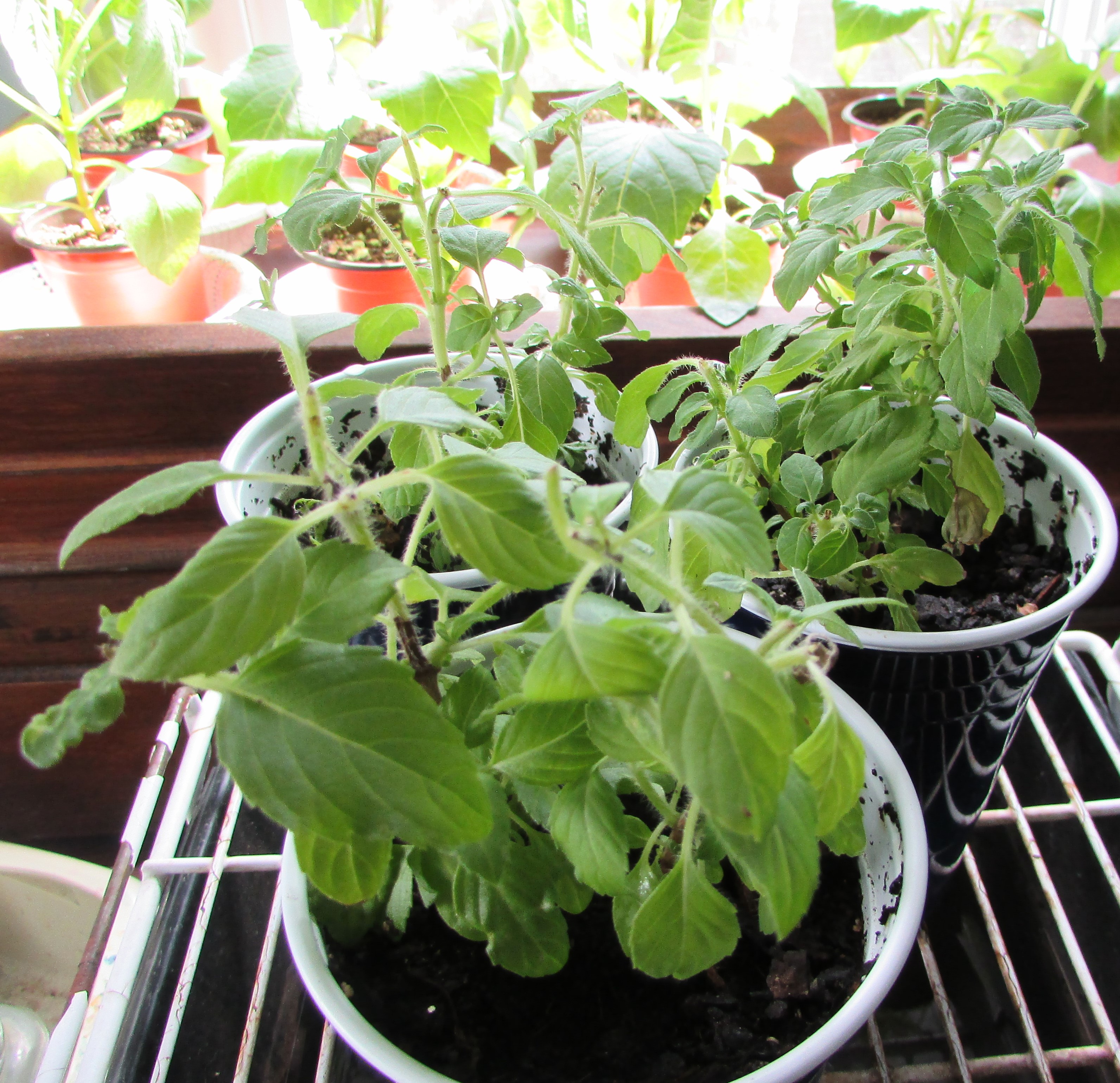
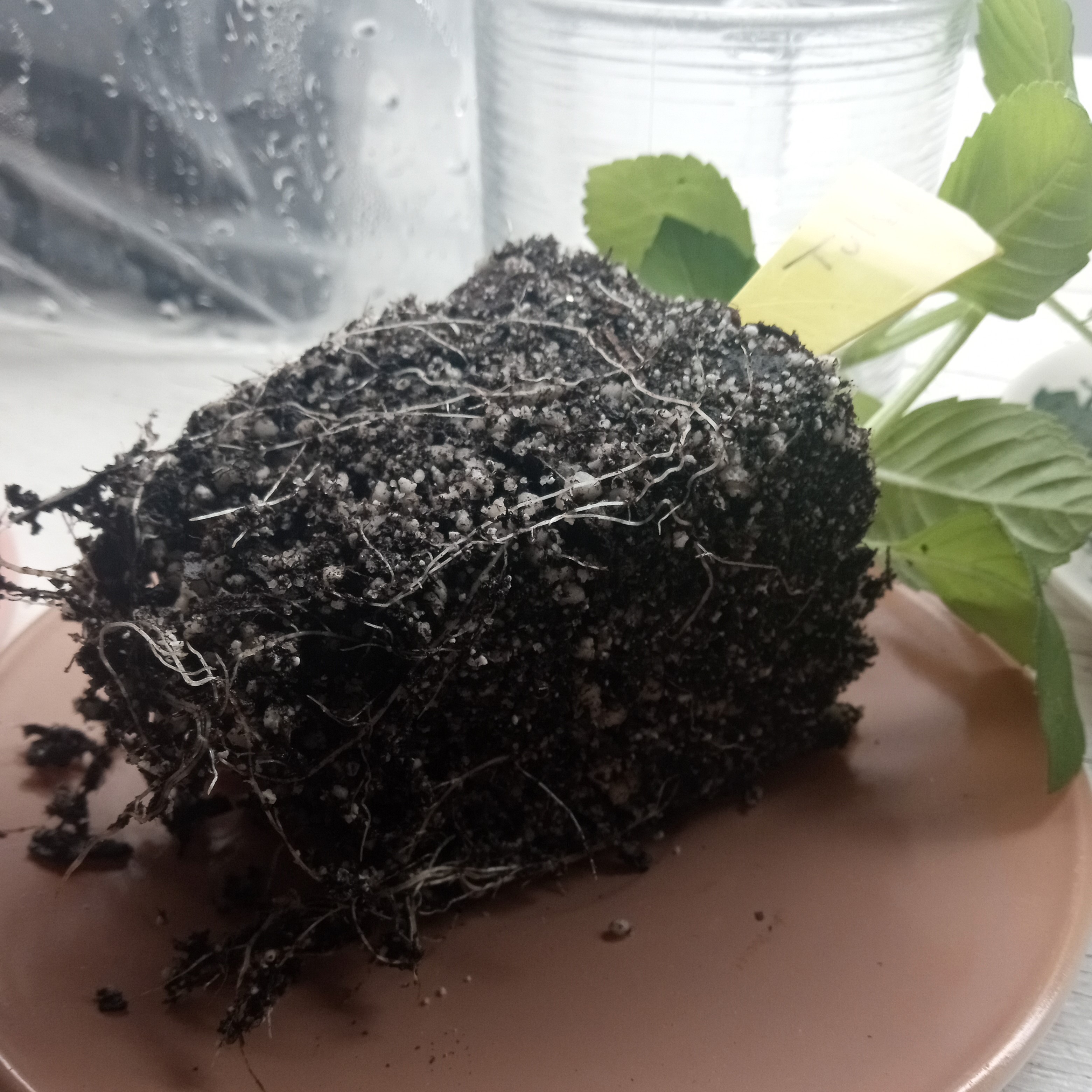
The cutting of Tulsi, dipped in honey and placed in half perlite, half potting soil, has quickly rooted. I removed it from the plastic bag when I noticed roots emerging from the drainage holes. When I gently coaxed the root ball out of the pot I was pleased with the exuberant evidence of roots. I will leave the plant out of the bag, and in the same pot, for another week or two. Then I will plant it in organic soil amended with some natural fertilizer. Once again, I must rave about this basil. It is wonderful!
I am going to do a bit of raving in this post. I have a new favorite herb, probably in my top ten for all time. It is Tulsi, also known as Holy Basil. I grew my plants from seed. It has been a fabulous addition to my potted herb garden. It is growing even now, ten inches tall, after another mid-summer sowing. The heat never bothered it, if anything, it grew even faster than the plants I sowed in Spring.
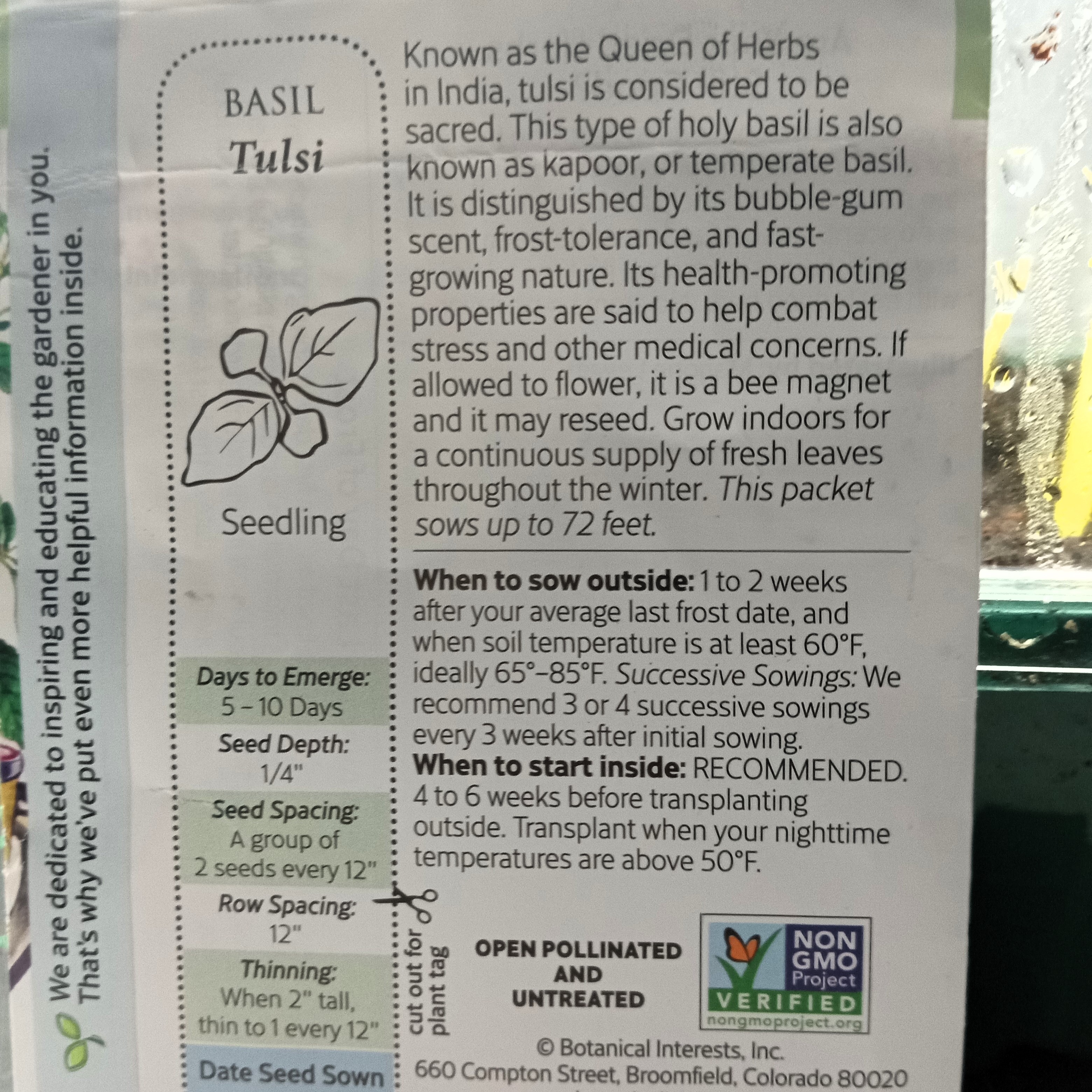
I am including the back of the Botanical Interest Seed Packet. I love the thorough information this company gives you on the packet.
Design-wise, there is none better. Botanical Interest seeds can be ordered online. They are available in some garden centers too; I sometimes drive 45 minutes to visit a nursery in our area that has an extensive display of Botanical Interest seeds each year.
Back to the Tulsi, this herb, combined with Lemon Balm and Spearmint, has become a favorite to brew as mid-afternoon tea. It has alleviated a nagging, if small, physical problem I was fighting. It also elevates my mood when I drink it, and even when I rub the leaves to release the scent, I feel an almost instant uplift. They definitely recharge me a bit. Best of all they are a plant that loves to grow. The only drawback is they form flowers and seeds quickly too, but this can be postponed by constant pinching of the top leaves. (And you can use those pinchings in tea. )
I sowed another batch two days ago. If you look closely you can see they are ready to break free from the seeds and show green against the seed starter.
Cuttings readily rooted in a perlite and soil mix. One cutting began to grow so fast I had to open the plastic bag and pinch it already.
A sprig also rooted very well in a vase of water. Oh my, what a plant. I hope this amazing herb has been included in global seed vaults. There is nothing flimsy about this plant, it is a bushy, blue-green beauty. I really recommend growing Tulsi. You will be love it in so many ways.
Holy Basil dried fairly well for me, although it lost a portion of its amazing scent.
I have a few top performers in the vegetable garden this year. At the top of my list are two tomatoes.
Rosella is a salad tomato, small and compact, this delightful plant has produced dozens of tomatoes within the confines of a five-gallon cloth growing pot. I am hoping for many more harvests through the beginning of Autumn.
Spoon tomatoes have been a surprise. Grown in a five-gallon container, the plants have produced dozens upon dozens of tomatoes.
The fruit is super small, about the size of blueberries. A bit addictive, it’s easy to eat them by the handful. Best of all, the seeds were free, as a thank you for my purchase from Baker Creek Seeds.
Mini Bell Mix Peppers have been exactly what the name implies–miniature. They develop beautiful color while small in size. Delicious, and perfect to cut into pasta and garden salad, these have been productive growing in a regular sized bucket as a pot.
As you will notice from the seed packet photographs, these varieties are all from Baker Creek Heirloom Seeds. A great company, and the plus is they provide fast service and mailing. Any order over $10.00, at least this year, receives a free packet of seeds. One of the free packets was the Spoon Tomatoes.
Asclepias syriaca, common milkweed, is now firmly established in my butterfly garden. Started from a seed, the plant piddled around for a year or two before growing tall last summer. It has naturalized during the time in between then and now, and there are several large clumps of it throughout the bed.
Don’t hesitate to try some common milkweed in your garden if you want to help Monarch butterflies thrive. Milkweed is also a great flower/plant to grow for pollinators too. The bumblebees were enraptured by the bloom, and I was pleasantly surprised by the fragrance of the flowers.
The pollinators did a good job and a few of the flowers have become small pods.
You can see how conditions have been almost perfect this year for growing milkweed. That’s me, standing beside the milkweed about a week ago. Since the photo was taken, the milkweed has grown at least another six inches. My husband estimates it is near seven feet tall.
Grow milkweed in full sun if possible. My garden bed gets a bit of morning shade, but in the afternoon the area is sunny. If you grow from a seed as I did, be patient, it takes a year or two for the plant to become established.
I have had a False Indigo plant in my garden for over a decade. I don’t remember when I first purchased it, but it reappears every year without fail, no matter the condition of the winter it weathered.
A year or two ago it became a bit overgrown, and I roughly divided it, thinking the cut away portion would probably not survive. It not only survived, but both plants thrived.
The flowers don’t last long, but they leave behind large pods that rattle fabulously when they dry, adding a castanet accompaniment to the song of the wind as it blows.
This perennial is very tall and should be planted at the edge of the border. The dark blue flowers are spiky and don’t last very long, but they do leave behind the wonderful pods. Beyond enjoying False Indigo in the garden, I must sing its praises as a cut foliage plant. I have a piece in a vase now that has been going strong for ten days and still shows no signs of wilting. I arrange flowers for church now and then and enjoy using the long stems in the arrangement. The soft bluish green color is a great neutral background-for all flowers.
False Indigo does well in my Southern NJ garden in full, hot sun. It seems to accept wet or dry conditions. False Indigo is part of Cee’s Flower of the Day Challenge.
The Spruce has a great article on the care of False Indigo.
I’ve been in a bit of limbo for two months. We had more than half of the interior of the house painted. It began mid-February and ended last Thursday. TOO LONG! I will think very hard before I ever begin major home improvements again. No matter how nice a stranger is, they are a stranger, and I am ashamed to say even an attempt at chit-chat and pleasantries began to grate as the time began to drag on and on. I really began to feel a bit wacky due to my routines being disrupted for so long. The job was well done though, and the walls are bright and clean.
We had a break in the two months of painting and went on vacation in Jamaica. The weather was wonderful. We came home to very cold weather in New Jersey. Brrrr….better now though. It is very warm today.
The praying mantis pods I gathered a few months ago, after spending the winter on the porch, are now velcroed to my rose bushes. I am hoping they will keep the sawfly invasion down this year. I also bought some alyssum seeds to sow. Sixteen packs from the dollar store only cost $4.00. I read alyssum helps keep pests that rise from the ground at bay. I am hoping to have a carpet of alyssum beneath the roses this year. Of course, now that I am searching for a link, I can’t find it again. Bah!
Placing a plastic grid from an old market tray over my pots of bulbs worked great. Pots without the grid were dug through by squirrels all winter long. The grid was a perfect shield and easily removed when the bulbs had sprouted.
I started over 200 seeds indoors this Winter. I always start weeks earlier than the seed packets recommend. If grown with heat mats and under light, the plants do not get leggy, well at least most of them did not get leggy. My biggest surprise, the dahlias. They thrived under the indoor conditions.
I have managed to root the tips of geraniums that had become hopelessly overgrown. I was inspired to try this gain after watching Gardener’s World on Britbox. This has become a favorite and it kept me sane through the weeks of painting.
There is nothing fancy about the Sea Grape. I love the plant/bush because it reminds me of the first time I vacationed in Jamaica. We traveled there with my son and daughter-in-law, her parents and sister, and it was there we first heard the news that a new grandchild was on the way. Sea Grapes bordered the walkways of the Runaway Bay Club Caribbean. They grow wild all over the island nation. I fell in love with them at first sight. Thick leaves, with red veins intersecting the two halves; I began to dream of how to grow one at home. Unfortunately, transporting seeds/plants from one country to another is prohibited. I was out of luck. Eventually, I did order some seeds online from Florida, but they never sprouted.
Flash forward to Sanibel Island, Autumn 2021. I once again found several sea beans on the beach. I soaked them, planted several, and a few grew for me. Oh, Happy Day, it turned out one of those sprouts was a Sea Grape.
Sea Bean – Drift seed, a seed of any of a number of tropical plants growing in coastal areas, the seeds of which are found floating upon ocean currents, by means of which the seeds are dispersed.
The Sea Grape has thrived, although it grows slowly. The newest leaf it developed is the largest so far. Sitting beside the plant is a teacup of shells also found on the Sanibel Island beaches. We were horrified by the hurricane that slammed into this area in October 2022. We keep track of the progress being made in rebuilding, and we will certainly visit again and support the community as soon as possible.
I subscribe to this wonderful shell seekers YouTube channel. This video shows both South West Florida beachcombing, and some of the devastation on Fort Myers Beach. If you miss summertime, and are in a state of winter-induced torpor, this video is a good way to dream of warmer days.
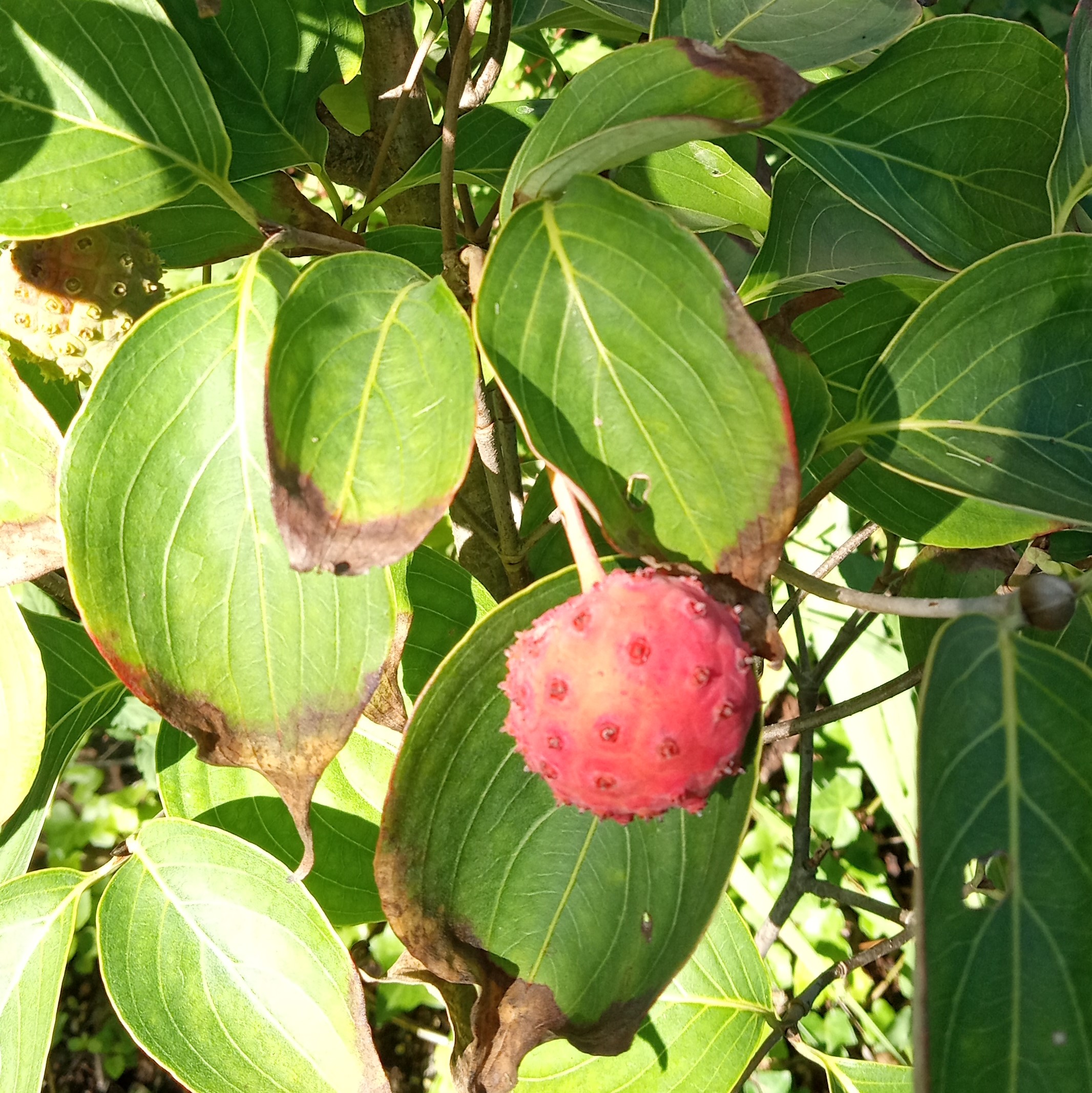
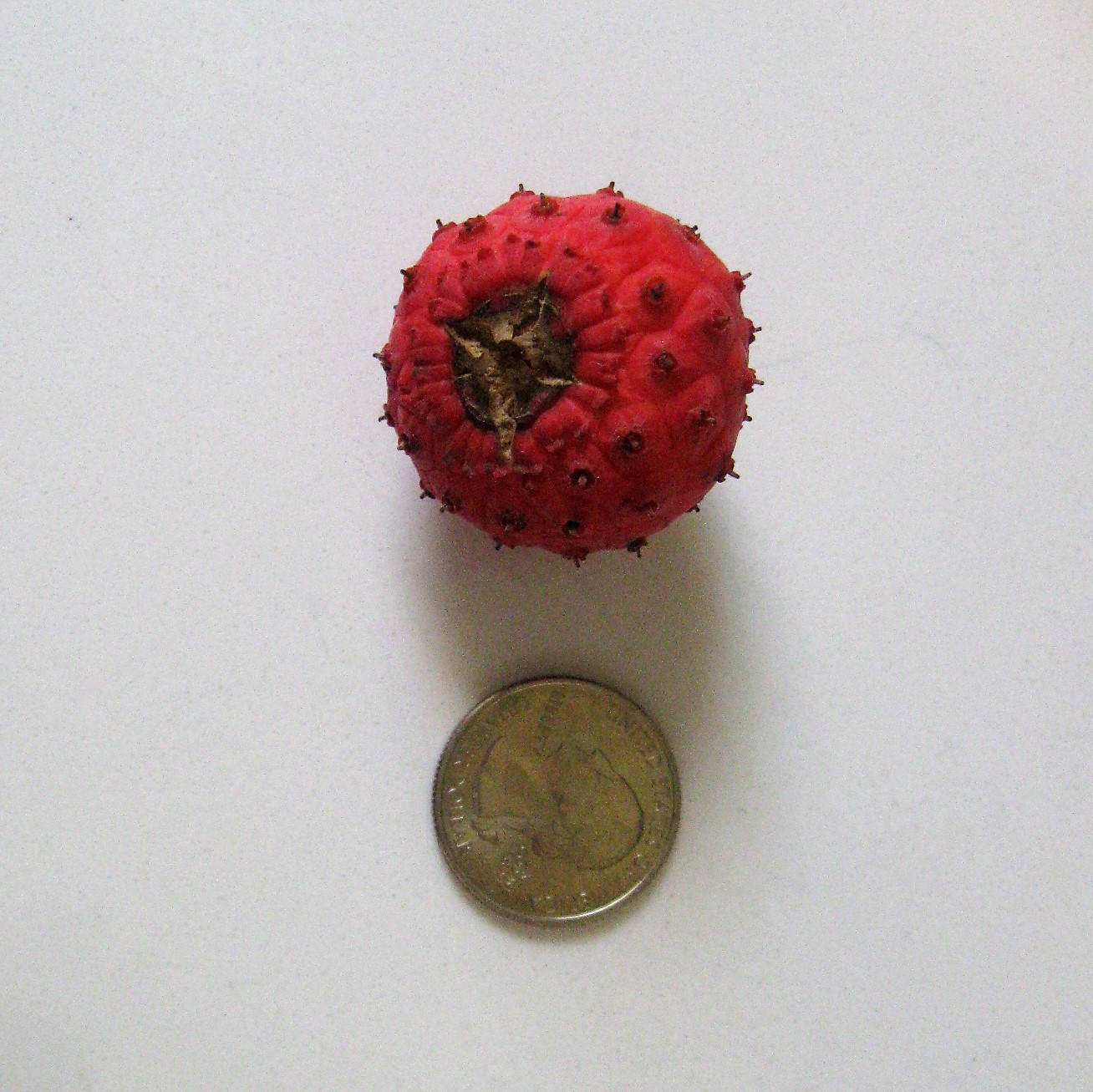
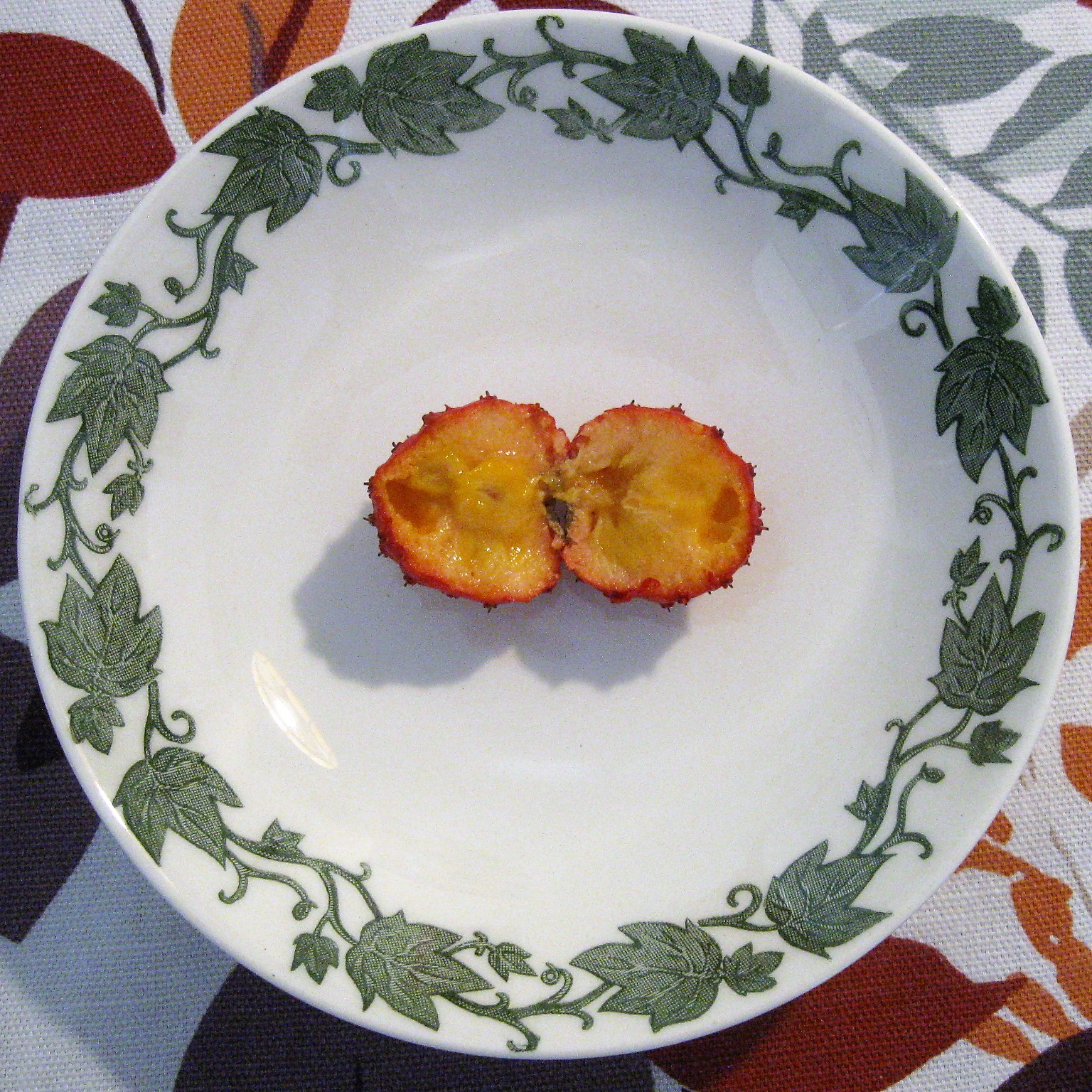
Surprise! This lovely Kousa fruit developed on my dogwood. After the flowers, tiny buds resembling drumsticks appeared in their place. I forgot about them until I spotted the fruit/drupes in early Autumn, much larger, the size of a shooter marble, and cardinal red in color. Beautiful! The fruit is edible, although there are so few on my small tree, I will just admire them this year.
As I related in Cladonia cristatella Part I, I searched for British Soldiers in hopes of creating a gift for my friend Sherry. I planned to encase the British Soldiers I collected, along with pressed Queen Anne’s Lace, in resin.
Instead of the two-step pour and mix variety, I chose the softer, one-step product. I purchased Blue Moon Studio charm molds, UV resin, and a small UV light from a local craft store. The products were expensive, but I was lucky and found them on sale.
The directions in the package were simple. When followed, they yielded perfect results. The resin, as indicated, dried in two minutes under the UV light. One plus was the ‘on’ button on the UV light; when pushed the light stayed lit for only a minute. This helped me avoid over-drying the resin.
The charms popped right out of their molds. Beautiful! I couldn’t believe I crafted something so tiny.
I gave the charms a bit more time in UV light and placed them in natural sunlight for a few hours. One final thought on finishing the charms. After I placed jump rings in the hole created by the mold, I strung the charms on a polyester necklace.
The polyester retained wrinkles from the packaging. I dampened the strand and hung it on the clothesline with a large weight. This straightened the necklace out in a few hours.
My tips after using Blue Moon Resin Products:
When I first tried to pour the resin from the bottle into the molds, I could not get the product to flow.
Why didn’t I remember most liquid in bottles come with an inner seal? After a bit of frustration, unnecessary squeezing, and muttering to myself, I took the cap off, felt sheepish when I saw the seal, peeled it away, and of course, no problem at all afterwards.
I did wipe the interior of the molds with a bit of rubbing alcohol before using them.
Tweezers are a definite must for placing the Cladonia and Queen Anne’s Lace in the poured resin.
I would never use the resin indoors as it dries under the UV light. Even on the porch, the smell in the air became noxious. Next time, I will be aware of the strong odor beforehand and move away.
I wish I remembered to thoroughly examine the poured resin before curing. After drying, I discovered a few trapped air bubbles. The directions state you can pop air bubbles with a straight pin before curing. When cured, they are a permanent part of your project. I plan to have a magnifying glass at the ready when I create my next project, and of course a sharp pin at the ready to pop those bubbles.
Would it seem odd if I labeled this post Throwback Thursday? Probably. I made my acquaintance with this small red lichen, Cladonia cristatella, better known as British Soldiers, years ago. In childhood, my friend Sherry, sister Susan, and I, would roam the fields near Sherry’s home in search of this small lichen to grow in terrariums. The lichen is a throwback to memories of earlier days.
I’ve been on quite a hunt for this plant, searching for it for weeks on end, I even know the date I began, August 31st. On that day we took Sherry, we’ve been friends for sixty years now, to the airport in Philadelphia, for her return trip home to the Dallas/Fort Worth area of Texas. I wanted to find a way to commemorate her trip to visit us, and also wanted a reminder of our decades of friendship. I envisioned an idea to use British Soldier Lichen, but oh my, what a time I have had finding it.
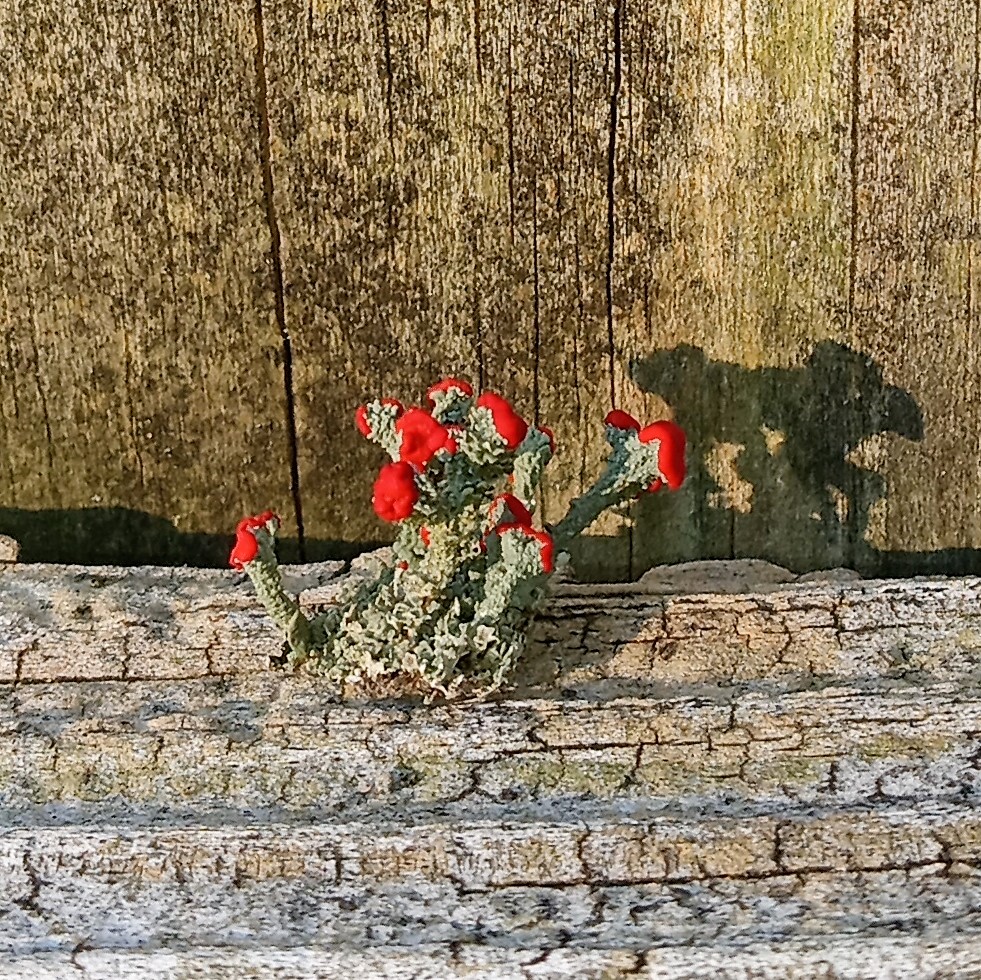
British soldier lichen, with its brilliant red caps, is named for the army of British “redcoats” who invaded colonial America. FloraFinder
I will write more about the use I am going to make of the lichen in Part II, this post is more about my search and where I finally found the lichen. I remembered as children we found the ‘soldiers’ growing along an abandoned roadway. I visited the same area and found nothing. I also rummaged around a broken-down fence that bordered a park near our home, I spotted the lichen there in the past, but nothing was found. I was near giving up, telling myself perhaps the lichen was seasonal and not growing in the area in late summer.
I had almost given up my great idea for a gift when on a bike ride, along the Glassboro-Williamstown bike trail, whizzing by a decaying split-rail fence, I spied a spark of red from the corner of my eye. I braked, threw down the kickstand, and shouted to my husband, “I found them!”
There were hundreds, more likely thousands, of the British Soldiers growing on the length of the railings. Need I say I was thrilled? I gathered a few, some for my project/gift, a few others to attempt growing over the winter. Parts II and III the blog posts on the British Soldiers will follow over the course of the next week.
I wonder how I have never before noticed this beautiful plant in my local nursery. Perhaps this is the first year they have offered it, or maybe the quantities are limited and they are quickly bought by those who, like me, adore finding a unique specimen. I know I would have walked right by it if it had no bloom. The leaves are typical of so many common flowering plants, and on their own not that attractive.
I potted the plant instead of planting in a garden bed. I want to bring it indoors and keep it growing through the winter months. One annoying problem is the plant came with a load of mealy bugs. Yikes. I have been painting them with rubbing alcohol, but they are still winning the battle. I might have to resort to systemic insectide, always a last choice for me. I don’t want to lose this beautiful flowering plant.
Lilies, yes, they are colossal. A perfect fit for the Monday Ragtag Community Challenge. The flowers are eye level to me, and I am of average height. The petals are a blazing yellow-gold with beautiful rust speckles and pretty anthers. They seemed perfect for Cee’s Flower of the Day challenge. My lilies also fit right in with City Sonnet’s Colors and Letters challenge for June 20th, which is the letter L.
I love taking part in challenges, though at times, try as I might I come up dry. Today the creative juices were flowing and the challenges fit what is blooming in my garden. A big thank you to the Ragtag Community, Cee, and CitySonnet for their daily challenges.
An update on the Mother-of-Thousands sprouts: Both types of propagation techniques worked well for rooting the tiny succulent plantlets.
Flower of the Day Challenge: Hyacinth blossoms in their last days. Still beautiful and very fragrant. The flower bloomed so well the stem couldn’t handle the weight, and the flowers are now right-side down.
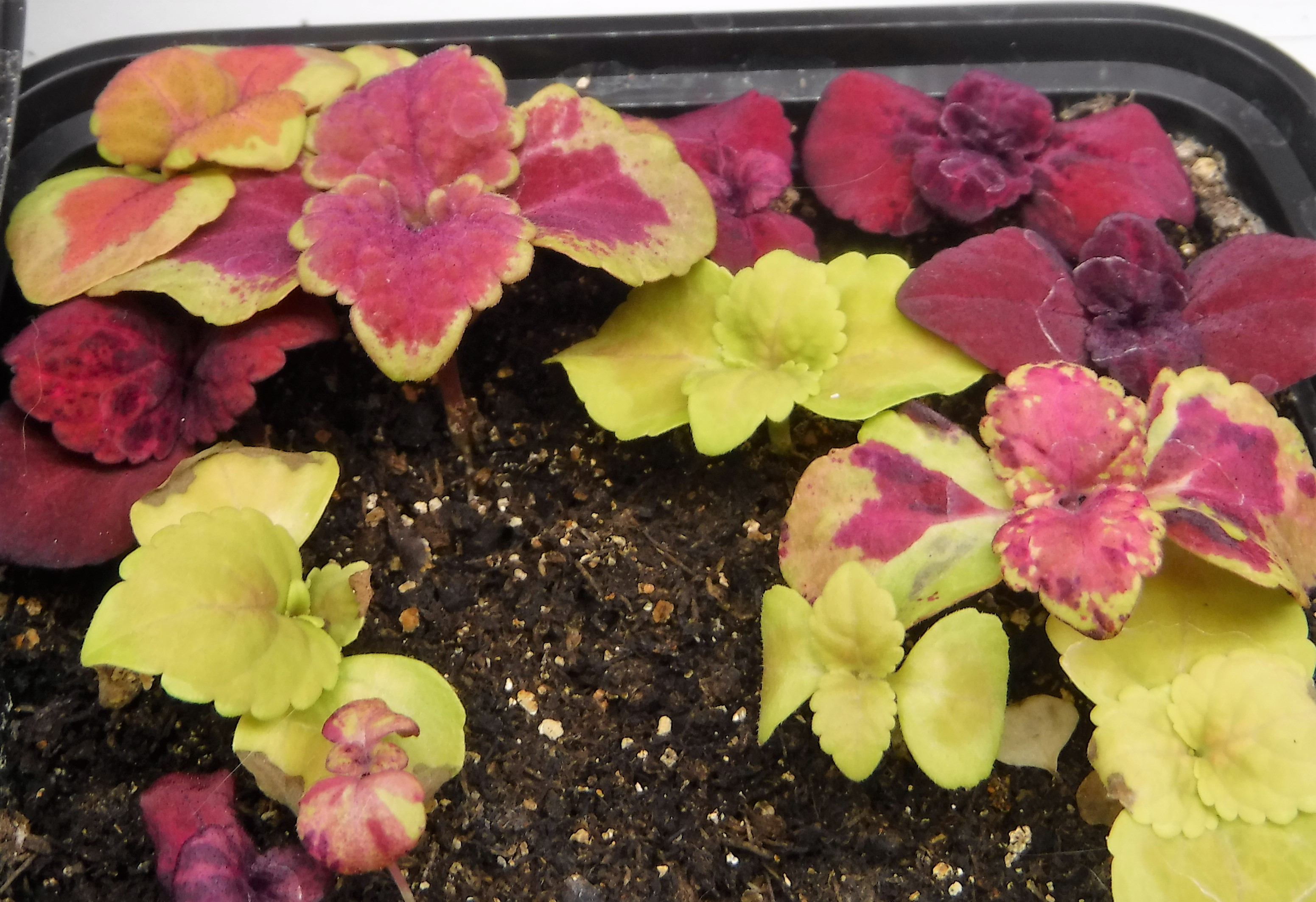
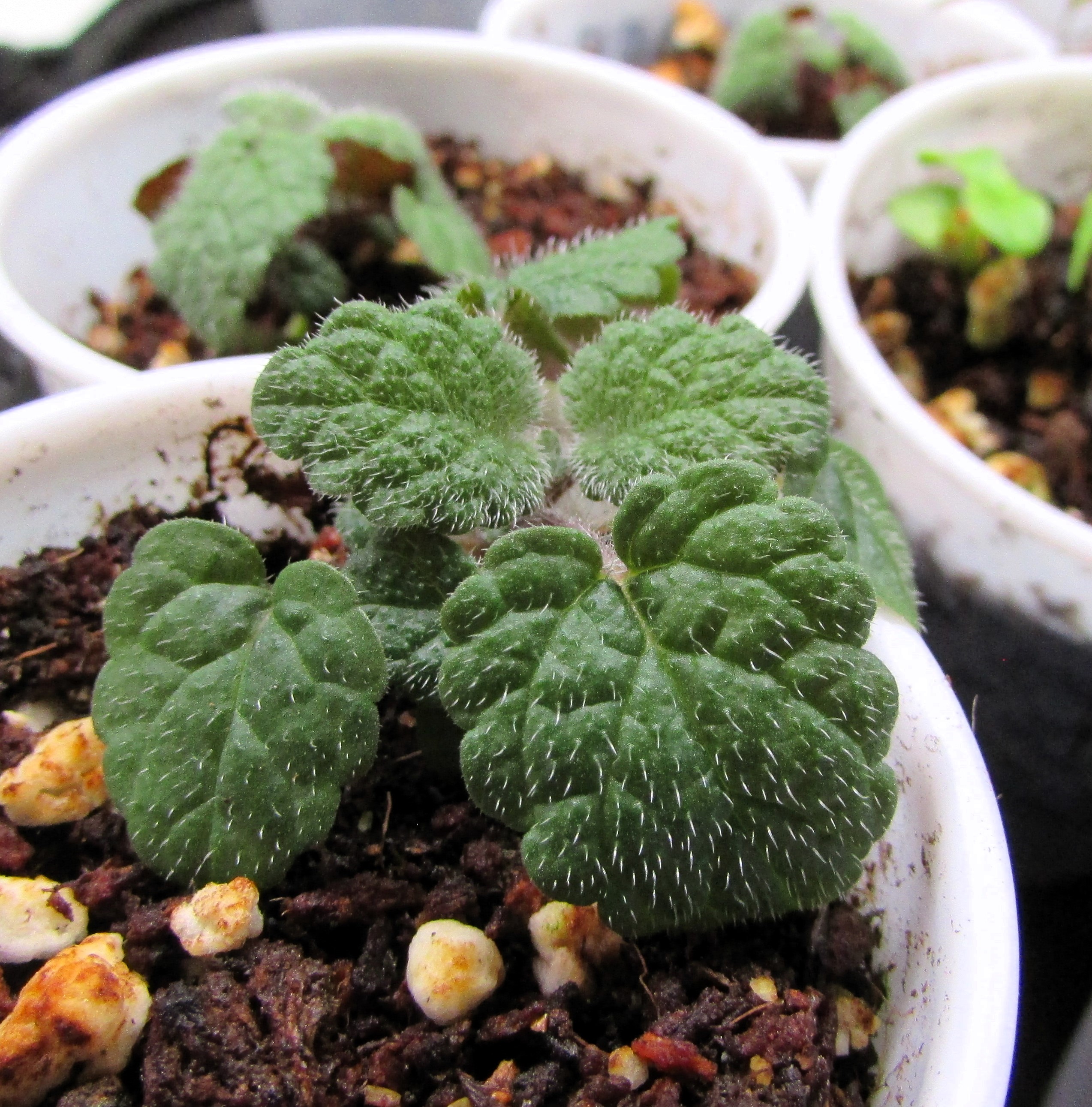
My coleus sprouts are small, growing steadily but slow, and beginning to develop nice color.
When I purchased this succulent, I had no idea it was a kalanchoe, or that it was one of a variety called Mother of Thousands, and sometimes the Chandelier Plant. It has thrived in a terracotta pot in my sunny kitchen window. The plant is about eight inches in height at this time. Since it is growing so tall I will transplant it to a bigger pot soon to avoid top-heaviness.
When I first noticed a new plantlet near the base I assumed it was growing from the main plant root. Now, after seeing small plantlets clinging to the uppermost leaves, I realize the new growth developed from one of these small sprouts.
Of course, I couldn’t resist planting a few of the larger sprouts. I am attempting to get good results from two different mediums to see which works best. On the left is a mixture of vermiculite and seed starter, on the right a peat pellet. I’ll update in the future.
My baby chandelier plants are in the inchoate stage of life. I love it when challenges make me stretch a bit. When I saw the Ragtag Daily Prompt today, the word inchoate was a unknown to me. Now I know the meaning – will I ever use it in a sentence, well, first I better learn how to pronounce it.
Inchoate – (ĭn-kō′ĭt, -āt) Being in a beginning or early stage; incipient. Imperfectly formed or developed; disordered or incoherent. Recently, or just, begun; beginning; partially but not fully in existence or operation; existing in its elements; incomplete.
Sea beans, the name is surprisingly unknown to most people. Are they edible? No. Where do they grow? They self-sow in most cases, and are responsible for diverse plants finding root in new places.
Nickernuts, dove gray in color, like the sky before a storm. The seed coat is near impenetrable, almost as hard as the glass marbles they resemble in size. I planted the seeds in soil to no avail. I soaked them for days without any water absorption occurring, my next attempt might be drilling them with my Dremel tool.
These sea beans are stored in a hidden area in my home. Several of them appear to be the seeds of the Castor Bean plant. This plant is extremely toxic. I haven’t planted any of these seeds; I don’t want a Castor Bean plant growing in my home or garden because of possible danger to pets and children.
I managed to grow a few of the sea beans we collected in October on Sanibel Island, Florida. After soaking in water, they sprouted and grew slowly, but have been great fun to watch. The advice I read that sea beans might take a year to sprout is correct. The tiny sprig on the left appeared months after sowing.
Any of a diverse variety of fruits, seeds or disseminules of land plants that find their way into the world’s oceans and ride currents for months or years before washing up on distant beaches and coastlines.
~Wordnik
Want to learn more about sea beans? Check out this site: What’s A Sea Bean?