A big snowstorm might be headed for my Mid-Atlantic state of New Jersey. I love snow, in fact, we have a few inches on the ground now. I can look out my second-story window as I write this, and see a coating of white on all the outdoor birdhouses and roofs.
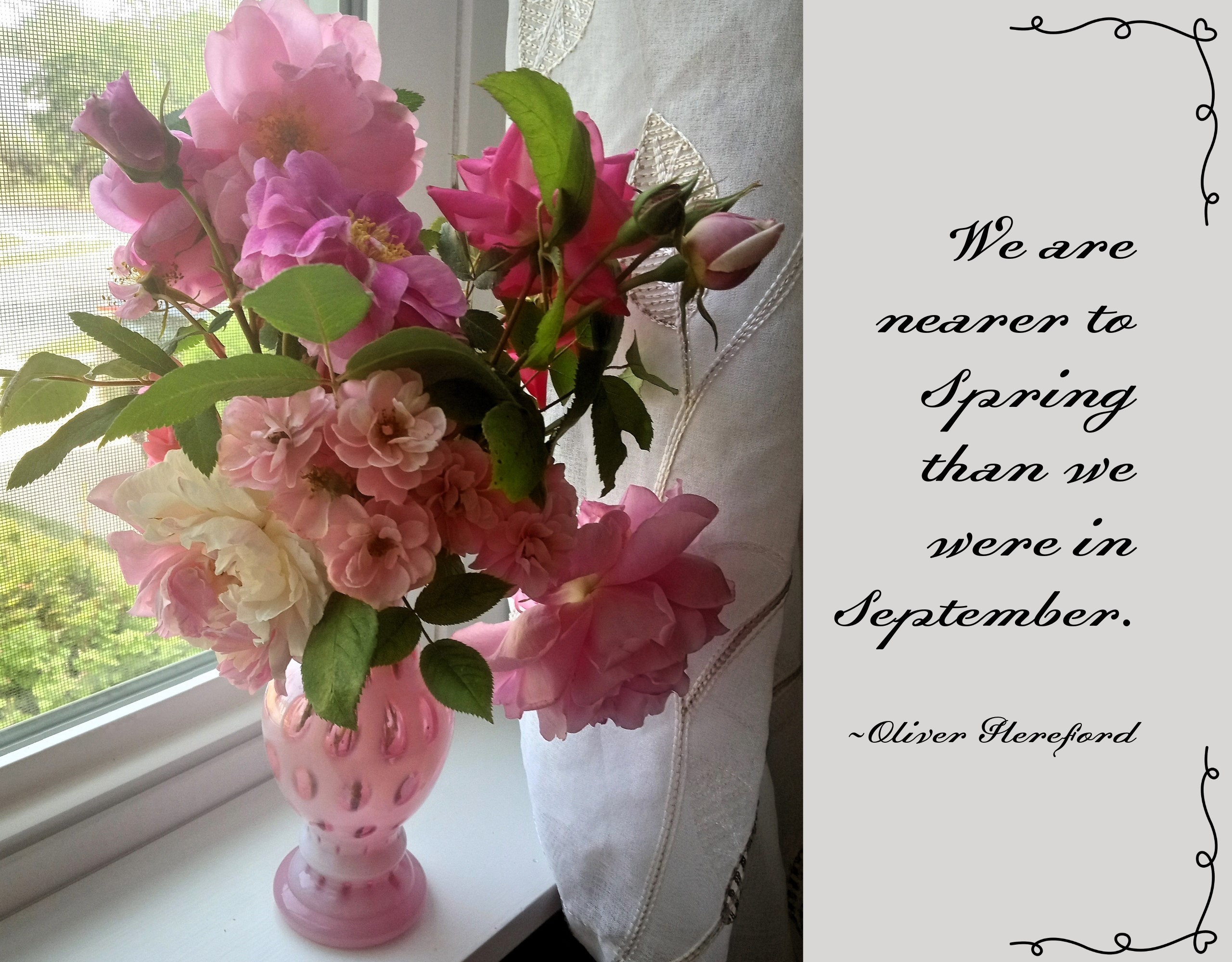
I found a photo of a rose arrangement from my garden in the archives. The soft pinks lifted my spirits; I remembered a captivating quote from a poem I especially love and combined the two. I’ve included the poem, written by Oliver Hereford (1863-1935). I want to take a few moments today and look up a few additional poems he wrote. He seems to capture the shared hopes of those who long for Spring.
I heard a bird sing In the dark of December. A magical thing And sweet to remember.
“We are nearer to Spring Than we were in September,” I heard a bird sing In the dark of December.
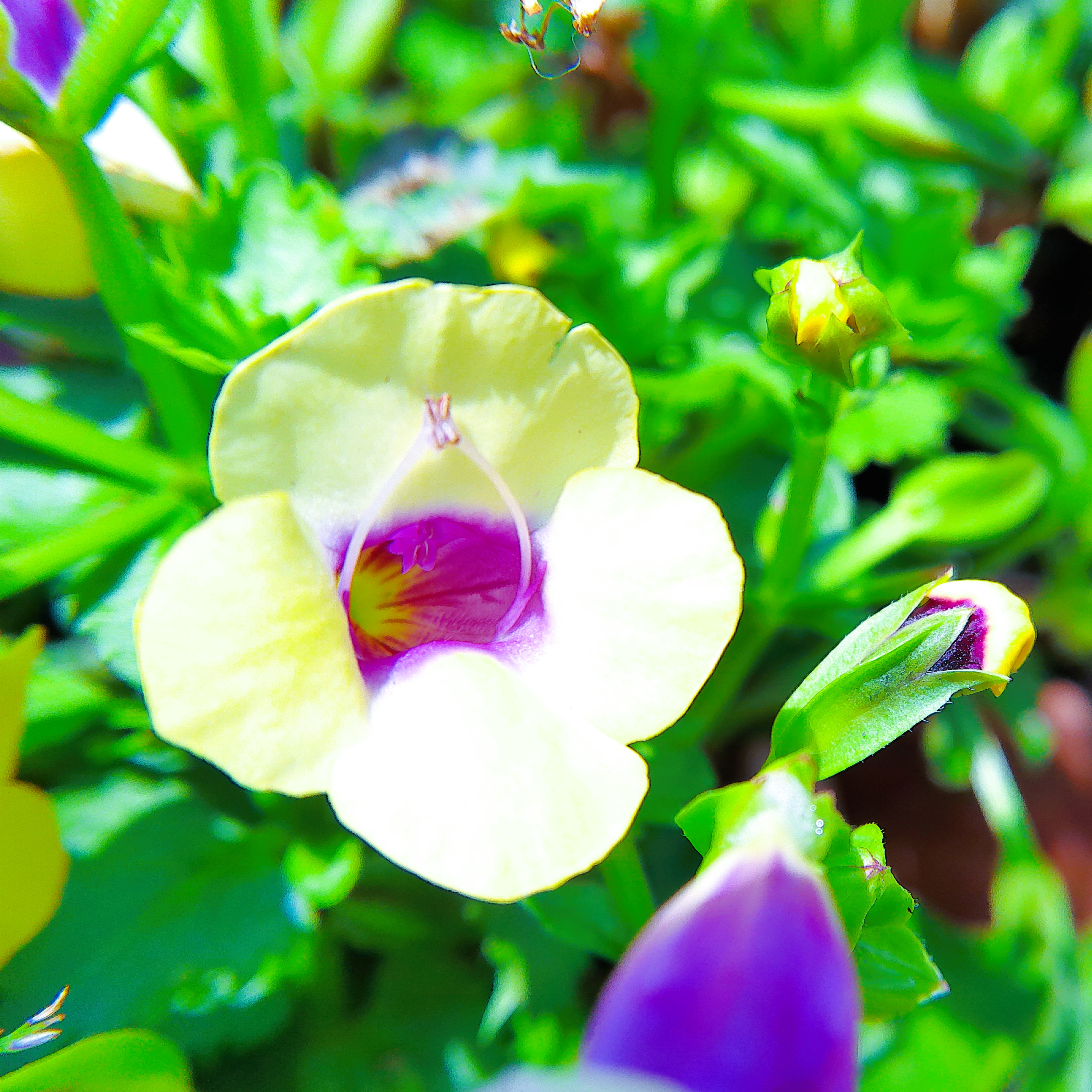
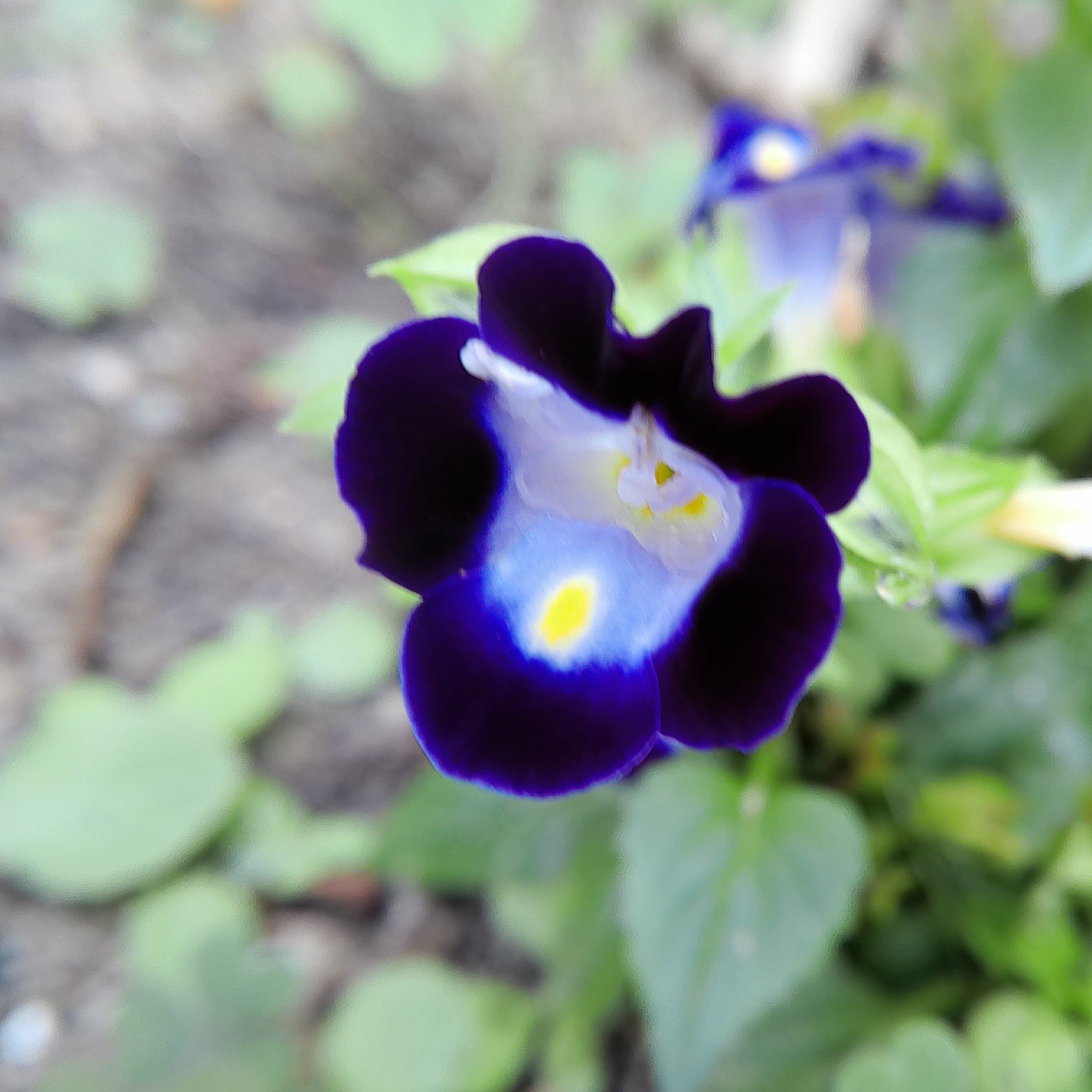
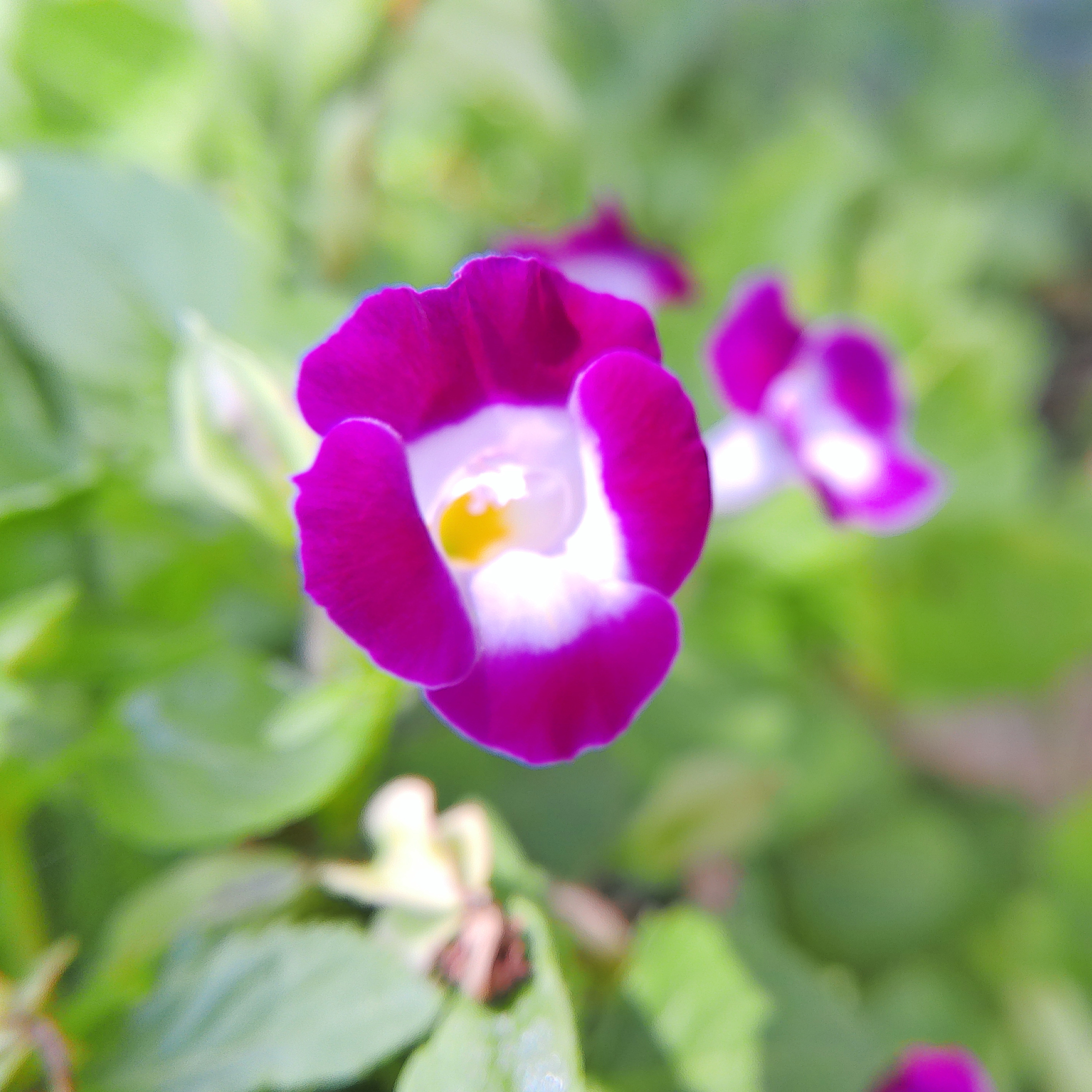
Torenia are one of my favorite flowers to grow in the summertime. They are low-growing and perfect for the front of a border or in pots. They don’t appreciate constant sunlight but are a good choice for half-sun, half-shade areas. Torenia flowers come in many varieties and colors, but the common thread for each flower is the wishbone inside. One of my favorite uses for Tornenia is flower pressing, and they are a staple in many of my pressed flower design cards.
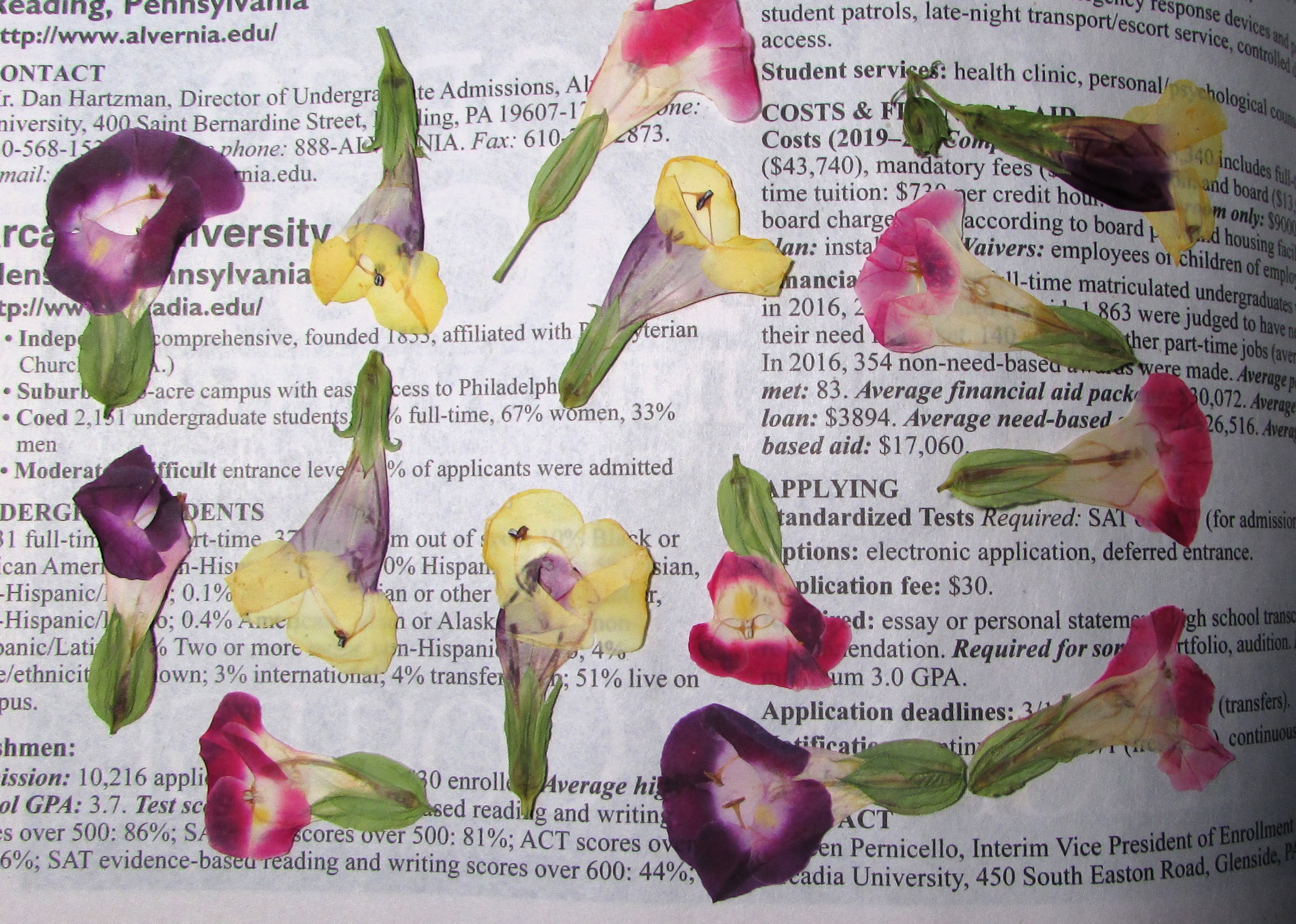
Torenia holds onto its vibrant color for years when pressed. You can see the wishbone in a few of the flowers above. I use porous paper for pressing. This was an old, discarded college catalog I bought for 25 cents at the local library.
A few more examples of the color of Torenia available in many garden nurseries.
Will I ever change my mind about growing a few Torenia flowers every summer? Never!
Outside my window grows a spectacular plant that causes me delight and a sense of impending dilemma. The Mexican Sunflower, Tithonia, was grown by way of Winter-Sowing, and has thrived both in its milk carton birthing room, and in the rich soil of the patio garden. The plant has attracted every type of buzzing pollinator, hosted hundreds of butterfly visits, quenched the thirst of hummingbirds, and now that it is setting seed, drawn in goldfinches, in drabber Autumn colors, but goldfinches, nevertheless. What could be more of a delight?
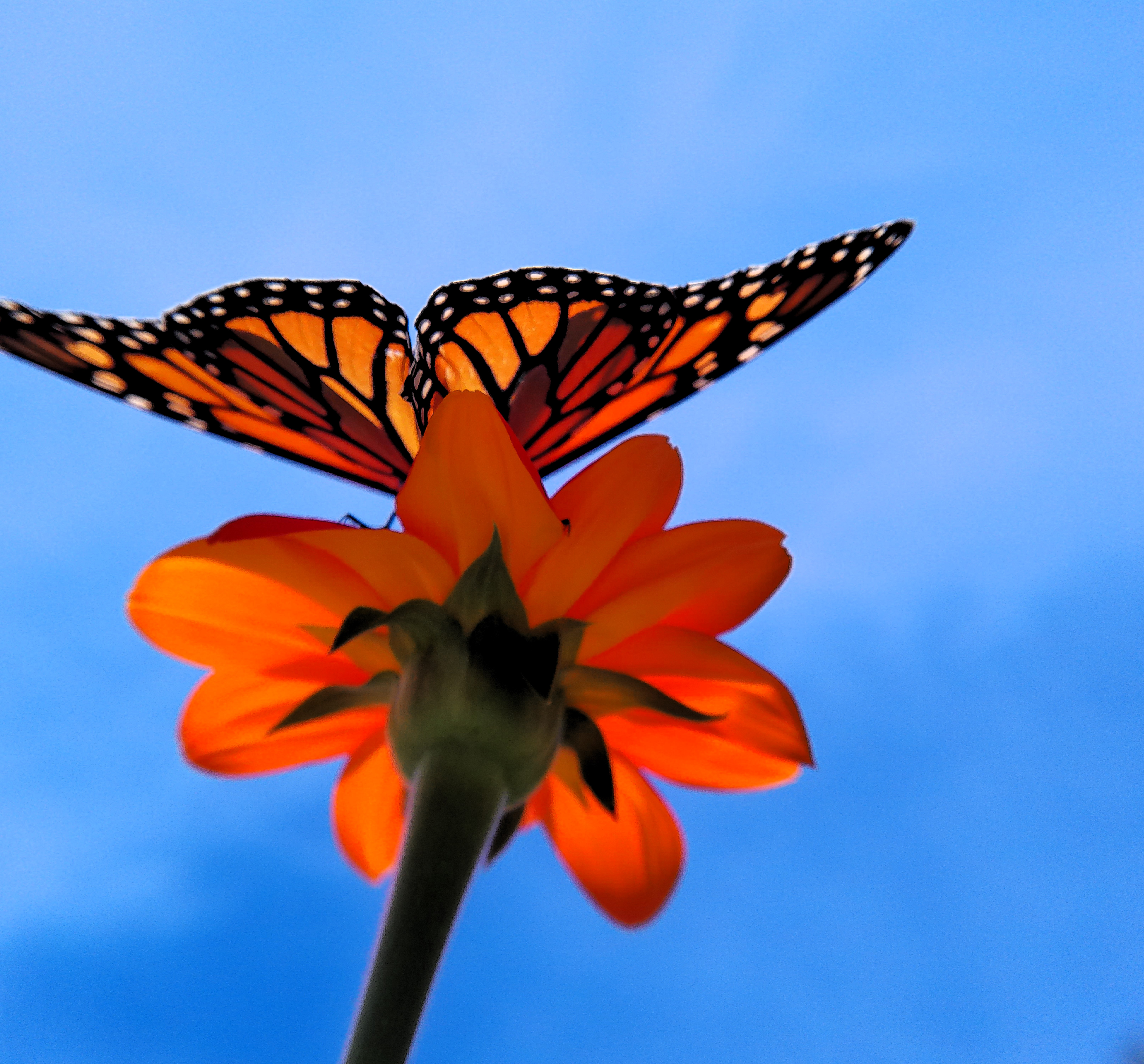
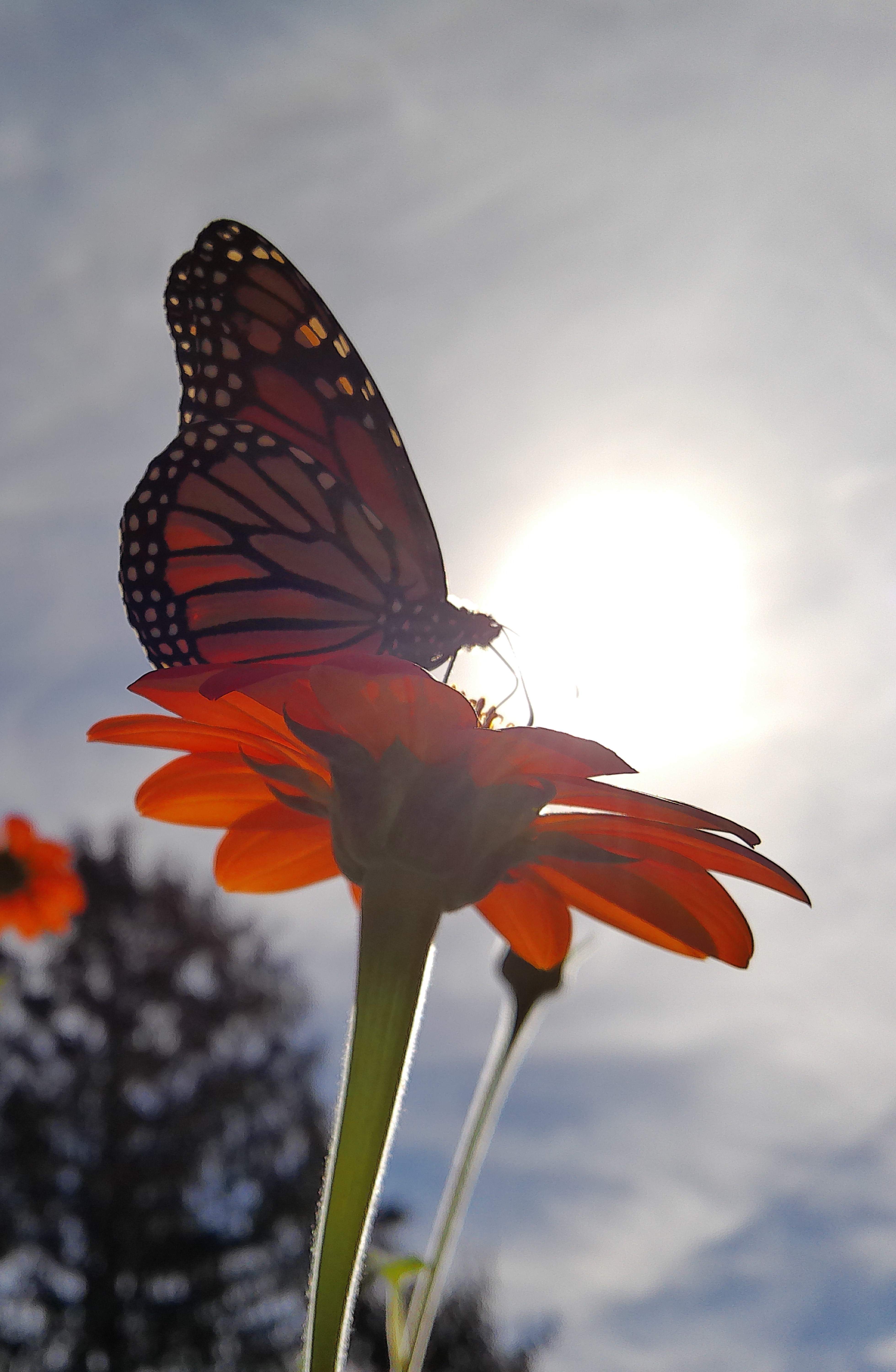
A newly hatched Monarch Butterfly spent hours fueling up for its flight to Mexico, circling the Mexican Sunflower continuously for hours, sipping nectar as it went round and round.
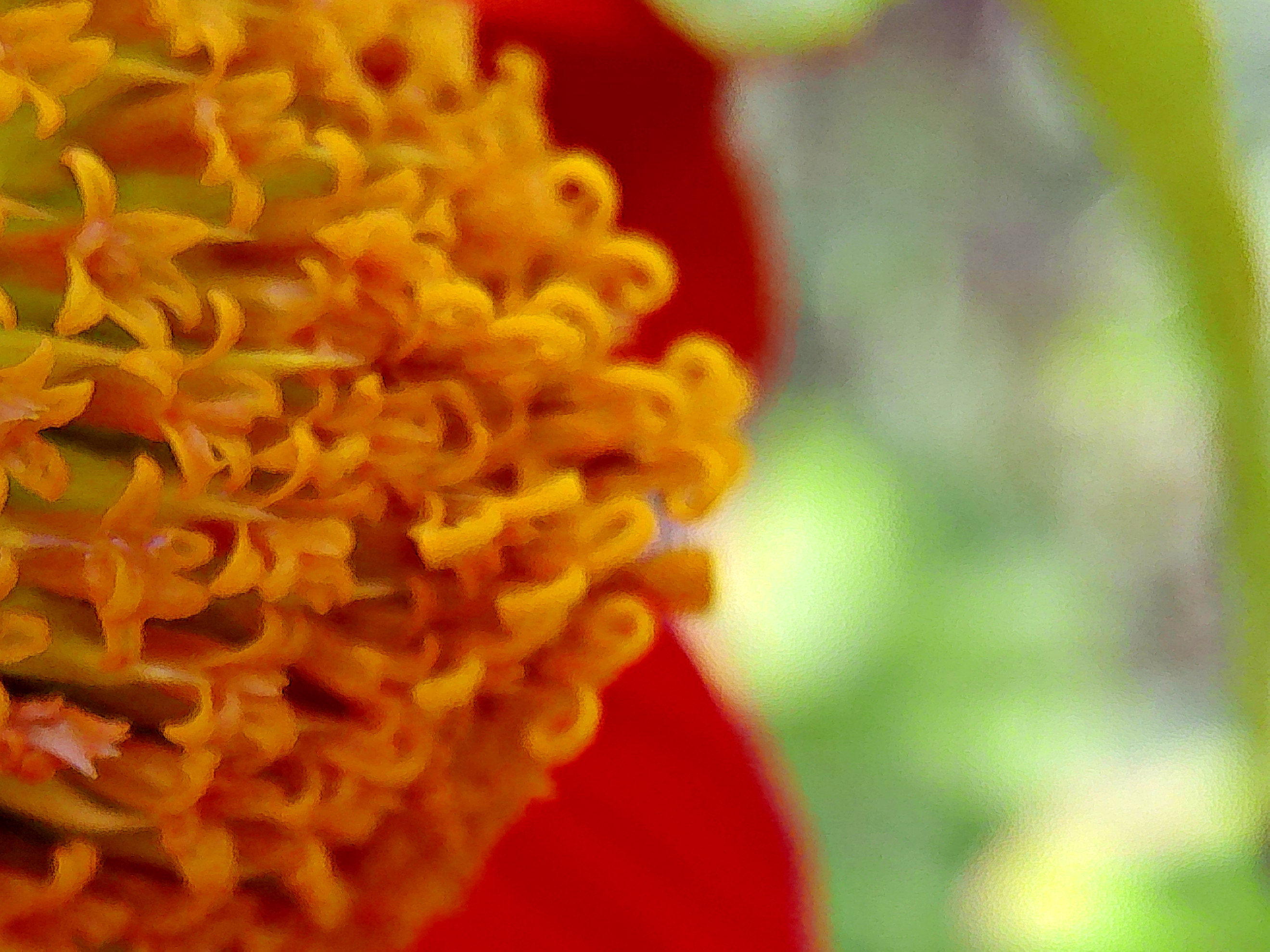
A pollinator’s view of the nectar-filled florets and pollen.
One dilemma is the size of the plant. I measured today, October 13th, and the height was eight feet. The plant is at least five or six feet across at the bottom. Next year, I’ll need to plant near the back wall of the house. I have other Mexican Sunflowers, but none reached quite the size of this beauty. I have collected seeds and look forward to growing them again next year with a few amendments.
The first I already mentioned. Keep the Mexican Sunflower at the very back of the garden, but still near enough to enjoy the up close and personal look at the nature it draws in with its nectar and pollen. Second, once the first lush leaves have fallen off, giving rise to many branches with smaller leaves and more blooms, consider planting some fast-growing vining plants at the base to grow up and add a bit of lushness to the sparser foliage by midsummer. A fast-growing scarlet runner bean would be a great choice.
The third dilemma is my indecision over whether to cut it down when it is entirely defoliated and flowerless or to leave it up as perches for the winter birds. My husband and I discussed decorating it by stringing popcorn and other goodies on the branches throughout the winter for the birds to enjoy when food is scarce. I will update later if we do this.
A photo taken today, a Mexican Sunflower, still blooming in mid-October, braving the rain of a N’or Easter. If you have room, consider growing this amazing plant.
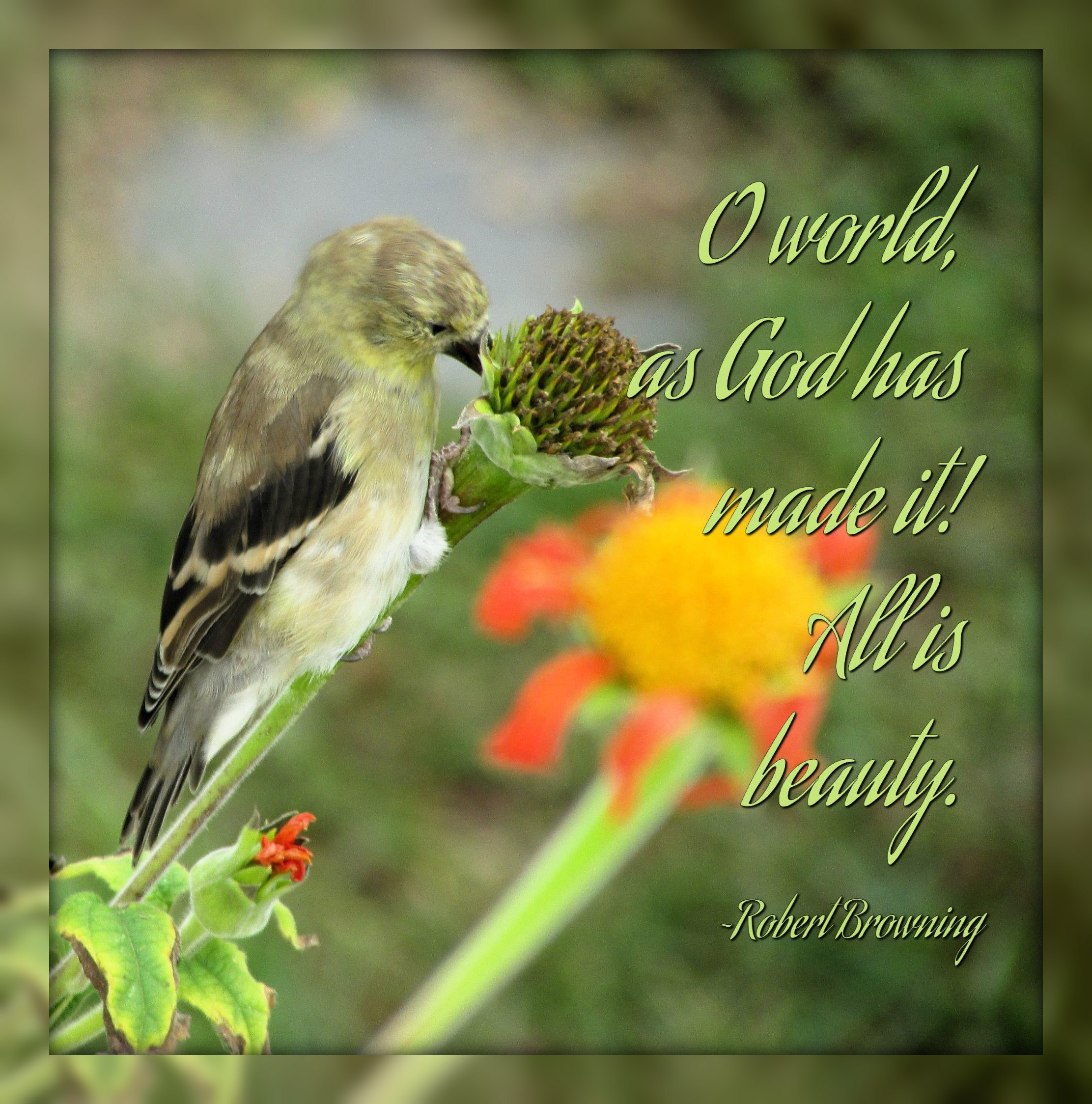
An appreciative goldfinch gathering seed was the perfect signpost backdrop for a quote from the poet Robert Browning.
“The lizard in the image is a Common House Gecko (also known as Asian House Gecko, Pacific House Gecko, or Moon Lizard), scientifically known as Hemidactylus frenatus.” ~Google
A common gecko was small enough to wander into the shower through a small drainage slit in the window frame. He was so adorable. I didn’t want him to die in the cottage we stayed in by becoming shut up in a closet or cabinet. With just a small prod to his tail, he jumped on my thumb; he was half the size of it, and I deposited him in the front garden. I hope he enjoyed the shower we shared.
I love receiving palms at the end of the Palm Sunday service. I added mine to my IAVOM (In a Vase on Monday) arrangement. The only other plant material is crabapple buds draped gracefully from slender branches. They are lovely, about to bloom, and seem to have the slightest of sweet scents. A small handmade cross, received at Hart’s Sunrise Easter service in Northeast Maryland two years ago, adds a touch of gratitude for Christ’s sacrifice for us.
The vase is a blown glass pitcher of Jamestown Glass. Thank you to Rambling in the Garden for hosting the weekly challenge, and to the Ragtag Daily Prompt challenge host.
I hope the days leading up to Easter Sunday will be a blessed week for all my blogging friends.
Visiting the Orchid House at Longwood Gardens is the perfect remedy for the winter weary. #SixonSaturday The large Paphiopedilum Orchids seem to almost float atop their slender stems.
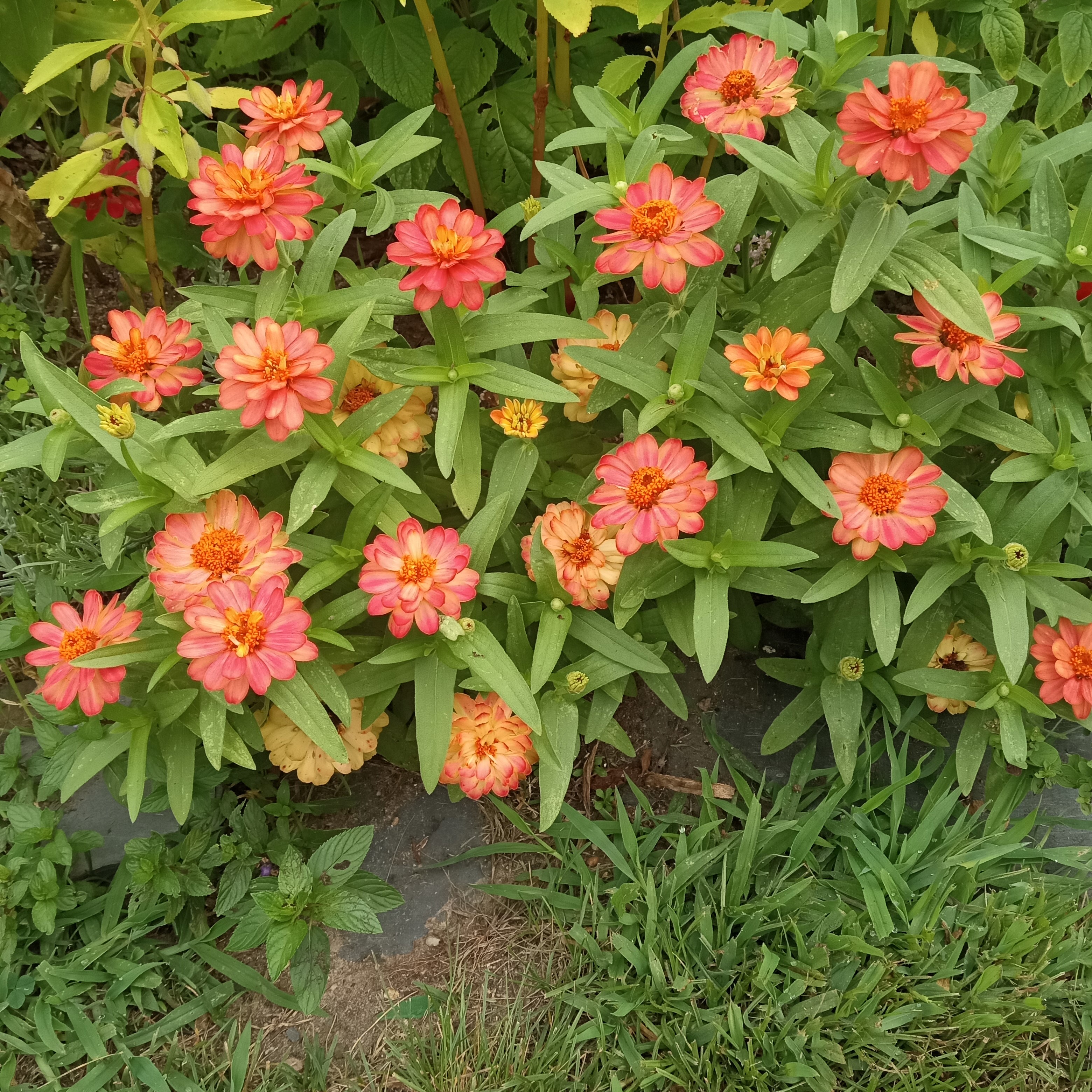
We grew this lively mix in the front beds of our old farmhouse porch and discovered it is one impressive zinnia, forming mounds of continuous color that were adored by the butterflies. ~Pinetree Garden Seeds
I am in love with this low-growing zinnia. Perfect for the front of my backyard patio border, the color is luscious, a brilliant coral pink.
The plants have been blooming for several weeks. They were available through Pinetree Garden Seeds, a reliable seed company. Next year, I will do the same and plant two side by side. This creates a mesmerizing display of color.
There is a plethora of flowers, and they last quite a long time. The color is beautiful even as they near the end of their bloom time. These zinnias fade to a lovely creamy yellow before they need to be cut away.
My one complaint is the small number of seeds in the packet. Although, the description does include the seed count so there was ample warning.
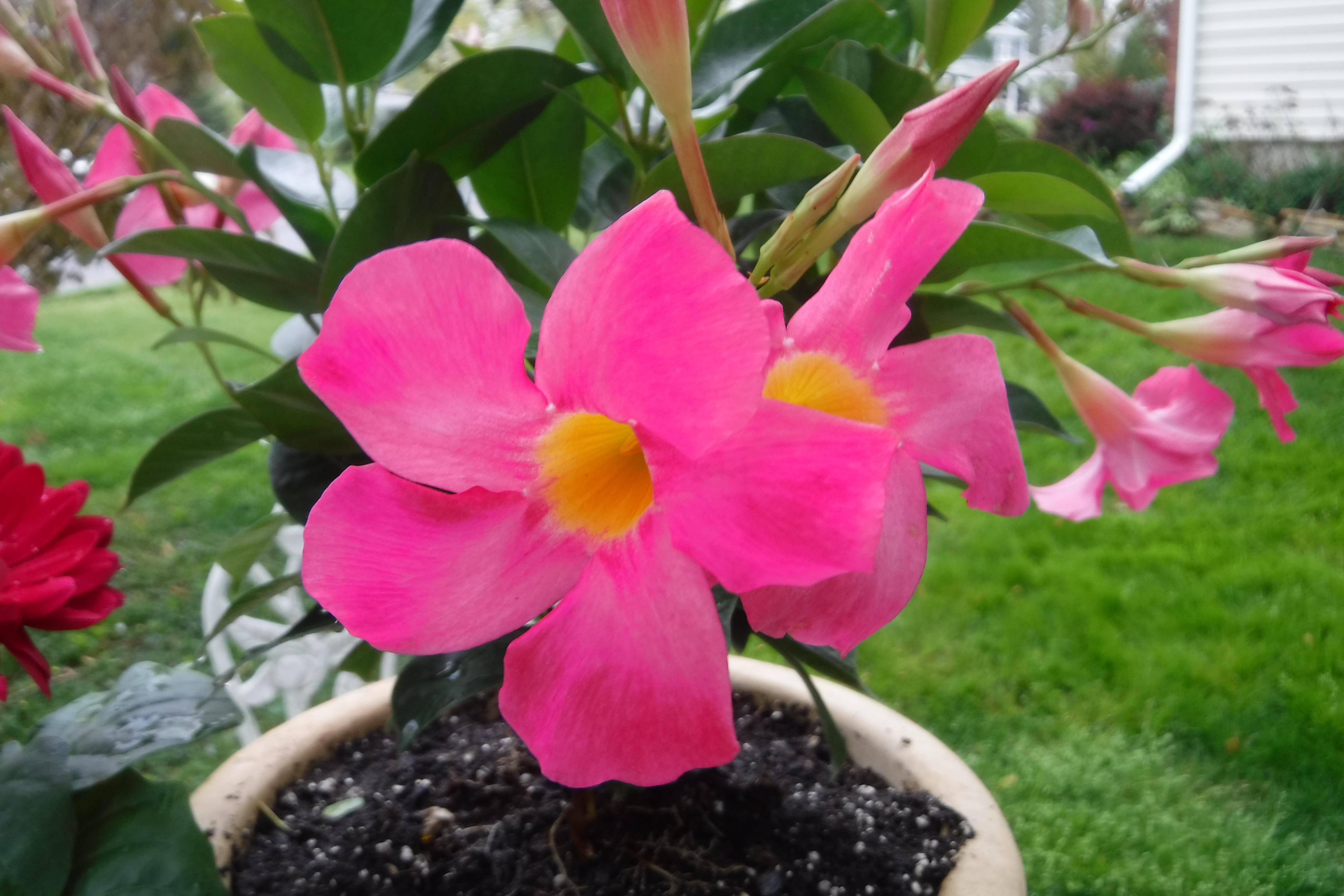
Mandevilla vines have spectacular pink flowers and grow inches by the day. I brought mine indoors when the nights grew cool expecting the plant to slip into a dormant state. The vine surprised me by growing in every direction at a fast pace. Soon, I needed to find a way to support the long tendrils.
I wanted to keep the appearance of the Mandevilla natural and clean, as minimal as possible. An area near me has quite a few wild grapevines hanging from trees. I found a few branches, about four foot in length, clipped them off and brought them home to fashion into a trellis.
Success! The trellis was easy to achieve. I poked the thicker ends into the soil along the pot sides, about three inches down. The springy tips were flexible, but also upright, and rose high above the plant.
Since the grapevine is loaded with large tendrils I twisted these gently around the uppermost stems and the trellis became self-supporting. I didn’t need to do any tying. How easy was that? The finished trellis does a perfect job supporting the vines as they coil up the stems. Problem Solved!