

“Hope” is the thing with feathers –
That perches in the soul –
And sings the tune without the words –
And never stops – at all –
Emily Dickinson

There is hope! The Monarch butterflies have finally made some appearances, although not in large numbers. This one flew in for a landing and cooperated with my camera’s intrusion, allowing me to capture several photos.


The ‘phlutters’ on my porch have been magnificent. While I write this post, I am thinking of eleven empty and transparent chrysalides. Each is the evidence left behind of a successful eclose of the Monarch butterfly that developed inside. The brief sojourn of the caterpillar becoming a butterfly is complete. Below is a description with photos of how the day of “The Magnificent Seven” evolved.

Raindrops started falling early but then tapered off; the weather became a concern since seven chrysalides turned black and were ready to emerge over the span of twenty -four hours. Morning light revealed the markings of each butterfly through the walls of its chrysalis. After a few hours of daylight, they began to eclose.

First to break free was the only Monarch who formed its chrysalis on a milkweed stem.
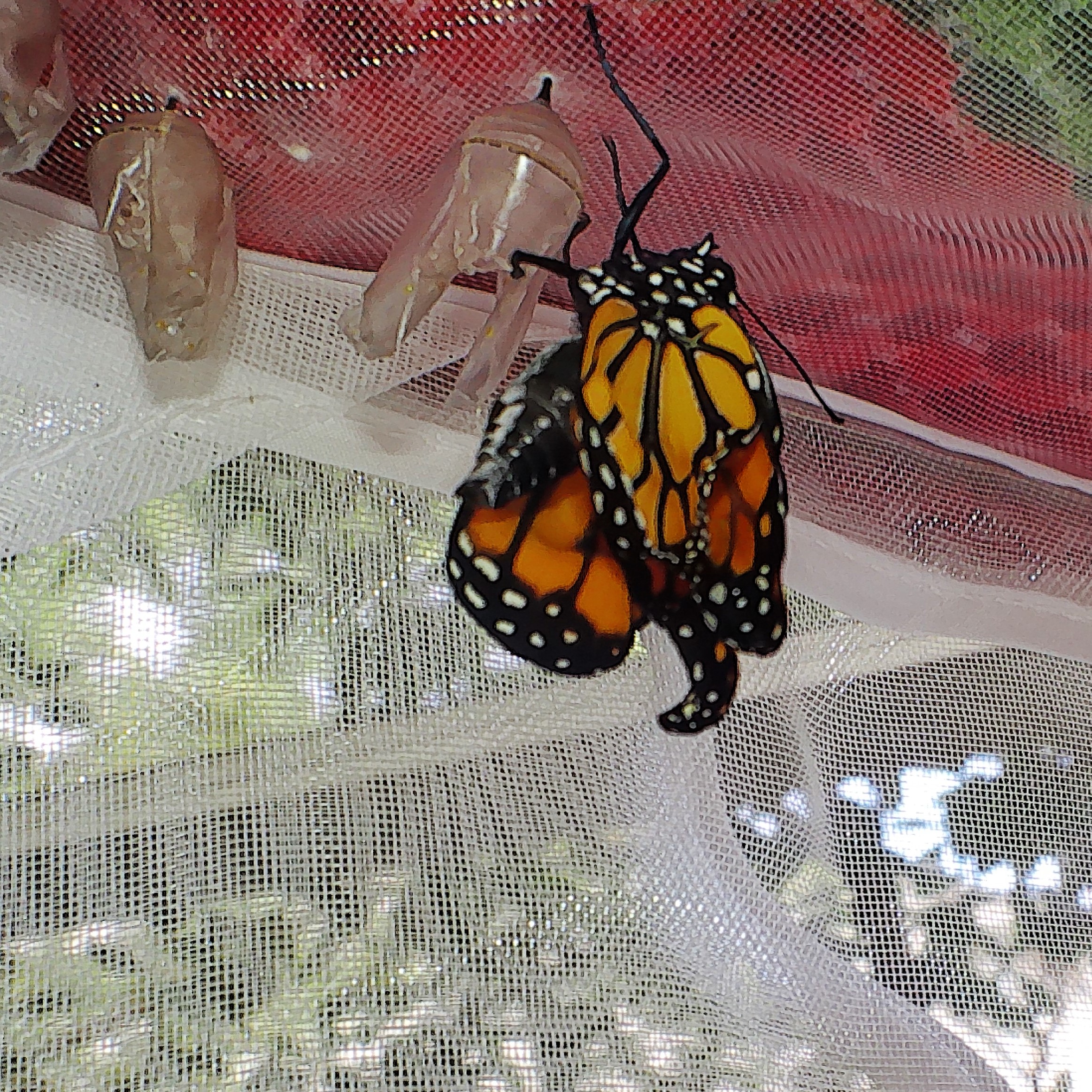
The remaining chrysalides clustered along the top edges and corners of the butterfly house. Throughout late morning/early afternoon all seven eclosed at varying times. All emerged perfect, no malformation or problems breaking free from the chrysalis.

Two to four hours after eclose the butterflies began to flutter within the confines of the butterfly house, I gently coaxed them onto my fingers and carried them to the open door. Several took to the air and flew out of sight over the rooftops, others seemed tentative, and these I rested upon a hanging basket. Later in the day, when I returned, they too had taken wing.

A sense of elation filled me when I realized a lucky seven eclosed in one day. This brings the successful ecloses to a total of eleven.
Today, as I post this, six newly hatched, ultra-small Monarch caterpillars are starting the cycle all over again. Will I ever grow weary of this miracle? Never.
This post is part of Skywatch Friday.

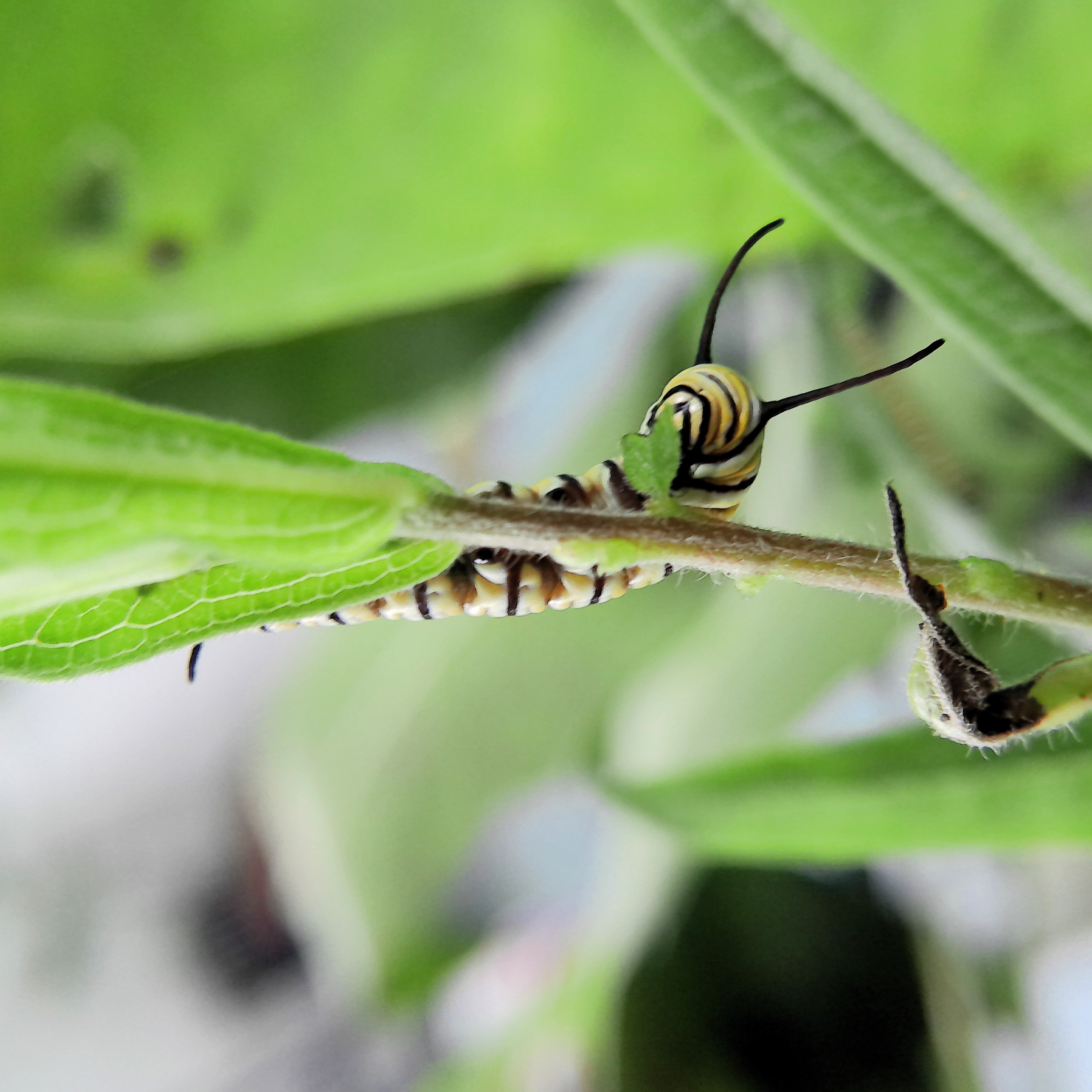
After spotting the vermilion orange flash of a Monarch butterfly laying eggs on my milkweed, I kept watch by tying a string on each leaf that had an egg on it. I was surprised, monarch eggs hatch quicker than the black swallowtails. Within a few days I spotted a small hole on one of the leaves. Sure enough, underneath I found an almost microscopic monarch butterfly caterpillar.
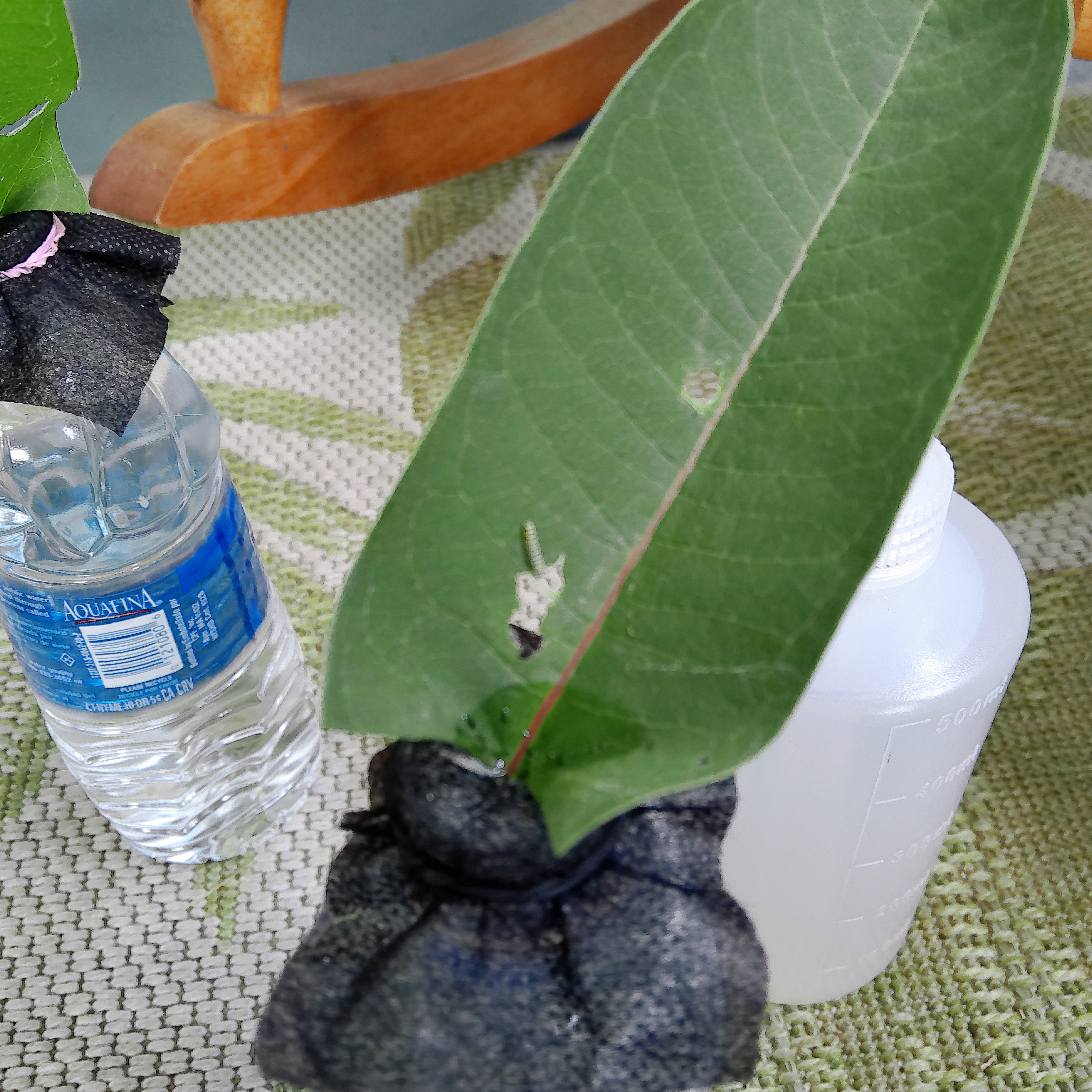
Because I’ve experienced the dilemma of monarch caterpilla cannibalism, I needed to find a better way to raise them this year. I brought one of the monarch caterpillars in on its leaf and using an old water bottle, garden cloth, and a rubber band I created a standalone leaf holder for the small caterpillar. Besides working at keeping the caterpillar separated, the bottle added a benefit; the leaves have stayed pliable and fresh for days.

To create more stem for the leaf to absorb water, I cut up along the edge of the stem, always careful to be aware of where the caterpillar is on the underside, next remove a v-shape portion by cutting away the leaf to form a stabilizing appendage to grip the garden cloth. I could go on with an explanation, but I think the photos tell the story better.

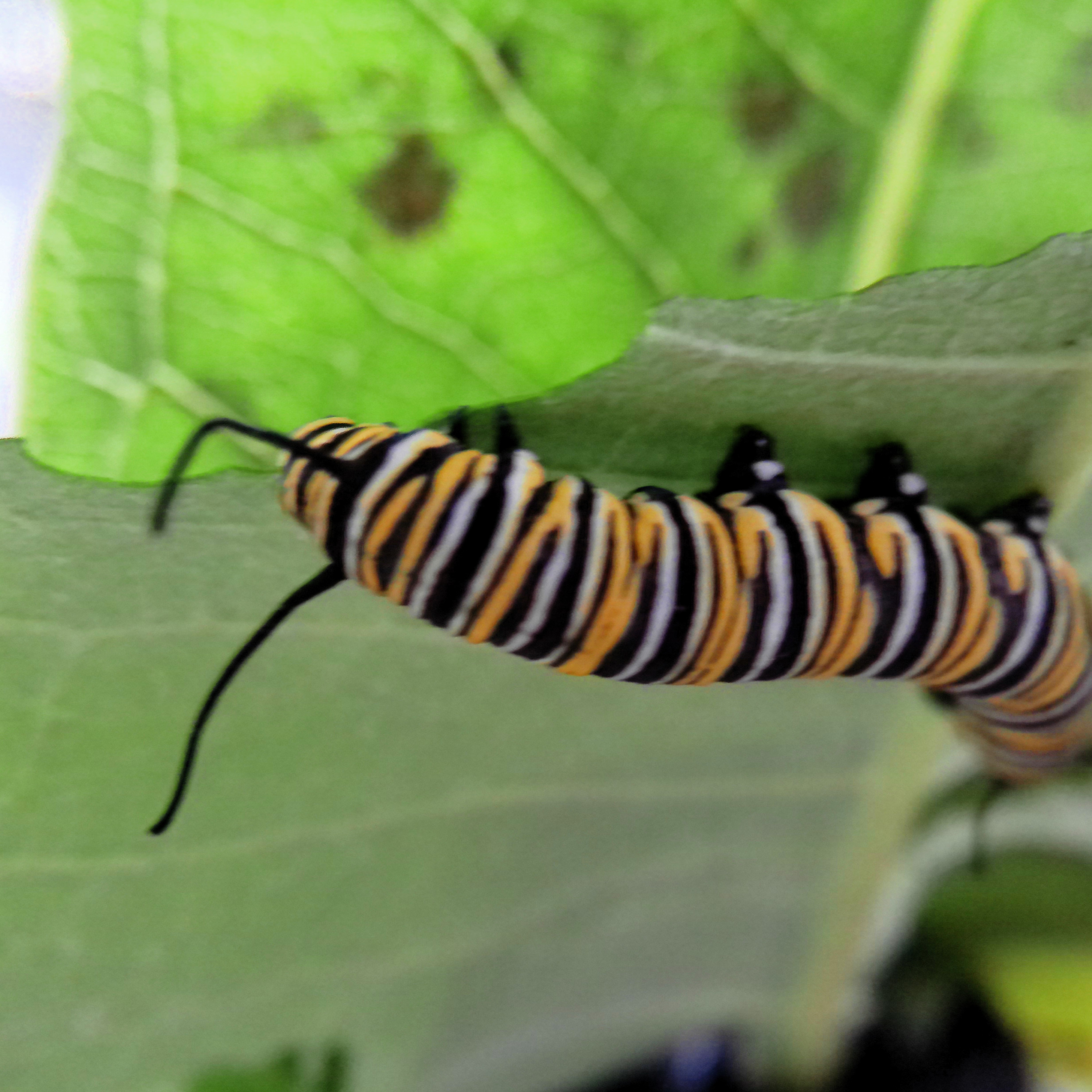
The caterpillars are thriving. They are now big enough for me to be able to see their spiky anthers.

In the course of adding water to the bottles, one caterpillar fell off on the rug, which is the same color as the caterpillar and even the same texture. I couldn’t find the small cat anywhere. I felt terrible. There was no sense in looking for the fallen caterpillar because I might squash it with my knee or foot while I searched. Instead, I laid a few leaves in the area where I thought it fell. The strategy worked, and today I found the wayward caterpillar on the leaf I laid on the floor. It is safely back on the rearing bottle now.
You can tell, by the holes in the leaves, and the freshness they’ve retained, that the single bottles work much better than leaving all the caterpillars in the bottom of the butterfly cage. Unfortunately, last year that is what I did, and I had seven caterpillars at one time on the bottom of the enclosure, eating the leaves. Overnight, my number was down to one. Yes, caterpillars of the monarch butterflies, although they are beautiful and delicate, are voracious cannibals of each other.
I might run into some trouble when they are big enough to loop themselves from one leaf to another. Maybe the problem will never present itself, but at least I am on the lookout for it.
I am grateful that I have a whole garden bed filled with milkweed. I checked some of the wild areas and the milkweed is in horrible condition. I found no caterpillars, only aphids spiders, ants and other bugs that prey on the monarch caterpillars. The leaves were leathery and dry from all the hot weather in our area. I have the advantage with my garden bed since I keep it well watered and stay on pest alert at all times.
This has been longer than my normal posts, but I wanted to share how to keep the leaves fresh, and the caterpillars away from each other. One note, they do like to be shaded. I keep them shielded from the Sun with dish towels over the sides. So far none have attempted to reach the other leaves. They are thriving and growing. I’m looking forward to watching the process over the next few weeks.


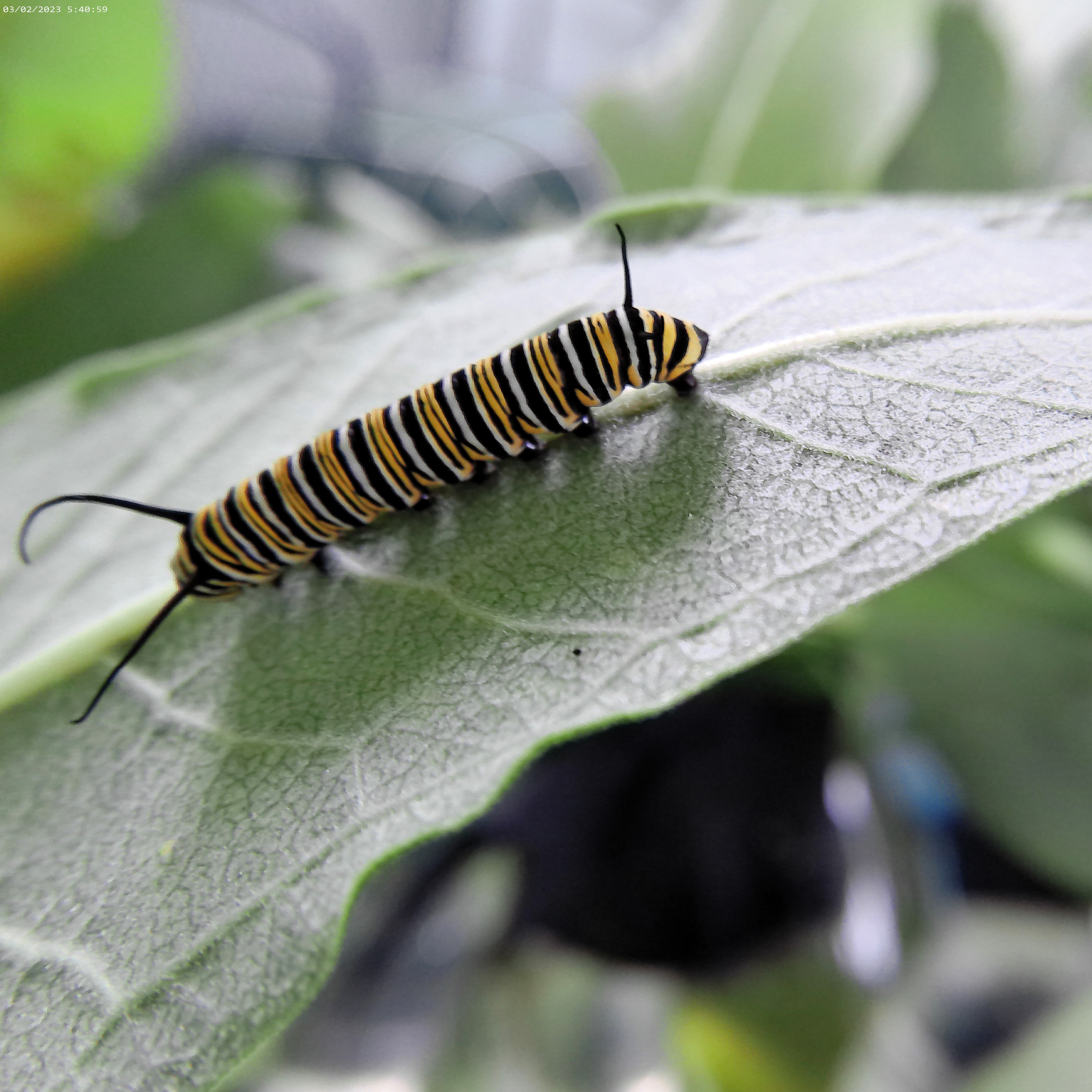
Sunday afternoon, I spotted five Monarch caterpillars on my milkweed plants. If I let nature take its course most will likely become victims of insect predators. The Monarch Butterfly Garden posted a list of bugs that dine on butterflies, their eggs, and caterpillars. A large portion of these insects are important pollinators too, essential to home gardens and crops. My small contribution towards a solution is to raise as many Monarch butterflies on my porch as possible.

An additional problem to solve is cannibalism. Yes, Monarch caterpillars are voracious and eat smaller caterpillars and eggs. A quick fix is to keep them well-fed and provide one whole leaf for each caterpillar at all times. I grew quite a bit of milkweed this year, I can keep the caterpillars supplied with plenty of food, and also make sure they are in containers with same-sized companions.
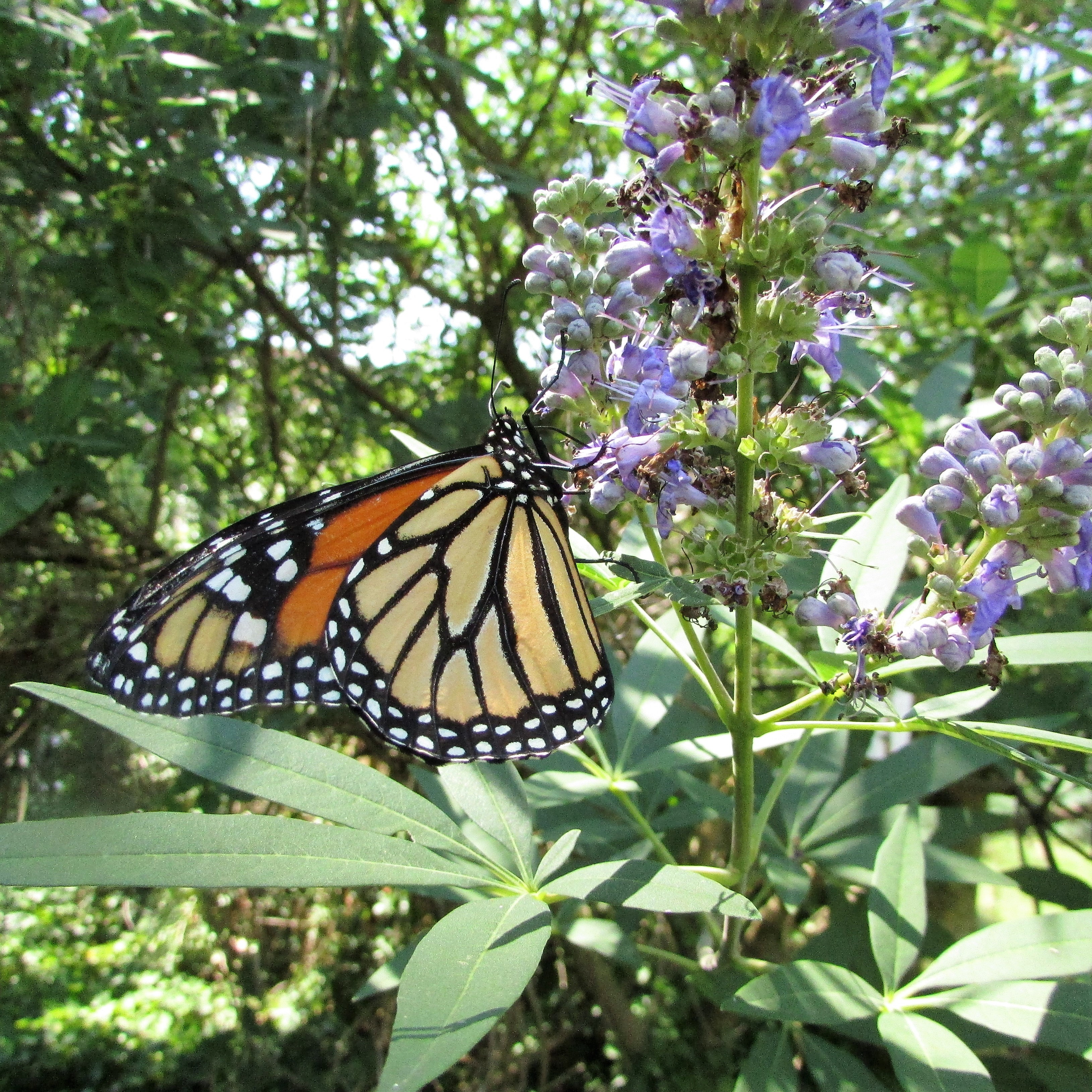
Is it worth spending valuable time to boost the Monarch population by a few butterflies? Oh yes, the flash of glowing orange wings alighting on my garden flowers and plants fills me with joy. I want to do all I can to increase the numbers of these beautiful butterflies.
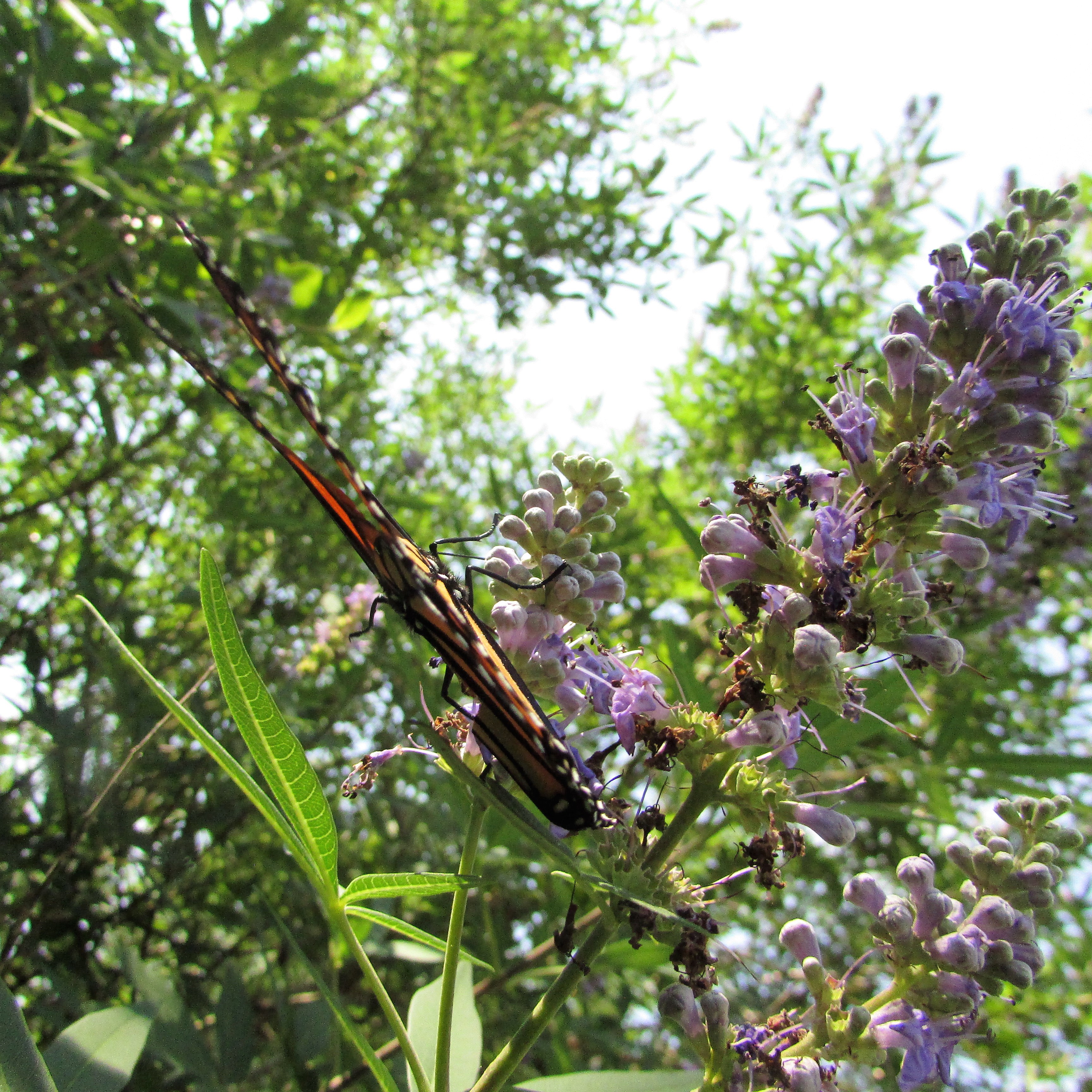

“O LORD, what a variety of things you have made! In wisdom you have made them all. The earth is full of your creatures.” ~ Psalm 104:24, NLT

I ended Part I of ‘Backyard Butterflies’ with a photo of this Monarch Chrysalis. Since that post, the butterfly has gone through its metamorphosis and emerged.
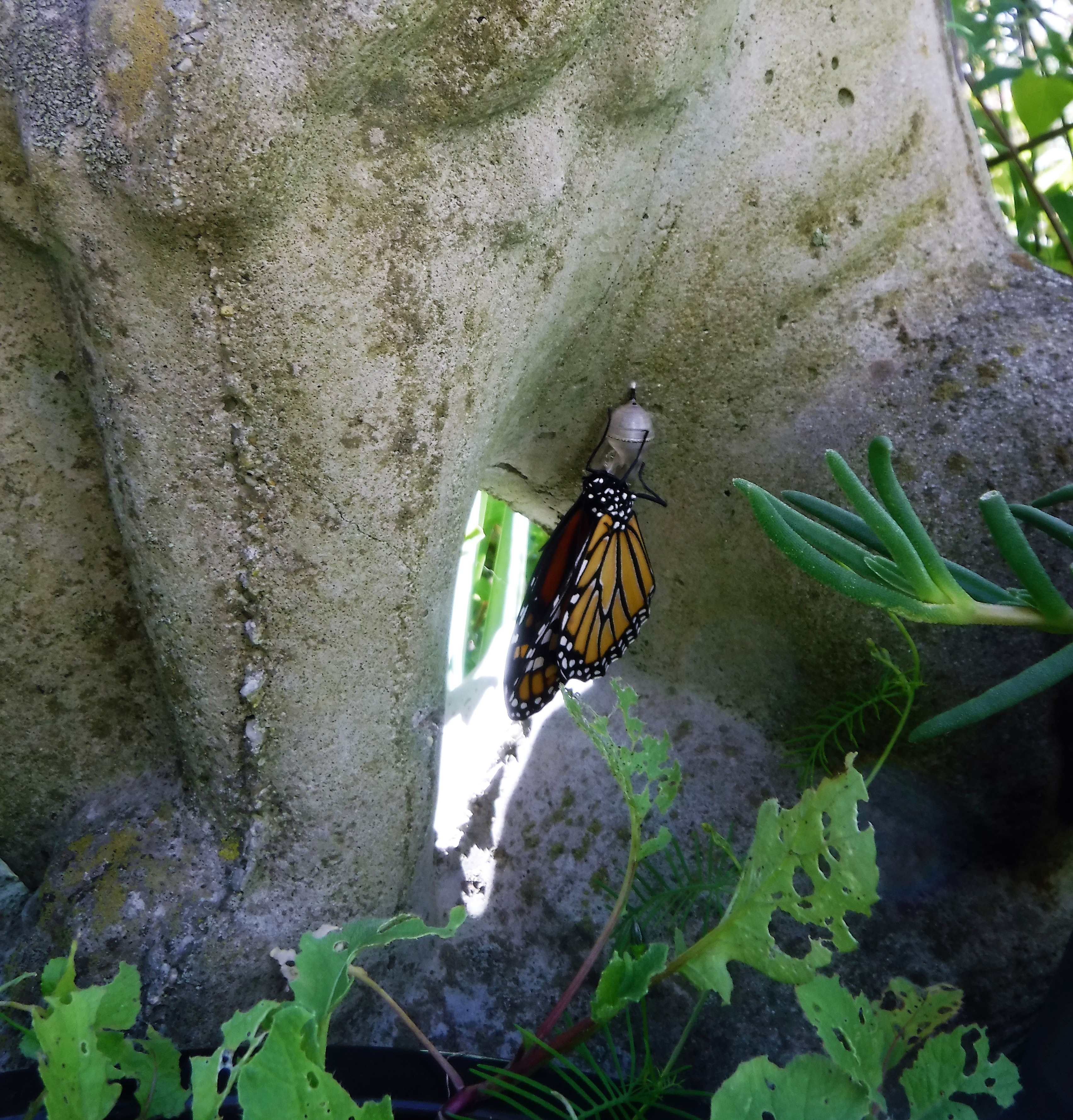
I didn’t see the butterfly break out of its yellow-green chrysalis, but I did notice it soon after.
After it dried off a bit, the butterfly began to explore the nearby garden. I watched throughout the day as the Monarch became acquainted with the sweet nectar in my garden.
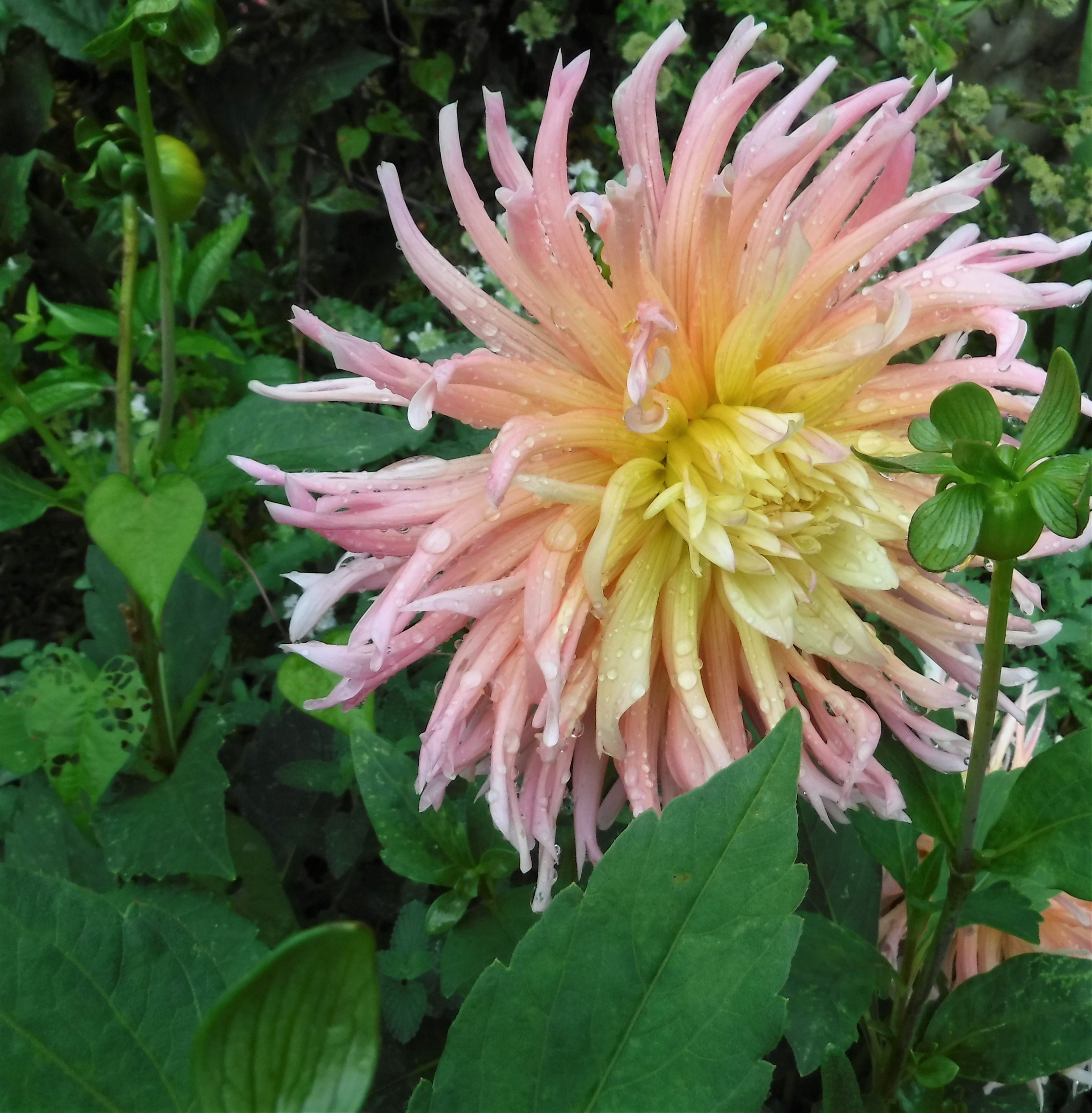
The dahlia is part of Cee’s Flower of the Day.

After a slow start, the backyard has been full of butterflies. One of the flashiest is the Monarch. The zinnias draw the Monarchs in to fill up on the nectar. They land on the flat surface of the disk and drink from the individual ray florets surrounding the center. While they are occupied they will often allow close-up viewing for photographs and video.
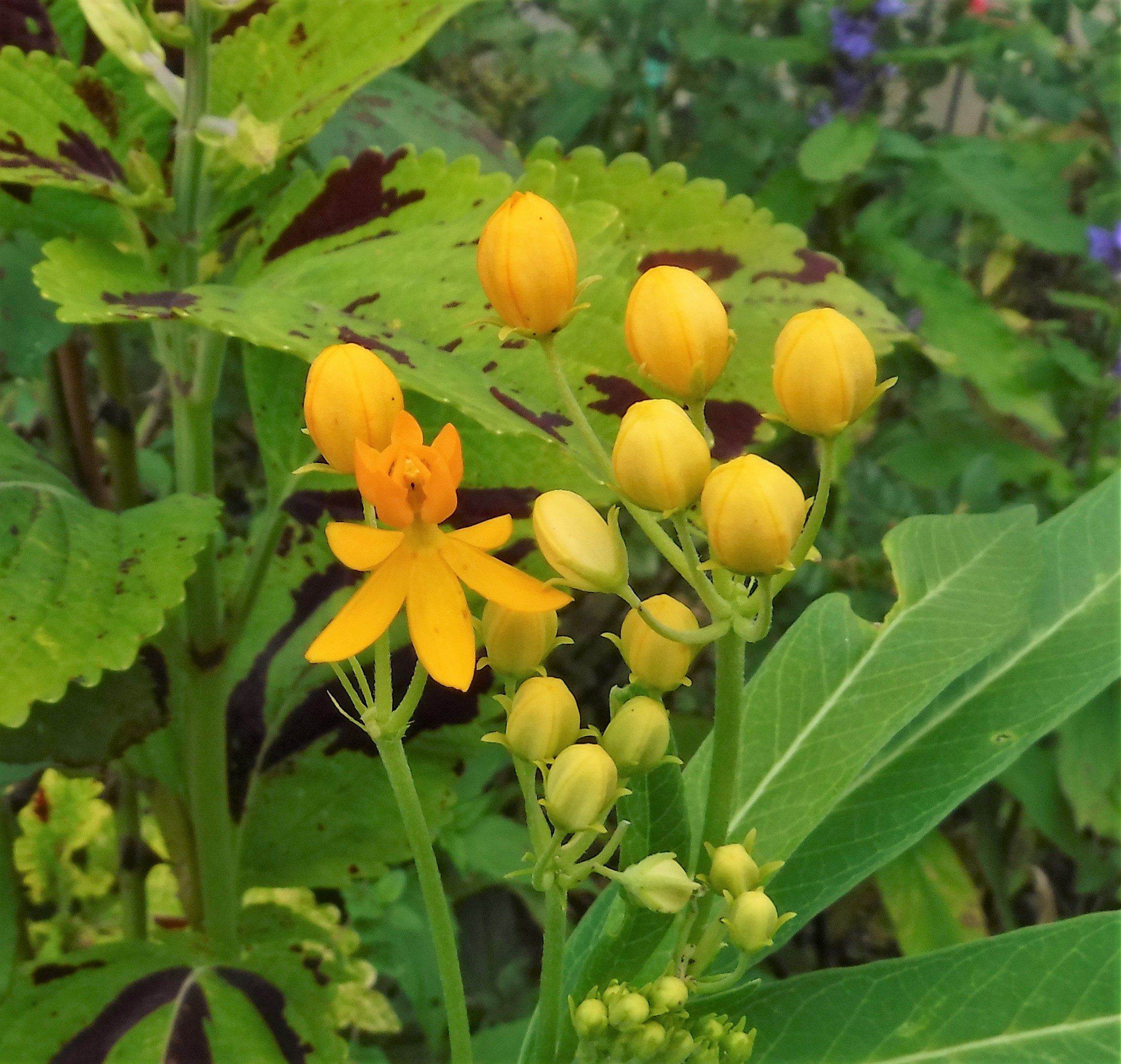
Another flower they love is Asclepias curassavica commonly known as ‘Silky Gold’ Milkweed. This flower and its leaves are a host plant for the monarch caterpillar.
This milkweed floret is part of Cee’s Flower of the Day Challenge.
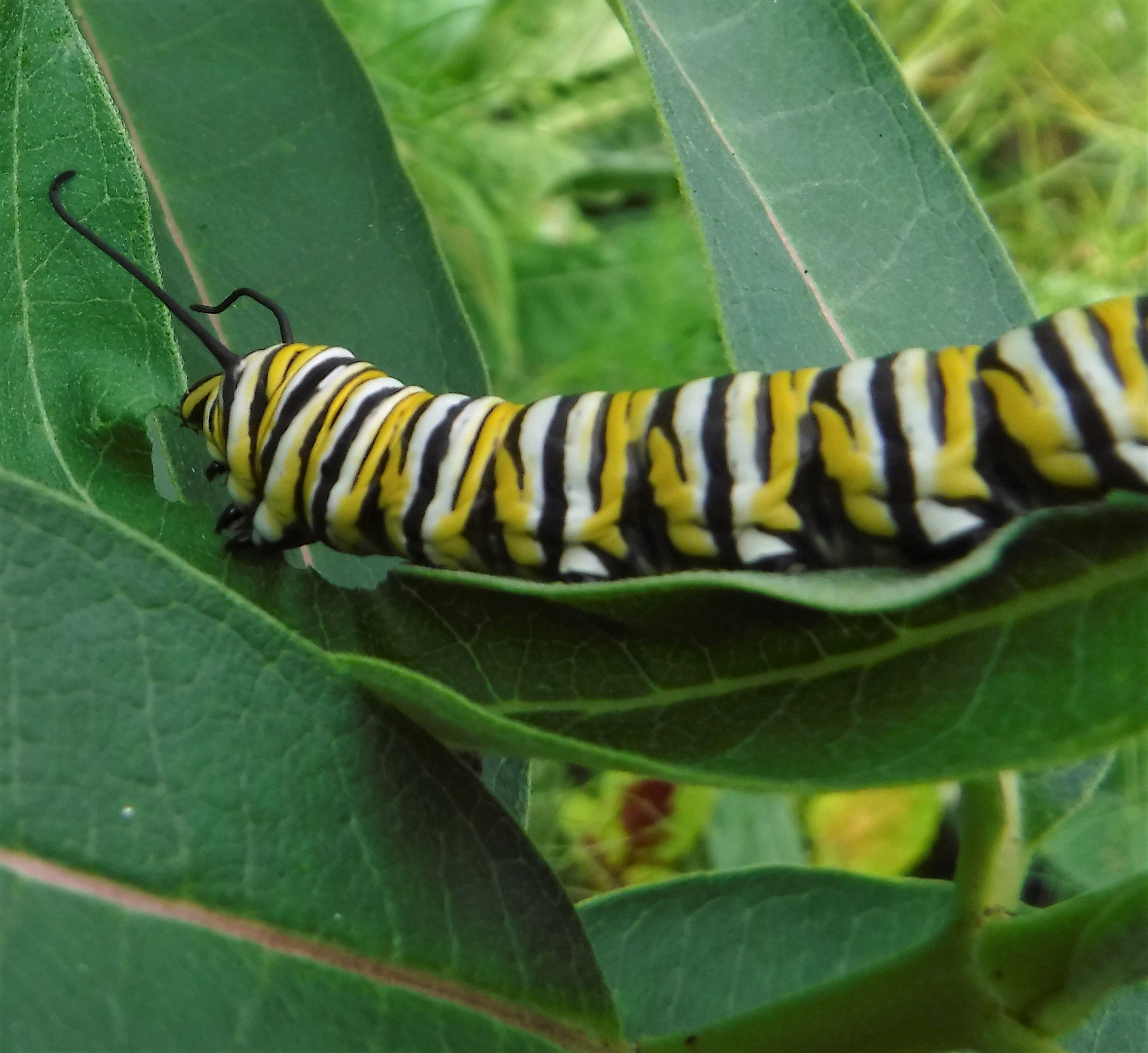
The caterpillars are poisonous to birds and other wildlife after eating the milkweed. The milkweed contains toxic cardenolides which keep some predators, but not all, away.
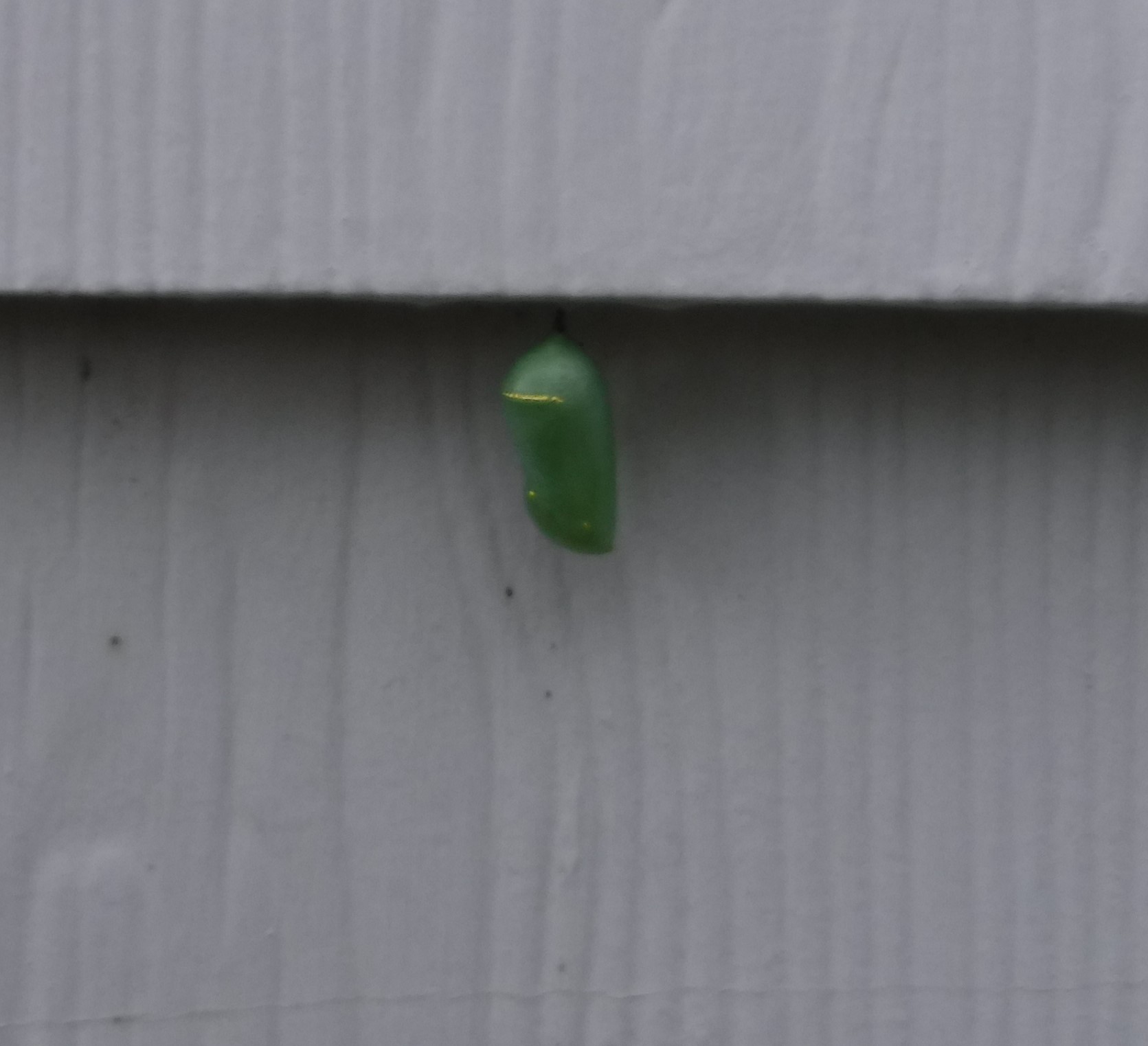
A week or two ago when I cut back a rose bush I uncovered a monarch chyrsalis on my siding.

Soon I found the newly hatched caterpillar clinging to the wall.
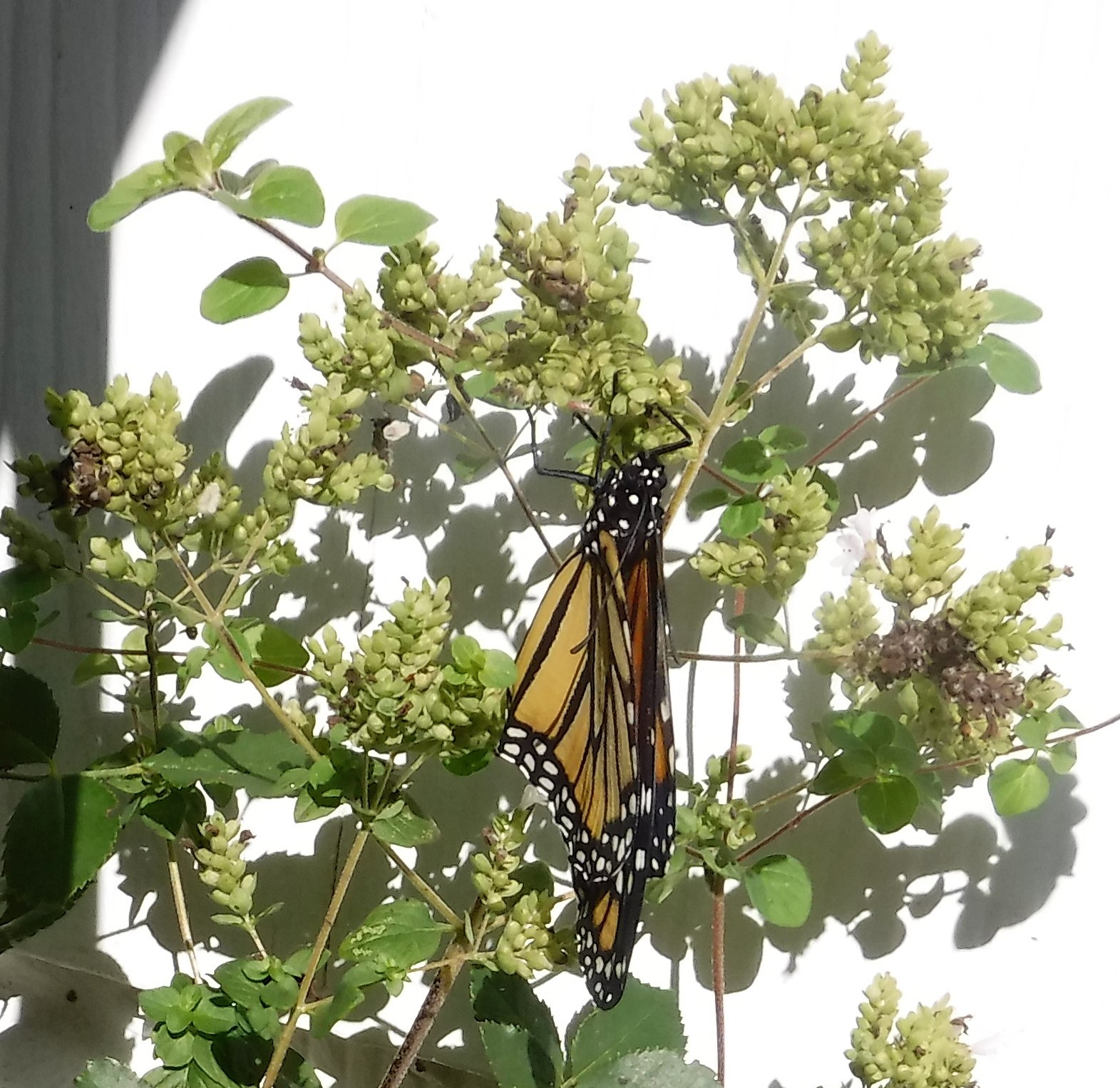
He dropped down to a mint plant and finished drying his wings. After a few hours he took his first flight to the upper branches of a pine tree.
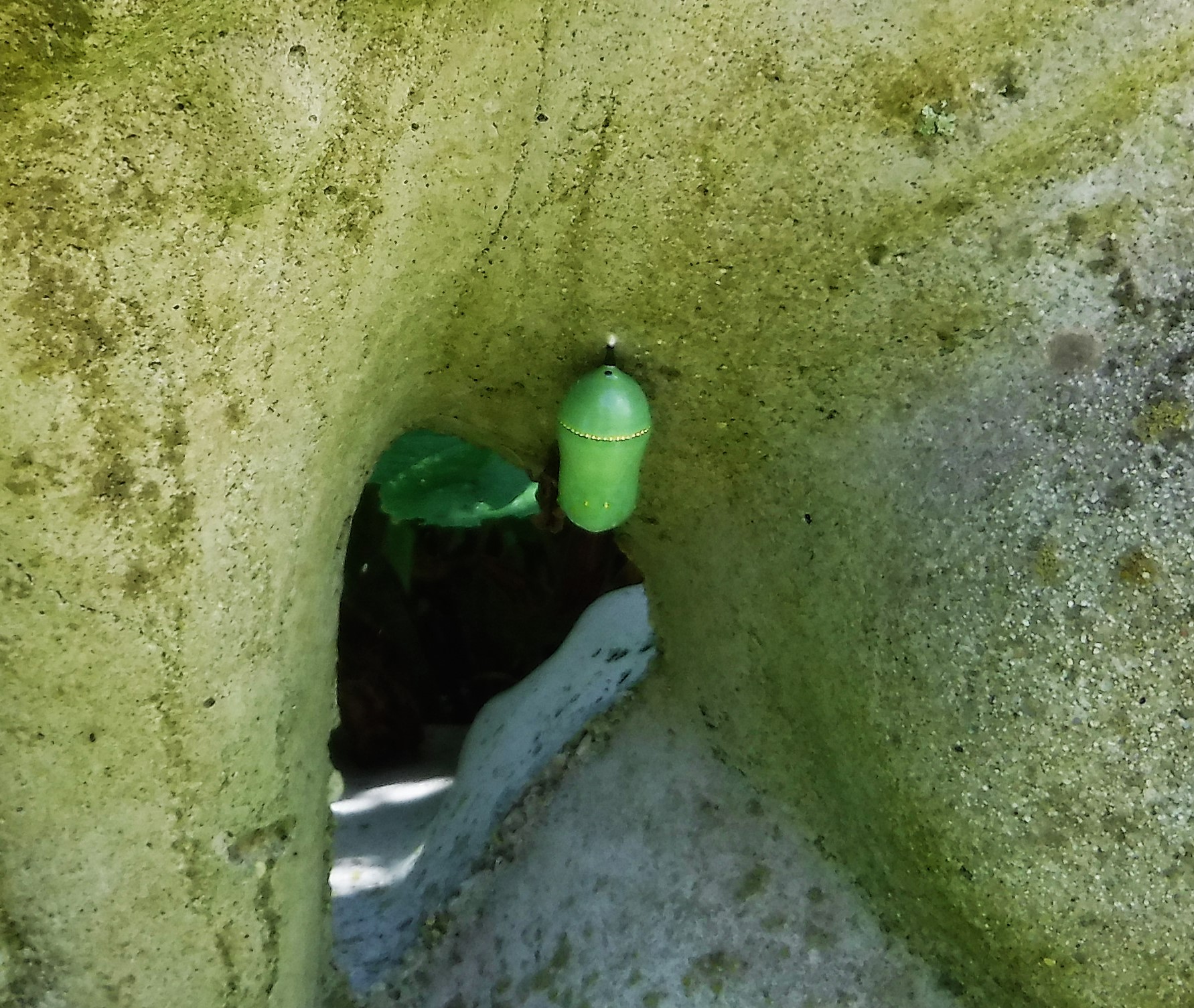
A day or two later I spotted another chrysalis on the underside of a concrete lion statue I have on my patio. I’ll keep a close watch and see if I can witness the miracle as one emerges from the chrysalis.


I was able to photograph a few favorites this past weekend. The butterfly with the beautiful orange wings is an Eastern Comma Butterfly. I don’t see many of these and was pleased to find it posing prettily in my front yard.
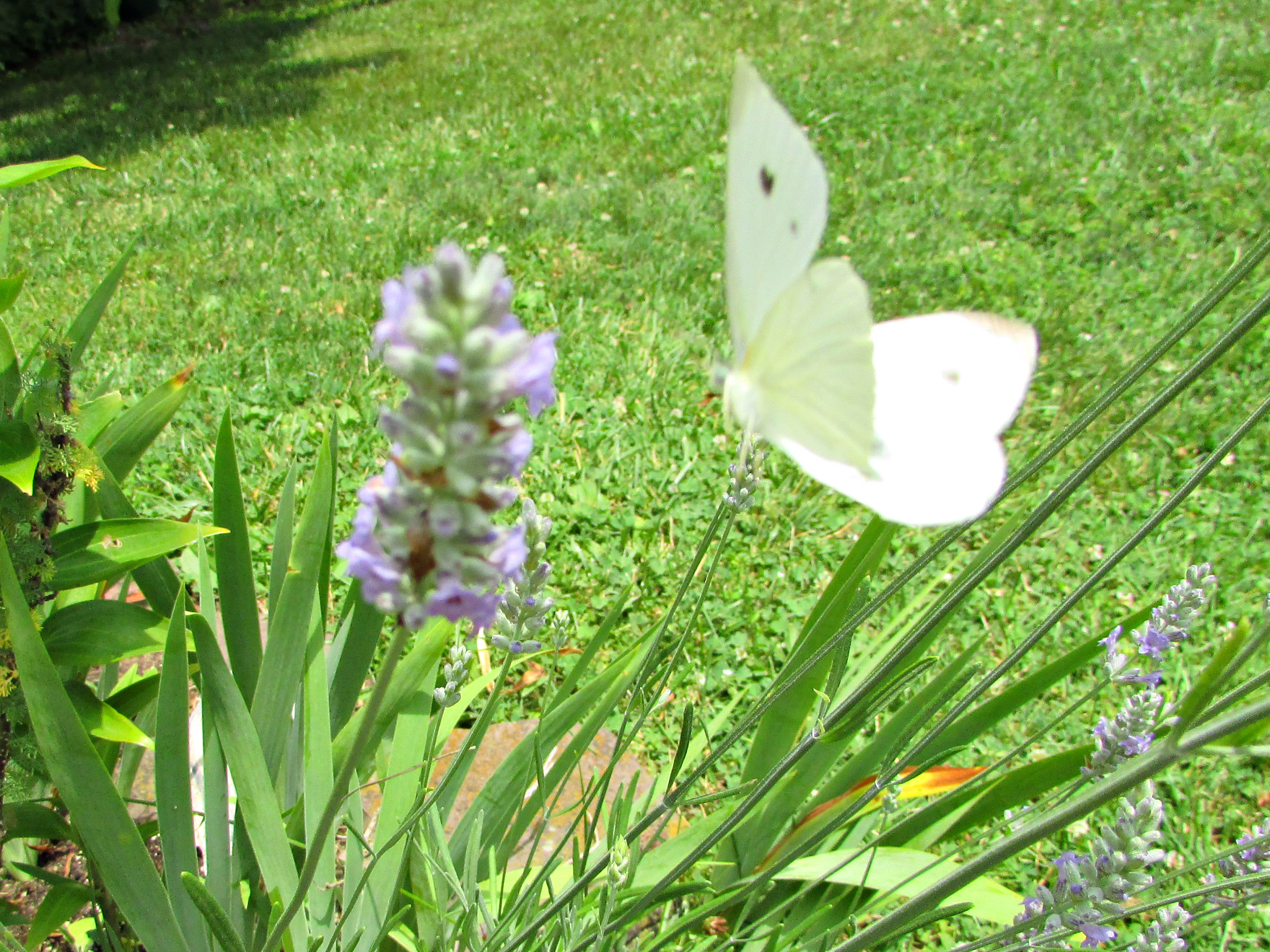
Cabbage White butterflies are plentiful, but not easy to photograph with wings outstretched.

I saw the first Monarch Butterfly of the season at Fortescue Beach. I didn’t know I had captured it in flight until I downloaded the files. This photo is part of Skywatch.
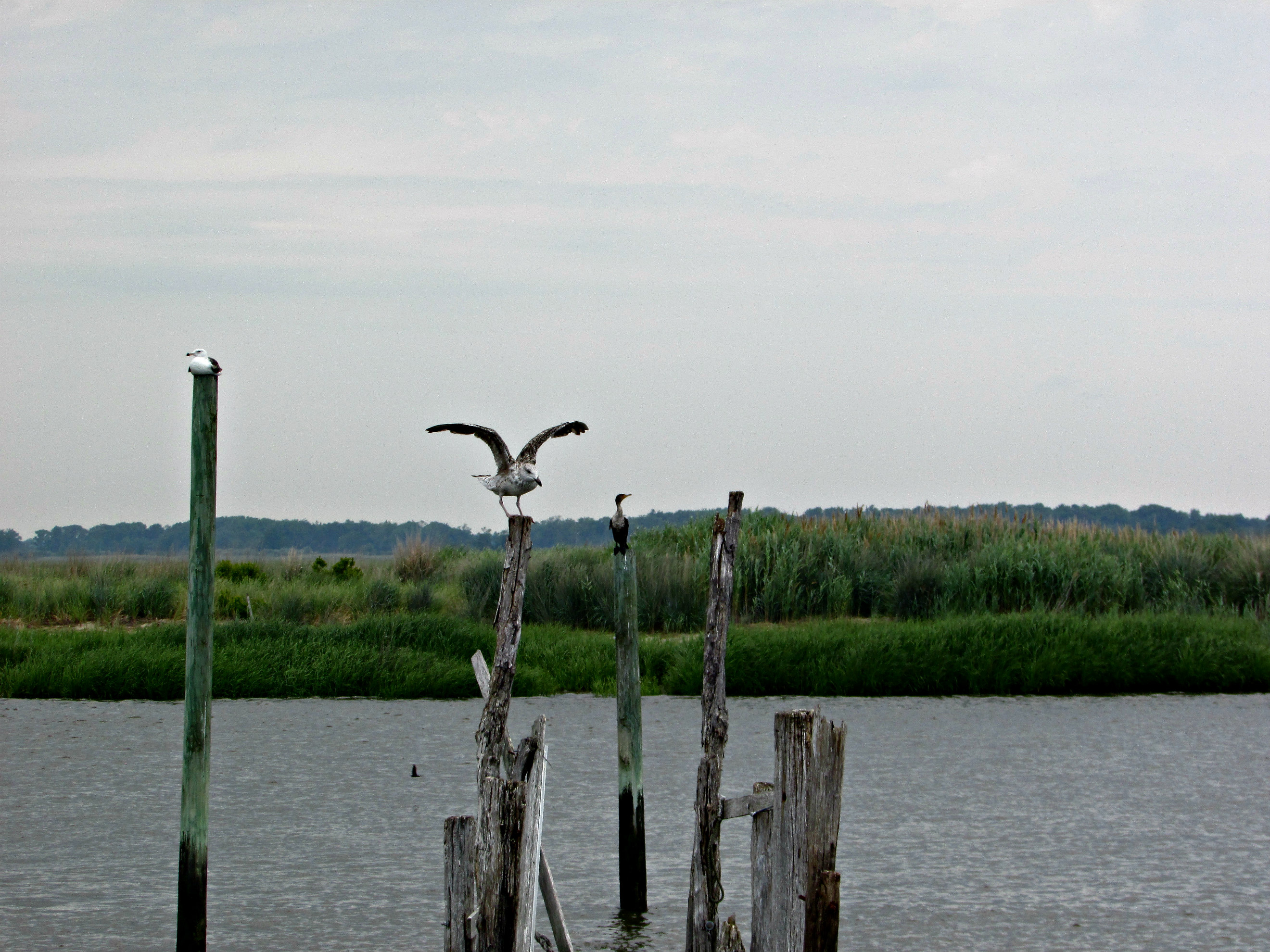
I love the seagulls in Fortescue. They haven’t learned the bad habits of raiding picnic hampers and snack bags. In neighboring beach towns the gulls are formidable. Never walk across the boardwalk with uncovered French Fries. You will be dive-bombed and might lose them.
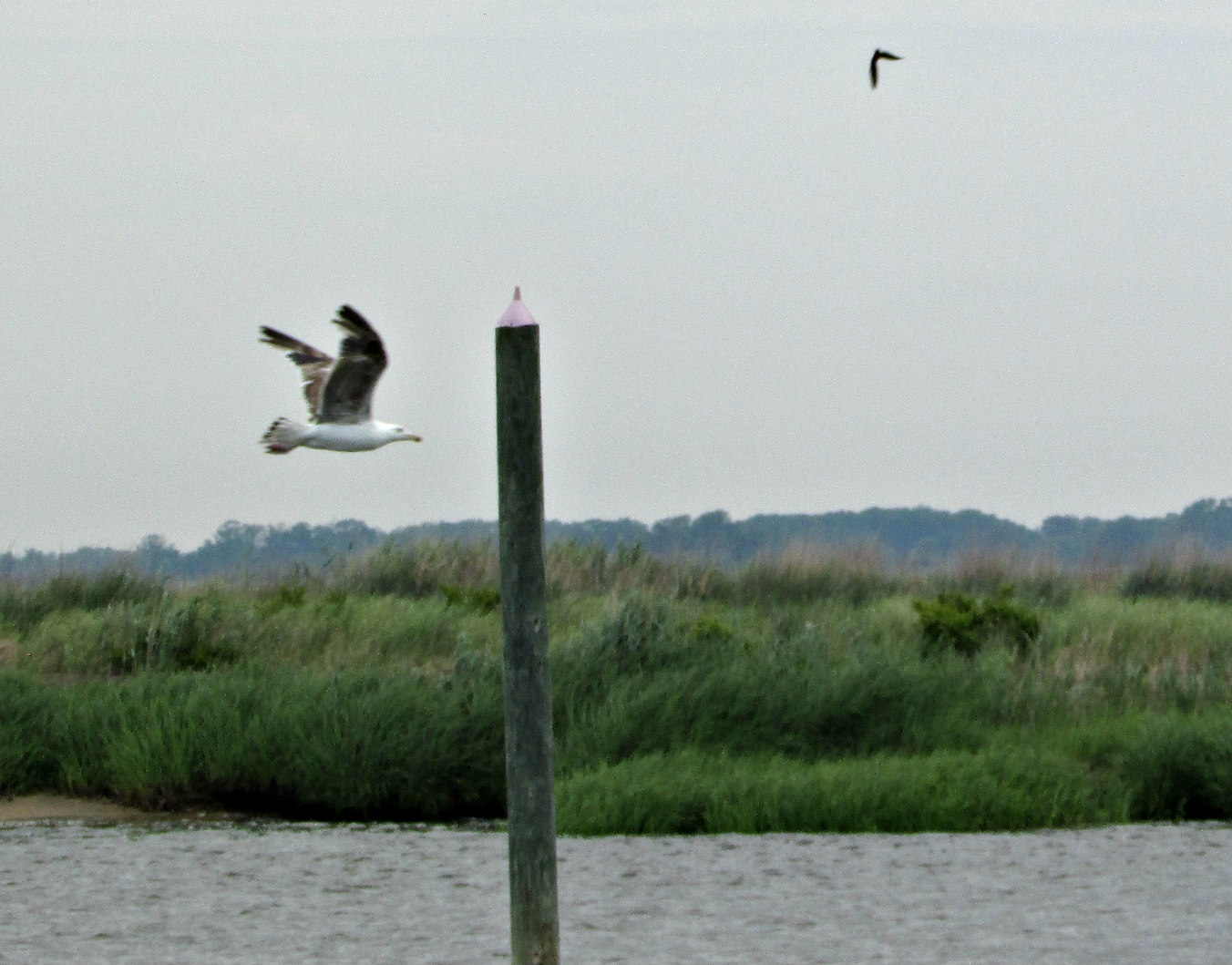
The funnel on top of the piling is there to keep the gulls off. The pilings without funnels are usually occupied by a gull.
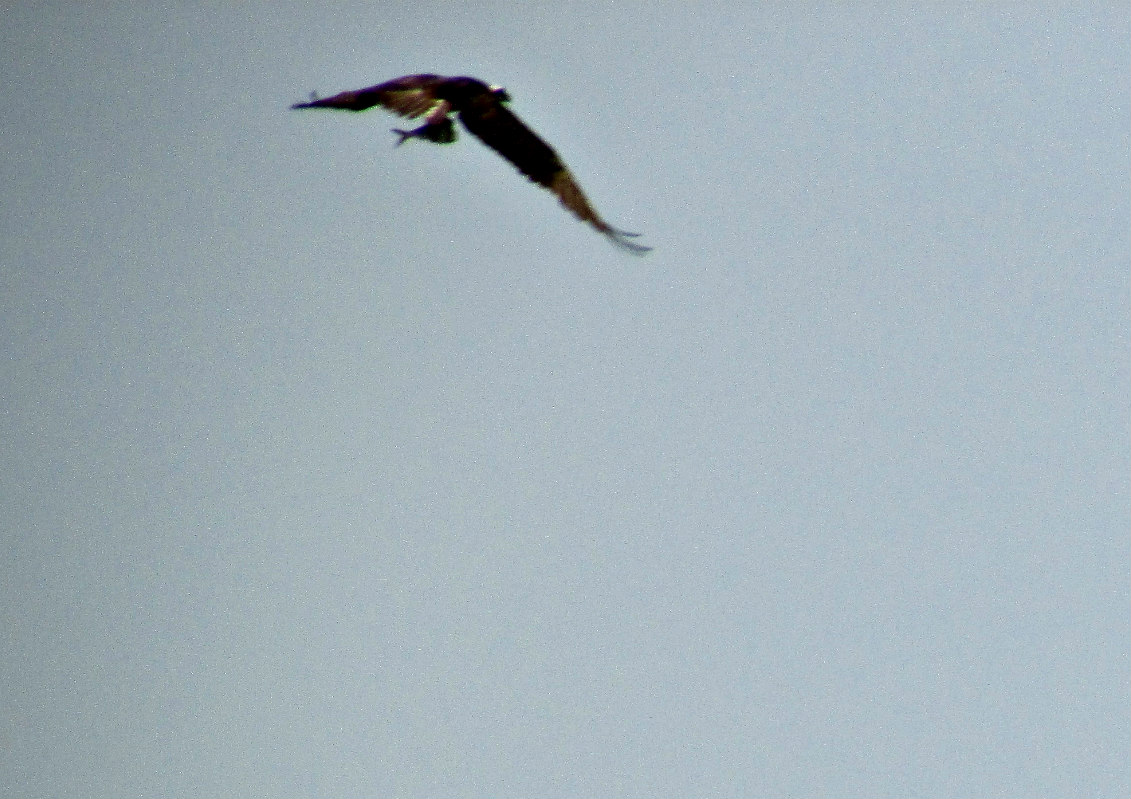
I watched this Osprey fly over the bay, descend, and come up with a fish in its talons. They are excellent at fishing.
I enjoyed my weekend full of flyers of all types…except maybe the Greenhead Fly who bit my ankle. That flyer is now lying beneath the sand I kicked over it after I swatted it. Happily, the Greenhead was a solo flyer, and no others visited me while I fished off the beach.


Part II of my small miracles day doesn’t have the beauty of the newly hatched Swallowtail butterfly, but it will help facilitate more miracles. I grow dill and other host plants for Swallowtail butterflies each year. This season I was determined to also grow plants for Monarchs.
I have managed to sprout some milkweed seeds by the winter-sowing method. Because I know the milkweed has a tap-root I chose to sow the seeds in peat pots and enclosed them in a recycled food container during the winter months. They have sprouted. I will get them in the ground as soon as possible so that the tap-root will not be disturbed and the plants will have a better chance at survival.
Asclepias syriaca: Common milkweed is the host plant for Monarch butterflies.
“Monarchs cannot survive without milkweed; their caterpillars only eat milkweed plants (Asclepias spp.), and monarch butterflies need milkweed to lay their eggs. With shifting land management practices, we have lost much milkweed from the landscape.” ~ Monarch Joint Venture
I know the assessment of Monarch Joint Venture is true. I can name three parcels of land within a mile or two of my home where I once saw milkweed. All three have been built upon, weed whacked, or decimated by the relentless need to clear land for business purposes. I’m sure this same problem is rampant across the country.
Due to the loss of habitat for monarchs, this year I collected a bit of seed from a milkweed patch to grow in my gardens. I’ll be planting the sprouts soon so that the long root can develop unhindered. I also have several milkweed seeds in my freezer. I’ll plant a few in my garden beds and also find some areas near me where they might have a chance to grow. If you want to participate in helping Monarch butterflies survive and thrive you can find some good tips here: Monarch Butterfly Garden.


“…May all who search for you
be filled with joy and gladness in you.
May those who love your salvation
repeatedly shout, “God is great!”
Psalm 70:4


