Problem-Solving – The Uncollectibles

I posted this for the first time in 2012, but it’s a good reminder now that Autumn is here once again, and I thought it was worth a repost. It’s fun to collect colorful leaves to press or use in projects, but there are still some plants to be aware of as you collect.
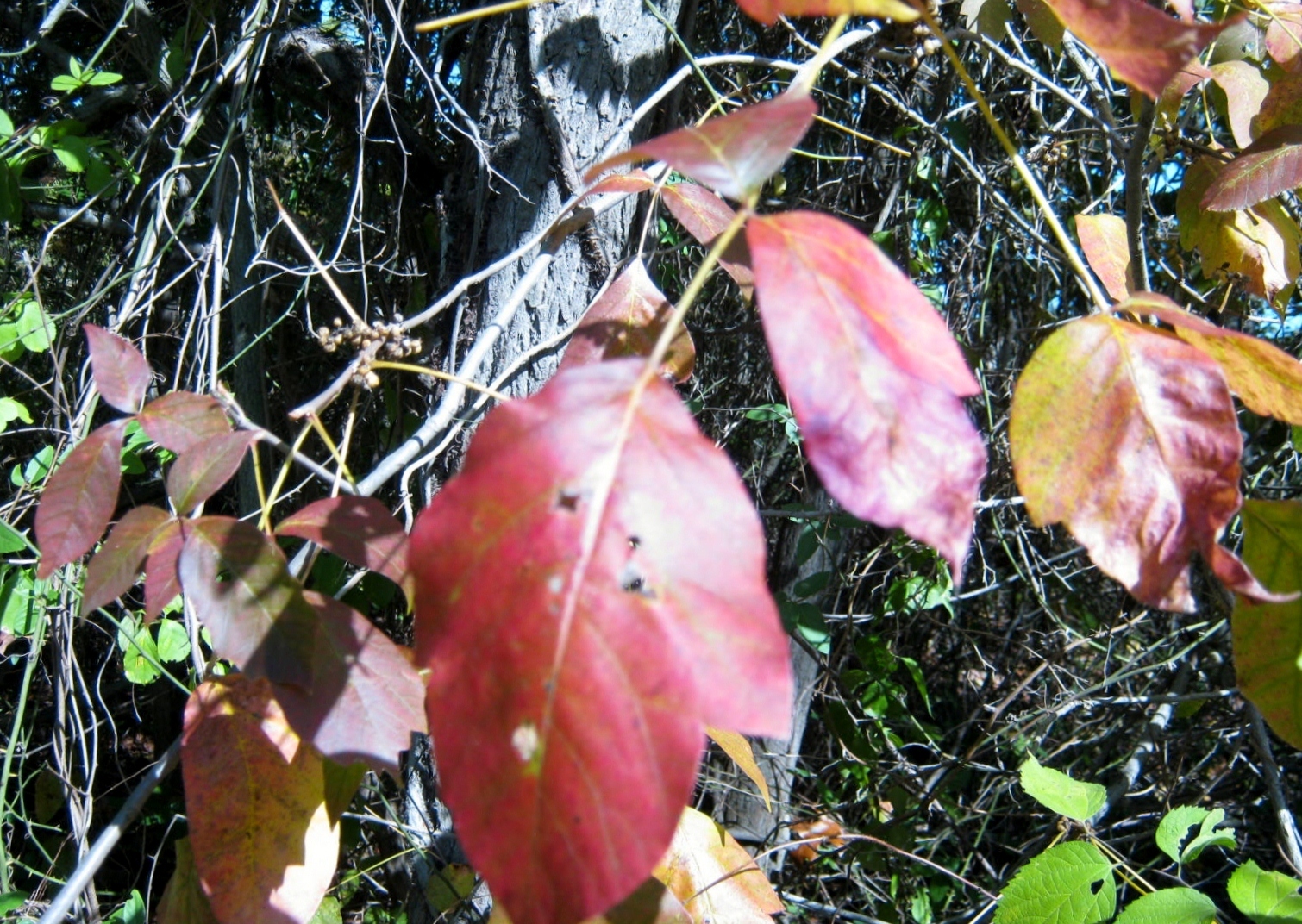
Many adults and children collect colorful Autumn leaves for projects and pressing, but beware, poison ivy is still growing,  and it’s leaves are now cloaked in a gorgeous array of crimsons and golds. The urishol oil stays active on the leaves and vines. Picking up even one leaf for pressing can cause a nasty rash. When the poison ivy leaves fall off the vine, they fall solo, not in groups of three. This makes it impossible to follow the wise proverb of, “Leaves of three, let it be.” It is much harder to identify poison ivy when it has fallen off the vine. One thing to look for is an oblong shape, and many of the leaves have a notched appearance. Take a good look at the veining on the leaf in the above picture…that’s a good clue too.

If you see a leaf that might be poison ivy, take a look around to see if you can spot a vine with berries that look like the sample in the photograph above. If you see these berries, don’t pick up or brush against any of these vines or leftover leaves.
Problem-Solving – Poison Ivy in Winter or Beware Vines Without Leaves

It might seem funny to blog about poison ivy at this time of year, but I am doing so because a sister-in-law of mine once developed a nasty case of poison ivy pulling a stray, leafless vine out of her Christmas tree.

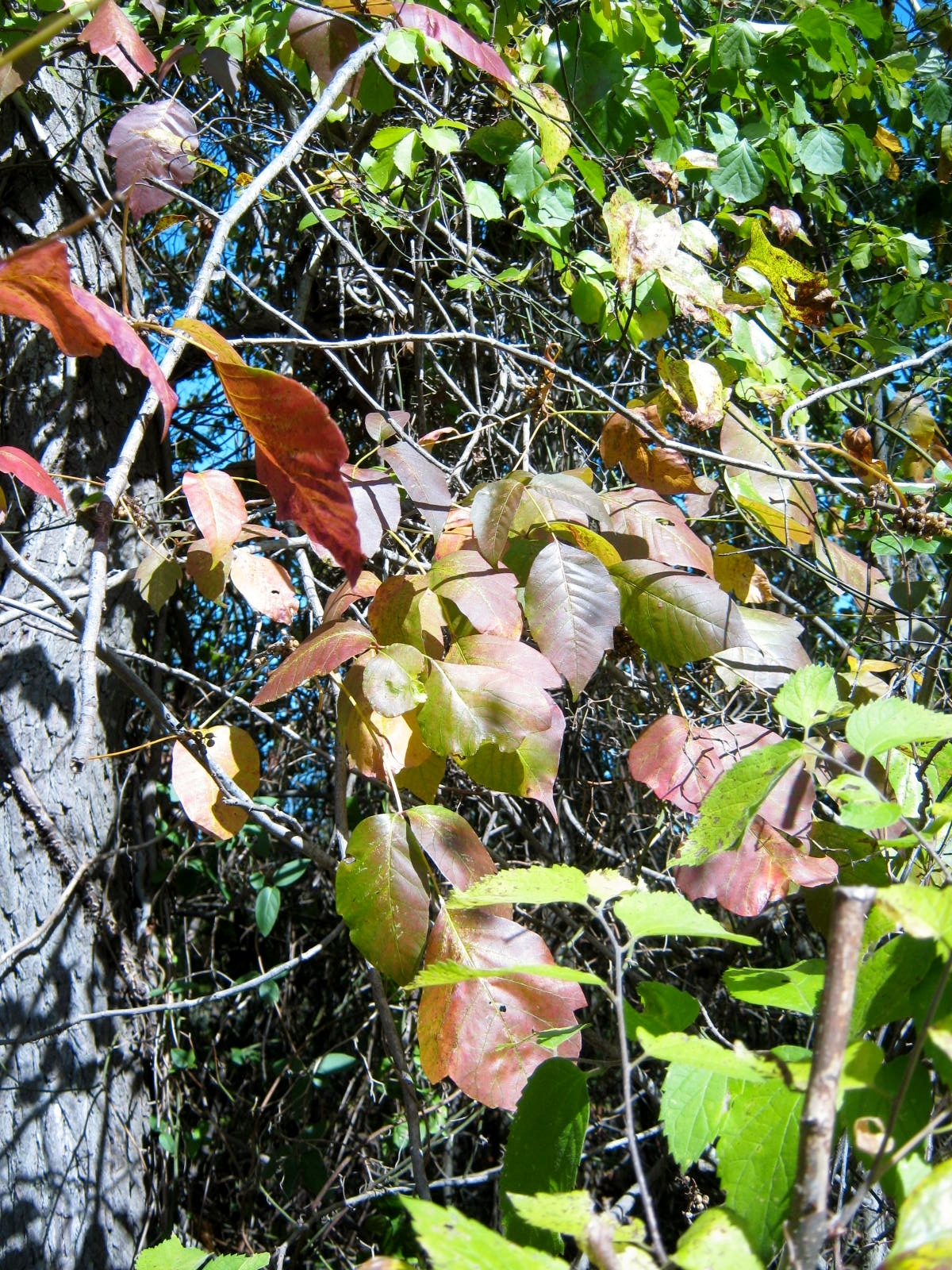
Even poison ivy puts on a coat of many colors in the cool of Autumn, but BEWARE…it still has the urishol oil and can give you a nasty rash. In our area, some poison ivy is so established, it almost mimics the look of the host tree it climbs on and seems to develop a bark.

I am one of those who does not develop a rash from the oil. But…I’ve also read that this tendency can change overnight, so I avoid all contact with the vines. Fels Naptha soap is one of the best remedies for removing the urishol oil from your skin.

I love Fels Naptha soap. I use it as a stain treatment too. I spray the spot with clear water, and then rub the Fels Naptha soap into the stain. Almost every spot comes out when treated this way. I also appreciate the fact that I am not inhaling caustic chemicals when I avoid the typical spray stain removers.

Fels Naptha can be difficult to find, but I was lucky enough to find it in my grocery store. If it is not available in your area you can order it from the internet. Check out the link below:

Fels Naptha Soap Distributor

Problem-Solving, Plant and Pressed Flowers – Jewelweed

While on a recent bike ride, I spotted the trumpet-like orange flowers of Jewelweed. This wildflower grows in moist, wet places and blooms later in the summertime. For those of you who react to the urishol oil in poison ivy, crushed jewelweed foliage applied to your exposed skin can save you from breaking out in a rash.

For a look at the foliage of this plant and more information take a look at this link: Jewelweed

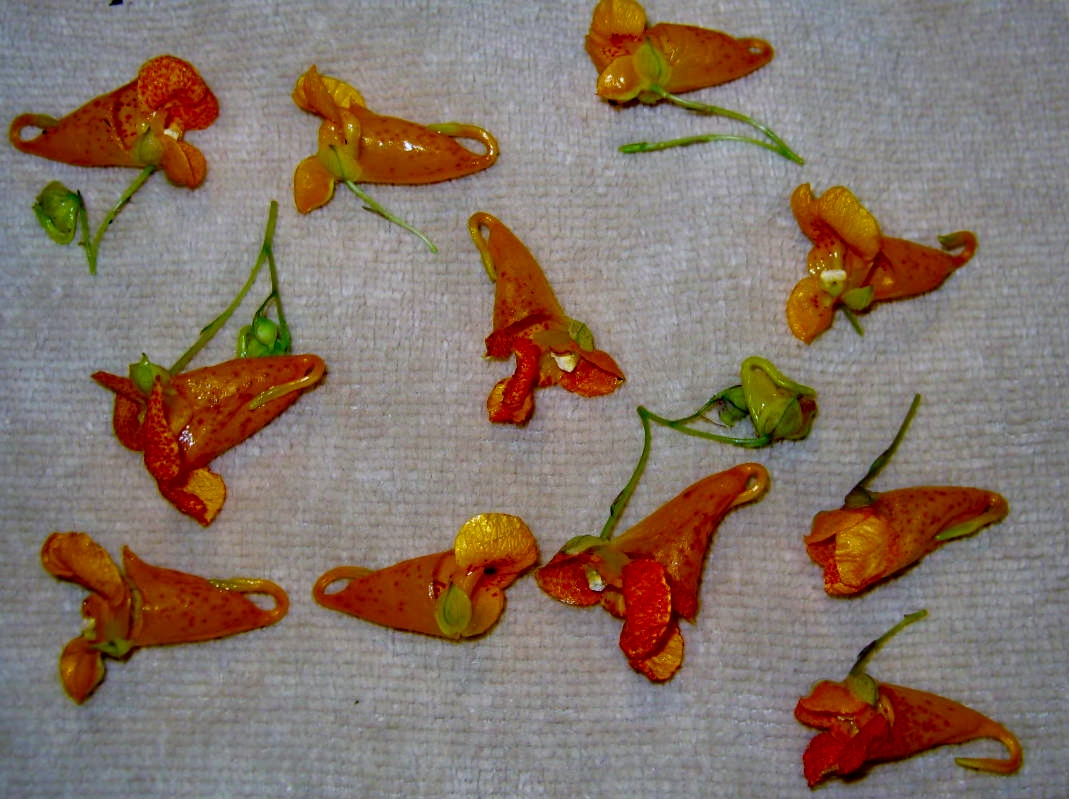
Jewelweed also makes a decent pressed flower, but it needs a bit of drying out before it can be used. I usually lay the blossoms on a towel and press them flat with my fingers. This removes a bit of inner liquid in the flower. Because of their moist nature, not every jewelweed flower will retain it’s color. I will keep trying though, it’s unique shape, intense color and plentiful growth along streams makes it a good candidate for pressing.