I am so honored to have a guest author write a post for my blog. SusieShy45, another WordPress blogger, has been a friend of mine for years through our contact on WordPress Blogs. She has grown Moringa trees from fallen stems into large trees. She has written to me of her experience and has given her consent for me to present it here. Thanks so much Susie. You can read more about Susie and follow her posts here: Susie Shy 45.
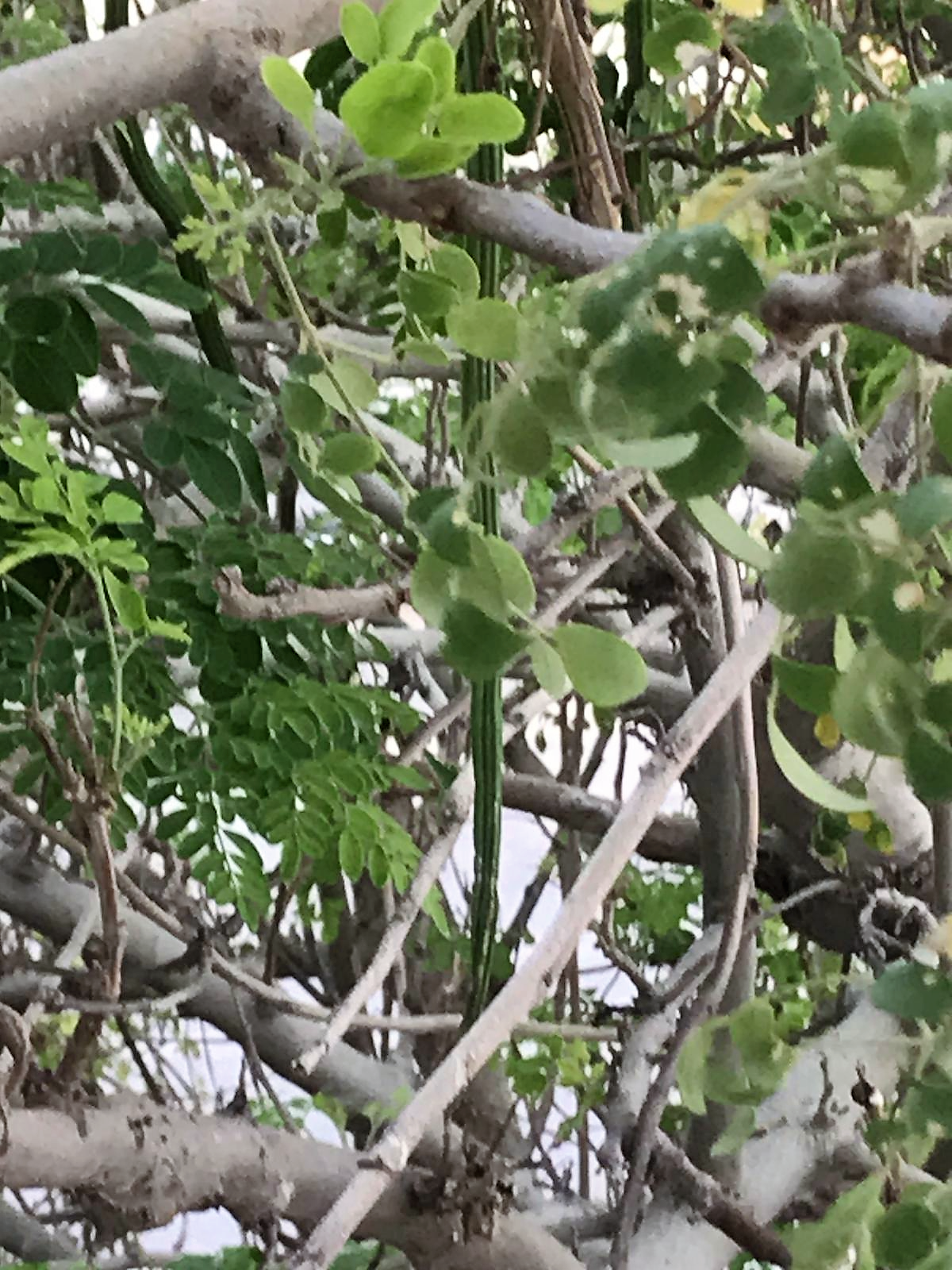
Moringa trees are a favorite tree of Indians- particularly South Indians- it can grow in warm dry rainless climates like in the Middle Eastern desert where a large number of the population has emigrated from South India. In a storm about 5 years ago, I got the watchman of our compound to get me fallen stems from moringa trees to plant in my backyard. This was in the heart of summer. Constant watering during the summer kept the plants alive, until they established roots. And then they survived on their own through the desert summer. By winter of that year, the leaves were green and the tree had started flowering. The flowers are creamy in colour and grow in bunches. They are used for cooking too- of course after removal of the stamens and pistils. Flowers are washed thoroughly to remove insects as they are a major source of nectar. The moringa tree loves the sun and direct sunlight, explaining why they are doing so well in the Middle East. And it is classified as a drought resistant plant, so does not require much watering. The tree grows tall in order to capture the sunlight.
Later the flowers turn to the moringa fruit, which is a delicacy and is used in many curries and sautes. The pulp from inside the fruit is what is edible, though the fruit is cut into small pieces and cooked – skin and all- only the soft part inside the fruit is eaten after they are cooked.
The leaves can be eaten any time, they are a good source of iron, folic acid, vitamin C. For us,eating moringa leaves in various sautees and curries, is supposedly responsible for the long, thick, black hair of many south Indians.
Here are some more photographs of Susie’s Moringa trees.

Drumstick Fruit
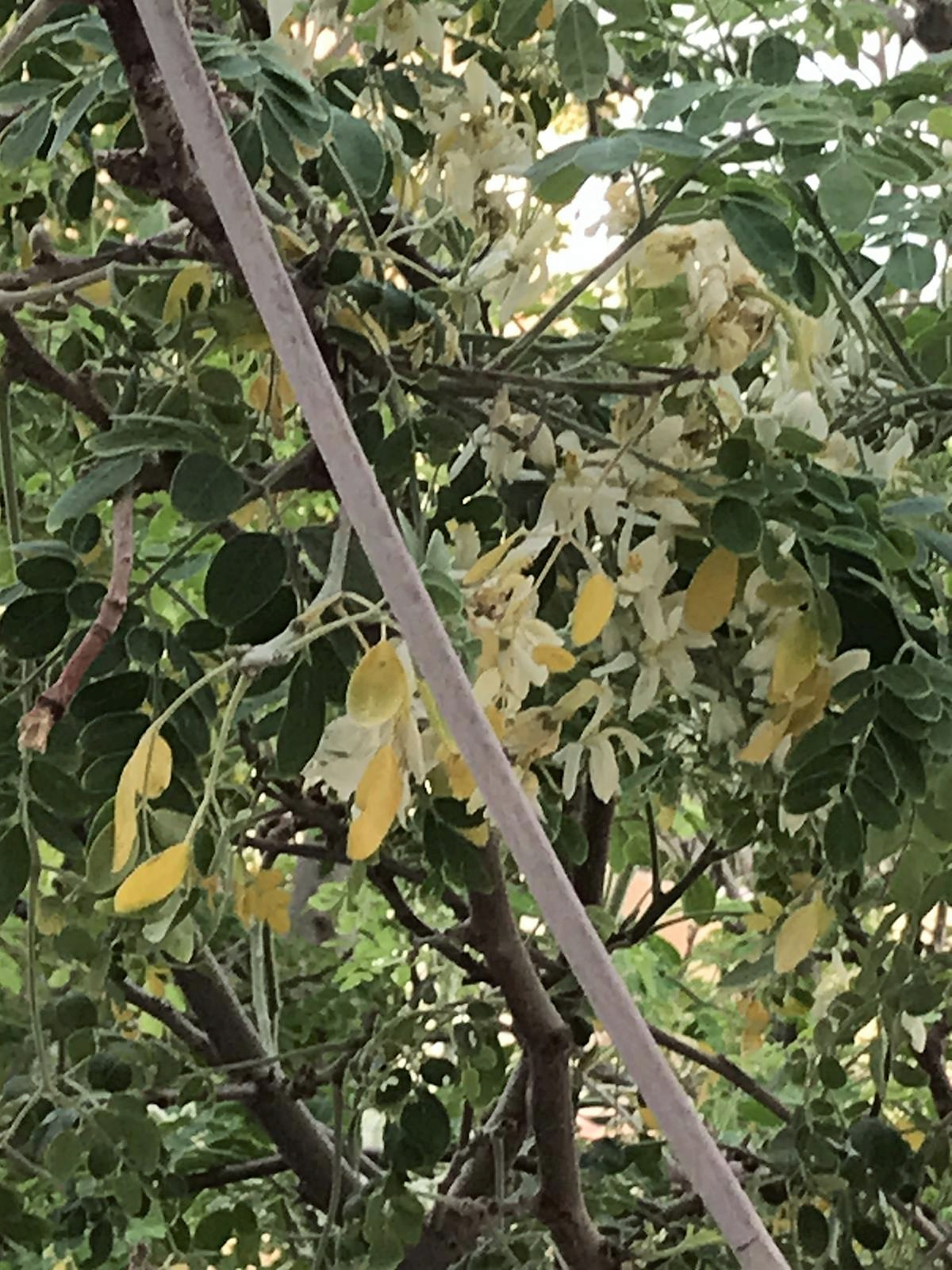
The flowers are edible.

Doves and other birds live on the tree.
Thanks Susie for the article and the great photographs.


