Phlutters – A Tragic Tale/Butterflies Part I

I had a rude awakening to one of the perils butterflies and caterpillars face. In mid-spring, expecting the butterfly chrysalis to hatch at some point, I brought the butterfly houses out to the porch and hung them from the ceiling. One day, checking them, I saw a delicate wasp of some sort had gotten inside the house and was trapped. Being a bit of a bleeding heart, I shooed the wasp out and felt I had done my good deed for the day. Wrong.

Two more wasps, surprisingly to me, also found a way into the house. I let these out also. Afterwards, I looked at the seven chrysalis on the sides. What! There was some type of hole in the sides of a few. I knew some parasite had attacked them.

When another wasp suddenly appeared in the house, I knew that it would not appeal to my softheartedness; I squashed it.

Trogus Pennator Wasps eat the swallowtail caterpillars from the inside out and emerge from the chrysalis. I can attest to the truth of this remark. Three overwintered chrysalis have opened in the past week or two, and beautiful Black Swallowtails have taken wing after the long wait. I have seen them fluttering over the fennel plants, and sure enough, I found several of the tiny eggs on inspection.

This weekend, small caterpillars appeared. I have twelve safely in one of two, new butterfly houses. I have also kept the older one from last year. Now that I have seen one of the parasitical threats they face firsthand, I will redouble my efforts and save as many as I can manage.

I will be keeping a 2024 Butterfly Diary. The link is here: Butterfly Diary 2024. It can also be found at the top of the blog page in the bar beneath the title. I will try to create a sidebar link too. Thanks so much for following the butterflies with me.

Phlutters – Friday Skywatch/Yellow Swallowtail

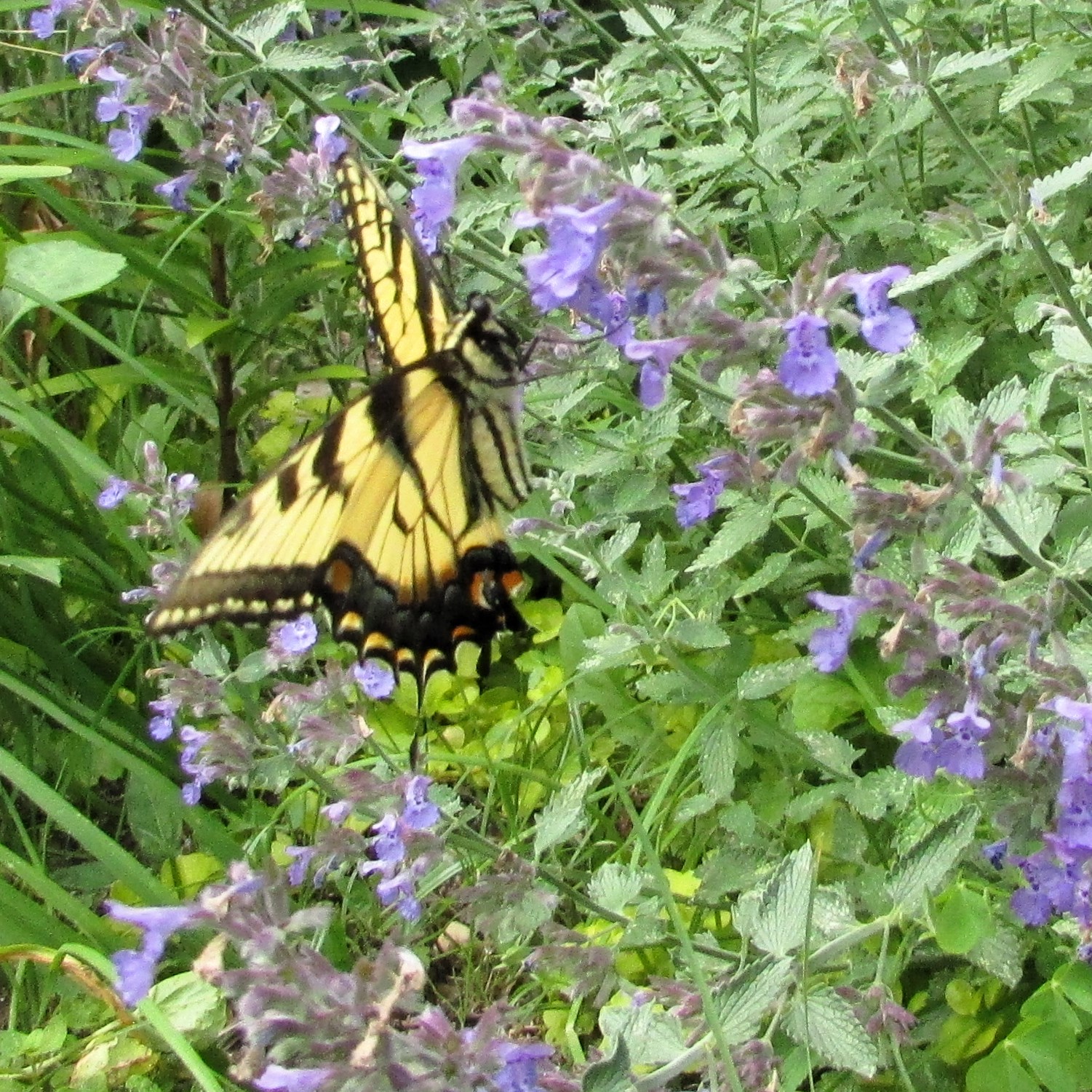
A yellow swallowtail visited my Catmint yesterday.

The beautiful butterfly floated above the flowers, giving me time to capture a photo of its yellow wings against the bluest skies and fluffiest clouds.

The butterfly had newly emerged from its chrysalis. Its vibrant colors and details are a dazzling display of our Creator’s love. Unafraid, it allowed me to capture its beauty as it visited the blossoms, sipping the nectar from each small floret. At that moment, I was truly blessed.

This post is part of Skywatch Friday and Whatsoever is Lovely. Thank you to the hosts for the opportunity to take part in the challenges.

Phlutters – Butterfly Feeding/First Swallowtail Part I

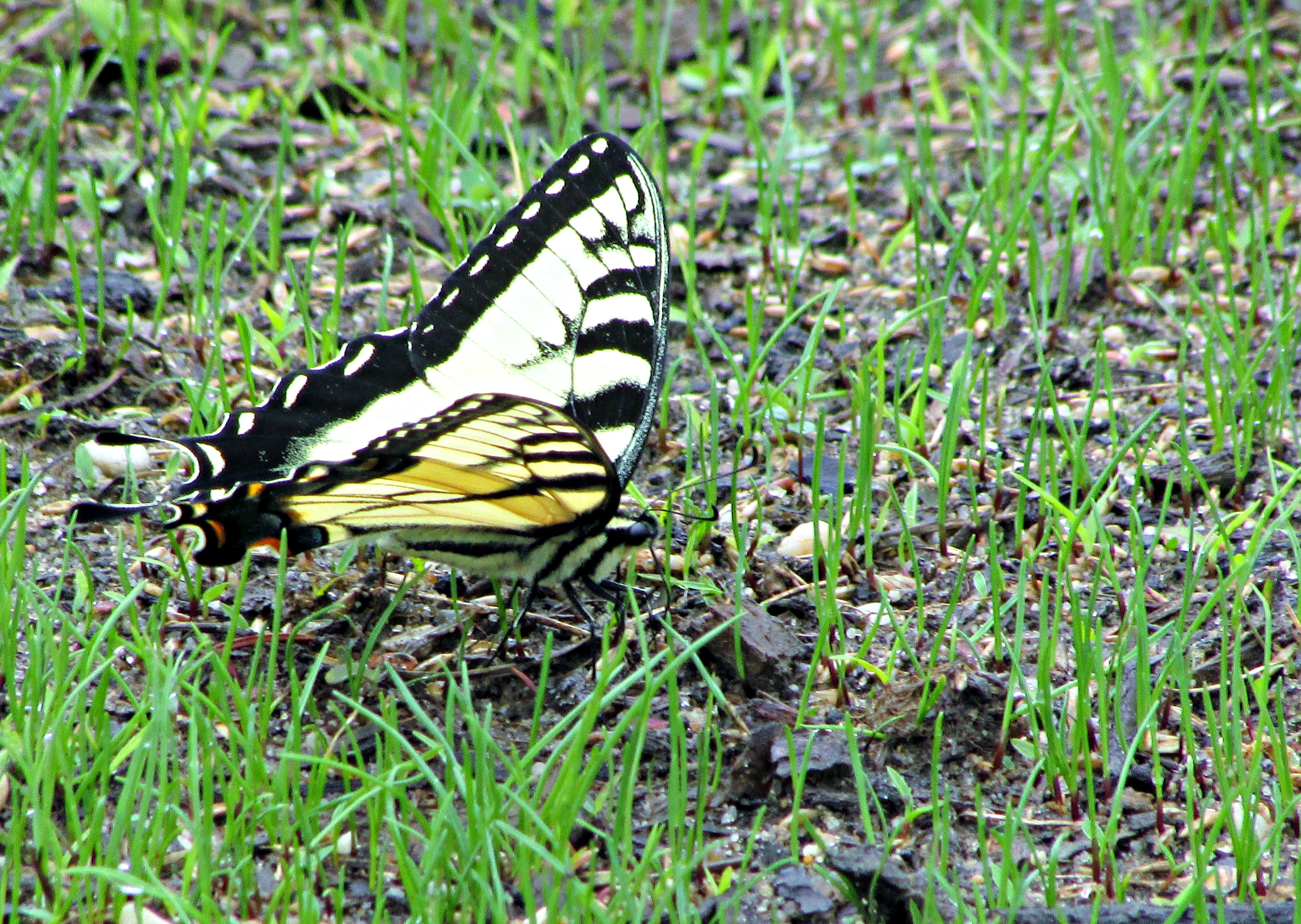
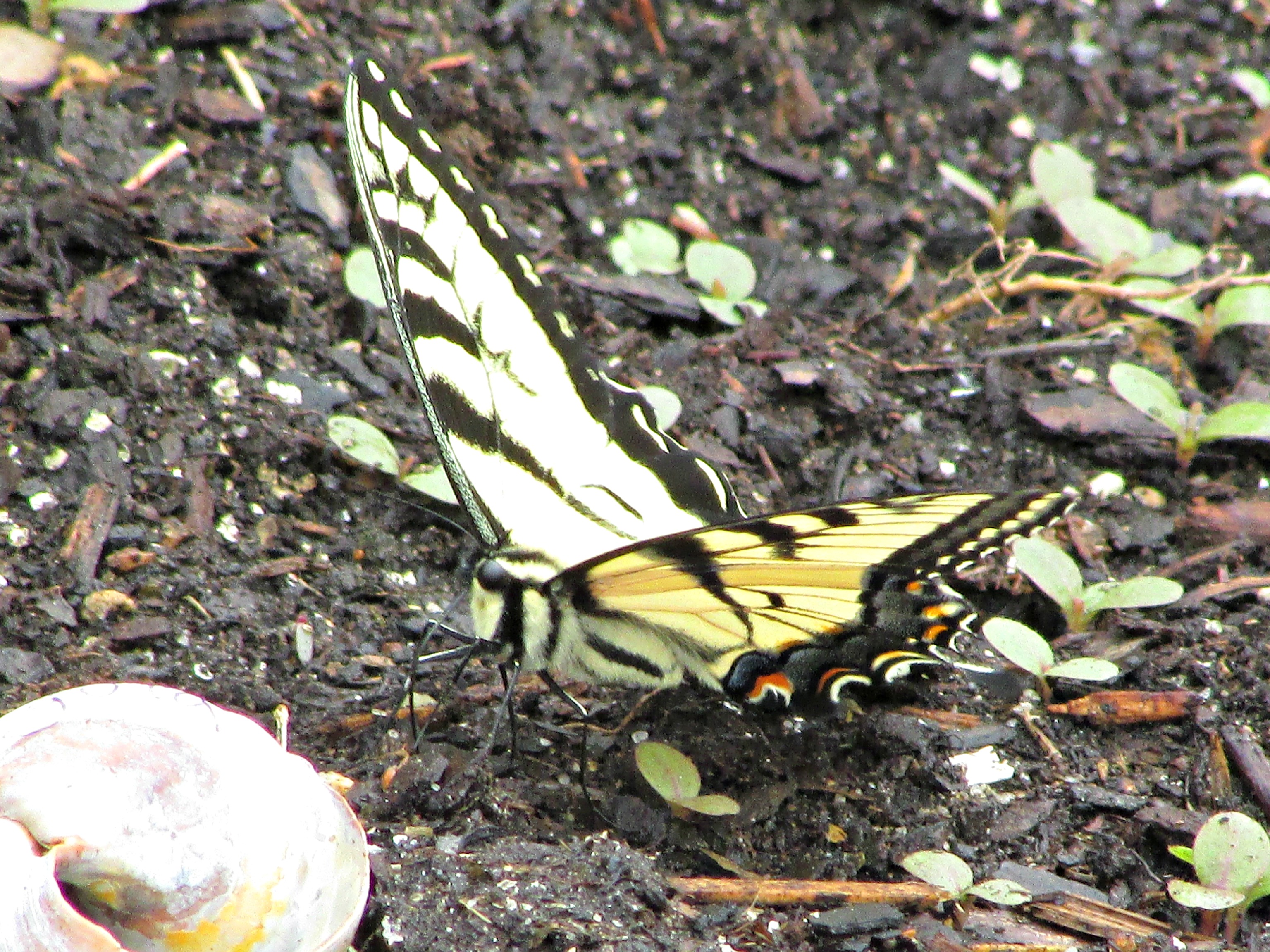
I watered a patch of newly planted grass yesterday, and was delighted when I saw the first yellow swallowtail butterfly of 2017 ‘puddling‘ in the dampness.

He fluttered around the yard searching out more patches of damp earth for sipping, making use of the nutrients, salts and amino acids the earth contains. I was surprised upon searching the Internet to find products to purchase for ‘puddling’ butterflies. These butterfly feeders are easy to make yourself. Today, I’ll gather up some materials and post my creations tomorrow.

Planting – Butterfly Garden Host Plant – Dill

IMG_7247

In the Spring, garden seed racks are available in almost every store I shop in. It’s hard to resist taking a moment to look over their display in search of something new. I’ve noticed almost every seed company offers a packet of mixed flowers that will draw butterflies. I enjoy growing flowers for butterflies and find zinnias are a favorite of the delicate winged creatures.

IMG_7250

An additional way of bringing butterflies into your yard is to grow the plant/plants they use as a host for their offspring. Dill is one of the best for attracting swallowtail butterflies to your yard. Dill is  readily available as a plant or seed in most garden centers.

dill

Dill is easy to grow and a good choice for a child’s garden. The yellow flowers resemble a burst a fireworks, and the seeds they develop can be collected for cooking. The fern-like foliage is  a perfect addition to many recipes. I sow dill seeds directly in the garden beds, and also start it indoors for quicker blooms. Give dill a try, you won’t be disappointed.

Photo Challenge – Swallowtails, Zinnias and Bumblebees, Oh My!

“Away with the colors of Hanukkah, Christmas, and Kwanzaa. Show us what “Yellow ” means to you.” Photo Challenge at WordPress – December 19th

swallowtail on zinnia

My first thought for this challenge was to choose a photograph of yellow flowers. I have dozens, hundreds, maybe thousands of flowers on disc. Many of the photos have been taken in my own gardens, others at local public gardens in the area I live.

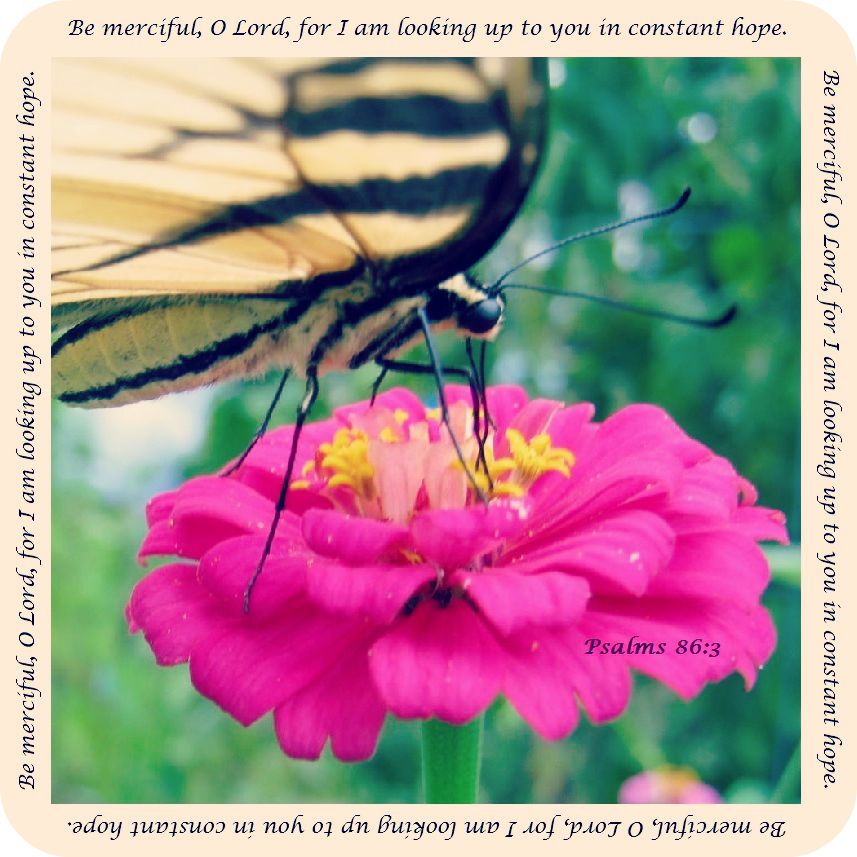
I decided instead to combine a favorite flower, zinnias, with a yellow swallowtail butterfly. Perfect. I love swallowtails. Lately, the weather and environmental issues have diminished their ranks, but hopefully their numbers will rebound in our area soon.

I love zinnias, and especially am entranced by the yellow ring of flowers surrounding their center. I always give this ring of small flowers, technically called “disc flowers” my own whimsical name of fairy ring flowers. This is where the butterflies find the nectar that they drink.

Zinnias have “Heads composed of both disc and ray flowers, with disc flowers tightly packed together in the head’s “eye,” while enlarged ray flowers function as petals radiating outward from the eye.” Composite Flowers – Backyard Nature

Here’s a closer look at the yellow “fairy ring” of zinnia disc flowers, this time hosting a Skipper butterfly.

skipper on butterfly

I loved this photograph so much I used it as a reference for a 5 x 7 watercolor, and posted the finished results on this blog: Skipper on a Zinnia

bee

Another visitor to the zinnias is a bumblebee in a fuzzy yellow jacket. Gorgeous insects all!

This post is definitely a tad out of season, but perhaps you are like me, and at the threshold of winter enjoy being reminded that Spring is only three months away.