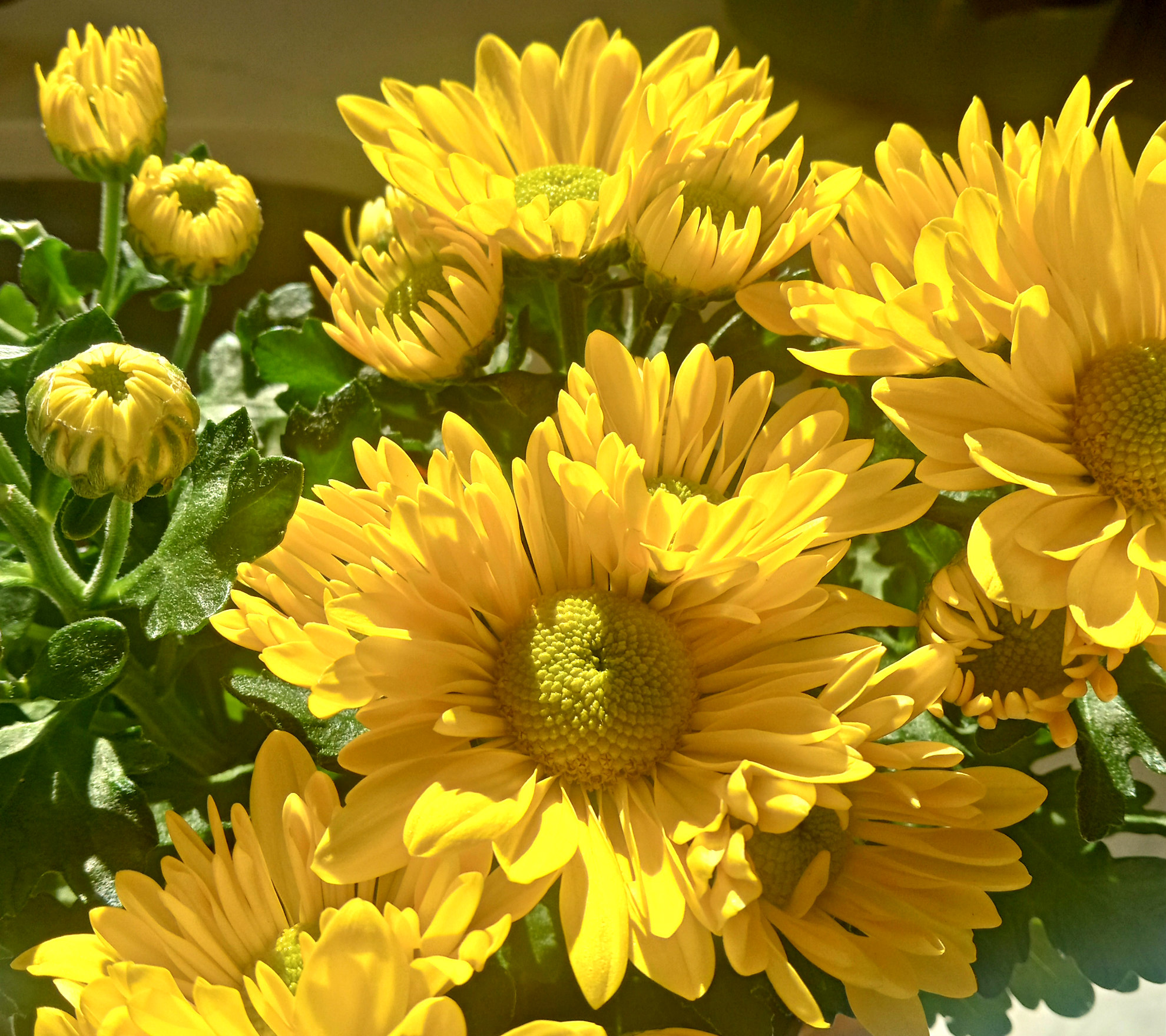
Today, I bought a small pot of yellow daisies, which is, in reality, a daisy-like chrysanthemum, to place on my kitchen table for a few weeks. I love the shape of daisies, the colors, the variety. Other similar daisy-shaped flowers are gerberas, the common field daisy, aster daisies, echinaceas, and some dahlias. Horticulture Magazine has a list of 40 Daisy-Like Flowers with Growing Tips, I favorited the link.
The yellow daisy chrysanthemums are my choice for Cee’s Flower of the Day.

I’ve blogged several times about daisies. Here is a poster, or as the new tech age calls them, a meme using a daisy as a backdrop. For me, my first memory of daisies is this well-known rhyme. Did you know the rhyme originated in France and was originally a game? Wikipedia has a bit of its history.
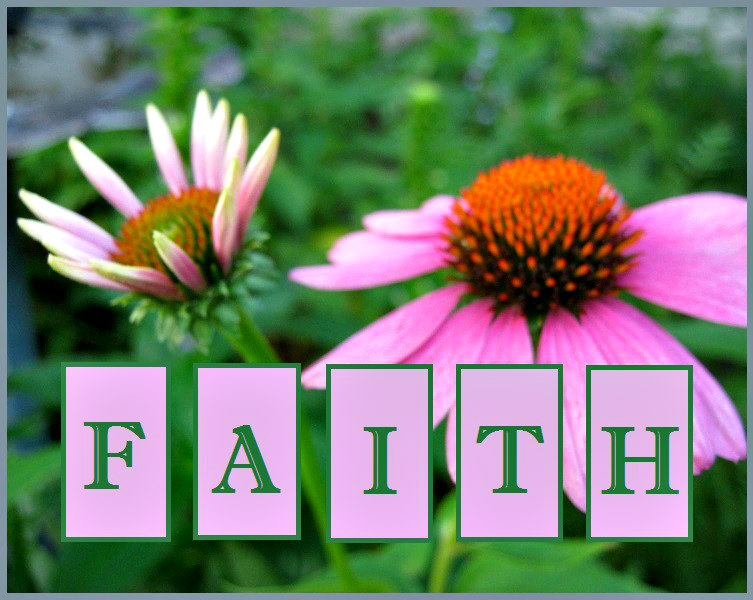
Another Echinacea Daisy seemed a perfect backdrop for the word FAITH.

My family had two dogs named Daisy, and my grandmother had a goat of the same name. The little black poodle adding her blessing to my wedding party forty-seven years ago this month was named after the flower. I still miss her. What a sweetheart.

One Daisy I never met was Daisy McCormack. I found her watercolor either in a shop or at a yard sale. I’ve had it so long I can’t remember the origin. The painting is delicate and sweet, 4 ½ by 3 ½. It is beautifully framed. The writing on the back is neat and straight, describing the flowers and where they were found and ending with hand-painted by Daisy M. McCormack. Since I watercolor and have painted many flowers, I treasure her work even though I will never know her in this life. Judging by the color of the backing paper, the work is decades old.

The Daisy in the photograph, top row, third from the left, is someone I met only once. She was Aunt Daisy to my grandfather. When his mother passed away in the Spanish Flu epidemic, she left behind four children under nine. Aunt Daisy took my grandfather in during this terrible time. Once, when I was small, he took me to her home in the hills near Martinsville, Virginia. I am forever grateful to this kind aunt for nurturing my grandfather when he was only six. She lived to be 94, and I hope she was blessed her whole life for her kindness.
P.S. My great-grandfather is the young gentleman on the lower left.
Lastly, I include a favorite oldie of mine. Somehow, I know a lot of the words. Perhaps from listening so often as a child to Bing Crosby and Mitch Miller Sing-A-Long Records. (Yes, I do mean vinyl records.) My mother loved the voice of Nat King Cole, so this is for her.
I usually write short posts, but this one kept growing, as I hope my love for daisies will grow throughout my lifetime.