Alstromeria

“Your Word, O Lord, is eternal; it stands firm in the heavens.”
“Your word is a lamp to my feet and a light for my path.”
Psalm 119:90 & 105
Alstromeria
“Your Word, O Lord, is eternal; it stands firm in the heavens.”
“Your word is a lamp to my feet and a light for my path.”
Psalm 119:90 & 105


In the photograph above you might think you are looking at a typical hanging basket…and you are of course! Look a little closer at how the basket is hung and you might see the purpose behind this “Peculiar” post.

Yes, what you are looking at is a gigantic fishing lure. I found this a few years ago while beach-combing. After I carefully picked it up off the rocks of the Block Island coastline, I dropped it into my collecting bag. It hung alone from the rafters of my porch ceiling for a few years, a reminder of a happy day. This year, however, while looking for the ever elusive S-hook for attaching my hanging baskets to the chain, I came up with the idea to use the lure. It worked great, but just to be on the safe side I wound a bit of floral wire around it too. I’m very pleased with my unique hook!


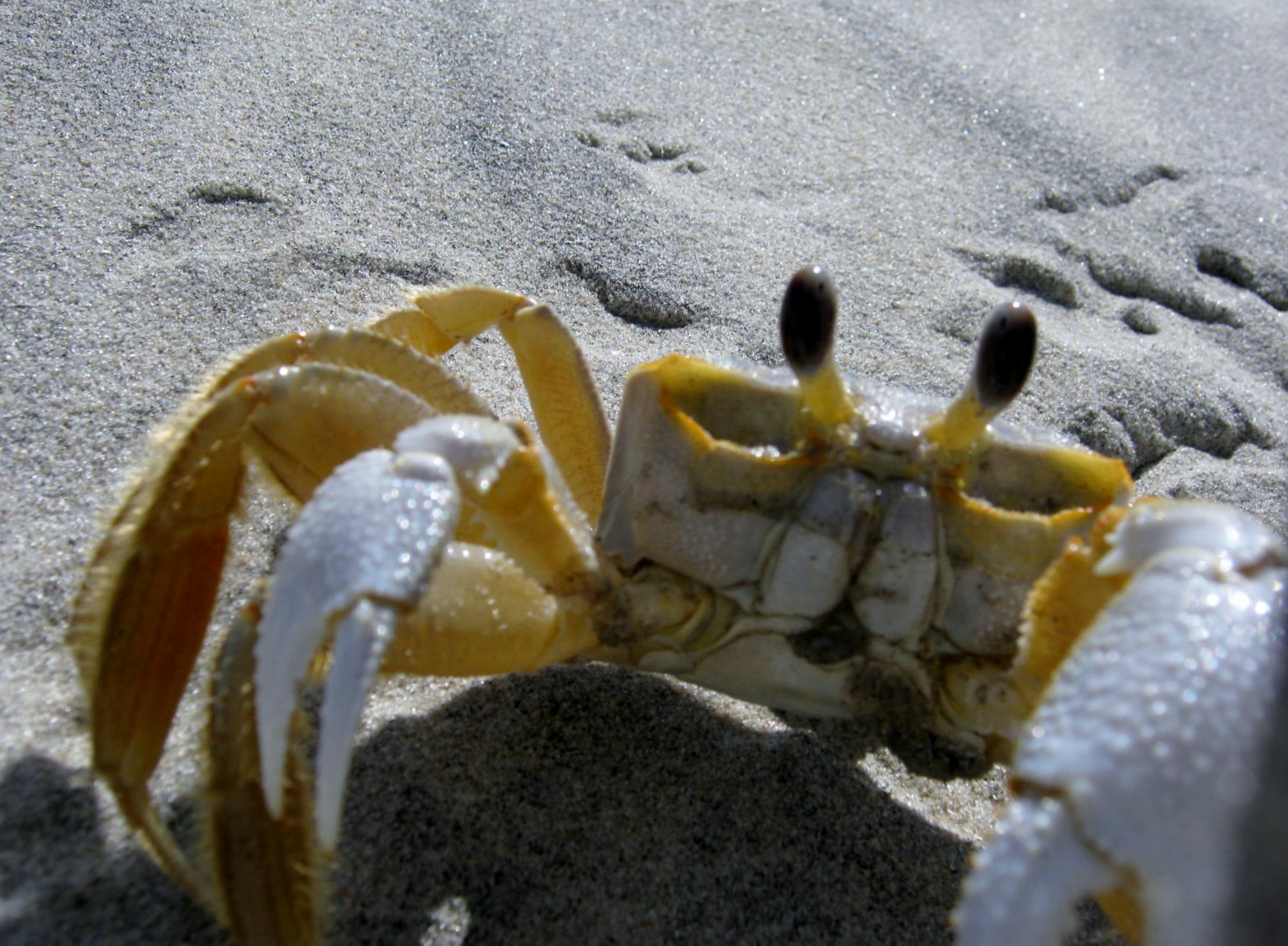
Sometimes it’s fun to get up close and personal with a feisty sand crab. This was one of the biggest, and boldest, I have ever come across. He took offense at the close proximity of my camera and charged at me with claws clicking.


I love this new begonia I recently purchased. The leaves remind me of angel wings, and I am quite taken with the delicate pink of its flower. I took cuttings of the stems as soon as I brought the begonia home from the nursery. Taking the cutting didn’t harm the plant in any way, in fact, it did it good, it is already sending out new shoots from the hard pruning. O Happy Day!

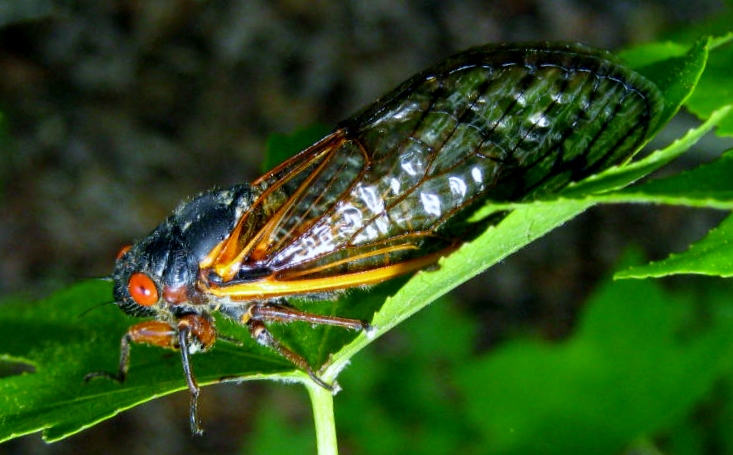
We recently camped in Belleplain State Forest amid the “singing” of seventeen year cicadas, or in technical terms, Periodical Cicadas. My husband and I both thought the sound they created was much like an old Sci-Fi movie when flying saucers descended upon the earth. I’ve included a version here of the sound. You can read more information about the cicadas here: Periodical cicadas

The cicadas leave behind their eerie exoskeletons after emerging from the ground.

The ground is covered with holes from which the cicadas emerged.
You can hear their song on the video I took amid the trees of Belleplain.


Roses are a very thirsty bush. For the best blooms and growth they should drink at least several gallons of water a week. The hotter your climate, the more water a rose needs. Check out this terrific article from the Santa Clarita Valley Rose Society: Water and Roses
Another problem can crop up if watering is done improperly: black spot disease. The best way to prevent black spot disease is to keep the foliage dry. The question then becomes: “How best to water?”
I have found the answer to be watering with a slow-release container. You can make one of these easily with an empty gallon milk carton or a kitty litter container. Drill or punch a hole in one corner. Fill the container as quickly as possible with water from a hose. Put your finger over the hole on the bottom and place the carton beside your rose.( It helps to loosen the dirt around the rose with a trowel.) The water slowly trickles out of the carton, and sinks into the dirt without running out too quickly and away from the rose bush.
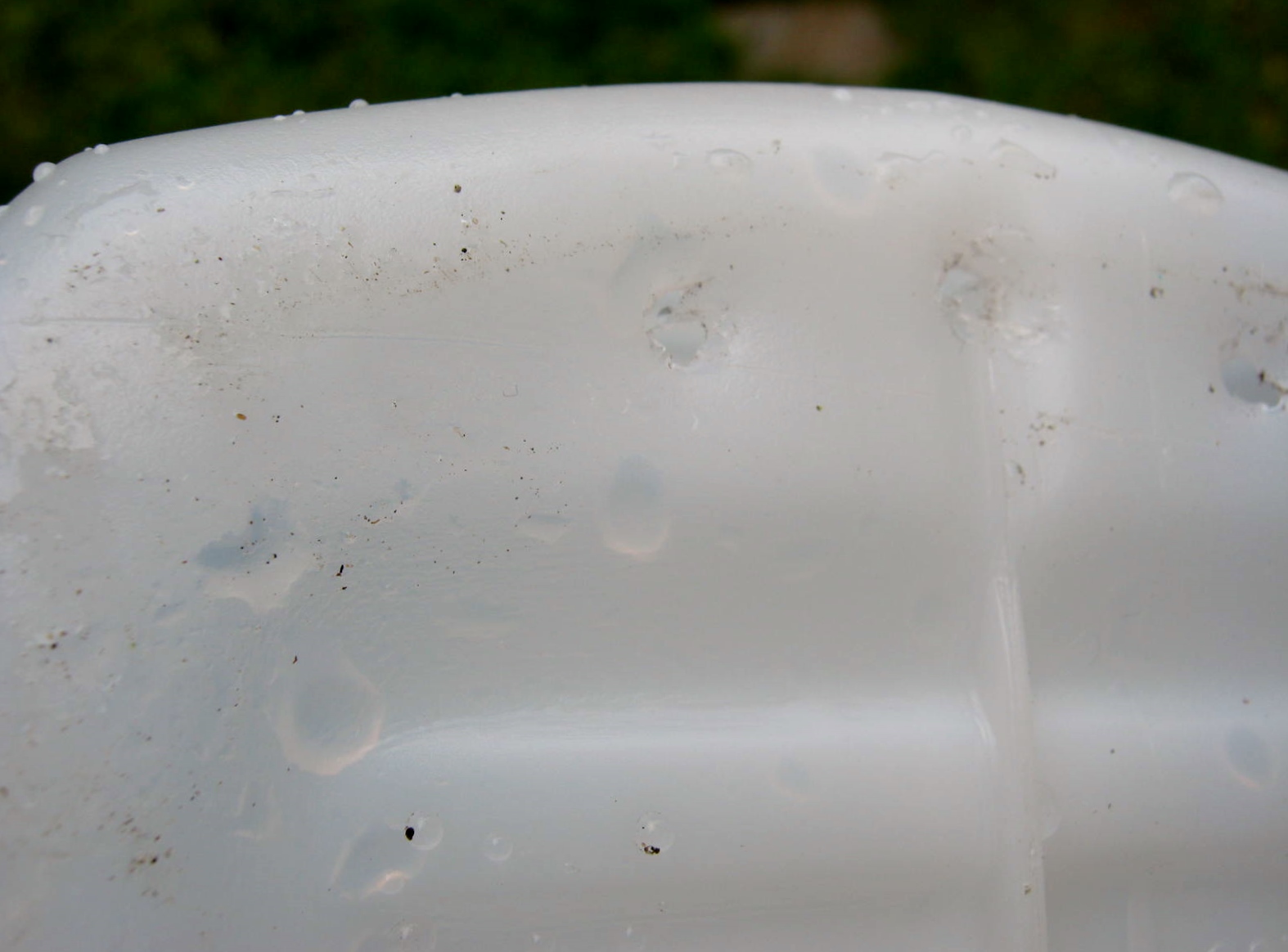
This might not look pretty, but it works amazingly well. Try it out for yourself.


In the past few weeks I have enjoyed hunting down and photographing some of the beautiful Iris plants in my area. When I gaze at the beauty of the petals of an iris I am reminded of the one who created all things.
To all artists and craftspersons, please feel free to use any of the iris photographs below for your art or projects. A Blessed Sabbath Day to you.


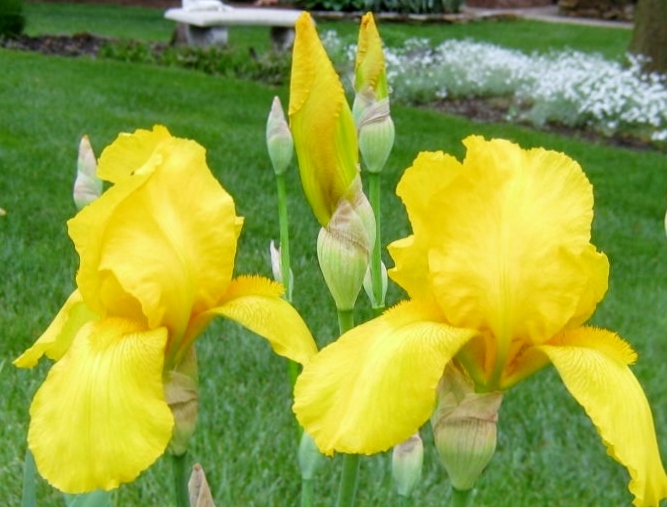


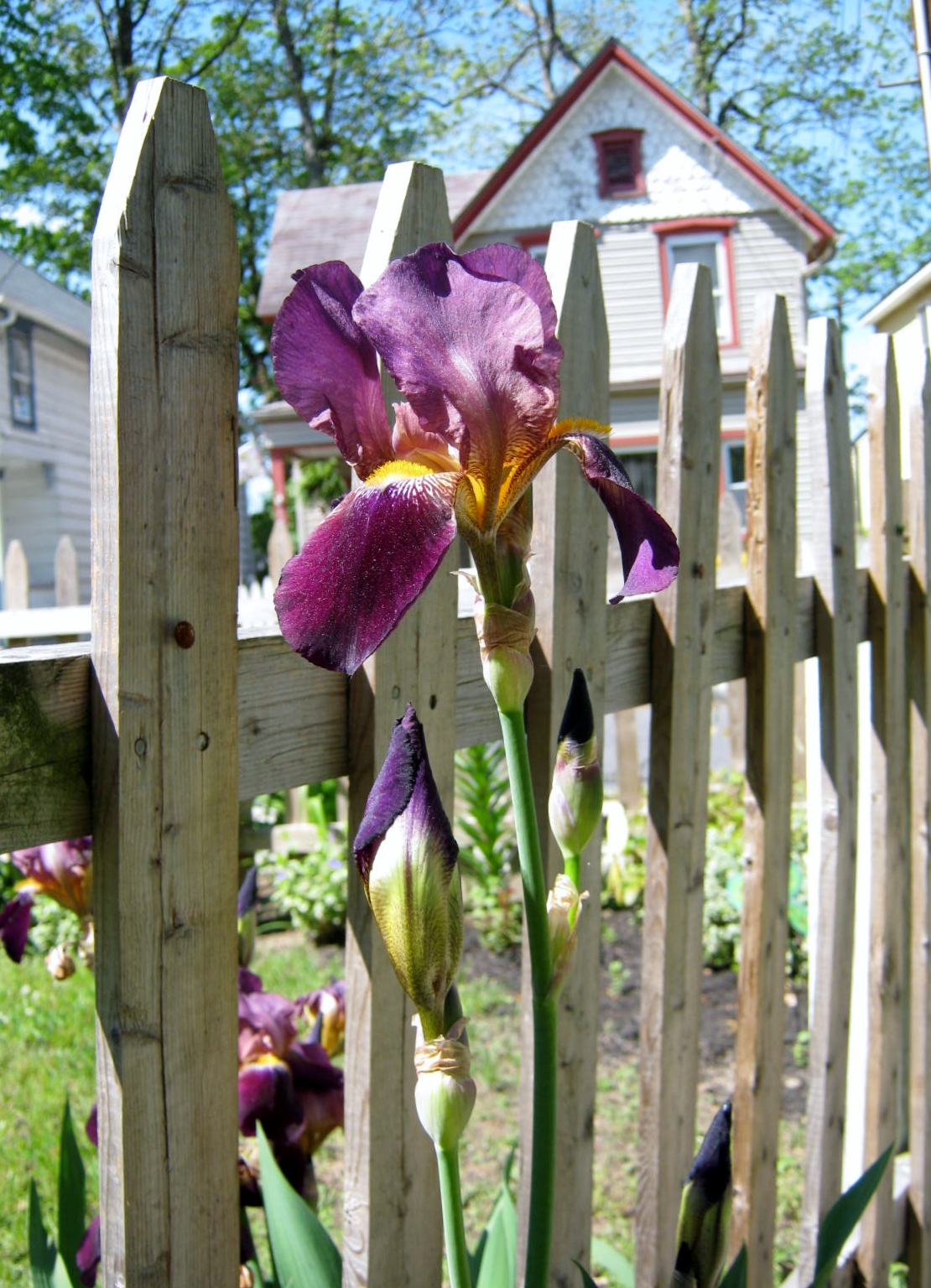
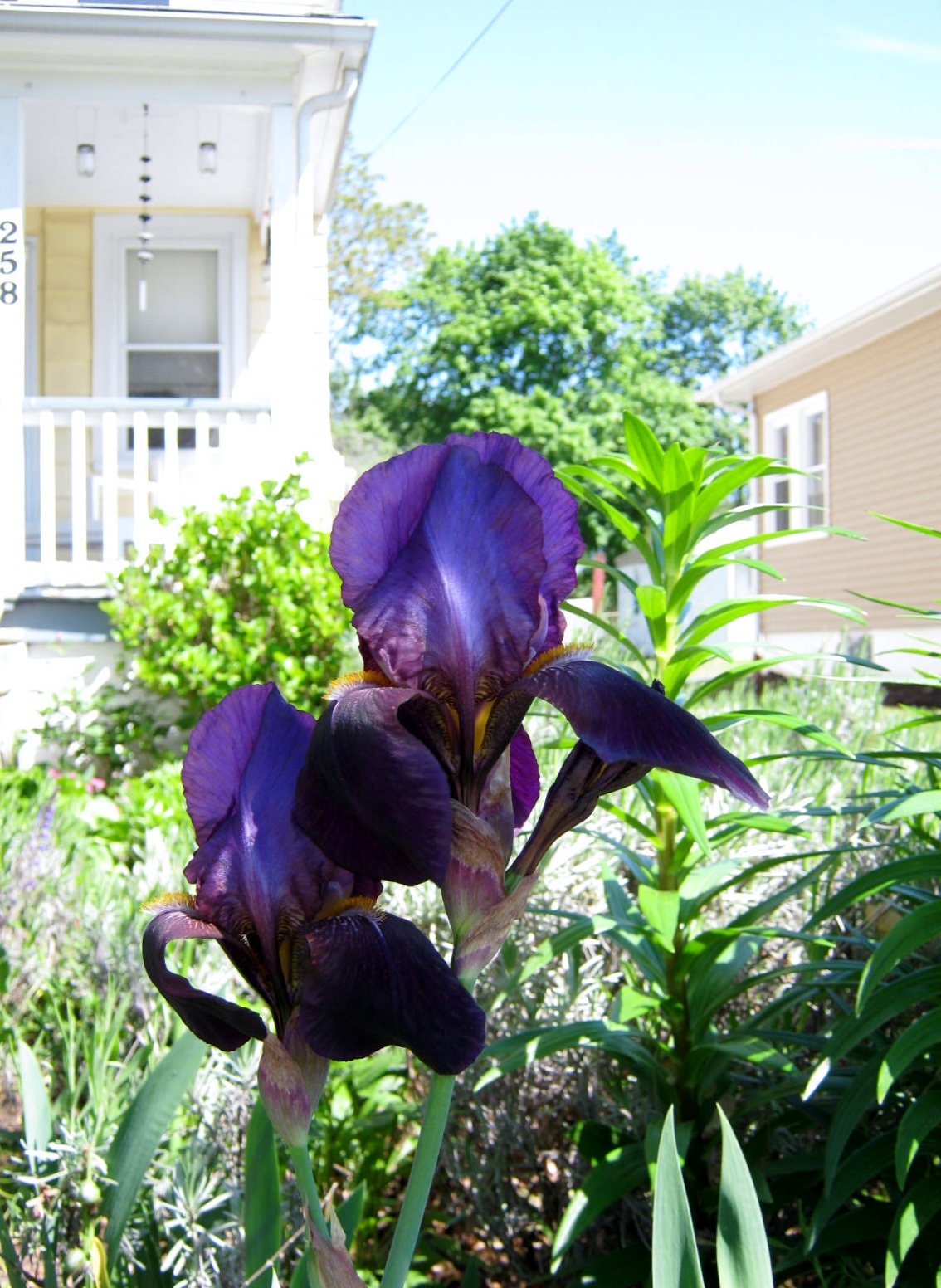


Years ago, in fact, twenty-two years to be exact, my youngest son and I cut thorny vines from our local woods to use in crafting wreaths. I was a stay-at-home Mom and often sold my pressed flower cards, and other natural woodland designs at craft shows. Since our Mid-Atlantic woods are over run with an invasive species of vine called Roundleaf Greenbriar, we made good use of the abundance and twisted them into wreaths. It is not an easy process, but since the materials were free, and ready-made wreaths expensive, it was worth the effort.
A good article about this thorny vine can be found here: Roundleaf Greenbriar
Most of the vines we used were between three to five feet long. This size is manageable to cut and carry home. We popped the long thorns off with our thumbs. (Yikes! I can’t believe we did this without gloves and have lived to tell the tale. If I make any in the future I will certainly wear gloves.) Once all the thorns were removed we twisted the vines into wreath shapes. They dry beautifully in the sun, rock-hard and quite durable, turning a lovely pale tan color.

I am trying to get rid of clutter around the house, and recently unearthed them again. I decided I must use them or throw them out. I found the perfect project! A unique trellis for my vining honeysuckle bush. I tamped three long bamboo stakes into the ground with a mallet, slipped the wreaths over the stakes, and pushed them down until the pressure held them in place. I am really happy with the way my tower turned out. I’m thinking of going back in the woods and gathering a few vines to make interesting tomato cages. Where are my gloves? 🙂

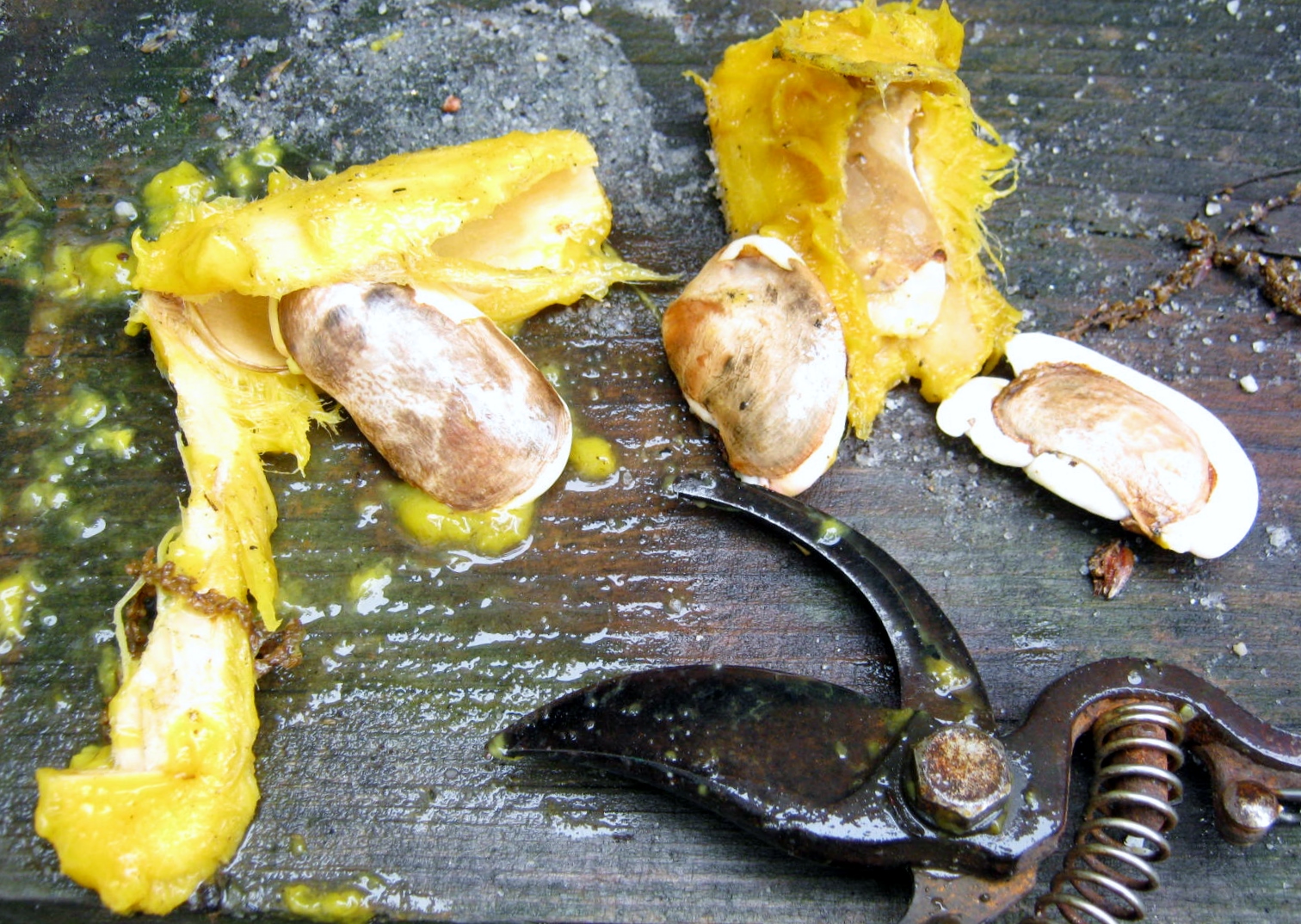
Yes! It’s messy. Yes! If you’re not careful you might slip and cut yourself or the seed you are trying to extract from the Mango pit. Here’s how I prepared my mango seed for planting.
1. Find and enjoy a delicious and ripe mango. The variety I planted was a Champagne Mango. In my opinion the most delicious type of mango I have ever eaten.
2. Soak the pit in water for about 24 hours. As you can see I had several pits to use. Did I say I LOVE mangoes? 🙂
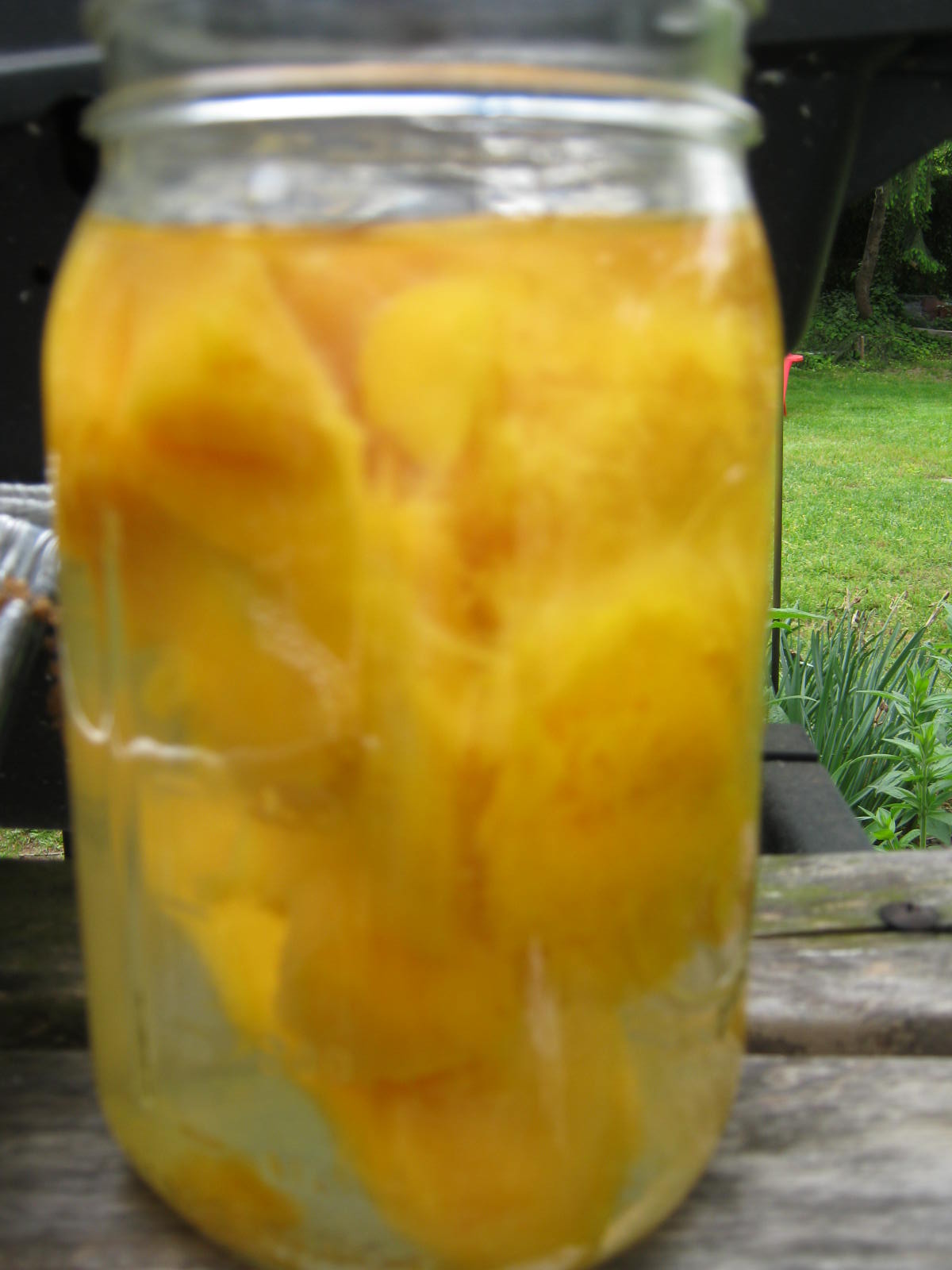
3. After soaking, I snipped a bit of the pit side with my pruning sheers, then zipped the edge away. I’ve also seen videos where people have cut the side of the mango with scissors. Either way, once cut or zipped, you must open the mango with your fingers. Be careful not to nick or harm the tender seed inside.
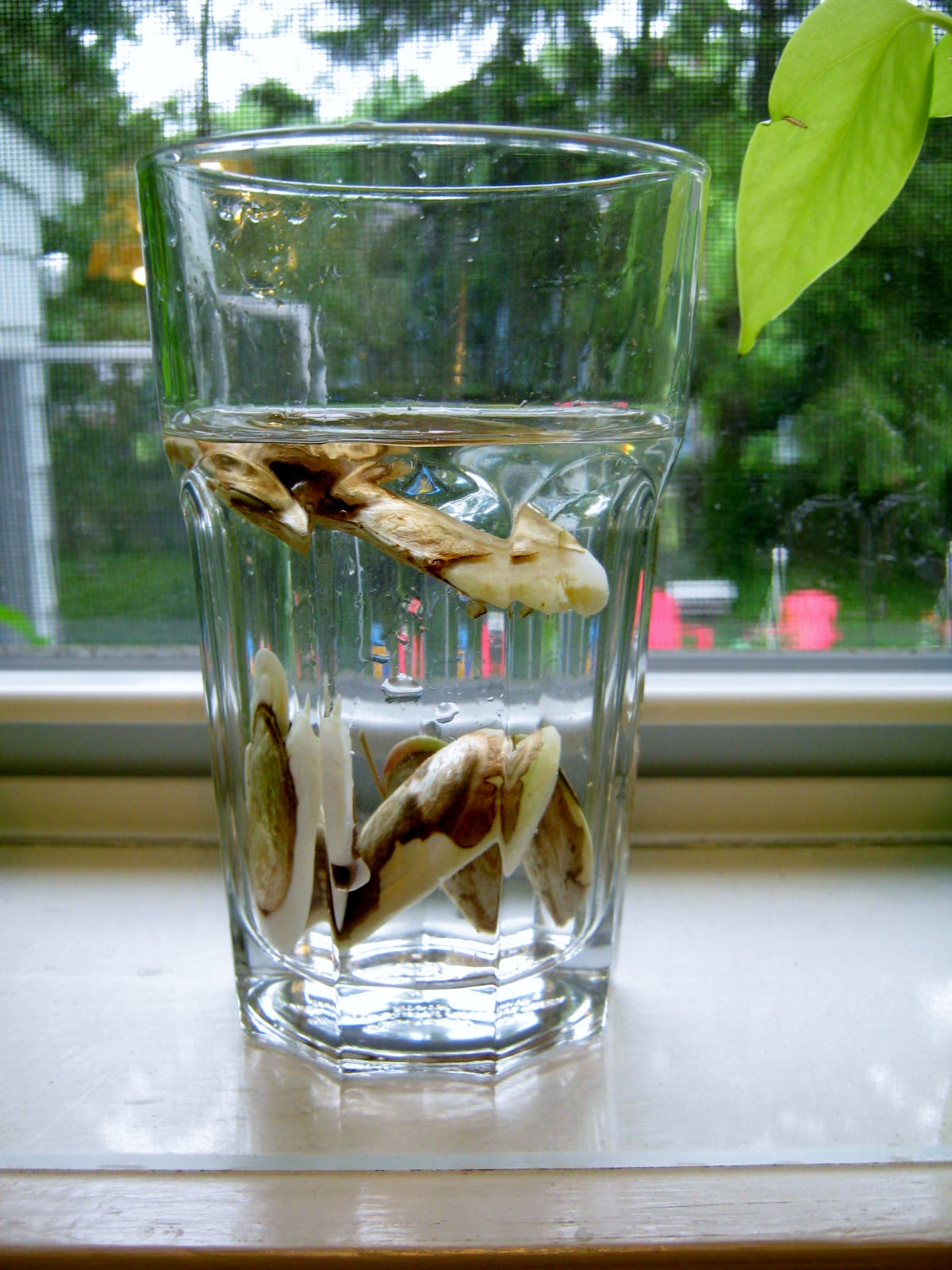
4. I once again soaked the husked seeds and then potted them up in potting soil.
I have seen Youtube videos that tell you to plant the pit and wait for it to split and grow. This would be the more natural approach. I am hoping to jump-start the growth by removing the pit first.

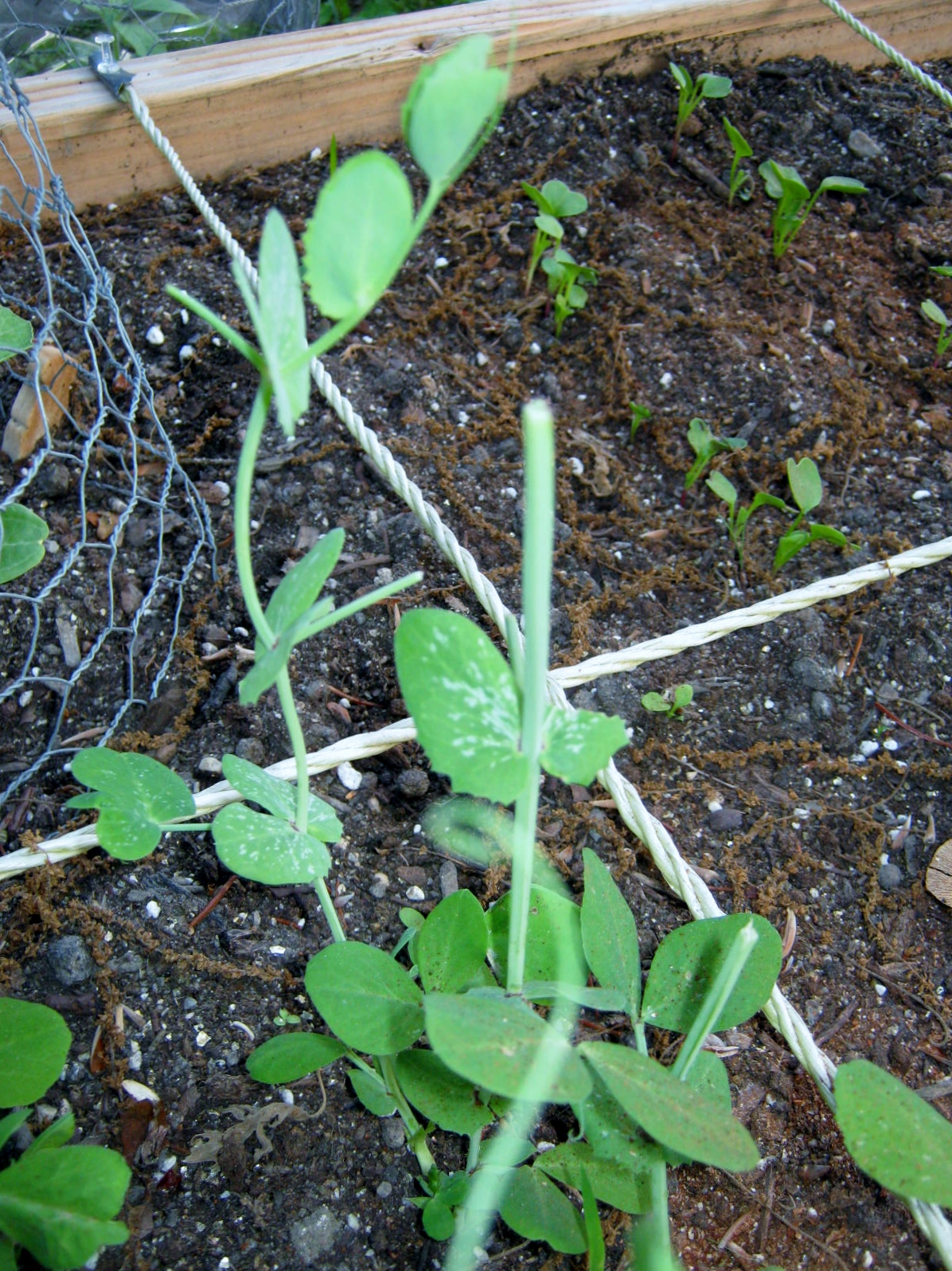
Anyone who gardens knows that at some point pests find your beloved plants. What’s a gardener to do? I have had plenty of wars with the local critters, and have found a few ways to scare them off. I’ve used water balloons, created scarecrows, spread around offensive odors with garlic, soap, dirty diapers, etc. All my weapons have worked to some degree, some better than others. My most recent attempt, the Rasta Raga Girl Scarecrow worked pretty well until the wind and rain blew her in half. 😦
Last week, once again, I went out to check my garden and found the tops of several pea vines bitten off. Because the level of the bite was rather high, and because I saw one of the rascals sitting in the middle of my raised bed, I knew it must be rabbits. A well-aimed dust brush scared the varmint off for a while, but I knew he would be back as quick as the sun would set.
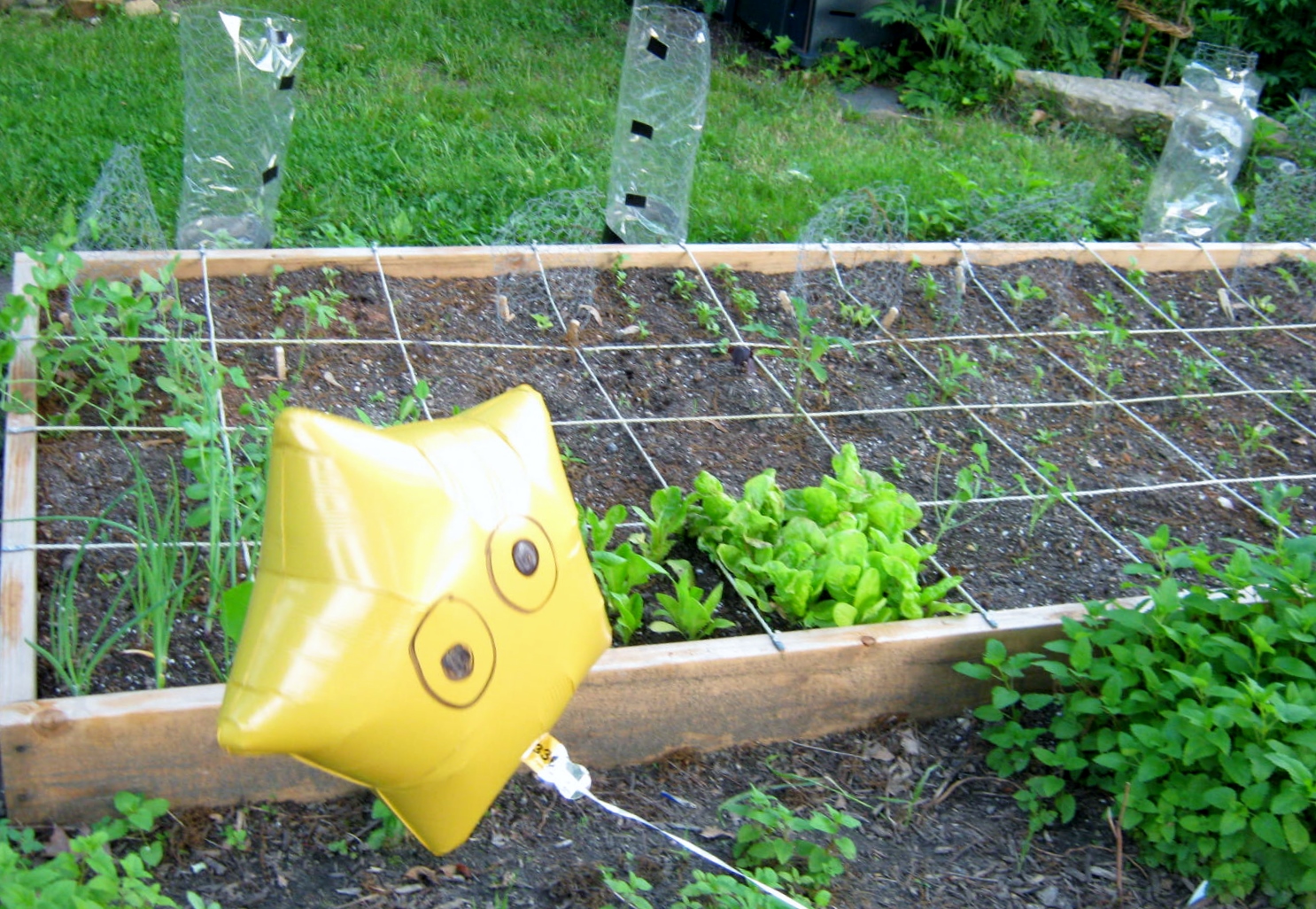
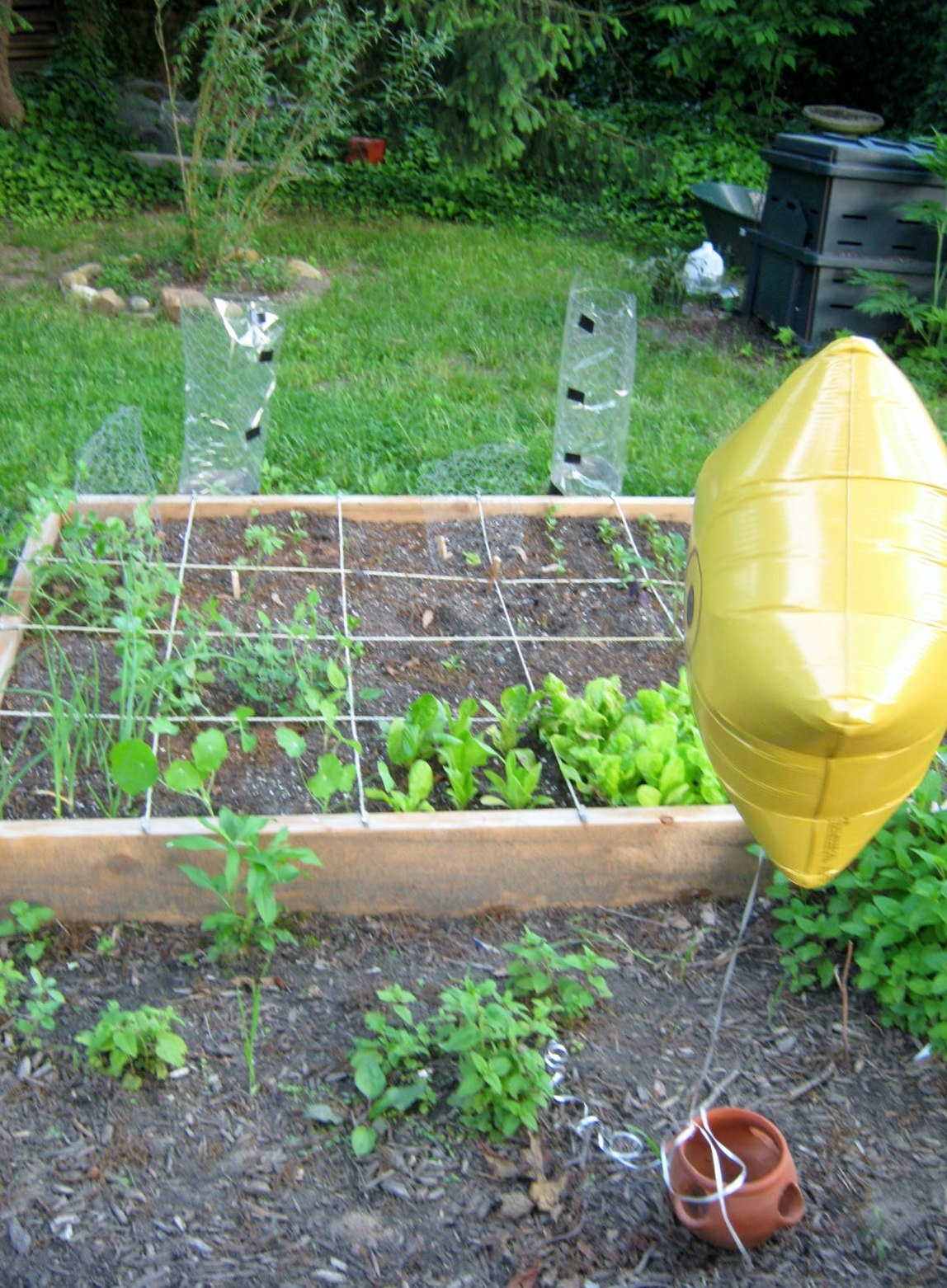
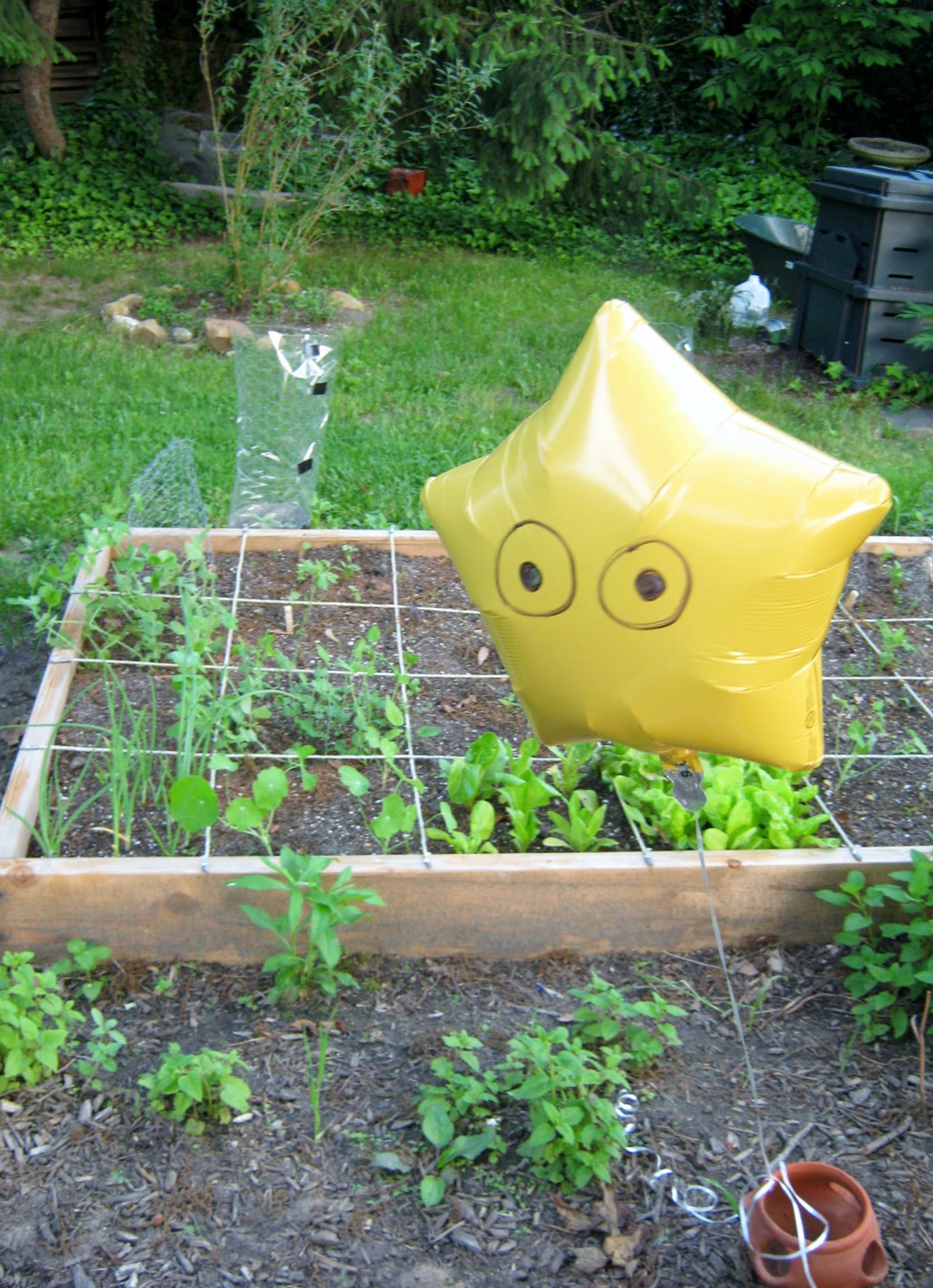
As I pondered a new preventative tactic, I remembered the strange round globes with eyes I had recently spotted in a local farmer’s field. Maybe a helium balloon with permanent marker eyes might work. Oh my! It works like a dream come true. As long as the balloon holds onto its helium I think it will keep scaring away the rabbits and rodents.
As you can see from the succession of photographs, tied to a terracotta pot, the balloon sways from side to side at the slightest touch of a breeze. The preventative measure is working well, and best of all, cost only a dollar. I know it will last only a few days, but if I vary my arsenal of “scary” weapons, perhaps I can keep those pesky critters at bay.

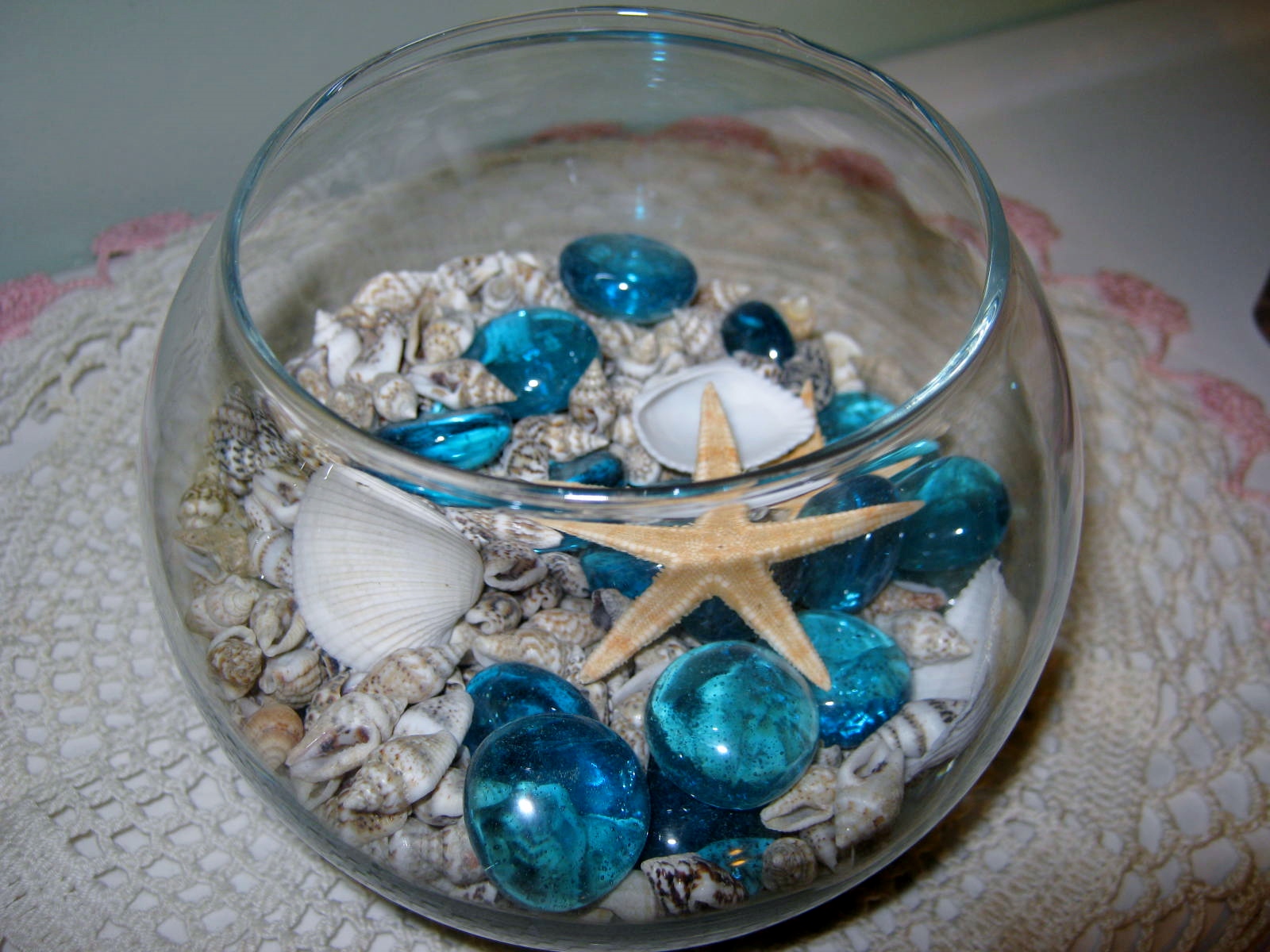
My youngest grandson recently turned one year old. For the birthday celebration his mother created these ivy bowls as centerpieces with shells, glass pebbles and starfish. I think they are lovely and elegant. I am happy to have one to keep as a remembrance of the day.


I recently set up a Scavenger Hunt for my two grandsons, ages 6 1/2 and 4. What fun I had as I composed and hid clues around the house. A few of my chosen spots were: the straw hat on the banister, under Papa’s shoe, inside a ceramic heart, hidden in the basket of a decorative figure, underneath a green book on a table. My oldest grandson was able to read or sound out the clues himself. Almost all of the rooms in the house had a clue to find. I made sure there was plenty of scampering upstairs and down. Finally, the search ended behind the door of the chifforobe in the dining room. Two helium balloons were there with some dollar bills tied up in their string. This “phun” activity was a big success.

I recently watched the film “The Impossible.” Based upon the 2004 Tsunami in Thailand, the true story was both terrifying and inspiring. When the Tsunami struck, for several minutes I forgot I was in my living room sitting in my comfy green chair, but instead had the sensation of being swept under with the characters on the screen.
A good movie, but it leaves you quite shaken at times…definitely not a film for the fainthearted. The Impossible is good, but more uplifting than entertaining.

“Be still, and know that I am God! I will be honored by every nation.
I will be honored throughout the world.”
Psalm 46:10 (NLT)

Sometimes to recover from a desolation of soul you must escape to a desolate place. There you will find rest. You will find stillness for your spirit. Breathe deep, exhale anxiety, and find peace within through God.
May the Eternal and Living God
bestow a gentle stillness upon your life
on this Sabbath Day.

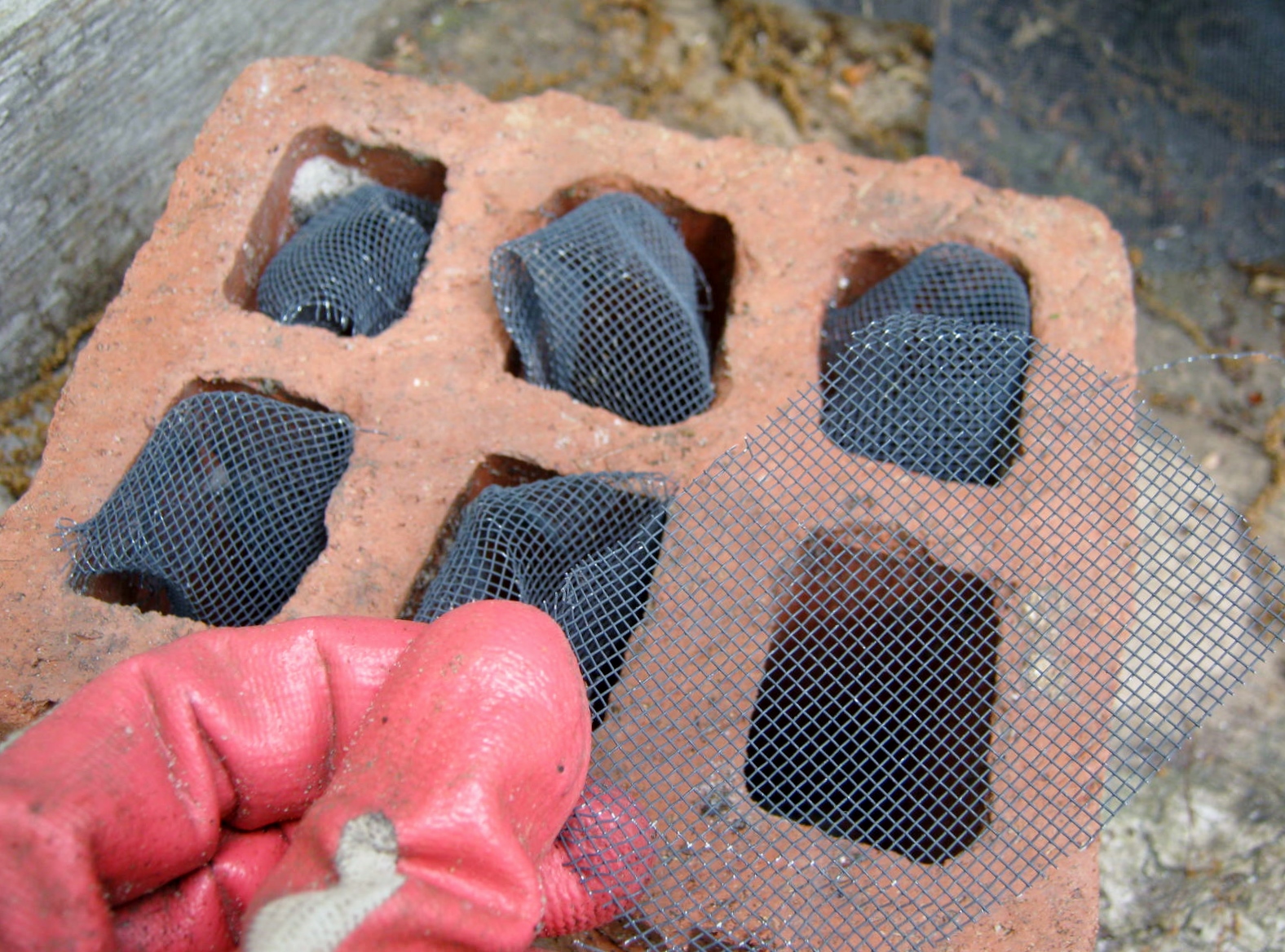
A few months ago while beachcombing I found this old, interesting brick. Sometimes when I find objects on the sand or in the waves I will take them home hoping that inspiration will eventually come to me. This time, I had a good idea as to how I would use the brick. Finally, I had the plants, the time, and the want-to to accomplish my project. I began by closing off the bottom of the holes with squares of screen.

I added potting soil and six portuluca plants. The plants pouted a bit at first, but even so, I was happy with the results.

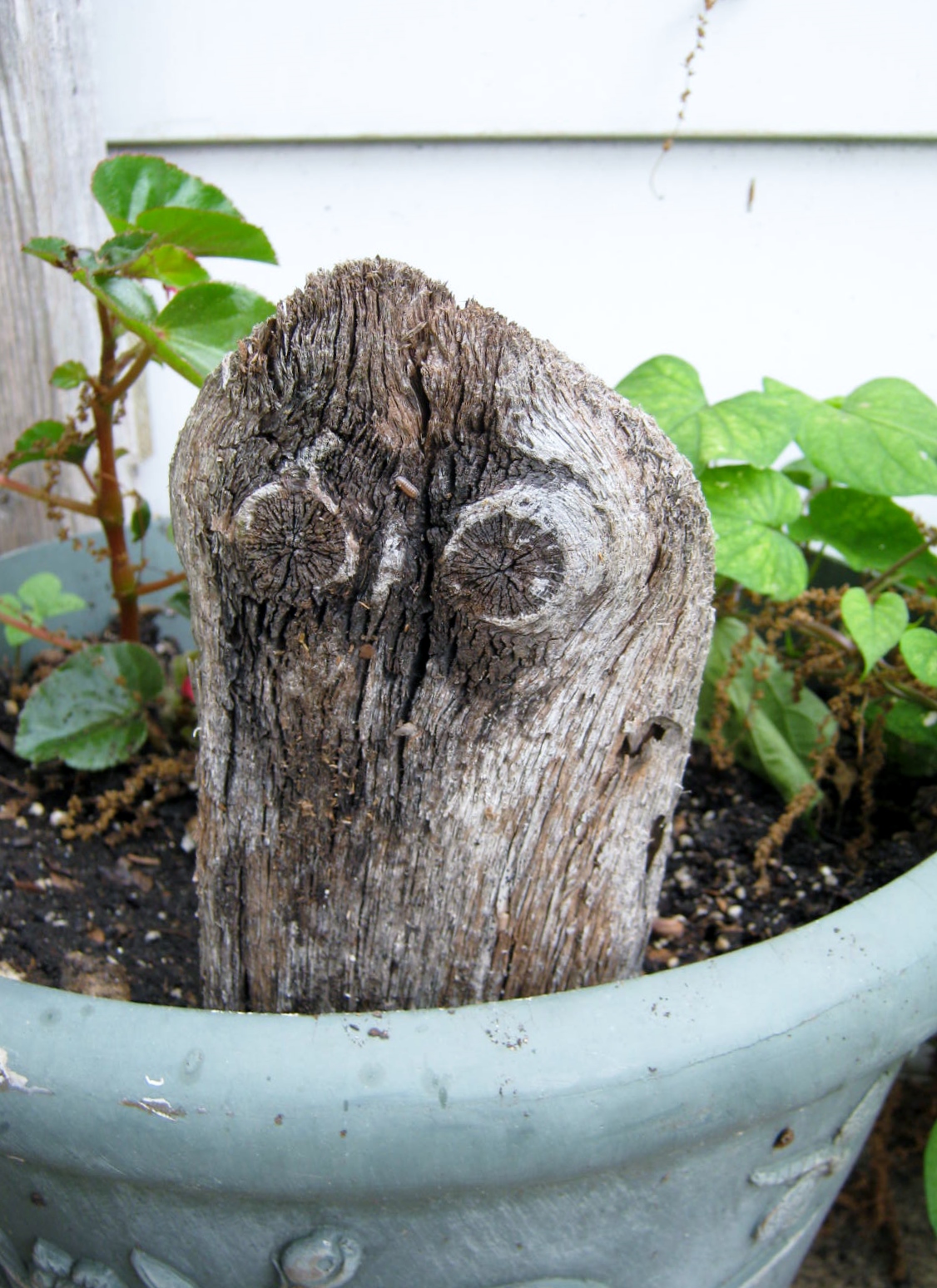
What do you see in the photograph above? I see an owl staring back at me from the piece of wood. I found the weathered piece of wood on the beaches of Block Island, Rhode Island. I instantly saw an owl’s face when I gazed at it laying upon the sand. Seeing faces or shapes in clouds, wood or other objects is known as pareidolia. The dictionary defines pareidolia as:
| Pareidolia – The imagined perception of a pattern or meaning where it does not actually exist, as in considering the moon to have human features. |
I often find faces in rocks. A favorite of mine is pictured below. SPOOKY!!!!

If you have a few minutes to spare, and want to view more images, type pareidolia into google images.
Another place my husband and I often find strange pictures is on the underside of an oyster shell. I took our oyster shell musings a bit further when I painted the watercolor below. Do you see what I saw and tried to portray? Fun.

Watercolor on Ampersand Aquabord, Winsor and Newton Paints, Size 5 x 7

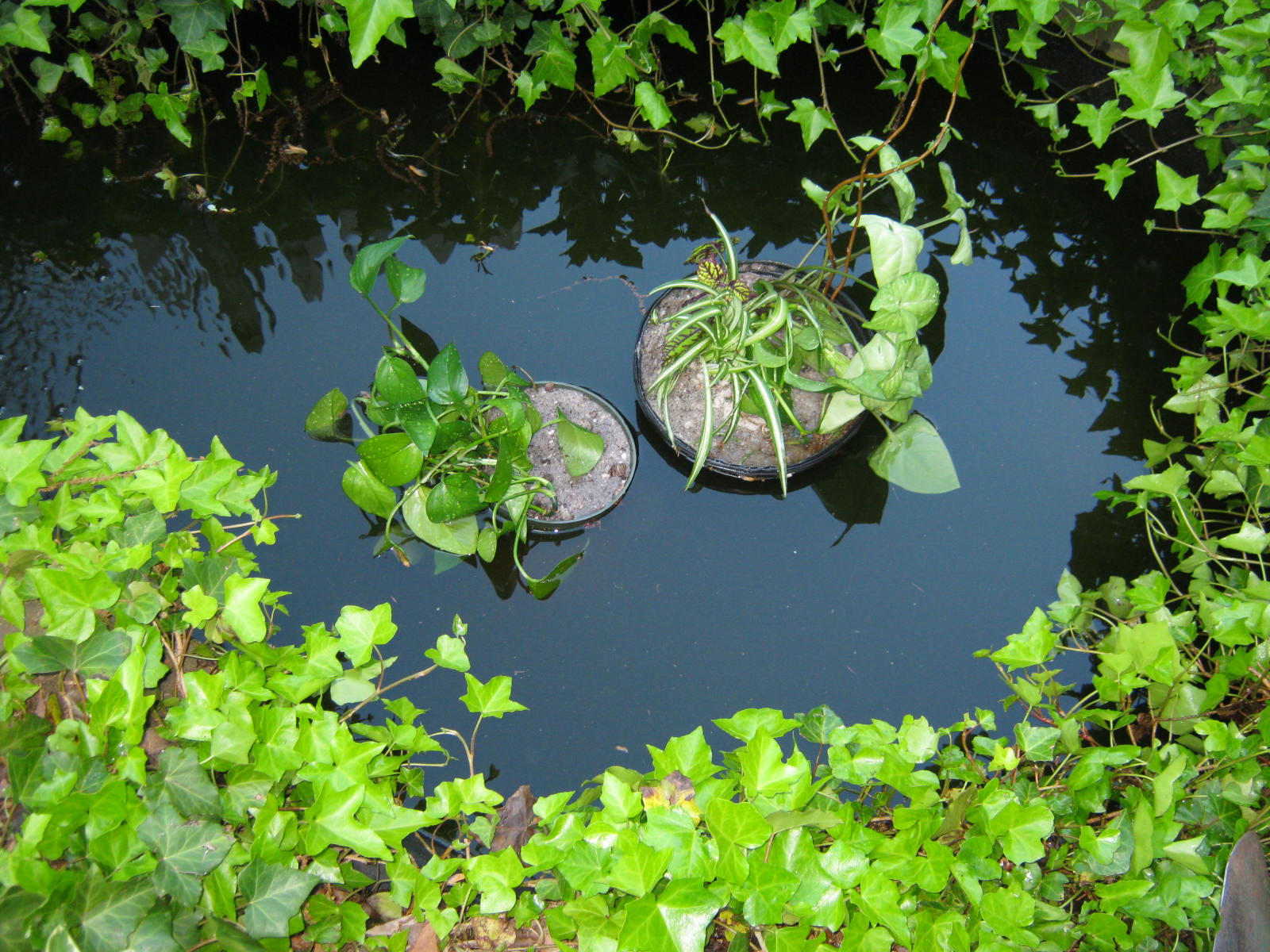
Each year, I usually spend close to twenty dollars on pond plants. Often they are puny specimens, easily killed off by the cold, small, and overpriced. The typical price for water lettuce and hyacinths is over three dollars apiece. This year, not wanting to waste my money, I gathered up every cutting I had rooting in water. I also raided the philodendrons I had in the betta bowls. I ended up with a good variety: curly willow, coleus, spider plant babies, arrow philodendrons and the plainer heart-leafed variety. I potted these in plastic pots with a coffee filter over the drainage holes, a few large heavy rocks, and plain unfertilized potting soil. I added the rooted cuttings, covered them with more soil, and added an inch of sand on the top. I placed these in my pond on top of overturned terracotta pots. It’s been about two weeks and other than a bit of sunburn they seem to be thriving. I’ll update later in the summer.


I happened to look up a day or two ago and spotted a mound of grass, sticks, ivy and bits of bark and debris emerging from an old bird house in one of our pine trees. On a nearby limb sat a mother robin, guarding her handiwork, and most likely, a clutch of eggs from predators and other birds.
My goodness! I never knew robins were such great guard birds. If a squirrel or another bird comes near the nest a whole troop of robins chases it away with much angry chirping and dive bombing. I’m fascinated that the mother robin seems to have many friends helping her make her nesting endeavor a success.
I love robins and feel great happiness one has nested in our yard.


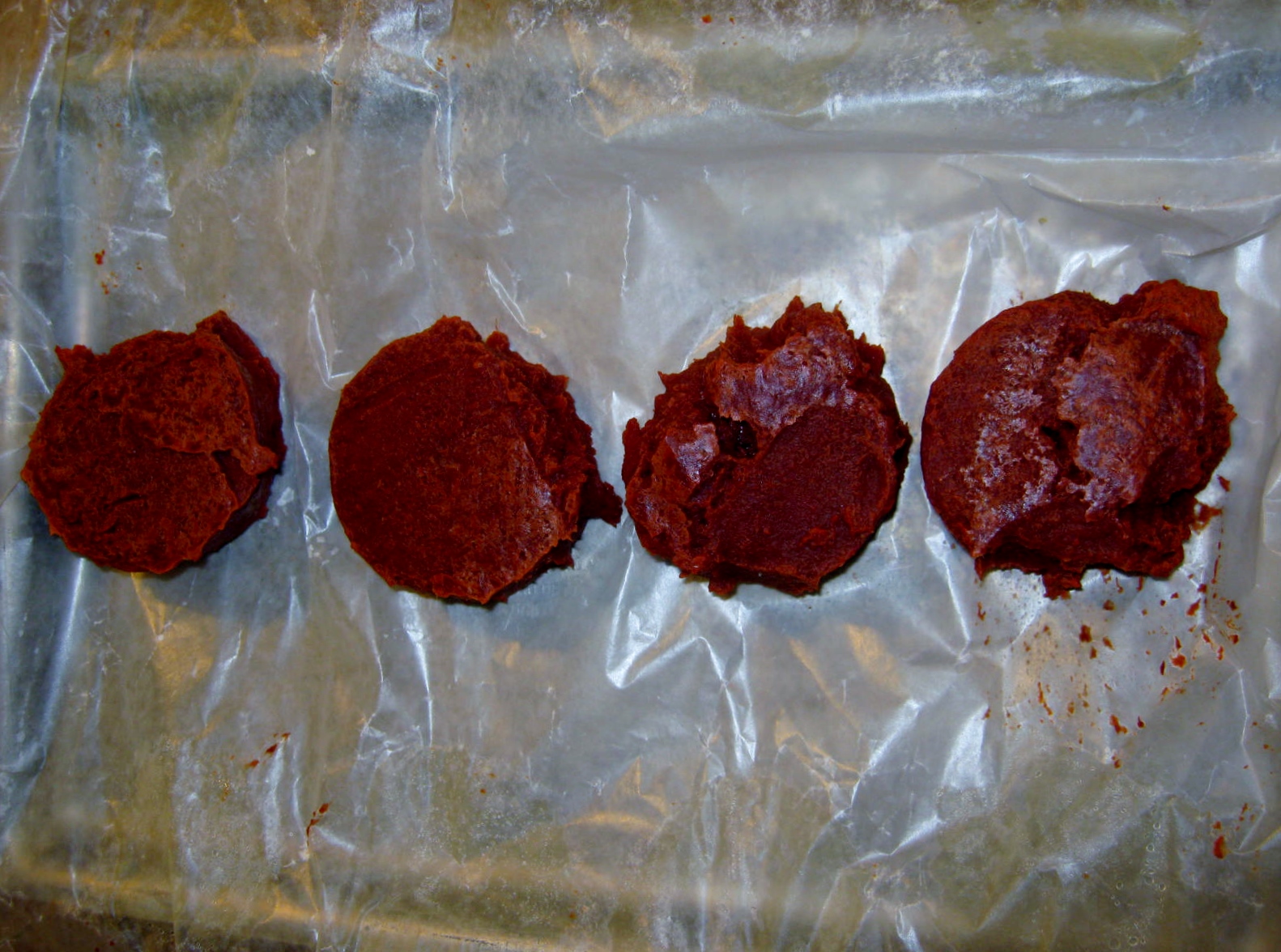
Here is a household tip for anyone who cooks with tomato paste. I often find that a recipe calls for just one tablespoon of tomato paste. More often than not, unless I have another recipe that calls for the same, I end up wasting the extra paste. A good way to use all the paste is to freeze the can for several hours, open both ends, and push the frozen paste out. Slice into four to six patties and store in a freezer-proof container. The patties will thaw and be ready to use in under an hour. Happy cooking!


