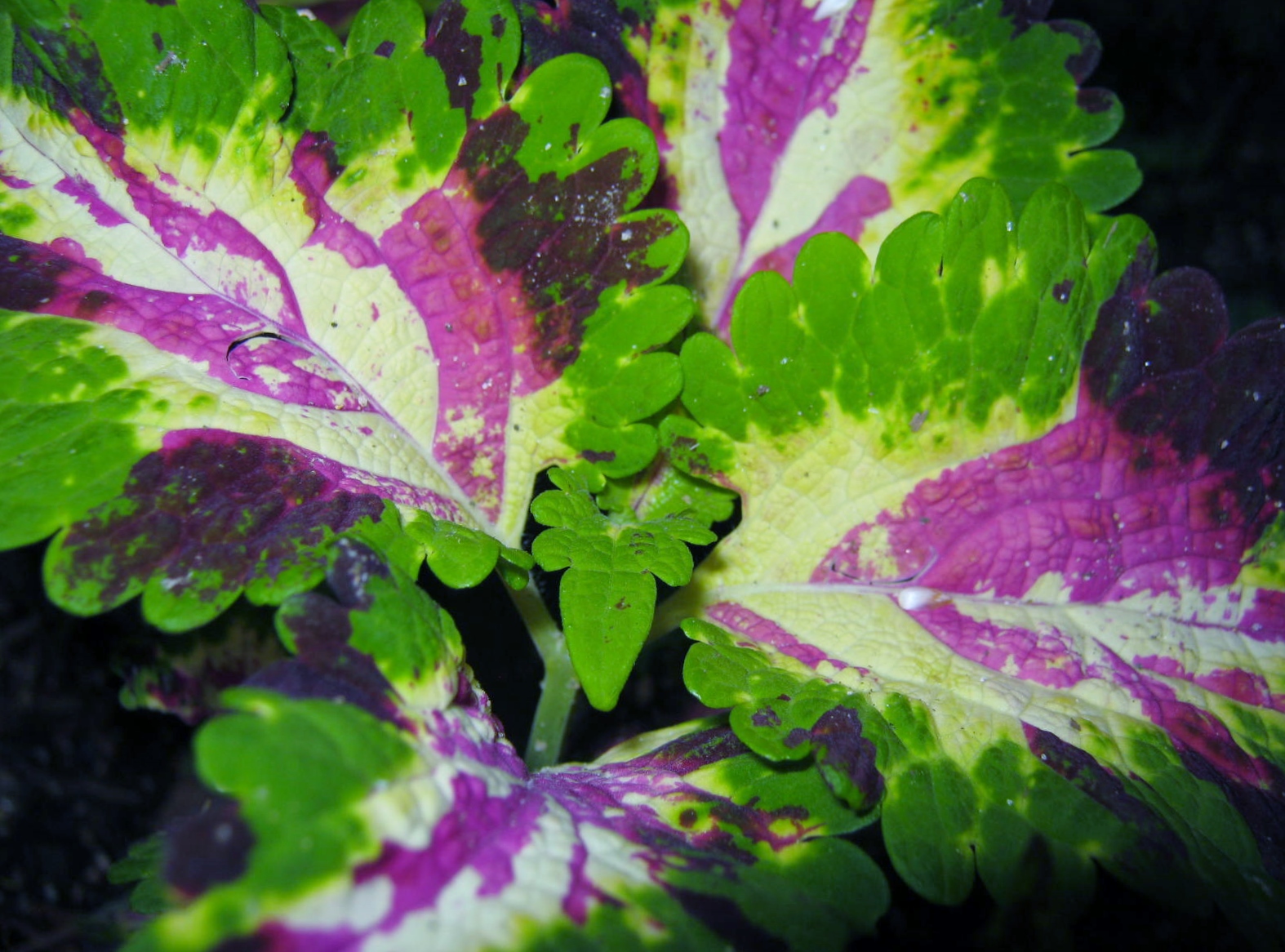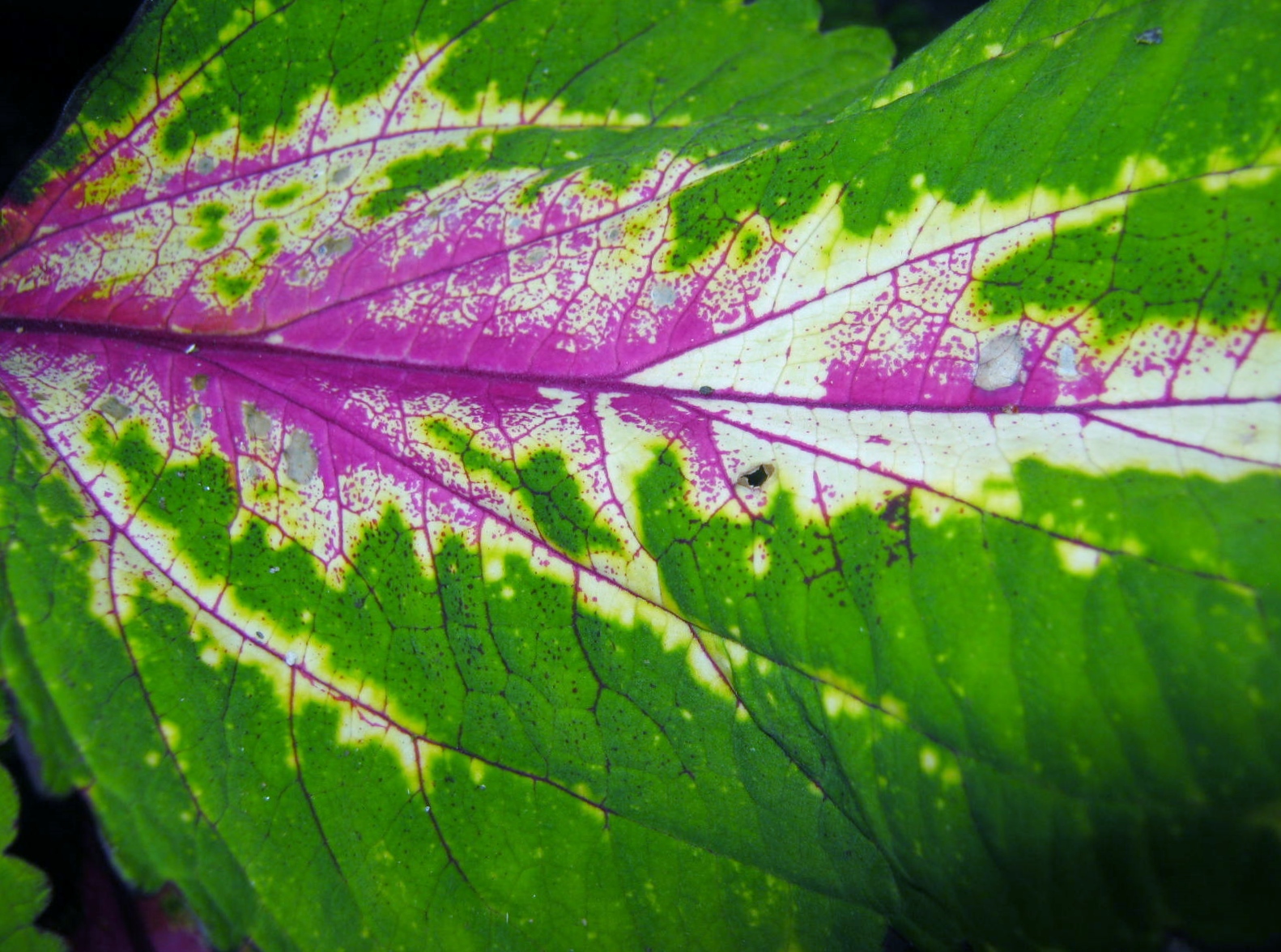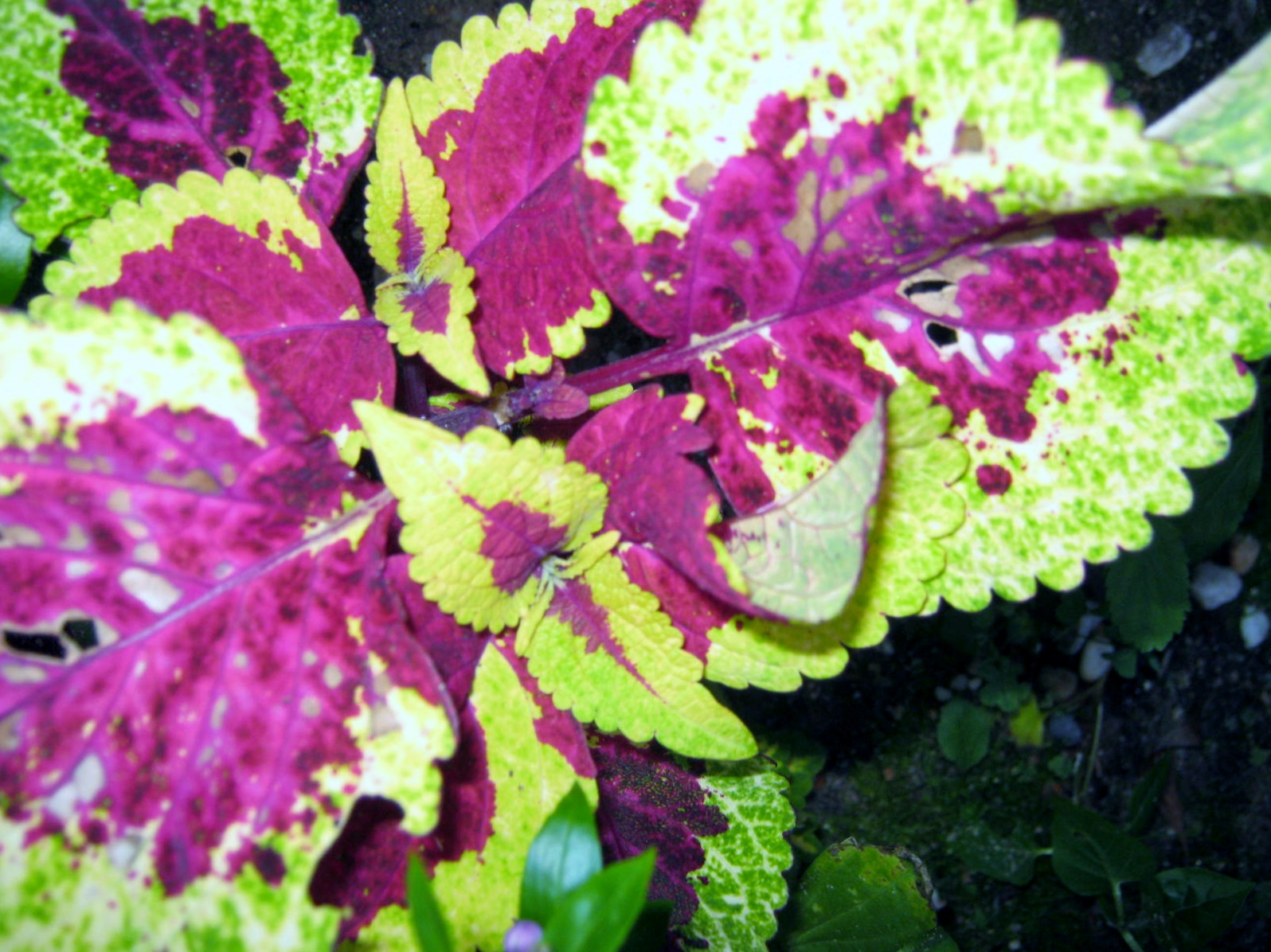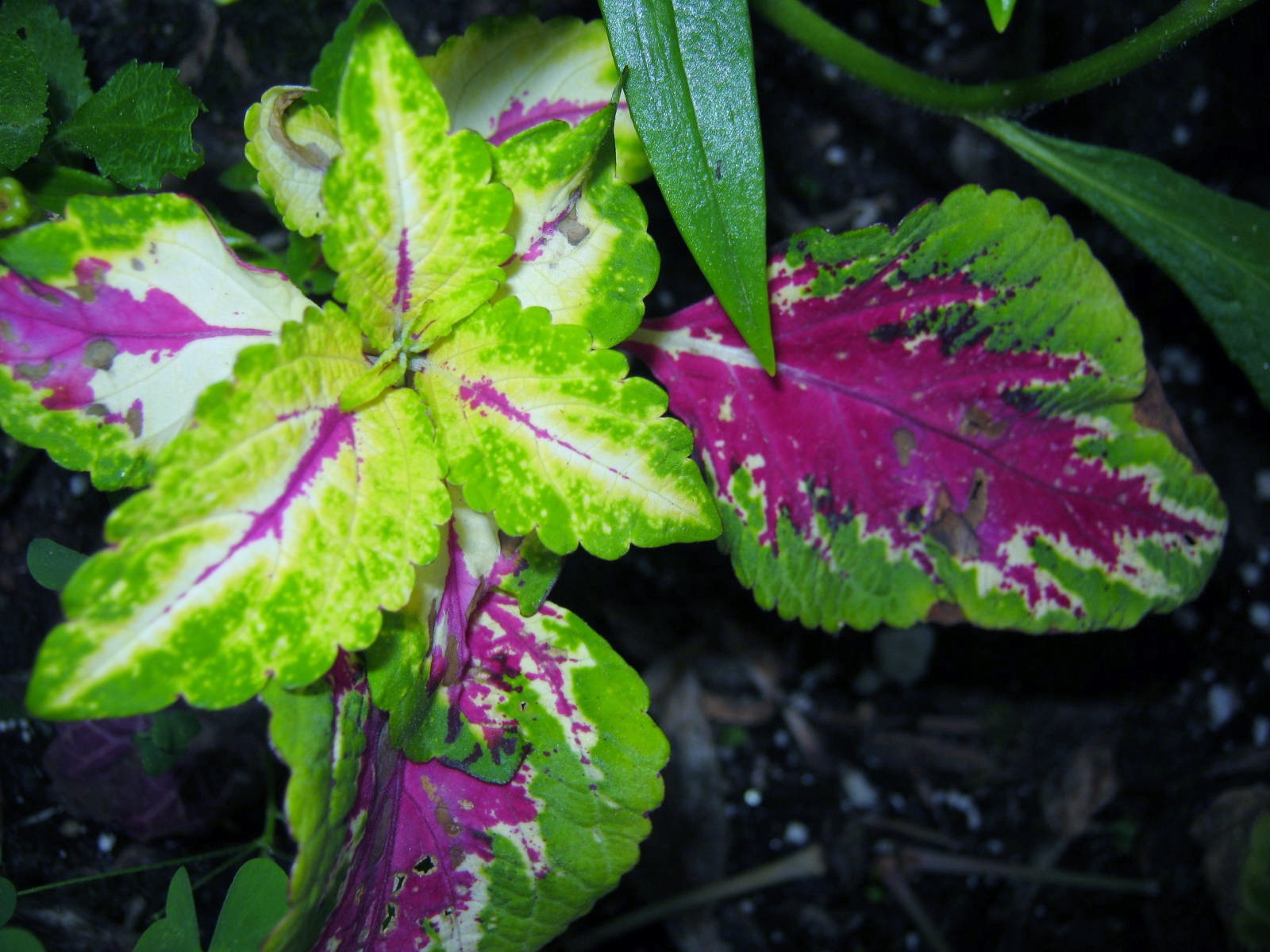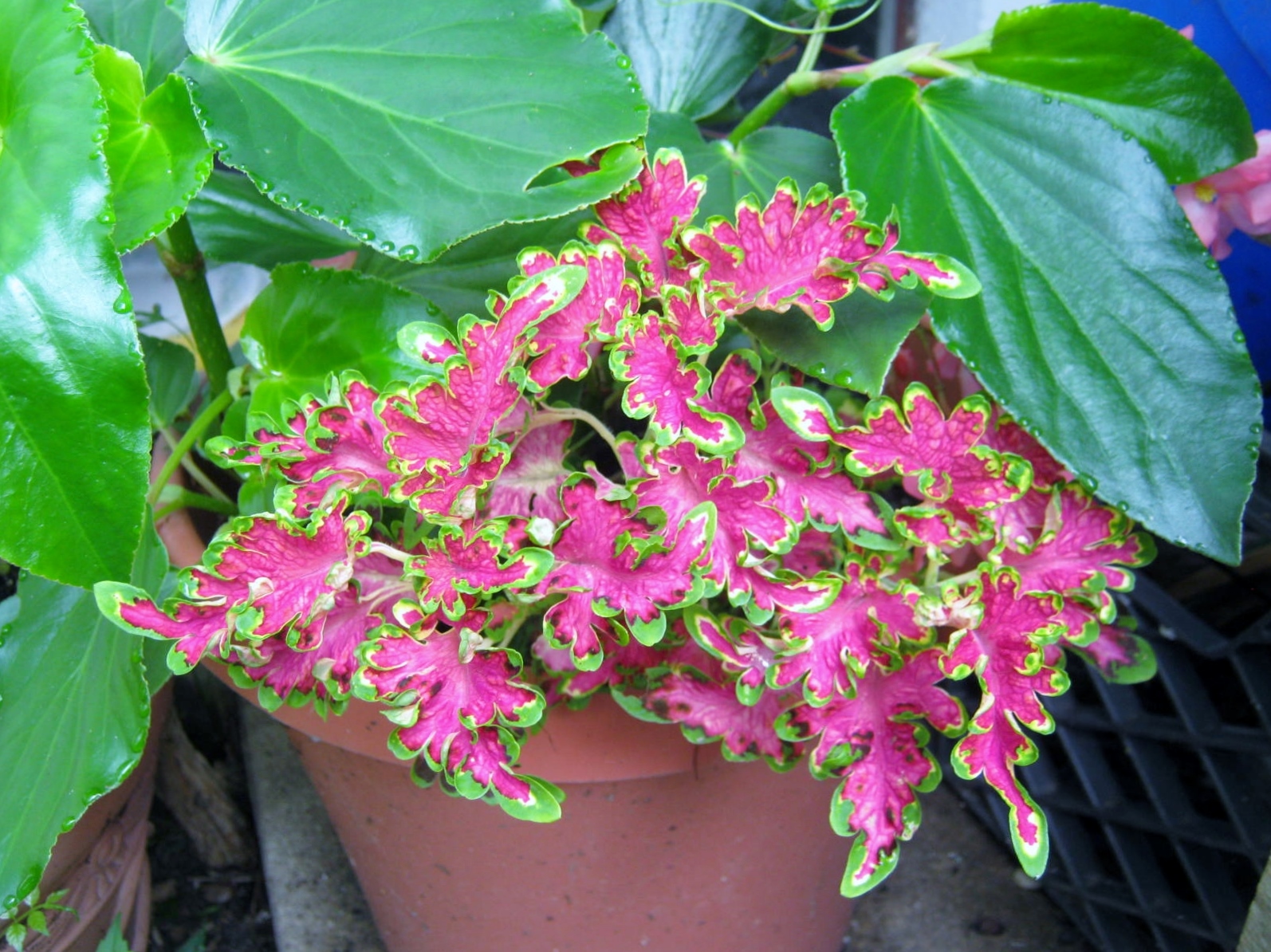
Here are a few samples of my “phavorite” coleus leaves and plants this season.
Author: Timelesslady
Phavorite – Coleus/Raspberry Swizzle
I am a believer in pinching the tips of my coleus to facilitate a bushier plant. Yet, about mid-August I stop my constant nipping of the leaves. Why, you may ask. The reason is at this point I let my plants begin to bloom. Although coleus blooms are not very attractive, I covet the new crop of seeds they will leave behind. I’ve named the coleus above Raspberry Swizzle. I’ve grown it for years, first from a seed collected from my plants, and afterwards from cuttings I take every winter from the plants I’ve saved. Allowing my coleus cross-pollinate for years has resulted in some interesting plants. Tomorrow I’ll post a selection of my favorites of this year.
Pleasures – Etsy Treasury/Stone In Love
I enjoy browsing Etsy when I have a few moment to spare. Creating a treasury of favorite items is an enjoyable pastime. I admire the Etsy artisans who have crafted these handmade works of art out of stones. Click on the individual boxes for more information.
‘Stone In Love’ by AntiquedFaerie
Love these beachy keen rocks and stones.
Sponsored by send bulk email from excel.
Purpose and Praise – Landfill Harmonic and 1 Corinthians 10:31
So, whether you eat or drink, or whatever you do, do all to the glory of God. 1 Corinthians 10:31
This amazing video trailer inspired me, gave me chills, and also brought a few tears to my eyes. I hope to be able to see the full-length feature when it is released.
“Landfill Harmonic is an upcoming feature-length documentary about a remarkable musical orchestra in Paraguay, where young musicians play instruments made from trash.”
Project – Mop Painting/Summer Fun
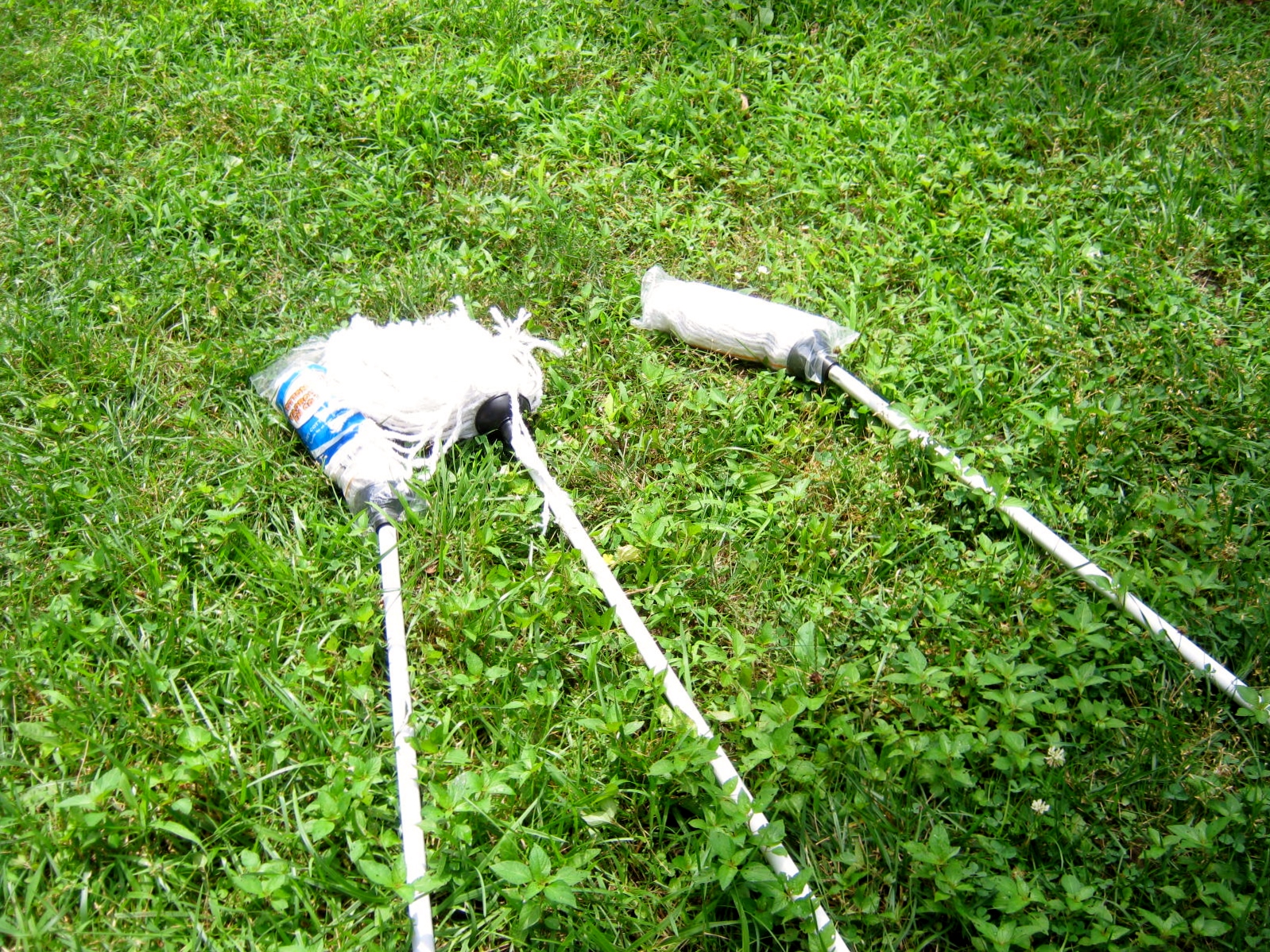
A good outdoor activity for children is mop painting. Start out by purchasing inexpensive mops at the dollar store. Next you will need to round up some food coloring or other paints. Acrylics will work for older children, but due to the EXTREME messiness of the painting, a water soluble paint is a better choice for younger kids, opt for watercolors or washable tempera.
Three colors are plenty, choose primary red, blue and yellow. These colors will blend and create the secondary colors.
Gather three deep containers. Add water and large dollops of paint or food coloring. Combine the water and paint with the mops.
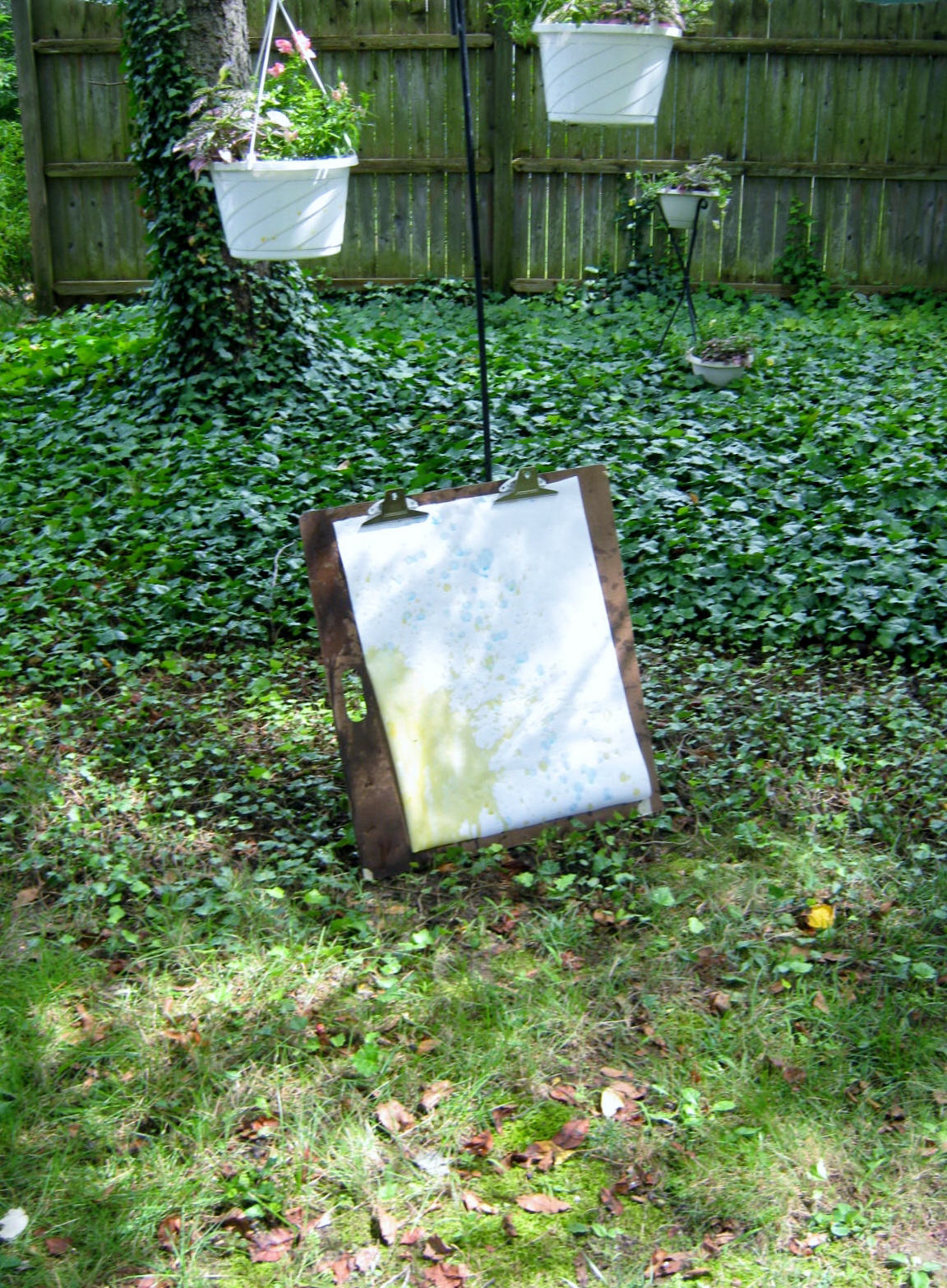
Freezer paper is the perfect canvas. A large clipboard is a good choice for stabilizing the paper. If you don’t have a clipboard any hard, flat surface will do. Lean your board and paper against a pole or chair. Remember, this is a messy project, stay away from anything you don’t want to be splattered.
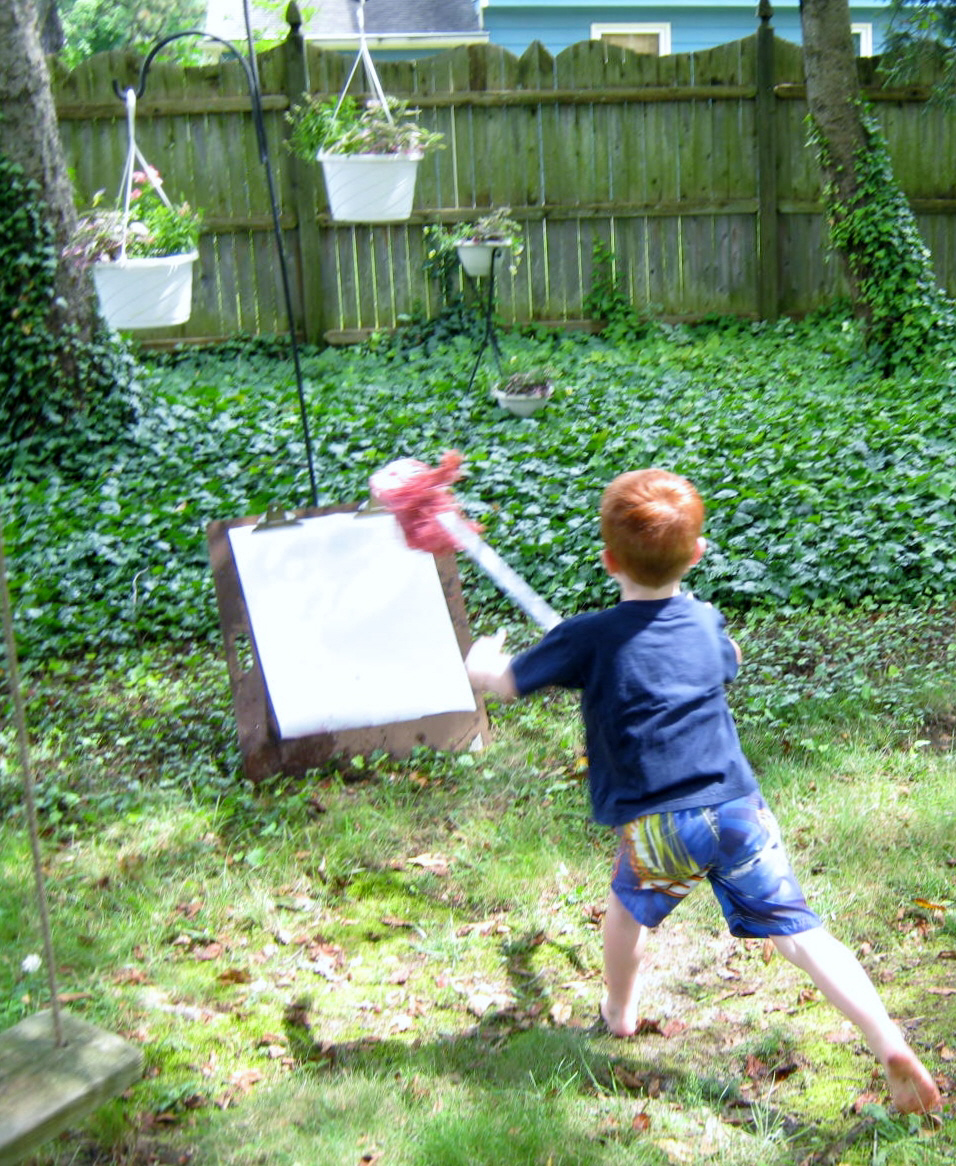
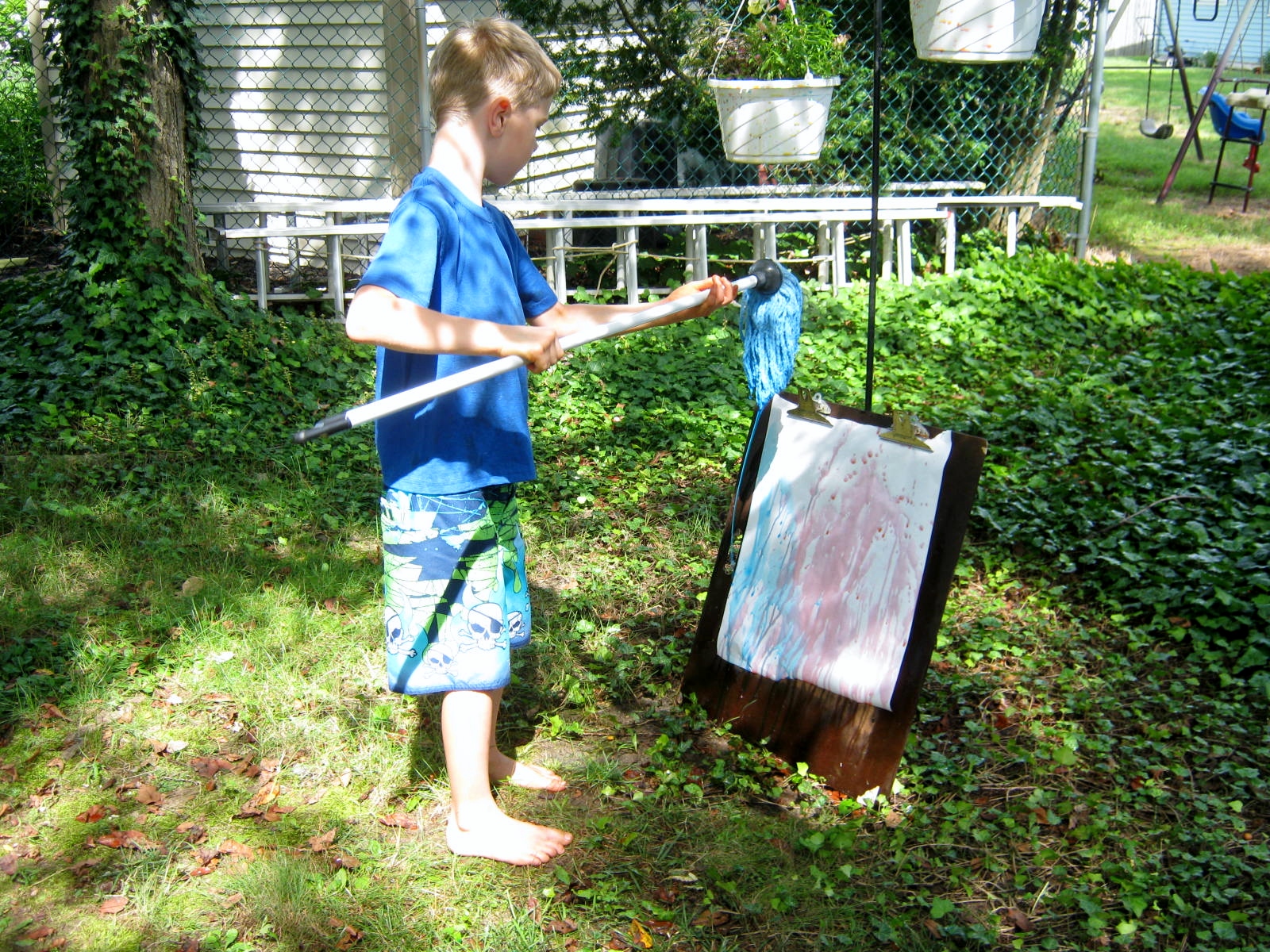
Now for the fun part, dunk the mops, drain excess water back into the container, and throw that paintbrush mop like a spear at the paper. Oh my, what fun we had creating these works of art.
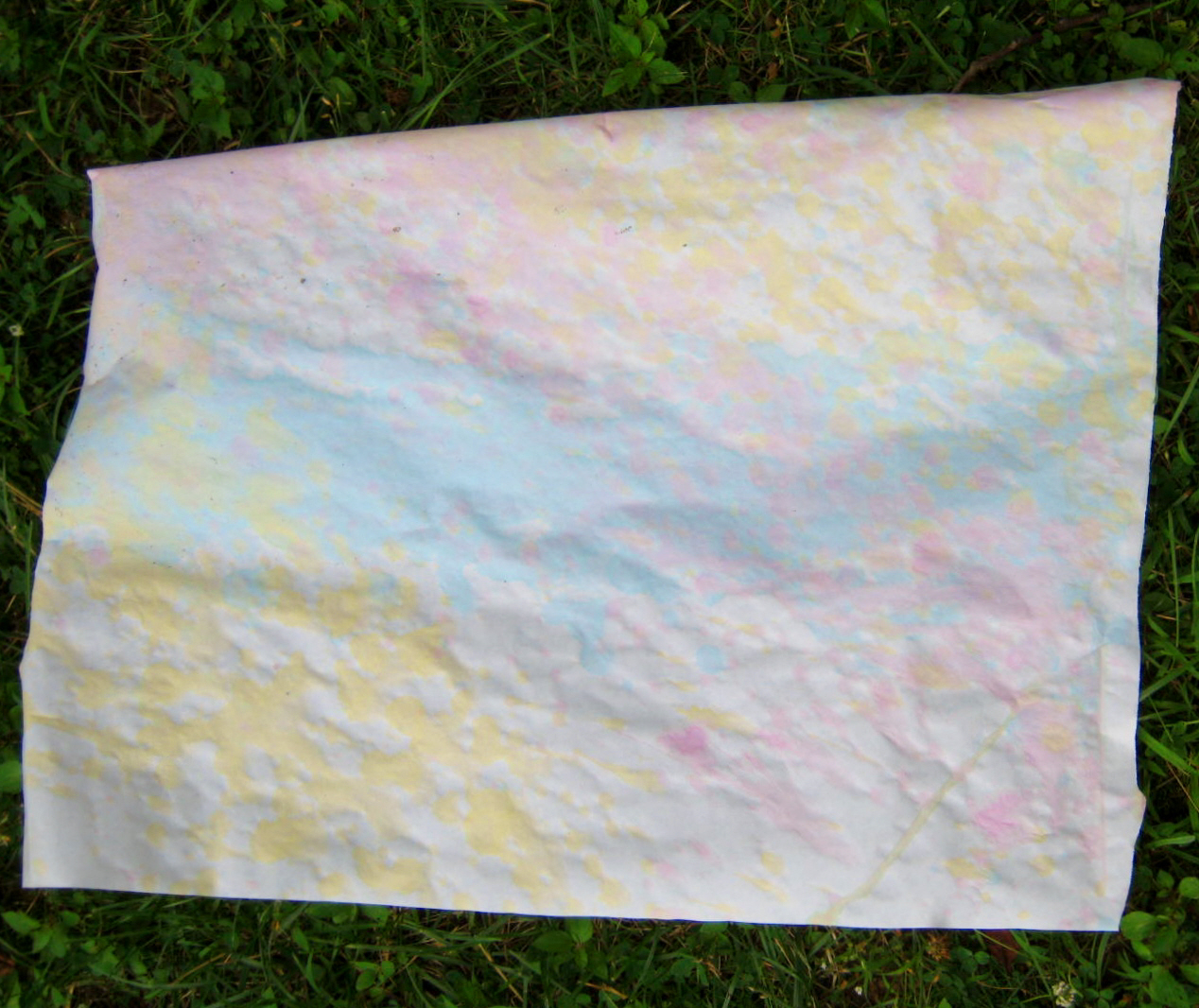
Dribbling is also a great way to add paint. We found that the secret to beautiful paintings was to leave about a quarter of the paper white. Too much paint and all the pretty marbling and blending colors combine into an unattractive tan or brown.
Beautiful! What a great effect. We decided our finished paintings would make terrific wrapping paper. I will iron it when it is dried out completely and roll it onto the cardboard tubes.
Can you tell we had a good time?
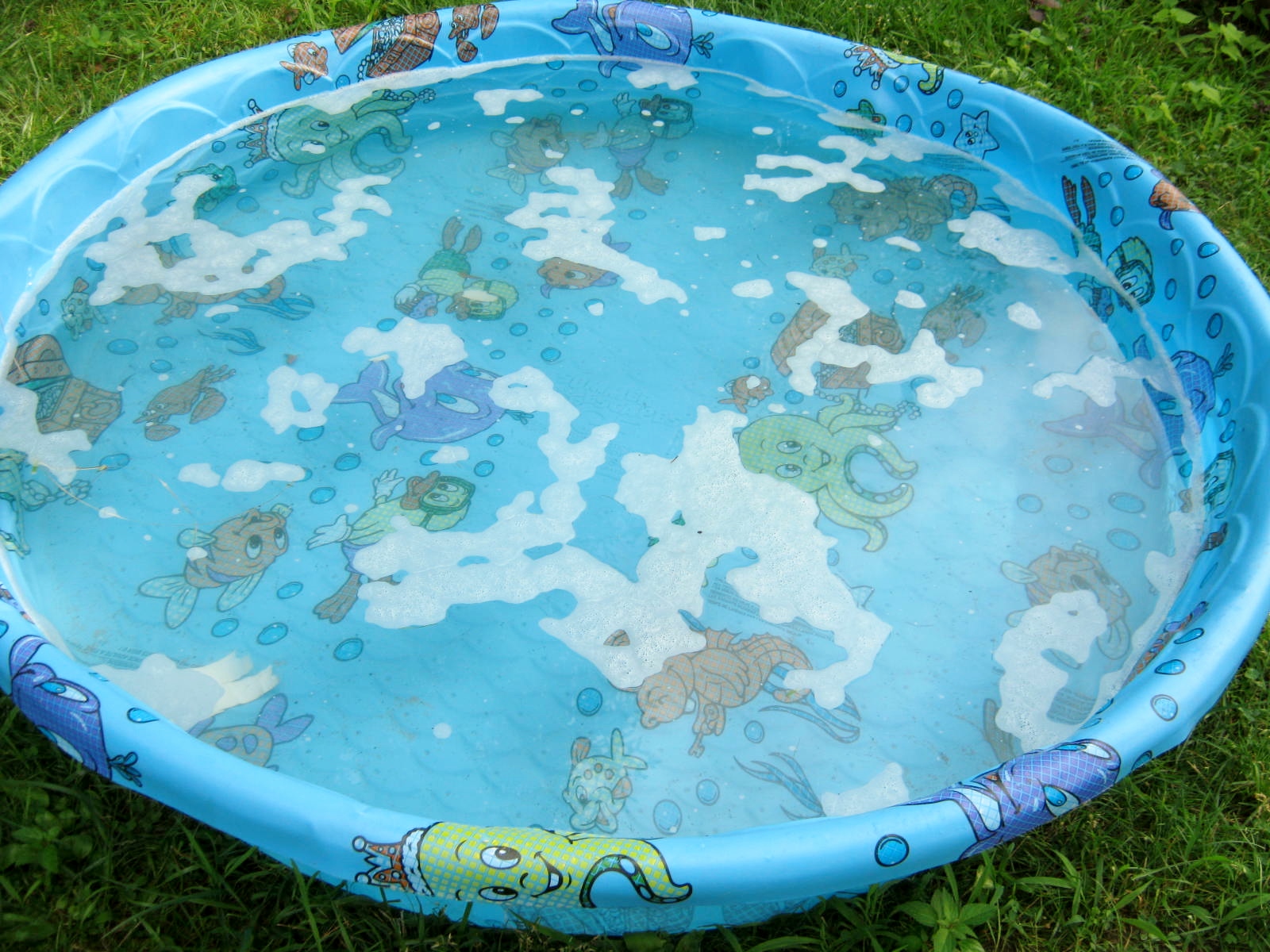
A final word of advice: have a place for washing off prepared before you start. A wading pool filled with bubble bath worked great for us.
Plant – Moonflower Vine
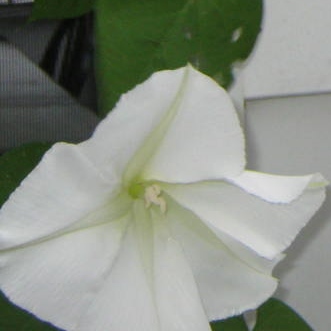
I have mixed feelings about Moonflowers. They are devilishly hard to grow…at least this is true in my case. Every year I am lured by the packages of seeds with the big white bloom on the front. I am also tantalized by the thought of inhaling their fragrance once again. Last year, the one Moonflower vine I grew under lights was killed by an unseasonable frost. This year, I started my seeds even earlier and had three out of a dozen or so seeds sprout and grow. Two of the vines were piddling, but one was a winner. This vine grew and twined itself around all the other small sprouts on my grow table. I was entranced, then disaster struck, the dreaded spider mite. I would not give up on the plant and discard it as I knew I should. Instead I diligently sprayed the plant with a mister several times a day. In fact, I sprayed all my sprouts as a precaution in combating the spider mites. Mites hate moisture, the best way to kill them is to drown them.
Long story a bit shorter…here’s a photograph of my best Moonflower vine ever. The early start, the constant misting, produced a plant that is already blooming for me. It’s been blooming for about two weeks here in Southern New Jersey. This afternoon I spotted a beautiful bud and thought the flower was ready to unfurl it’s petals. Tonight I checked the plant, and yes, a gorgeous bloom had opened and was filling the air with its lovely, ethereal fragrance. How could anyone not love a Moonflower?
My best advice for growing Moonflowers…start much earlier than the package of seeds recommends. When the seeds first appear in nurseries buy a packet and plant them that same week. I soak the seeds for about 24 hours, I sometimes nick the outer shell, but this year did not take the time to do this. Plant the seeds about half an inch down in seed starter. I cover the pot with plastic wrap and place the container near a heat vent. Check for sprouting every day. If the seeds do not emerge within four weeks throw them out and try again. Many times the seeds I plant rot in the soil. I don’t know why, but they do…persevere and plant again.
Peculiarities & Phascination – The Intruder
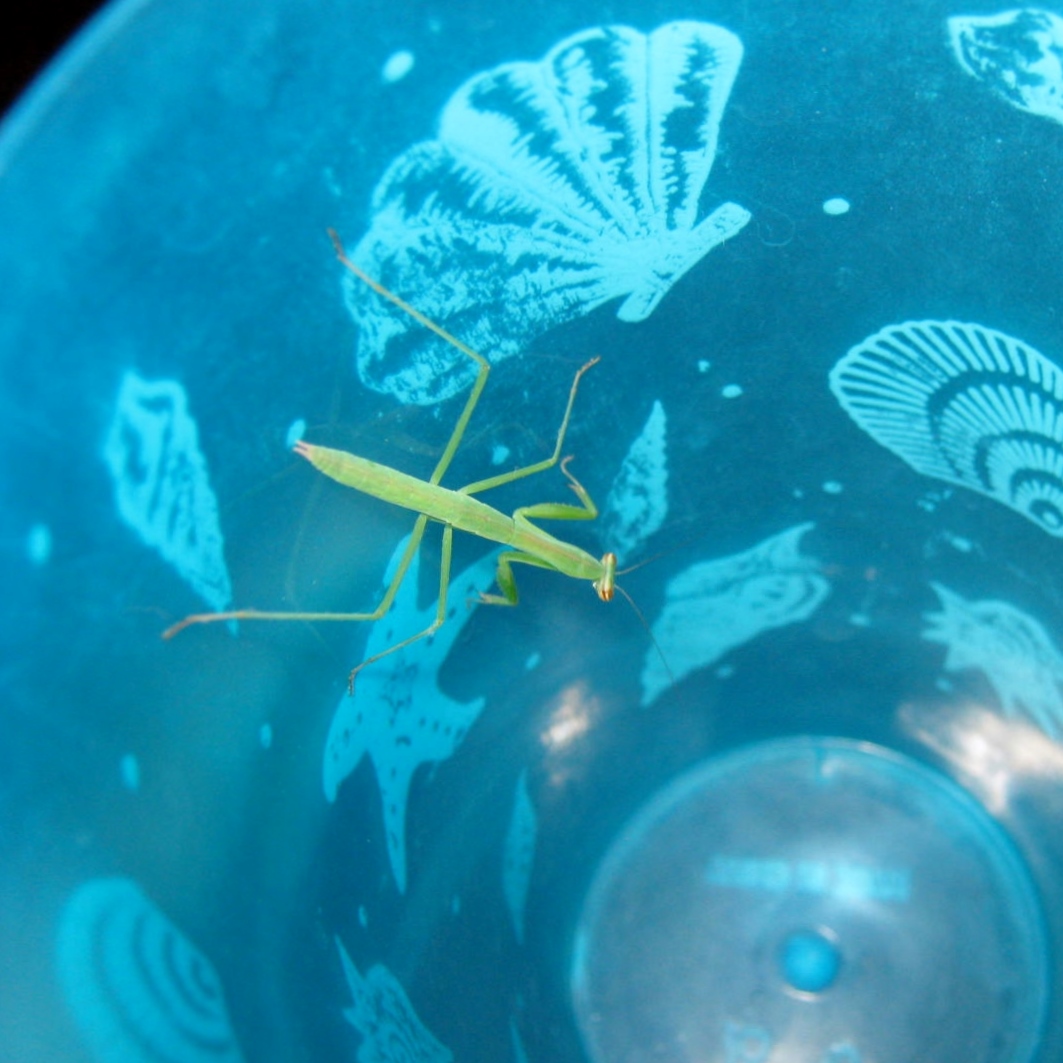
This week I was surprised by an uninvited guest in my home. A brilliant green praying mantis, measuring about an inch and a quarter, somehow found its way into the house. Even though this amazing bug has outstanding predator qualities, and I am sometimes bothered indoors by the occasional mosquito, spider or stink bug, I knew he belonged outside.
A good way to remove beneficial bugs from your home without harming them is to use a glass and a sturdy piece of paper. Place the glass over the insect and slide the paper between the bug and the wall. Voila…Captured! I try to release any bug that is an asset to a garden or to man into the garden.
The mantis exploring his new home on an Echinacea flower.
Peculiarities – Tiny Tadpoles/The Final Edition
My tiny tadpoles are both a success and a sob story.
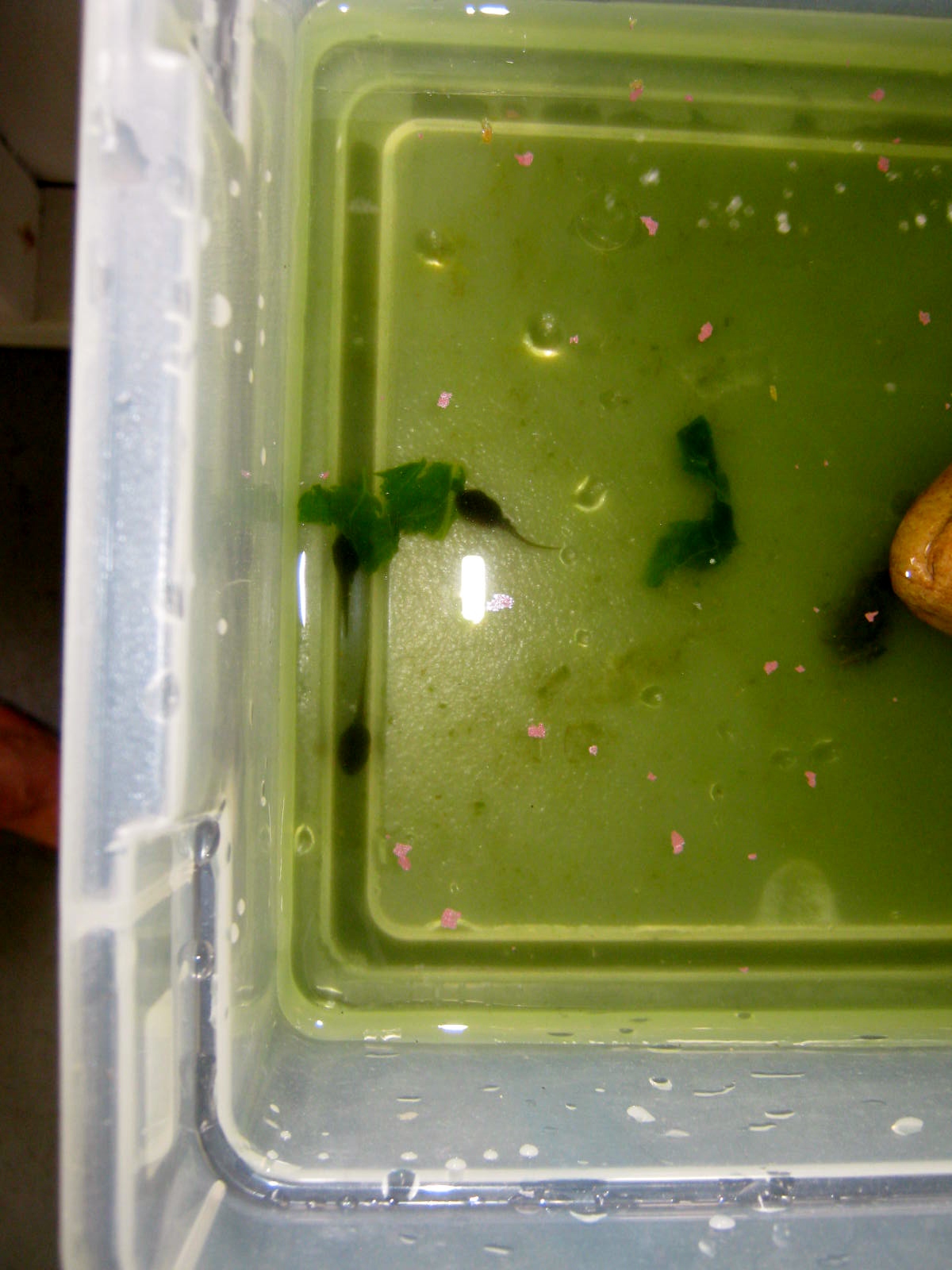
Success – The tadpoles have flourished in a small container being fed boiled romaine lettuce. They are quickly metamorphosizing into frogs or toads. I still have not figured out which species they will ultimately become.
Sob story – After a July 4th weekend camping trip, we arrived home to a small toad clinging onto the side of the rock. I was captivated by the small scrap of life. He had only a stump of tail left, and I knew he would soon have the ability to begin jumping. I resolved to place the container into the garden in a shaded place the next day. The next day arrived only to begin with the discovery of the body of the first toad to morph. I realized that on the screen porch he had begun to need insects to eat and there were few or none. I immediately placed the container outdoors in a sheltered spot and added more water, rocks and a piece of wood that reached the top of the container.
Success – The rest of the tadpoles/frogs seem to be doing fine. I boiled up some more romaine for those who are still in the in between stage of development and checked on the ones who are near total metamorphosis. Every tadpole seems to be doing well right now. Hopefully, in a few days I will have an empty container and be happy in the knowledge that the small toads/frogs are alive somewhere in my yard.
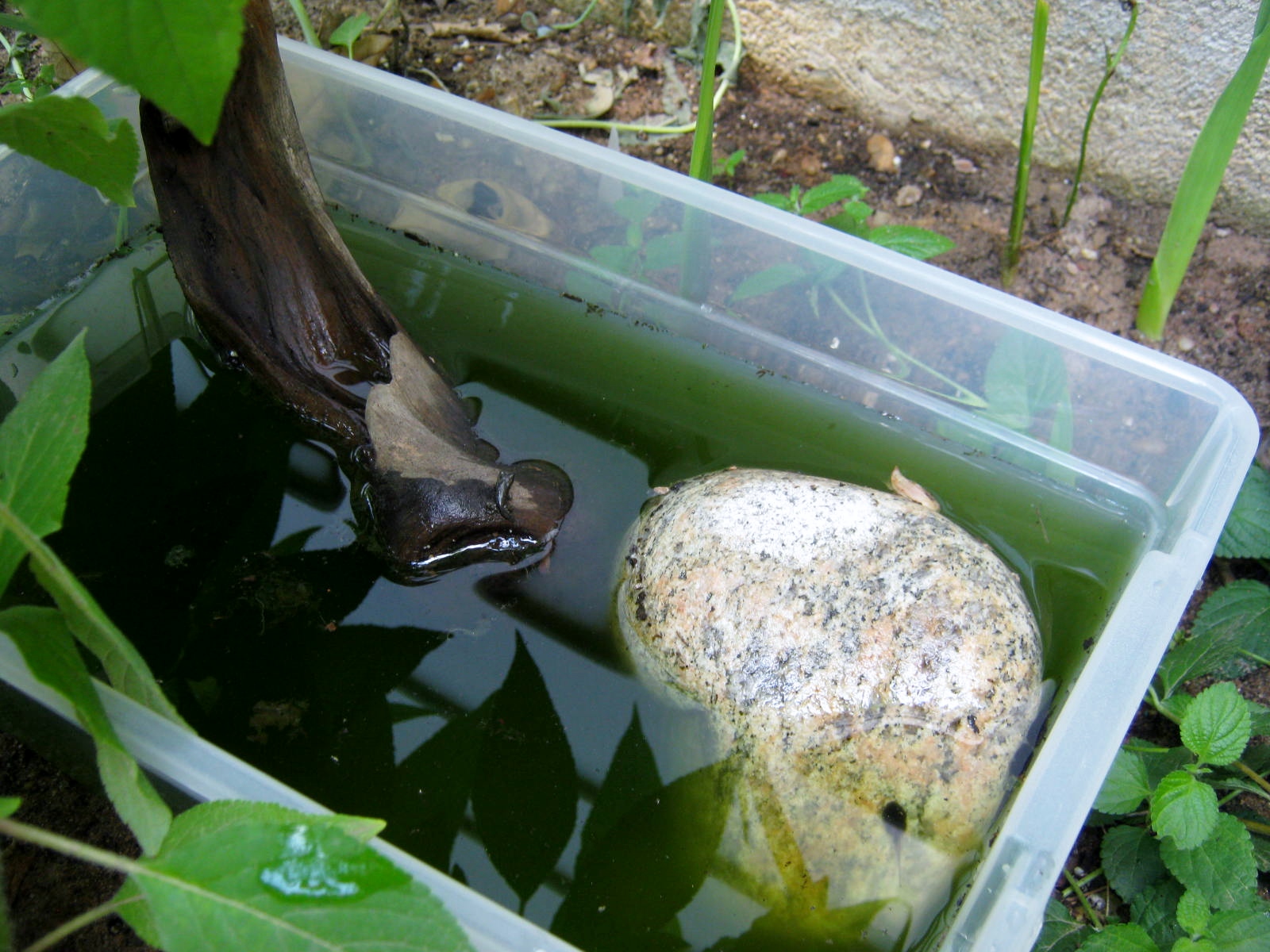
Can you see the almost developed frog/toad on the end of the wood, and the still developing tadpole on the rock?
Here’s a close-up of the frog/toad. My final thoughts on the adventure. I’m very glad I saved the tadpoles. When I first observed them in the puddles I also saw red-winged blackbirds plucking them out of the water as an easy meal. I knew that in their quickly evaporating puddle not many would survive. I’m glad I saved a few. I feel bad about the one that didn’t make it, but have high hopes for all the others. Would I do it again? Oh yes!
Problem-Solving – Update/Sunflower Towers
I don’t always have success with my critter-war weapons, but I did this year with my sunflower towers. Well, strike that, I had success with half of my sunflower towers. They worked perfectly for keeping the critters away from the sprouts and seeds. What I hadn’t counted on was our wet and cold spring…a few of the plants succumbed to soggy feet. I thought about cutting the chicken wire away from the sunflowers, but I decided against it since they are Mammoth sunflower seeds and will only have one bloom. I have grown Mammoth sunflower in years past and the buds have been nipped off pre-bloom by hungry squirrels. I think I will leave the towers in place for a little bit longer. You can read the initial post on my sunflower towers here: Sunflower Tower/The Beginning
Plant Tips – Growing Squash Upright
I find squash and zucchini blossoms beautiful. Even better is the fact that a delicious vegetable will grow after the blossom falls away from the plant. Squash plants take up a large amount of room in the garden. Since I grow my vegetables in the Square Foot Gardening method I don’t want to give up many squares to one plant. I was happy this year to find some good information on Pinterest that led me to good articles on how to grow squash upright. Here are a few of my finds:
Growing Winter Squash and Pumpkins
Square Foot Gardening Squash Tips
Happy Gardening!
Plants – Red, White and Blue in the Garden
Let’s keep our patriotism going all year long! 🙂
I am thrilled with the red mandevilla plants I planted this year. I am growing them in hanging baskets near my porch. They are beginning to send out climbing tendrils. So far, they haven’t succumbed to the very wet weather we have had in the Mid-Atlantic states this summer.
I love the tall, beautiful shasta daisies that grow in my gardens. They are a very reliable perennial. Every year they come back a little taller and a little broader. Who could ask for anything more?
Blue Salvia is a favorite of mine and also a favorite of the hummingbirds. I purchased this beauty shown above, but I was also able to grow quite a few blue salvia plants from seed by winter-sowing.
Pots and Pans – Norma’s Muffins in Red, White and Blue
Let’s keep our patriotic spirit going all weekend-long! 🙂
Years ago, many, many years ago, when I was a new bride, my cousin Norma hand-copied dozens of her favorite recipes and put them in a binder as a wedding gift. I have cooked up many of these recipes, but my all-time favorite remains her muffin recipe. It is a very basic recipe that makes about 18 muffins. I have added all kinds of fruits and without fail the muffins turn out. Once in a while, when I am feeling in the need of cooking even healthier, I will use half wheat flour in place of the white. These muffins are good for using the harder strawberries the supermarkets often sell at a great price. The berries soften and the flavor is intensified when they bake. I’ve included Norma’s recipe at the bottom of the post. Happy Baking!
Tempting Tip: Always slice a muffin vertically rather than horizontally. That way you get a bit of the muffin top in every bite. Delish! These muffins taste even better when lightly toasted and buttered.
Norma’s Muffins (I think I have shared these in a previous post but the recipe is worth repeating)
3 Cups flour ( you can substitute half wheat flour, makes a heartier tasting muffin)
1 Cup sugar
4 tsp baking powder
1 tsp salt
2 beaten eggs
1 Cup milk ( can be 2%)
1/2 Cup salad oil
Mix all ingredients together. Do not over-mix. (causes toughness) The batter will be a bit lumpy. Bake at 400 degrees for twenty minutes. Makes about 18 muffins. The recipe can also easily be halved or doubled.
Peculiarities – Pareidolia…again
Yes, I’ll admit it might be a stretch, but doesn’t this oyster shell resemble Moby Dick? Another good example of pareidolia.
Pareidolia –
Phascination and Peculiarities – Tiny Tadpoles Part II
The tiny tadpoles I collected from a mud puddle are thriving and growing. Their legs are developing. Yesterday I moved them to a larger container, and filled it with about an inch and a half of pond water. I added two rocks, a round tall stone, and a flat pebble. The pebble is partially submerged in the water and balanced on the taller rock. This will let the tadpoles become accustomed to the change in environment before they are ready to become a land dweller rather than live in the water. When the time is right they can crawl out onto the flat pebble and take a look at the world from a new vantage point. I will still keep the container on the porch. I am sure the hungry birds in my yard would make a quick meal of the little swimmers if they had access to them.
I also cooked a batch of food to add to the fish food flakes and slimy leaves I have been feeding them. I boiled romaine lettuce in water until it was broken down a bit. I froze a few of the pieces in ice cube trays and gave the remaining pieces to the tadpoles. Within a few minutes they were devouring the boiled lettuce.
The tiny tadpoles are doing well. I will update their progress in a few days. To read the original post go to this link: Tiny Tadpoles Part 1
Pots and Pans – Frozen Banana Bites
I am reblogging this post…why…well it’s buried in a July 2012 post, and oh my…these quick and easy banana bites are scrumptious.
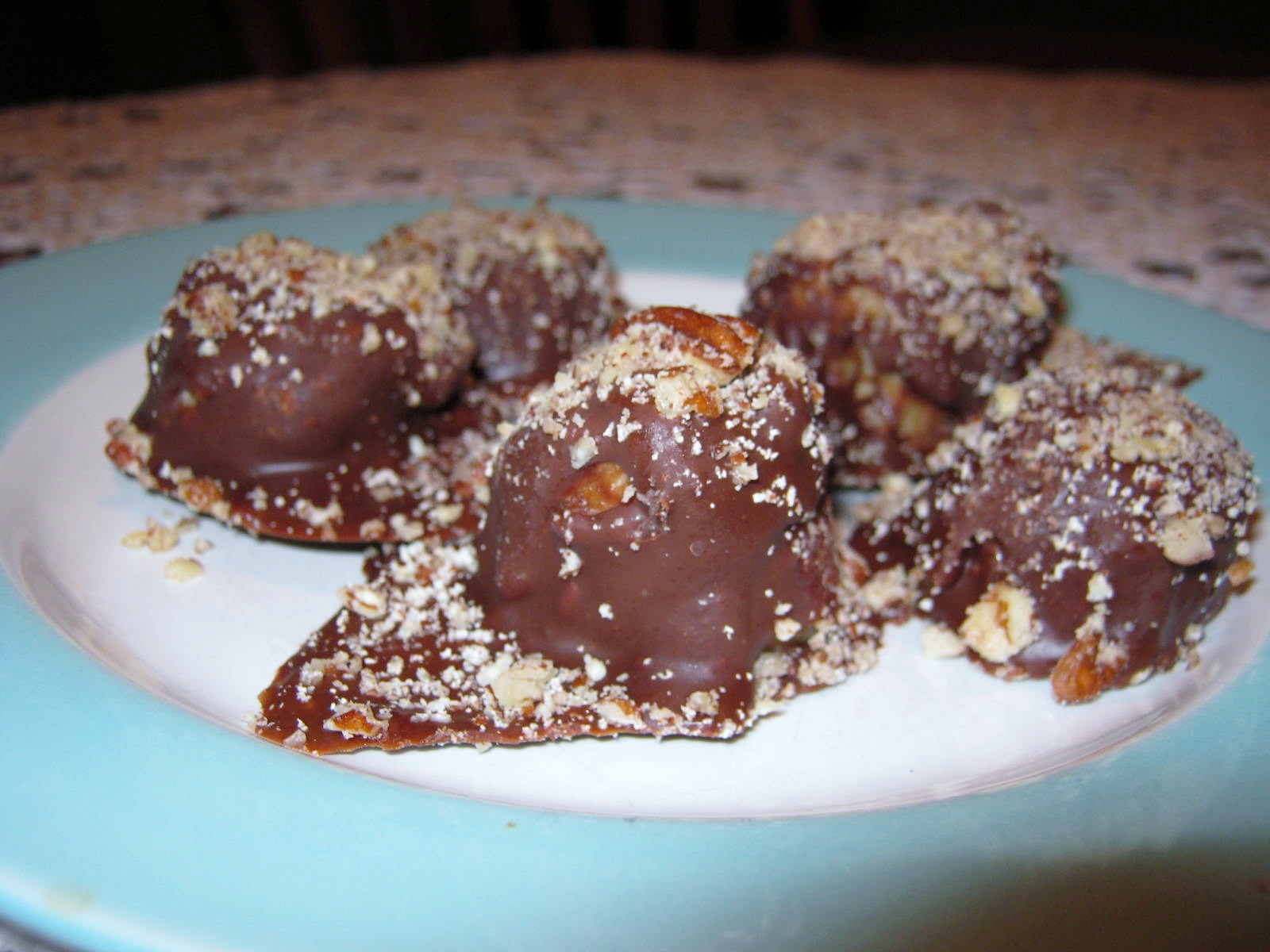
Oh my…oh my…oh my! Once in awhile I come upon a perfect recipe. I found a recipe for Frozen Banana Bites on Pinterest, pinned there from the blog of “(Never Home) Maker.” The recipe on her blog post was for Vegan Frozen Banana Bites. Since I’m not a vegan I adapted my banana bites in my own way. Here is my adaptation:
Frozen Banana Bites
2 whole ripe bananas
1/3 C peanut butter
1/3 cup chocolate chips (I used Ghiardelli 60% cocoa)
Pecans for garnish chopped fine
The recipe is so EASY!!! Cut ripe banana into about 8 – 9 pieces. Set aside in a bowl. Melt the peanut butter and chocolate chips 20 seconds at a time in the microwave. It only took me 40 seconds in all to melt the chocolate. Don’t heat the chocolate too much or it will seize up on you and turn into a…
View original post 253 more words
Posies – Simplicity
Black-eyed Susan with Vitex (Chastetree) Foliage
Although I have created many complicated bouquets with a wide variety of flowers, I still think the simplicity of one type of flower with some beautiful foliage is the most stunning of all arrangements. Likewise, my favorite verses in the Bible are often simple and to the point and oh so easy to understand.
Jesus answered, “I am the way and the truth and the life. No one comes to the Father except through me.” (NIV) John 14:6
Blue Hydrangea Bouquet
Pink Hydrangea Bouquuet
Pleasures – Volunteers
I’ve been wandering the yard with trowel in hand looking for late season volunteers. These are plants that have self-seeded and are sprouting in the damp and hot weather we are having at the present time. I don’t mulch my flower beds and the volunteers are the reason why. I always have a few bare spots in my gardens left by plants that bloom quickly and die back just as fast; the small volunteers are perfect for filling in the bare spaces. Removing them from between the sidewalk cracks is a little dicey, but I know if I don’t they won’t thrive for very long. Onward Volunteers!