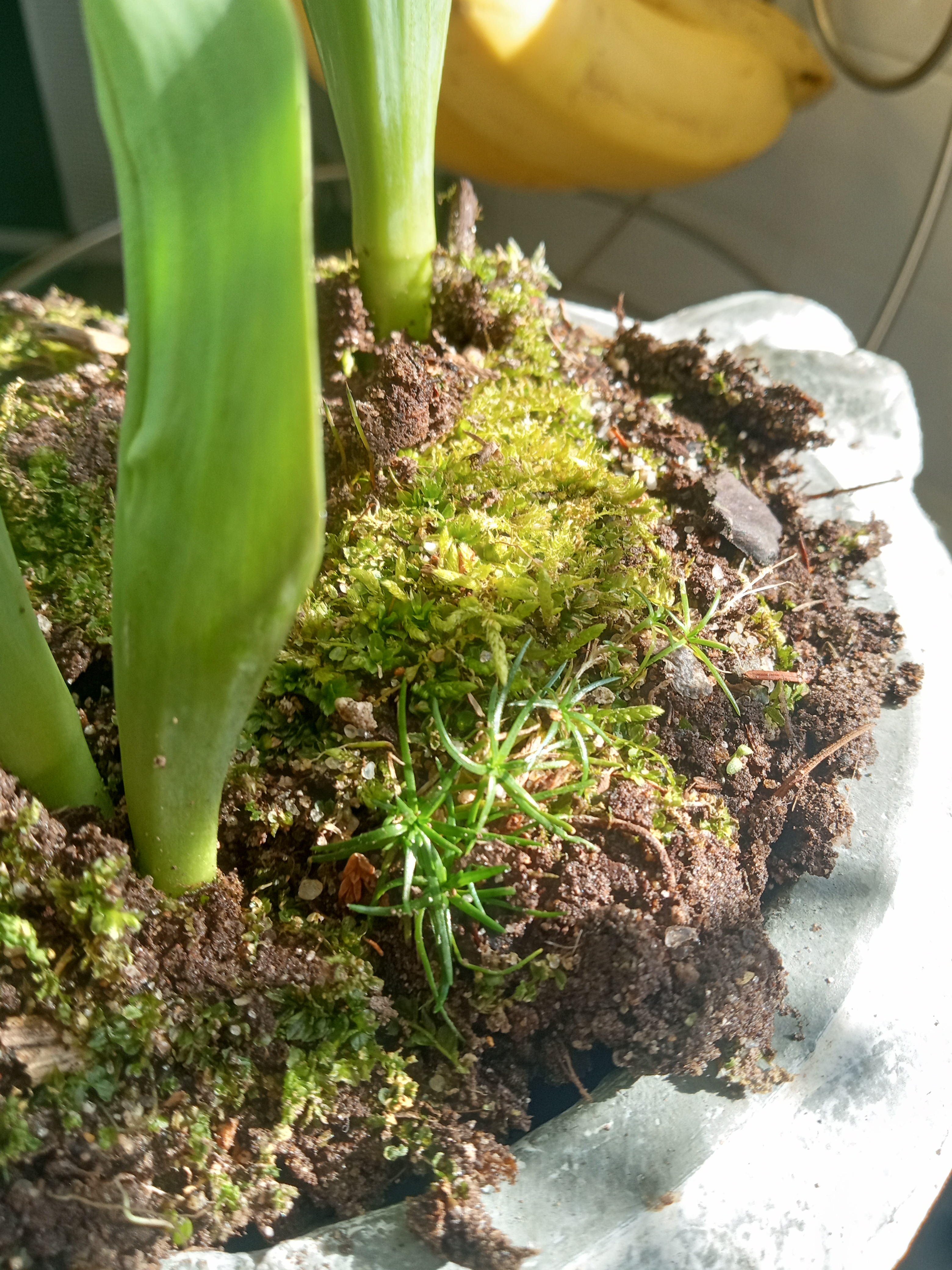
Oh, Happy Day, even though the sky is grey and cloudy. This week, I found potted tulips for sale in my local supermarket. At the top of the spear of foliage, I could see that they would be the shade of yellow I love. Sure enough, they have blossomed into a gorgeous, pale yellow. I put them on my counter near the window during the day, so they won’t grow too leggy. I also put a bit of moss on top of the bare earth to give it a more natural appearance. These beautiful booms certainly brighten my day and mood.
A few of the many shades of blue pansies and violas I have grown in my gardens over the years.
Pansy and Johnny-Jump-Up are a variety of seeds I will be sowing this week. It seems early, but I should have sown them four weeks sooner. I don’t follow the recommended dates on the back of the packets. Earlier is always better if I want to have larger-sized plants for the Spring Garden. If my seedlings are pitifully small, I fall victim to the lure of lusher-appearing plants in the local nurseries.
I purchased several interesting varieties from Baker Creek Heirloom Seeds at the end of Autumn, and I can’t wait to see if they are as lovely as the photograph on the package. (Dilemma: I don’t remember the ‘safe’ spot I stored them in.)
The seeds of Pansy and Johnny-Jump-Ups sprout with some bottom warmth and humidity but also have one crucial requirement: they must have total darkness. I will put a plastic tray over the top of my flat and also cover that with a dark, wet washcloth. This will seal out any light rays that might interfere with sprouting.
Organic seed starter and sterile organic potting soil are what I use to start my seeds. The plants develop robustly if I fill the bottom 3/4 of the flats or pots with soil and the top quarter with seed starter. The foliage sits against the quick-draining starter, and the roots reach down into the richer soil. Two types of grow-lights work well for me: overhead and adjustable surround wands. A sunny window provides natural light and is also a good choice.
One variety I loved, purchased from Baker Creek last year, was Laeta Fire, a viola with dime-sized blooms perfect for flower pressing. I have a few seeds left in the packet and will grow them again. You can see how small this flower is in comparison to the normal-sized geranium leaf alongside it. When I persevere in my gardening throughout the winter, the process brings me a sense of peace and renewal.
I enjoyed a quick walk on this second morning in January. The air, crisp with cold, was stimulating, waking me up and opening my eyes to the beauty in the winter landscape. The limbs and twigs of the trees against the chilly sky are God’s sculptures raising their arms toward the heavens. I could almost imagine them beginning to sing.
I searched for dandelion cones with fluff emerging from their tips. I am partial to dandelions; in fact, I have named 2024 my year of the dandelion. I want to be as productive and as resilient as this beautiful plant.
What do I love about dandelions? Perhaps it’s the color and shape. The flower reflects the Sun. I admire the resilience of dandelions. They will bloom wherever they can and grow lushly, even within the cracks of the street and sidewalks. Just today, I photographed this determined plant thriving in the smallest of spaces between the curb and the blacktop. I have read recently that one dandelion plant can produce up to 2,000 seeds. I hope to be as productive as the dandelion and spread as much GOOD NEWS as possible.
Here’s a fun project to do with children. You can string the unopened pods of dandelion seeds onto a piece of thread, and within 24 hours, they change and open up into perfect spheres. It’s so easy, and if you choose the right place, they will reflect the sunshine and glow and bring a touch of magic into the room. The photos below show the process. So much fun!
The candy is light enough not to break the string but heavy enough to give it a bit of weight. I love bringing a touch of whimsy to winter days.
I don’t have much growing in the garden, but my IAVOM arrangement for the first day of 2024 contains the few flowers and pieces of foliage still blooming.
Contained in the vase is a Bidens blossom. This tiny flower is about the size of a quarter. It is inconspicuous in the garden border during the summer, overtaken by plants that grow exuberantly. After these plants die back in the cold temperatures, the Bidens thrive for several months. The Spruce has a great article on how to grow Bidens perennials in the garden.
One pansy was blooming brilliantly in a terracotta pot in the backyard. Hurrah! It is bedraggled in a few places, but on the whole, it is still lovely and perfect for Cee’s Flower of the Day.
Dandelions are within the vase but opened after I took the photograph. There will be more to come on dandelions tomorrow. I love the spent seedhead. It’s done its job, and the umbrella-like pappus dispersed all the seeds into the air.
Fennel is still filling the garden beds in various heights and sizes. When I picked a few sprigs for the vase I momentarily smelled that distinctive licorice fragrance the foliage puts out. This wonderful herb is one of my major host plants for butterflies. I imagine many Black Swallowtail caterpillars on the fennel come to Spring when I daydream about my 2024 gardens.
Lastly, I picked a few pieces of Butterfly Bush foliage, still glowing blue-green in the grip of winter weather, and used those leaves as a base for the flowers.
Sometimes, much like today, I need to focus momentarily on something simple and beautiful, and set aside every nuance that might darken my day. Ralph Waldo Emerson’s quote, this flower, both do me good during a day of running around, cleaning, and cooking. God bless you all on Thanksgiving Eve.
The roses are a mirage of my memory now. Photographed a few years ago in the Longwood Conservatory, the rose hall has been torn down and is being replaced by a new, more modern structure. I will miss walking alongside the beautiful bushes, and hope rebuilding will not be a protracted project.
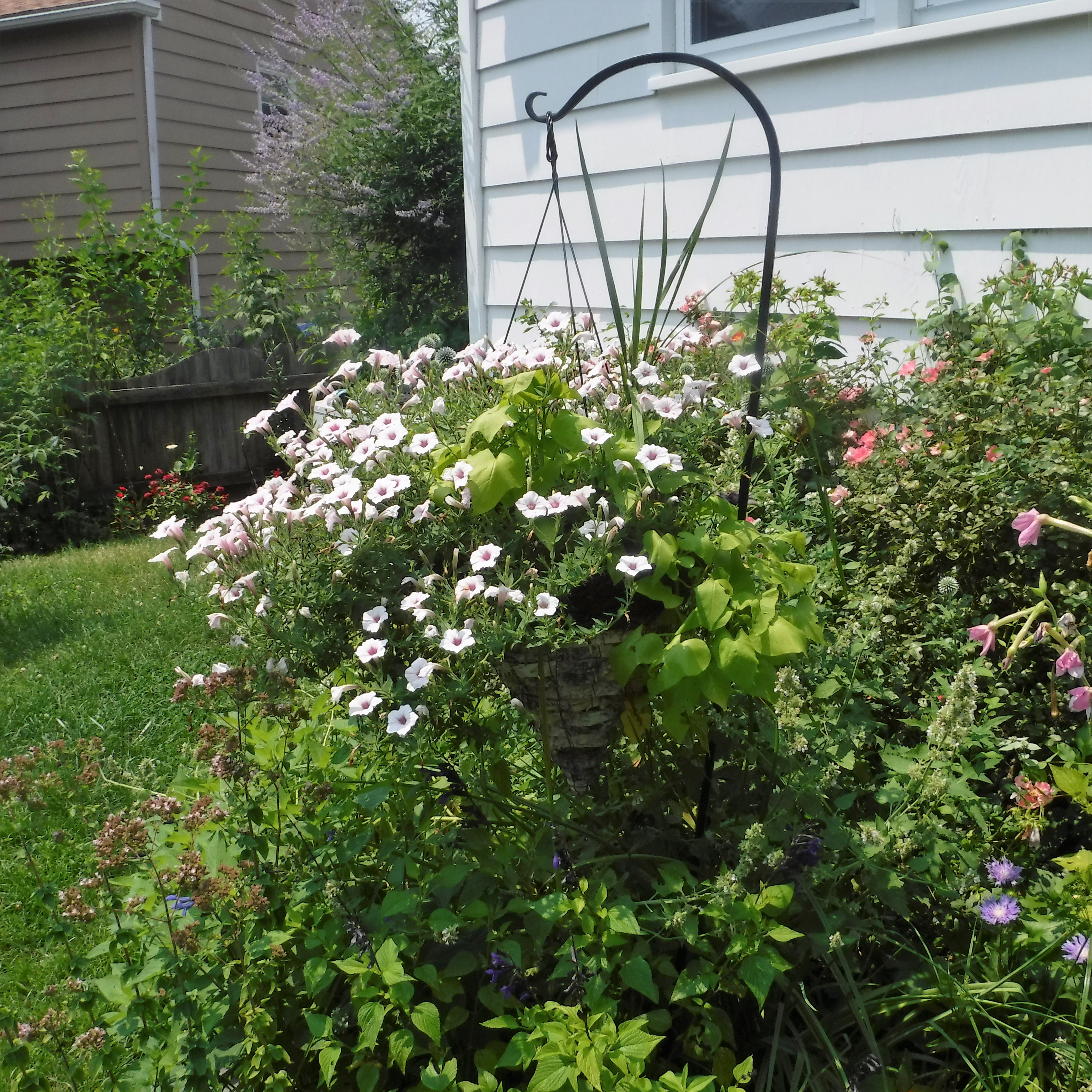
I can’t remember the source for this beautiful petunia, but oh my, am I glad I found it. I planted it up in Spring with some Sweet Potato Vine and have been in love with it ever since. It really lives up to the Proven Winners Brand description of fillers and spillers, for it certainly fills the basket and spills over the side. Beyond that, the color of the plant is extraordinary, truly a silvery pink. The flowers are small and compact, and even though I try to deadhead them, they don’t seem to need it to continue to bloom in abundance. I highly recommend this lovely flower. It is worth every penny you pay for it.
Only one plant, potted up in a hanging basket in the Spring, has expanded in every direction. Amazing! It’s still growing strong and fast.
Supertunia Vista petunias are very vigorous, with mounding habits that can reach up to 2 feet in height in the landscape and will trail over the edges of baskets and containers up to 4 feet by the end of the season. They are fantastic landscape plants and are great in large containers, where they function as both fillers and spillers. In garden beds, they will work either in the front or middle of the bed. They have medium-sized flowers.
A bonus for those who press flowers…usually petunias are iffy for successful pressing. If I gather these blossoms when they first open, although very fragile and thin, they retain their color and veining. Because the blooms are not as large as a standard petunia, they work in smaller-sized pressed flower settings too. Beautiful.
Asclepias syriaca, common milkweed, is now firmly established in my butterfly garden. Started from a seed, the plant piddled around for a year or two before growing tall last summer. It has naturalized during the time in between then and now, and there are several large clumps of it throughout the bed.
Don’t hesitate to try some common milkweed in your garden if you want to help Monarch butterflies thrive. Milkweed is also a great flower/plant to grow for pollinators too. The bumblebees were enraptured by the bloom, and I was pleasantly surprised by the fragrance of the flowers.
The pollinators did a good job and a few of the flowers have become small pods.
You can see how conditions have been almost perfect this year for growing milkweed. That’s me, standing beside the milkweed about a week ago. Since the photo was taken, the milkweed has grown at least another six inches. My husband estimates it is near seven feet tall.
Grow milkweed in full sun if possible. My garden bed gets a bit of morning shade, but in the afternoon the area is sunny. If you grow from a seed as I did, be patient, it takes a year or two for the plant to become established.
My choices for IAVOM (In A Vase on Monday) are definitely along the patriotic lines and use red, white and blue flower choices.
Along with Blue Salvia, White Balsam and Alyssum, I used one of my favorites, Red Monarda/Bee Balm. This beauty seems to bloom every year just in time for the Fourth of July. In my eyes, it is quite the appropriate flower for July; it resembles bursting fireworks. The Bee Balm is a quick bloomer, and only thrives briefly in my garden beds. Already, it is showing signs of the fungus that plagues it every year. Somehow, it survives the blight and returns for me every year.
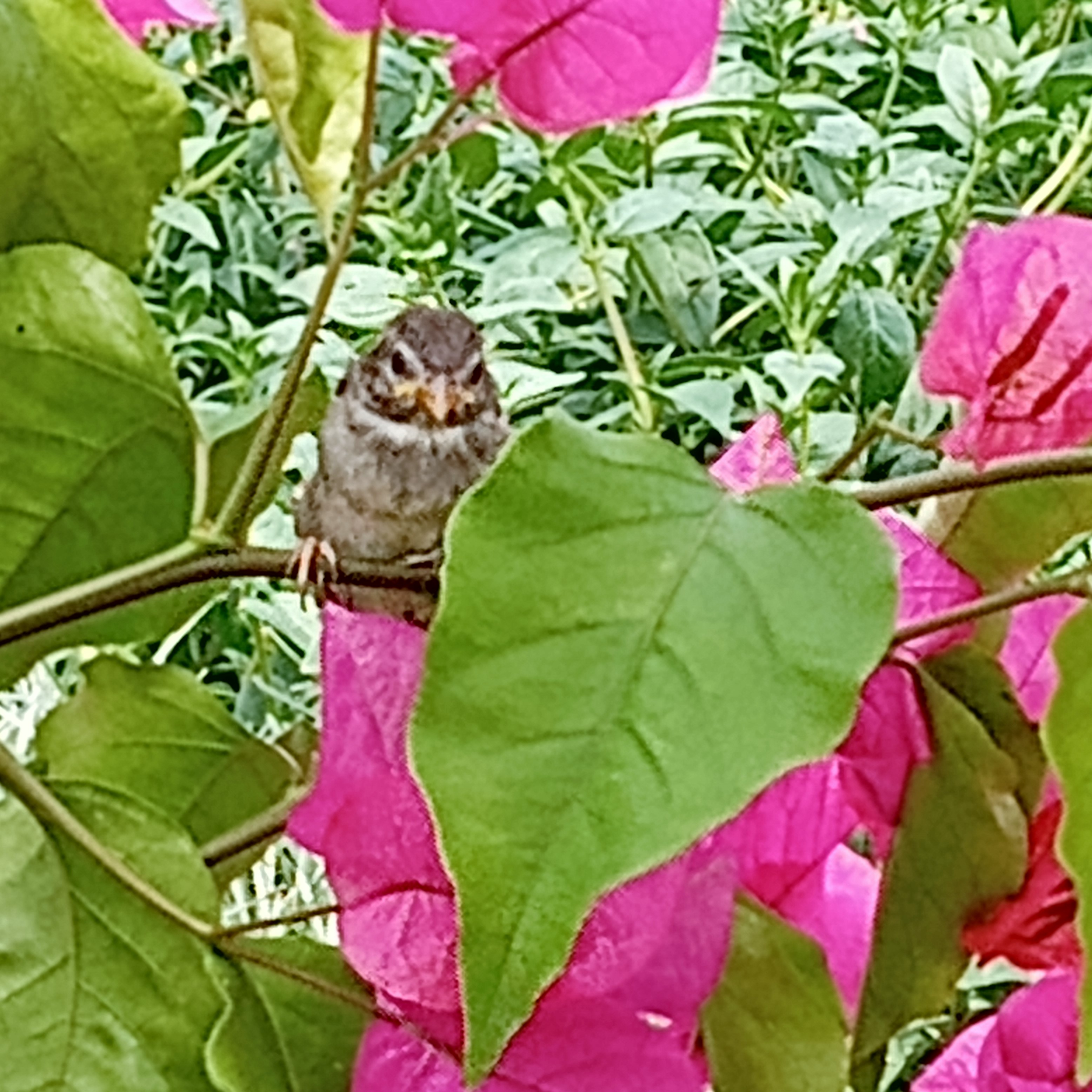
Eyes were upon me, I felt something watching as I browsed through a greenhouse in search of bedding plants this year. It was a small fledgling sparrow, its feet wrapped around a twig of a bougainvillea plant in a hanging basket. I was in love with his sweet expression, but then wondered if it was sweet, or maybe a bit annoyed at me for disturbing his space. I bought another bougainvillea hanging near the one he perched in to remind me of the moment. Sweet. I think this is one of my favorite photographs taken in May.
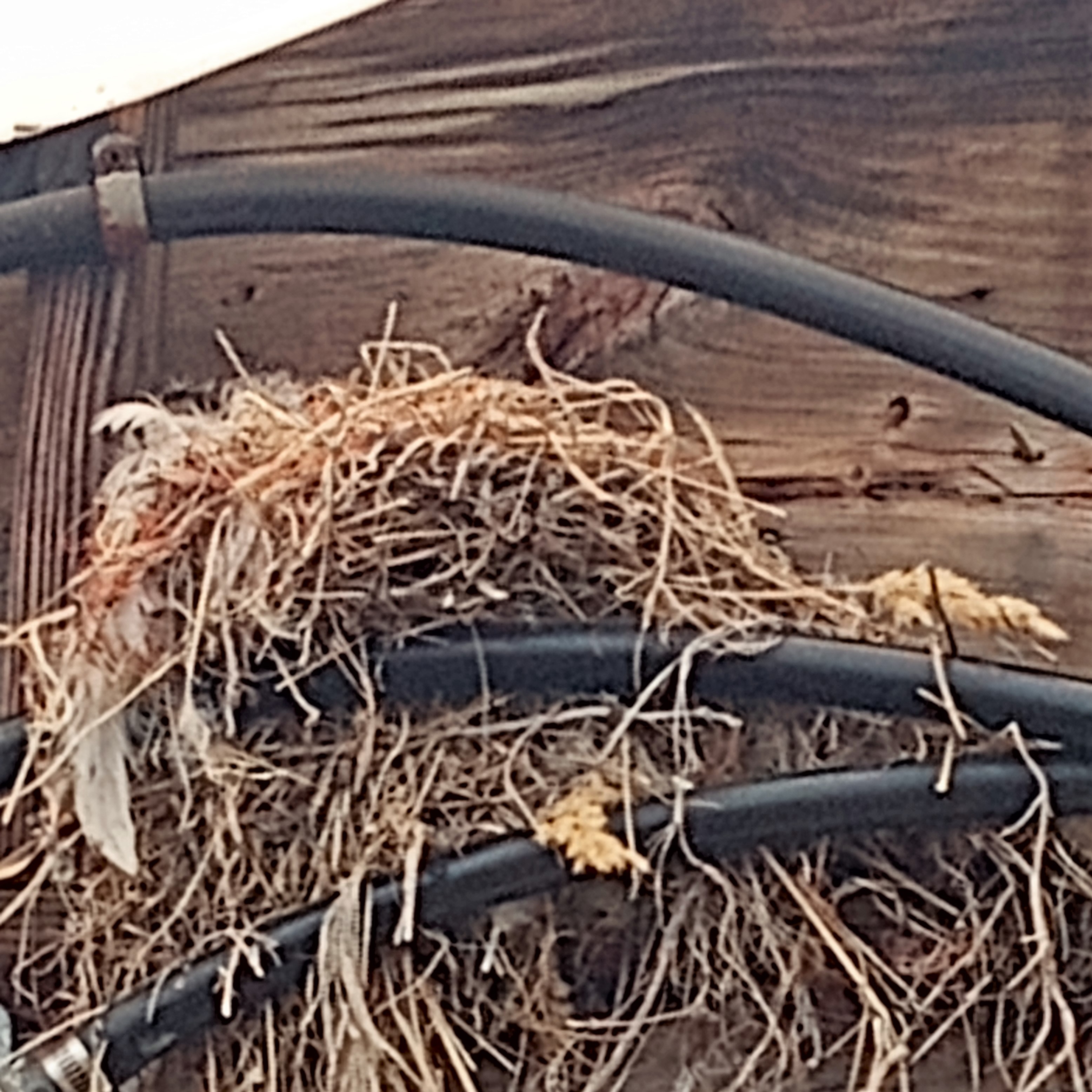
As I left the greenhouse, I noticed the nest he occupied as he grew above the door. The bougainvillea flower is part of Cee’s Flower of the Day.
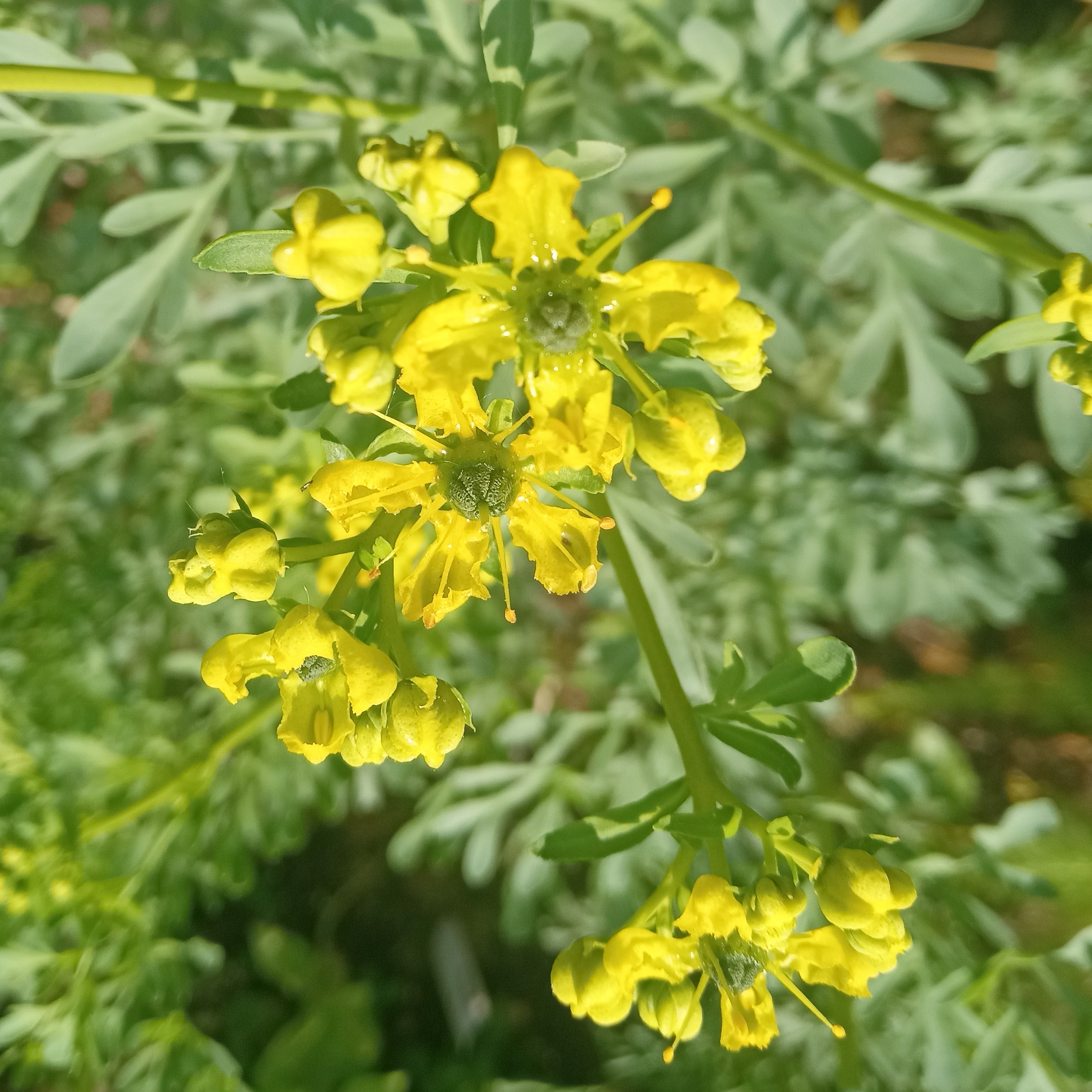
Rue (Ruta graveolens) is called the Herb of Grace.
It was a common herb believed to keep away witches, and that folk use evolved into the Catholic Church’s practice of dipping branches of rue into Holy water and sprinkling it over the heads of parishioners as a blessing, which earned it a common name for the plant of “herb of grace.”
Rue is a fabulous addition to a Butterfly Garden. Last year, planted in a sunny spot in my garden beds, they grew and thrived, hosting many eggs and caterpillars of Black Swallowtail Butterflies.
I didn’t cut them back in the Autumn. In Spring, they began to grow at the tips of rather leggy stems and were soon loaded with buds, and afterwards bloomed a brilliant yellow flower. They have a unique appearance, rather sticky in the center. This area is hard and forms into a rounded seedhead.
The foliage is a beautiful blue-green and presses perfectly. There is a caution for people with sensitive skin – Rue can cause phytophoto dermatitis following sun exposure in those susceptible to that condition.
Grow Rue in full to part sun in well-drained soil. This is a wonderful herb and is a great host plant for Black Swallowtails.
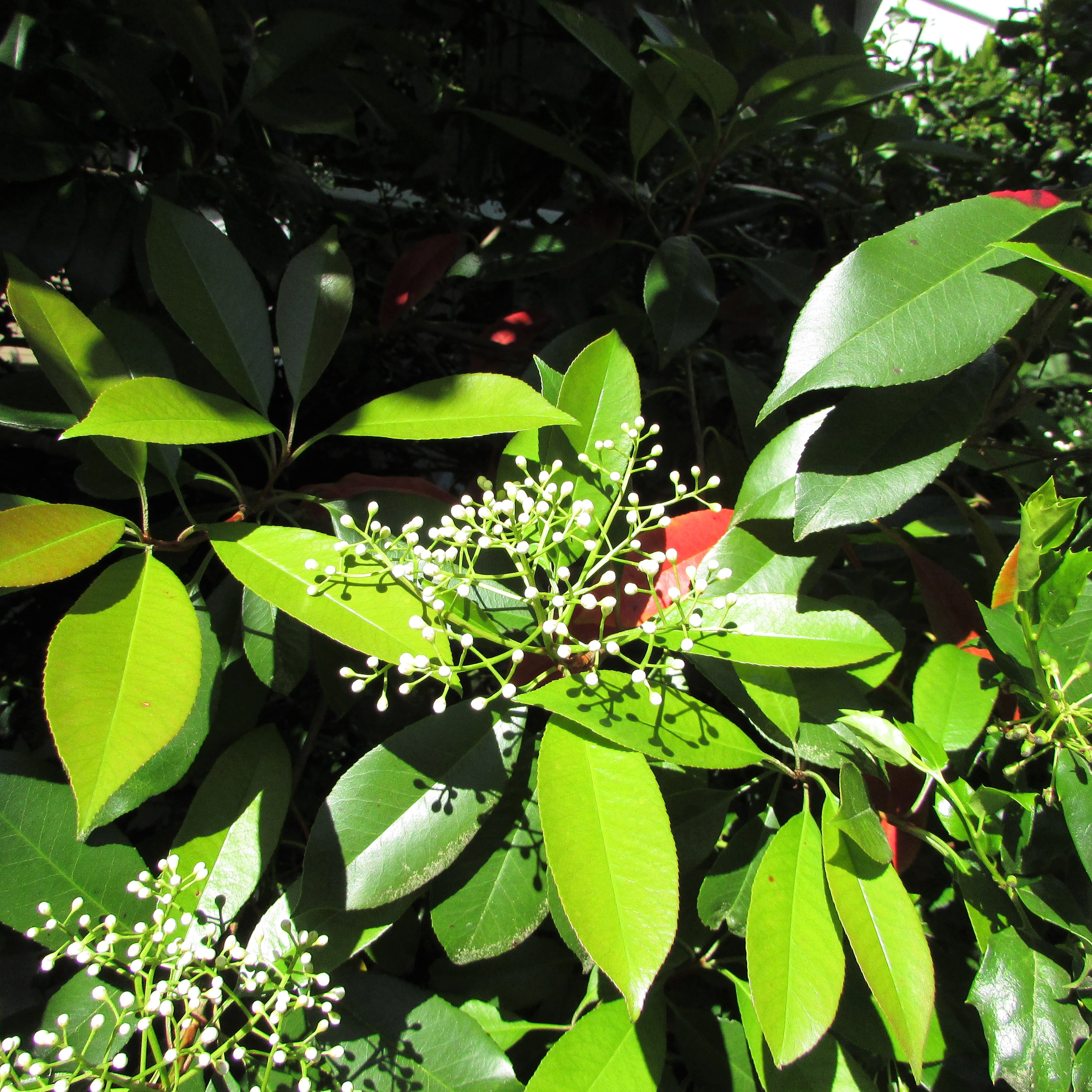
Such a busy time of year. I’ve been lax with blogging, but I so love taking part in the IAVOM challenge, I scurried around the yard cutting stems today before I began planting out seedlings. The little goldfinch is a reminder of my first glimpse of brilliant yellow goldfinches this past week. I’m so happy to see them in their summer colors. The bouquet is created with Japanese Photinia, yellow tulips edged in pinks, and a stem of comfrey.
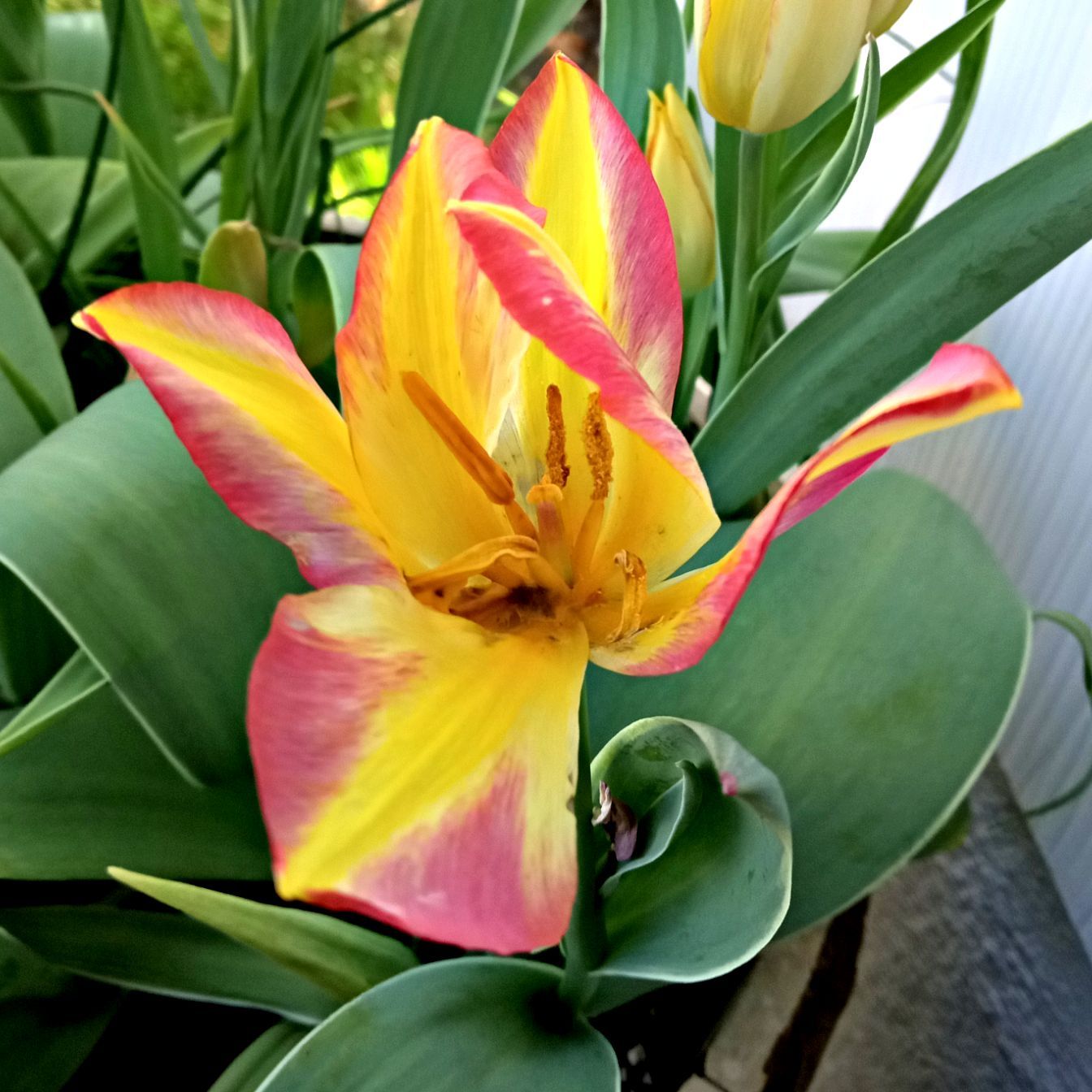
As it matured, the colors of this yellow tulip became even brighter. Lovely! I think this tulip is worthy to be a part of Cee’s Flower of the Day.
The comfrey blooms once a year. I am going to save seeds to send to my sister who has begun a Flower Farm in North Carolina.
Not only is it an evergreen through the winter, it blooms in the spring. The new leaves are a gorgeous shade of blush pink/red. Japanese Photinia is a perfect choice for a garden tree/bush.
I looked for a periwinkle a few days ago, and found nothing. I didn’t know it was hiding out within the mass of ivy beneath the pines. I love these small flowers. Now I know for sure Spring is on the way in South Jersey. It’s really cold and windy today, but this tender little blossom gives me hope. My periwinkle is part of Cee’s Flower of the Day.
On a day filled with windy March bluster, I found first blooms in the 2023 garden beds. Top left to bottom right: Japonica, Crocus in three colors, hyacinths and a perky daffodil.
I could interpret last week’s sixty-degree temperatures as a sign Spring is on the way, but I have lived through many seasonal changeovers, and I know that even though twilight is coming later every day, the hope of Spring arriving early is just folly and there are still weeks of Winter to live through.
Tulips are my Flower of the Day, part of Cee’s Daily Flower Challenge.
I have grown the yellow tulips from bulbs I purchased in Autumn. Past attempts at forcing them have been mixed. I have kept them bare and in a cold place, forcing them in water. This year I planted thickly in terracotta pots, about six bulbs per pot, and left them outdoors on the porch for several months. I wasn’t sure when I should bring them in, but the tulips themselves told me by thrusting leaves above the surface. I bring one in each week, and this pot is my first success. It is a bit leggy, but grand just the same. I support the overgrown stems with small twigs in the soil. I like the seasonal look they give, and even though thin, they support the leaves and stems perfectly well.
The Longwood Gardens Conservatory boasts a gorgeous display of orchids. Not only can you view hundreds of varieties, you can also gaze out upon the ongoing construction of Longwood Reimagined in the Orchid room. There are many signs on the grounds, and articles available on the web, that apprise visitors of the future gardens and buildings. It’s quite exciting to imagine myself walking in these structures in the future.
While the sun glare, magnified through the window, can make it difficult to take a larger photo, a close-up of these beautiful blooms in the orchid room is enhanced by the back-lighting.
There is no one dominant species of orchid in the display, but I am always drawn to the faces of the Paphiopedilums. Just like pansy blossoms, they seem to have a perky personality.
This lovely orchid almost seems artificial. The inner recesses of the labellum are sunrose yellow, the January 30th color for City Sonnet’s January Colors and Letters.
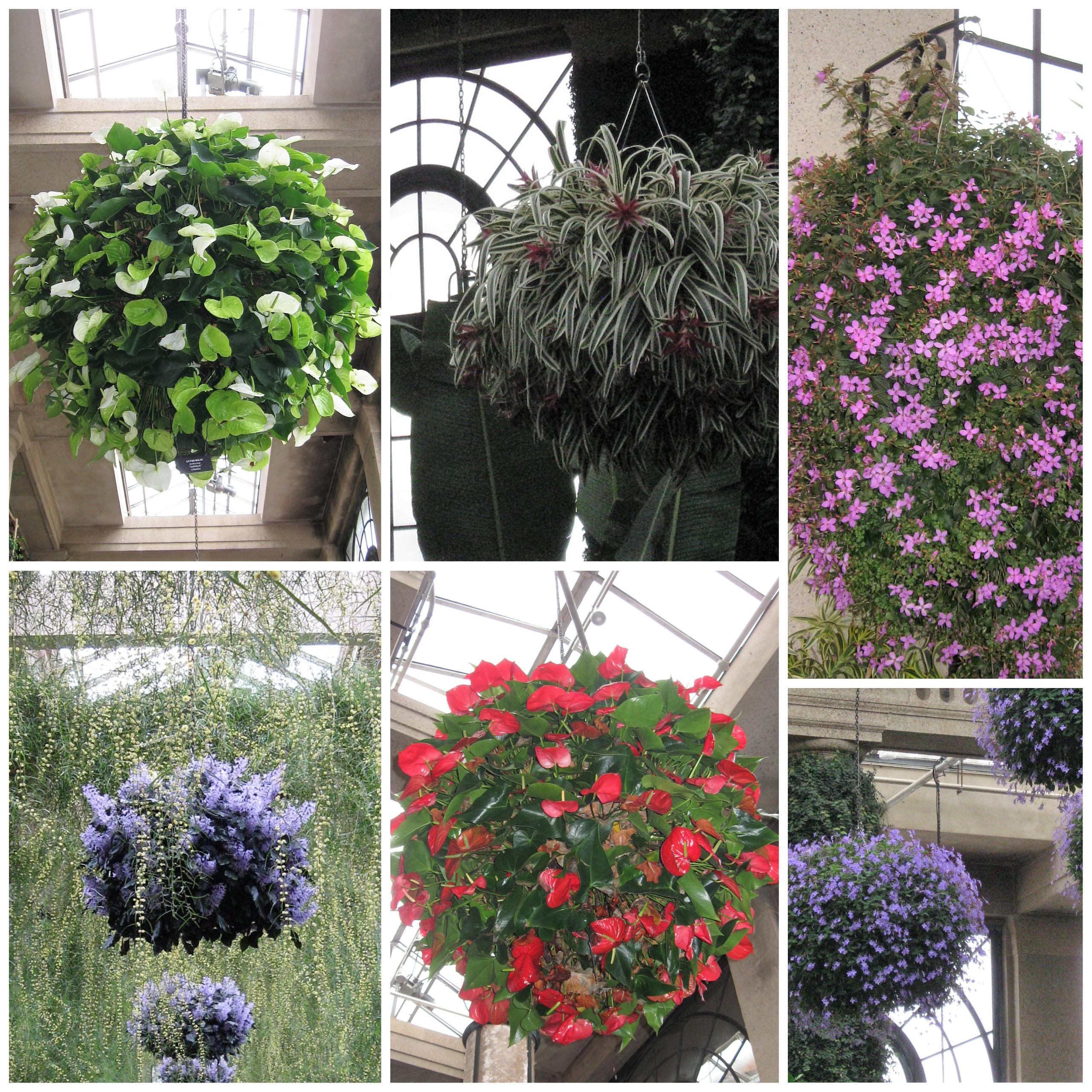
Here’s a sampling of the hanging baskets in the Longwood Gardens Conservatory yesterday. It’s hard to capture the size/scale of the flower baskets. To say they are large is an understatement.
Some of the plants are: Cape-primrose (Streptocarpus), Anthuriums, Cinnamon-Wattle Acacia, Bromeliads.
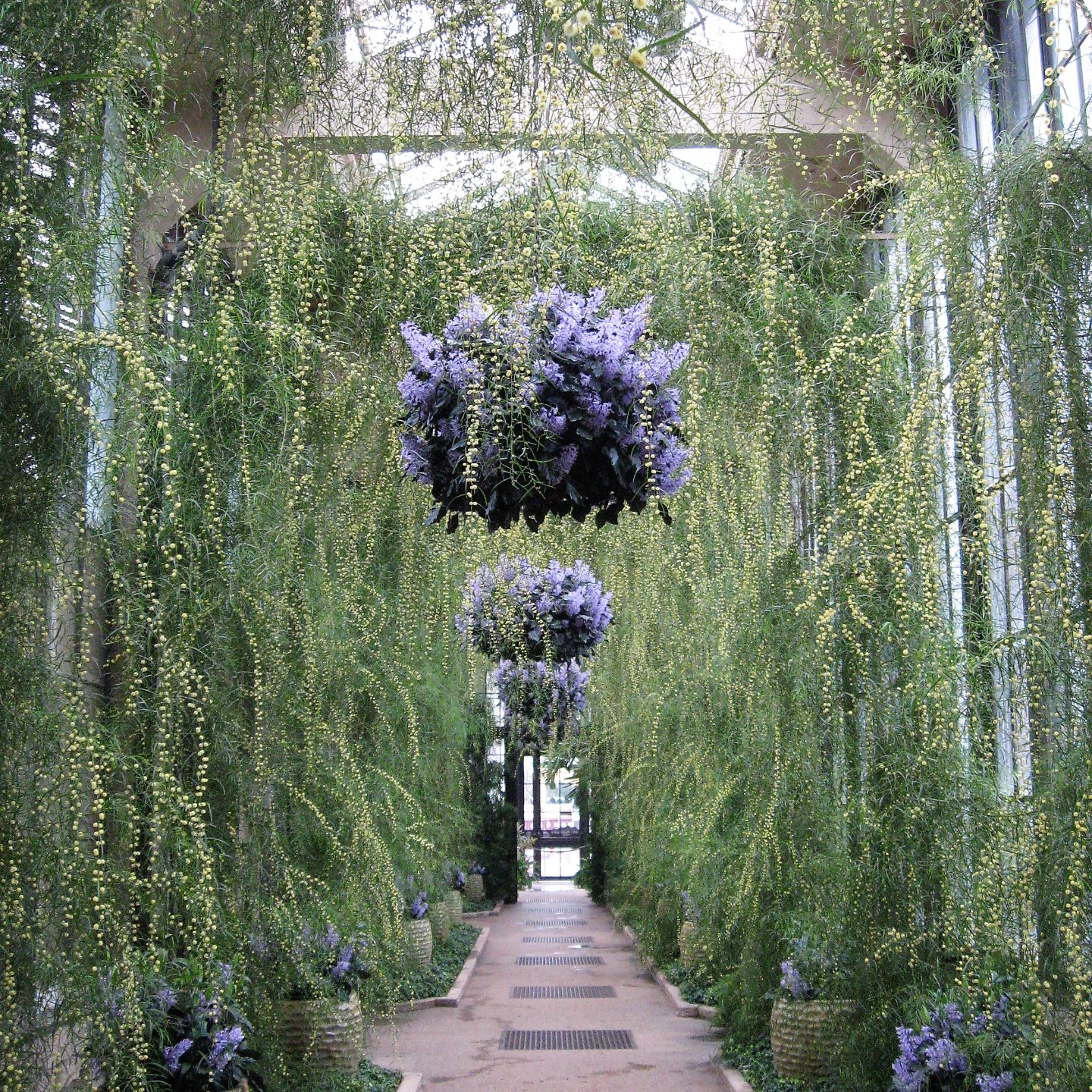
My favorite walk was along the acacia passage. The Cinnamon-Wattle acacias were in bloom. The fragrance was incredible. There was definitely a feeling of enchantment present as we gazed down the corridor. Periwinkle is one of my favorite colors, and the combination of the streptocarpus with the soft yellow of the acacia was stunning. The streptocarpus are part of Cee’s Flower of the Day.
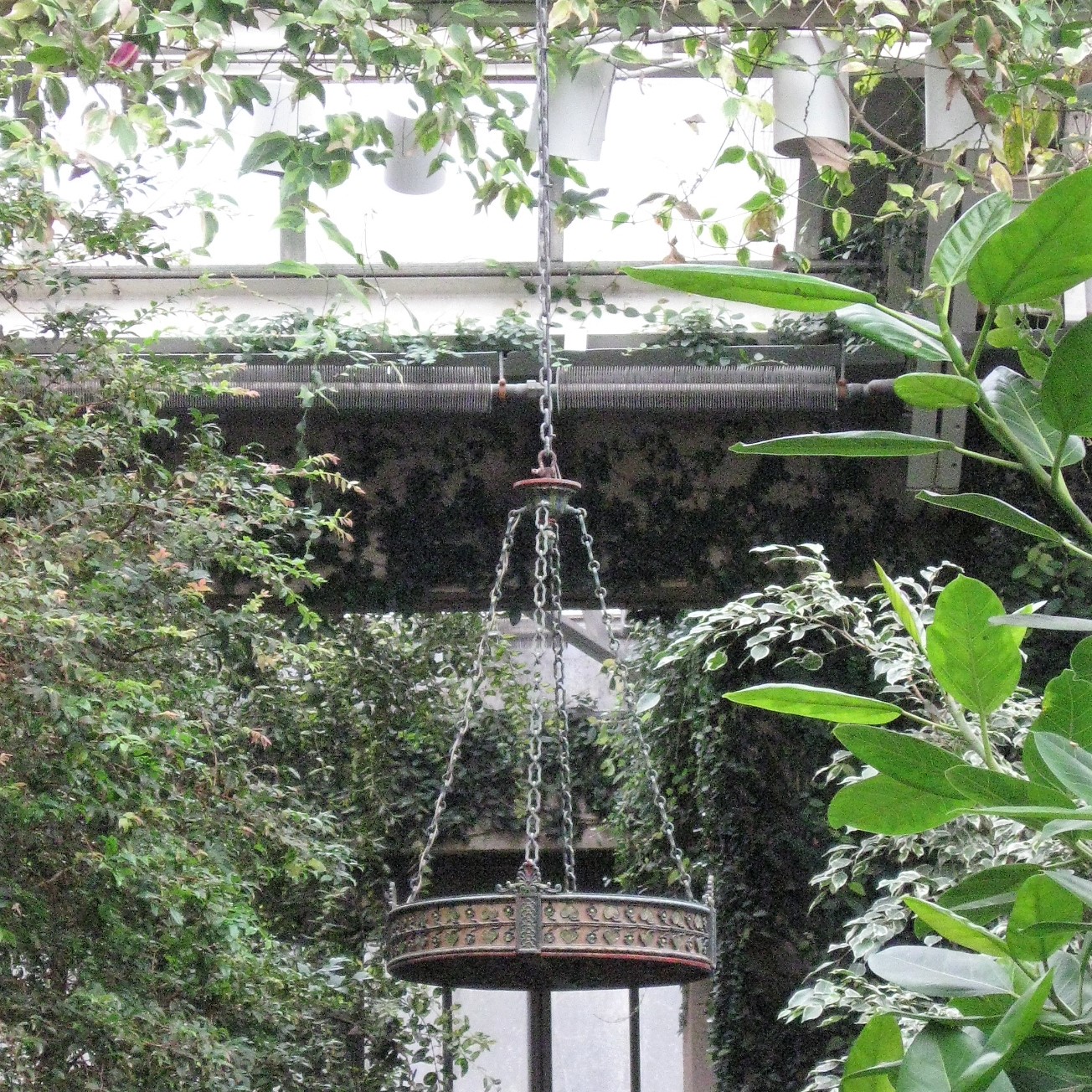
I also had some moments of inspiration. I don’t know if this is a hanging basket of some type for displaying flowers, a light fixture, or something totally unique to my imagination. I am determined to create better hanging basket arrangements this year for the porch and outdoors and this will be my artistic muse for the project.
As we walked within the walls the soft winter sun outdoors illuminated everything inside with a glow of Royal Silver. I wish I could somehow capture and copy the indescribable atmosphere in a watercolor painting.
Here’s a silly self-portrait of us in the conservatory; a visual description of our joy. It’s a little distorted, the mirror had a funhouse quality, but it still captured our happiness in being in a place filled with flowers and fragrance.
I love the soft pink of these dime-sized blooms on my Crown of Thorns, the color almost a copy of cotton candy. The plant lives outdoors on the screened-in porch for five months of the year. Through the Autumn and Winter it delights me with flowers when everything outdoors is dormant. No coddling needed, the plant is easy to grow and maintain. This beautiful flower is part of Cee’s Flower of the Day.
These gorgeous Mr Lincoln roses were blooming in the mid-November sun this Sunday morning. Somehow, their petals stayed intact through rather heavy rain Friday and overnight. They began to emit their compelling fragrance as they warmed up in the house. Not many roses can surpass Mr Lincoln blooms for scent and beauty.
I usually don’t expect such a perfect rose in November. These blooms are part of Cee’s Flower of the Day.
The small hymnal in the first photo, The Gospel Hymn Book, is signed and dated 1890. Surprisingly, I found it in a local library, shelved in the Books for Sale section, available for purchase for only fifty cents. Oh my! I am blessed to have it. It is very fragile, dog-eared and spotted, bound with aged string, but the wisdom within is full of strength, power, and timeless. Under a title of Sweetness of Prayer is printed the following verse:
“Do not watch the petals fall from the rose with sadness, know that, like life, things sometimes must fade, before they can bloom again.” – Anonymous
The best rose of the year is blooming today in my Autumn garden. Winter Sun was a great performer all summer, covered in flowers, abundant leaves, and strong canes. Blossoms at this time of year are scarce, but this beauty is perfect and as large as the span of my hand. Winter Sun is my Flower of the Day?