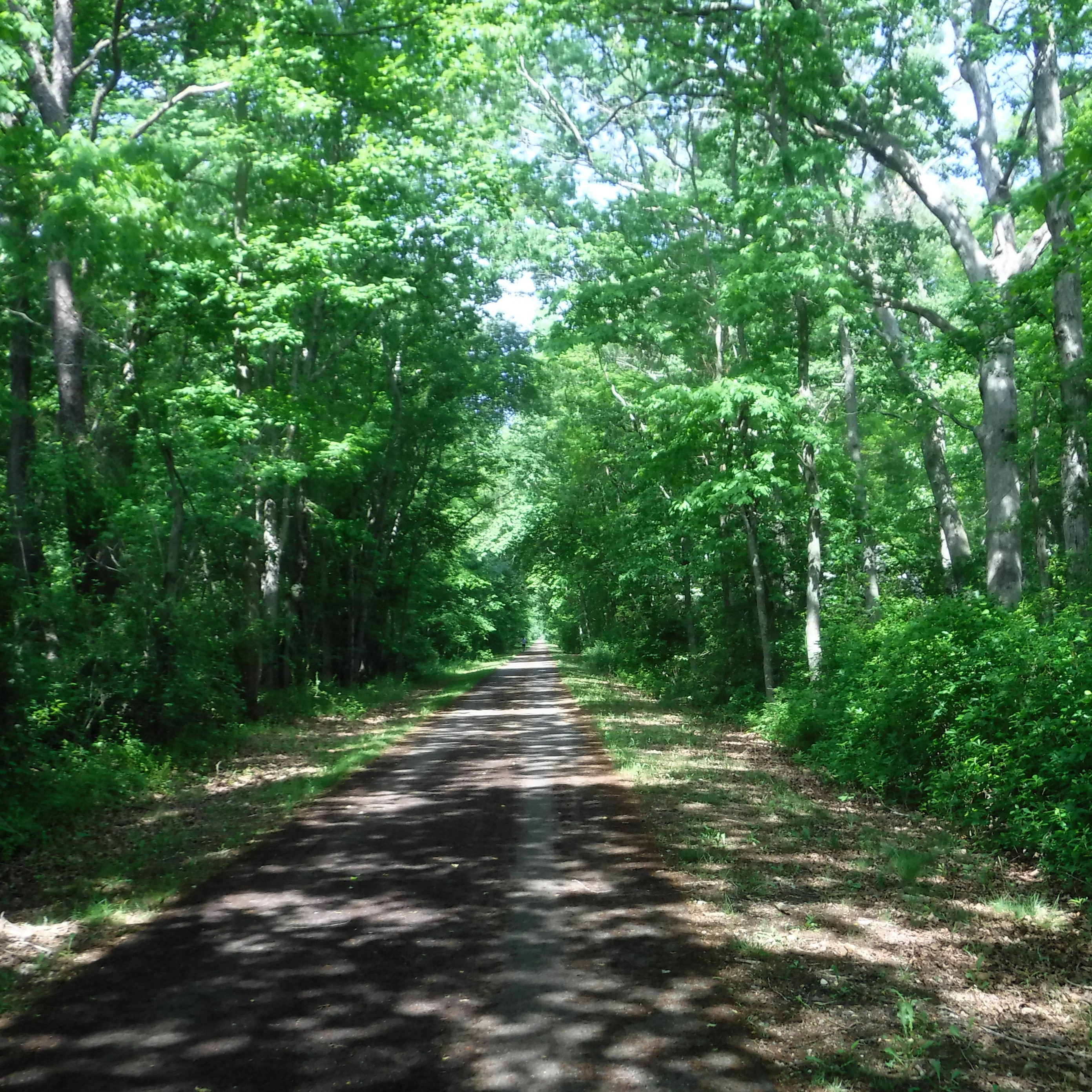
I’m starting Six on Saturday, with a view from my bike on the Glassboro-Williamstown Bike Trail.
The trail has several swampy areas. They are lovely and fairylike, with their carpet of duckweed. This photograph is my entry in the Cosmic Challenge—Waterways. Wild Roses border the swamp and trail.
Cinnamon Ferns grow lushly in the woods, and some are beginning to send up their center spike.
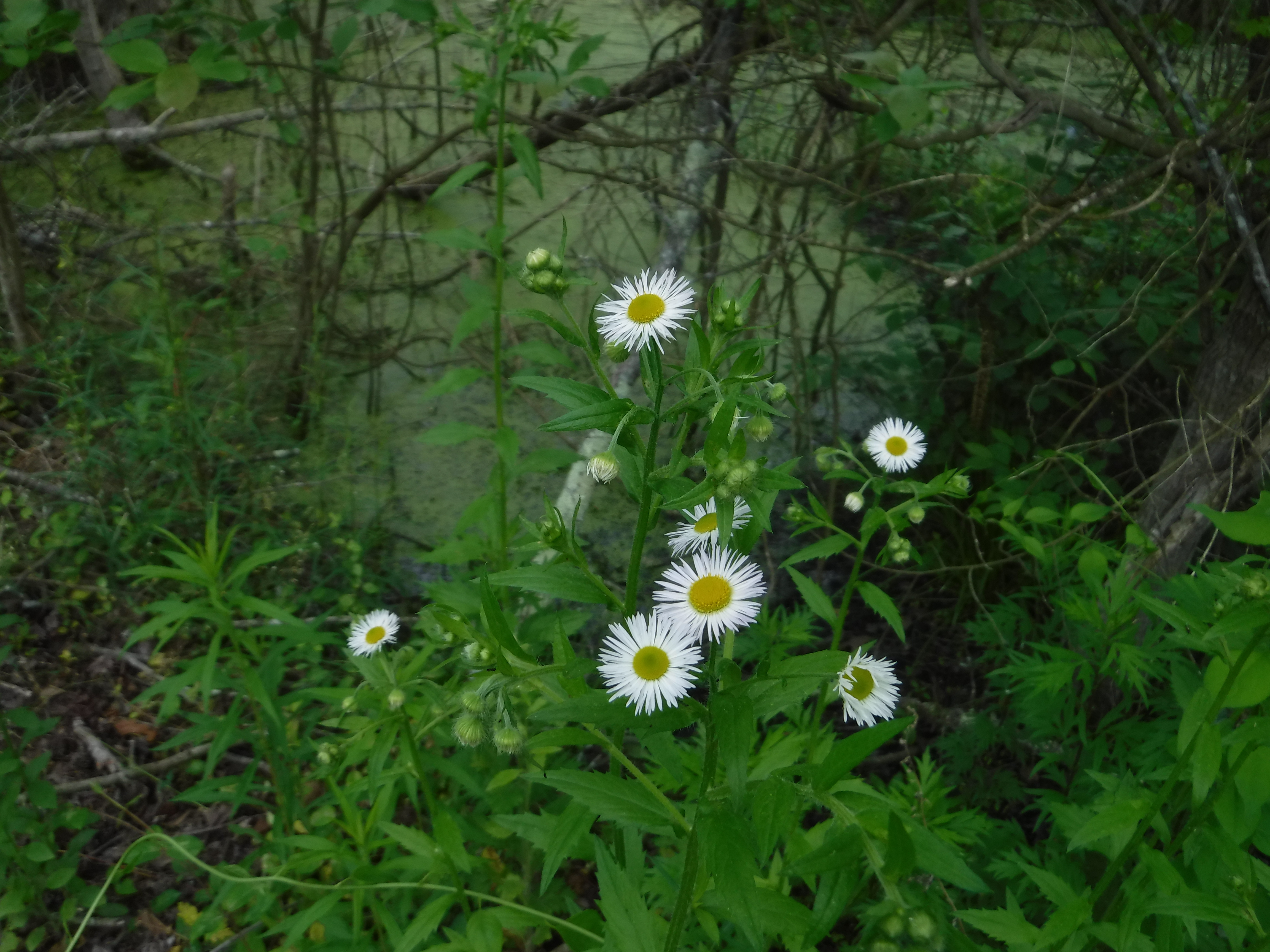
Wild asters are delicate in appearance but durable wildflowers.
Beautiful Mountain Laurel in full bloom.
The best photo of the day and the best scent was the honeysuckle. A bumbling bee was drinking the nectar as we passed by.
The beautiful honeysuckle and the bumblebee are my choices for Xingfu Mama’s Whatsoever is Lovely Challenge. I just noticed while looking closer that I also photographed two small ants on the honeysuckle leaves, unbeknownst to me at the time.
I’m laughing as I read through this, remembering all I have posted on how to chase away garden pests without harming them: water balloons, rubber snakes, jingle bells, etc. Here’s a new idea…yes, you can laugh, I never win 100% with the rodents or the bugs.
In the 1960s, our family’s favorite visitor was my Mom’s cousin, Norma. Norma lived in California, which alone made her quite the novelty since we lived on the other side of the USA in New Jersey. She always visited, armed with plenty of stories to entertain us. On one visit, she brought a hysterical book called ‘That’s Ugly.‘ The witty prose and the illustrations captivated us.
I say all that to introduce my latest pest and squirrel/chipmunk deterrent. Now, don’t get me wrong–I adore my squirrels. I walk around with peanuts to toss out to the friendliest backyard inhabitants. I don’t want to harm anything by using non-organic means to deter them.
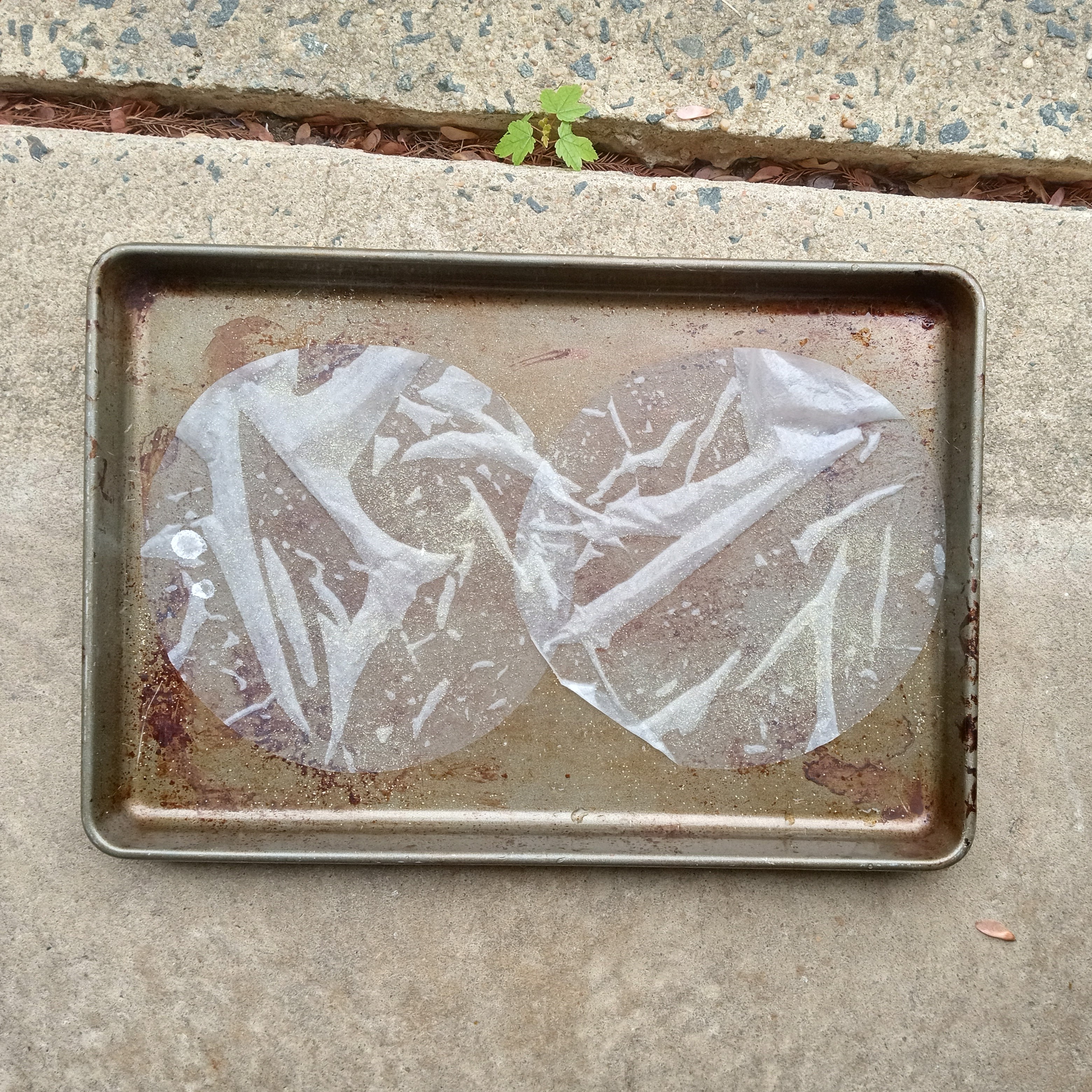
Quite by accident, I discovered a perfect deterrent while filtering powdered garlic through a coffee filter. The resulting garlic water, combined with a drop of dish detergent, 1 tsp of baking soda, and a touch of oil, makes the underside of my rose leaves inhospitable to the sawflies laying their eggs on said leaves. After spraying the roses, I noticed that the garlic powder had dried to the coffee filter as if glued and still retained its potent smell.
I was thrilled. I now have made up several of these stinky filters. I put them in pots of newly planted sprouts; I hang them on hooks and skewers near flowers I don’t want nibbled. It is working. The adorable squirrels still get peanuts, but don’t bury them in my garden pots now. The problem is, the sight of them would be a perfect addition to the book ‘That’s Ugly!’ Honestly, it looks like my garden pots have been toilet-papered on Mischief Night. I hope I can remove the filters in a week or two, and the plants will be left alone.
*One note, the garlic actually becomes glue. If I don’t remove the filters from the pan while still damp, they dry and stick to whatever surface I have laid the on.
Long post short: Give it a try. It seems to organically keep the sawflies and digging rodents at bay.
Monday morning, I’m enjoying the brilliant sunshine after a rainy Mother’s Day. My family was so sweet and showered me with flowers. All the raindrops were forgotten amid such love. The vase I’ve created is a hybrid, filled with flowers blooming in the garden and also with the small broken stems of the larger bouquets I received.
For today’s IAVOM, I used as a focal point a beautiful Iris that blossomed for Mother’s Day. I also included False Indigo stems from my garden, an excellent perennial for flower arranging. Can you spy the puffy chive blossoms near the Iris? The kangaroo paws, mini-carnations, tulip, and lily were broken stems from the Mother’s Day bouquets.
In memory of my mother, I placed a bunch of yellow tulips in the living room. In her last months on this earth, her house was filled with vases of silken yellow tulips. When I look at them, I remember her and the cheerfulness of the flowers she chose to place in her home. A Willow Tree figurine, titled Tenderly, seemed perfect to include.
We have a beautiful and very large Photinia planted beside our back porch. I am in love with this bush, although it has grown so large that it might be considered a tree.
I sit beside the bush on the opposite side of the porch screen and admire the foliage, gazing also at the gorgeous white blooms adorning it. Unfortunately, relaxing on the porch has been marred for several days by my search for the dead animal filling the air around me with the scent of rotting flesh.
Today, I suddenly remembered reading that Photinia blooms have an unpleasant smell. No! Could it be? I went outside and took a whiff of a lower blooming flower cluster, and oh my…instantly knew I had found what I had thought was a ‘dead’ animal. To say the flowers smell bad is an understatement. Thankfully, we are not having company in the next few weeks, and the flowers will drop off…but not soon enough.
Seeing them on the tree is glorious; however, the joke is on me. This Spring, we needed to fill in a spot close to the original, and since we like our Photinia so much, we purchased another one. Next year, the smell will be doubled. Still, the tree is beautiful, and I even use the evergreen branches for floral arrangements. Live and learn…and next time, do better research about the characteristics of the trees before I buy. Seriously, folks, the terrible smell fills the whole yard. I giggle a bit when I imagine the neighbors searching their yards for the dead animal.
This beautiful Torenia is also known as the Wishbone Flower. I have an easy time growing them. Plop them in the earth or a hanging basket, keep them watered when dry, and you will have blooms all summer. Once every few weeks, I cut away stems forming seeds. They don’t need as much deadheading as many other annuals. I’ve never been disappointed in my Torenia plants. I made one mistake last year: I put one plant in full afternoon sun. The flowers did fine, but the foliage burnt a bit.
The poem complements the plucky sunshine yellow of the flowers. Isaac Watts, (1674 -1748) is the author of this and hundreds of hymns still being sung around the world.
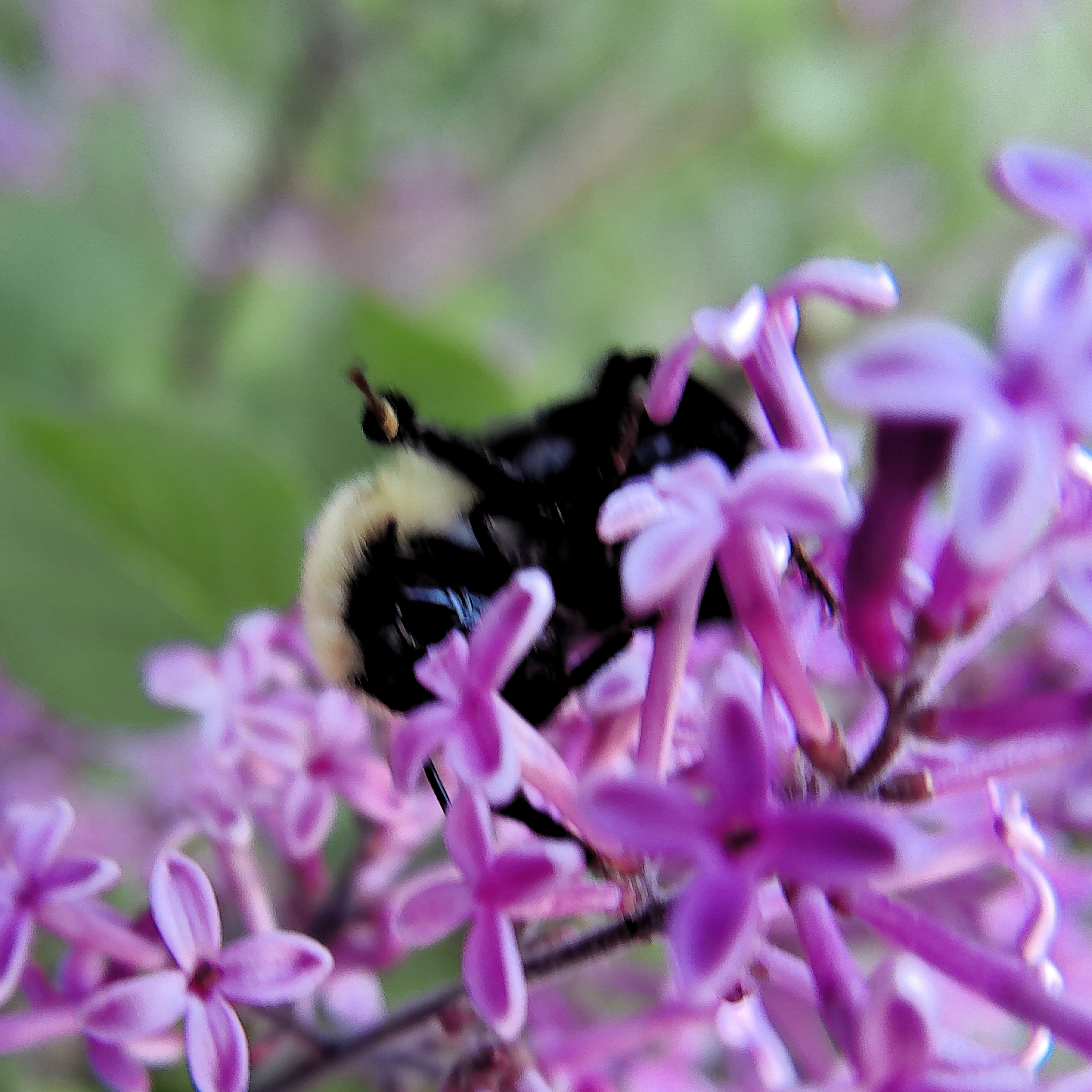
I spied this bumblebee early in the morning. It seemed he had slept the night away in a bed of the Boomerang Lilac flowers. When I came near to take a photo with my camera, he flung up a leg as if to say, “Leave me alone, or you’ll be sorry…”
We planted a new lilac bush in our side yard a few weeks ago. It is called Yankee Doodle. It appeared ordinary until the buds opened. What a surprise! The fragrance is divine, and the flowers are the size of a quarter. I’ve never seen a lilac with such large blooms.
It’s a purple kind of day. It is not a gloomy deep purple mood, but instead, the bright lavender of the Boomerang Lilac that has put on quite a display in the side-yard. This is not a sprawling bush, but I hope it grows a few feet taller than the 3.5 to 4 feet it is now.
The flowers smell slightly of Lilac but do not envelop you in scent when you approach as I had hoped when I purchased it. This variety’s charm is that it is supposed to rebloom in the summer.
A few Iris buds, some Vinca Vine in a lovely shade of Periwinkle, and sprigs of Wisteria are included. The vase is a small watering can I bought years ago because I loved the sparrows on the front.
This post is part of this week’s In A Vase of Monday (IAVOM) hosted by Rambling in the Garden.
The antidote to the windy weather of yesterday was to take a morning walk around the yard and gather Spring flowers for IAVOM.
I have placed a few of the flowers blooming in my garden inside the vase. The inner petals of the tulip are gorgeous. What a sanctuary for a bee! If I were small and had wings, I would dive in after the pollen and buzz in delight. There is nothing ho-hum about these beautiful colors and forms.
Other flowers in the vase are Iris, Bleeding Heart, and Vinca.
I keep hearing the children’s chorus, This Little Light of Mine, as I gaze at the bright area around the tulip’s stigma and anthers.
The yard is dreary beneath rainy March skies, but the gardens are ablaze with the captured sunshine of daffodils.
I couldn’t leave so many of them to droop beneath the raindrops, so I cut them to create a bouquet to enjoy in the house. A break in the clouds enabled sunshine to pour through the window, backlighting the daffodils perfectly for their portrait.
“Daffodils with sunlit petals all ablaze, Will ever create in me words of praise.”
Forgive me, my amateur poetical nod to William Wordsworth’s beautiful poem about daffodils. You can find his excellent poem below.
I Wandered Lonely as a Cloud
By WILLIAM WORDSWORTH (1770 – 1850)
I wandered lonely as a cloud
That floats on high o’er vales and hills,
When all at once I saw a crowd,
A host, of golden daffodils;
Beside the lake, beneath the trees,
Fluttering and dancing in the breeze.
Continuous as the stars that shine
And twinkle on the milky way,
They stretched in never-ending line
Along the margin of a bay:
Ten thousand saw I at a glance,
Tossing their heads in sprightly dance.
The waves beside them danced; but they
Out-did the sparkling waves in glee:
A poet could not but be gay,
In such a jocund company:
I gazed—and gazed—but little thought
What wealth the show to me had brought:
For oft, when on my couch I lie
In vacant or in pensive mood,
They flash upon that inward eye
Which is the bliss of solitude;
And then my heart with pleasure fills,
And dances with the daffodils.
**************************************
Daffodils are a part of Cee’s Flower of the Day Challenge.
Definitely the daffodils are my “Whatsoever is Lovely” moment for Xingfu Mama’s Challenge.
The daffodils are definitely the dancers of Springtime. They move to the rain, the wind, and face the sunshine, dwelling in the music of nature.
Yesterday, I was able to text my son a photo of this beautiful puff of salmon. I told him it was a cutting grown from a Geranium he gave me on Mother’s Day two years ago. Plants given as gifts are especially dear to me.
Before frost arrived last year, I dipped a cutting of the geranium in honey and placed it in loose soil with a Ziplock bag over the plant to keep it humid. Not every cutting works, so I usually grow three for every plant I want to save.
I also tried bagging/boxing up a few bare-root geraniums, and the photo shows what I found just an hour ago when I opened the bag. I will continue to grow cuttings and, in the future, leave bare root storage to the experts.
It’s been a rough ten days. Flu/Covid/Cold, one of the three or all of them simultaneously, chills, night sweats, fever, coughing, sneezing…you name it, we’ve had a bit of it. I wish I had remembered this small bottle within my stash of essential oils a bit sooner. Yesterday, facing another day of feeling dreadful, I remembered the Fighting Fiveessential oil. I placed a few drops in a diffuser and felt improved within a few minutes. It isn’t a cure, but it is a help for getting through the symptoms.
Both of us also experienced strange insomnia throughout this illness, waking every 45 minutes or so. Last night was the first night I slept well. I had filled the room with fragrance and the soothing power of the Fighting Five.
Ingredients in the Fighting Five Essential Oil – Eden’s Garden
Fighting Five can be purchased through Eden’s Garden. I have bought essential oil for years through this company and have always been satisfied. I use the essential drops in a diffuser for air-born relief; the product also comes in a roll-on applicator.
I have some lavender plants on a windowsill near my desk. I love to stop what I am doing and brush them with my hands. The lovely, fresh scent of lavender fills the air and gives me a boost of energy amid mid-winter doldrums.
You can imagine my outcry when, out of the corner of my eye, I spotted movement on my lavender—spider mites. The tiny pests were fearless and having a marvelous time, creating webbing, feasting on the juices, and multiplying by the minute.
Running the plant under a heavy stream of water is always my first course of action. The spider mites are small and are quickly swept away by the deluge. So far, my initial treatment is working, and I’ve only seen one or two stray mites.
One of the problems with diagnosing spider mites on a houseplant is their size. The webbing and drying leaves are a clue to an infestation. Sometimes, as in my case, you can see them moving along their webs. To be sure I was aware of all the infested spots, I sprayed the lavender with water before washing the mites away. The side-by-side photo shows how much easier it is to see an infestation after spraying.
Unfortunately, I must be realistic; removing every spider mite from the lavender will most likely take several sessions under the faucet. This pest spreads quickly in the dry air of a heated house. I will check all my houseplants for infestation with water sprays throughout the week.
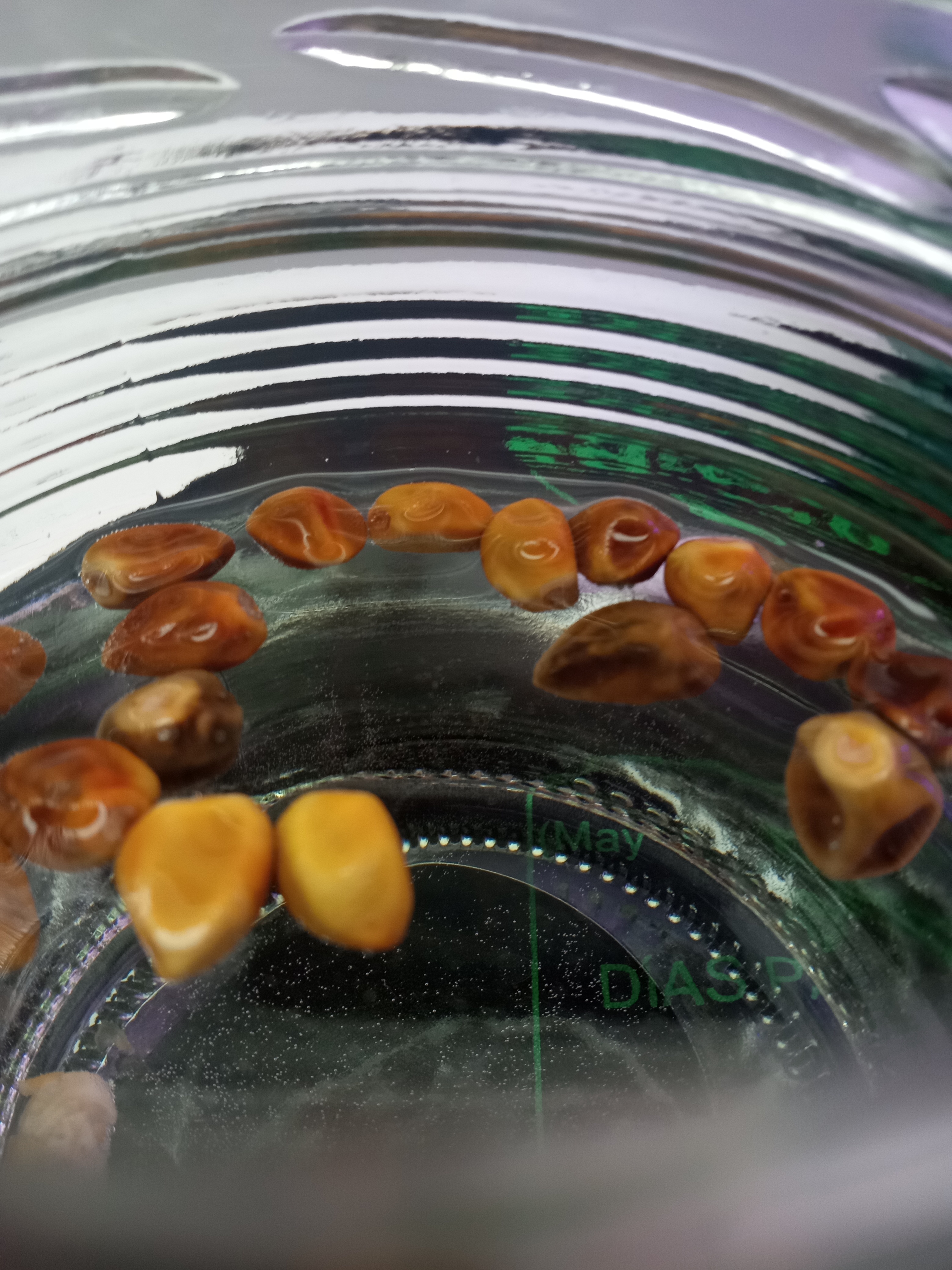
Moonflower Vines are one of my favorite night-blooming annuals. I grow them yearly and have found it best to start them earlier than the seed packet recommends. To ensure mid-season blooms, I start my seeds in mid-winter, which, for me, means today. I always soak the seeds first. The seeds soaking in water were gathered from last year’s plants.
If the seed is viable, it will sink to the bottom of the jar as it draws in the water. So far, only one has taken the plunge. Hopefully, many more will follow suit.
The In a Vase on Monday challenge allowed me to use the pink McCoy Swan Vase I found in Goodwill a few weeks ago. I didn’t have much in my yard that would look nice in a vase. After the recent snowstorm, there is very little dried material to be salvaged for bouquets. I added evergreen sprigs from my gardens, Nandina, Aucuba, Vinca, and purchased Lily stems. The pink color of the vase seems an appropriate way to welcome in the first week of February.
Thank you to Rambling in the Garden for hosting this challenge.
I have good luck with my white and blue nigella plants self-seeding in the front of the butterfly border. Each year, the initial sowing of plants brings forth a new generation. Today, at half price, I was thrilled to find seeds for a pink variety called Mulberry Rose. It’s always exciting to procure a new variety of a plant you love.
This small flower creates quite a dynamic seedpod. It blooms the size of a quarter, is low-growing, and has delicate foliage. Beautifully rounded and loaded with seeds, the pod dries beautifully for indoor winter arrangements.
The seed packet suggests making successive sowings for continuous bloom. My new Nigella seeds are from Renee’s Garden. I am content in the knowledge that this small blossom will grace my garden for years to come.
One of my first memories of outdoor fun is chasing fairy wishes. I associate my parents and Mom’s cousin, whom I called Aunt Norma, with my first recollection of fairy wishes. The premise behind catching one was the fulfillment of a wish. Upon capturing the wish in your hand, you whispered your hope or dream, and then, and this was important, you had to let it go again.
The beautiful fairy wishes in the photograph were captured as they unfurled from a milkweed pod in my back garden. Anyone, who has read my blog for any length of time, knows I am a bit obsessed with helping butterflies thrive in my garden. I grow common milkweed as a host plant for Monarchs, fennel, dill, parsley, and rue for Black Swallowtails.
My prayer is that God helps me ride the winds of the written word, just like a milkweed wish, to spread the Good News of Salvation and His Love far and wide.
Jesus said to him, “I am the way, the truth, and the life. No one comes to the Father except through Me.
The beautiful moss spores are my choice for The Cosmic Photo Challenge/What’s Flowering Where You Are? Before the recent snowstorm, I grabbed my camera and took a woodland walk. I was amazed at the vivid green of the mosses and lichens. In places where the sun shone through the branches, I noticed some of the mosses had already sent up spore capsules. I’m going to stretch and say these are a type of bloom.
If I had to rate these moss spores for beauty between 1-10, they would receive a 10+ from me.
Skunk cabbage has also emerged in the dead of winter. Here are some of the ‘knobs’ before the snow covered them. I read an amazing fact on the PFEIFFER NATURE CENTER site: some skunk cabbage plants can be over 100 years old. Wow, I will feel a bit more awe over them when I take my next woods walk.
Next time when I become a bit winter-worn and weary over the cold weather, I’ll remind myself of those skunk cabbages never giving up.
As always, lichen on fallen branches are a welcome touch of green.
Whatsoever is Lovely? Definitely the small and delicate bits of green I found in the woods. I wish I could have a large garden plot filled with mosses and lichens in the winter.