I hope everyone has a blessed Easter Monday. My IAVOM (In a Vase on Monday) is a day old since it was Easter Sunday’s table arrangement. Three rooting bottles hold a sprig of Aucuba evergreen, deep purple Iris with a slightly grapelike fragrance and variegated tulips. All flowers and foliage were gathered from my garden beds. A piece of glittery tulle ribbon dressed up the bottles a bit, and the arrangements were slim and not cumbersome as they decorated the tables.
The In a Vase on Monday challenge allowed me to use the pink McCoy Swan Vase I found in Goodwill a few weeks ago. I didn’t have much in my yard that would look nice in a vase. After the recent snowstorm, there is very little dried material to be salvaged for bouquets. I added evergreen sprigs from my gardens, Nandina, Aucuba, Vinca, and purchased Lily stems. The pink color of the vase seems an appropriate way to welcome in the first week of February.
Thank you to Rambling in the Garden for hosting this challenge.
Seven hundred days…that is how long the weather forecasters told us our area had not seen accumulating snowfall. This week, when the skies greyed and beautiful snowflakes began to descend, it created a swell of joy in many, especially children with new sleds and toboggans. It was a superb snowstorm, not so much as to cause a complete standstill, but enough to have a bit of fun in. Even the most winter-weary could not feel hostility toward it when they gazed at a landscape frosted with white.
There is little left in my yard to vase. I took advantage of an amaryllis that had grown so top-heavy it had to spend its last days in the garage. I found a basket instead of a vase. Anything glass or porcelain might have cracked in the freezing temperatures. I plucked a few stems of sedum that still had some dried flowers and placed them in the spring-green basket. The amaryllis mirrored the brilliant snow. It is a fun way to celebrate IAVOM (In a Vase on Monday) and the glorious snowfall.
In my gardens everything is beginning to dry out and brown. The annuals have had their summer fling, and the perennials are beginning to nod off too, ready to be put to bed for the winter months. I thought instead of picking flowers from my gardens for this week’s In a Vase on Monday, I would take a bike ride and see if there were any wildflowers to be found.
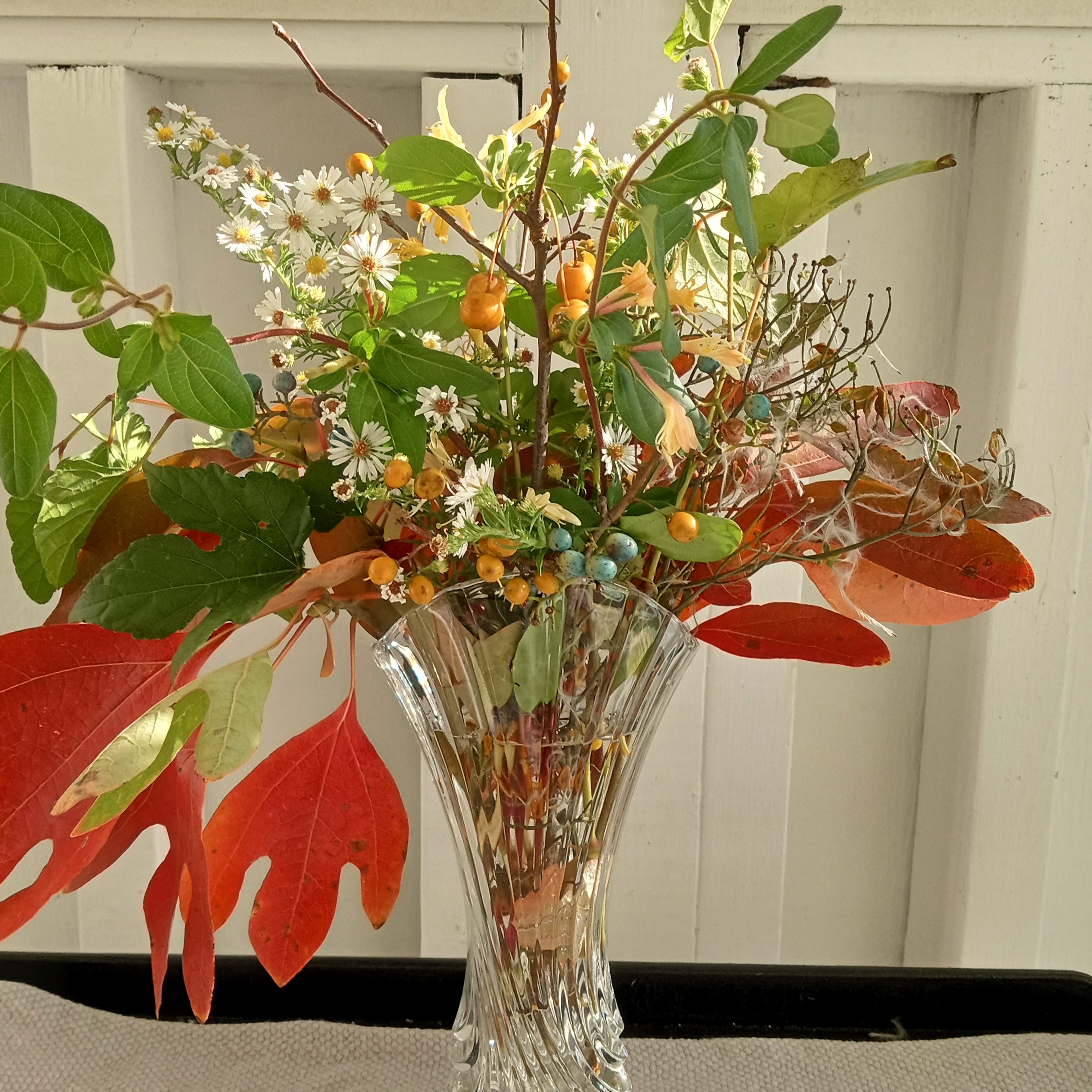
I was surprised to find a few sprigs of honeysuckle having a bit of a renaissance, blooming, and still spreading a bit of fragrance. Since it was in a spot no one would see, I didn’t feel badly picking it for a bouquet. I kept riding, picking berries, and Autumn leaves, surprised to find the goldenrod was over, I had been sure it would still be available.
A neighbor saw me peddling up the street, took note of the sprigs I held in my hand, and asked if I was giving my flowers a ride. I answered yes, and that they were free flowers.
One wild stem I found was Porcelain Berry, something new to me, and a little dangerous in appearance. If a berry ever looked poisonous to me, this one surely did. I had a plastic bag in my pocket and I wrapped it around the stem after I picked it in case the sap was deadly.
For a bit of clarity, and peace of mind, before I handled it further, I used my photo search app. Ampelopsis glandulosa is its classification. It isn’t poisonous at all, and has some health benefits. These are the culinary uses I found when I researched the plant: Leaves and buds can be consumed after being cooked, the fruit (berries) can be consumed raw or cooked.
I find the porcelain berries beautiful, however, they are very invasive and can kill native plants. Birds eat the plump berries and the seeds are spread in this way.
Health benefits of Ampelopsis glandulosa: Some health benefits are treating boils, abscesses and ulcers, bruising. They are anti-inflammatory, diuretic, has been used to treat breast cancer.
The plants used in today’s IAVOM are: honeysuckle, bittersweet berries, porcelain berries, crabapple, frost aster, autumn clematis seedpods and sassafras leaves.
I still have a few plants blooming despite cooler temperatures. Gone is the cumbersome task of daily weeding, and left to me is a rebirth of the hardier blooms to cut and arrange. Here is a sampling of a few blossoms I thought were a good representation of Autumn colors. They are perfect for the In A Vase on Monday challenge.
My hyacinth bulb vase holds some coleus leaves, Knockout rosebuds in Coral, and sprigs of Agastache Poquito Orange. (After checking 2023 seed orders, I realized this plant is not Poquito Orange, but a apricot variety from the Fragrant Delight Mix of Agastache Seeds available from Baker Creek Heirloom Seeds.)
I love the Agastache I grew from seeds, sown indoors in late Winter. They are a beautiful shade; the blossoms are the size of a dime. Even the buds are attractive as they elongate and open. The flowers, growing in pots, never stopped their showy display from late Spring through Autumn. The photograph of my Agastache was taken yesterday.
The plants thrived in medium-sized pots in combination with other hummingbird plants. There is evidence of a few small nibbles of insects, but the plant is basically ignored by most pests. Perhaps it is not any wisdom or luck on my part they are uninfested, but due to the fact that they are in potting soil instead of the garden beds. They are small, about 10 inches tops, and they have a graceful drape to their stems, making them perfect to place around the edges of planters and hanging baskets. Will I grow these again? Oh yes!
I’m not ready to vegetate yet where the garden or Word Press challenges are concerned. I enjoyed including several challenges in today’s post. Thanks to all the hosts of these wonderful prompts to help me keep thinking and looking ahead. The Agastache flowers are part of Cee’s Flower of the Day and all my beautiful blooms are an entry in City Sonnet’s Colors and Letters Challenge – Letter F = Flowers.
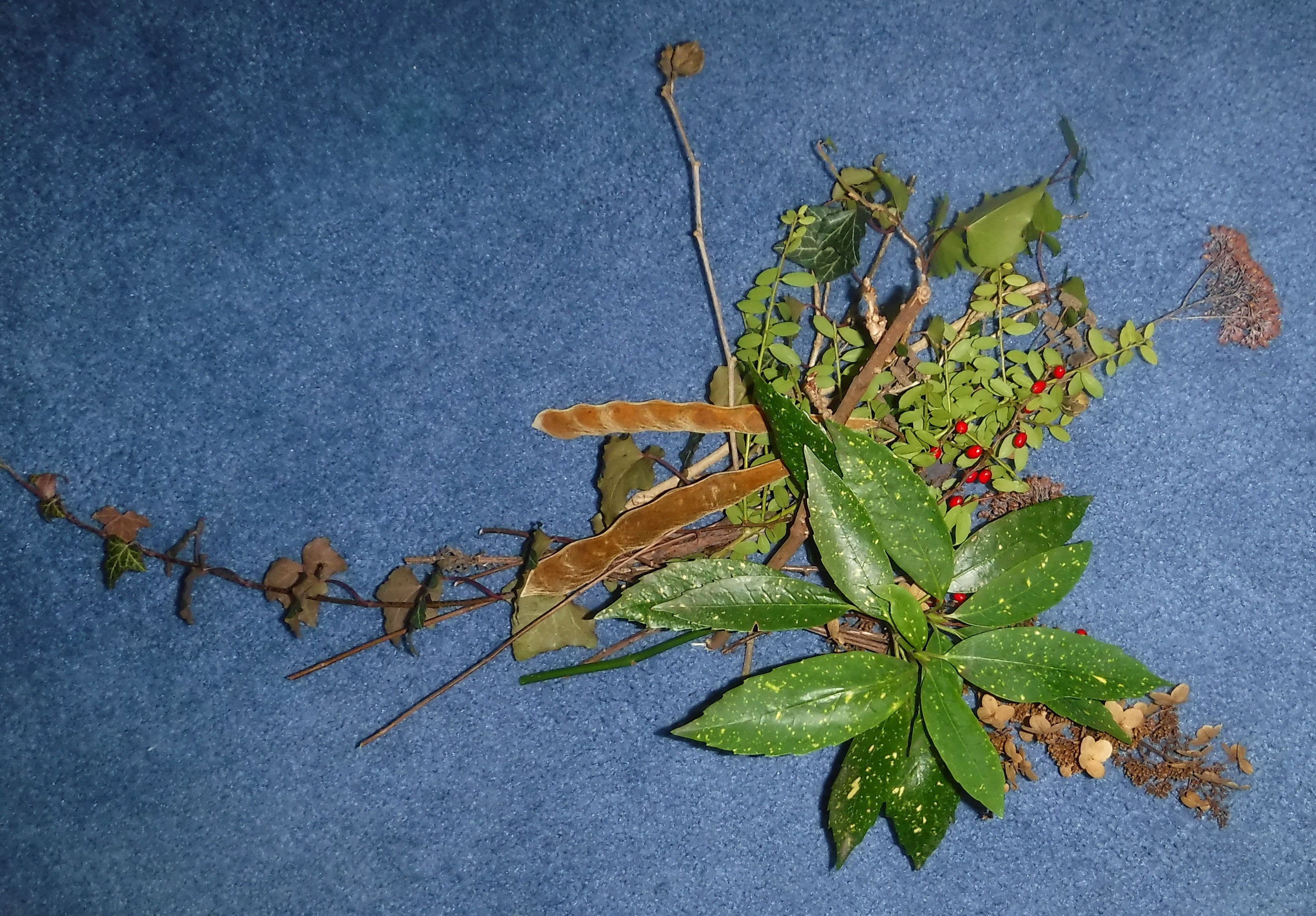
My first 2023, In A Vase on Monday bouquet is muted in color by Winter’s cold temperatures. Today, here in southern New Jersey, the weather is mild, though grey-tinged, but we had quite a preview of frigid temperatures in December. The greens, pods and berries I chose for the tall vase are the only choices to be had in my yard. My participation in this interesting challenge will probably be limited until Spring, but I will keep my eyes open when I’m outdoors, and perhaps inspiration will strike.
To be honest, I prefer the appearance of the stems tossed across the floor, pre-arrangement. They resemble the cascade of a Bride’s bouquet. I would have thought making a bouquet impossible at this time of year, but a walk-about in my yard yielded a few interesting pieces: dried hydrangea & sedum blooms, pods of Echinacea, velvety Wisteria, and Rose of Sharon. Barberry berries (ouch, very thorny), hoya & myrtle leaves, and ivy vines.
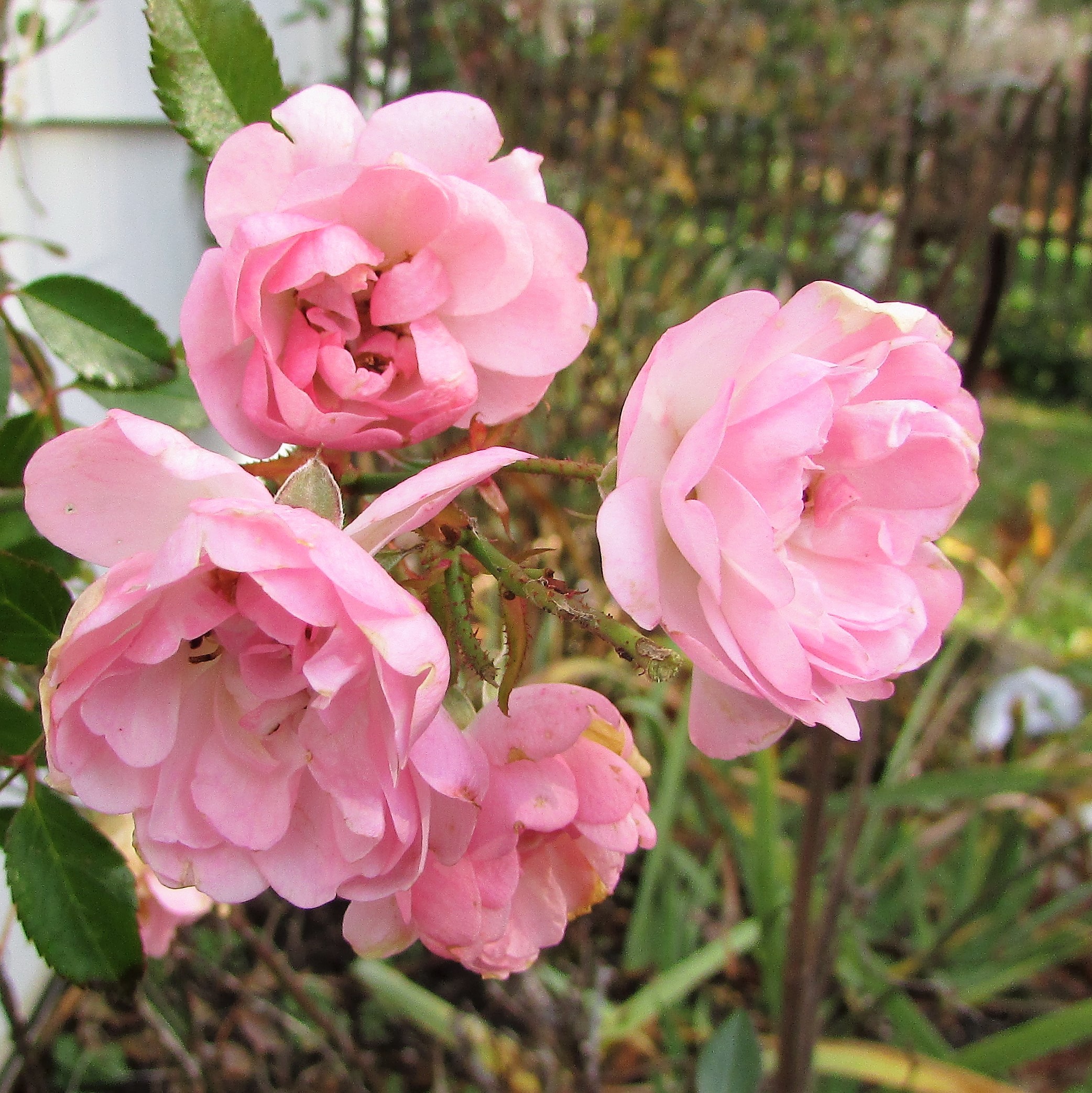
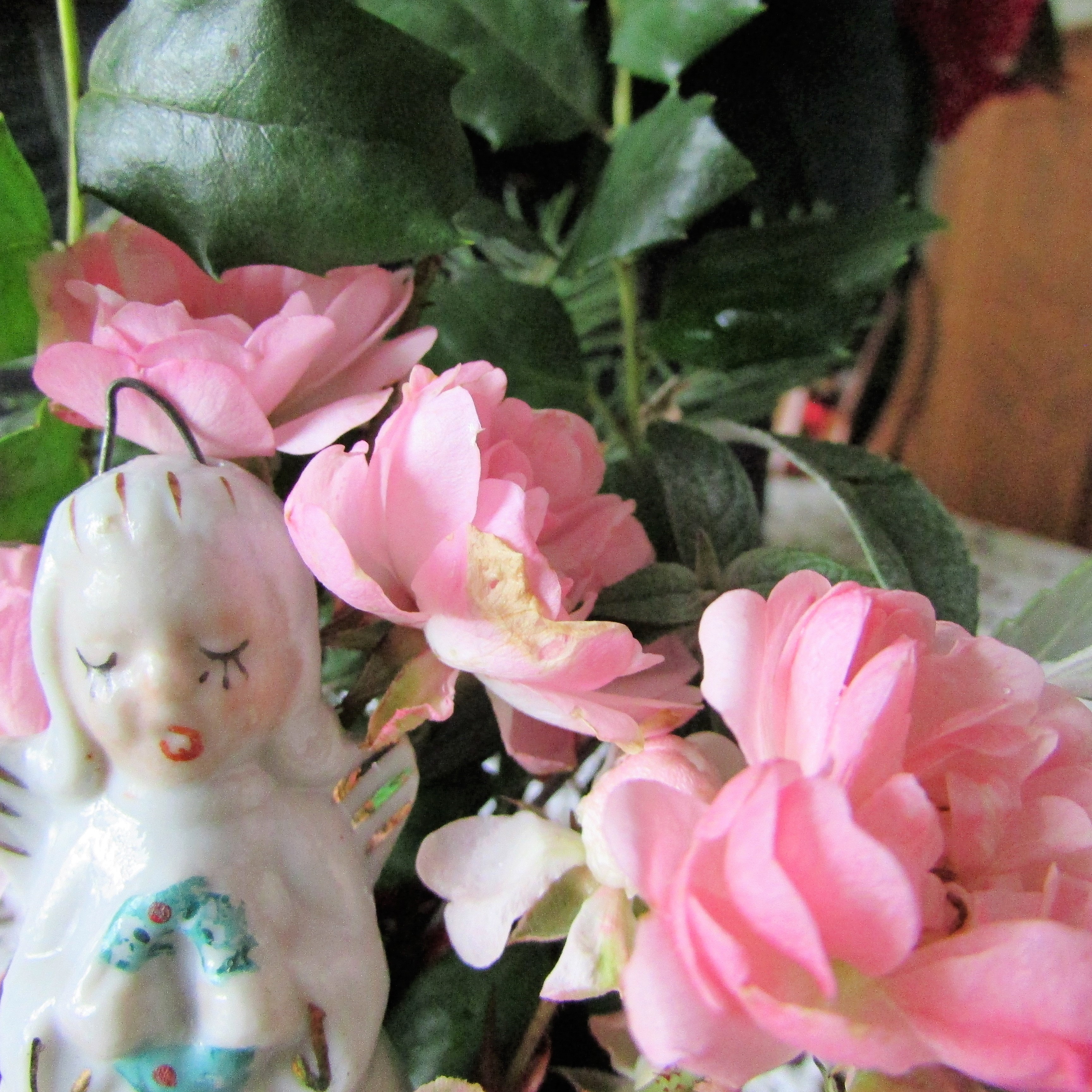
These are the last of my 2022 garden blooms. They are among the most delicate in appearance, but oh my, though small, they are still blooming in bunches. They are a bit worn and damaged by the cold, but they are still showing new buds along the stems.
This small miniature rose is called ‘Fairy,’ and the name belies its resiliency. Fairy Rose is part of Cee’s Flower of the Day.
“The Fairy is a polyantha rose. Polyantha roses produce their flowers in sprays or bunches rather than as single flowers. Unlike a lot of heirloom roses that only bloom once a year in the spring, The Fairy blooms continuously from spring until fall.” Dengarden
The small angel was given to me when I was a baby. I don’t remember who, but I am so grateful to have this vintage remembrance of a time long past.
Another of my Christmas favorites showed up in my photo. Christmas is wonderful: Angels, Scrooge, The Grinch, Frosty, Rudolph, the list can go on and on. Of course, my favorite is the reason for this season, THE CHRIST CHILD. This is a good time to leave a link and reminder to watch THE NATIVITY during this special season. I am always thrilled to my core when the child is born and wish I could have been there to be in his presence. God is so good to us.