Place – Meadow Walk/Longwood Gardens

We went to Longwood this week. The walk alongside the Meadow was golden and glorious. Spectacular wildflowers called Common Cup-Flowers lined the path. Goldfinches, butterflies, bumble and honeybees, gathered nectar and seeds.

Common cup-plant is a native wildflower in the Asteraceae (daisy) family. It may self-seed. It typically grows to around 6′, however, can grow to reach 9′ tall. ~North Carolina Extension Gardener.

The Common Cup-plant is my choice for Cee’s Flower of the Day.

The yellow daisy-like flowers were spectacular against the bluest of skies.

The child in me wanted to wade through the tall grasses and flowers and climb this perfect branching tree.

Even a photograph that went askew seemed pretty as it gave me a good glimpse of the underside of the flowers.

If you visit Philadelphia, Pennsylvania, take a trip to Longwood Gardens in Kennett Square.

These photographs are part of Garden Ruminations/Six on Saturday.

Phlutters & Phloral – IAVOM/Queen Anne’s Lace

In my part of Southern New Jersey, the temperature is in the 90s. AccuWeather says the real-feel temperature is around 104°. The hot weather is helping the caterpillars thrive. I have an abundance of them in the Butterfly House and each is born with a ravenous appetite.

Inside the houses, I have Rue, a host plant, and a few sprigs of parsley. The dill in the garden is still only in the small sprout stage since I planted it late. The fennel is suffering a bit in the heat, and since that is where most of the eggs for the Black Swallowtail Butterflies are laid, I don’t want to use it all. My goal is to concoct the perfect caterpillar feast for strong butterflies.

Queen Anne’s Lace, a host plant, is in bloom now, and the tall umbrella spires grow in hedgerows near my home. I took a walk with my cutting sheers in the hottest part of the day in hopes of collecting the wildflowers.

Unfortunately, the Queen Anne’s lace was not where I expected it to be. The sprigs I had seen a week or two earlier had bloomed and gone, and my walk became longer than I had planned. I did find more growing along the edge of the woods and cut several stems. By the time I got home, they were significantly wilted, and I wondered if I could use them as I had planned for the IAVOM challenge and afterward as food for the caterpillars. The Queen Anne’s Lace stems drew up water and eventually recovered. I used a Coca-Cola bottle as a vase.

Butterfly tip: The Queen Anne’s Lace, though the blossoms become frail, has stems that stay firm even after drying out. They are perfect for a caterpillar to use to form its chrysalis.

Prayer & Pressed Flowers – The Prayer Flag Project

The Prayer Flag Project

“Therefore, confess your sins to one another and pray for one another, that you may be healed. The prayer of a righteous person has great power as it is working.” James 5:16

I recently participated in “The Prayer Flag Project” by creating a prayer flag.

“In June of 2011, Vivika Hansen DeNegre started The Prayer Flag Project. She invited people from around the world to to join her in making Prayer Flags. Each flag is created in the artists own style, then hung outside for a while, its words and sentiment dissolving into the wind and being spread to all whom the wind touches. They are a living, breathing, kinetic journal of our hopes, dreams and concerns. The Prayer Flag Project… Join us if you’d like.”

The theme: Create a flag that incorporates “Images of leaping humans (think leap of faith), and of course maps and lettering.” My flag, and the flags of others, can be viewed by clicking on the button at the top of this post.

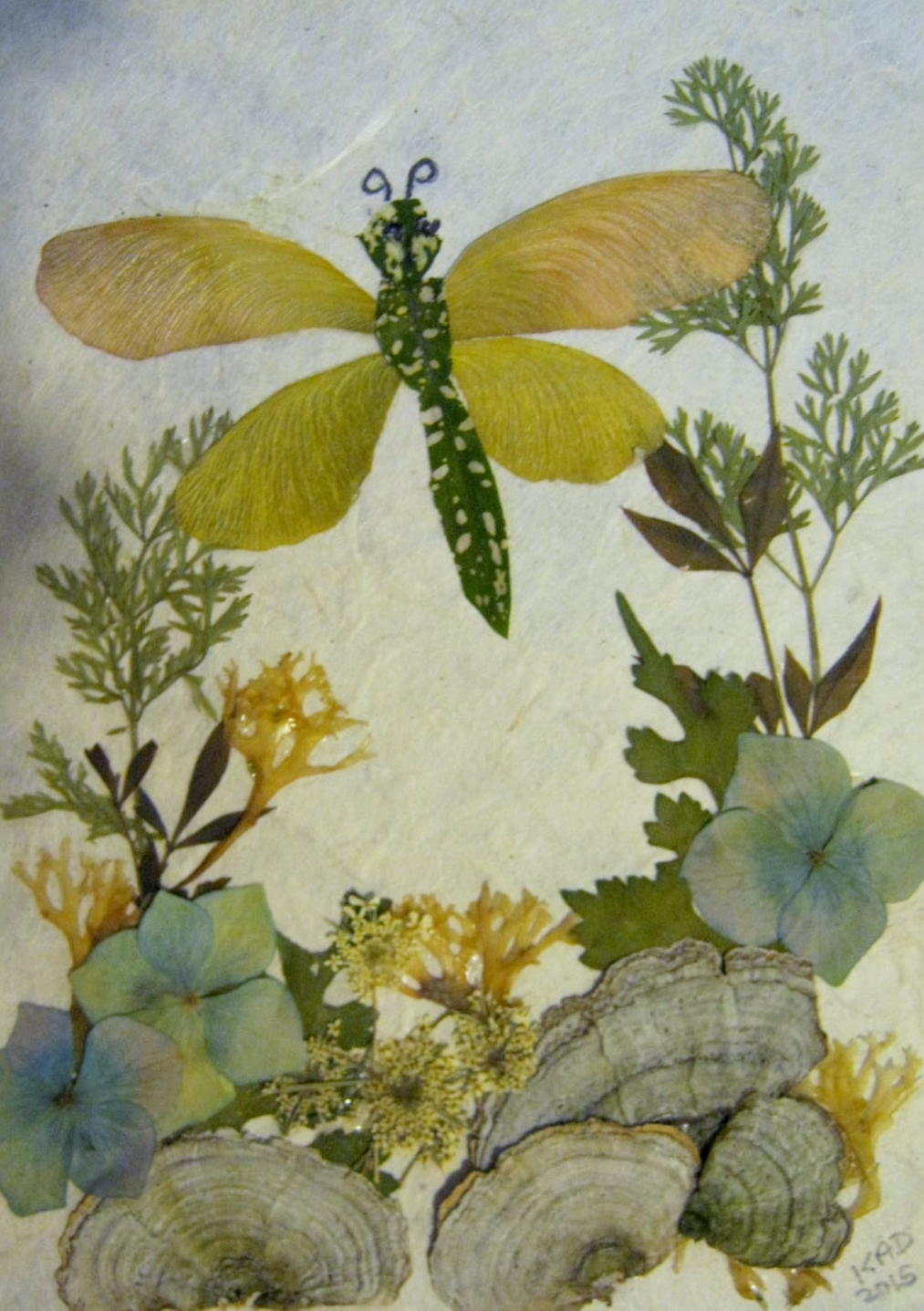
My initial flag was created with pressed flowers on Mulberry paper. It turned out lovely, but I realized it was too fragile to send through the mail, and most likely would not hold up being sewn to binding along the top. Here’s a peek at the finished flag.

The Dragonfly: Pressed Flower Artwork, 5 x 7, Blue Hydrangeas, Queen Anne's Lace, Seaweed, Lichen, Mulberry Leaves
The Dragonfly, pressed flower artwork, 5 x 7, Blue Hydrangeas, Queen Anne’s Lace, Seaweed, Lichen, Mulberry Leaves

Pressed Flower Tip: Hydrangeas are a good pressed flower candidate. The hard round center must be removed before pressing. Press without heat in between non-shiny pages.Lichens can be pressed flat in books. Seaweed can be dried and pressed between pages. Wildflower and tree foliage presses beautifully.