In response to The Daily Post’s writing prompt: “Blur.”
Fishing Boat, Montego Bay, Jamaica
I am returned home after ten days spent in one of my favorite vacation destinations: Jamaica. I’ll be blogging more about my stay and some of the unique sights, sounds and activities I took part in, but for today I’m using one of the photographs I captured as an entry in the WordPress Weekly Photo Challenge. This week the challenge title is “Blur.”
“A throwaway shot, or purposefully unfocused? This week, find beauty in a blur.”
Sunrise in Montego Bay, Jamaica. A fisherman soundlessly glides past the sleeping Royal Decameron Resort.
This photograph was taken in the ‘blurred time’ between the dark and the dawn. As the fisherman rowed past me, I captured the photograph never realizing until just a few moments ago, that his boat was named, “God Bless.” A good reminder to me that so often in the busyness of the day, GOD BLESSES ME, and I am sometimes unaware of his hand of blessing upon my life. Thank you Lord for all your many blessings. GOD BLESS you all on this Easter Monday.
“Peace I leave with you, My peace I give to you; not as the world gives do I give to you. Let not your heart be troubled, neither let it be afraid.” John 14:27
A blessed HOLY WEEK to you…Minding My P’s with Q will be on a short break throughout this week.
I enjoy sharing a few of my vintage seasonal postcards from time to time. A Blessed Easter and Spring to you!
“Dear Friend, I guess you think I’m a mighty long time answering your postal received several weeks ago but will try and answer it now. Hoping to see or hear from you soon. Ever your friend. E.” Postmark reads: April 17, 1908
The postcard has to be flipped upside down to read all the message.
Now is the time to check the hanging apparatus of your birdhouses and clean out those with removable bottoms. This winter, the wire loop hanging my birdhouse from a tree limb, rusted through, and allowed the birdhouse to fall to the ground. Thankfully, it didn’t have any occupants. This Spring I’ll be sure to use a wire that will not rust.
Broken wire
If you paint your own wooden birdhouses be sure to choose one that is made of durable wood and is screwed together rather than glued.
I’ve mentioned this before, but it’s a good tip, and after my birdhouse has hung outside for two seasons, I know it works. To keep gnawing rodents, such as chipmunks and squirrels from breaking into your birdhouse, surround the hole with tacks, staples, or anything else indestructible that can be fastened tightly to the wood.
Staples surrounding birdhouse entrance.
The staples keep the pesky rodents from chewing through the wood.
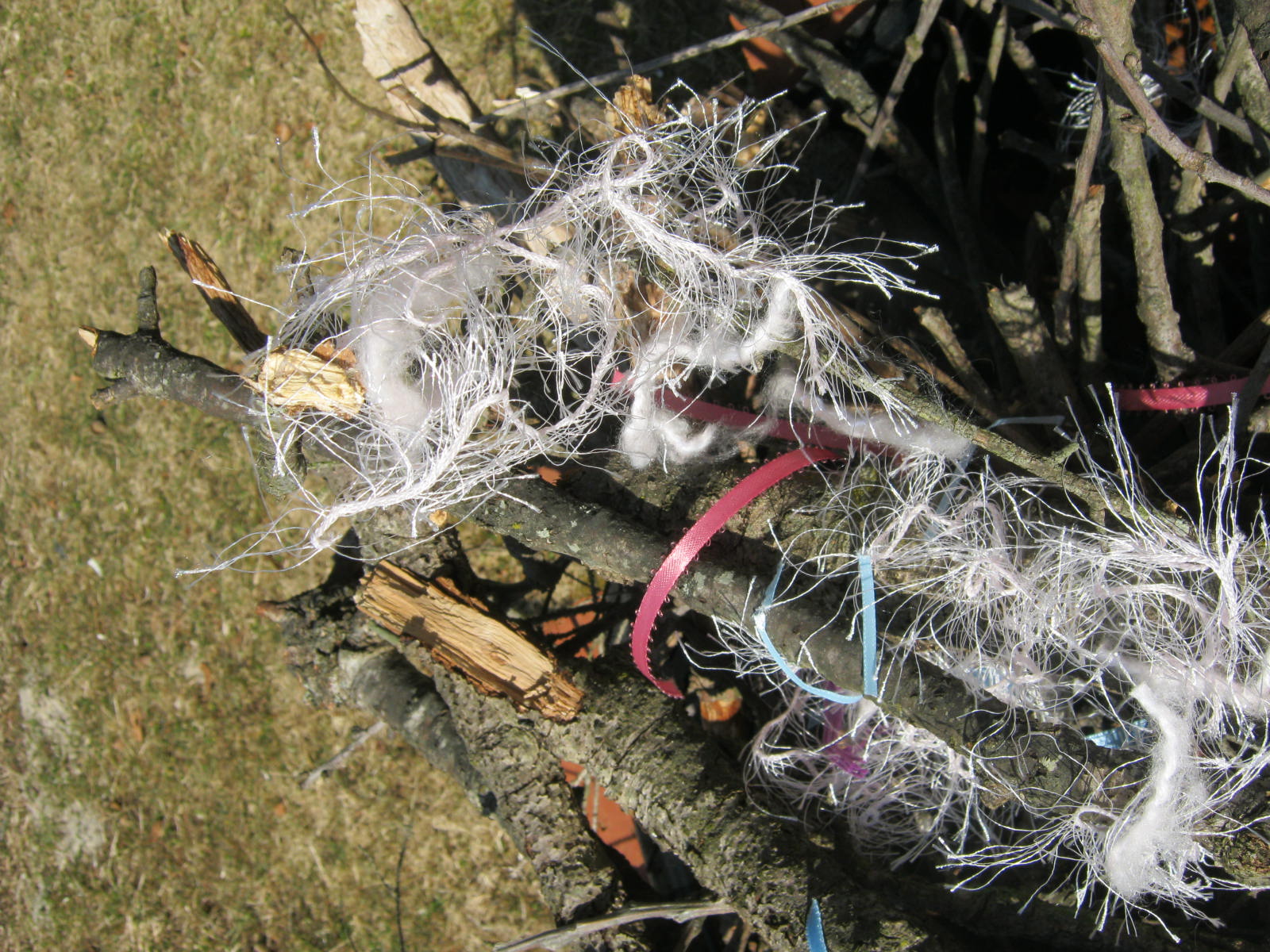
The birds are all a-twitter. Time to lay out some string and others soft materials for their nests. This is a great project for children to participate in.
Nesting material, cut short and scattered over twigs.
“HOW TO OFFER NEST MATERIAL
•Place nesting materials, such as twigs and leaves, in piles on the ground—other materials, too, if they won’t blow away.
•Put fluffy materials, hair, and fur in clean wire-mesh suet cages, or in string or plastic mesh bags. Attach them to tree trunks, fence posts, or deck railings. The birds will pull out the material through the mesh holes.
•Push material into tree crevices or drape it over vegetation.
•Put material into an open-topped, plastic berry basket (such as strawberries are sold in).
•Some manufacturers sell spiral wire hangers especially for putting out nest material. (One type looks like an oversized honey-dipper.)
~ The Cornell Lab of Ornithology
Don’t be too quick to clean all of winter’s debris from your yard.
Gather up some of these items in your yard into small concentrated piles:
•Dead twigs
•Dead leaves
•Dry grass (make sure the grass hadn’t been treated with pesticides)
•Human or animal hair (especially horse hair) (use short lengths—no longer than 4-6 inches long)
•Pet fur (Never use fur from pets that received flea or tick treatments)
•Sheep’s wool
•Feathers
•Plant fluff or down (e.g. cattail fluff, cottonwood down)
•Kapok, cotton batting, or other stuffing material
•Moss
•Bark strips
•Pine needles
~ The Cornell Lab of Ornithology
I often grow common dahlias from seed. They reach a height of twenty-four inches and bloom in August when grown in this manner. Dahlias are great for late-season color in pots and borders.
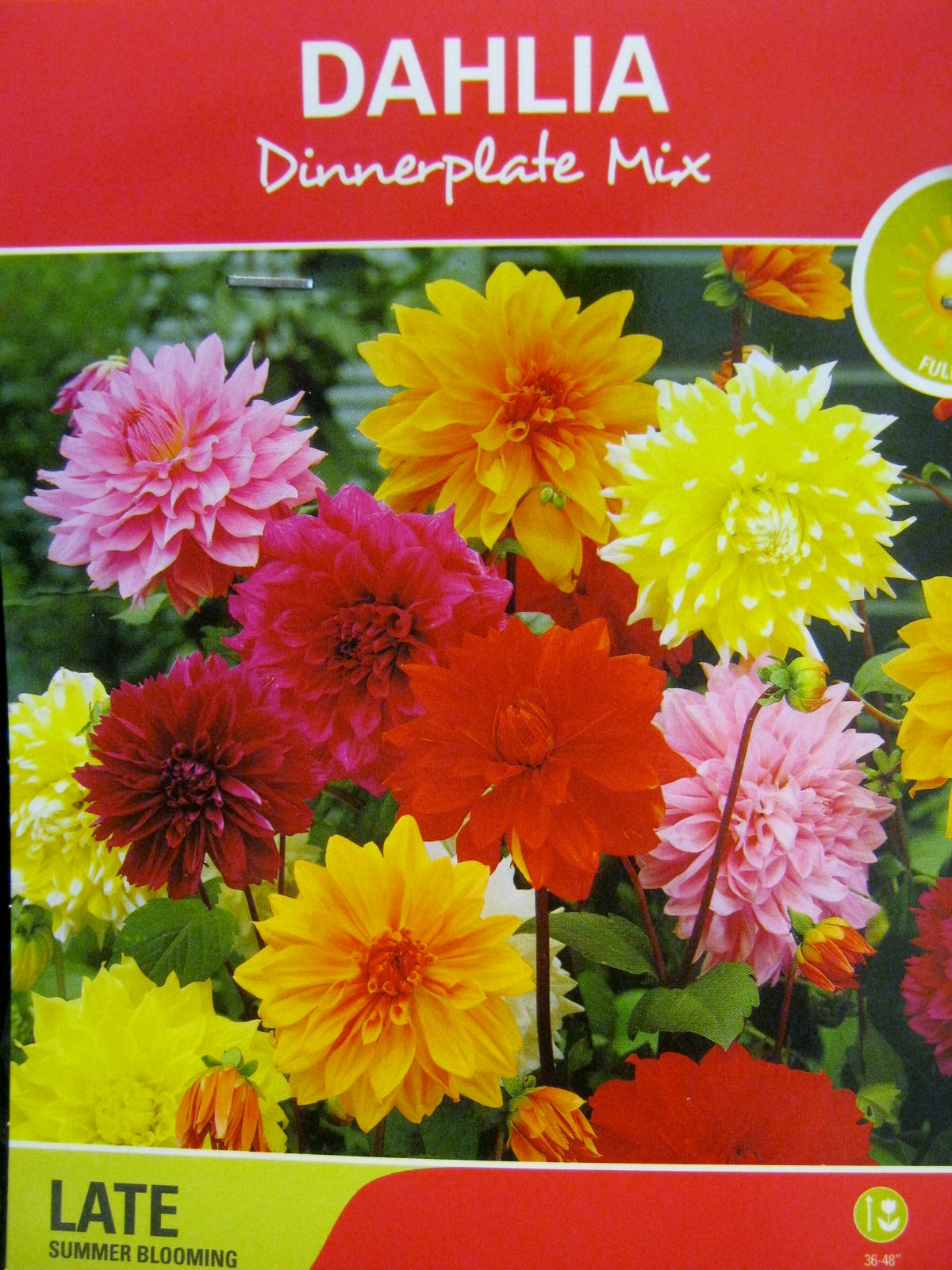
The larger dahlias, often called the dinner-plate variety, are best grown from tubers. These are available for purchase in almost all of the larger warehouse stores and garden centers. The tubers are placed in the ground, and bloom late in the season. The best luck I ever had with the larger dahlias was the year I bought a pre-planted tuber from a local nursery. This year I decided to start a few dahlias in pots to get a jumpstart on their blooming time.
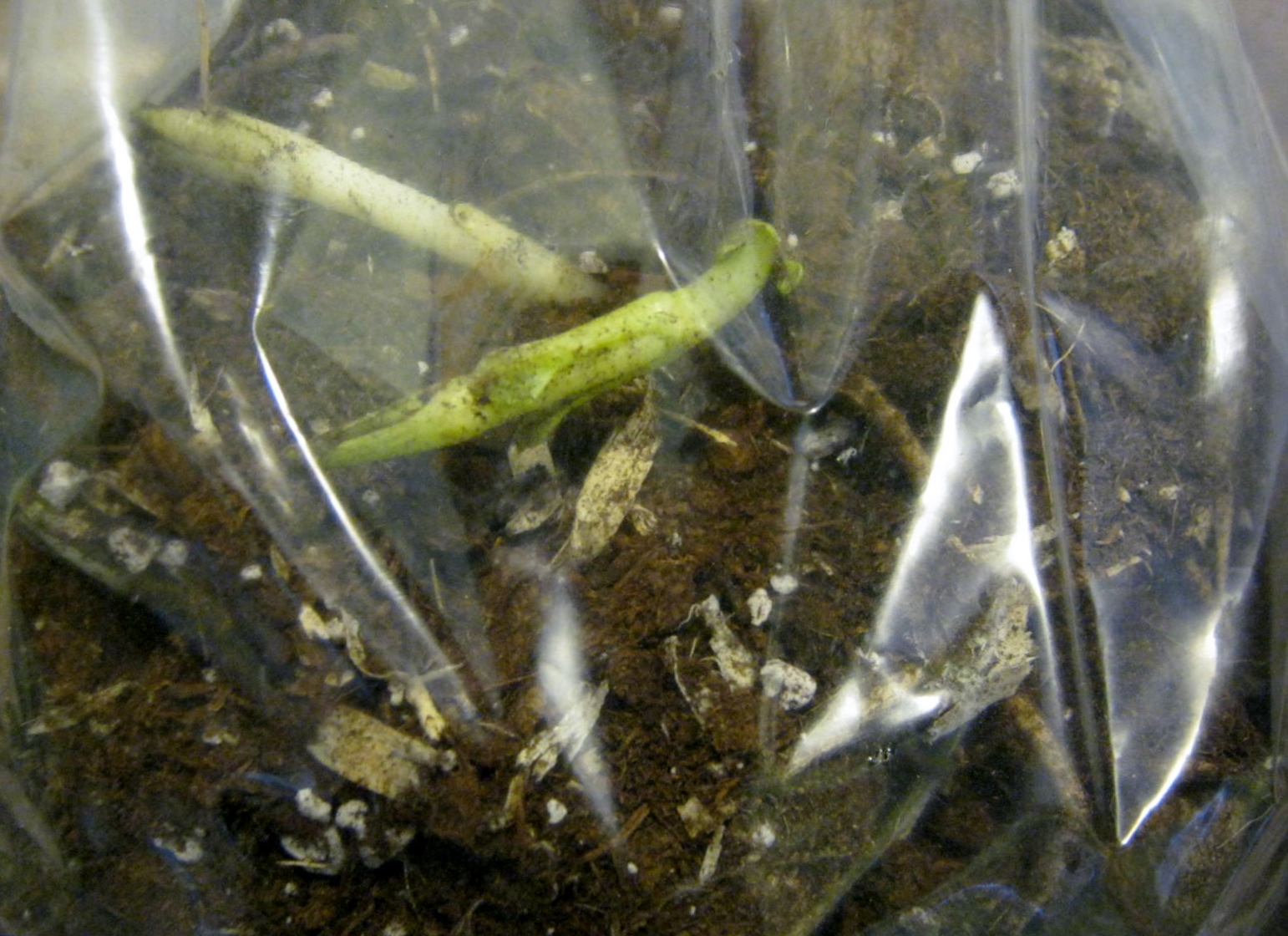
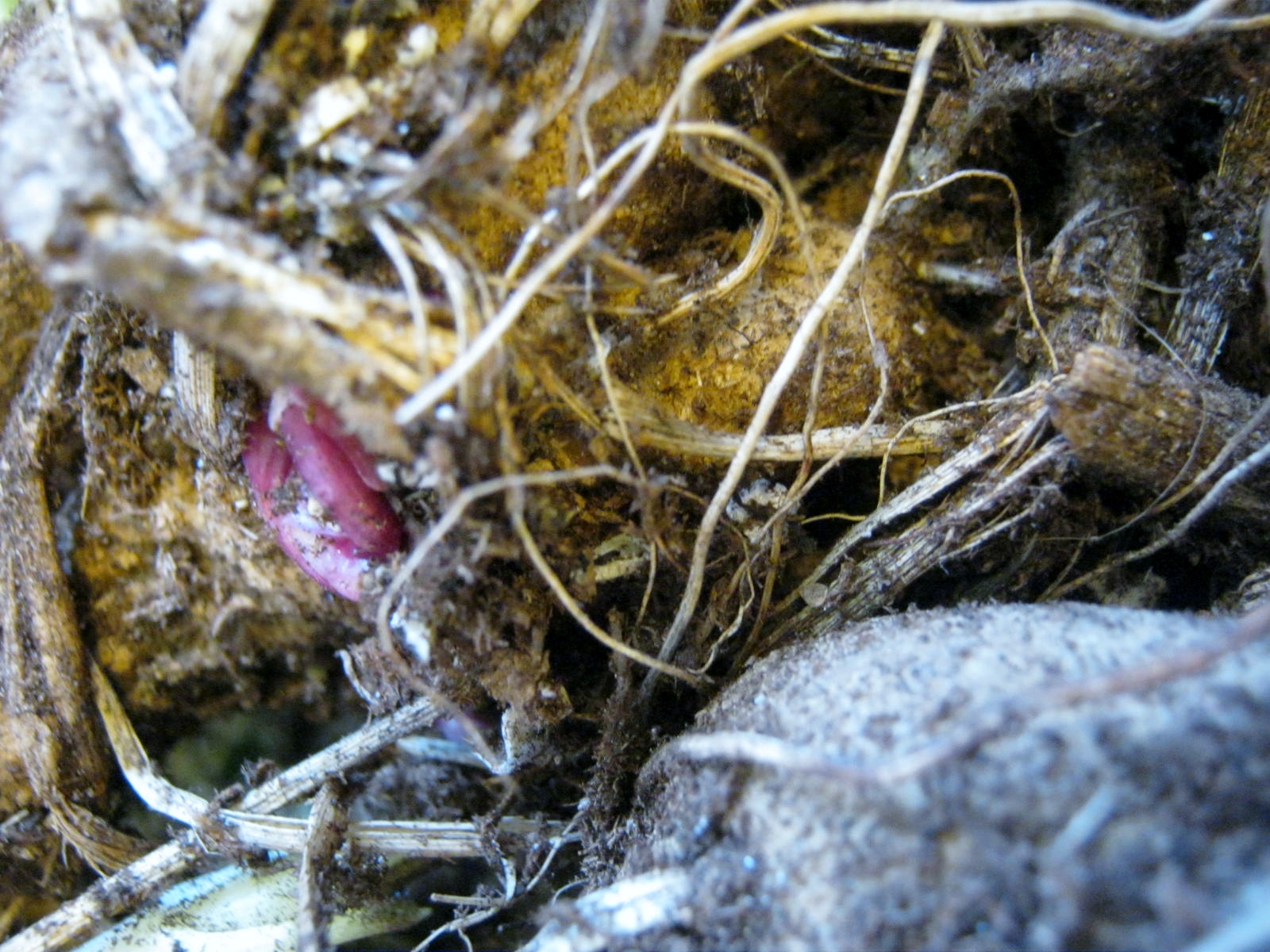
Dahlia tuber with sprout
Before I purchase a package of dahlia tubers I check to see that at least a few sprouts are visible. If there is no sign of life, I don’t buy the package.
Dahlia tubers with buds
When I open the package I check to see that all the tubers are firm. Each should have a few purple buds showing, and hopefully some green shoots.
Dahlia tubers potted up.
I found six good tubers in my package. Instead of planting each in a separate six-inch pot, I planted all the tubers in one ten inch pot. When the tubers begin to thrive and grow steadily, I will replant each in a separate pot. When all danger of frost is gone I will plant them outdoors. Hopefully, the early start will mean early blooming. I will update their progress in a few weeks.
I love the appearance of wooden Easter eggs, but they can cost a pretty penny when hand-painted and strung for hanging. I found an alternative, but I must also include a warning: these faux eggs might magically disappear before you can use them for Easter decorating.
Malted Easter Eggs
I recently purchased a package of malted Easter eggs in my local drugstore. I chose them for their eye-appeal; covered in pastel candy, speckled in darker pastels, the malted eggs were small, delicate and irresistible.. While I was pondering all the ways I could rig them for hanging, I ate one…then another, and so on…and you know the end of my tale, by the time I had a plan in place half my eggs had disappeared.
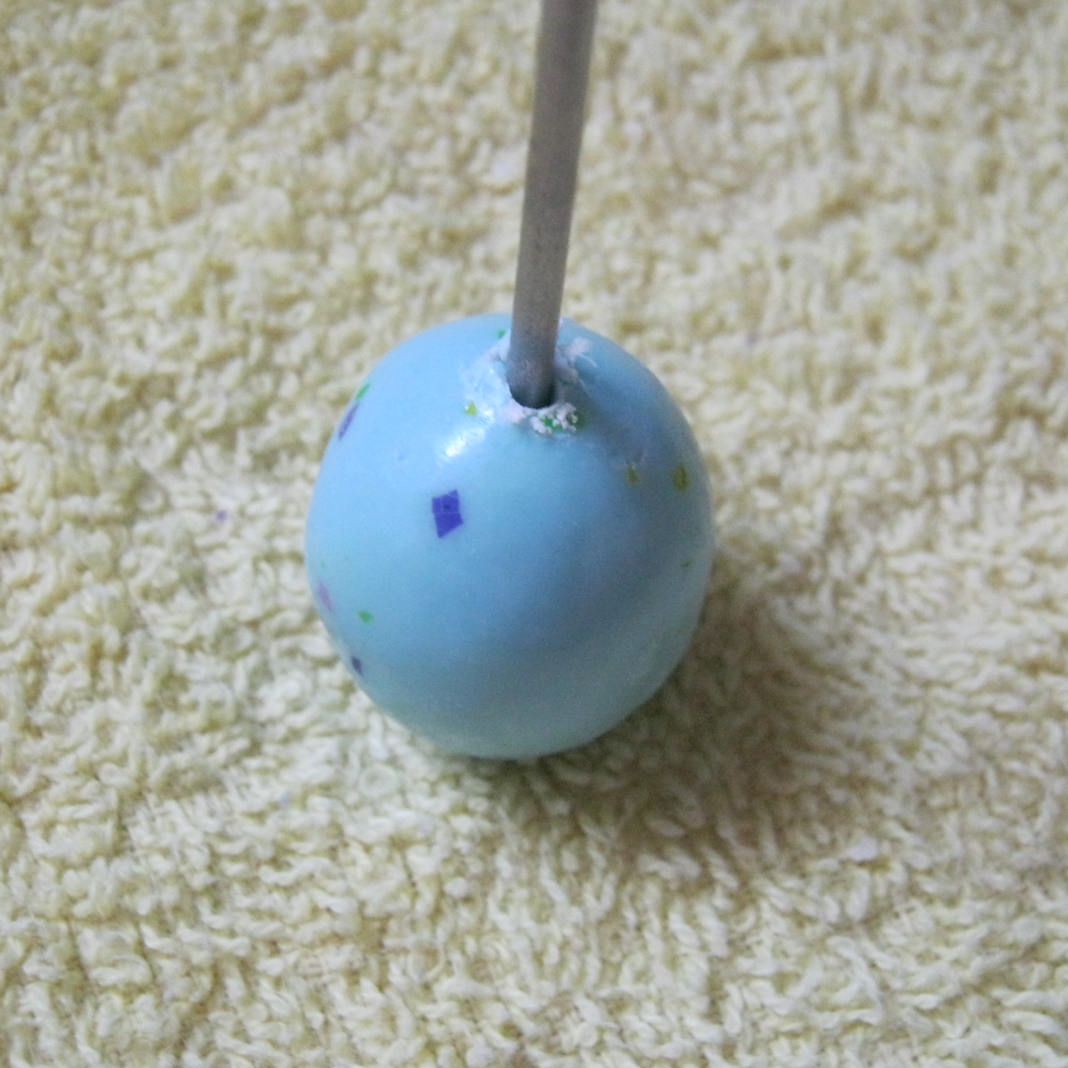
Skewering an Egg
To create a hole for threading, place the malted egg on a wash cloth or other thick cloth, pointy end up. Place a barbecue skewer, ice pick, heavy-duty toothpick, etc., on the top and slowly twist until it penetrates the outer shell. Continue twisting and applying pressure until the skewer reaches the bottom of the egg and exits through the bottom.
Malted Easter Eggs with Ribbons
A thin looped ribbon was easily pushed through with a toothpick, and knotted on the larger end. Easy faux wooden eggs for a fraction of the cost. They won’t last more than one season, but if they did I would miss the fun of making (and eating) them again next year.
In response to The Daily Post’s writing prompt: “Fresh.”
“For this week’s photo challenge, share with us a photo that expresses something fresh.”
Block Island Donuts
When I think of fresh I think of Payne’s Killer Donuts on Block Island in Rhode Island. They truly are FRESH and capture that “Melt-in-your-mouth” goodness we all crave.
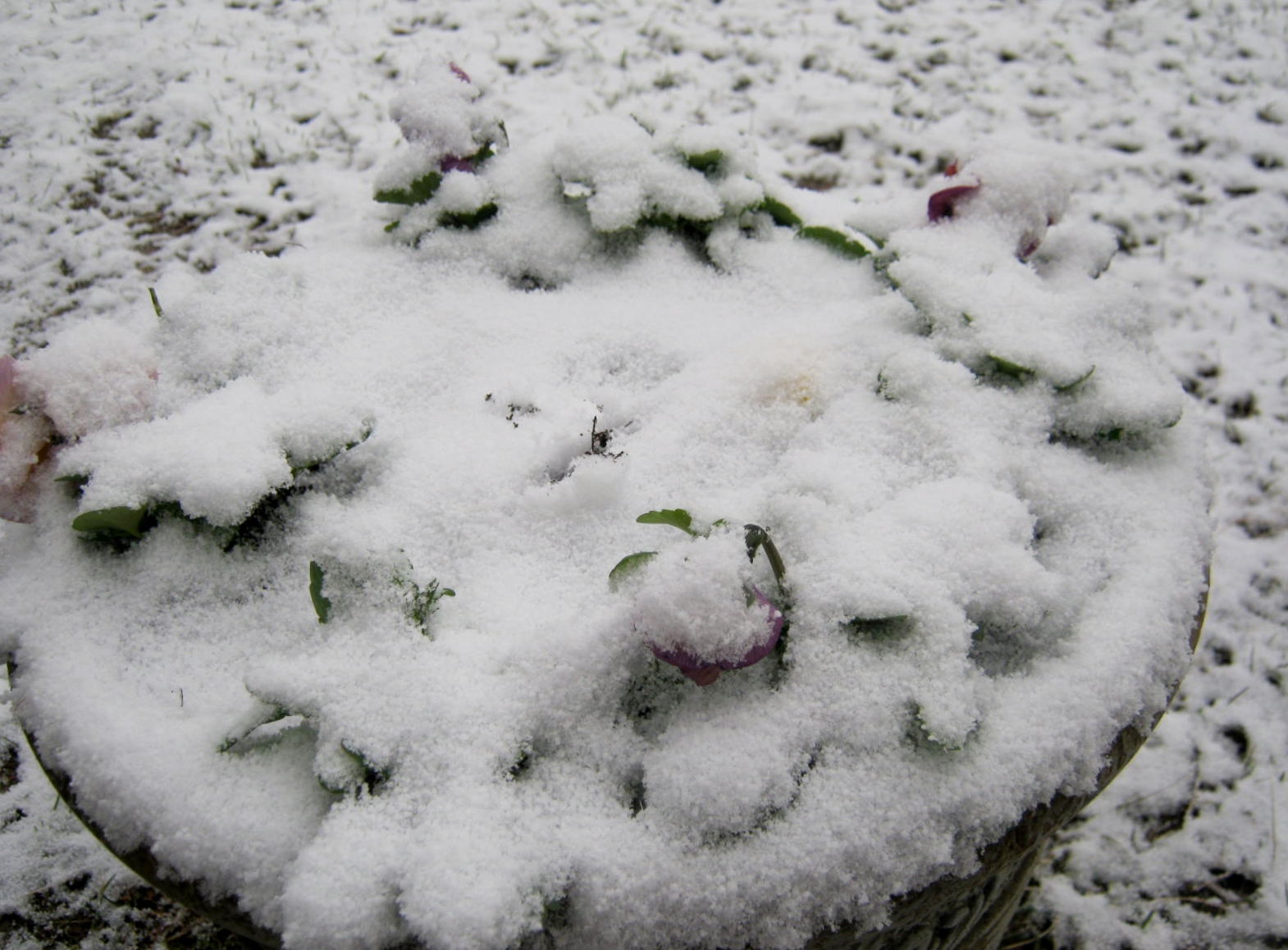
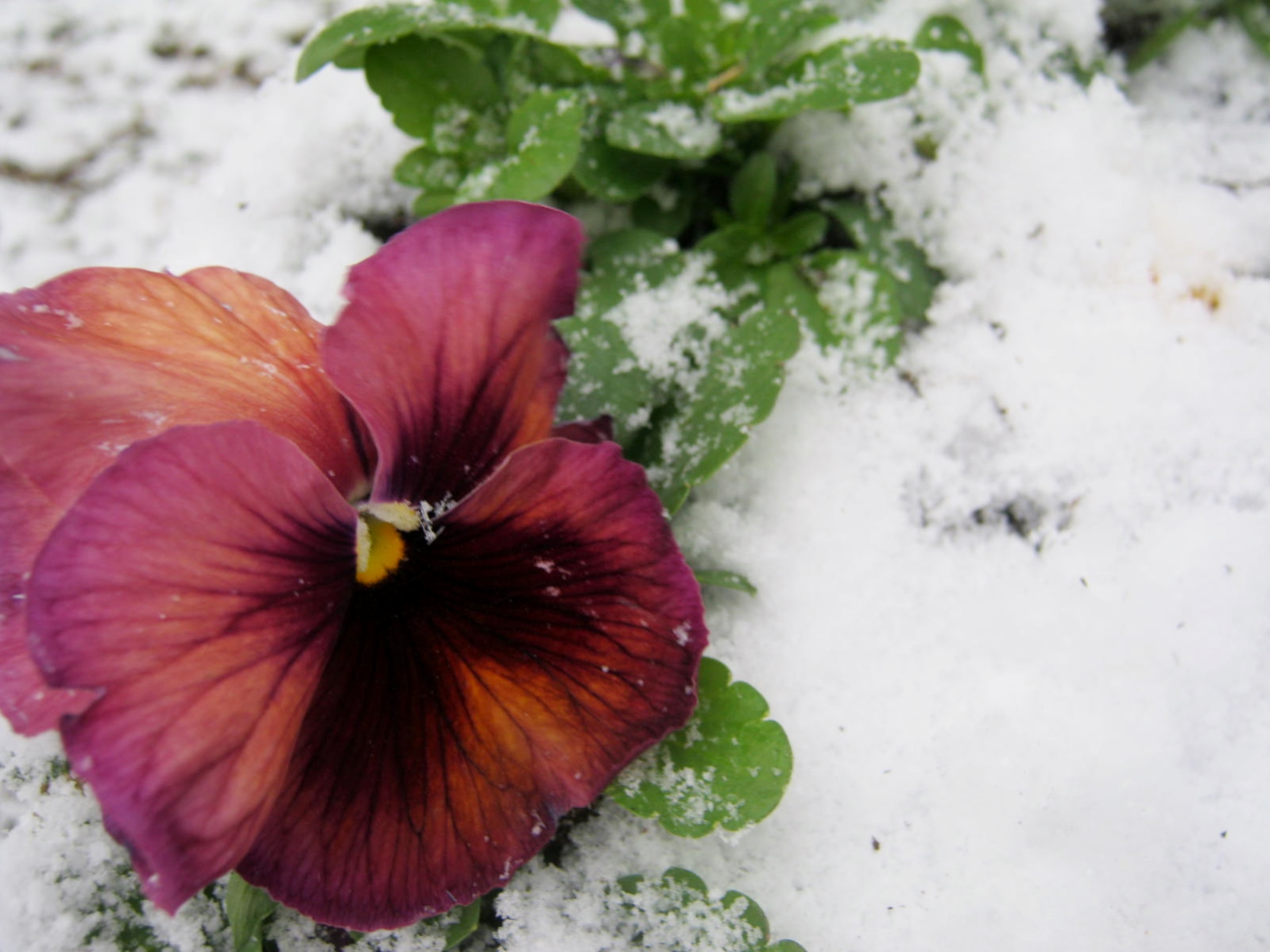
Fortunately, pansy plants and flowers are extremely hardy and won’t mind a day or two of snow. Brush the flakes away and there, pert as can be, are the whiskery faces of the flowers.
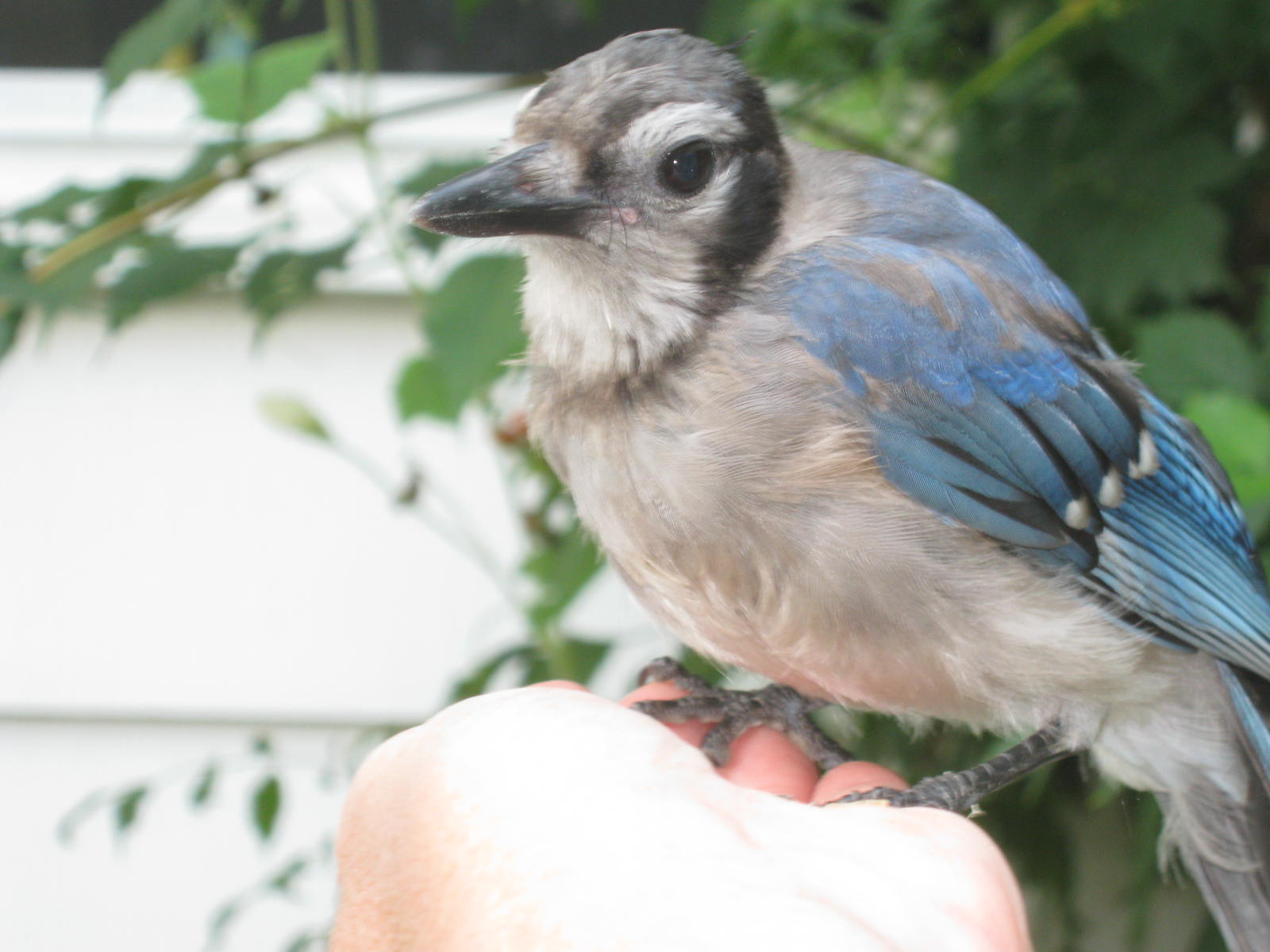
This is a re-posting of one of my favorite moments last summer. I can’t wait to see if we have any more close encounters with the blue jays.
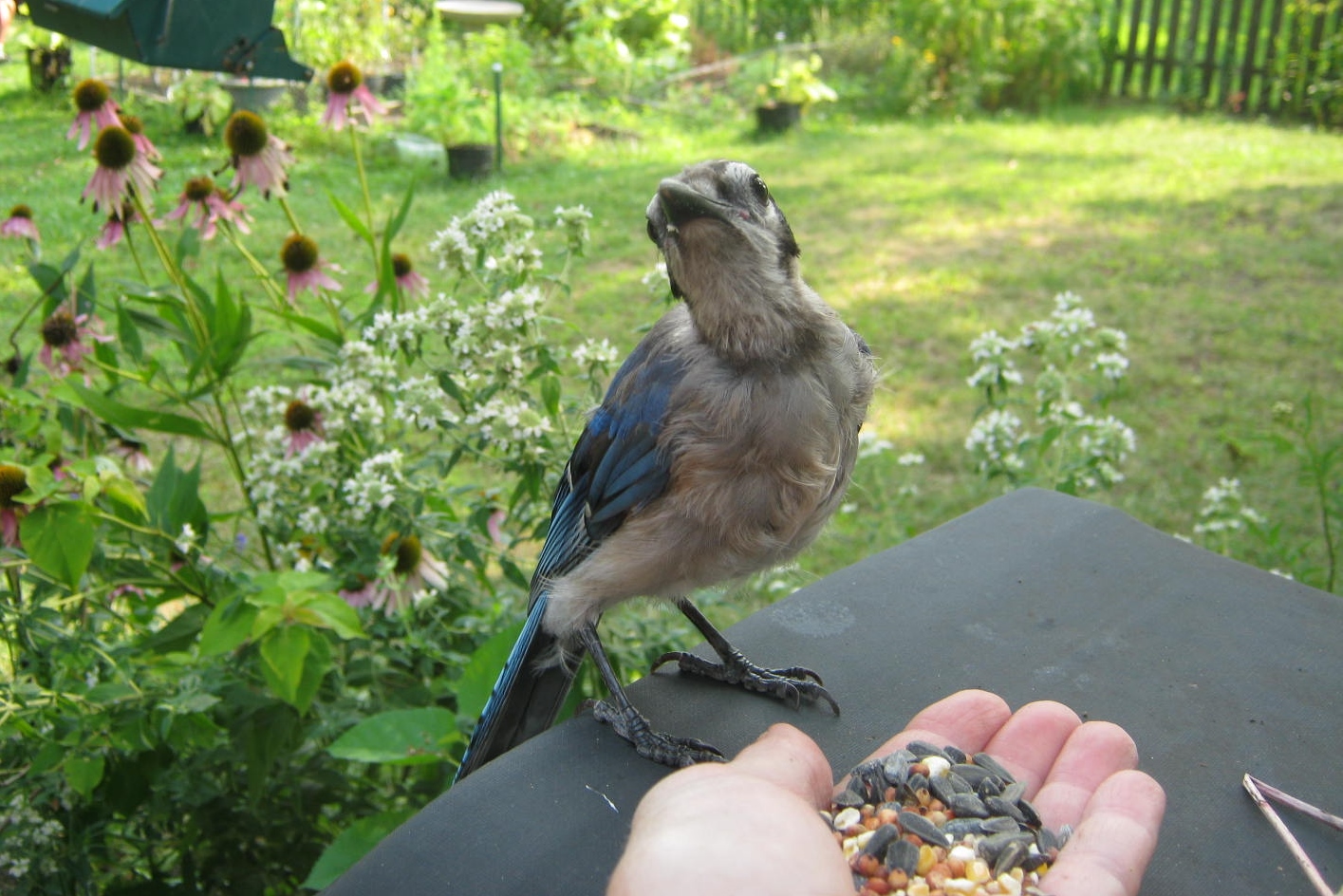
A “teenager” Blue Jay, wild and reckless, made friends with the ones his Mama told him were the wrong crowd. What an amazing experience this was for all of us.
We gave him some bird seed. He gobbled up a bit, but seemed to like the attention he was receiving more than the food.
He first captured our attention by bathing in a muddy puddle the grandboys had created with the hose. The two year old baby was excited and bold, he went right up to him and petted him on the back. We were amazed. No worries for those of you who might wonder if the bird was sick…no…just very young…feisty, strong, and bright-eyed. We wondered if perhaps someone had hand-raised him…he was that tame.
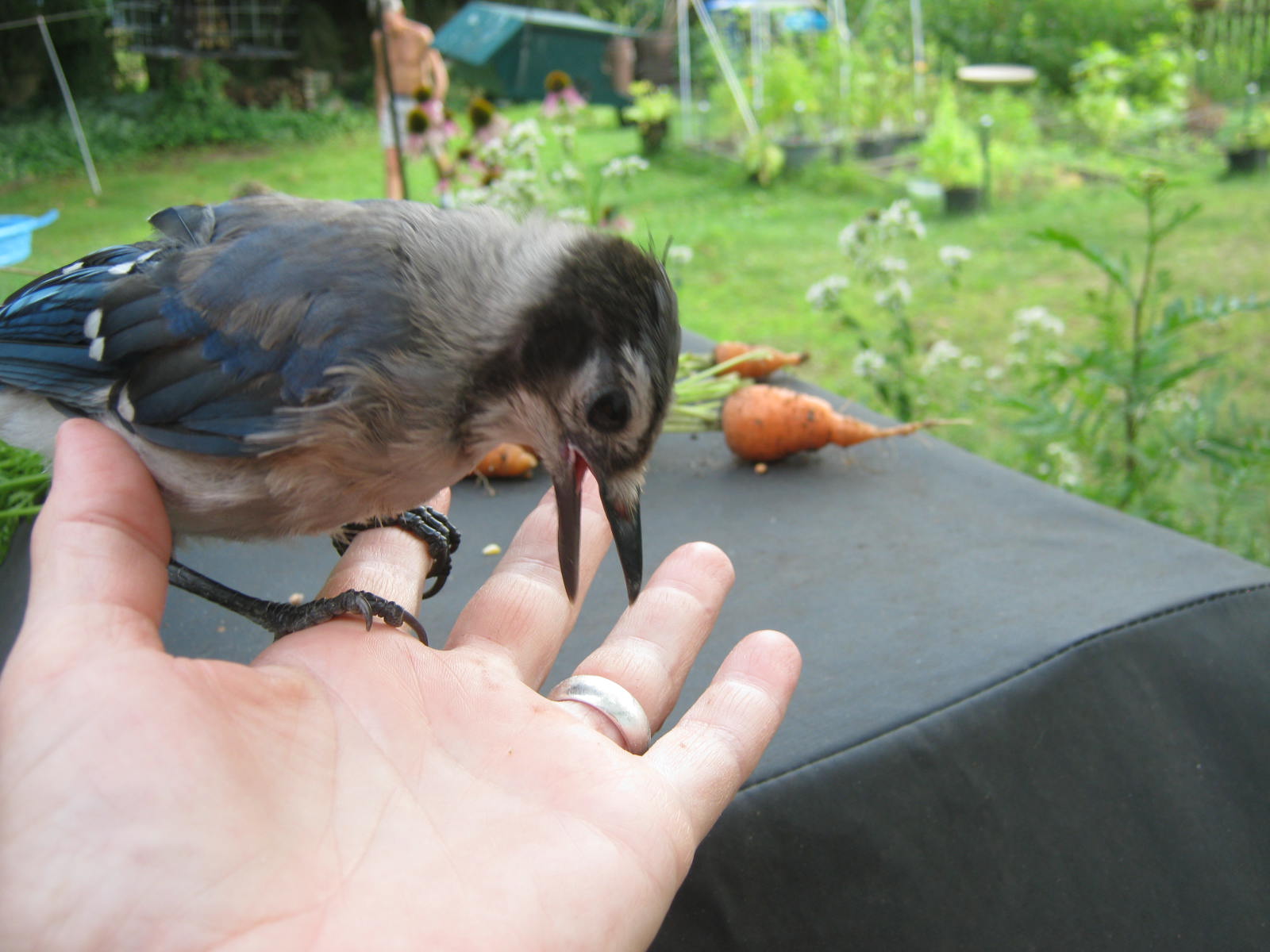
As I took photographs he pecked the camera.
He also took a liking to my wedding ring.
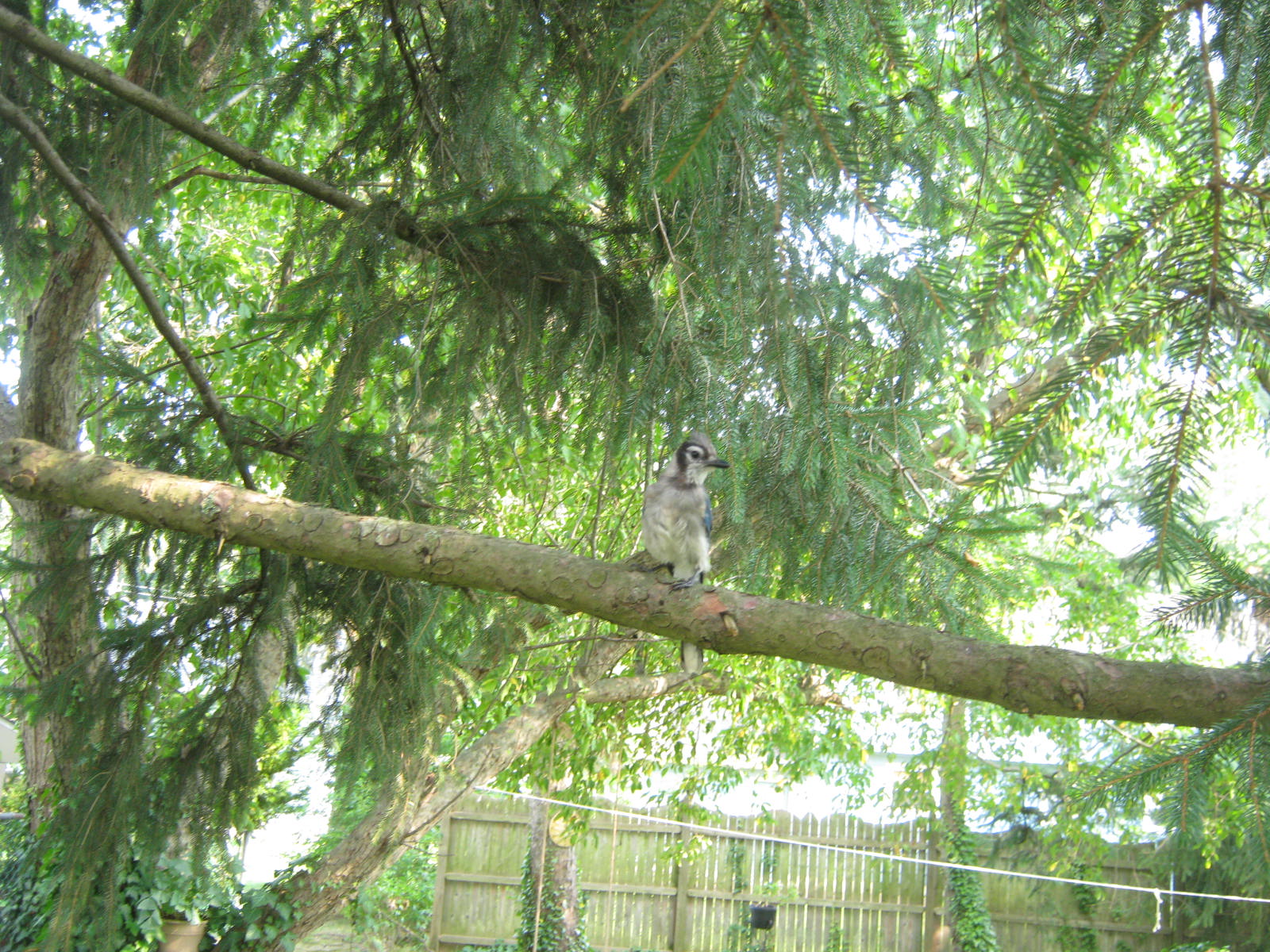
After a bit he flew to a perch in one of the pines bordering our back yard. Fly away home little bird…stay safe. Small miracles happen every day. Thank you God!
“Christ beside me, Christ before me,
Christ behind me, Christ within me,
Christ beneath me, Christ above me.”
~ St. Patrick
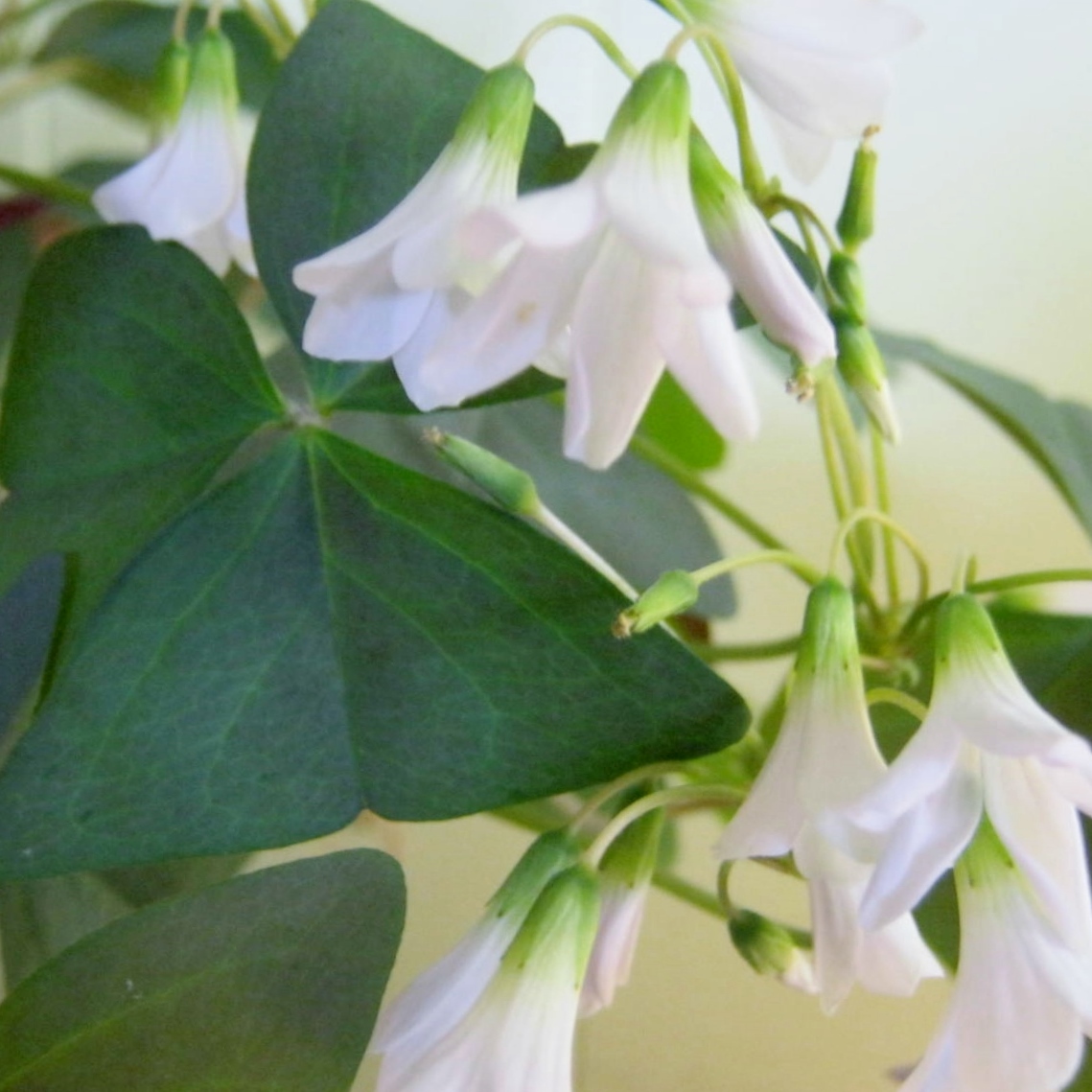
White Wood Sorrel
“If I have any worth, it is to live my life for God so as to teach these peoples; even though some of them still look down on me.” ~ St. Patrick
I am quite fond of my Wood Sorrel Oxalis/Shamrock plant. I purchased it last Spring as a “Proven Winner.” I planted the oxalis in a medium-sized pot and grew it beneath the shady branches of a crab apple tree. The dappled sunlight it received allowed the plant to thrive. In the Autumn, I brought the oxalis into the house and placed it in a shady basement window. The plant thrived all winter with minimal attention. In a few weeks I will place it outside beneath the crab apple tree once more. A terrific plant, but might not be easy to find. It is available online.
“This is a sweet plant with lots of delicate small white flowers. Its leaves resemble shamrocks so it is a perfect St. Patrick’s Day gift. It will grow happily in a window of your home in a cold climate, as did my first plants. It also grew happily outside in my garden in the Caribbean isle of Montserrat. That’s not bad for flexibility which automatically makes it one of my favorites.” ~Green Garden Online Plant Source
“A Charentais melon is a type of cantaloupe melon, Cucumis melo var. cantalupensis. It is a small variety of melon, similar in flesh to cantaloupes, but with a more fragrant smell. It was developed in western France around 1920 as a more refined cantaloupe. Most are now produced in North Africa, with some limited production in the United States.” ~ Wikipedia
Cantaloupes are not a new type of produce for me, they have been a staple on my table for as long as I can remember, but The Charentais Melon is a new taste experience. The melon I recently bought might have been a tad under-ripe, but the flavor was wonderful. The color of the flesh was tantalizing, a deeper apricot color than the cantaloupes I often buy at this time of year. I really admire the appearance of this cantaloupe, and enjoyed cutting slices using the green stripes as a guide. Would I buy this cantaloupe variety again? You betcha’.
In response to The Daily Post’s writing prompt: “Wall.”
I love shadows on the walls. This week I wandered into an upstairs room and found my geraniums, backlit, and casting amazing shadows on the wall. Of course I had to enter into the Shadowland.
These are a few of the reference photographs available for the challenge. You are also free to use one of your own. Any media can be used for the challenge. Please visit WetCanvas and the Floral and Botanical forum for the rules and more information. WetCanvas Plant Parade March 2015
Betwixt and Between – “Undecided, midway between two alternatives, neither here nor there.” The Free Dictionary
Winter is waning, but still trying to hold us in the grip of its icy fingers. Spring is attempting to become a reality and turn Winter into nothing but a bad memory. Who is winning? I hope it is Spring, but this past week has been a dilly of an example of living in the “Betwixt and Between.”
The sun has begun to shine as if it means business.
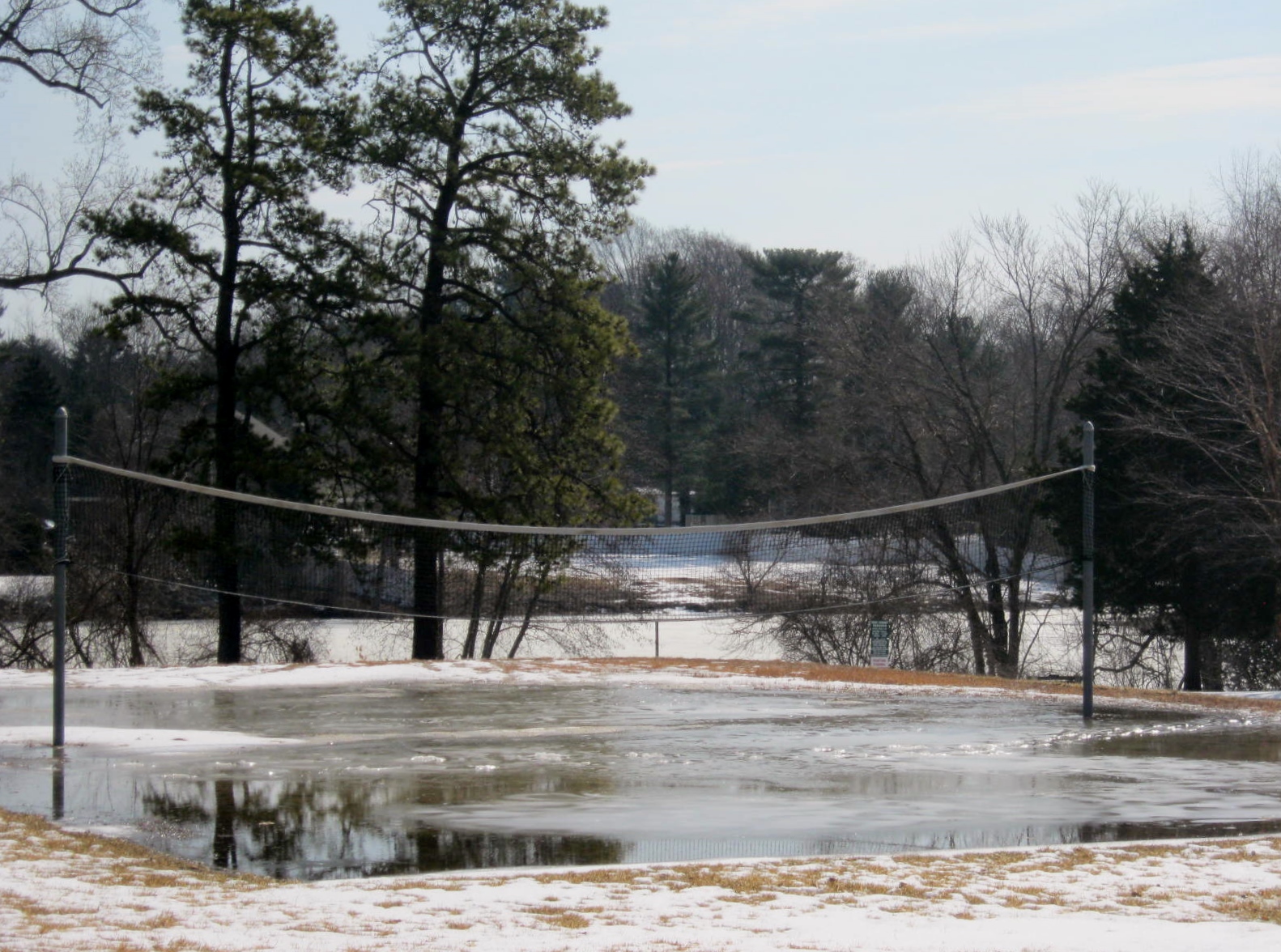
The volleyball court at the local park resembles a pond,
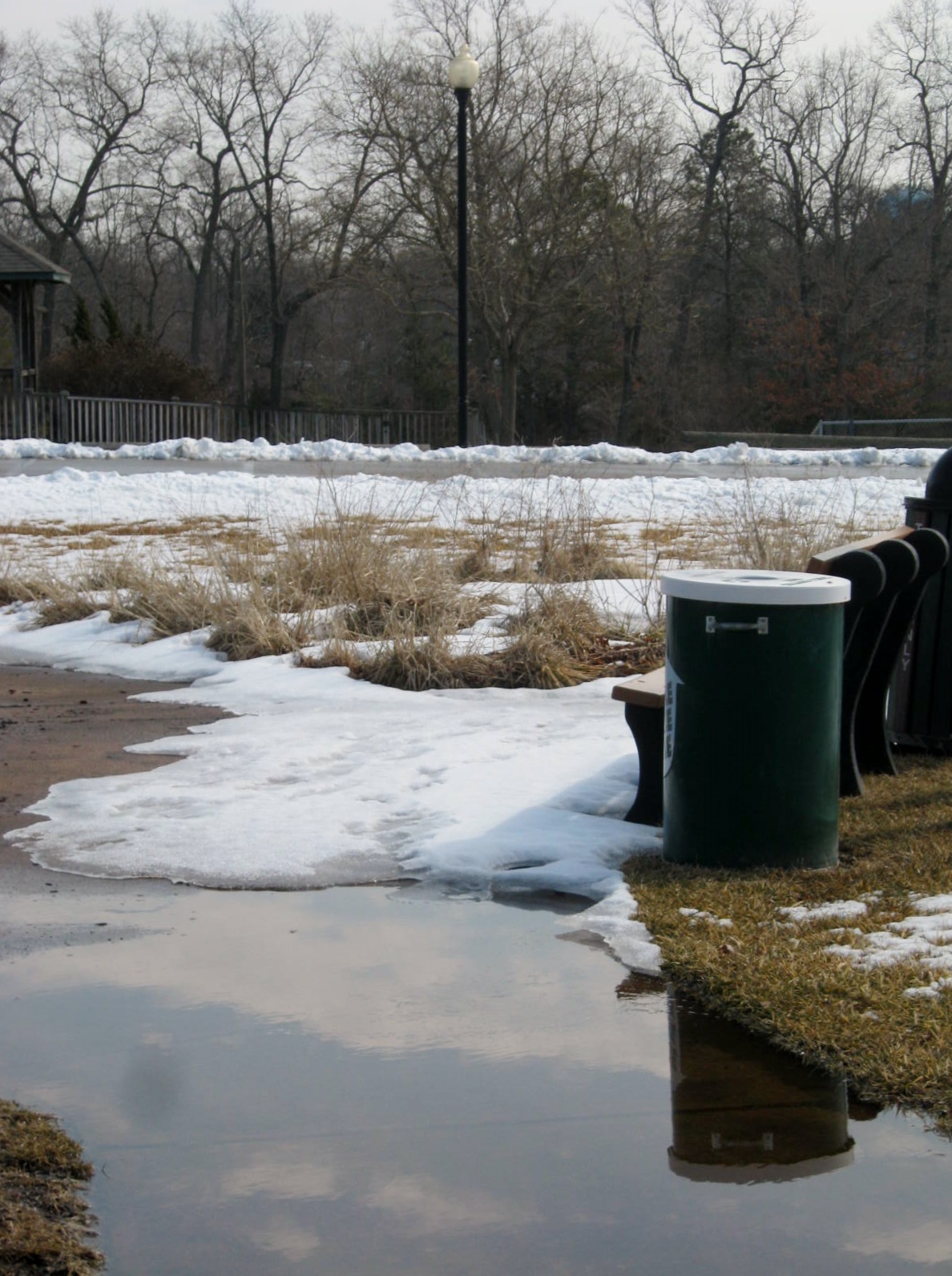
The sidewalk resembles a stream.
The skunk cabbages, regardless of the snowy surroundings, are thrusting their folded leaves toward the sky.
Yesterday, after the snow finally disappeared, the crocus opened their golden blooms and the birds began singing “The Hallelujah Chorus.” I am joining in with a few “Hallelujahs” of my own. Welcome Spring, you can’t arrive soon enough for me.