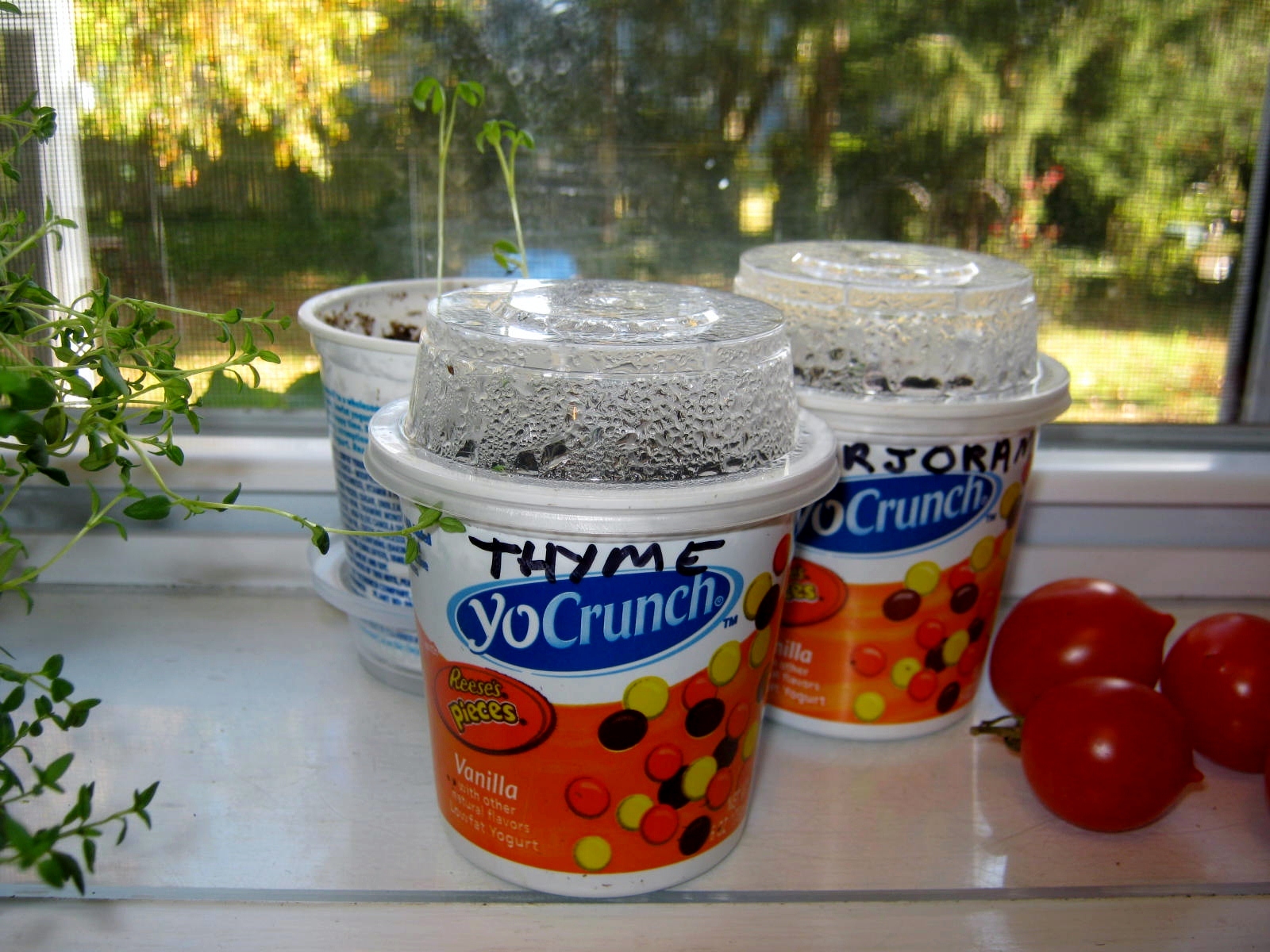
A month or two ago my son brought me several empty yogurt containers and clear lids. I was touched that he thought of me and took the time to clean each one. (Thanks to his sweet wife too, who probably cleaned quite a few too.) He correctly guessed that they would make a perfect nursery for sprouting seeds. I planted six varieties of herbs in them. Five of them have sprouted within a week: cress, thyme, cilantro, basil, marjoram…I’m only waiting on the parsley to sprout now. Upcycling trash into treasure is one of my favorite pastimes.
Category: Projects
Project – Birthday Terrarium in Five Steps
1. Select Container/Add a layer of pebbles.
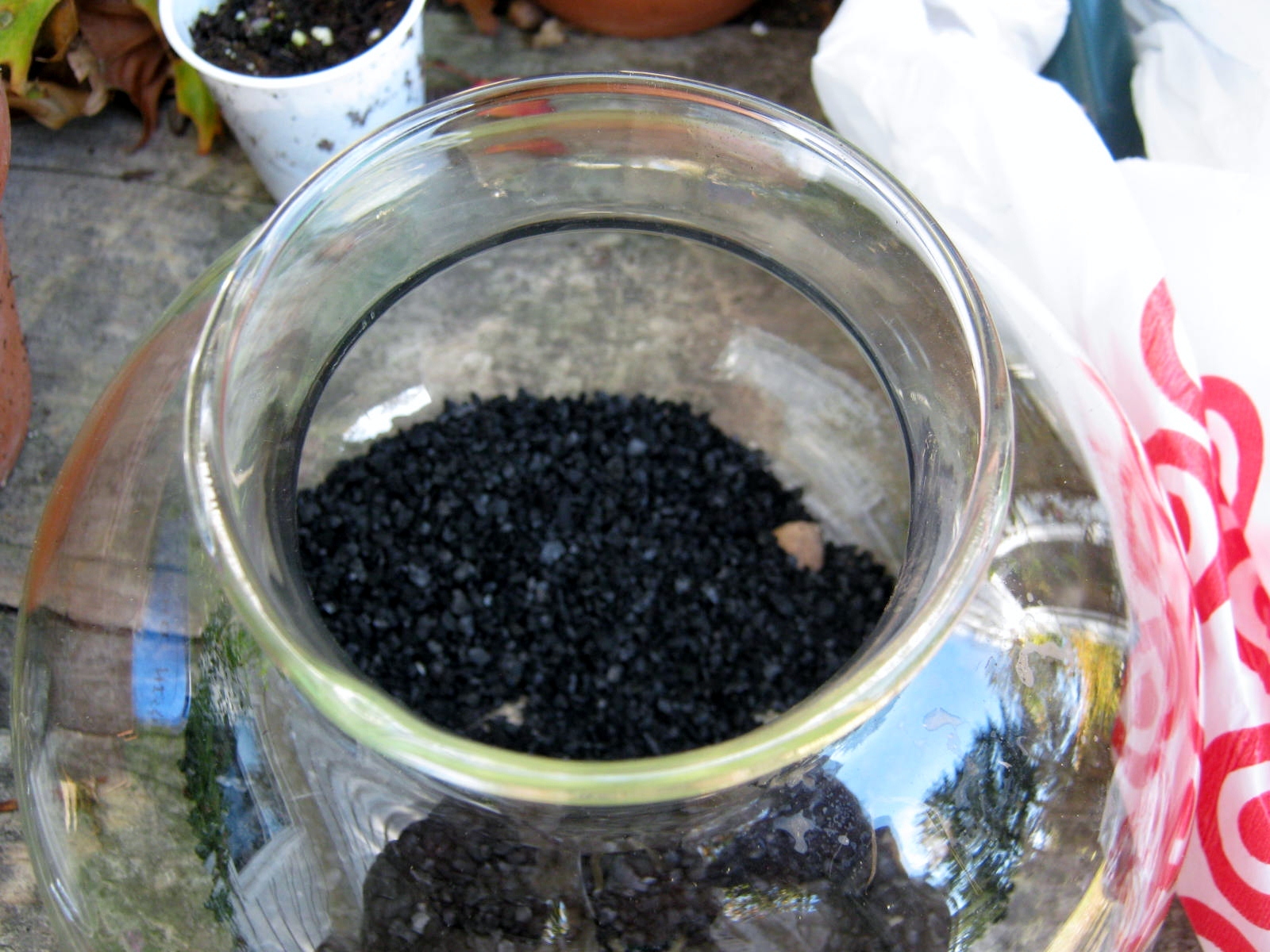
2. Add a layer of charcoal.
3. Add a layer of humus/soil.
4. Add plants and mosses.
5. Add lichens, rocks, and small statues. (Mine are elephants from Red Rose Teabag boxes) Water sparingly, rinse excess dirt off of sides. Cover with lid of some type. Enjoy your beautiful terrarium.
Care of terrariums: Mosses like gentle sun, morning light exposure is best for a terrarium. Try to lift lid each day to give terrarium fresh air. Your terrarium will self-water, if it develops a look of dryness water sparingly once again.
Projects – Jack O’ Lantern Tree/Part II
The next step in the project is to attach a green floral wire to the back of each Jack O’ Lantern with a glue gun or other strong-bodied glue. First, I twirled the wire into a tight circle to give it more gripping area for gluing. Wire has more stability than string, and you can twist and manipulate the object you are hanging into the perfect position. I think I am going to cut away all the strings from my Christmas ornaments this year and replace them with green wire.
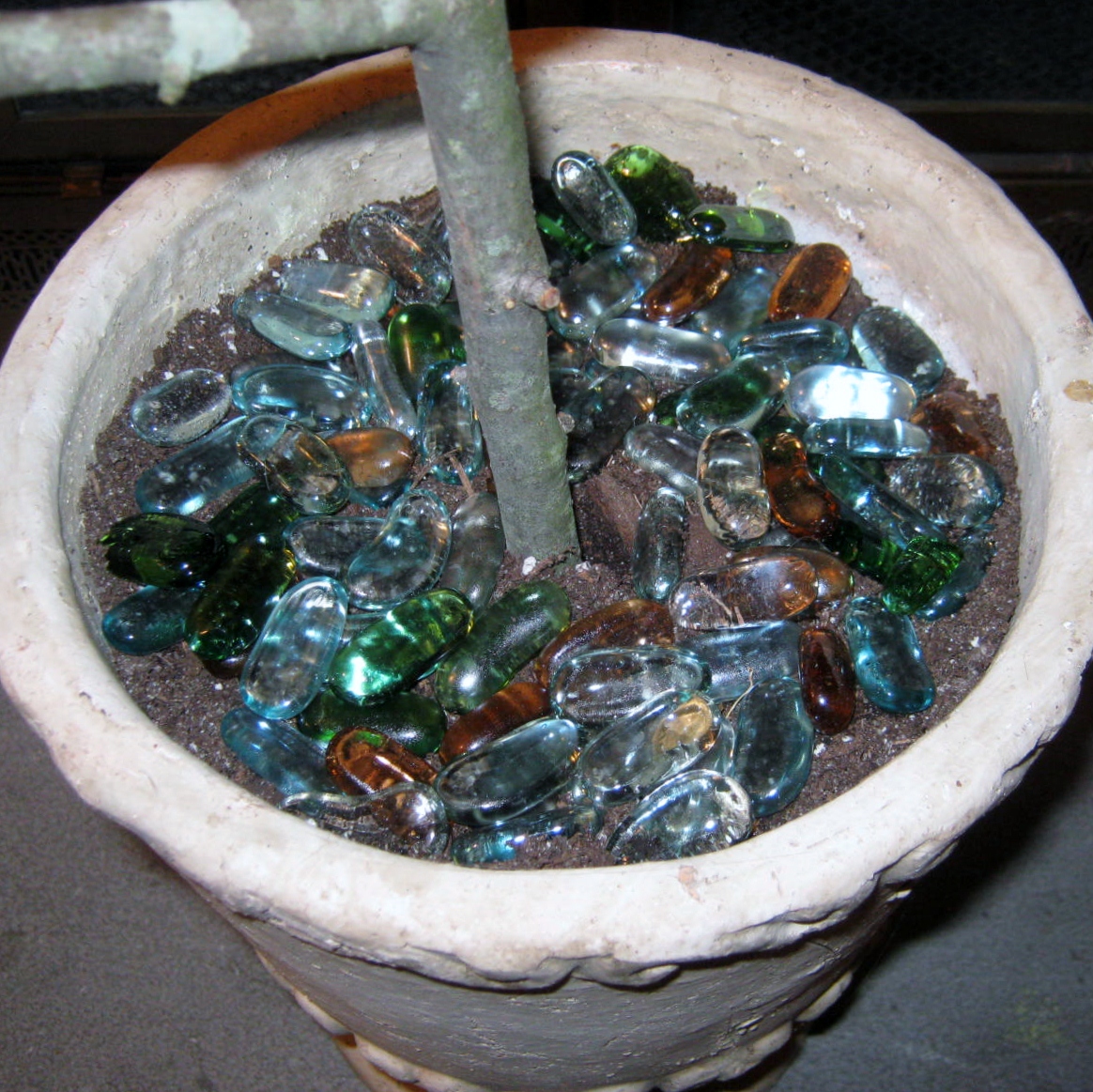
At this point I went outside and chose a nice branch from my crabapple tree. Any tree branch will do, but I especially liked the crabapple twig. It is sturdy, yet it has many little outcroppings of branchlets to hang the ornaments upon. A decorative, neutral colored urn was my container of choice. Any medium-sized pot will work, a large coffee can, a beach bucket, etc. I filled the urn with potting soil, inserted my branch, firmed up the soil around it, and added a few decorative glass pebbles from the dollar store just for aesthetic appeal.
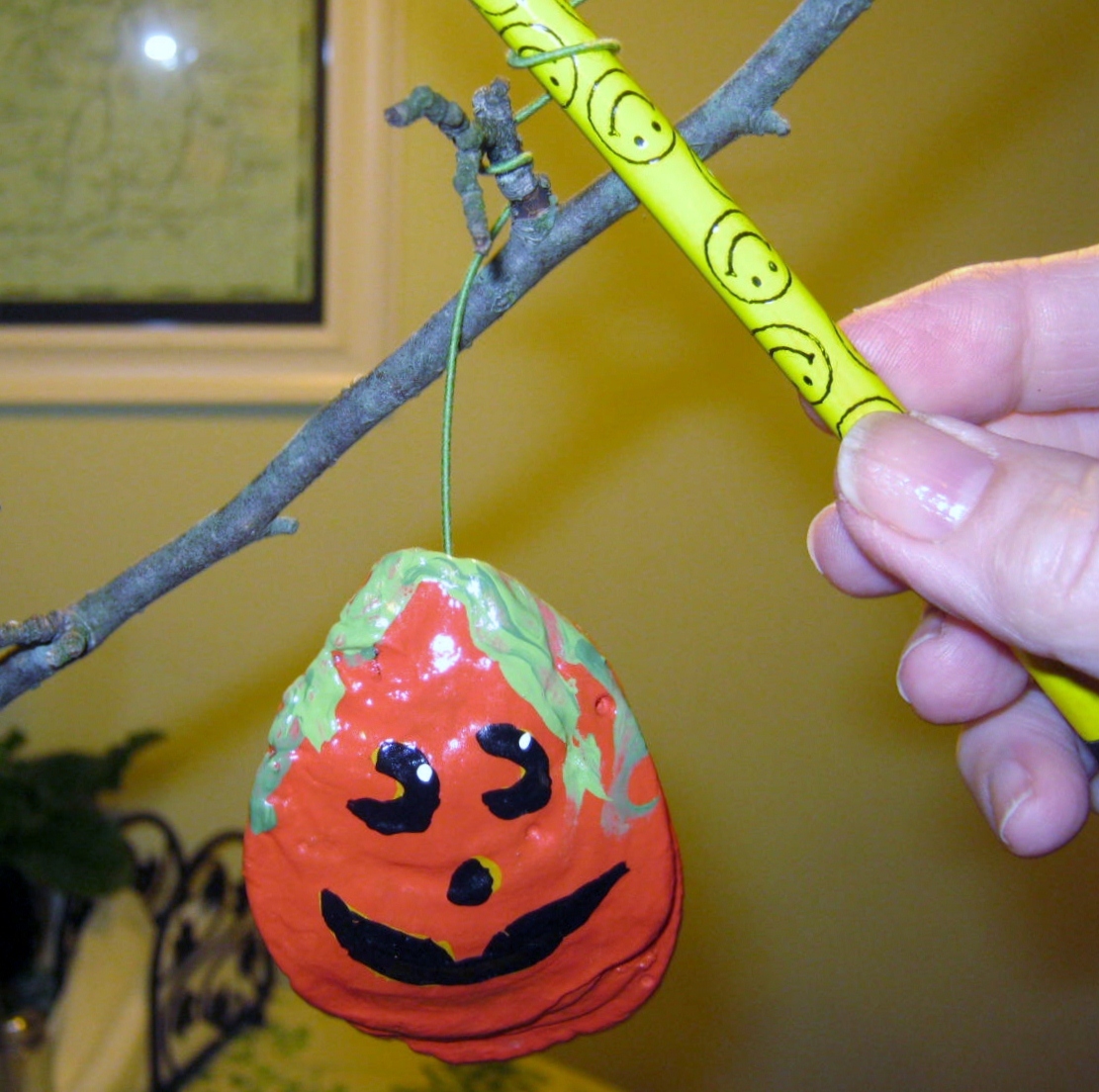
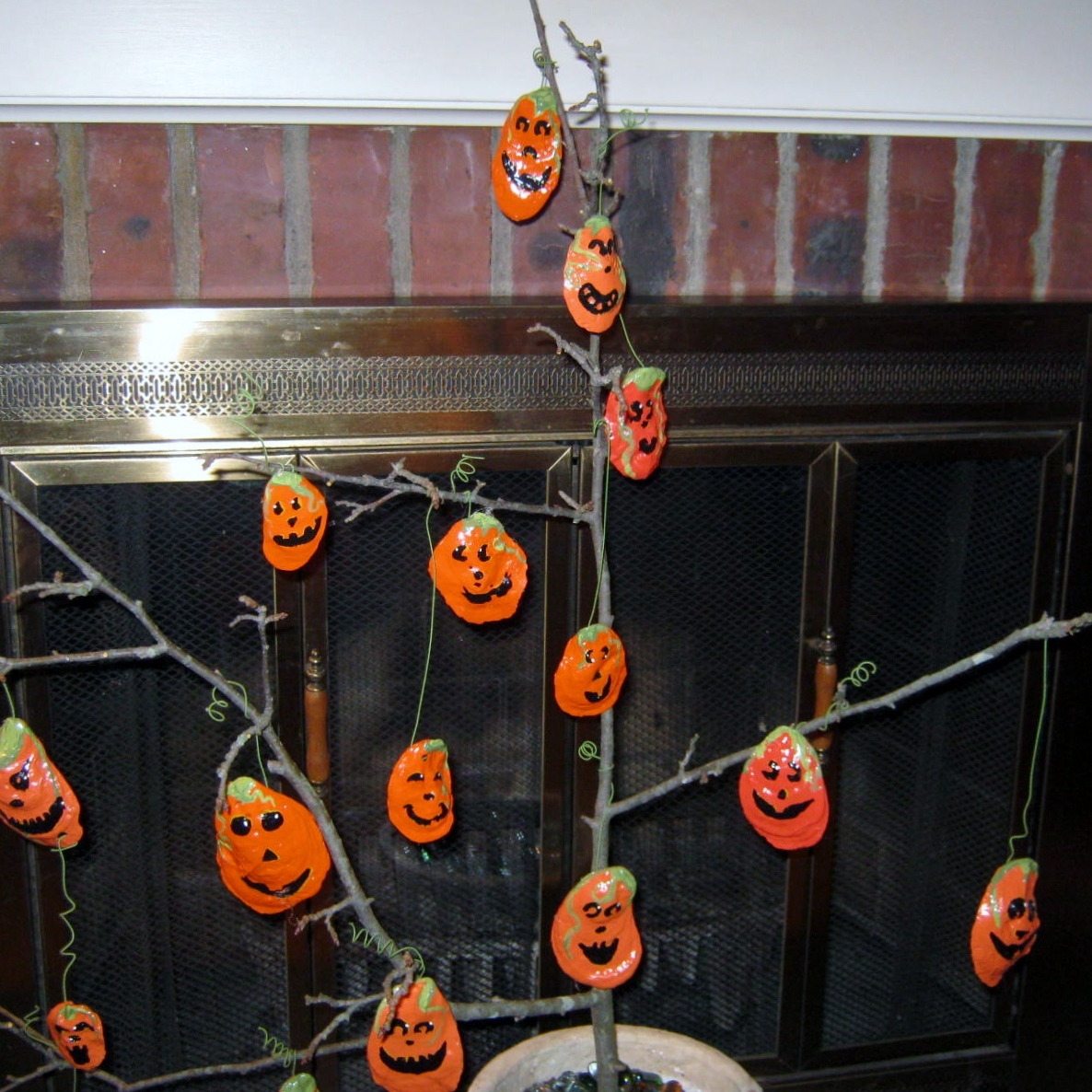
Now comes the fun part! I twisted each Jack O’ Lantern’s wire around a branch, and twirled the excess around a pencil to give it the look of a vining tendril.
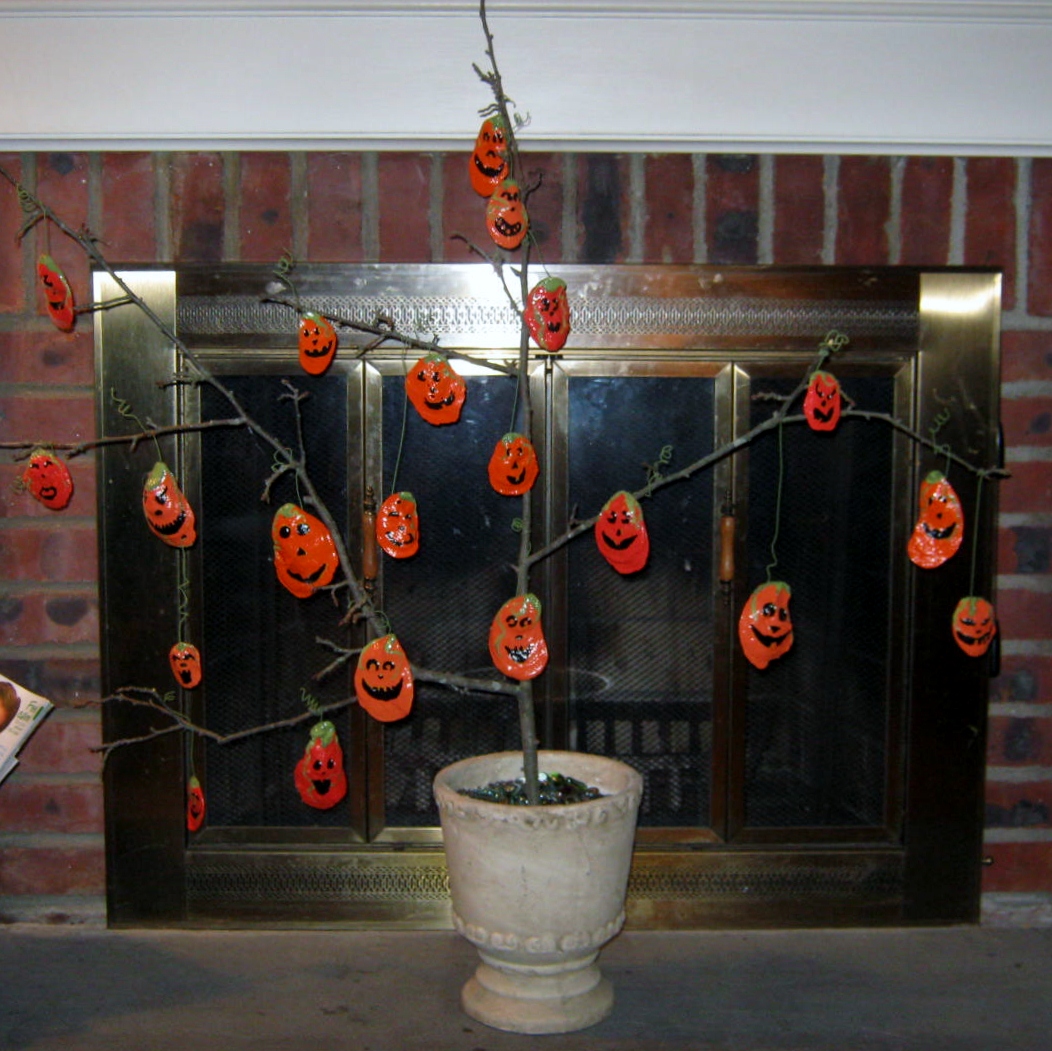
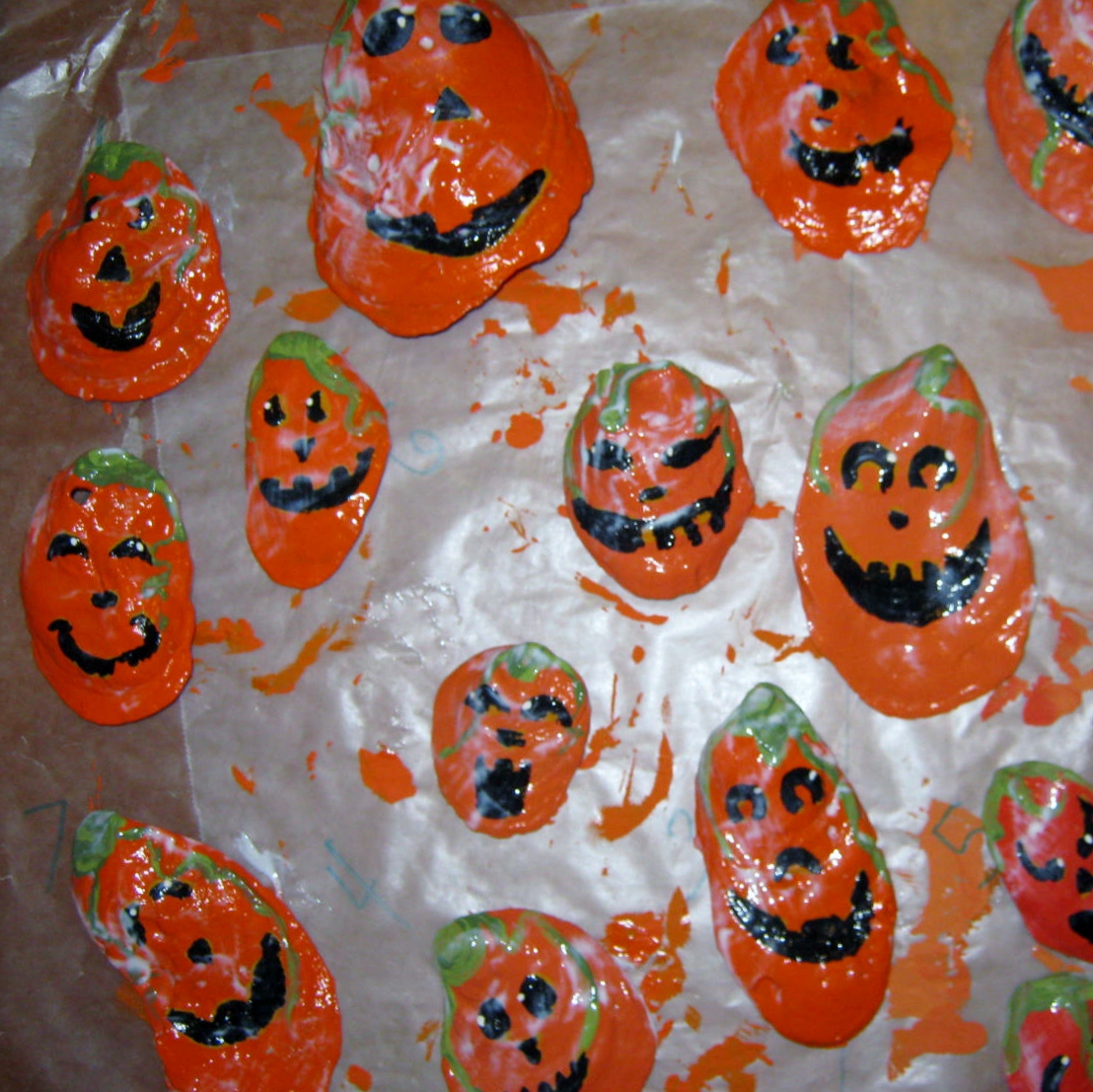
I think the oyster shells look very happy in their new role of Jack O’ Lanterns.
Ta-da! My Jack O’ Lantern Halloween tree is finished. I can’t wait for my grandsons to see it today. One word of caution, find a place for the tree where it won’t jab or catch on someone’s clothing as they pass by…be especially careful not to put the tree at eye level when it is near a walkway. The only surprise in the project-making was the time involved. It took much longer to paint the oysters than I had estimated at the start of the project. Part I of this project can be found by clicking this link: Jack O’ Lantern Oysters/Part I
Happy October to you and yours!
Projects – Jack O’ Lantern Tree/Part I
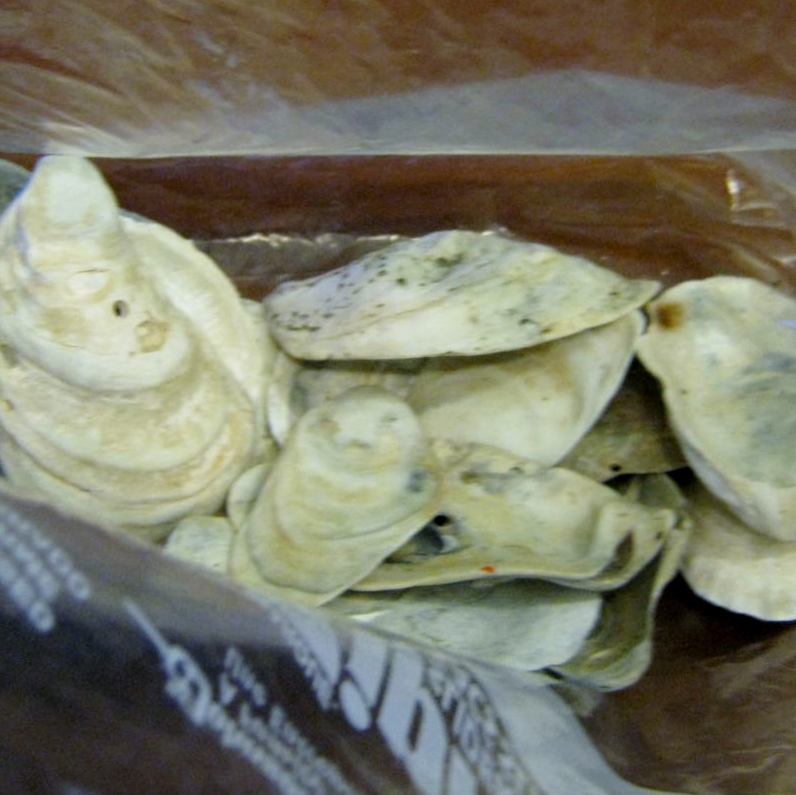
I’ve mentioned in previous posts that I am an incurable beachcomber. Recently, part of my shell collection has become a project for Halloween. I’ve seen oyster shells fashioned into Santa Claus ornaments with a bit of paint, and I imagined turning my shells into Jack O’ Lanterns. The shells are oblong and oval, much like a real pumpkin. They have a bumpy, lumpy, wavy surface, another commonality with a pumpkin.
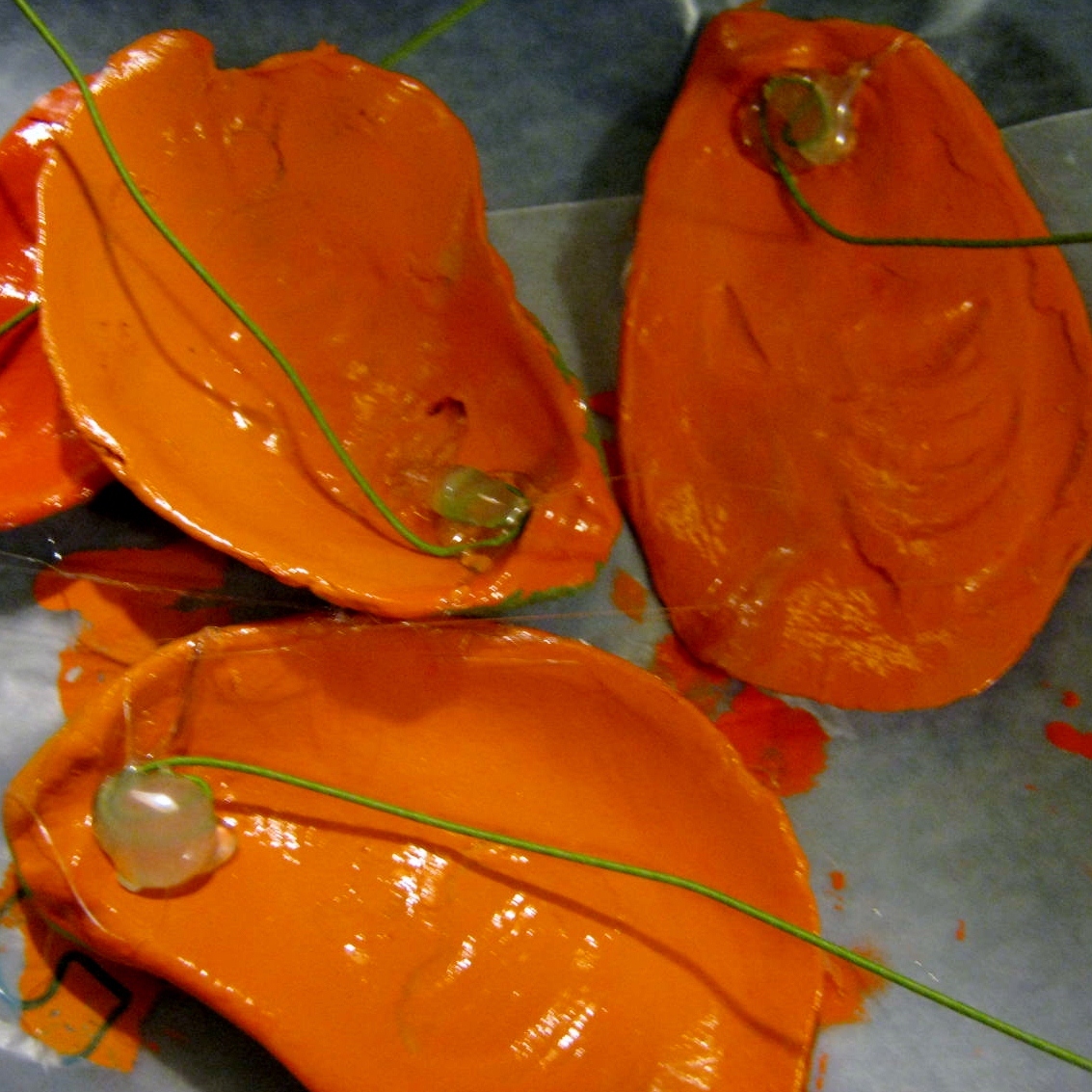
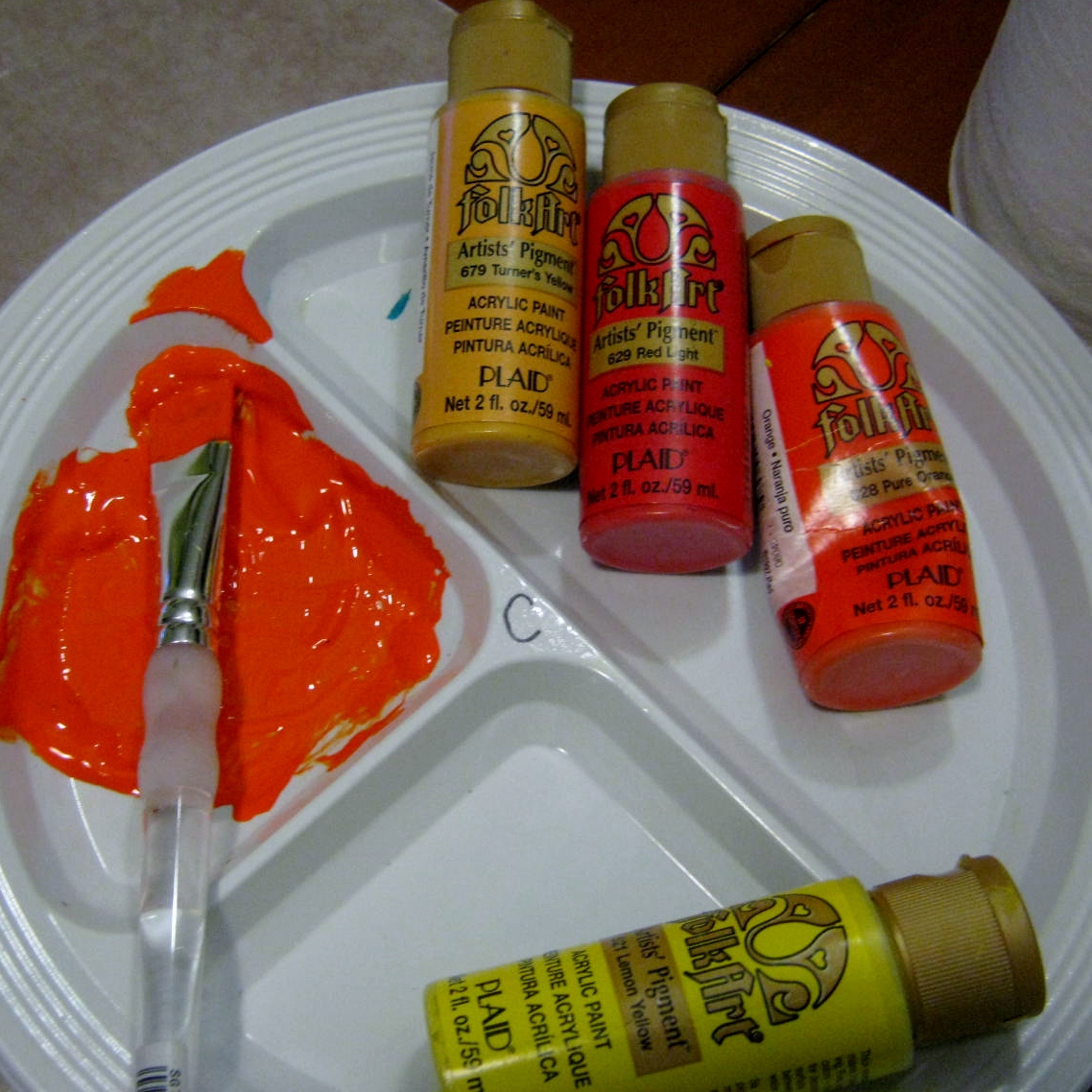
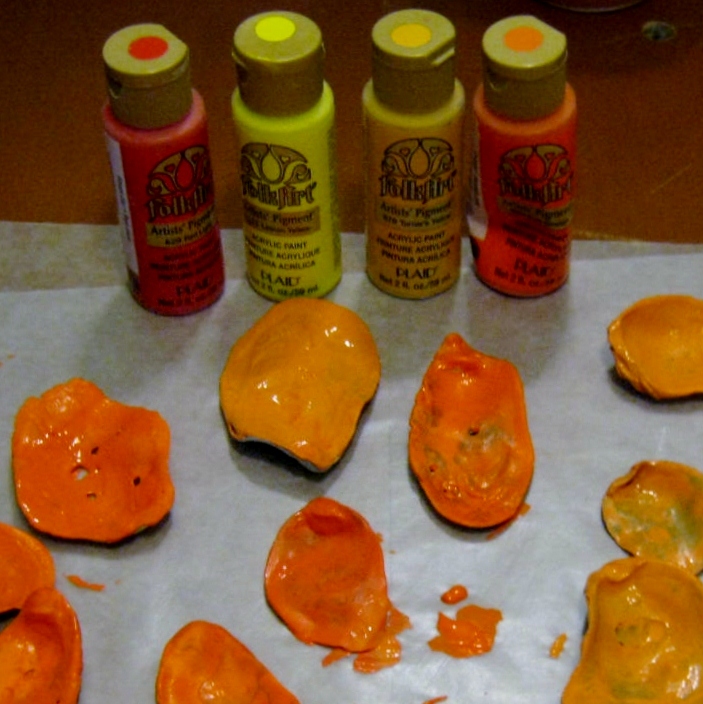
I broke out my Folkart acrylic paints and a brush and began to paint my shells.
I needed two coats of the paint, front and back.
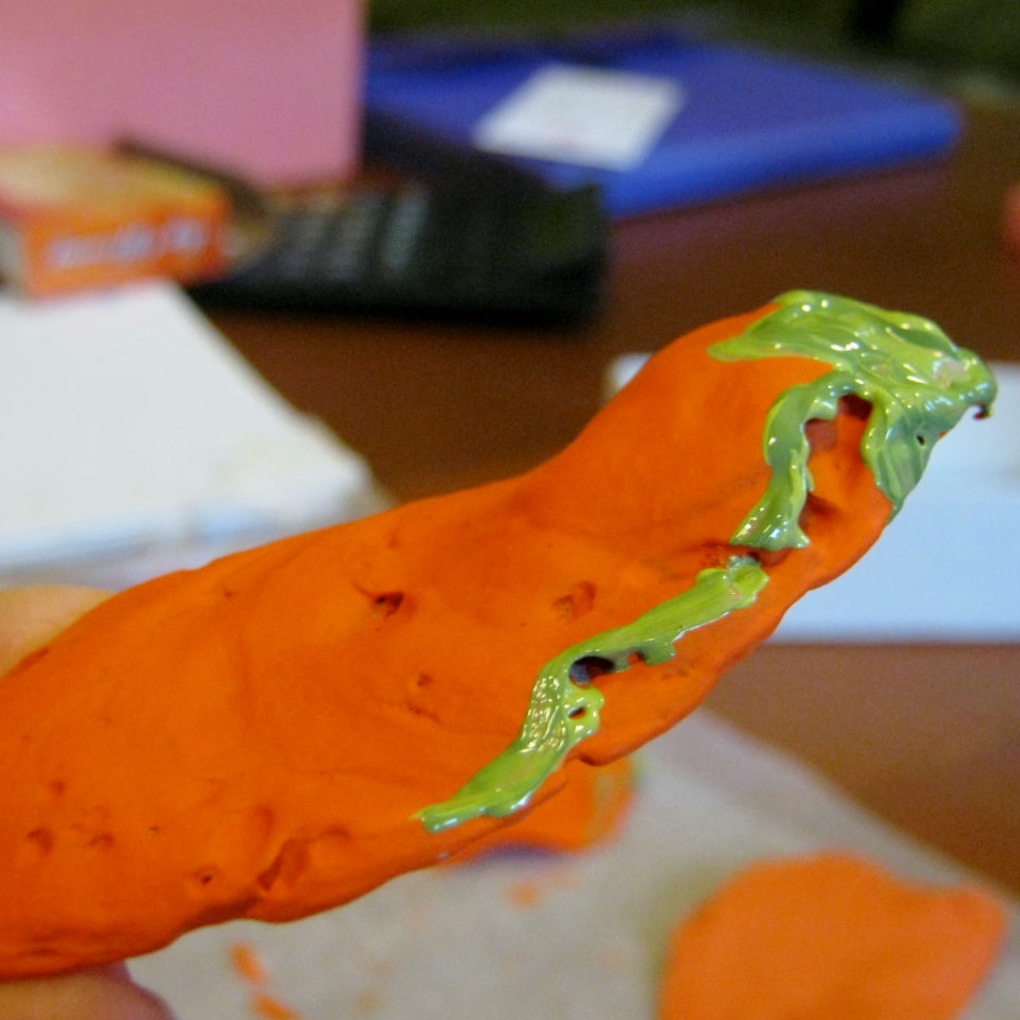
After the orange paints were completely dry, I mixed two greens together on the same brush and painted a stem and some twirly vines down the side. I followed the curves and indentations in the shell to give the oyster Jack O’ Lantern a more natural look.
Here’s a photograph showing several of the pumpkins with stems and vines painted on.
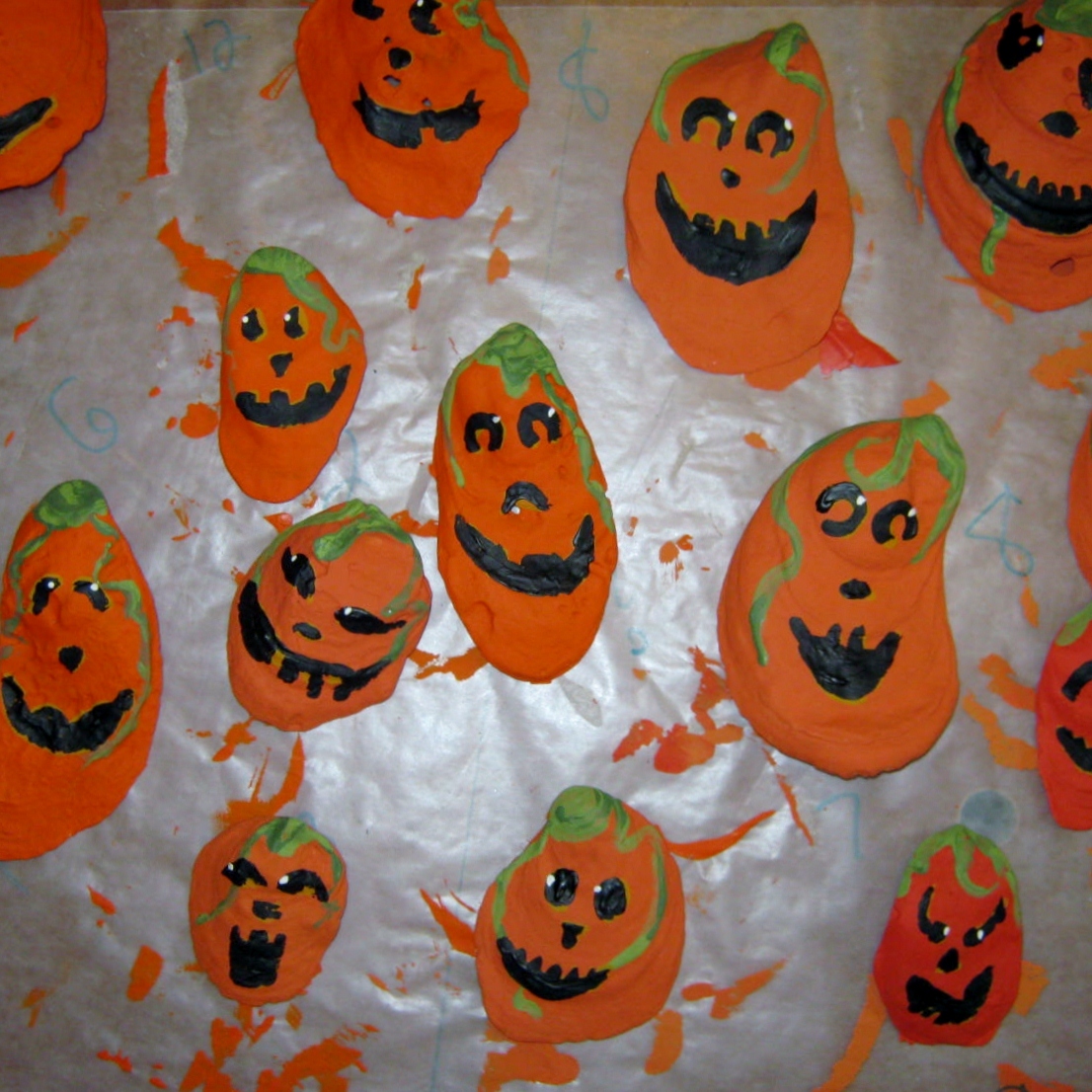
I painted black eyes on one, and realized they looked flat and had no depth. To give the illusion of carving, I painted a raw sienna paint in the face pattern first. This gave an illusion of the inner color of the pumpkins. I wanted to have happy faces, rather than scary or spooky.
I found some happy faced pumpkin patterns to use as inspiration at this site. Happy-faced Jack O’ Lanterns
I added the black paint, being very careful to leave a bit of the raw sienna showing for the depth I wanted. The last touch was a white highlight on each Jack or Jill’s eyes.
The next step was a coat of glossy mod podge. Part II will be tomorrow’s post. Check back for the finished Jack O’ Lantern Halloween tree.
Project and Pleasure – Sunflowers or Defeating the Critters
Finally, I seem to have hit upon a way to grow sunflowers. My big problem…relentless foraging by chipmunks and squirrels. They dig the seed out of the ground, or if they somehow miss a seed or two, they nip off the top of the newly sprouted plant. Another trick that worked for me has been planting later in the season when other food is more abundant.
I planted the sunflower seeds in my Square Foot Garden. This area is enclosed by chicken wire. For some reason the squirrels stay out of this…perhaps it is the CD’s I have hanging from hooks that swing in the breeze and maybe scare them away.
My best deterrent has been to plant the seeds and then enclose the area in a gallon size ziplock bag. To do this, I cut the bottom of the bag away, then tape bamboo skewers inside the bag with duct tape. I make sure the sharp end of the skewers extends beyond the bottom of the bag about an inch or two. One problem with this method…the skewers are very sharp, even on the blunt top end. To remedy this I stick a clove of garlic on each top. I am pretty sure this also helped repel those bad chipmunks and squirrels.
I’m not sure if I planted early enough to enjoy blooms this year, but the plant is beginning to bud so I have high hopes.
Projects – Stepping Stone Walkway
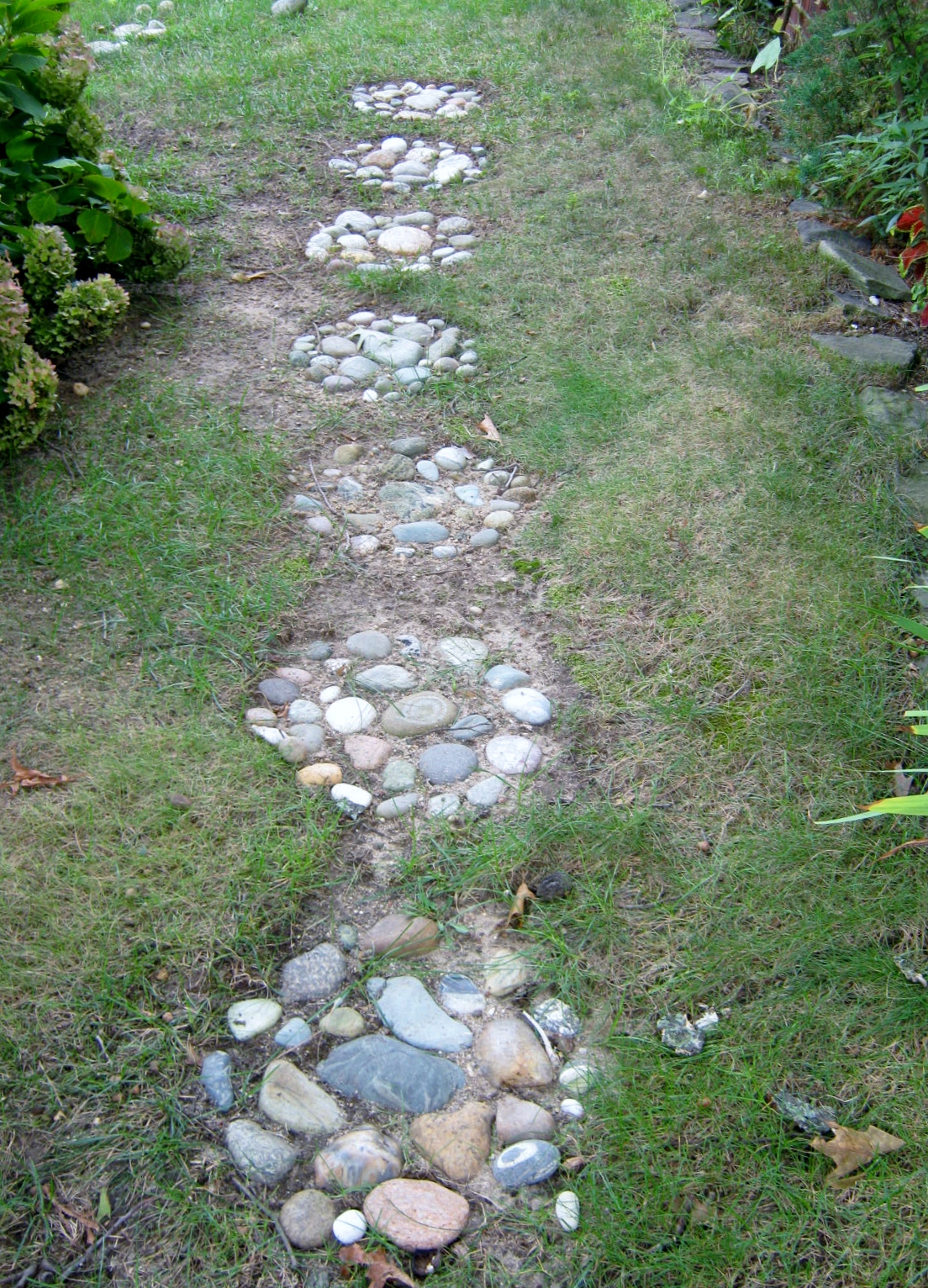
I decided this summer that I really must go through all the shells, rocks, mosses and other natural items I had stockpiled in the garage during the twenty-five years we have lived in this house. I have made a dent in the collection. In the spring I created planters with a border of seashells, and in the last few weeks I have been creating stepping-stones with my huge rock collection. I love to step along the stones and relive the feel of walking across them on the beaches, bays and creek beds where they were gathered.
Projects – Saving Seeds
Vinca Seedpod and Seeds
I have seedpods and seeds strewn all over my house. It’s time to get serious about letting a few plants go to seed so that I will not have to buy the same seed packets again next year.
I’ve even collected a few wildflower pods. Milkweed attracts monarch butterflies so I collected a pod from a roadside plant.
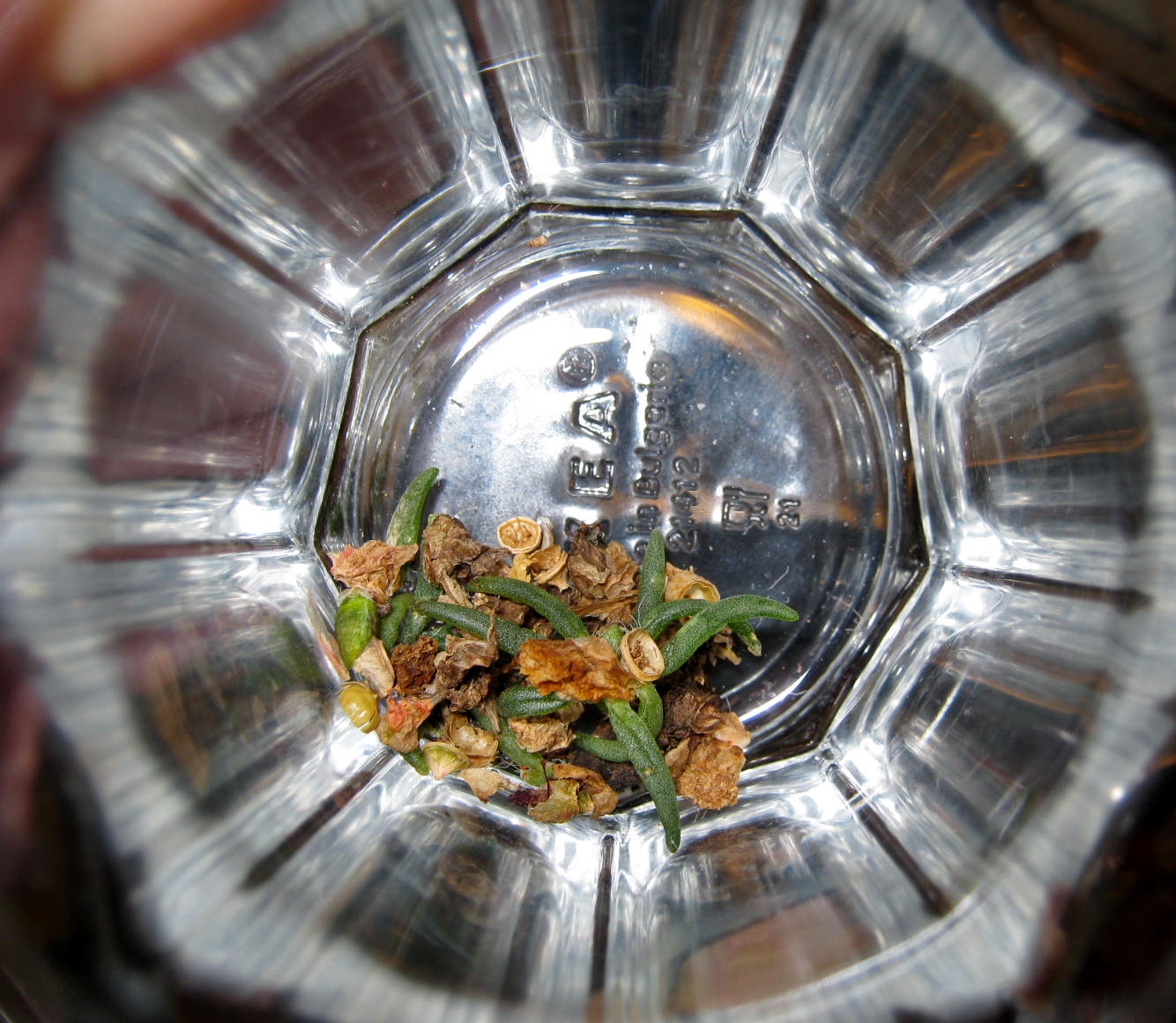
I let my collected seeds dry out for several days, either on the windowsill, or inside a glass.
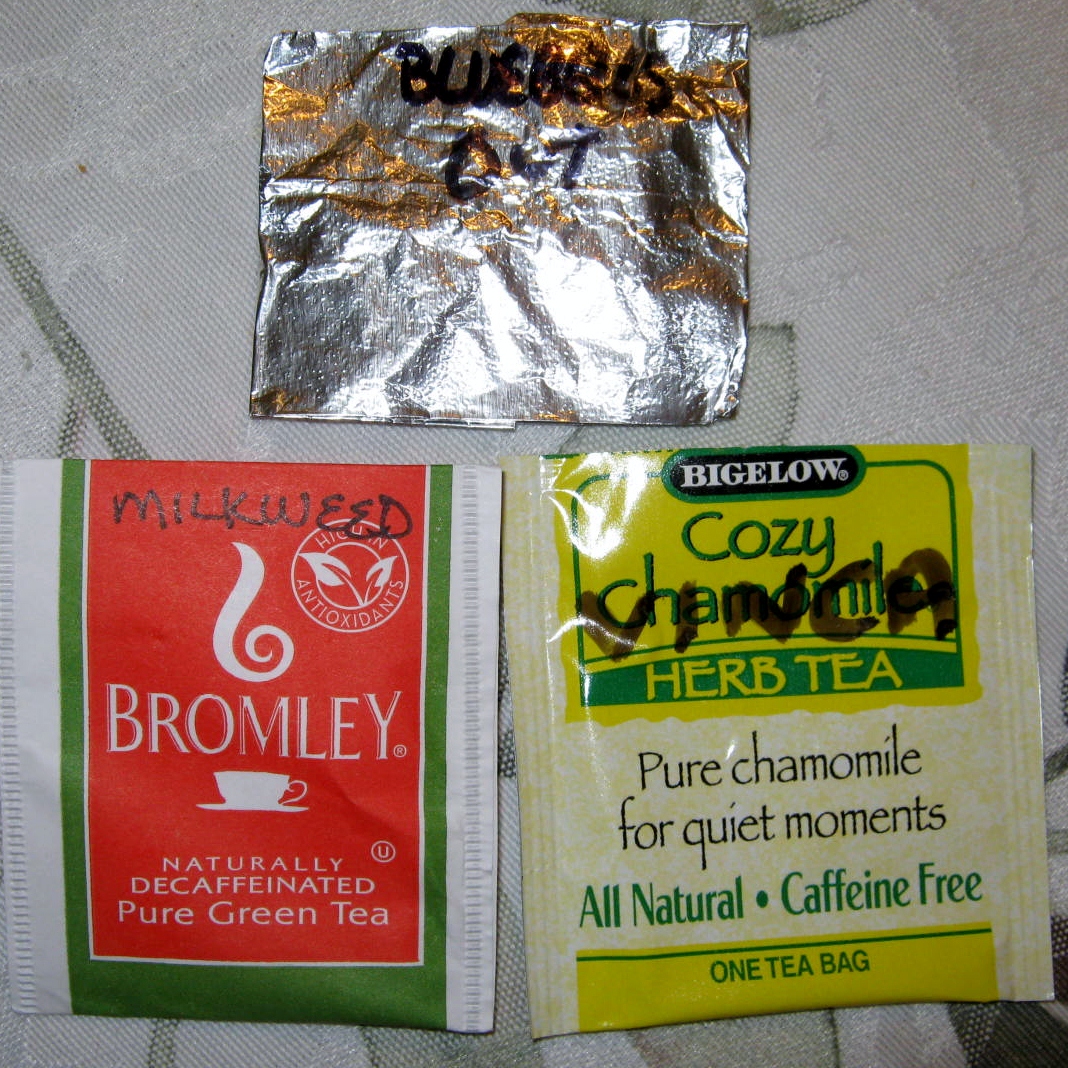
I then enclose the seeds in aluminum foil and store this packet inside a recycled tea bag wrapper.
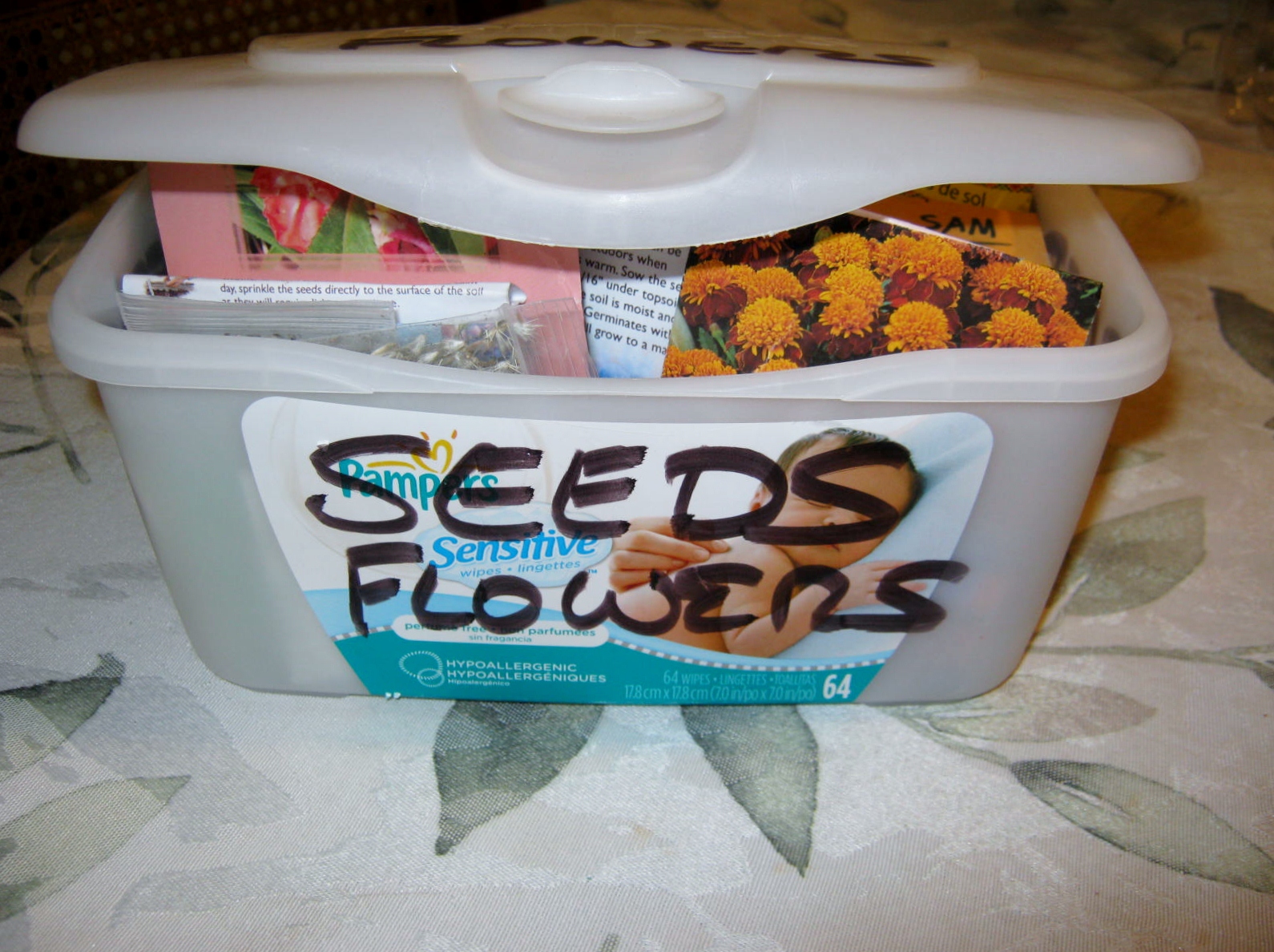
Finally, I file these seed packets, and any leftover seeds from spring, inside a recycled plastic container. In the picture below I’ve used a baby wipes container. These are kept in my refrigerator until I begin to plant once again.
Project – Square Foot Garden & Container Planting Summer Harvest
I am pleased with the start of my summer harvest. My Square Foot Gardens and container grown plants are producing the beginning of what I hope is a stellar season of produce. The tomatoes are just beginning to ripen, the spaghetti squash is huge and beginning to develop some color, the cucumbers are producing more than I can eat. The peppers and eggplants are still small, but for my husband and I, a smaller size is usually the perfect dinnertime serving.
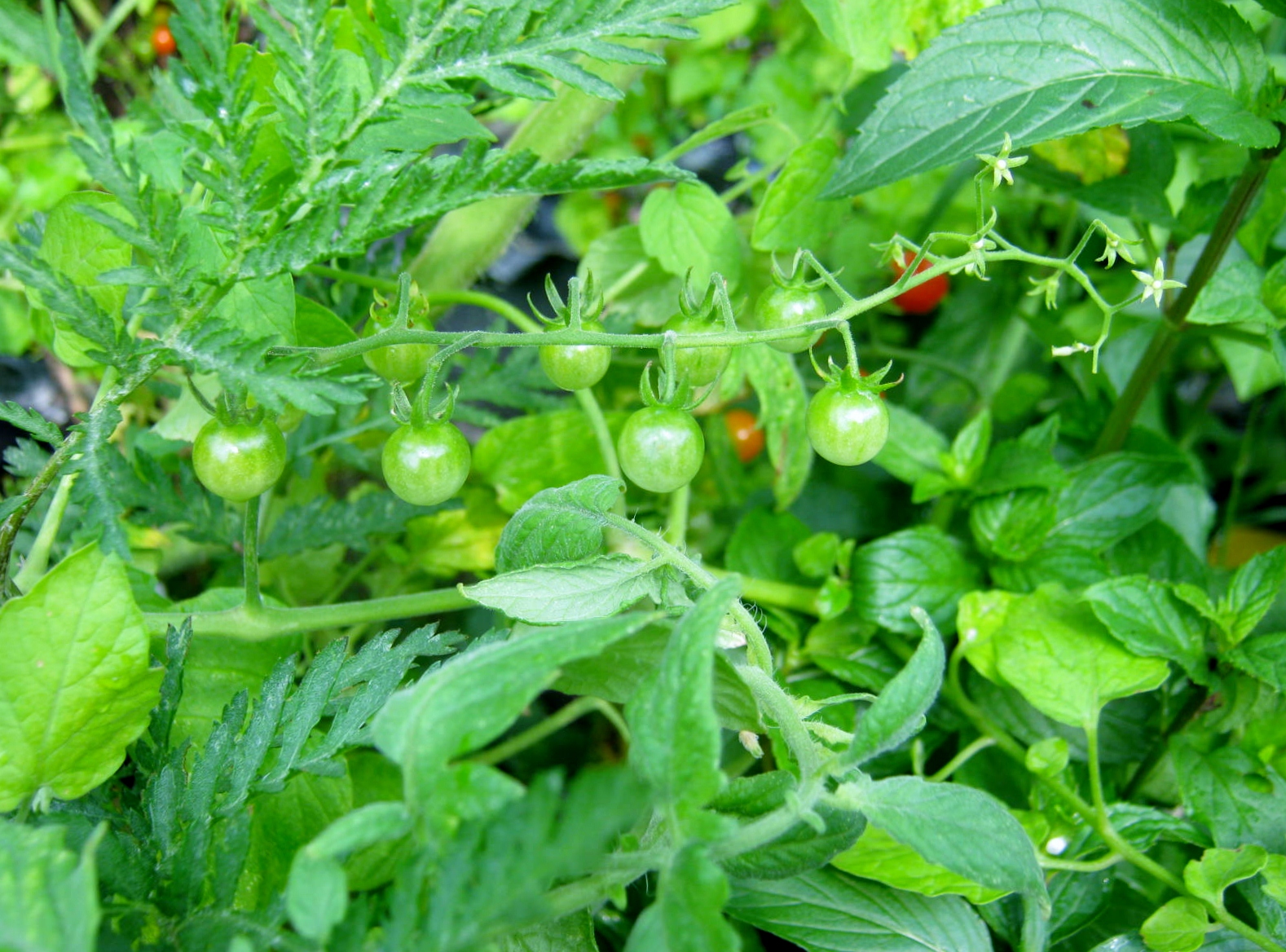
I am thrilled with these small tomatoes I grew from seed this year. I am not sure of the variety of the cherry tomato, in truth I think it came from a free packet of mixed tomatoes I received from Baker Creek Heirloom seeds. They are delicious. The biggest, or should I say smallest, and one of the best surprises, have been the super sweet and delectable “currant” tomatoes. I believe they are an heirloom purchased from The Sample Seed Shop. They are very small…check out the dime for scale. I can’t seem to wait to eat them in a salad, they are just so easy to pop into my mouth as I walk by.
Links for Seed Sources and Square Foot Gardens Official Website:
Baker Creek Heirloom Seeds
The Sample Seed Shop
Square Foot Gardening Official Website
Projects – Mom’s Fourth of July Hats
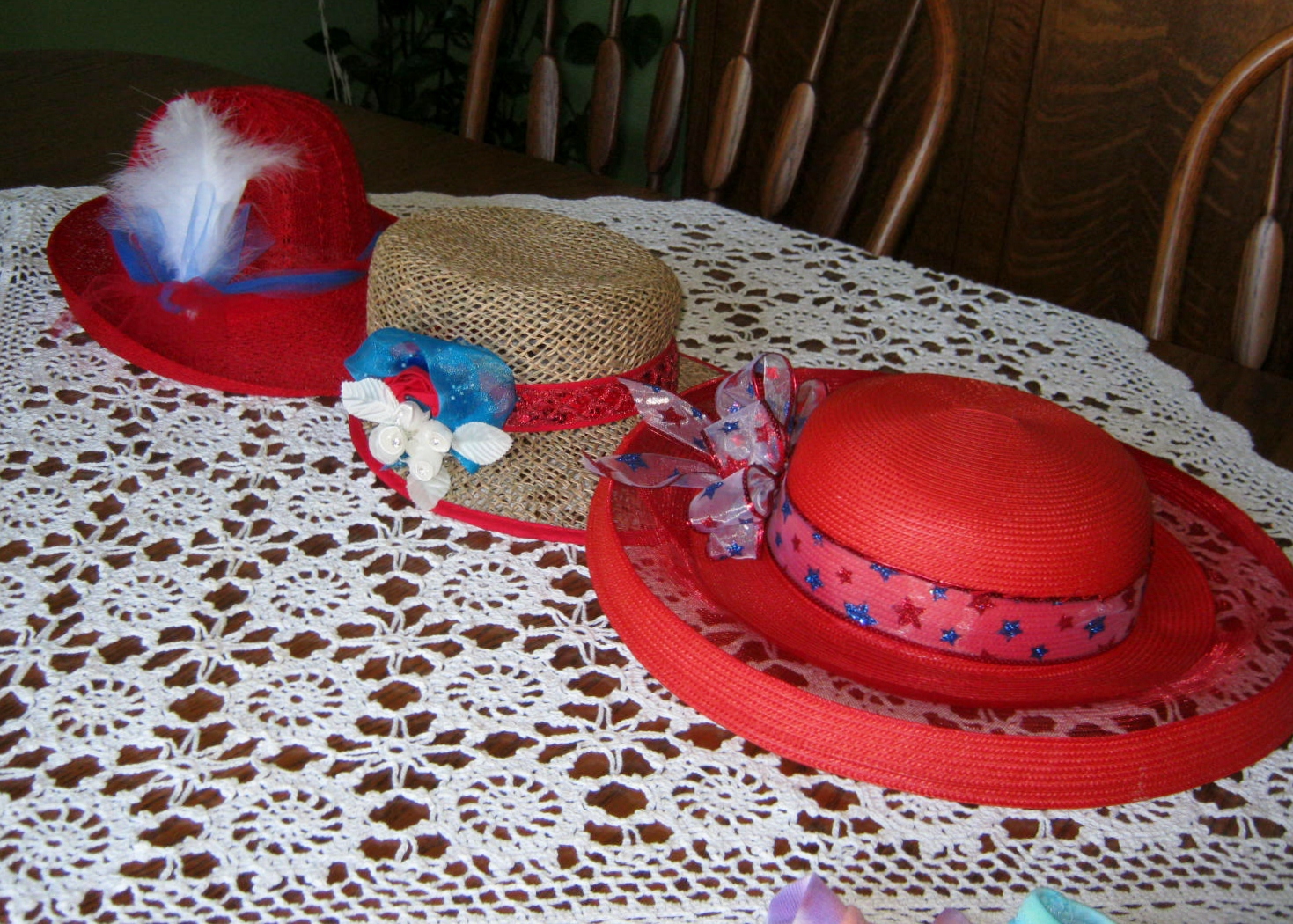
I decorated some hats for my Mother-In-Law and her friends to wear on the Fourth of July. She and my Father-In-Law are part of a handful of original members of their church congregation who are riding on a float in the local parade. One of the techniques I used was melting the edge of sheer polyester to prevent raveling and give the blue flower a decorative look. Below is a quick tutorial on how to do this with ease.
Projects – Tie-Dye Shirts
Every summer our family gets together and creates beautiful tie-dye T-shirts. We have fun together and then have the extra bonus of keeping a shirt to wear all season long. Tie-dye kits are available at most craft stores. They are a bit pricey, but I keep watch for 50% off coupons and purchase the kit at that time. I have found that the boxes of dye, such as Rit, do not do as good a job.
Tie-Dye Tip: The kit I bought this year had a large assortment of colors to use. To make color choice easier I numbered the bottles with permanent black marker, did the same on an old T-shirt, and put a splotch of corresponding dye color on top of the marker number. It was a great guide to the color choices available. The color guide won’t be wasted. I’m going to keep it to wear when I paint with acylics.
Paintings and Projects – Big Huge Labs Color Generator
This amazing photograph was taken by my nephew. What a great eye he has for color and composition. I hope to paint this one day. When I do I will use the newest tool I have found to come up with the proper colors to use in my artwork. Big Huge Labs Color Generator is a free site well worth joining. Creating a free account allows you to download photographs, push their easy to read “create” button, and immediately see a detailed color chart with html symbols included too. This is an invaluable tool for painters and crafters alike. Listed below are the names and html symbols for all the colors in the photograph above. What I couldn’t show is the color chart that was also included. Take a look. I’m sure you will enjoy experimenting with your own photographs.
This is also a perfect site to use to compare the colors of an online purchase with what you already have in your house or closet.
Projects – Clothespin Bag
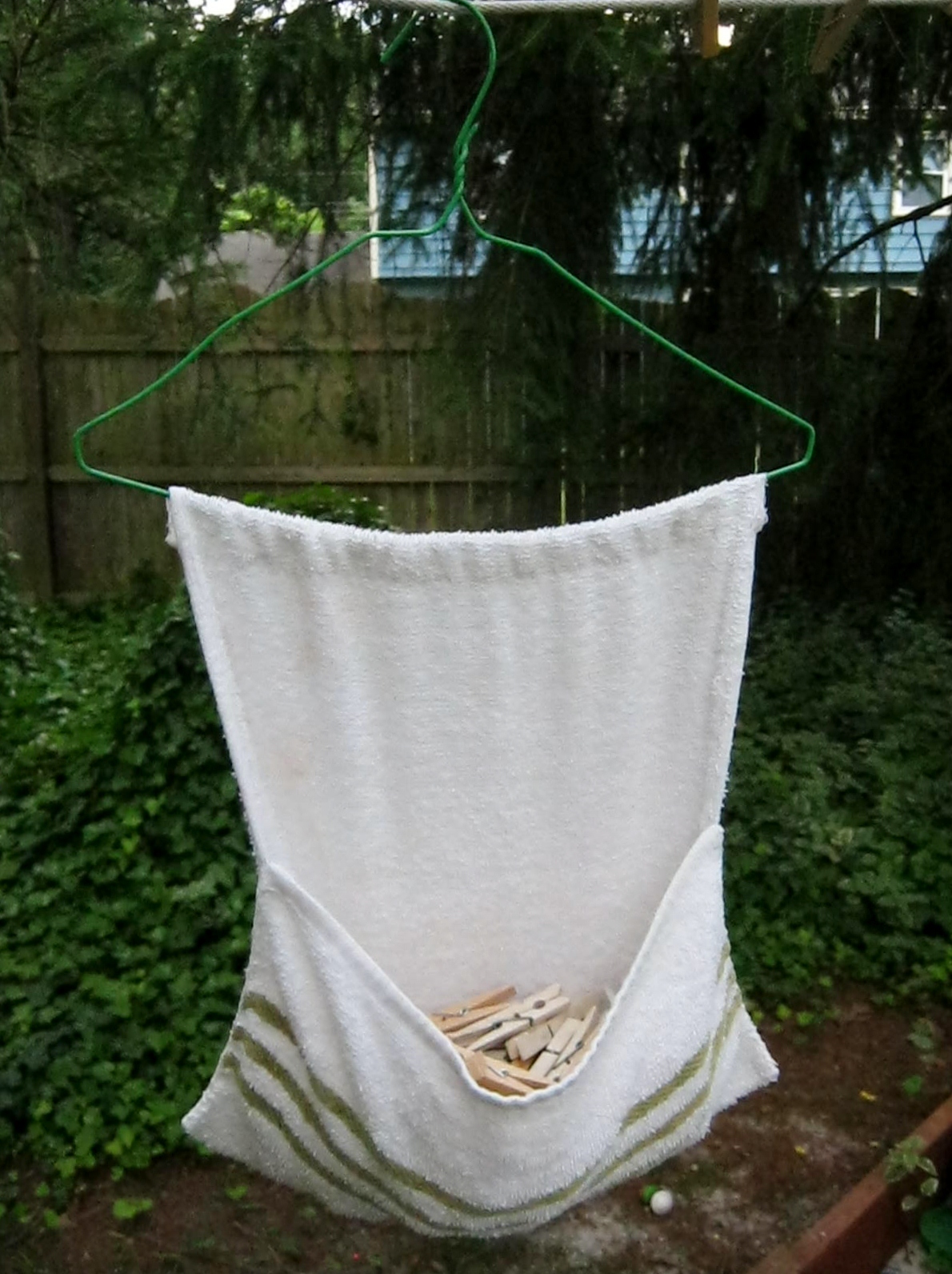
Yes, it is not very pretty, and yes, it will never win a “best crafter” award, but it works, it was free, and it will save me from stooping and bending to pick my clothespins out of a basket on the ground. It was very easy to construct, a few stitches whipped the top of the towel over the edge of the plastic coated hanger, a few more whip stitches up the sides and “Voila,” a clothes pin bag that works.
Project – Captured Memories
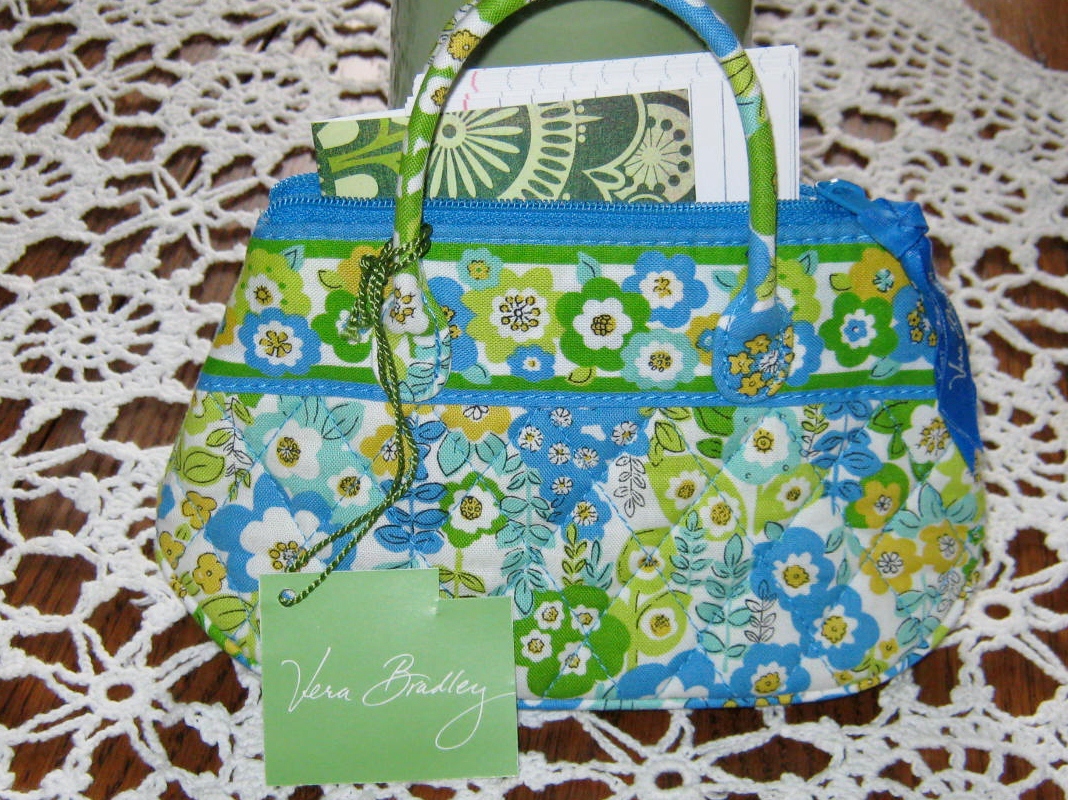
I began writing down good memories I had of my childhood for my mother’s birthday. Within an hour or two, I had written my way through half a stack of index cards. I didn’t get past the age of twelve because there were SO MANY good memories writer’s cramp set in. I bundled these good memories into a Vera Bradley cosmetic bag and gave them to my mother for her birthday. She said she is going to read one a day, and was very pleased with the good thoughts. Over the next few weeks I’ll get out my Sharpie pens, gather a few more index cards, and begin to write about year number thirteen and so on.
Projects – Square Foot Garden Update
This is an early morning photograph of my Square Foot Garden. I have to say, hopefully without sounding like I’m bragging, this method of gardening has been a major success for me. I have lettuce daily, my broccoli and bread seed poppies are ready to begin budding. I have cooked and eaten my kale and swiss chard, and though I have always loved fresh greens cooked in various ways, I can now feel a “fresh greens fanatic” point of view taking me over.
The Square Foot Gardening Website can be found here: Square Foot Gardens. Take a look and browse the information and photographs. Better yet, buy the book and create your own little area of vegetable heaven.
This is a view of the back of my Square Foot Garden. I know my pea trellis leaves a lot to be desired, but the peas come and go quickly, and I will be replacing them in a few weeks.
Because I didn’t want to give up too many of my squares to the dozen tomato plants I am growing I planted half in containers. These are doing very well too, the stems are beginning to look like tree saplings. I already have some flower buds on a few plants. O Happy Day…tomatoes in a month or two. Hooray!
I was honored to see one of my Square Foot Garden photographs was featured in a Mel Bartholomew Blog Post. Take a look: My Square Foot Garden Squares On Mel Barthlomew’s Website.
Projects and Pressed Flowers – Greeting Card Stockpile
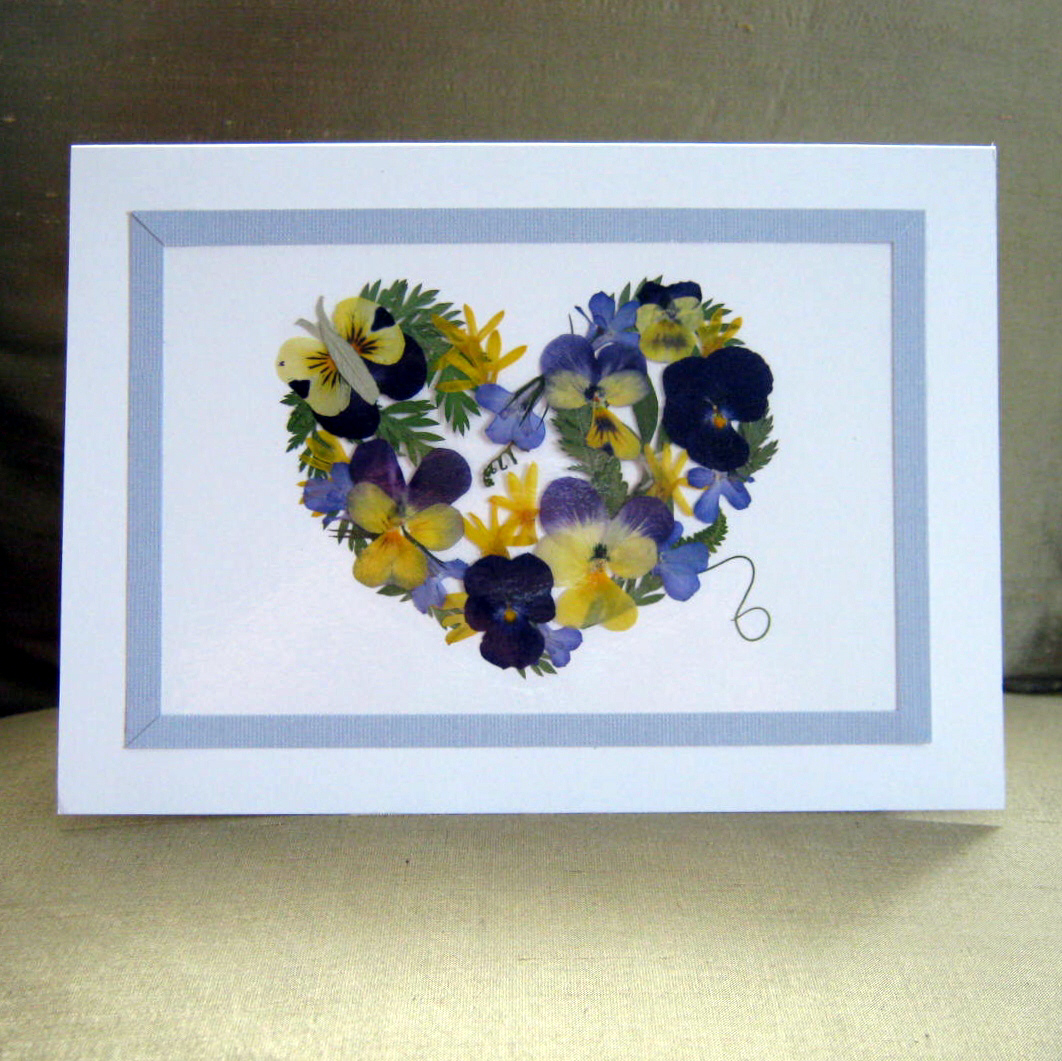
I have quite a stockpile of pressed flowers ready to use for greeting cards and other projects. I love creating these unique cards. The heart in the photograph above has a small butterfly in the top left hand corner. I was pleased with the way it fit into the theme of the card.
I have several birthdays, some graduations and other events in the next few weeks that will need a card. I haven’t found a way to make these card appear masculine, so I bought two male-themed graduation cards instead. (Cringe…they are so overpriced and not unique in any way whatsoever…big sigh) If someone has ideas for masculine themes with foliage and flowers, please comment. I almost feel the card pictured below fits the bill, but not quite. Created with birch bark, ferns and subtle wildflowers, it is almost rustic, but is still a little flowery.
Flowery hearts are one of my favorite cards to make. They are also easy to create. Lightly sketch a heart shape, add foliage, and space flowers around the edges.
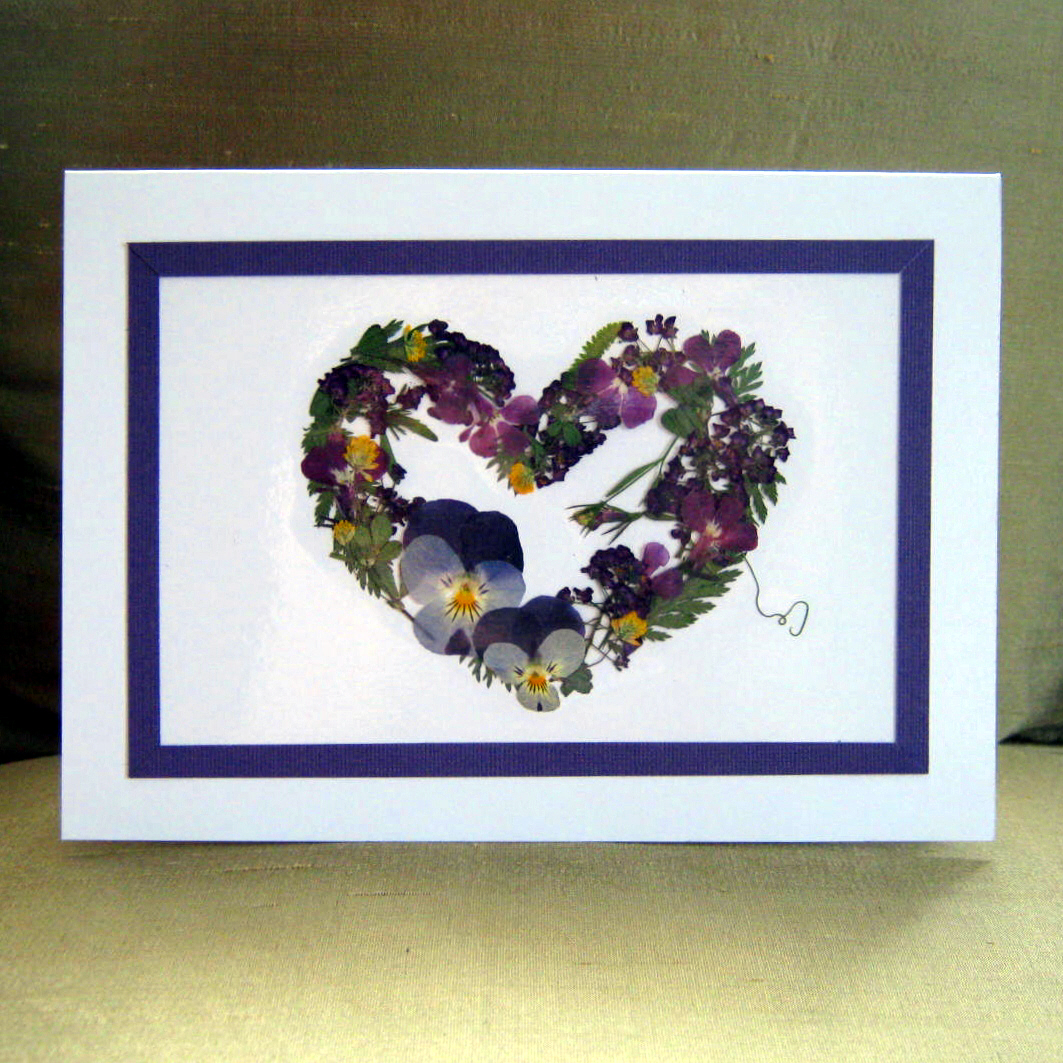
Every now and then I create a composition that disappoints me. I am not too thrilled with the card below, and I will probably peel off the layers and try again. I think it is the static placement of the dark flower, and the loss of the curving edges of the heart. This composition appears boxy and without grace. I should have been more careful to keep the edges of the petals inside the shape of the heart. Feathery, small pieces of foliage and twirly sprigs look fine escaping the confines of the heart, but large petals jutting out too far detract. I’m sure if you study the one I am unhappy with, you will agree.
Pressed Flowers and Projects – Vintage and Classic Books
I treasure my classic books: Little Women, Heidi, The Secret Garden, Grimm’s Fairy Tales and many others. Often, at yard sales, I will find copies of these tales, battered and dog-eared, but still holding promise. I can’t resist these old books. I buy them and take them home to use in craft projects. Recently, I bought a paperback copy of “Little Women.” A page describing Jo and Meg’s outing to a ball was the perfect background for a pressed flower arrangement of Verbena and Forget-Me-Nots.
Projects – Upcycled Kitty Litter Buckets
Wikipedia defines Upcycling as: “Upcycling is the process of converting waste materials or useless products into new materials or products of better quality or a higher environmental value.”
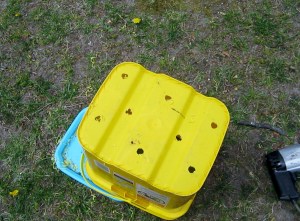
I have been setting large 35-pound kitty litter buckets aside for several months. They are too sturdy to throw away, and they are not the kind of plastic that I can put into the recycle bin. I decided to use them for container growing. Before I filled them with soil, I knew I needed to do something to make them look a little more presentable. I was determined to keep the project as low-cost as possible, and use things I already had around the house. Hmmm…what to do? Plastic is notoriously resistant to paint. Buying the special spray paint made for plastic was out of the question. It is expensive and I am not sure how well it works. I have a lot of fabric scraps on hand and wondered how I could glue them to the bucket and waterproof them at the same time. I came up with the idea of using old latex paint we have in the house. If you’ve ever touched a fabric dropcloth after paint has dried you know how stiff it becomes. It also will work like glue, and so my idea was born. Below are the easy steps to putting together a fabric covered kitty litter bucket that is durable and waterproof.
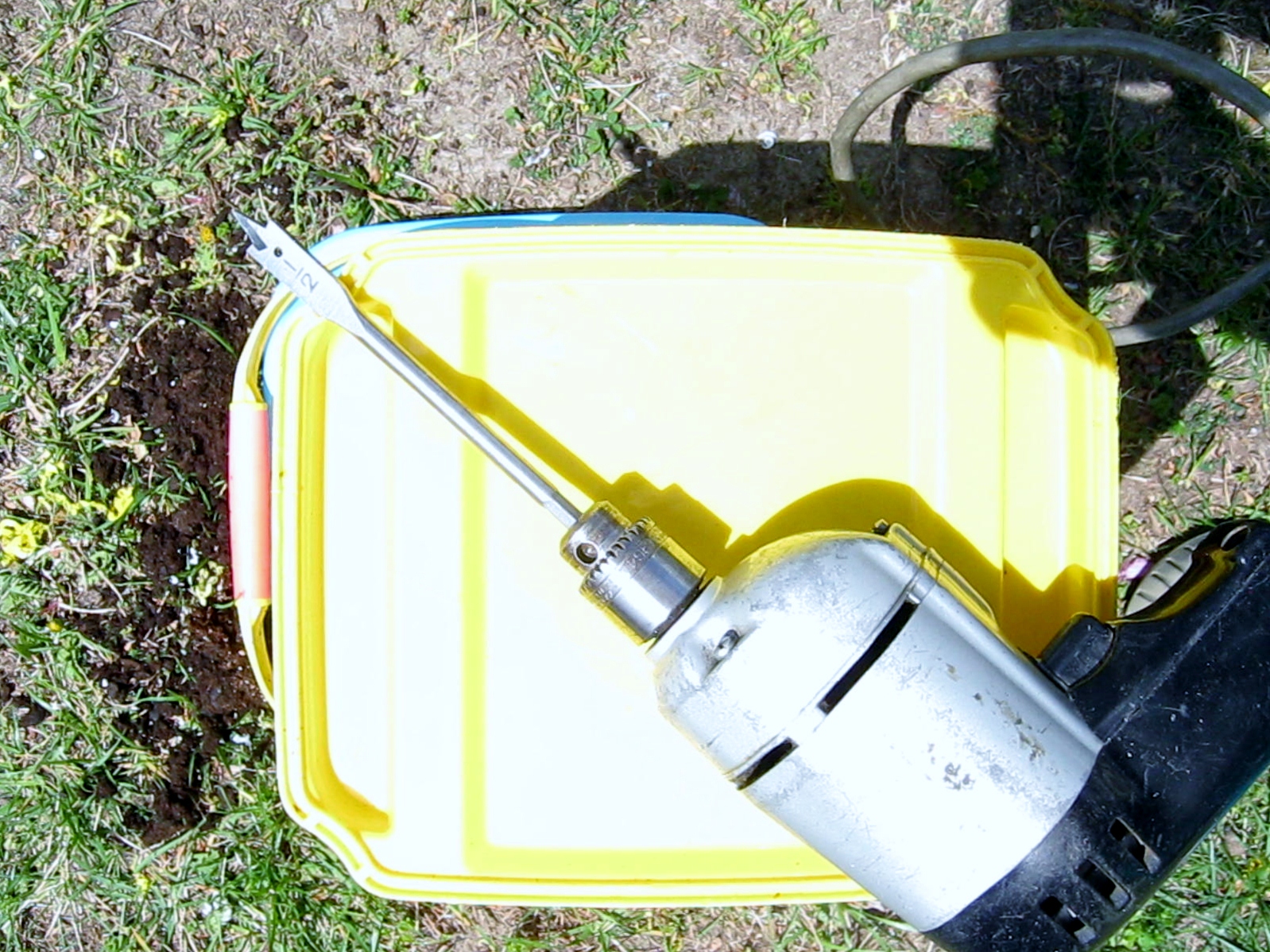
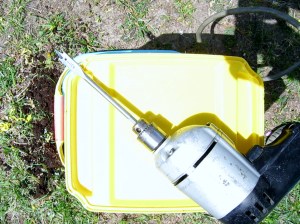
Step One: Wash bucket and let dry. Drill holes in the bottom of the bucket. I also bore holes in one of the buckets with a sharp pair of garden shears. It took forever, but if you don’t have drill it is an option.
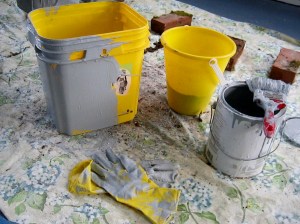
Step Two: Gather together old latex paint you have around the house. I added whites to some reddish purples and greens. Red and green are opposite each other on the color wheel and this created exactly the color I wanted, a grey reminiscent of concrete.
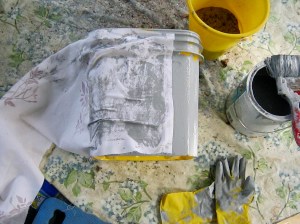
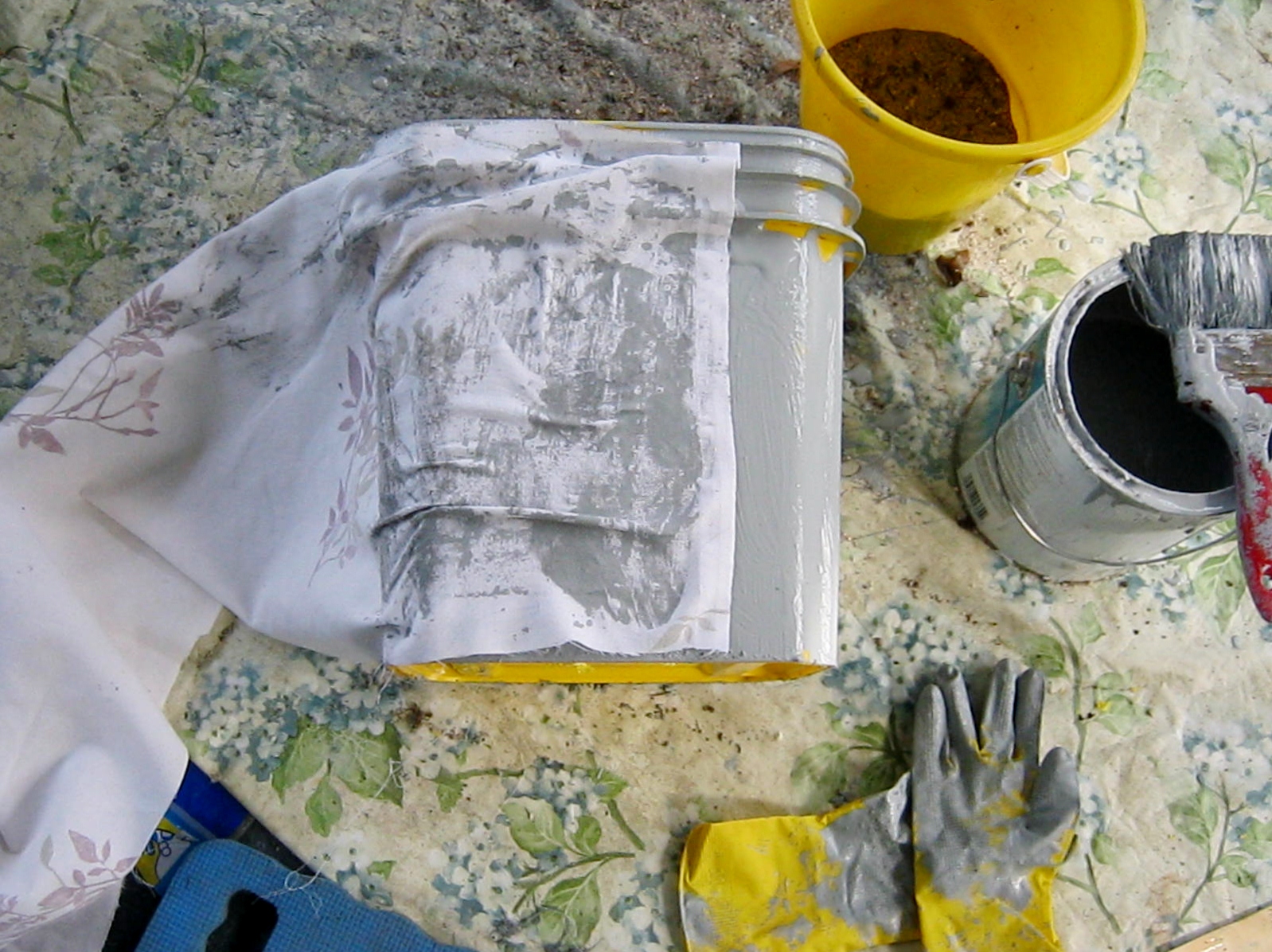
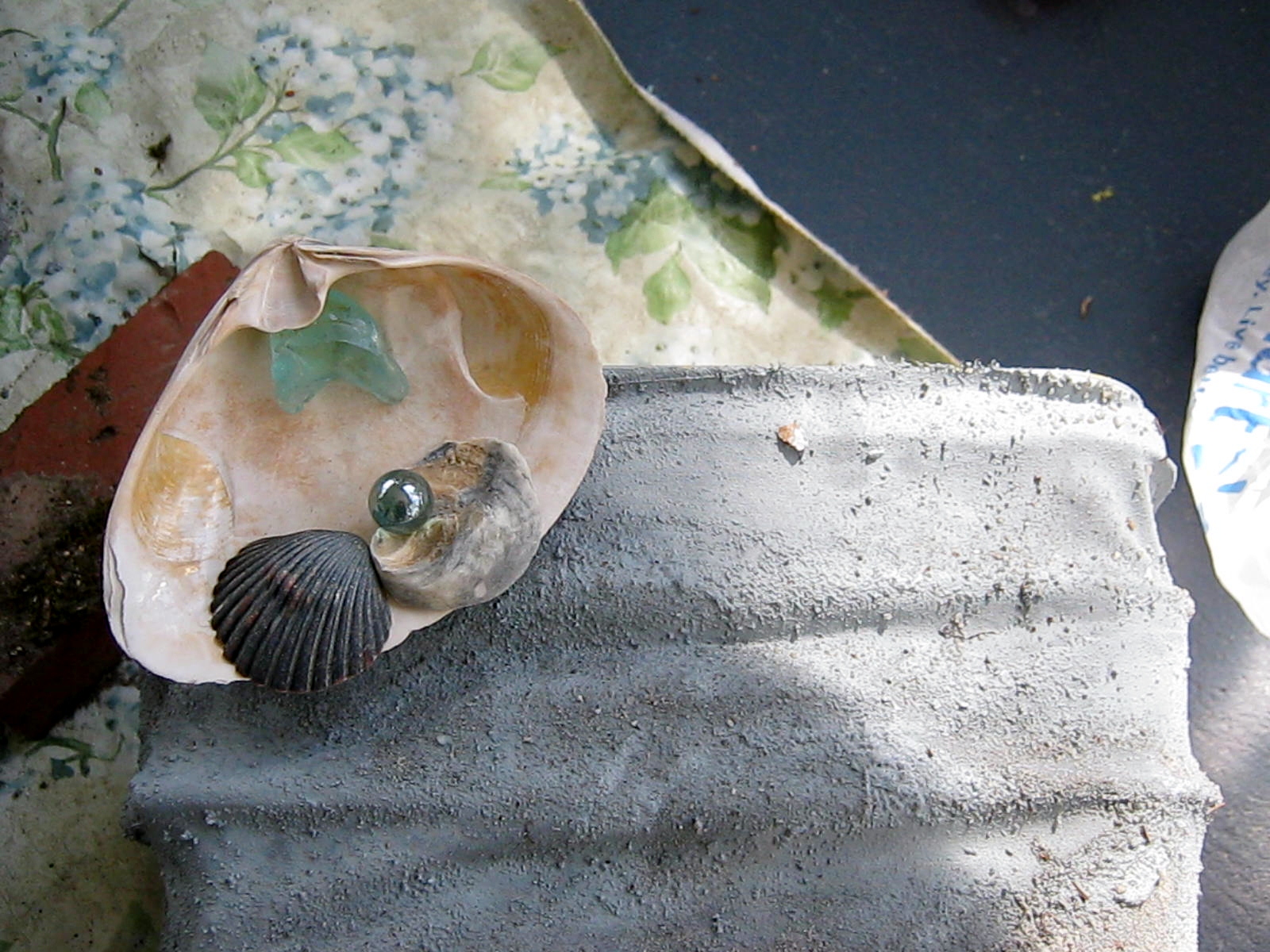
Step Three: I cut pieces of old sheets to size, making sure they wrapped around the bucket with about two inches of overlap. I then began to paint the buckets with an old paint brush. (Important Tip: It’s messy! Wear some disposable plastic gloves) After I covered a side with paint I pressed the sheet into the paint and then painted over it. I continued until the whole bucket was covered. I didn’t try to smooth out all the wrinkles as they added some interest. To add texture and make the bucket look like real concrete I threw play sand all over the wet paint. At this point I set the bucket aside to dry overnight. The next morning the painted/sanded fabric was dry, stuck fast to the sides, and waterproof.
I wanted to decorate the top in some way. I did not paint inside the bucket. I don’t know if growing food inside something painted with latex paint is safe. I know that some gardeners who are strictly organic will not grow food in plastic, but I have decided since I will be doing everything else organically, no pesticides, etc., I am not going to become fanatical about growing in plastic. There has to be a place you draw the line, and that is my line in the sand, but anyway back to the directions.
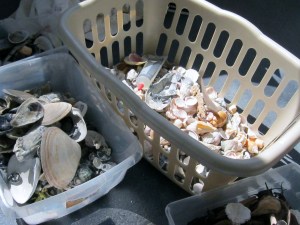
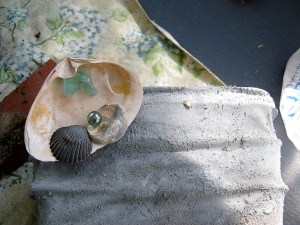
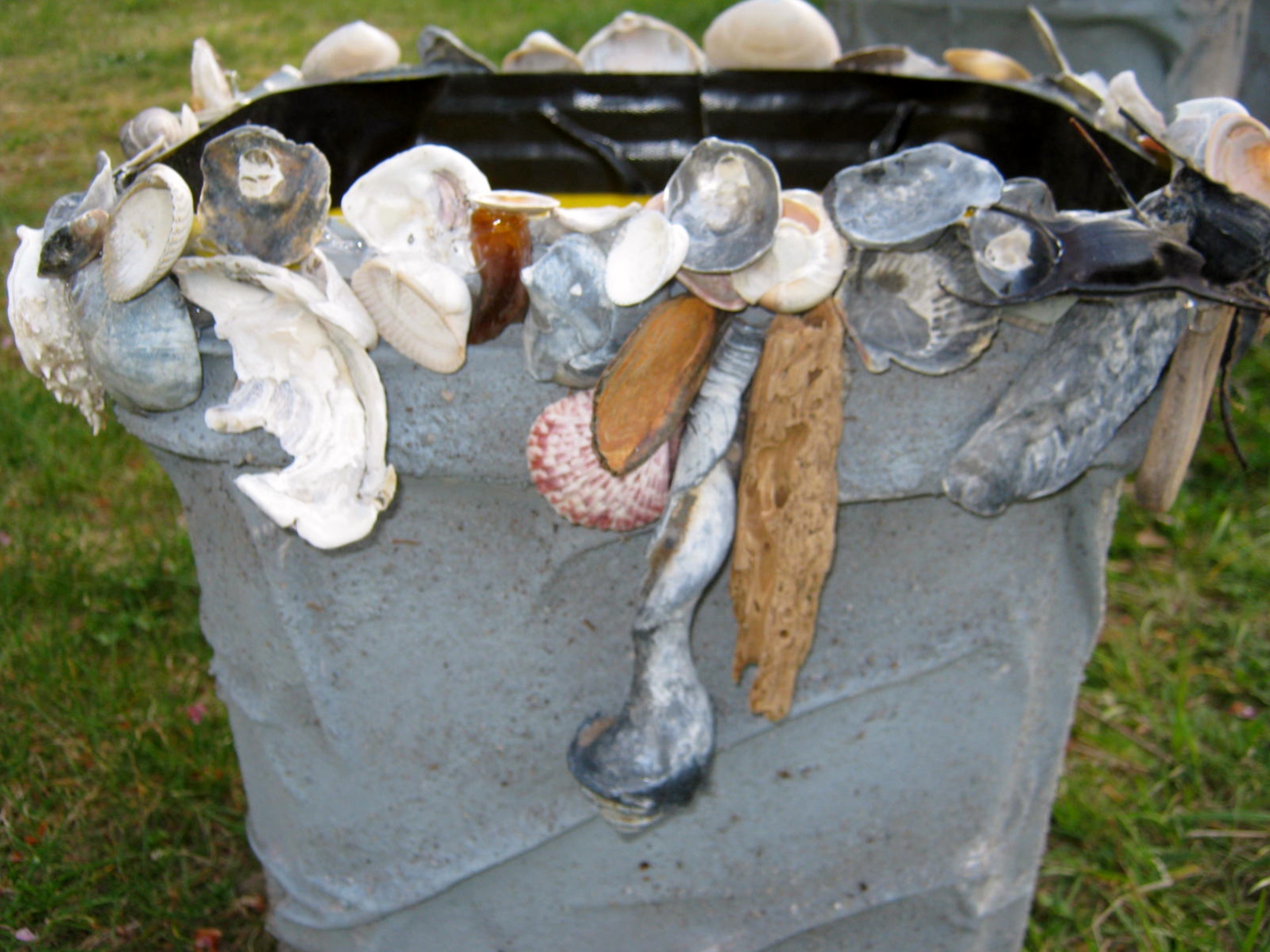
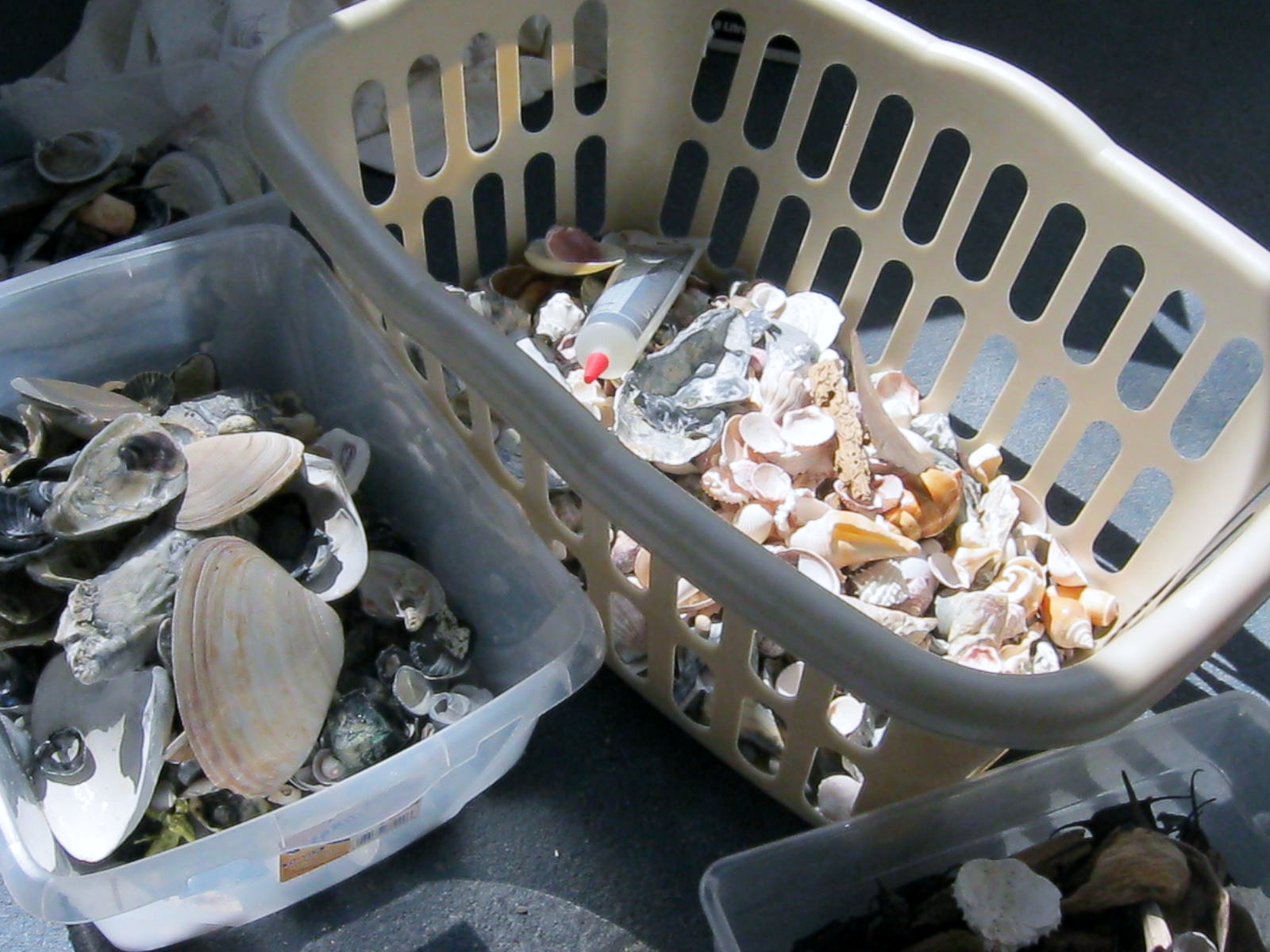
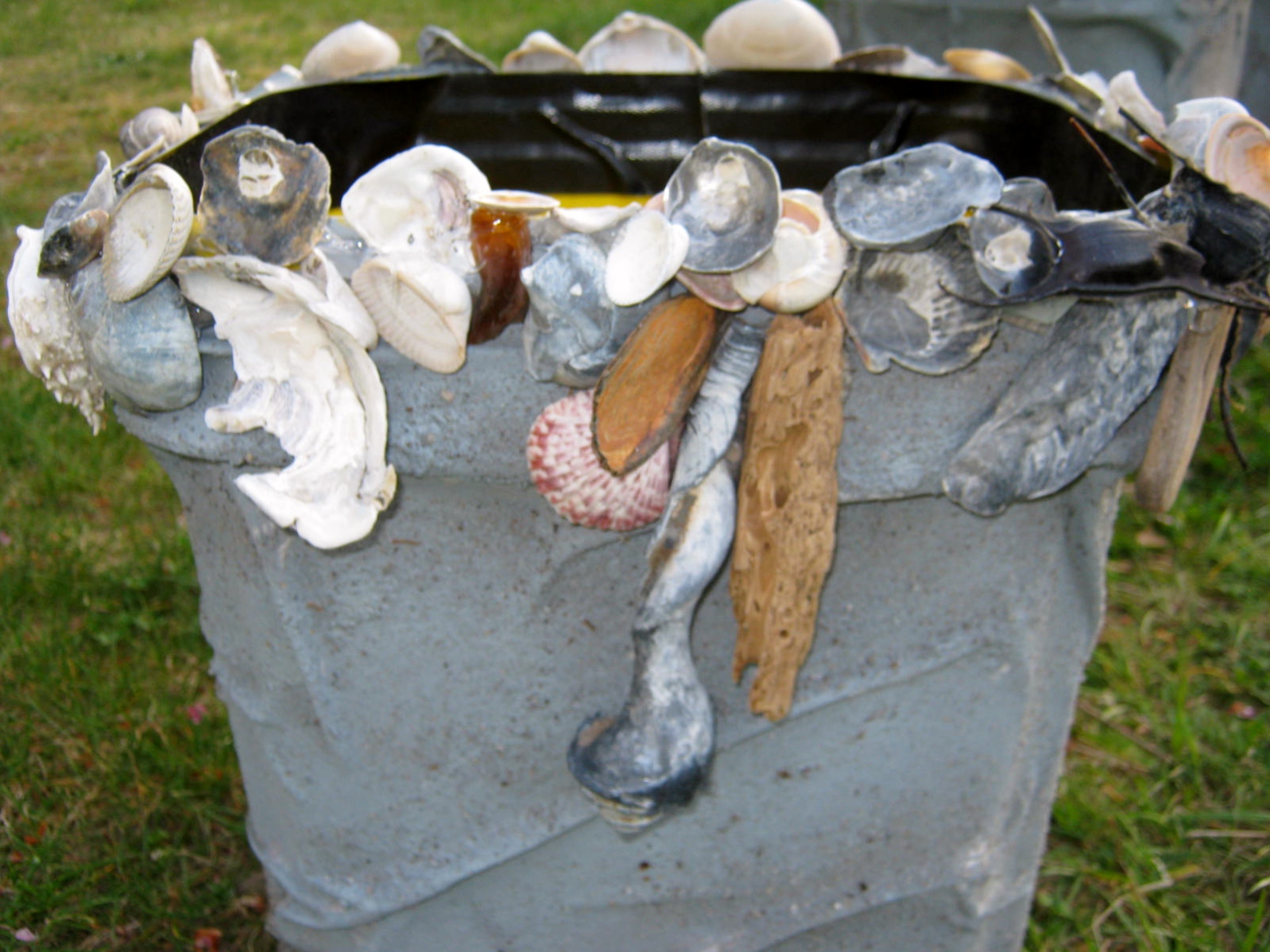
Step Four: I am an avid beachcomber and have many baskets of seashells, sea glass and driftwood. I had to put out a little money on the adhesive used to decorate the top borders. I used silicone caulk in a caulk gun and affixed shells to one side at a time. I let each side dry at least six hours before turning the bucket and proceeding with the next side. To put a border on all four sides of ten buckets I needed three tubes of silicone caulk. The safety seal on the silicone assured me it would be safe to use on items that would hold food. To add a double precaution I tried to keep it away from where water might pass over it and into the bucket.
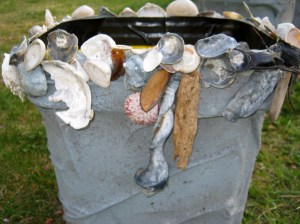
I’m pleased with the finished result. Mine are decidedly beachy, but they also wouldn’t look bad plain, or maybe dressed up with moss, sticks, vines, anything that would add a bit of the outdoors without costing much.
Projects – Square Foot Gardening Update
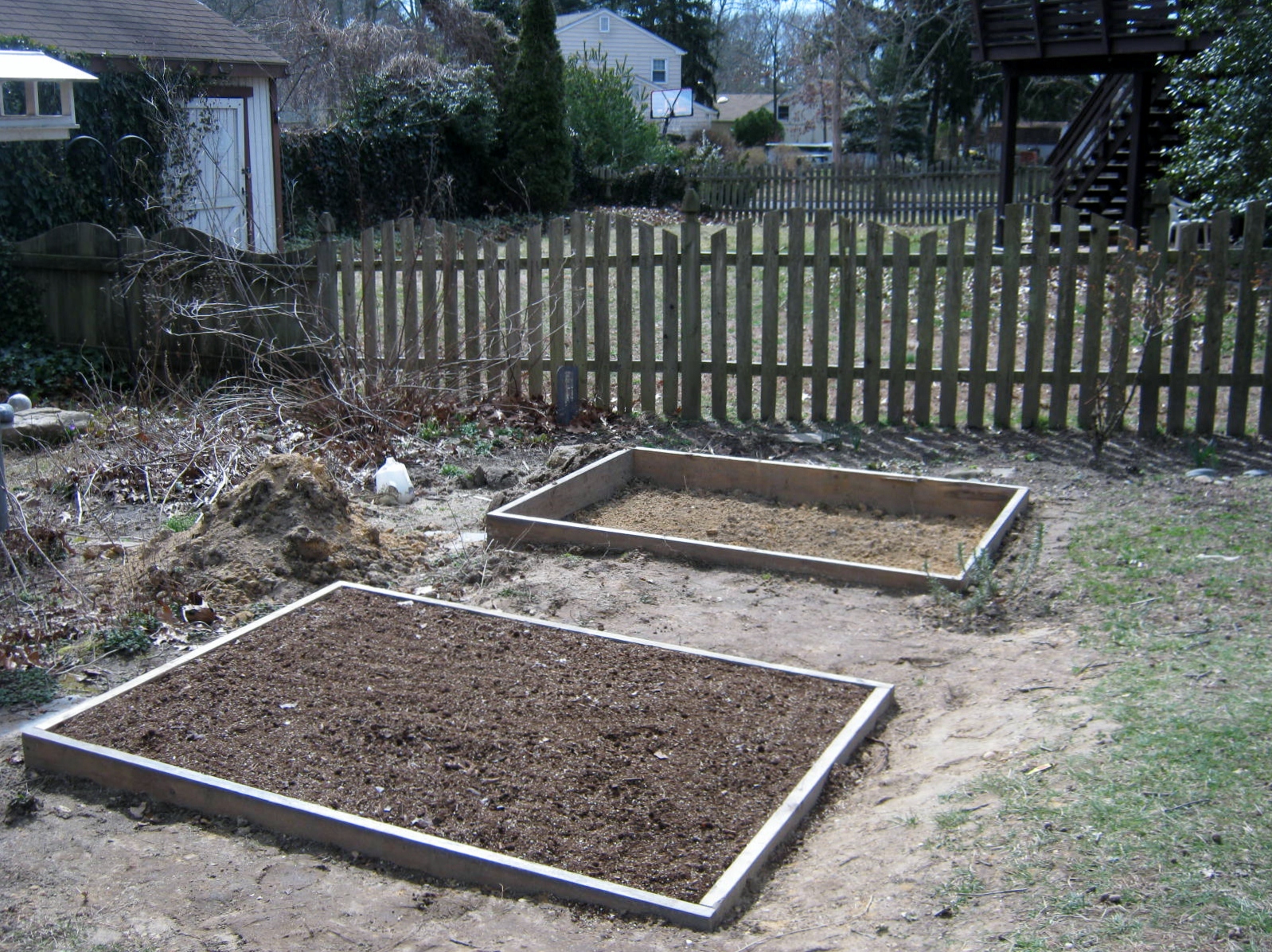
Yesterday, after visiting Roork’s in Elmer, New Jersey, we began mixing the growing medium for our first square foot garden. Setting these gardens up is a bit pricey. For one 4 x 6 raised bed we spent about 75.00. The good news is that this expense is a one-time occurrence. In coming years we will only need to add a bit of our own compost to the bed. These raised beds need no fertilizer or additional amendments.
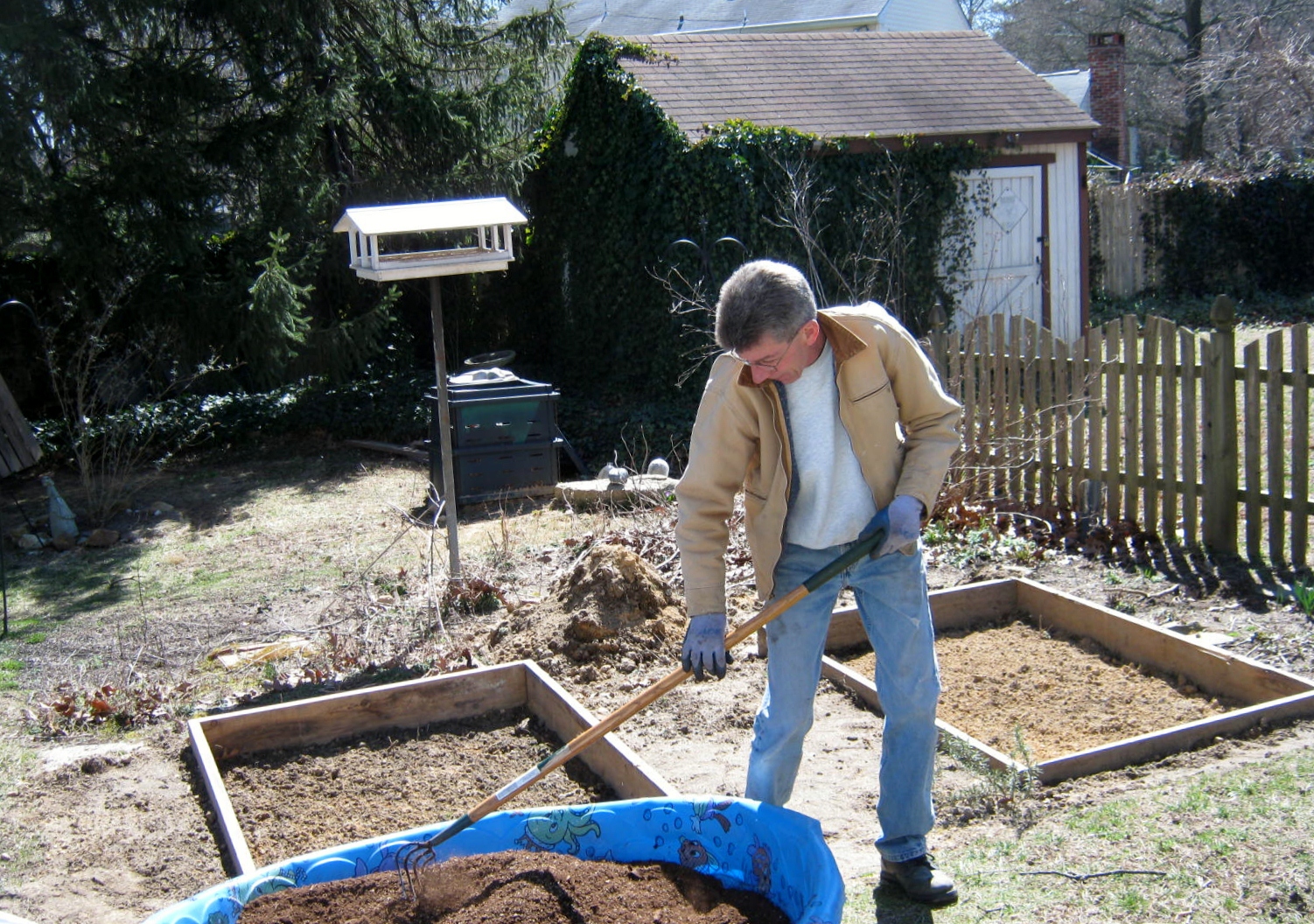
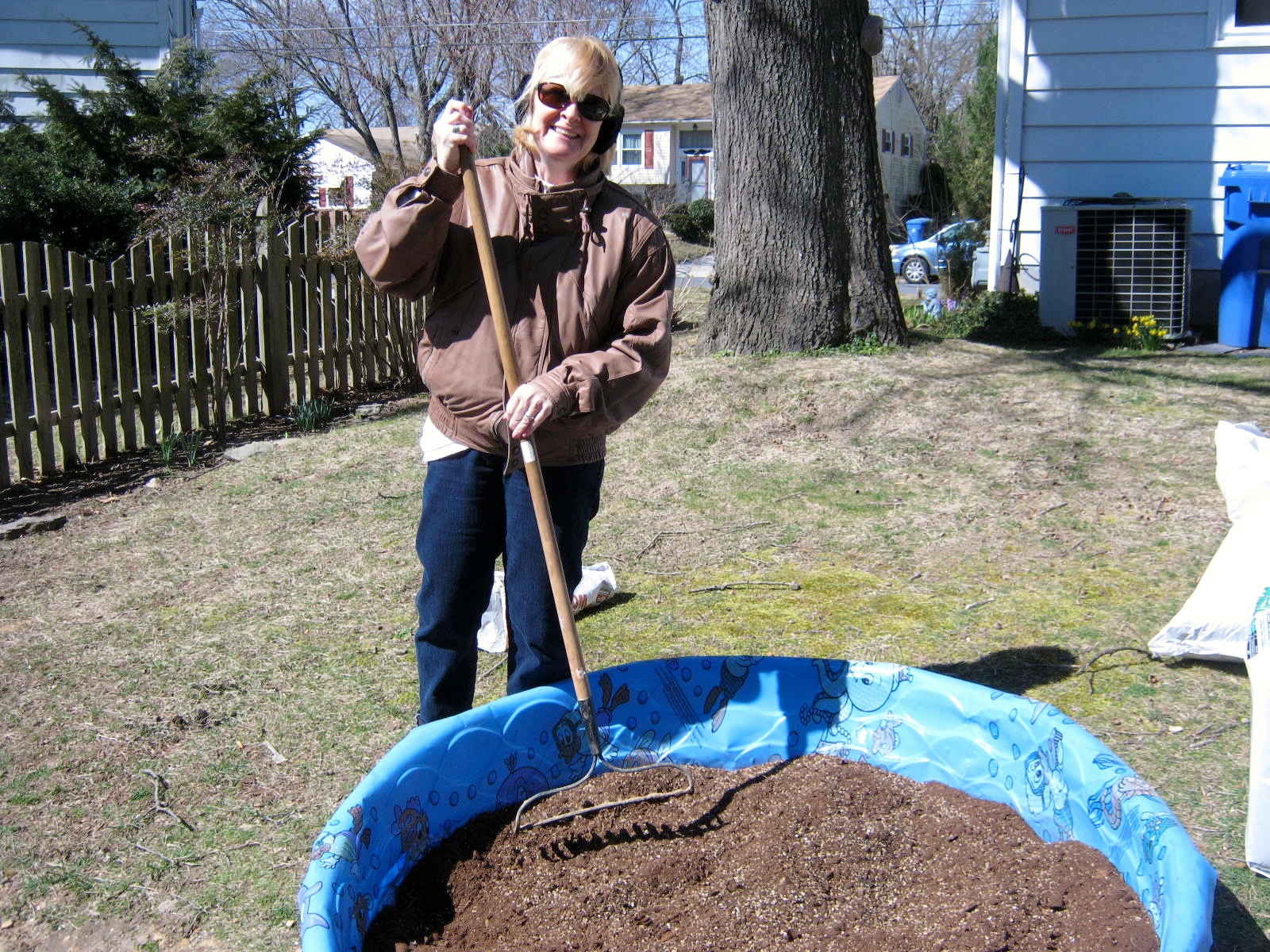
Mixing was easy in an old children’s swimming pool. We mixed half the product at a time. Joe did the mixing, I did the clump-busting with a metal garden rake.
We used four different types of humus, the book recommends five, but we decided four was enough, two types of manure, one mushroom soil, and bucketfuls of our own compost from the bin.
We used a whole bale of peat moss as the book, Square Foot Gardening, recommends.
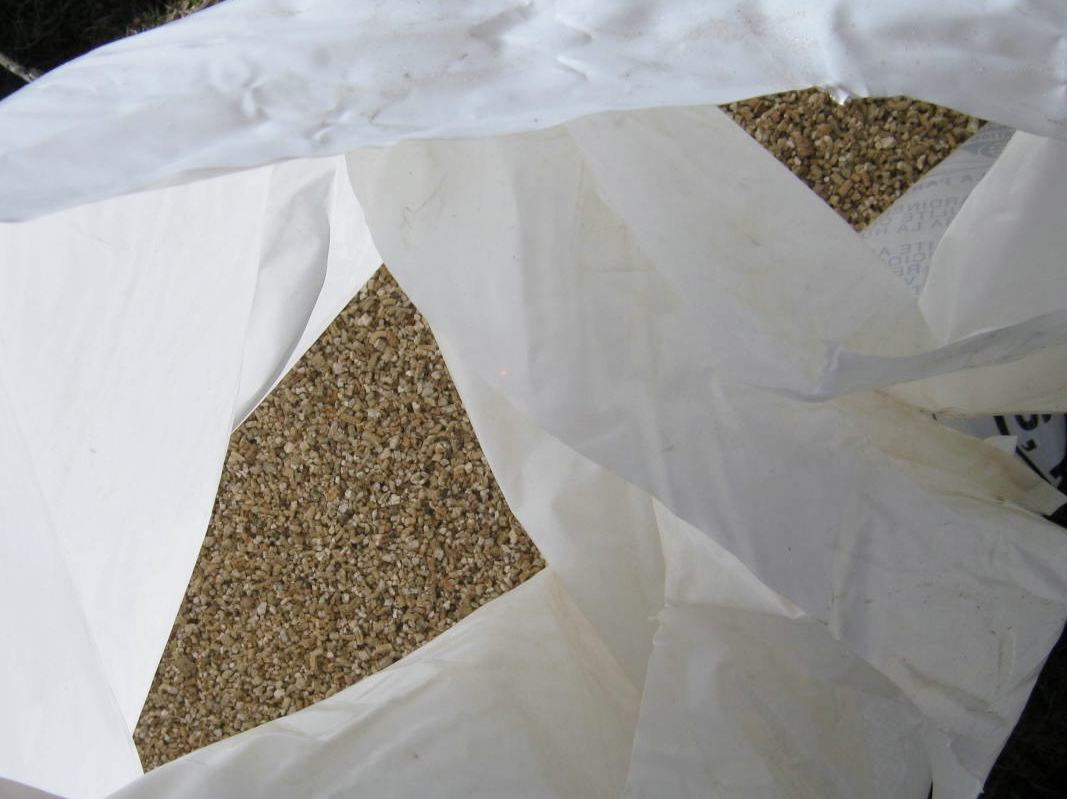
A bale of vermiculite was next. This was the most expensive item. It does look much more natural than perlite though, so in the long run we know it will be more aesthetically appealing.
All we need now is a bit of fencing to keep the rascally rabbits, the curious cats, and the mischevious chipmunks and squirrels out of the bed. Today I might work on making some scary looking owl replicas out of old CD’s. Fun.
Projects & Plants – Rooting Cuttings with Honey
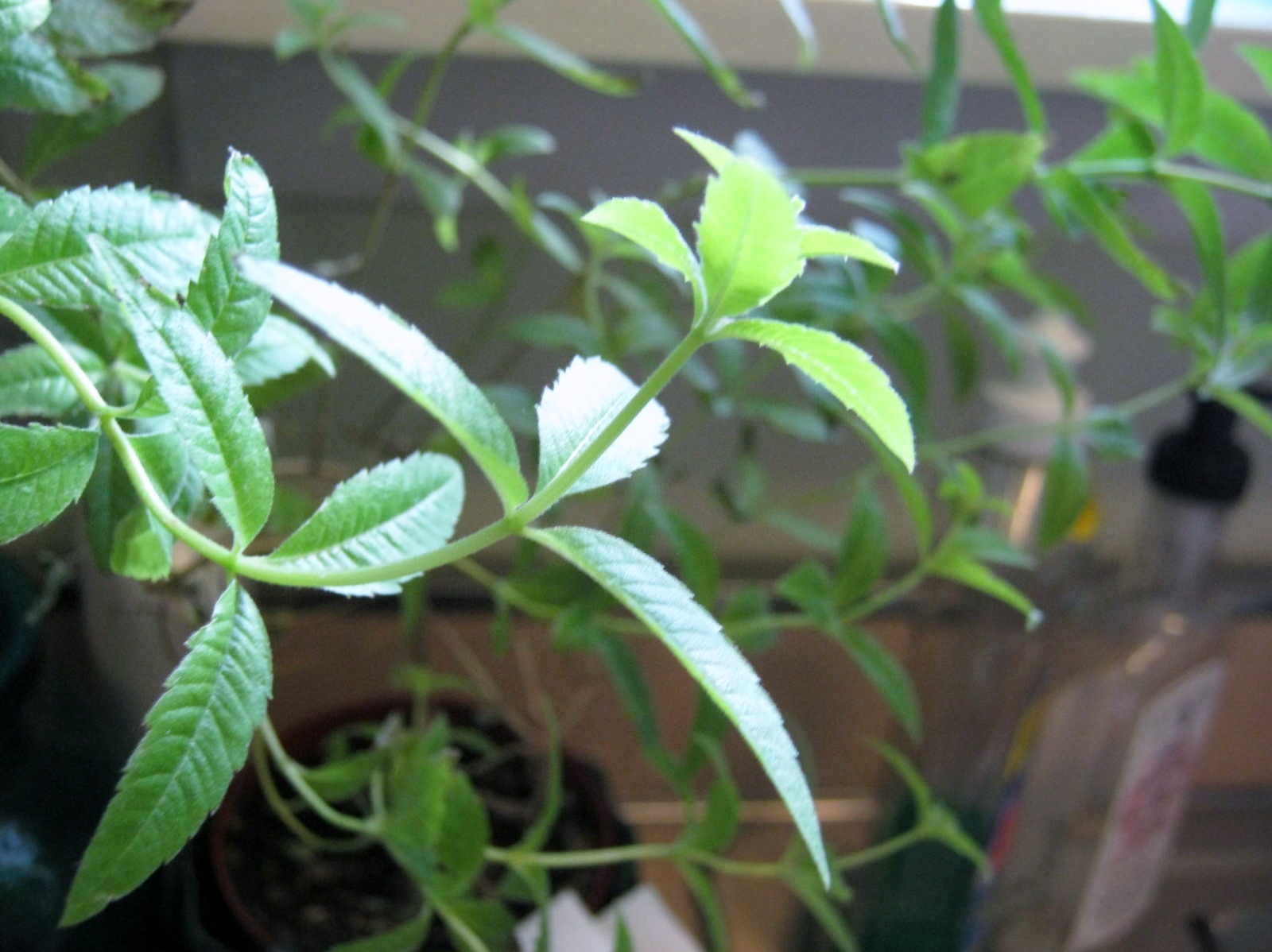
My Lemon Verbena plant is thriving, but it is in definite need of a trim. I want to grow several lemon verbena plants in my herb garden this year so today was the perfect day to take cuttings. In the past I have used rooting hormone on the stem ends of the cuttings, but this year I am aiming to go as natural and organic as possible. I have heard in the past that Honey is a natural rooting compound. I always have honey in my pantry so I pulled it out and gave it a try.
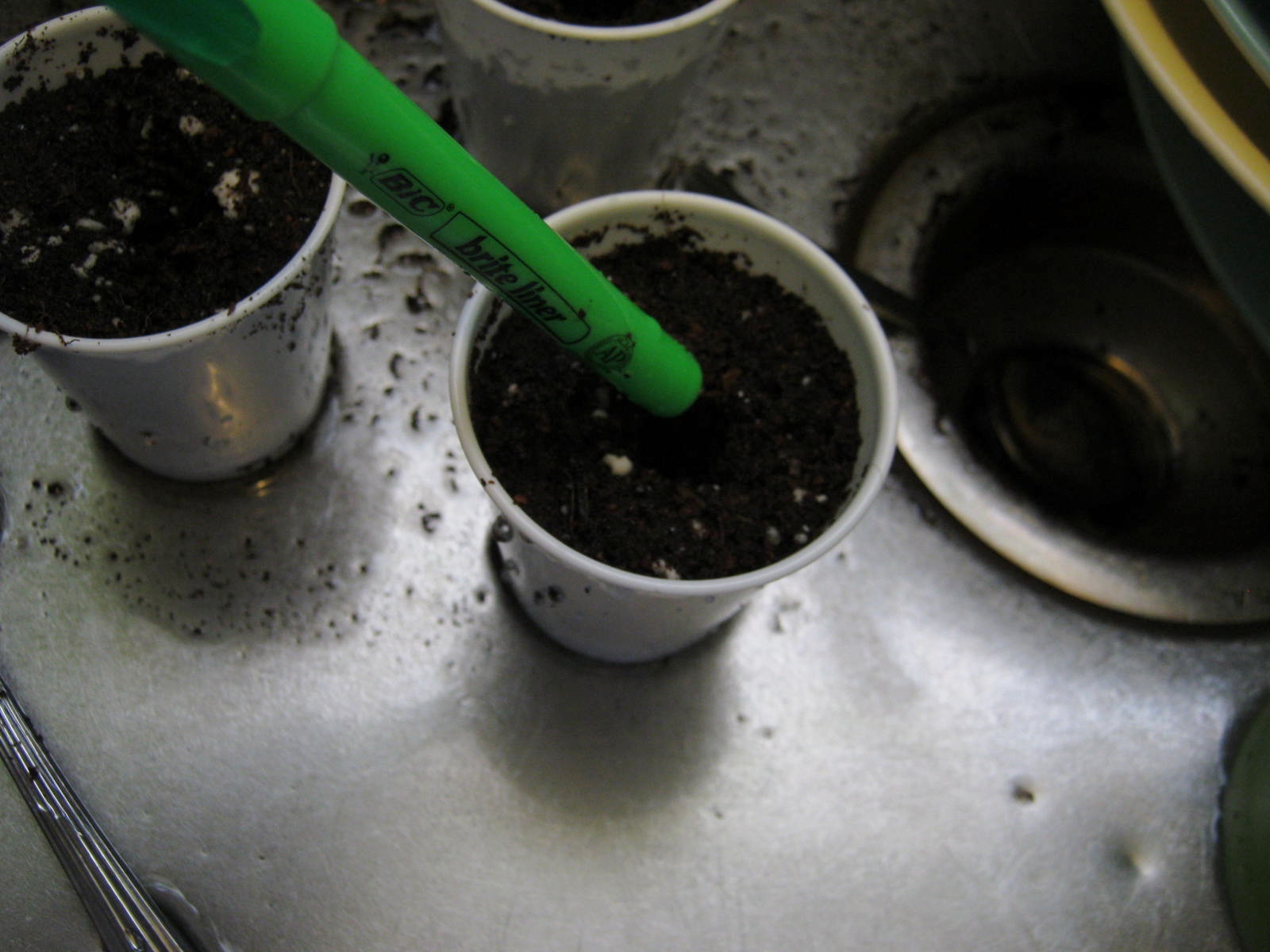
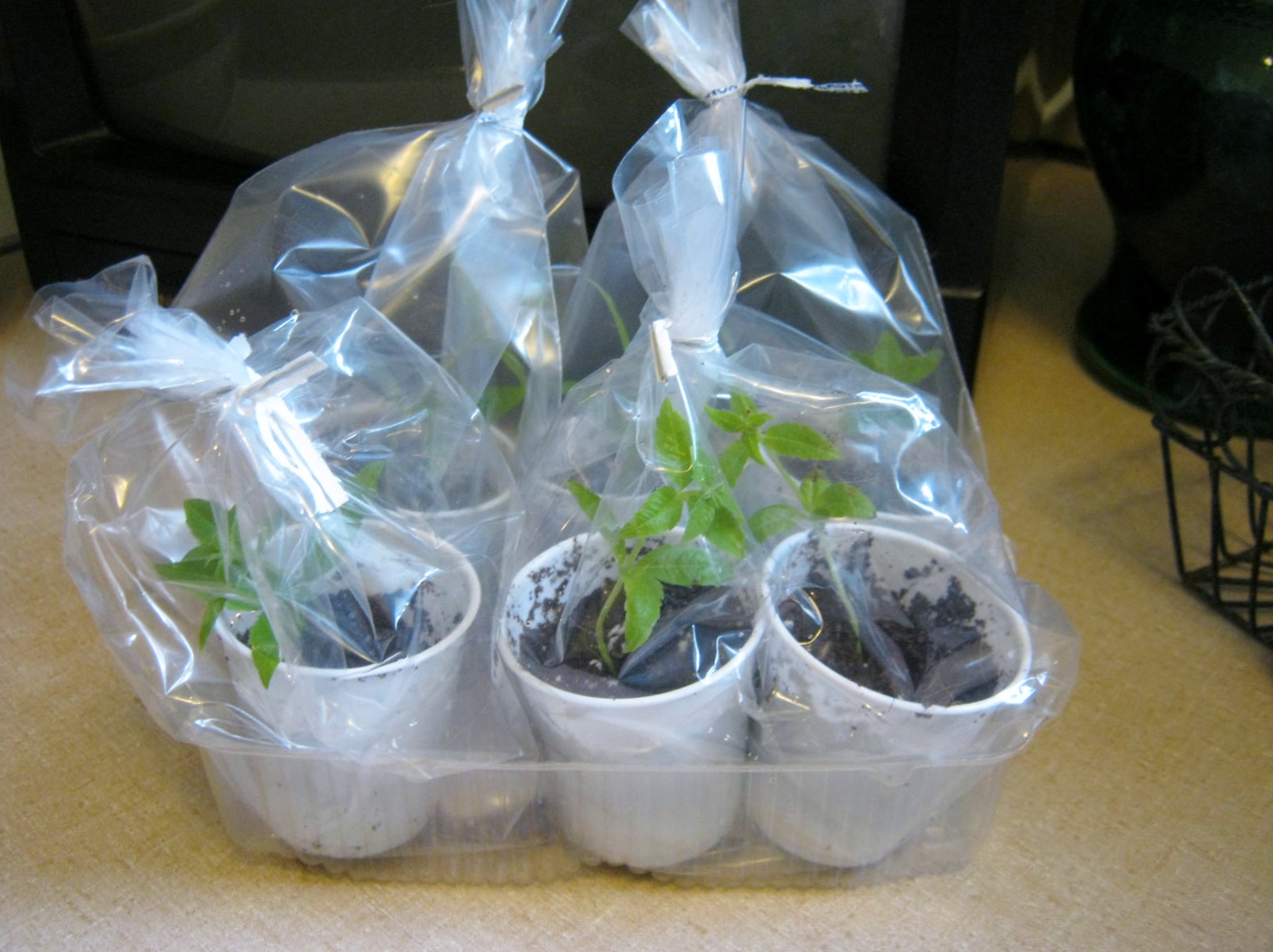
I followed the same protocol I use with rooting hormone. I punched out a drainage hole in 3 oz plastic cups and filled these with sterile soil. I watered the potting medium and created a hole with a plastic highlighter.
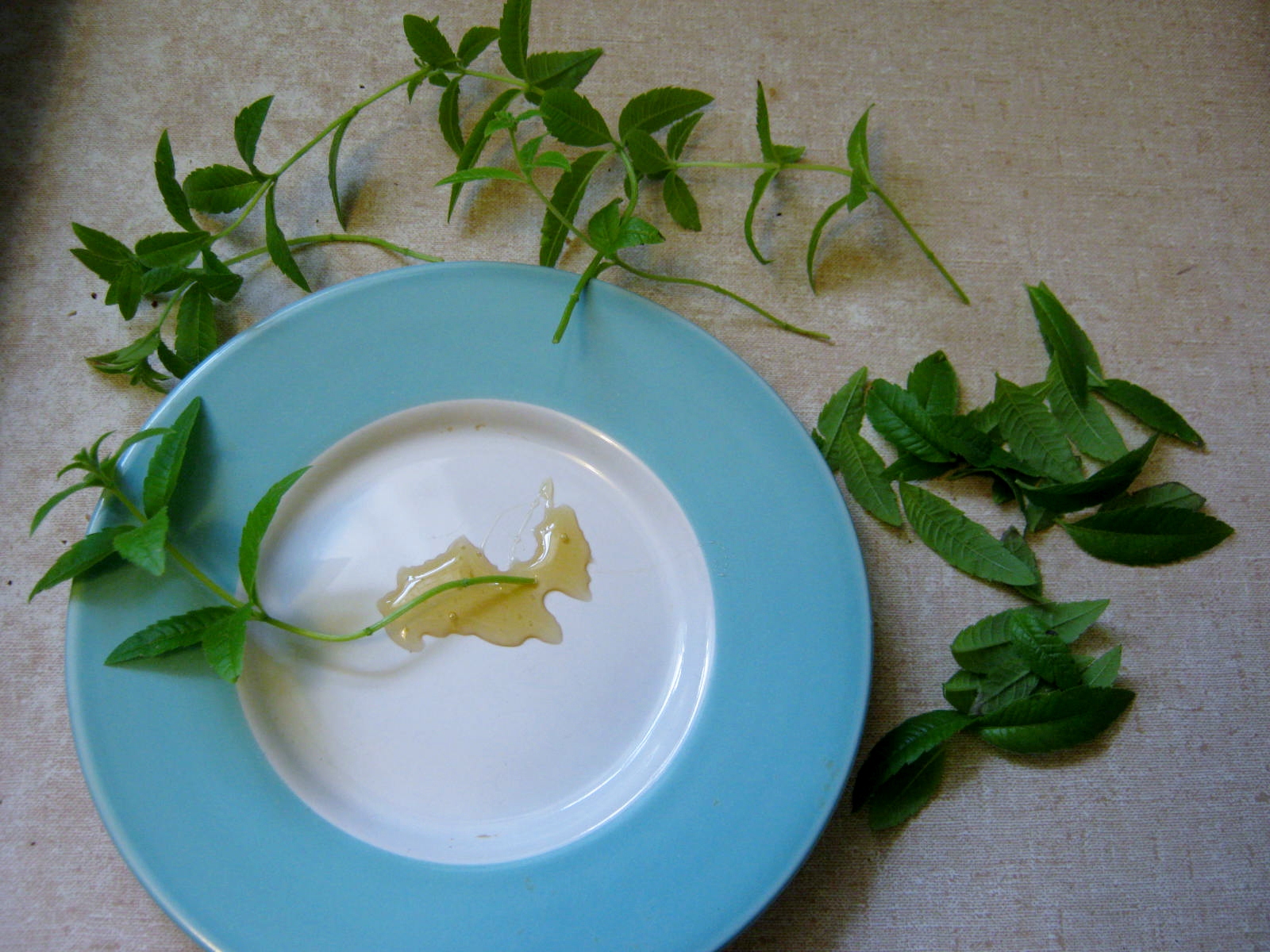
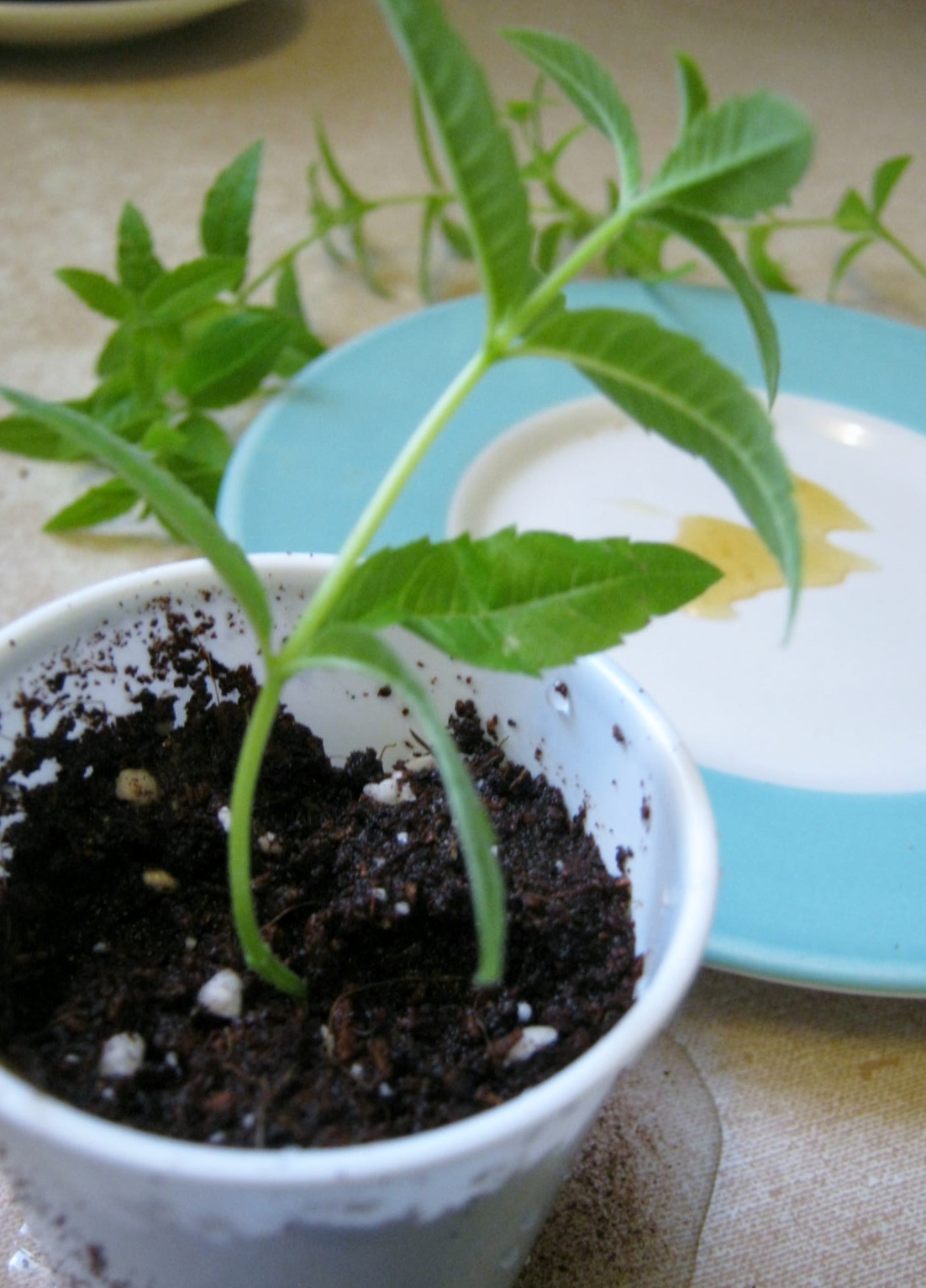
I dipped the lower inch and a half of the verbena cuttings into the honey and inserted them into the soil. I avoided brushing the sides of the planting hole to keep the honey intact on the stem end.
I gently firmed up the soil around the stem and then inserted the cup in a plastic bag and sealed it. The honey is anti-fungal and will create a seal on the cut end of the cutting and help retain moisture.
When I was finished I had six small pots. I used a recycled cookie tray to hold the six cuttings steady, and placed them under lights in my basement.
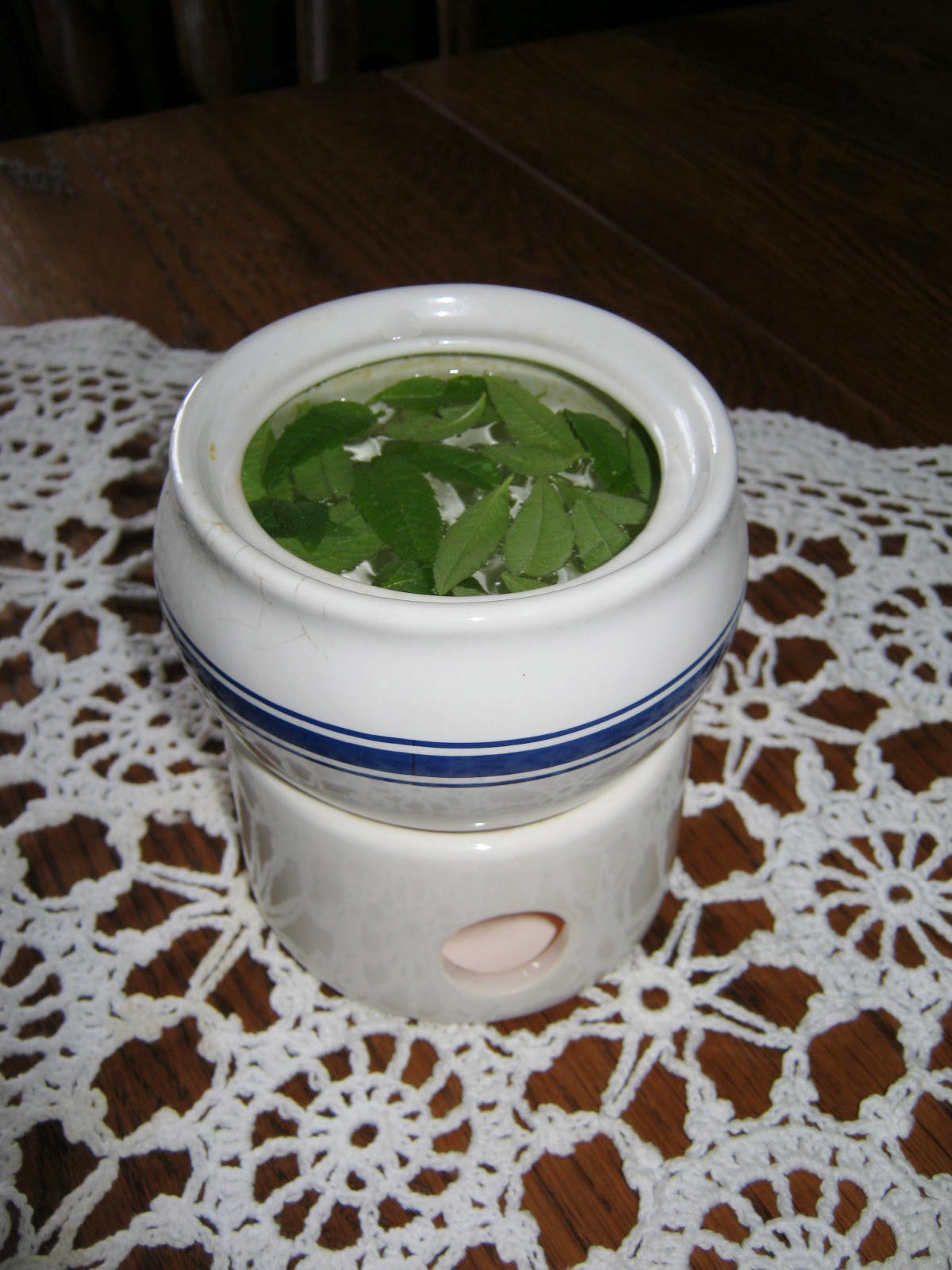
The lovely smelling leaves I stripped away were also put to good use. I simmered them in a pot of water and freshened up the house with a little extra moisture and lemon scent in the air.
Projects – Crayon Chips & Wax Paper = Stained Glass Valentine Hearts
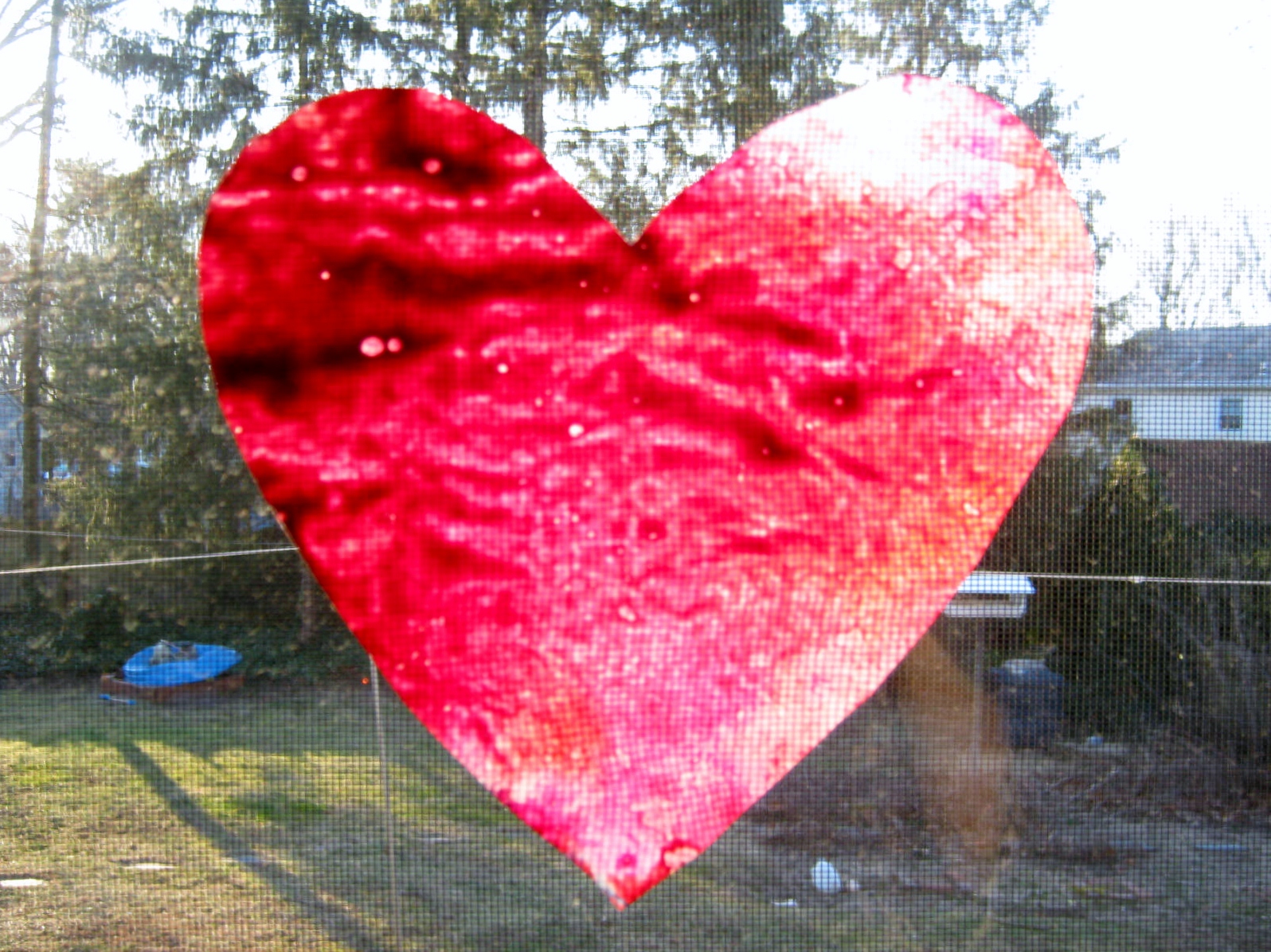
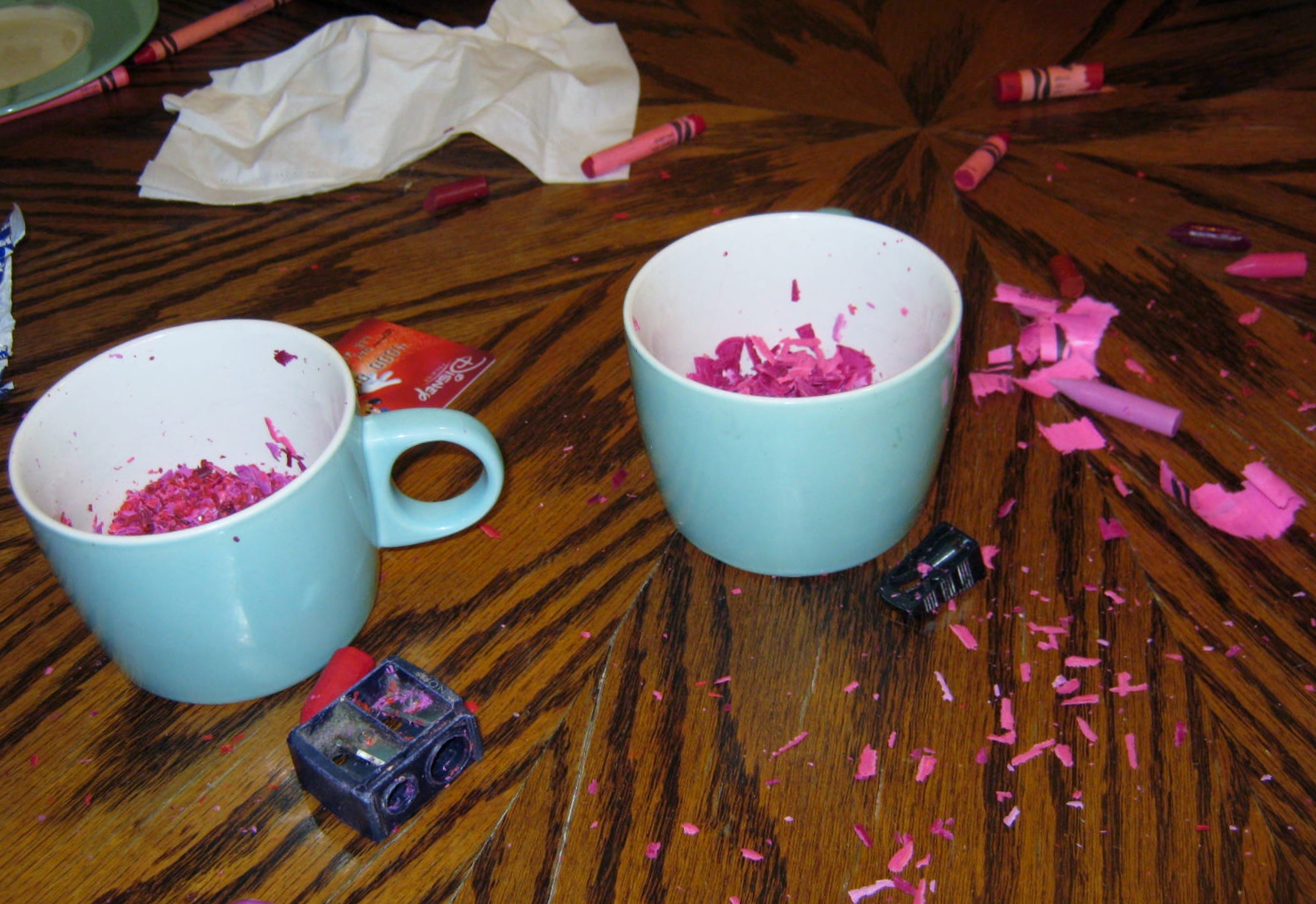
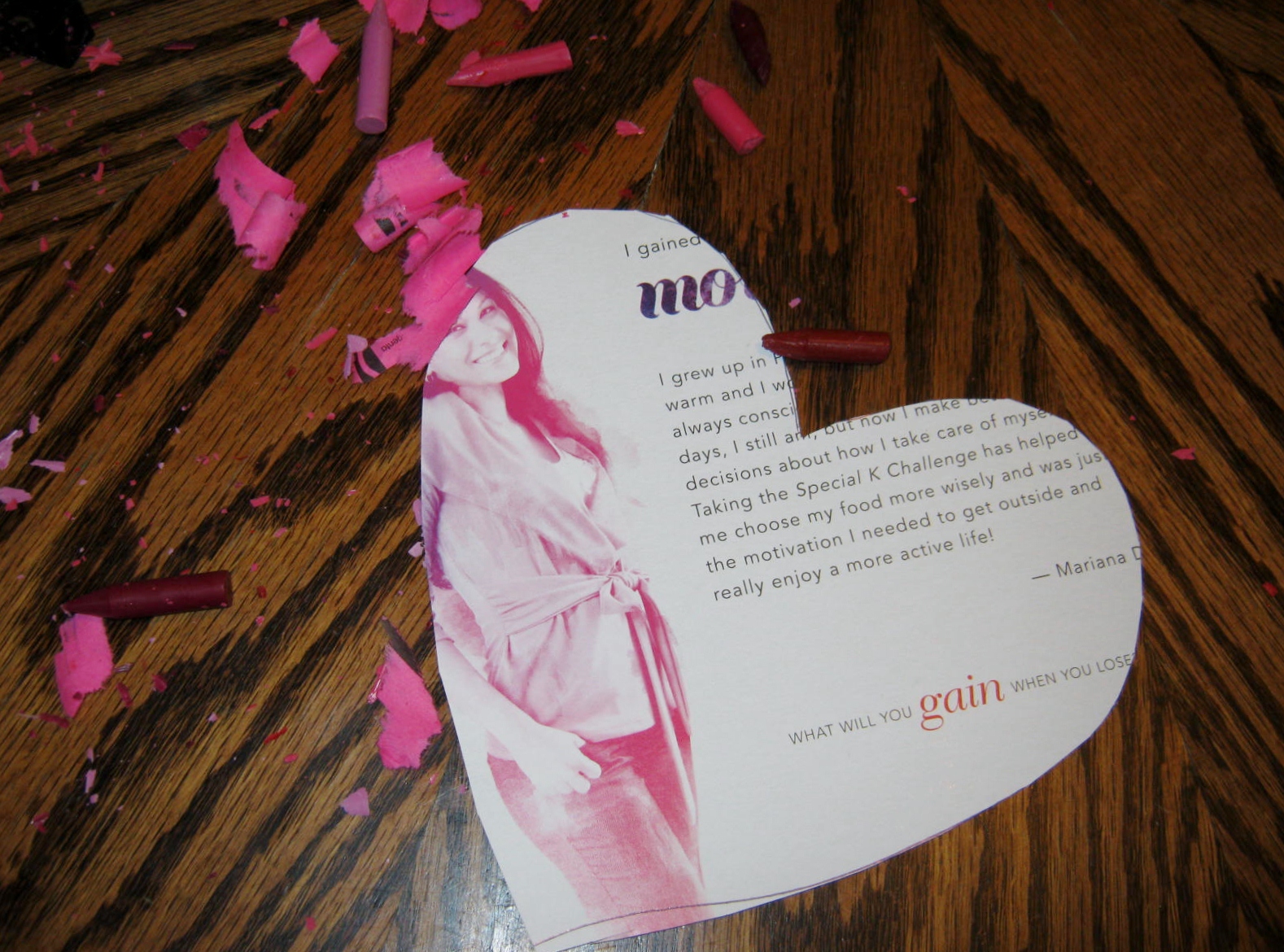
My grandsons and I created beautiful Waxed Paper Stained Glass Hearts to put on our windows. First we used pencil sharpeners and created shavings of pink, red, and violet crayola crayons. Yes, our crayon box is now depleted of these colors…must buy more.
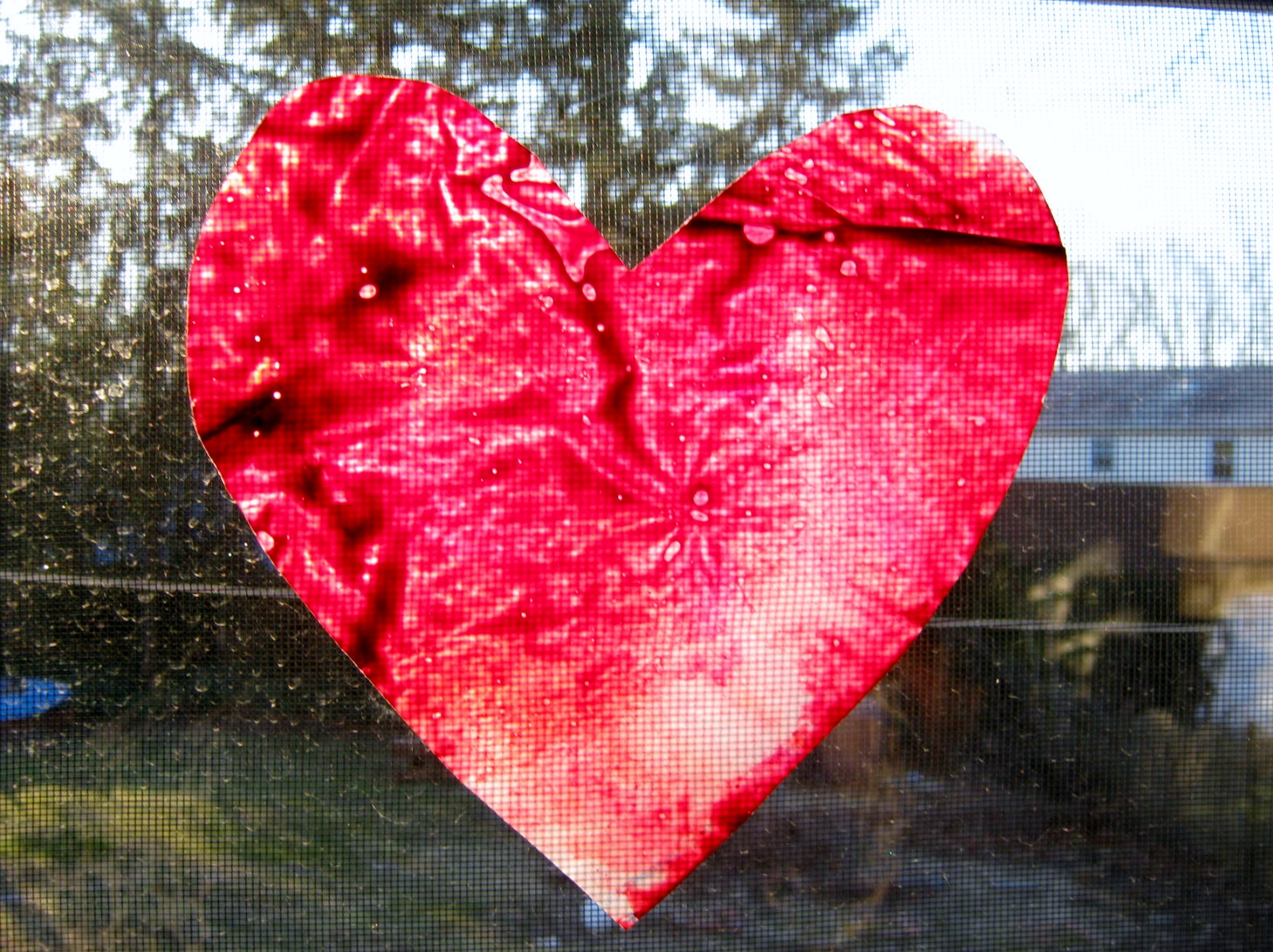
I used the back of a cereal box and cut out a heart shaped pattern. We traced this onto waxed paper with a Sharpie, and then dribbled bits of the shaved crayons into the outline. We covered the shavings and paper with another sheet of waxed paper, and I ran a hot iron over them very briefly. This melted the crayons into a beautiful pool of swirled and translucent colors. I carefully picked it up and laid it on the garage floor to dry. When they had hardened we cut them out and hung them on our window with double sided tape. (I have since realized a glue stick is a much better choice!) I would give this project an A++.
The Valentine hearts glow when sunshine steams through them. I wish we had more waxed paper and crayons, I would have made dozens.