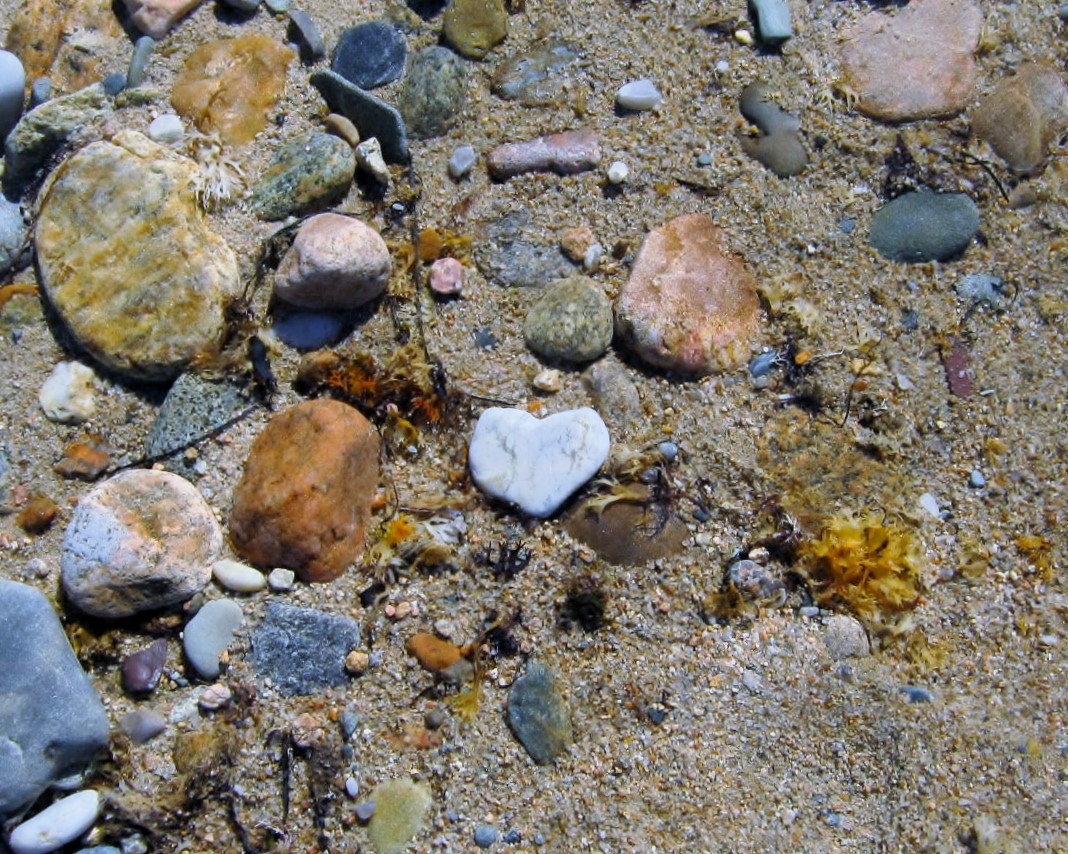
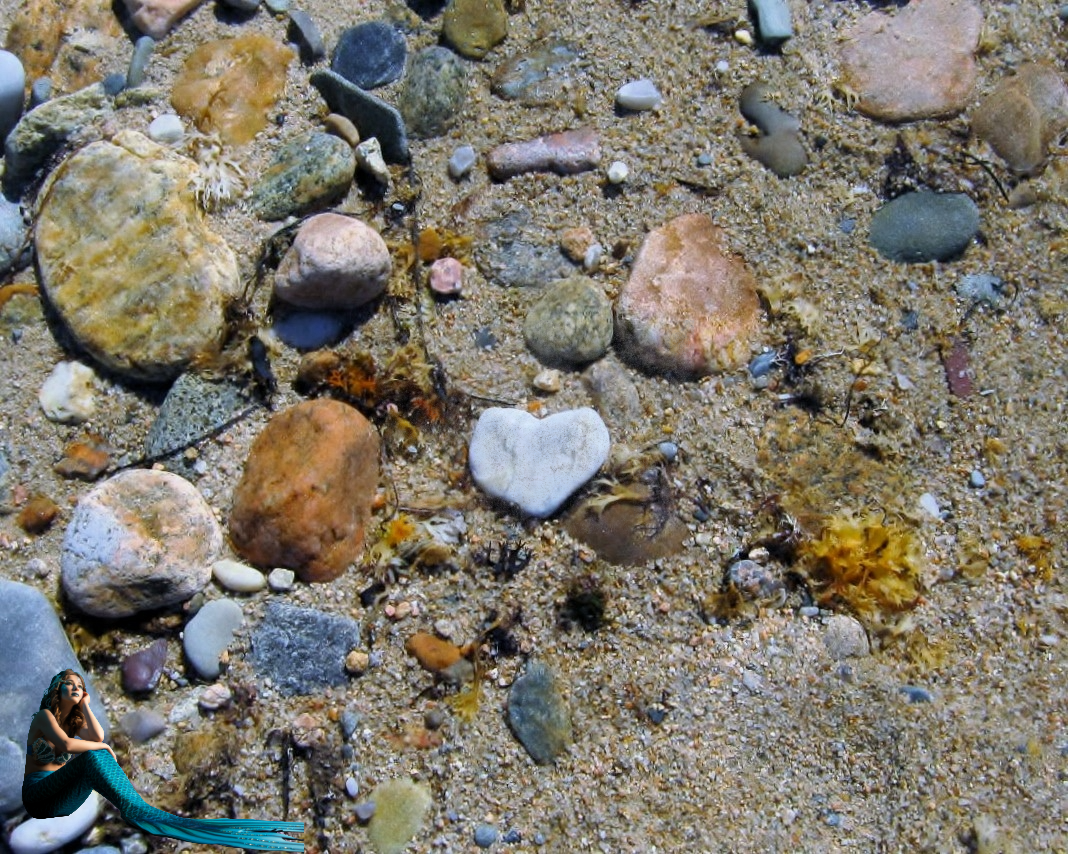
February seems a perfect month to take part in Xingfu Mama’s One-To-Three Photo Processing challenge. My original photo was taken on the beach of Block Island, Rhode Island. The beachy scenery beneath your feet is half pebbly rocks, half coarse sand. I don’t know another place where I have seen so many beautiful stones. If you search long enough, you will eventually find a few heart-shaped rocks.
The goal of the One-to-Three Photo Processing Challenge is to change the original photo three ways.
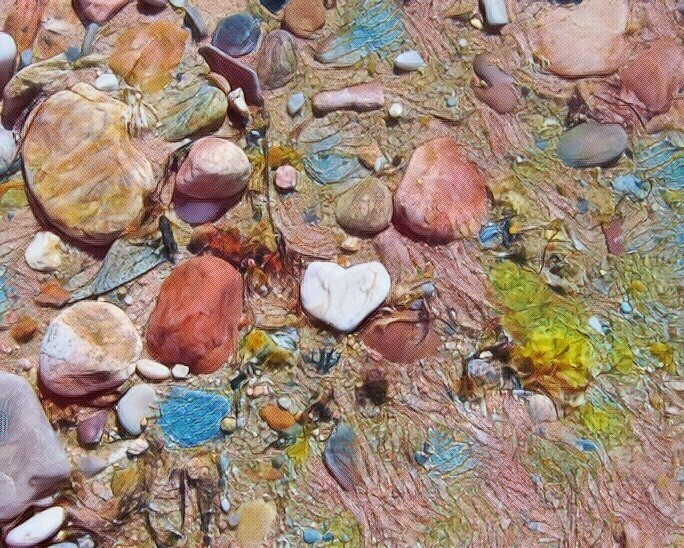
The first processed photo was filtered in LunaPic.com using an art filter called Beauty. I like the colors and the way the heart-shaped rock remains the focal point.
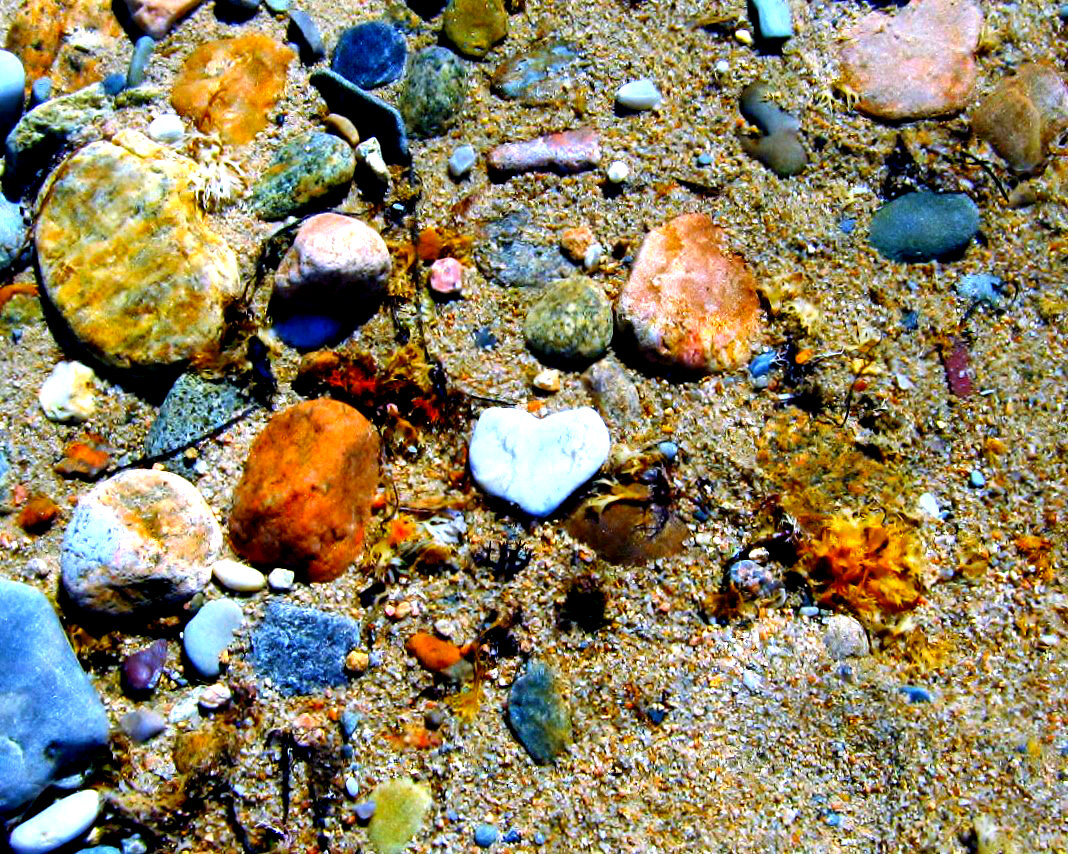
The second process was created in Ribbet.com and, as the name implies, is a Boost.
The third photo processing is not so much a change to the original as it is an addition. Look in the lower-left corner, and you will see a bit of editing I did in Adobe Express.
Thanks to Xingfu Mama for hosting this challenge for February.
Cee’s Fun Foto Challenge for this week is a Single Flower. I chose this beautiful white Echinacea that grows in full sun near my patio. The identity of the seed source is Baker Creek Heirloom Seeds. Since I planted the seeds indoors sometime in Spring of 2022, it took two years for the plant to flower outside. As soon as I finish writing this post, I will follow the link to Baker Creek and purchase another packet. I plan to start the echinacea seeds now, in late summer, and grow themto blooming size by Spring.
I had many unusual colors grow from this variety: peach, deep coral, the typical pink, and this white flower. If you love the sturdy stems and reliable bloom of Echinacea plants, try growing this unique mixture.
Paradiso Echinacea loaded down with blooms in late July.
(Later) I did purchase the seeds and they are already shipped. At this slower time of the growing season Baker Creek Seed company is very fast with order fulfillment. Baker Creek is definitely in the upper echelon of best heirloom seed companies.
The Farmer’s Almanac has an excellent article on how to grow echinacea.
I might be slightly stretching the challenge subject of passages/paths to consider walking alongside the ocean and bay a pathway, yet my way has a water border and dry sand on the other side. I walk on the wet, hardened area swept over by the waves. On further reflection, I think of walking along the ocean, a definite path.
The first photograph is one of my favorite places, Fortescue, New Jersey, along the creek that flows into the Delaware Bay. This area is a popular spot to fish. Again, I found the photograph quickly because it is set aside as a scene I would like to paint.
Another favorite area is Strathmere, New Jersey. We walk to the point across from Corson’s Inlet State Park. The beach has large cordoned-off areas for the shore birds that raise their young in the sandy stretches beyond the reach of the waves.
Whatever beach I visit, I collect an assortment of ocean treasures. I keep them in baskets and jars, paint them, craft with them, and have them in my living room as decor. Today, I created a decorative basket with a few. I especially like the piece of seaglass on the front. I found the glass with the small oyster shell firmly attached. I imagine that oyster had quite a whirlwind life while it was alive, tossed around in the waves with its piece of glass host. The small shell included on this piece is a cat’s paw collected on Sanibel Island.
On the subject of Sanibel, I’m including a clip of one of my favorite YouTube Channels: SWF Beach Life. This clip includes Sanibel Island. I love her channel; it is so relaxing and fun to live through her as she gathers beachy treasures. On a scale of 1 – 10, I give this YouTube channel a definite 10. If you feel stressed, or are just interested in seashells, check out this channel.
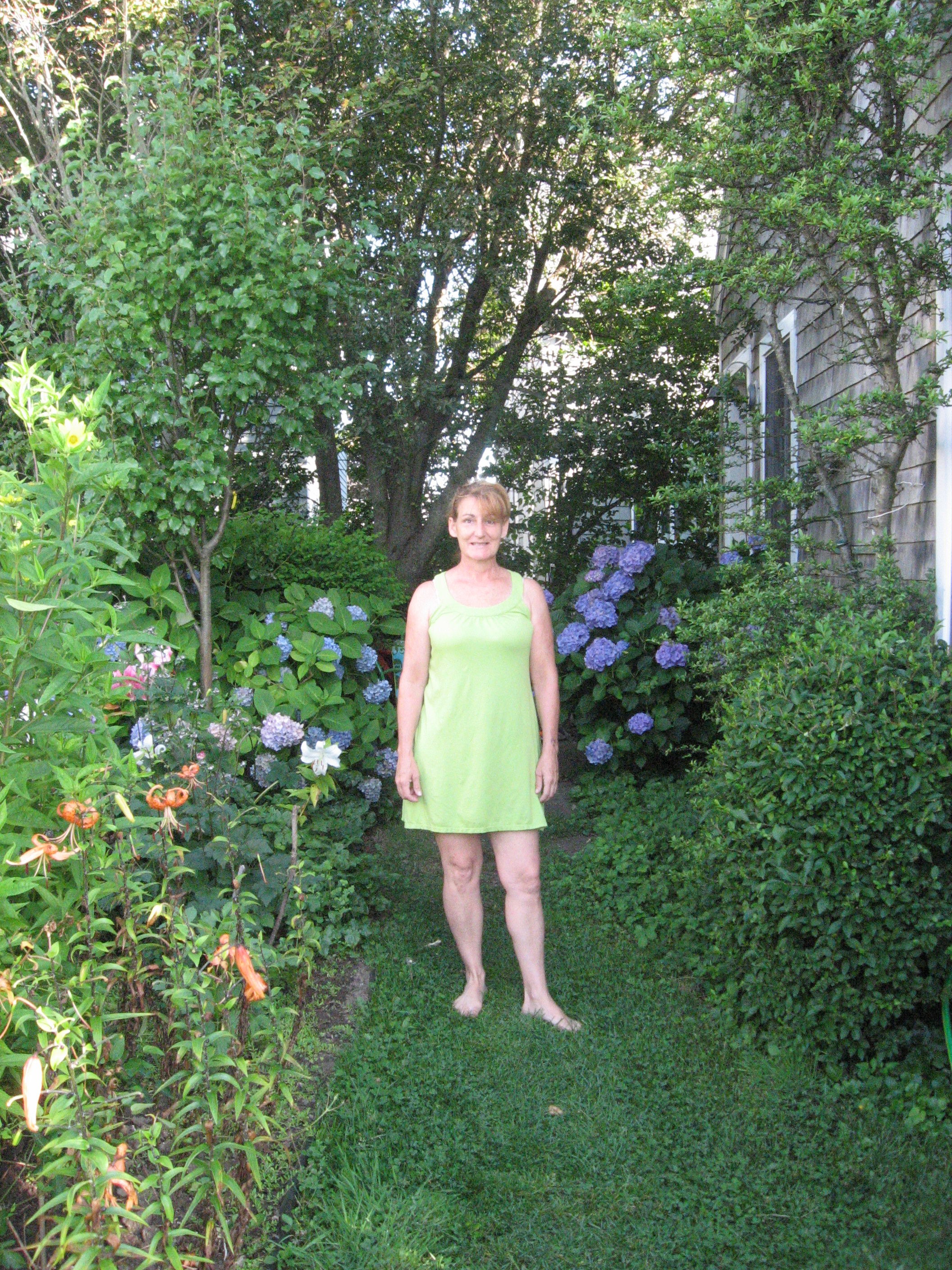
It’s day two of the Pathways and Passages challenge, and I’m still walking the paths of Block Island and Longwood Gardens in my imagination. We often stayed in a Block Island Bed and Breakfast called the Sea Breeze Inn. It’s been well over a decade since we spent a week on the island, but we still remember one of the biggest draws of the place, its beautiful location, and the innkeeper, Gabby.
In the photograph, Gabby is standing on the path that leads to the room we always booked for our week’s stay. I wish we had kept in touch and could still withdraw to the wondrous room with its high ceilings and comfortable furniture. Every morning, Gabby brought us a basket filled to the brim with a pot of coffee, muffins, Danish pastries, fruit, and many delicacies to start the day. I often wonder where life has taken her, if she still lives on the island, or if she has moved to the mainland.
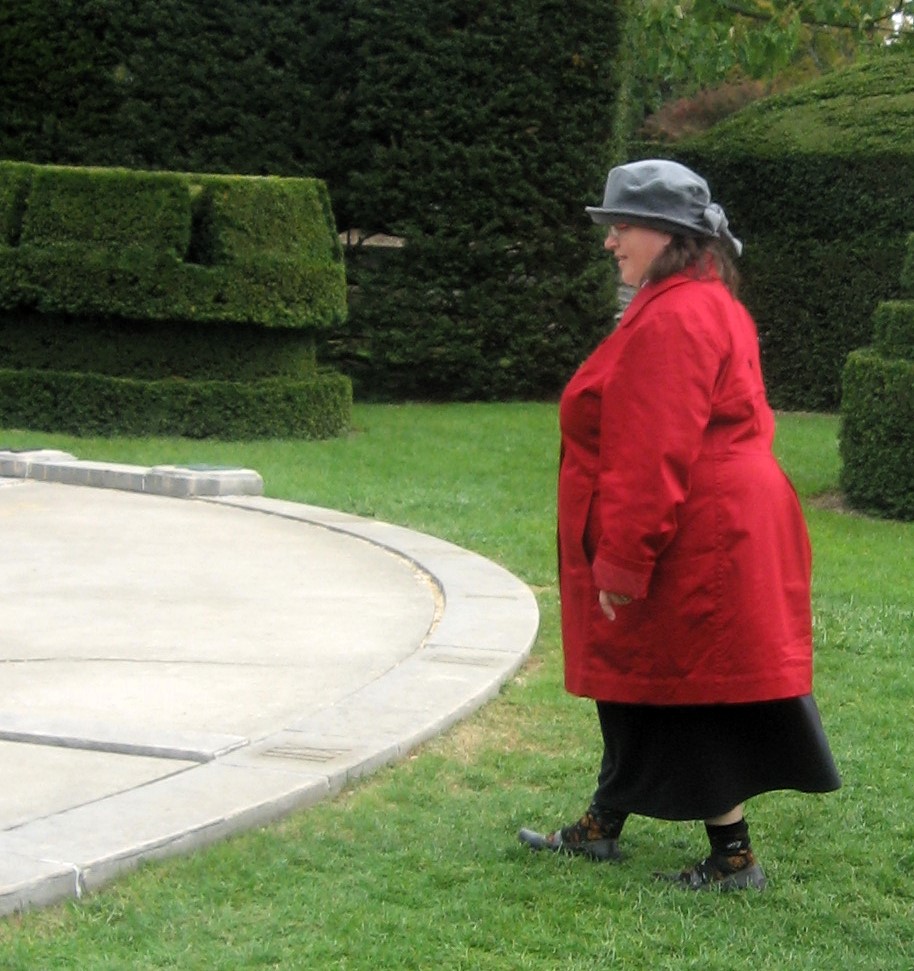
This well-dressed lady piqued my fancy one October day while visiting Longwood Gardens. I didn’t know her, and perhaps it is not polite to take a photo of someone just because you admire their outfit, but I loved her hat with its sassy bow, the red coat, and the posh bag she carried. Her long skirt was the perfect complement to the coat. So cute! In hindsight, I wish I had told her how beautiful her outfit appeared as she walked the pathways in the gardens. The photograph was taken in 2009. One of these days, I will attempt to create a watercolor of her. Fifteen years later, there is a lot of time between my first inspiration and getting around to it.
In my part of Southern New Jersey, the temperature is in the 90s. AccuWeather says the real-feel temperature is around 104°. The hot weather is helping the caterpillars thrive. I have an abundance of them in the Butterfly House and each is born with a ravenous appetite.
Inside the houses, I have Rue, a host plant, and a few sprigs of parsley. The dill in the garden is still only in the small sprout stage since I planted it late. The fennel is suffering a bit in the heat, and since that is where most of the eggs for the Black Swallowtail Butterflies are laid, I don’t want to use it all. My goal is to concoct the perfect caterpillar feast for strong butterflies.
Queen Anne’s Lace, a host plant, is in bloom now, and the tall umbrella spires grow in hedgerows near my home. I took a walk with my cutting sheers in the hottest part of the day in hopes of collecting the wildflowers.
Unfortunately, the Queen Anne’s lace was not where I expected it to be. The sprigs I had seen a week or two earlier had bloomed and gone, and my walk became longer than I had planned. I did find more growing along the edge of the woods and cut several stems. By the time I got home, they were significantly wilted, and I wondered if I could use them as I had planned for the IAVOM challenge and afterward as food for the caterpillars. The Queen Anne’s Lace stems drew up water and eventually recovered. I used a Coca-Cola bottle as a vase.
Butterfly tip: The Queen Anne’s Lace, though the blossoms become frail, has stems that stay firm even after drying out. They are perfect for a caterpillar to use to form its chrysalis.
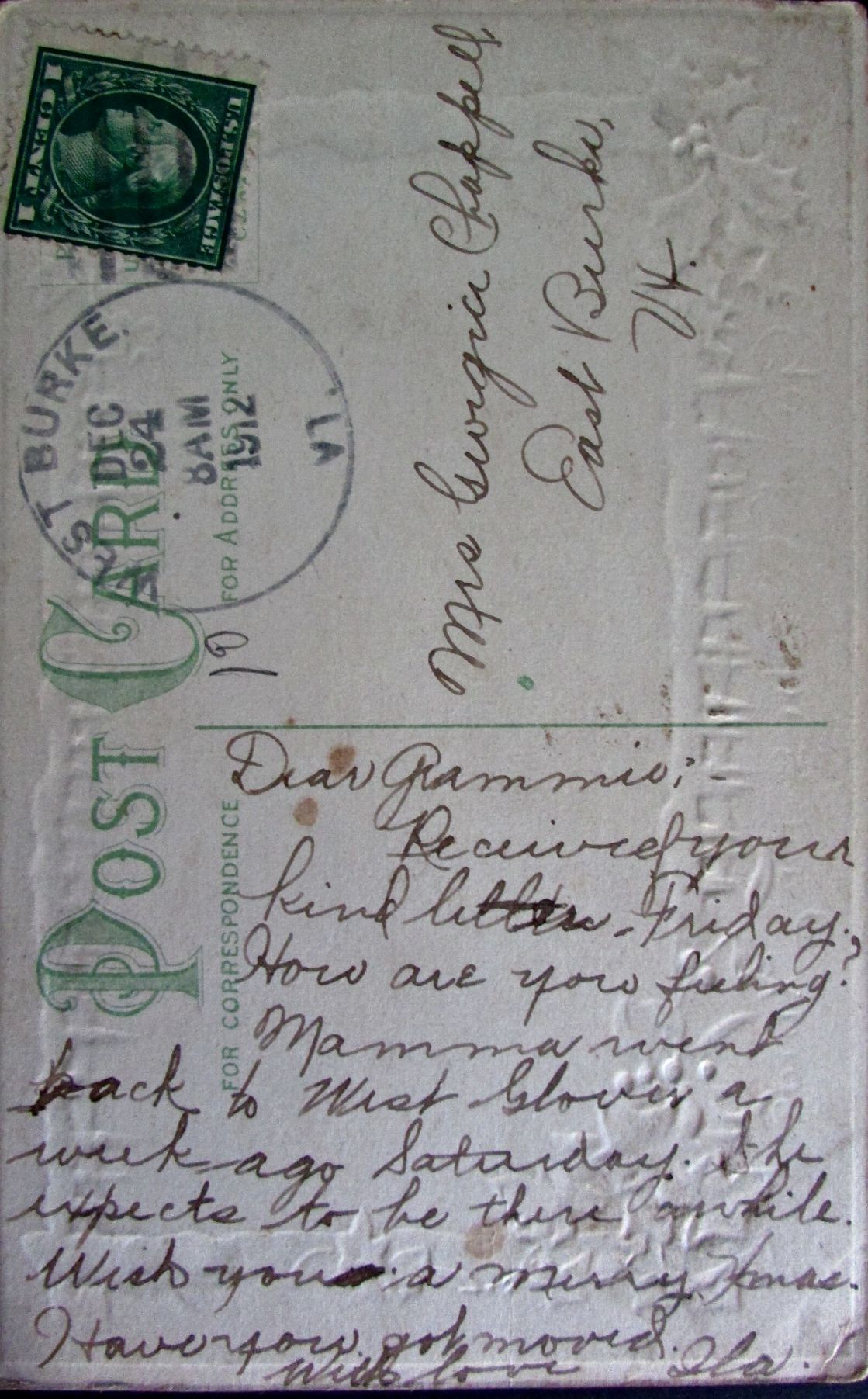
Judy Dykstra Brown’s Blog offers a unique new challenge. The basis of the challenge is to search your photos with a number and create a blog post with them. This week the number is 126. Post a selection of photos on your blog and link back to her blog. Fun! I thought I would have more, but these are the three photos that had 126/26.
This is my first time taking part in this challenge. I will definitely try again. Why not take part too? What a good moment it was when a photo of my grandparents showed up in my search.
The two beachy scenes are Block Island, Rhode Island. I love the way visitors and islanders alike build rock cairns on the slopes and sand.
I was surprised I didn’t have more photos in the search, but then again, sometimes I relabel the numbers. If you do this also, Judy Dykstra Brown has a way for you to take part, choose a word instead.
Like the Steinbeck quote below, my photos seem to multiply while I sleep. Most of mine are on CD discs for storage.
Ideas are like rabbits. You get a couple and learn to handle them, and pretty soon you have a dozen.
Seven hundred days…that is how long the weather forecasters told us our area had not seen accumulating snowfall. This week, when the skies greyed and beautiful snowflakes began to descend, it created a swell of joy in many, especially children with new sleds and toboggans. It was a superb snowstorm, not so much as to cause a complete standstill, but enough to have a bit of fun in. Even the most winter-weary could not feel hostility toward it when they gazed at a landscape frosted with white.
There is little left in my yard to vase. I took advantage of an amaryllis that had grown so top-heavy it had to spend its last days in the garage. I found a basket instead of a vase. Anything glass or porcelain might have cracked in the freezing temperatures. I plucked a few stems of sedum that still had some dried flowers and placed them in the spring-green basket. The amaryllis mirrored the brilliant snow. It is a fun way to celebrate IAVOM (In a Vase on Monday) and the glorious snowfall.
A few of the many shades of blue pansies and violas I have grown in my gardens over the years.
Pansy and Johnny-Jump-Up are a variety of seeds I will be sowing this week. It seems early, but I should have sown them four weeks sooner. I don’t follow the recommended dates on the back of the packets. Earlier is always better if I want to have larger-sized plants for the Spring Garden. If my seedlings are pitifully small, I fall victim to the lure of lusher-appearing plants in the local nurseries.
I purchased several interesting varieties from Baker Creek Heirloom Seeds at the end of Autumn, and I can’t wait to see if they are as lovely as the photograph on the package. (Dilemma: I don’t remember the ‘safe’ spot I stored them in.)
The seeds of Pansy and Johnny-Jump-Ups sprout with some bottom warmth and humidity but also have one crucial requirement: they must have total darkness. I will put a plastic tray over the top of my flat and also cover that with a dark, wet washcloth. This will seal out any light rays that might interfere with sprouting.
Organic seed starter and sterile organic potting soil are what I use to start my seeds. The plants develop robustly if I fill the bottom 3/4 of the flats or pots with soil and the top quarter with seed starter. The foliage sits against the quick-draining starter, and the roots reach down into the richer soil. Two types of grow-lights work well for me: overhead and adjustable surround wands. A sunny window provides natural light and is also a good choice.
One variety I loved, purchased from Baker Creek last year, was Laeta Fire, a viola with dime-sized blooms perfect for flower pressing. I have a few seeds left in the packet and will grow them again. You can see how small this flower is in comparison to the normal-sized geranium leaf alongside it. When I persevere in my gardening throughout the winter, the process brings me a sense of peace and renewal.
I don’t have much growing in the garden, but my IAVOM arrangement for the first day of 2024 contains the few flowers and pieces of foliage still blooming.
Contained in the vase is a Bidens blossom. This tiny flower is about the size of a quarter. It is inconspicuous in the garden border during the summer, overtaken by plants that grow exuberantly. After these plants die back in the cold temperatures, the Bidens thrive for several months. The Spruce has a great article on how to grow Bidens perennials in the garden.
One pansy was blooming brilliantly in a terracotta pot in the backyard. Hurrah! It is bedraggled in a few places, but on the whole, it is still lovely and perfect for Cee’s Flower of the Day.
Dandelions are within the vase but opened after I took the photograph. There will be more to come on dandelions tomorrow. I love the spent seedhead. It’s done its job, and the umbrella-like pappus dispersed all the seeds into the air.
Fennel is still filling the garden beds in various heights and sizes. When I picked a few sprigs for the vase I momentarily smelled that distinctive licorice fragrance the foliage puts out. This wonderful herb is one of my major host plants for butterflies. I imagine many Black Swallowtail caterpillars on the fennel come to Spring when I daydream about my 2024 gardens.
Lastly, I picked a few pieces of Butterfly Bush foliage, still glowing blue-green in the grip of winter weather, and used those leaves as a base for the flowers.
I enjoy finding ways to display my vintage postcards. I searched my file box and found over a dozen Christmas or New Year’s themes. The artwork on the postcards is often exceptional. However, they range in age from 100 – 120 years old and must be protected from too much exposure to light.
I used some cardstock I had on hand and cut it to 4.5 x 6.5 inches, giving me a half-inch border around each postcard. Glue and tape are definitely banned from attaching the postcards to a display. Instead, I used a paper trimmer and made small slits near the corners. I then gently inserted each postcard in two of the slits, creating a double-sided display for two postcards on one piece of cardstock.
A piece of twine attached through small holes is enough to keep such a featherlight piece of vintage art in place.
I’ll leave the display out for about two weeks, then place them in their file and back in the dark closet. It’s fun to take them out now and then read the old-fashioned, cramped messages. I enjoy daydreaming about the people who wrote them and imagine what course their lives might have taken.
Are you like me? Sometimes, I gift myself with computer programs that enable me to blog more easily, write with better grammar, and listen to my words read back to me. I thought it would be a good idea to share throughout this week, along with some other reposts, the computer apps I use that make life easier and help me move toward completing goals.
Today’s app is Ribbet.com. The program helps me create beautiful photos with some tweaking for fun. I feel like a child again when I decorate my favorite garden photos with this app. The photo above is tweaked with Ribbet.
Here is my original photograph, a summer capture of Verbena blossoms. It’s very pretty on its own, but I love to play around with overlays to take images from normal to showy.
I uploaded the Verbena photograph to Ribbet.com. Square photos work best on my blogs, so I cropped the image first and Auto-fixed the colors. My computer shows content on the left side and a work area on the right.
To read the symbols on the toolbar, hover over them, and you will see the name appear. I used Effects to add a matte border to my photograph. You can strengthen the matte effect by sliding the strength bar to the right. You can use the same effect twice on the photo to create a strong image. There is also a Text symbol that enables me to add words.
I added some Bokeh lights using the Overlay filter. I did the opposite with the lights and diminished their effect so that they would only lightly highlight the photo. At this point, I was satisfied with the image and saved it to my computer.
John Henry Newman – (1801 – 1890) “John Henry Newman was a Roman Catholic priest and cardinal who converted to Roman Catholicism from Anglicanism in October 1845.” ~ Christian Quotes.
I took this quote to heart. It is a failing of so many of us that we don’t continue to pursue our dreams because someone, or even ourselves, has found fault with what we do. I needed this today since I am working on a project I had set aside for years. It is a bit draining, but it has also made me laugh, and even enjoy, the words I had put to paper. It helped me realize I had created something not bound to the time I’m living in now.
What is meaningful to me is the background of this quote. It is a macro photograph of a piece of watercolor I was not happy with and tore up. I have a whole basket of these scraps, collected for over twenty years. I tweaked the photo a bit in LunaPic and was pleased with the Autumnal appearance of the result.
Don’t be absent from the classroom of your dreams, learn their lessons, take charge and make them count! Do everything feasible to succeed.
The tip might be a little late for this year’s gardens, but keep it in mind for Spring planting. The red zinnia below is my photo for Cee’s Flower of the Day.
It’s always fun to traipse around the garden beds eye-level to the zinnias. Their height presents a problem though; how to support them? If you’ve ever grown these beauties, the taller varieties, you most likely know a heavy rainstorm will drive them to the ground if they are not staked. This year, quite by accident, I grew a natural staking plant nearby.
In the patio garden I planted zinnias, the State Fair variety that grows near four feet tall for me. Beside it I planted blue salvia since both flowers are hummingbird favorites. As the zinnias grew tall, and the salvia spread out in width, the zinnia grew up between the branches of the salvia and rested upon the natural support. No staking required. The plants look lovely growing together. Their roots have plenty of room. I can’t extol this combination enough; the hummingbirds are happy and so am I.
The growing season is almost over. We have had heavy rain along the Atlantic coast for days. The zinnias are now as tall as I am, and still, despite the downpours they are held aloft by the salvia plants. What a beautiful combination.
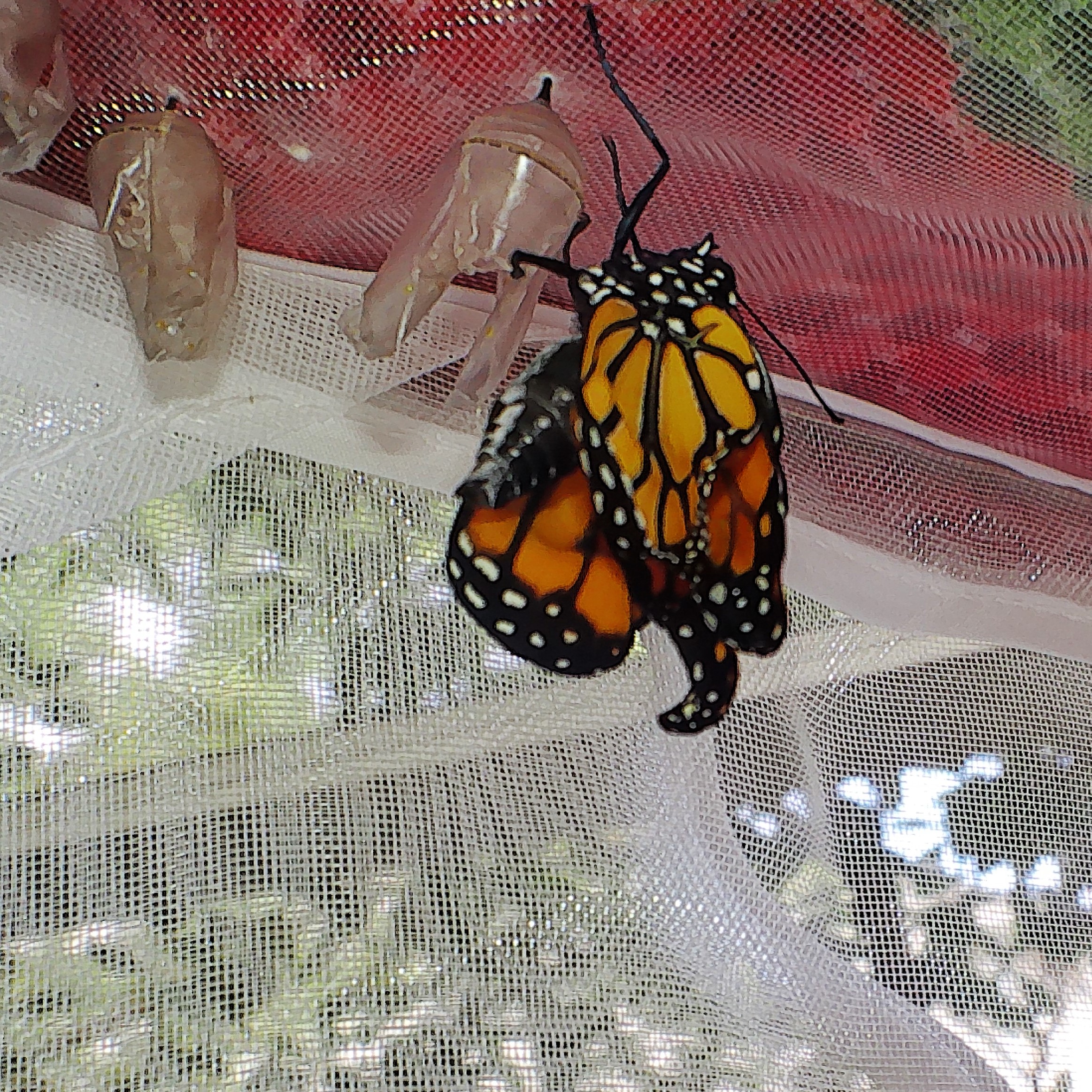
The ‘phlutters’ on my porch have been magnificent. While I write this post, I am thinking of eleven empty and transparent chrysalides. Each is the evidence left behind of a successful eclose of the Monarch butterfly that developed inside. The brief sojourn of the caterpillar becoming a butterfly is complete. Below is a description with photos of how the day of “The Magnificent Seven” evolved.
Raindrops started falling early but then tapered off; the weather became a concern since seven chrysalides turned black and were ready to emerge over the span of twenty -four hours. Morning light revealed the markings of each butterfly through the walls of its chrysalis. After a few hours of daylight, they began to eclose.
First to break free was the only Monarch who formed its chrysalis on a milkweed stem.
The remaining chrysalides clustered along the top edges and corners of the butterfly house. Throughout late morning/early afternoon all seven eclosed at varying times. All emerged perfect, no malformation or problems breaking free from the chrysalis.
Two to four hours after eclose the butterflies began to flutter within the confines of the butterfly house, I gently coaxed them onto my fingers and carried them to the open door. Several took to the air and flew out of sight over the rooftops, others seemed tentative, and these I rested upon a hanging basket. Later in the day, when I returned, they too had taken wing.
A sense of elation filled me when I realized a lucky seven eclosed in one day. This brings the successful ecloses to a total of eleven.
Today, as I post this, six newly hatched, ultra-small Monarch caterpillars are starting the cycle all over again. Will I ever grow weary of this miracle? Never.
I could interpret last week’s sixty-degree temperatures as a sign Spring is on the way, but I have lived through many seasonal changeovers, and I know that even though twilight is coming later every day, the hope of Spring arriving early is just folly and there are still weeks of Winter to live through.
Tulips are my Flower of the Day, part of Cee’s Daily Flower Challenge.
I have grown the yellow tulips from bulbs I purchased in Autumn. Past attempts at forcing them have been mixed. I have kept them bare and in a cold place, forcing them in water. This year I planted thickly in terracotta pots, about six bulbs per pot, and left them outdoors on the porch for several months. I wasn’t sure when I should bring them in, but the tulips themselves told me by thrusting leaves above the surface. I bring one in each week, and this pot is my first success. It is a bit leggy, but grand just the same. I support the overgrown stems with small twigs in the soil. I like the seasonal look they give, and even though thin, they support the leaves and stems perfectly well.
At least 65 years plus in age, my birdbath still holds water for my backyard birds. It mimics the full moon that has been gracing February’s cold night skies. It first belonged to my maternal grandmother. I remember being nose-high to its edge, peering over the rim at the silvery reflections. It resembles a crystal ball. Strange, I am considered a reasonable person, but I have no desire to know the future, near or far. I gaze into it to remember the joys of the past.
There is nothing fancy about the Sea Grape. I love the plant/bush because it reminds me of the first time I vacationed in Jamaica. We traveled there with my son and daughter-in-law, her parents and sister, and it was there we first heard the news that a new grandchild was on the way. Sea Grapes bordered the walkways of the Runaway Bay Club Caribbean. They grow wild all over the island nation. I fell in love with them at first sight. Thick leaves, with red veins intersecting the two halves; I began to dream of how to grow one at home. Unfortunately, transporting seeds/plants from one country to another is prohibited. I was out of luck. Eventually, I did order some seeds online from Florida, but they never sprouted.
Flash forward to Sanibel Island, Autumn 2021. I once again found several sea beans on the beach. I soaked them, planted several, and a few grew for me. Oh, Happy Day, it turned out one of those sprouts was a Sea Grape.
Sea Bean – Drift seed, a seed of any of a number of tropical plants growing in coastal areas, the seeds of which are found floating upon ocean currents, by means of which the seeds are dispersed.
The Sea Grape has thrived, although it grows slowly. The newest leaf it developed is the largest so far. Sitting beside the plant is a teacup of shells also found on the Sanibel Island beaches. We were horrified by the hurricane that slammed into this area in October 2022. We keep track of the progress being made in rebuilding, and we will certainly visit again and support the community as soon as possible.
I subscribe to this wonderful shell seekers YouTube channel. This video shows both South West Florida beachcombing, and some of the devastation on Fort Myers Beach. If you miss summertime, and are in a state of winter-induced torpor, this video is a good way to dream of warmer days.
The Longwood Gardens Conservatory boasts a gorgeous display of orchids. Not only can you view hundreds of varieties, you can also gaze out upon the ongoing construction of Longwood Reimagined in the Orchid room. There are many signs on the grounds, and articles available on the web, that apprise visitors of the future gardens and buildings. It’s quite exciting to imagine myself walking in these structures in the future.
While the sun glare, magnified through the window, can make it difficult to take a larger photo, a close-up of these beautiful blooms in the orchid room is enhanced by the back-lighting.
There is no one dominant species of orchid in the display, but I am always drawn to the faces of the Paphiopedilums. Just like pansy blossoms, they seem to have a perky personality.
This lovely orchid almost seems artificial. The inner recesses of the labellum are sunrose yellow, the January 30th color for City Sonnet’s January Colors and Letters.
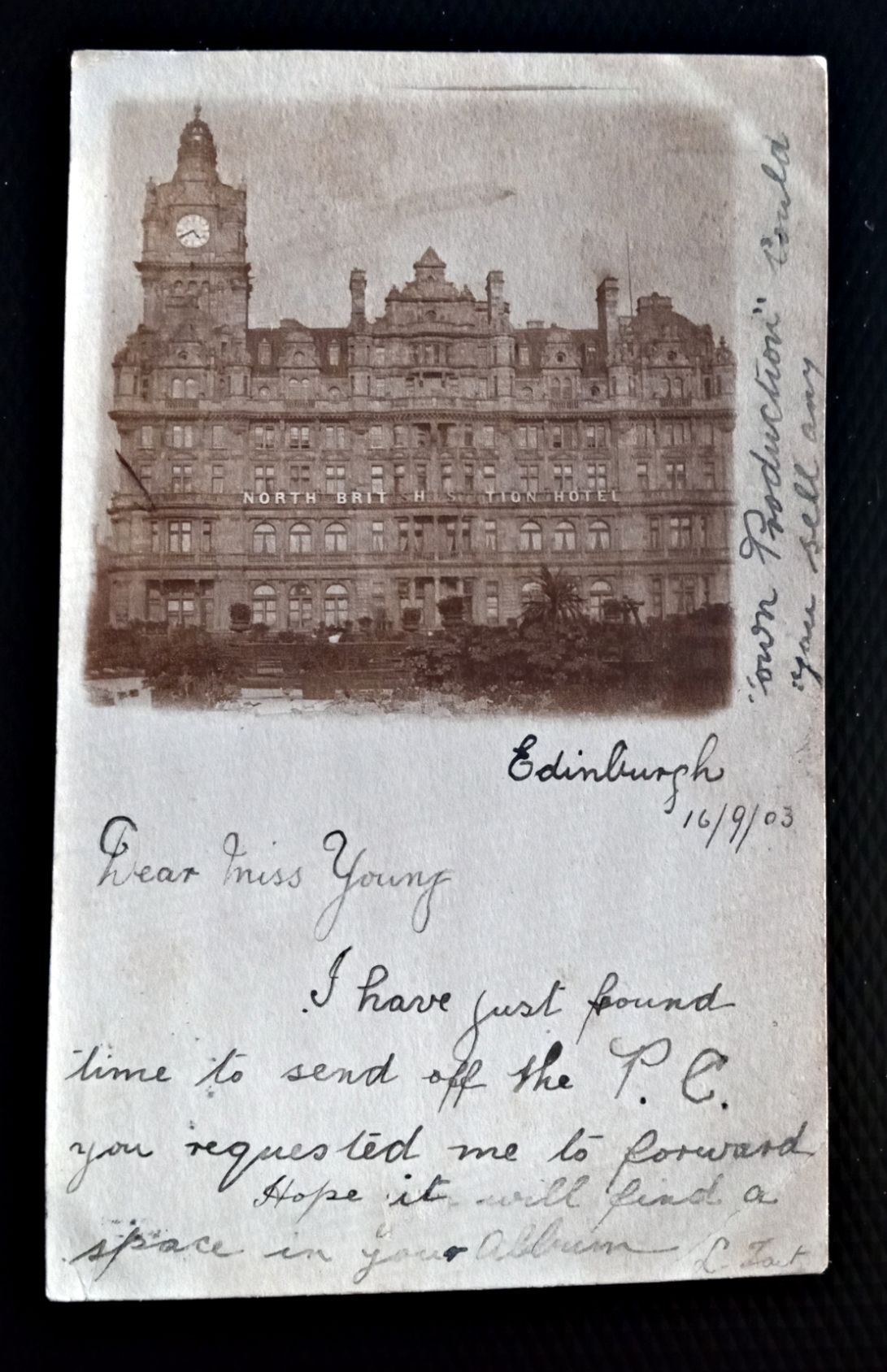
It’s been a long time since I have posted one of my vintage postcards. This one has entranced me for a week or two. I found it in a local Antique Conglomerate, in a box with many others, marked at just fifty cents. Oh my! What a bargain. It is postmarked September 1903, with the image of Edward VII on the half penny stamp. The ephemera I hold in my hand is just a few months shy of being 120 years old.
The age alone makes it a worthy treasure, but for me, it is always the written message, the address, the speculation over the person who picked out, wrote a message, and sent the card, Then, of course, next is wondering over what the person who received it thought of the correspondence. If you are like me, perhaps you too would come up with a whole story around the short message and names.
The postcard is in great shape. I tried to square it up for a photograph, and realized it wasn’t going to happen; the bottom is two to three millimeters less in width than the top. Comparing the date with the opening of the hotel I see it was probably one of the first images taken and sold as a postcard of the location.
Now for the fun part: the messages. The writer of the card had a lot to say in a small space and also used the front. I love the mention of the canaries. I wonder what the L stood for in the name. Was L a man, or a woman? I also wonder what the first name of Miss Young might be…
Eyemouth is a beautiful coastal town about fifty miles from Edinburgh. The word ‘Fruiterer’ means just what it sounds like, a seller of fruit. The recipient might have had a grocery shop, or small stand on High Street. ‘It’s a nicht one,’ is Scottish for night.
This postcard was very clear and easy to read. Other postcards I have are sometimes near illegible. At those times I take a photo of the postcard and magnify it on my computer, creating larger optics to better read the message.
My take on the messages:
Edinburgh 16/9/03 Front: Dear Miss Young I have just found time to send off the P.C. you requested me to forward. Hope it will find a space in your album. L. Tait Along the side: ___own Production” Could you sell any Back: I send this just for a “Lark” and hope your Canaries are getting on, & that you don’t miss the one I took home. Its a grand whistler. “Its a nicht one” Address: Miss Young Fruiterer High Street Eyemouth Postmark: Edinburgh 10:30 AM SP 13 03
Vintage postcards are a great way to break up the tedium of winter weather and staying indoors.
My family often gathers together for Thursday evening dinner. The conversation last night turned toward summer’s end, and the finish of fun activities, picnics, and warm weather. The swimming season at lake and pool is over, school is starting next week, and coatless weather will soon be replaced with jackets and hats. Since my sons have been working in high heat and humidity outdoors, they aren’t sorry to see temperatures in the 90’s disappear, but we all wish the freedom and fun of summer would never vanish. The calendar might proclaim summer not ending for twenty-two days, but Labor Day weekend in the U.S. always seems to announce Autumn.
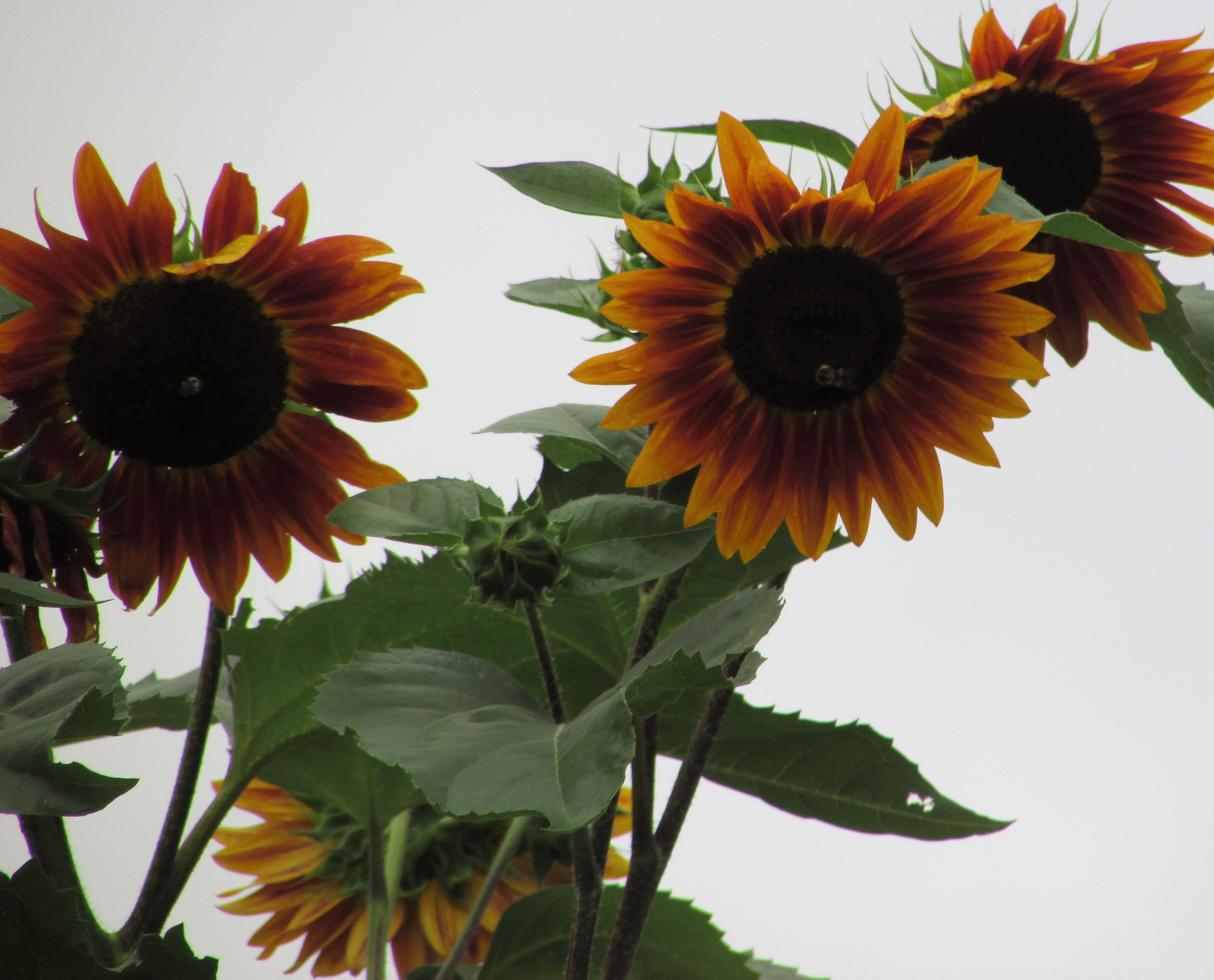
Although they bloom all summer, sunflowers are commonly associated with Autumn. I recently found these beauties growing in the front of a neighbor’s home. The day was overcast, the sun still rising, and the grey of the sky created an unearthly backdrop for these beauties. I think they will be perfect to use as the September header image for the blog. Good-bye August…Hello September.