Phlowers – Mexican Sunflower/Delight & Dilemma

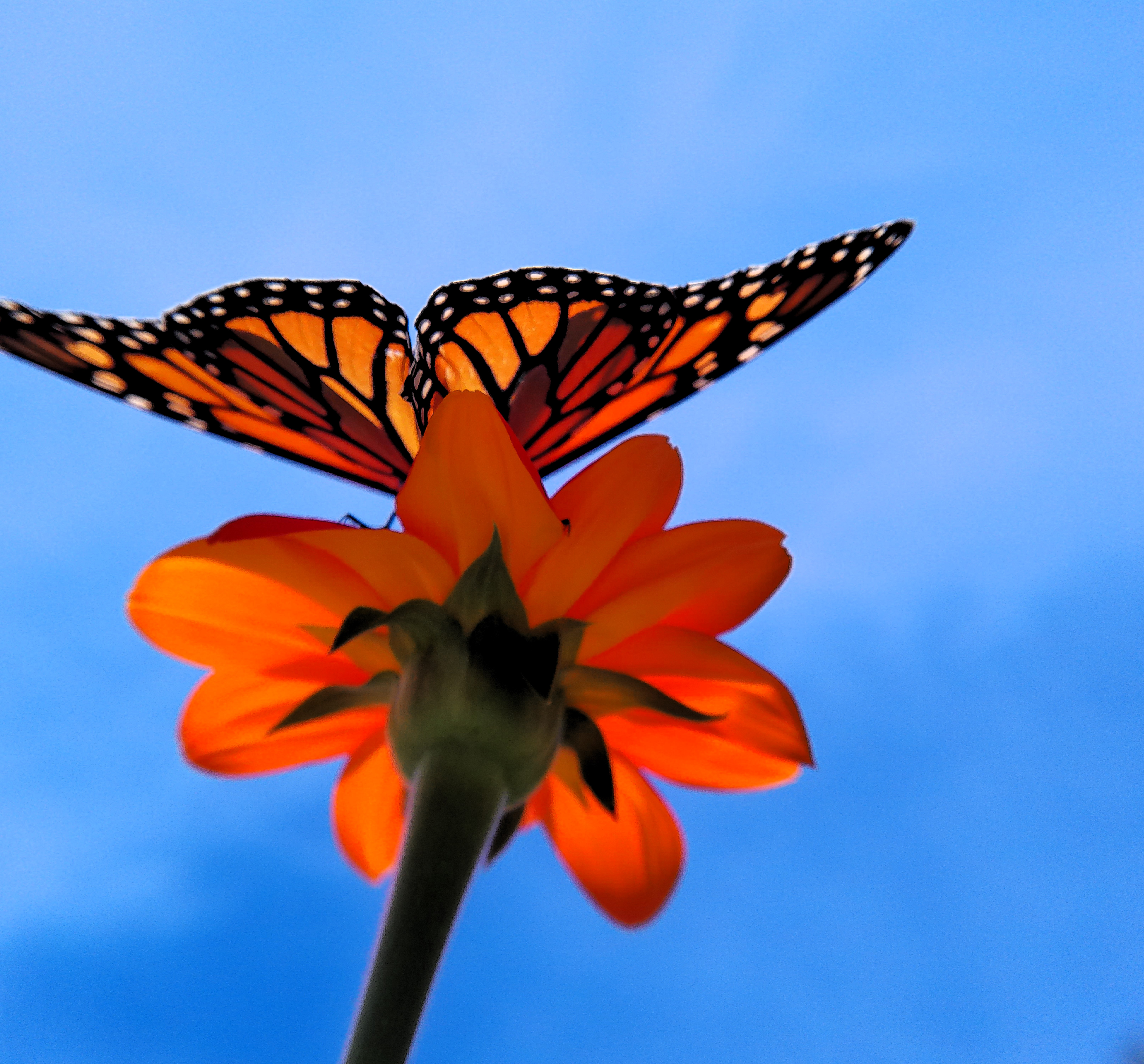
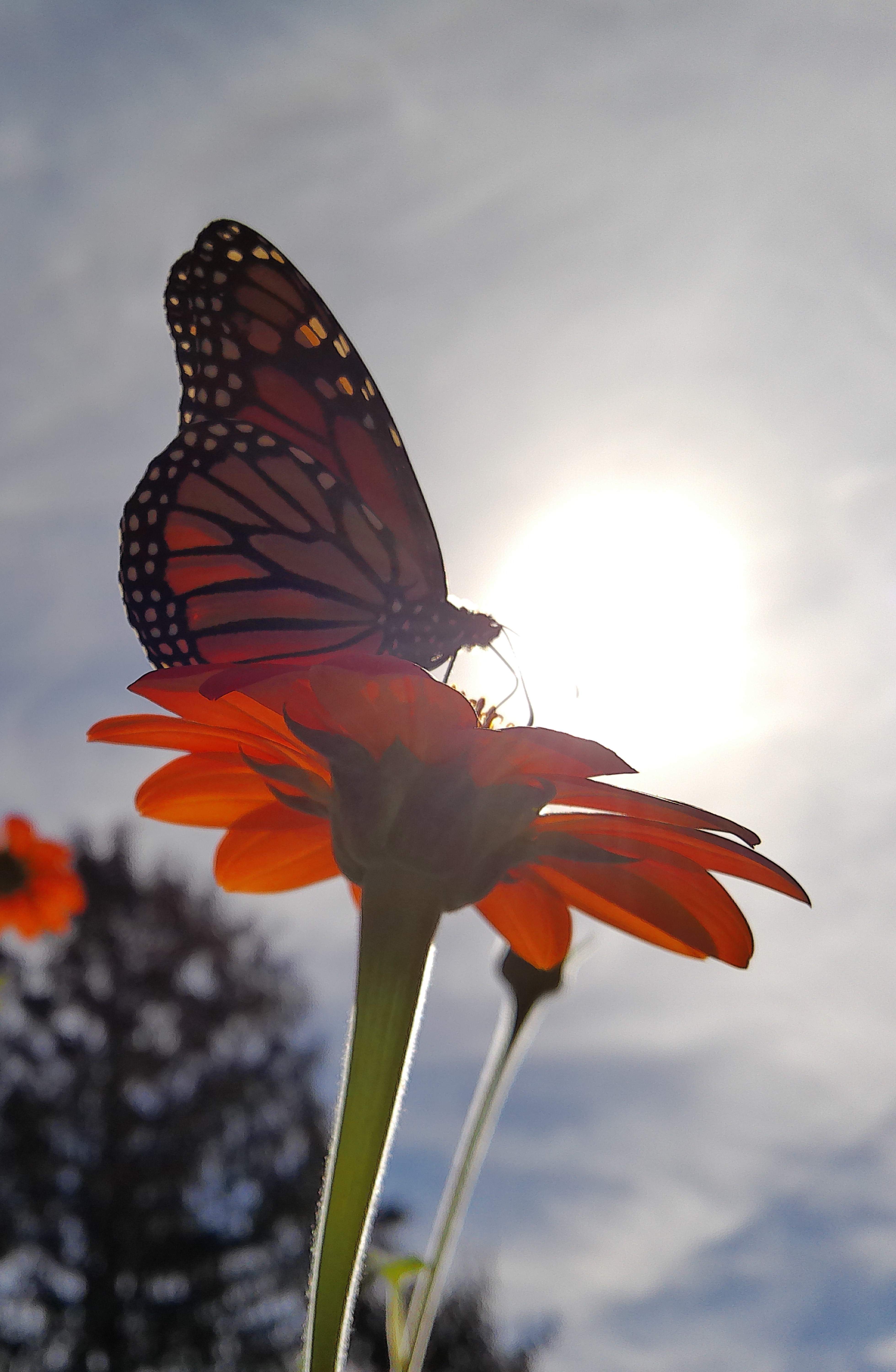
Outside my window grows a spectacular plant that causes me delight and a sense of impending dilemma. The Mexican Sunflower, Tithonia, was grown by way of Winter-Sowing, and has thrived both in its milk carton birthing room, and in the rich soil of the patio garden. The plant has attracted every type of buzzing pollinator, hosted hundreds of butterfly visits, quenched the thirst of hummingbirds, and now that it is setting seed, drawn in goldfinches, in drabber Autumn colors, but goldfinches, nevertheless. What could be more of a delight?

A newly hatched Monarch Butterfly spent hours fueling up for its flight to Mexico, circling the Mexican Sunflower continuously for hours, sipping nectar as it went round and round.

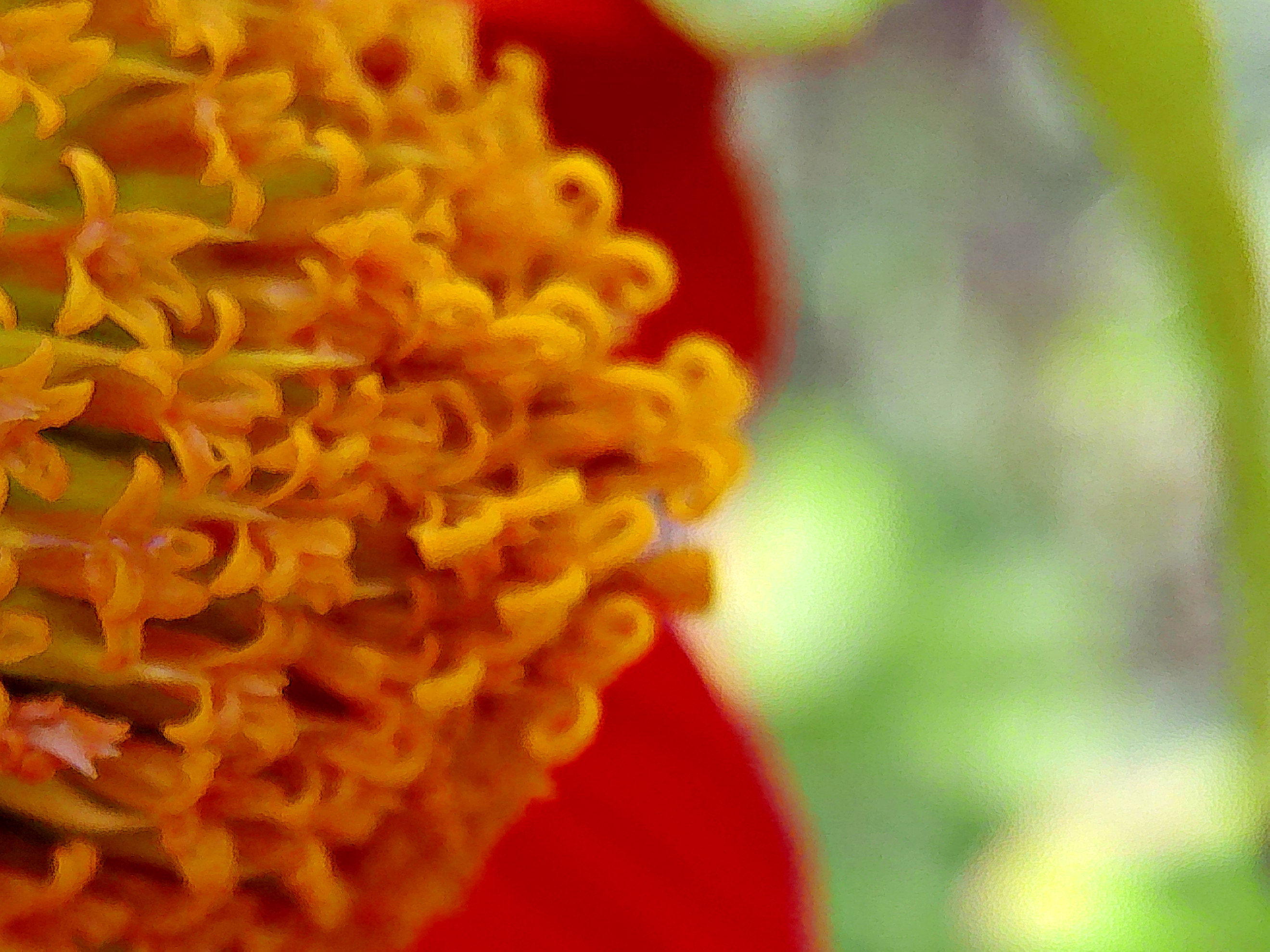
A pollinator’s view of the nectar-filled florets and pollen.

One dilemma is the size of the plant. I measured today, October 13th, and the height was eight feet. The plant is at least five or six feet across at the bottom. Next year, I’ll need to plant near the back wall of the house. I have other Mexican Sunflowers, but none reached quite the size of this beauty. I have collected seeds and look forward to growing them again next year with a few amendments.

The first I already mentioned. Keep the Mexican Sunflower at the very back of the garden, but still near enough to enjoy the up close and personal look at the nature it draws in with its nectar and pollen. Second, once the first lush leaves have fallen off, giving rise to many branches with smaller leaves and more blooms, consider planting some fast-growing vining plants at the base to grow up and add a bit of lushness to the sparser foliage by midsummer. A fast-growing scarlet runner bean would be a great choice.

The third dilemma is my indecision over whether to cut it down when it is entirely defoliated and flowerless or to leave it up as perches for the winter birds. My husband and I discussed decorating it by stringing popcorn and other goodies on the branches throughout the winter for the birds to enjoy when food is scarce. I will update later if we do this.

A photo taken today, a Mexican Sunflower, still blooming in mid-October, braving the rain of a N’or Easter. If you have room, consider growing this amazing plant.

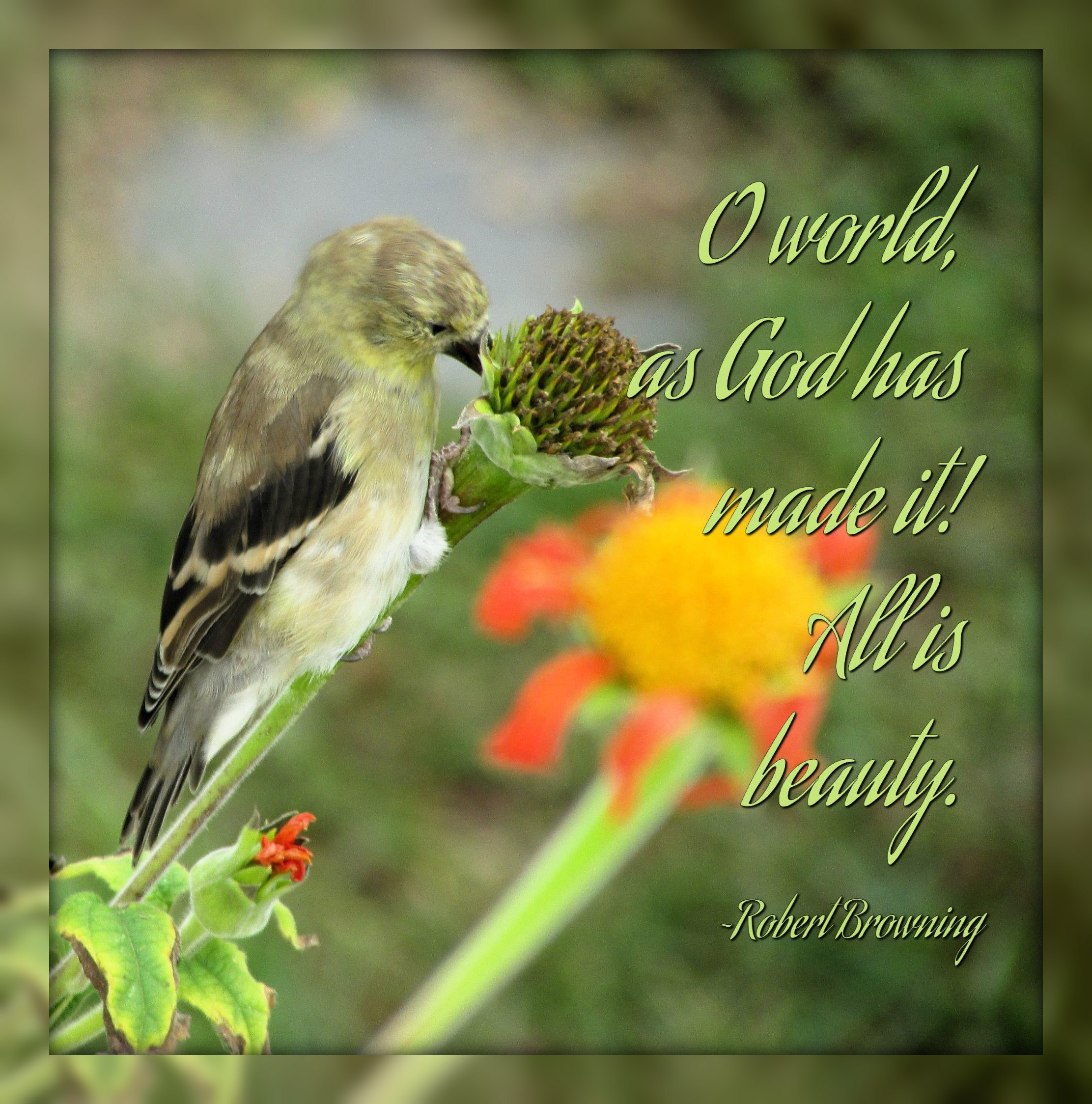
An appreciative goldfinch gathering seed was the perfect signpost backdrop for a quote from the poet Robert Browning.

Project – Weekend Project/Flower Pounding

A way to preserve flowers is to pound their essence and color into a sheet of paper. I had some handmade paper, measuring 6×4, with deckled edges. I found it the perfect background for pounding some of my garden flowers.

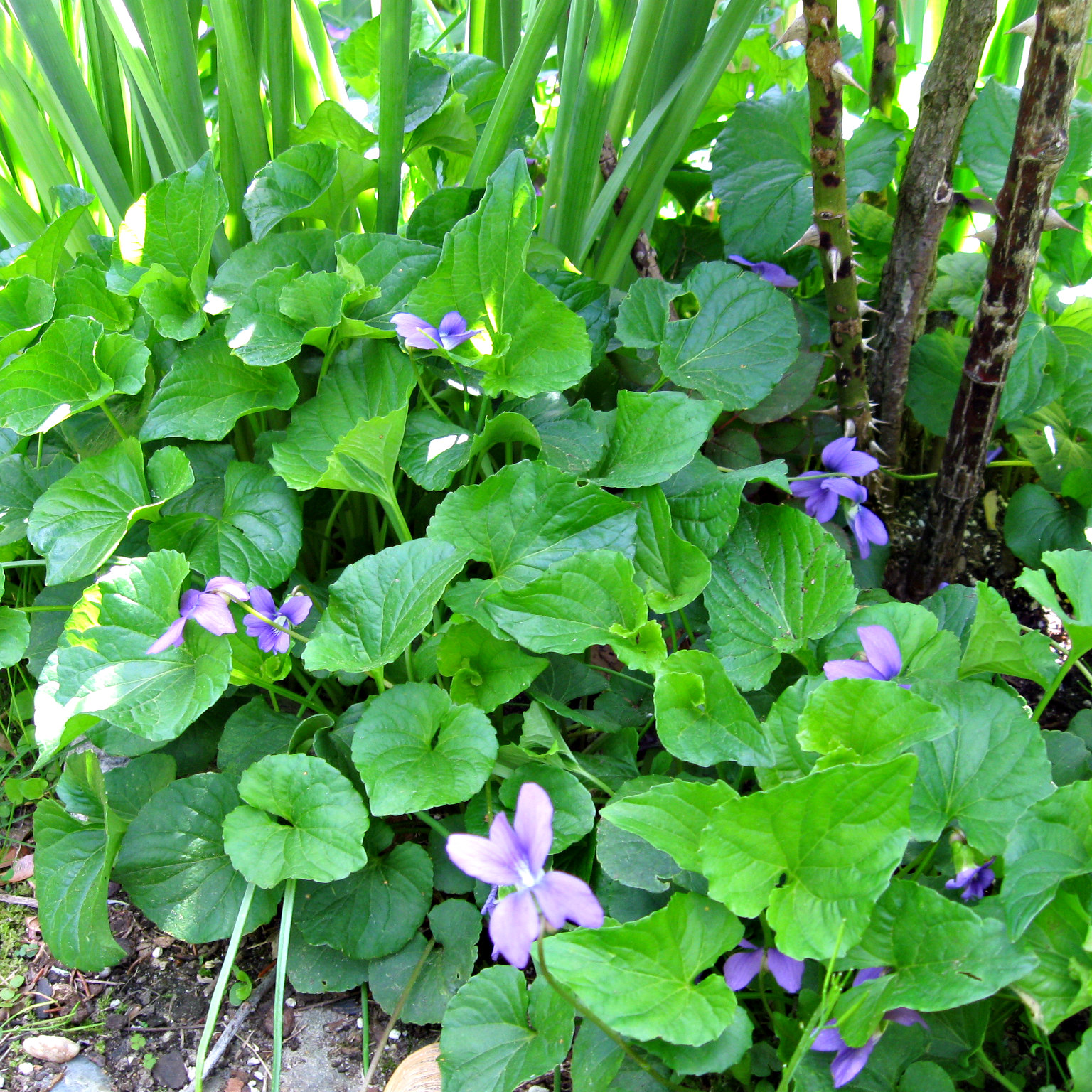
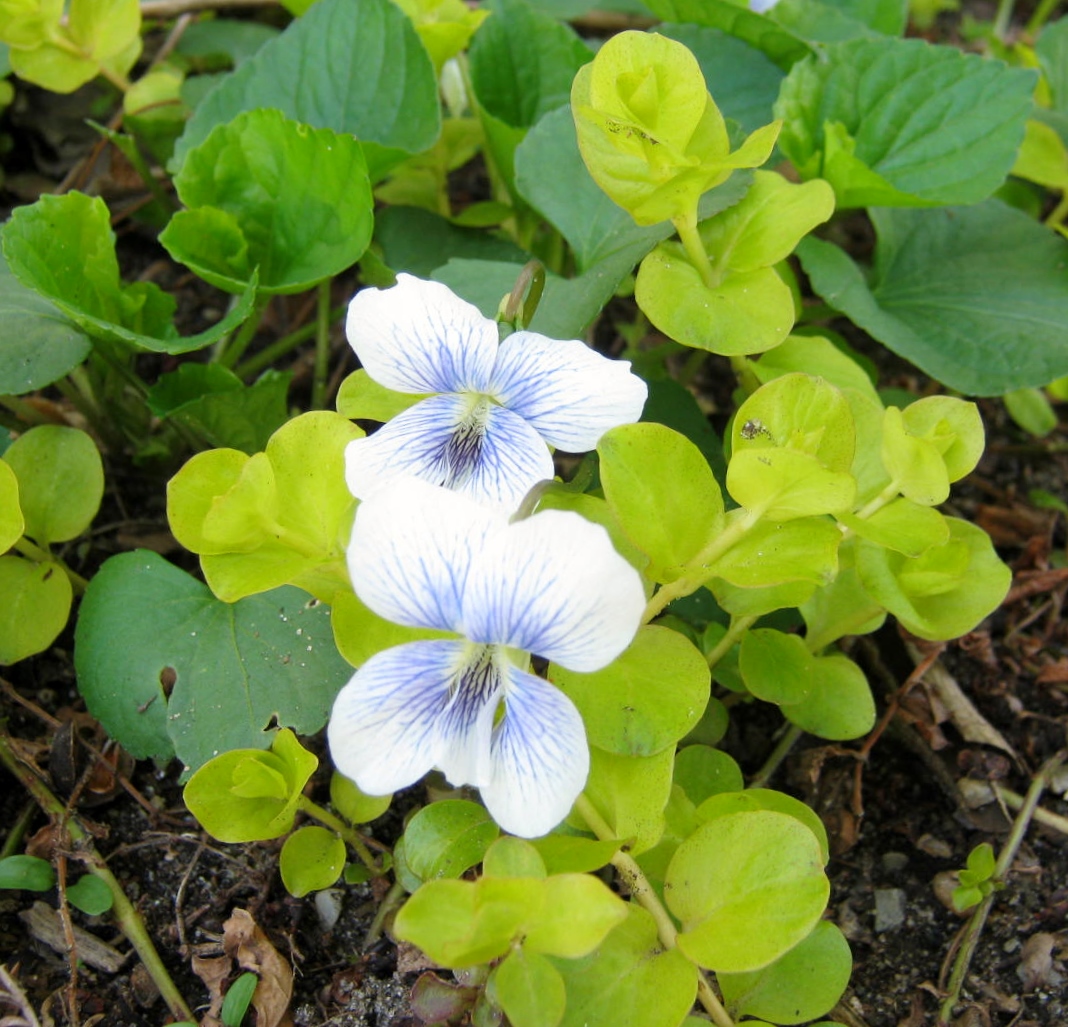
I started my flower pounding with violets. Years ago, I transferred some from the woods into my garden beds. I have hundreds of violets in my grass and flower beds in early spring. I don’t mind them at all. I pull them out if they overwhelm my perennials or annuals. Because they sow seed, there will be many more to take their place next year. They are also a great ground cover for areas I don’t want to weed weekly. The leaves are a host for the fritillary butterfly. 

The beautiful violet color is easy to transfer. I place the flowers and leaves on the handmade paper, then, using a piece of tracing paper to see what I’m doing, I place this over the flowers and pound them flat with a small hammer. It is easy to work in a corrugated box based on the floor rather than on the floor itself. Some flowers stick to the handmade paper. I let these sit for a few minutes, and then gently remove them. Voilà, there is an impressionistic-type print of the flowers.

After drying the paper out for about two weeks, I used a 005 permanent marker to create a few lines, using the photos I took before I pounded the flowers as a reference.

I love the way the finished product turned out. I will continue pounding flowers all summer, labeling each pounded flower print with where it was taken from in my garden or other places. At the end of the summer, I intend to make a handmade book containing all the prints.

Phlowers – Cardinal Climber Vine/FOTD

Cardinal Climber Vine ((Ipomoea × multifida) is my post for Cee’s Flower of the Day. These vines and the beautiful trumpet-shaped flowers blooming on them are some of the best flowers for a hummingbird garden.

Most of my garden plants have blooms that are waning. I don’t obsess over the lack of bloom because I see few bees, butterflies, and hummingbirds in October. The Cardinal Climber Vines bloomed late for me this year. I thought they were in a slump until a few weeks ago when they burst into dozens of blossoms. There is nothing timid about these flowers when they bloom; they are brilliant in color, and the stamen almost seems to glow like a spotlight beckoning hummingbirds to dive in for the nectar they contain.

Yesterday, I had an experience that I hope will stay a treasure in my spirit forever. I was bent down, turning off the hose nozzle, and when I stood, inches from me, a hummingbird was sipping nectar from the Cardinal Climber blooms. It seemed unaware of me, or perhaps in fueling up to return to warmer climates, was willing to risk my presence. I stood for several minutes, holding my breath, wanting to jump for joy as I listened to the buzz of the small bird’s wings and had the closest view ever of a hummingbird sipping nectar. I will never forget that magical moment in the garden.

The Spruce has information on how to grow Cardinal Climber Vines.

Phloral Arrangement – IAVOM/Dried Hydrangeas

The hydrangeas I displayed as my IAVOM two weeks ago, have dried beautifully. The colors have deepened into a beautiful purple and sage green. They rustle when I lightly brush them, and the sound reminds me of old book pages. I was so happy with the shade of their flowers that I used them as the inspiration for the Autumn mantel and strayed away from my usual golds, burgundy, and rust.

The hydrangeas are in a vase that, while a bit minty, can almost pass for sage green. I frequently use this McCoy Swan vase for arrangements. Surrounding the vase are gourds we bought in farm markets and garden centers this past weekend. A wise owl looks on the display; his heart-shaped face expresses fond approval of my choices. A wooden mushroom, last year’s birthday present from a sister, seems to fit in with the theme. I love to strew beads and garlands of bells over the mantel in a haphazard way. It adds a bit of interest.

What you can’t see are the old books and other Autumn decorations to the left, all in the same shades. Thanks for visiting and thank you to Rambling in the Garden, the host of IAVOM.

Phlutters – Butterfly House/Red Bank Avenue

Today, I had strange companions along for the ride as I drove to Red Bank Battlefield. Ten caterpillars, mid-sized in their cycle, rode along to become residents of the Butterfly House. The fennel plants collapsed a bit in the heat, but the caterpillars did well.

The house has many butterflies, chrysalis, and caterpillars. The interior is filled with dozens of nectar and host plants.

The volunteers (Butterfly Whisperers) were pleased to welcome and make room for the new residents. The jar holding the fennel sprigs they were feasting on was placed beside a beautiful fennel plant growing in the house.

It gives me great joy to think of all the visitors receiving a bit of pleasure as they watch the butterflies throughout their life cycle.

The Revolutionary War Battlefield, now a historic park, is located on the banks of the Delaware River. Philadelphia’s skyline is in view to the right of the park.

Phlowers – Echinacea

Cee’s Fun Foto Challenge for this week is a Single Flower. I chose this beautiful white Echinacea that grows in full sun near my patio. The identity of the seed source is Baker Creek Heirloom Seeds. Since I planted the seeds indoors sometime in Spring of 2022, it took two years for the plant to flower outside. As soon as I finish writing this post, I will follow the link to Baker Creek and purchase another packet. I plan to start the echinacea seeds now, in late summer, and grow them to blooming size by Spring.

I had many unusual colors grow from this variety: peach, deep coral, the typical pink, and this white flower. If you love the sturdy stems and reliable bloom of Echinacea plants, try growing this unique mixture.

Echinacea Paradiso Mix

Paradiso Echinacea loaded down with blooms in late July.

(Later) I did purchase the seeds and they are already shipped. At this slower time of the growing season Baker Creek Seed company is very fast with order fulfillment. Baker Creek is definitely in the upper echelon of best heirloom seed companies.

The Farmer’s Almanac has an excellent article on how to grow echinacea.

Phlowers – Profusion Double Deep Salmon Zinnia

We grew this lively mix in the front beds of our old farmhouse porch and discovered it is one impressive zinnia, forming mounds of continuous color that were adored by the butterflies. ~Pinetree Garden Seeds

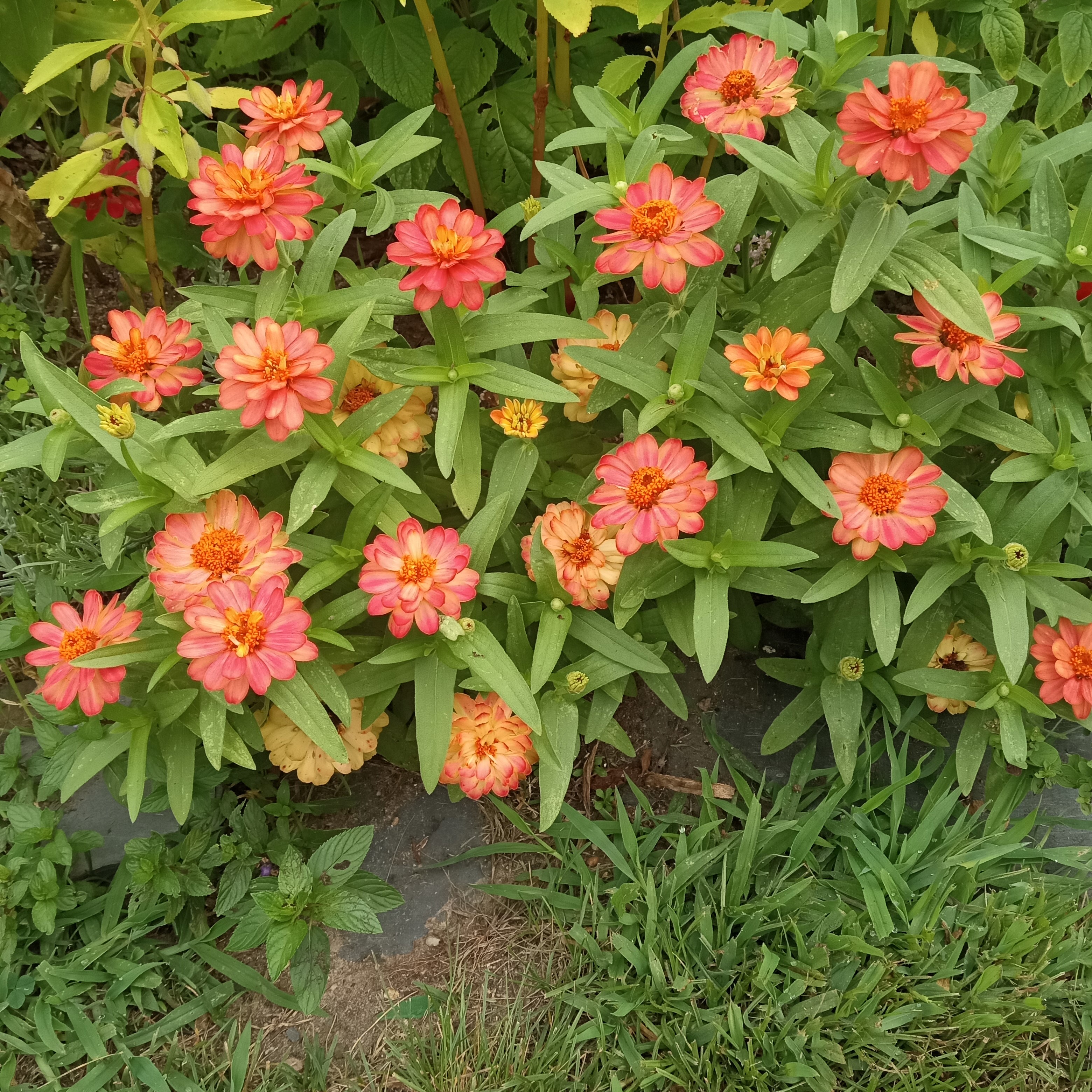
I am in love with this low-growing zinnia. Perfect for the front of my backyard patio border, the color is luscious, a brilliant coral pink.

The plants have been blooming for several weeks. They were available through Pinetree Garden Seeds, a reliable seed company. Next year, I will do the same and plant two side by side. This creates a mesmerizing display of color.

There is a plethora of flowers, and they last quite a long time. The color is beautiful even as they near the end of their bloom time. These zinnias fade to a lovely creamy yellow before they need to be cut away.

My one complaint is the small number of seeds in the packet. Although, the description does include the seed count so there was ample warning.

The zinnias are part of Cee’s Flower of the Day.

Product – Miracle-Gro Composter/Tumbler

I purchased a composter/tumbler from Miracle-Gro this Spring. It was totally unassembled, so it took my husband about 90 minutes to put it together. A few connective inserts bruised his thumb as they were challenging to push into the frame. Yet, when the composter/tumbler was ready to use, it was all easy from that moment on. 

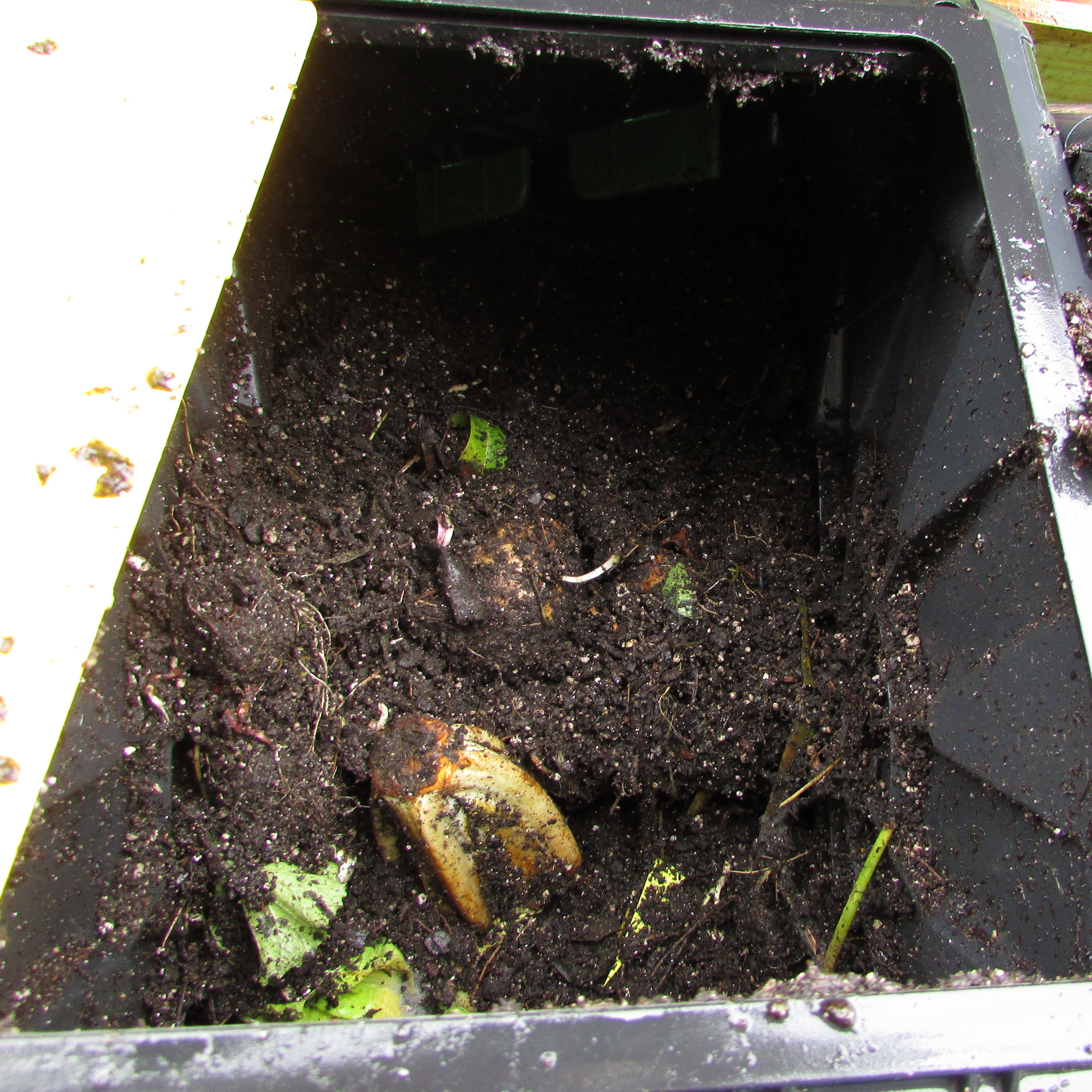
I placed it in the back of the yard. The composter is not an eyesore, but it is only pretty if you are a gardener and recognize what you are looking at. I immediately added a bit of used potting soil, undiseased yard/garden clippings, and kitchen scraps. Every day I made sure to tumble the bins. When the first bin was full, I marked six weeks on the calendar, and today was the day I scooped out my first harvest of compost. 

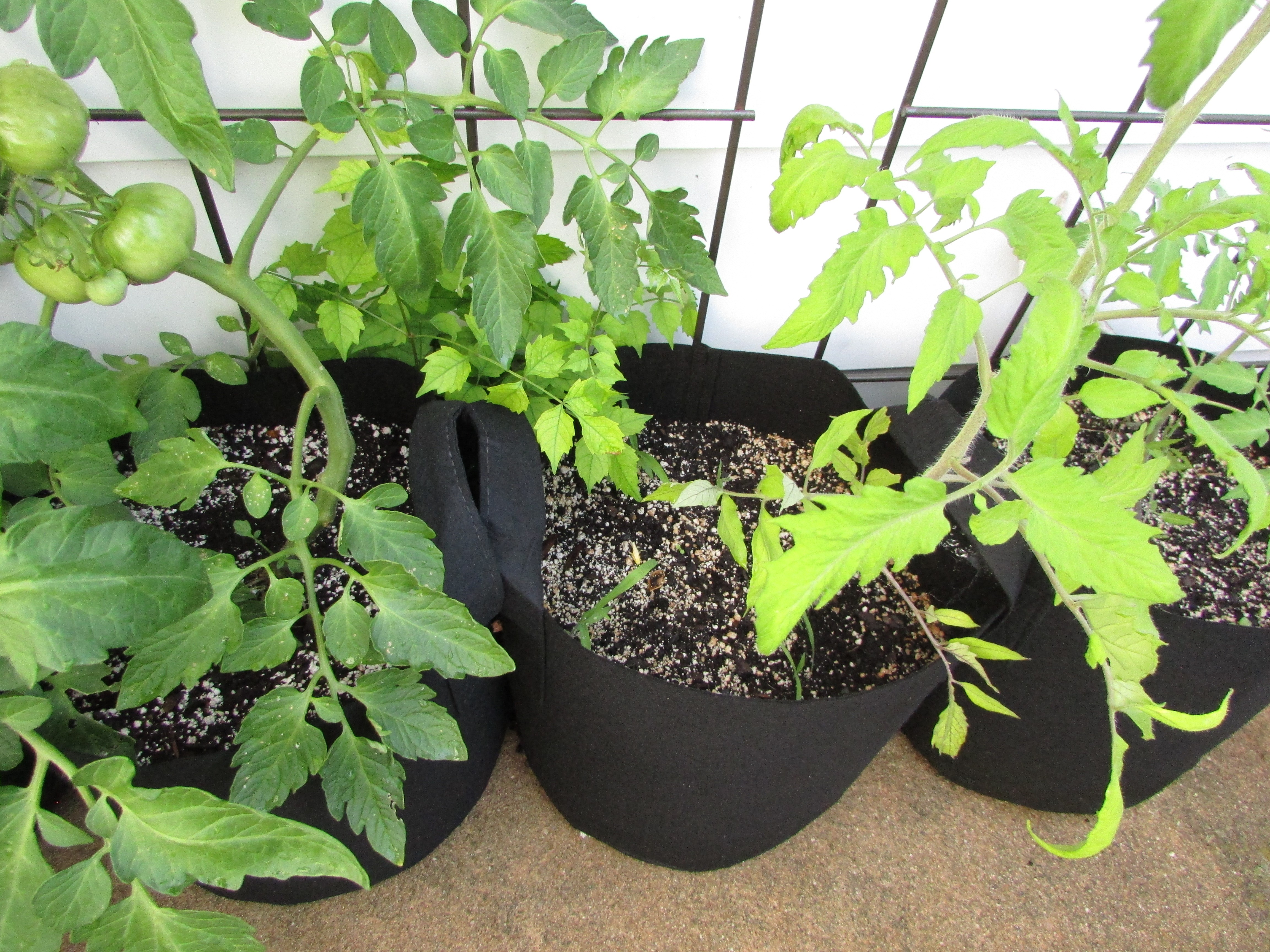
After removing the few sticks and roots that had not decomposed, I admired the dark, beautifully textured soil the composter created. I added it to the tops of my potted tomatoes. I am pleased with this wonderful garden product and recommend it. I purchased mine through Amazon. 

  • The only drawback to this product is that it is time-consuming and frustrating to connect some of the pieces. 

Phlutters – A Tragic Tale/Butterflies Part I

I had a rude awakening to one of the perils butterflies and caterpillars face. In mid-spring, expecting the butterfly chrysalis to hatch at some point, I brought the butterfly houses out to the porch and hung them from the ceiling. One day, checking them, I saw a delicate wasp of some sort had gotten inside the house and was trapped. Being a bit of a bleeding heart, I shooed the wasp out and felt I had done my good deed for the day. Wrong.

Two more wasps, surprisingly to me, also found a way into the house. I let these out also. Afterwards, I looked at the seven chrysalis on the sides. What! There was some type of hole in the sides of a few. I knew some parasite had attacked them.

When another wasp suddenly appeared in the house, I knew that it would not appeal to my softheartedness; I squashed it.

Trogus Pennator Wasps eat the swallowtail caterpillars from the inside out and emerge from the chrysalis. I can attest to the truth of this remark. Three overwintered chrysalis have opened in the past week or two, and beautiful Black Swallowtails have taken wing after the long wait. I have seen them fluttering over the fennel plants, and sure enough, I found several of the tiny eggs on inspection.

This weekend, small caterpillars appeared. I have twelve safely in one of two, new butterfly houses. I have also kept the older one from last year. Now that I have seen one of the parasitical threats they face firsthand, I will redouble my efforts and save as many as I can manage.

I will be keeping a 2024 Butterfly Diary. The link is here: Butterfly Diary 2024. It can also be found at the top of the blog page in the bar beneath the title. I will try to create a sidebar link too. Thanks so much for following the butterflies with me.

Problem-Solving & Pests – That’s Ugly

I’m laughing as I read through this, remembering all I have posted on how to chase away garden pests without harming them: water balloons, rubber snakes, jingle bells, etc. Here’s a new idea…yes, you can laugh, I never win 100% with the rodents or the bugs.

In the 1960s, our family’s favorite visitor was my Mom’s cousin, Norma. Norma lived in California, which alone made her quite the novelty since we lived on the other side of the USA in New Jersey. She always visited, armed with plenty of stories to entertain us. On one visit, she brought a hysterical book called ‘That’s Ugly.‘ The witty prose and the illustrations captivated us.

I say all that to introduce my latest pest and squirrel/chipmunk deterrent. Now, don’t get me wrong–I adore my squirrels. I walk around with peanuts to toss out to the friendliest backyard inhabitants. I don’t want to harm anything by using non-organic means to deter them.

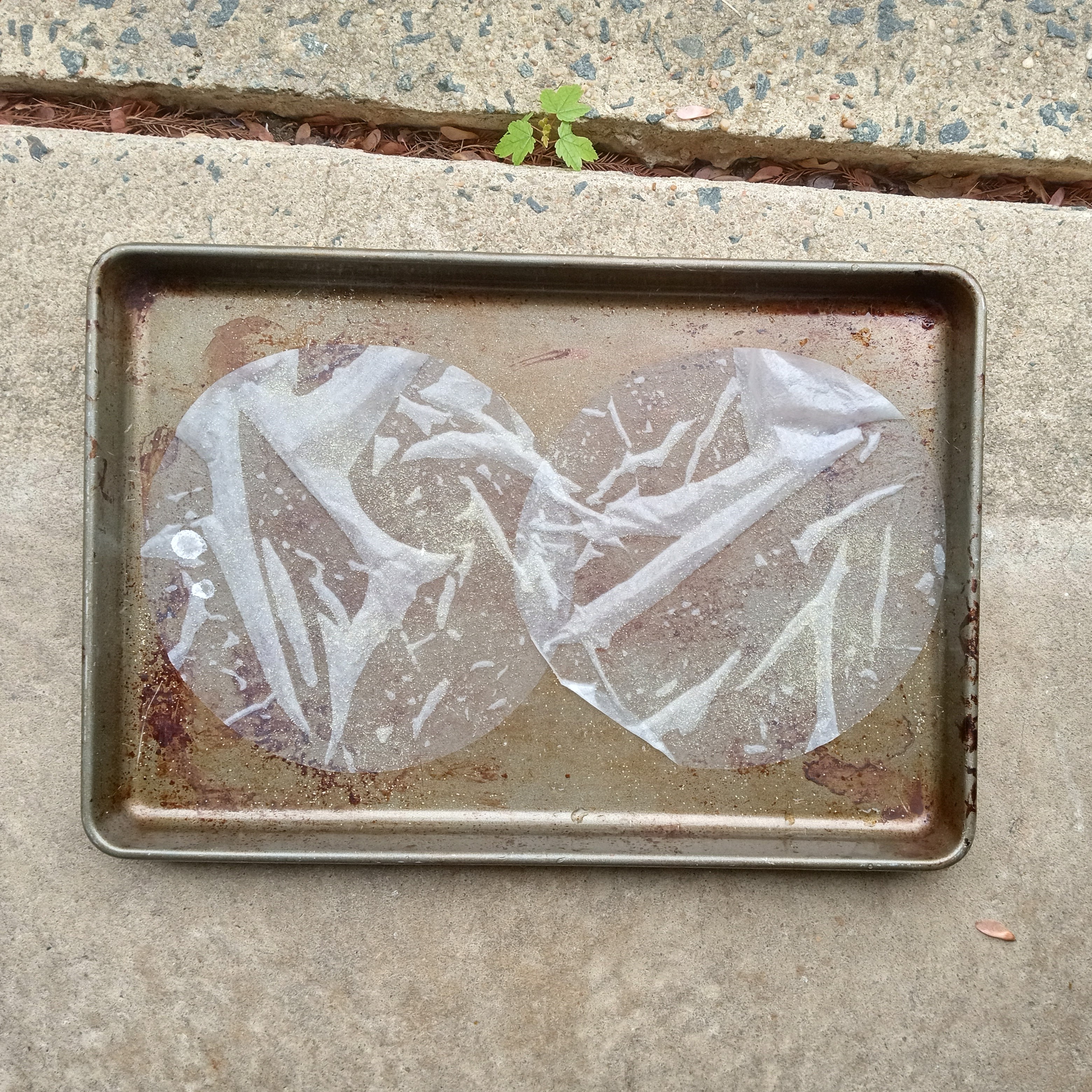
Quite by accident, I discovered a perfect deterrent while filtering powdered garlic through a coffee filter. The resulting garlic water, combined with a drop of dish detergent, 1 tsp of baking soda, and a touch of oil, makes the underside of my rose leaves inhospitable to the sawflies laying their eggs on said leaves. After spraying the roses, I noticed that the garlic powder had dried to the coffee filter as if glued and still retained its potent smell.

I was thrilled. I now have made up several of these stinky filters. I put them in pots of newly planted sprouts; I hang them on hooks and skewers near flowers I don’t want nibbled. It is working. The adorable squirrels still get peanuts, but don’t bury them in my garden pots now. The problem is, the sight of them would be a perfect addition to the book ‘That’s Ugly!’ Honestly, it looks like my garden pots have been toilet-papered on Mischief Night. I hope I can remove the filters in a week or two, and the plants will be left alone.

*One note, the garlic actually becomes glue. If I don’t remove the filters from the pan while still damp, they dry and stick to whatever surface I have laid the on.

Long post short: Give it a try. It seems to organically keep the sawflies and digging rodents at bay.

Plant & Perspective – Milkweed Fluff & My Year of the Dandelion

One of my first memories of outdoor fun is chasing fairy wishes. I associate my parents and Mom’s cousin, whom I called Aunt Norma, with my first recollection of fairy wishes. The premise behind catching one was the fulfillment of a wish. Upon capturing the wish in your hand, you whispered your hope or dream, and then, and this was important, you had to let it go again.

The beautiful fairy wishes in the photograph were captured as they unfurled from a milkweed pod in my back garden. Anyone, who has read my blog for any length of time, knows I am a bit obsessed with helping butterflies thrive in my garden. I grow common milkweed as a host plant for Monarchs, fennel, dill, parsley, and rue for Black Swallowtails.

My prayer is that God helps me ride the winds of the written word, just like a milkweed wish, to spread the Good News of Salvation and His Love far and wide.

Jesus said to him, “I am the way, the truth, and the life. No one comes to the Father except through Me.

John 14:6

Planting – Ginger Rhizomes

Gathering in the green is one way to crawl out of the brain sludge of dreary winter weather. By green, I mean plants, green dreams of gardens to come, and green thoughts of using what is usually thrown away.

Quite a few pieces of ginger you buy in the supermarket are sprayed with a sprouting inhibitor. I recently found, in Produce Junction, a large ginger rhizome with swollen joints. They looked like they wanted to grow. Of course, to me, the sight of that ginger was irresistible. I let it lay undisturbed in my basement, and the swelling grew larger.

Yesterday, I planted it in a large 10″ pot. I hope to see sprouting above the soil’s surface in just a few weeks. I will update on the progress.

Planting indoors in such a large pot might have created havoc with dirt and debris everywhere, but I recently read an excellent tip in Martha Stewart’s Very Good Things: use an under-the-bed storage bin for planting indoors. This tip worked great for me. So much easier to close the lid when I was through and roll it under my plant table until needed again.

The online Farmer’s Almanac has an in-depth article on growing ginger from supermarket rhizomes.

Phlowers – Six on Saturday/Sowing Pansies and Johnny-Jump-Ups

A few of the many shades of blue pansies and violas I have grown in my gardens over the years.


Pansy and Johnny-Jump-Up are a variety of seeds I will be sowing this week. It seems early, but I should have sown them four weeks sooner. I don’t follow the recommended dates on the back of the packets. Earlier is always better if I want to have larger-sized plants for the Spring Garden. If my seedlings are pitifully small, I fall victim to the lure of lusher-appearing plants in the local nurseries.

I purchased several interesting varieties from Baker Creek Heirloom Seeds at the end of Autumn, and I can’t wait to see if they are as lovely as the photograph on the package. (Dilemma: I don’t remember the ‘safe’ spot I stored them in.)

The seeds of Pansy and Johnny-Jump-Ups sprout with some bottom warmth and humidity but also have one crucial requirement: they must have total darkness. I will put a plastic tray over the top of my flat and also cover that with a dark, wet washcloth. This will seal out any light rays that might interfere with sprouting.

Organic seed starter and sterile organic potting soil are what I use to start my seeds. The plants develop robustly if I fill the bottom 3/4 of the flats or pots with soil and the top quarter with seed starter. The foliage sits against the quick-draining starter, and the roots reach down into the richer soil. Two types of grow-lights work well for me: overhead and adjustable surround wands. A sunny window provides natural light and is also a good choice. 

One variety I loved, purchased from Baker Creek last year, was Laeta Fire, a viola with dime-sized blooms perfect for flower pressing. I have a few seeds left in the packet and will grow them again. You can see how small this flower is in comparison to the normal-sized geranium leaf alongside it. When I persevere in my gardening throughout the winter, the process brings me a sense of peace and renewal.

My Laeta Fire Viola is part of Cee’s Flower of the Day.

Plantings – Hugelkultur – The Ultimate Raised Garden Beds

I like to include new ideas on my blog. This method of gardening seems to defeat drought conditions. It’s worth a look considering much of the US experienced severe drought this past growing season.

It might be a long way until Spring, but it’s always wise to come up with a gardening plan during the winter months.