We’ve had a hard frost and there’s not much left alive in the garden. Happily for me, there are still several roses blooming. They are rewarding me now after a summer slump. It’s easy to decide on what to use when your choices are limited.
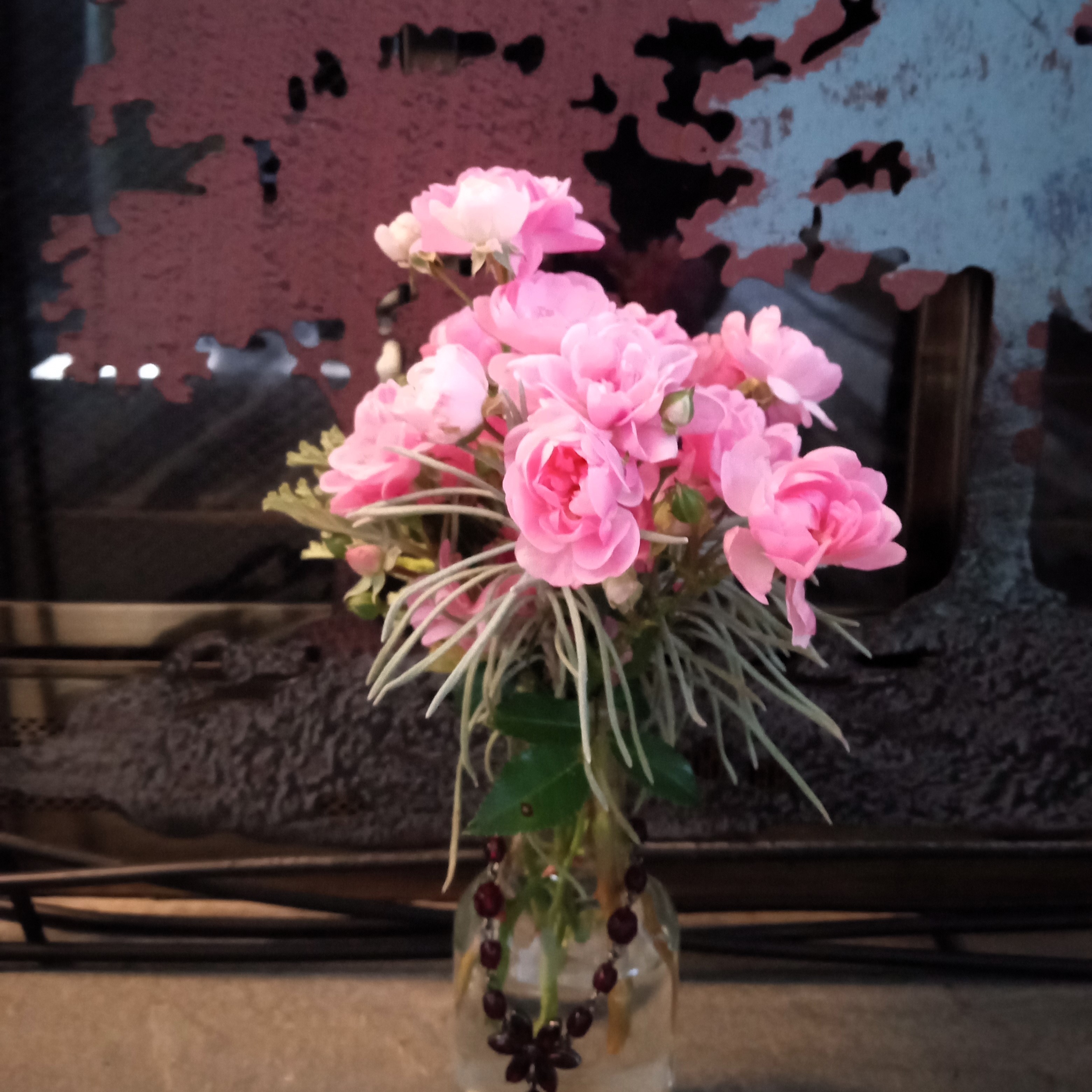
Roses are some of the first bright blooms of spring after the pansies, daffodils and tulips. One of my best varieties is a brilliant pink miniature rose called Fairy. In the beginning days of November, it is loaded with pink blossoms. I almost hate to cut them, but since I don’t go out as frequently now that the weather has turned chilly, bringing flowers in will give me more time to enjoy them.
They are my IAVOM selection, and also a part of Cee’s FOTD. Included in the vase, a bottle I use for rooting cuttings, are pieces of foliage that are still surviving: Helichrysum Icicles and scented geranium sprigs. The vase itself looked a little plain so I dressed it up a bit with one of my necklaces.
In my gardens everything is beginning to dry out and brown. The annuals have had their summer fling, and the perennials are beginning to nod off too, ready to be put to bed for the winter months. I thought instead of picking flowers from my gardens for this week’s In a Vase on Monday, I would take a bike ride and see if there were any wildflowers to be found.
I was surprised to find a few sprigs of honeysuckle having a bit of a renaissance, blooming, and still spreading a bit of fragrance. Since it was in a spot no one would see, I didn’t feel badly picking it for a bouquet. I kept riding, picking berries, and Autumn leaves, surprised to find the goldenrod was over, I had been sure it would still be available.
A neighbor saw me peddling up the street, took note of the sprigs I held in my hand, and asked if I was giving my flowers a ride. I answered yes, and that they were free flowers.
One wild stem I found was Porcelain Berry, something new to me, and a little dangerous in appearance. If a berry ever looked poisonous to me, this one surely did. I had a plastic bag in my pocket and I wrapped it around the stem after I picked it in case the sap was deadly.
For a bit of clarity, and peace of mind, before I handled it further, I used my photo search app. Ampelopsis glandulosa is its classification. It isn’t poisonous at all, and has some health benefits. These are the culinary uses I found when I researched the plant: Leaves and buds can be consumed after being cooked, the fruit (berries) can be consumed raw or cooked.
I find the porcelain berries beautiful, however, they are very invasive and can kill native plants. Birds eat the plump berries and the seeds are spread in this way.
Health benefits of Ampelopsis glandulosa: Some health benefits are treating boils, abscesses and ulcers, bruising. They are anti-inflammatory, diuretic, has been used to treat breast cancer.
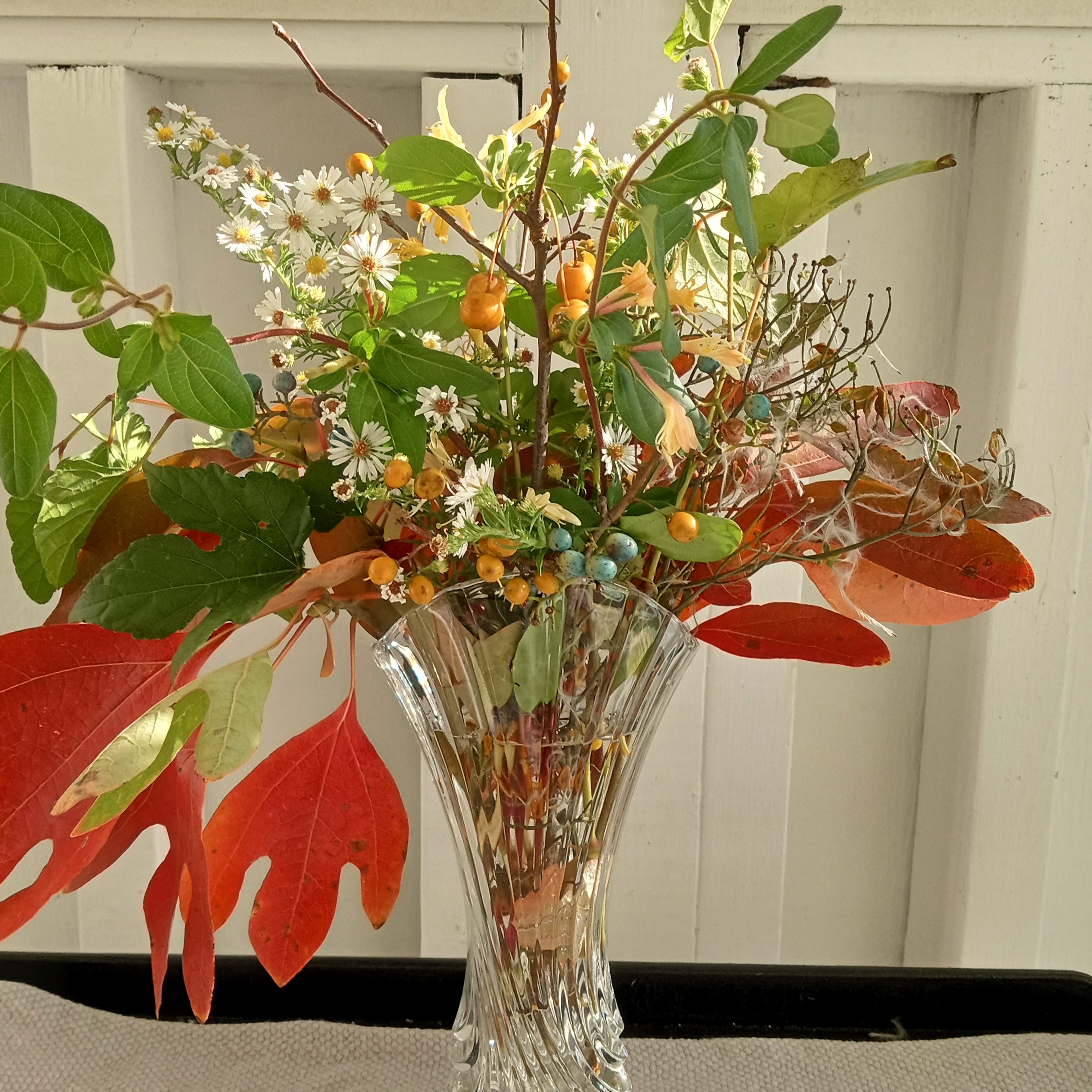
The plants used in today’s IAVOM are: honeysuckle, bittersweet berries, porcelain berries, crabapple, frost aster, autumn clematis seedpods and sassafras leaves.
I still have a few plants blooming despite cooler temperatures. Gone is the cumbersome task of daily weeding, and left to me is a rebirth of the hardier blooms to cut and arrange. Here is a sampling of a few blossoms I thought were a good representation of Autumn colors. They are perfect for the In A Vase on Monday challenge.
My hyacinth bulb vase holds some coleus leaves, Knockout rosebuds in Coral, and sprigs of Agastache Poquito Orange. (After checking 2023 seed orders, I realized this plant is not Poquito Orange, but a apricot variety from the Fragrant Delight Mix of Agastache Seeds available from Baker Creek Heirloom Seeds.)
I love the Agastache I grew from seeds, sown indoors in late Winter. They are a beautiful shade; the blossoms are the size of a dime. Even the buds are attractive as they elongate and open. The flowers, growing in pots, never stopped their showy display from late Spring through Autumn. The photograph of my Agastache was taken yesterday.
The plants thrived in medium-sized pots in combination with other hummingbird plants. There is evidence of a few small nibbles of insects, but the plant is basically ignored by most pests. Perhaps it is not any wisdom or luck on my part they are uninfested, but due to the fact that they are in potting soil instead of the garden beds. They are small, about 10 inches tops, and they have a graceful drape to their stems, making them perfect to place around the edges of planters and hanging baskets. Will I grow these again? Oh yes!
I’m not ready to vegetate yet where the garden or Word Press challenges are concerned. I enjoyed including several challenges in today’s post. Thanks to all the hosts of these wonderful prompts to help me keep thinking and looking ahead. The Agastache flowers are part of Cee’s Flower of the Day and all my beautiful blooms are an entry in City Sonnet’s Colors and Letters Challenge – Letter F = Flowers.
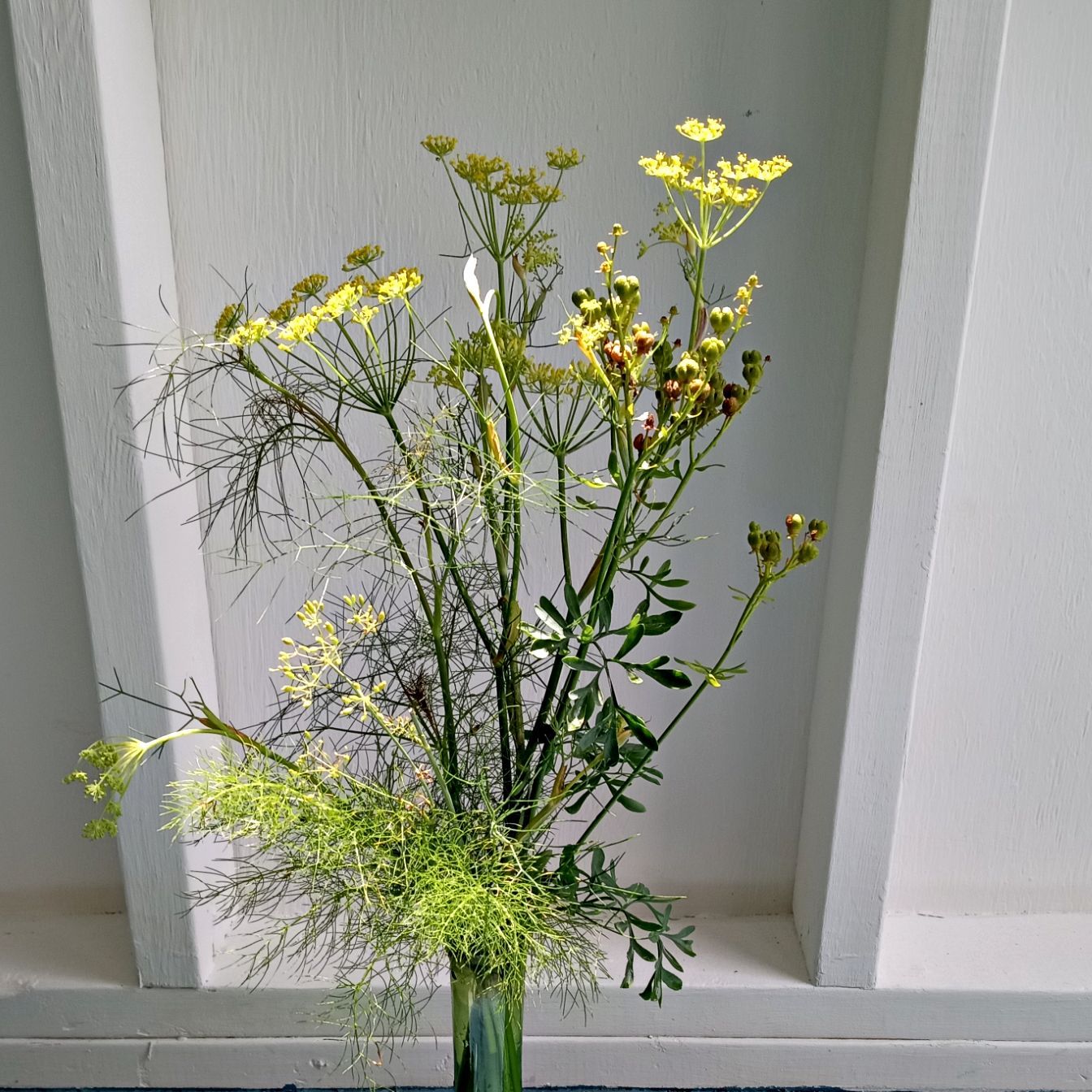
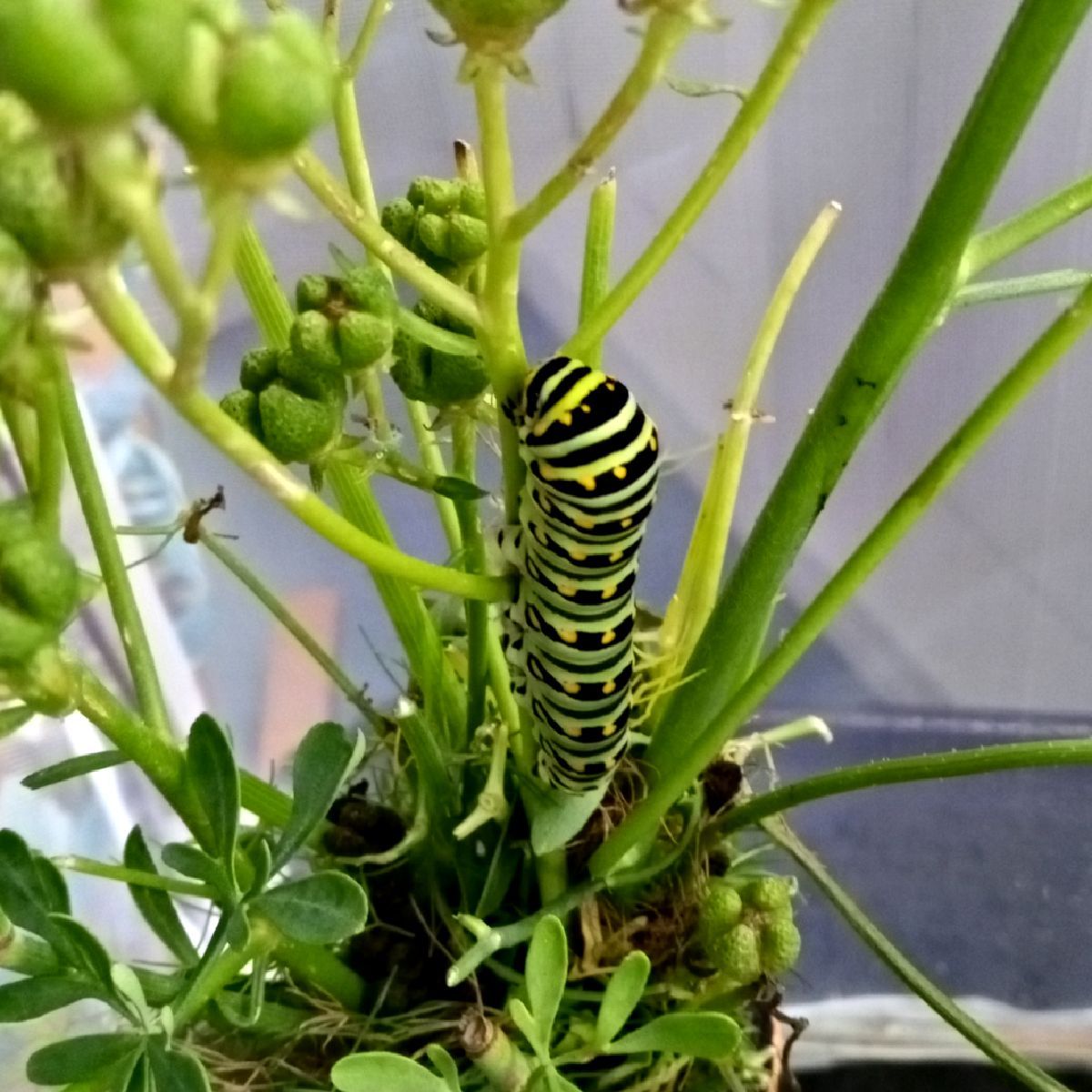
Fennel flowers, Rue seedpods, and some fennel fronds with a piece of dill added here and there, make up my rather strange vased bouquet for Ramblings in the Gardens challenge of In a Vase on Monday. The herbal bouquet has a job to do, provide food for the caterpillars feeding in the Butterfly House. They are still in the small to medium stage, the larger ones have formed chrysalis, save one, who is still deciding if the time is right to drop off the rue stem.
I have seven smaller caterpillars happily munching the new bouquet. The climate in this area has been perfect for the development of caterpillars now that the wildfire smoke is gone. This bouquet will soon be eaten down to mere nubs, not a long-lasting arrangement to be sure. All of these herbs, along with parsley and Queen Anne’s Lace are host plants for Black Swallowtail butterflies in my area.
Although they produce a lot of frass (insect waste), they don’t make any type of fracas, and are silent companions on the porch. An ongoing diary of the Butterfly rearing of 2023 can be found at the top of this page, or can be followed from this link: Butterfly Diary.
My choices for IAVOM (In A Vase on Monday) are definitely along the patriotic lines and use red, white and blue flower choices.
Along with Blue Salvia, White Balsam and Alyssum, I used one of my favorites, Red Monarda/Bee Balm. This beauty seems to bloom every year just in time for the Fourth of July. In my eyes, it is quite the appropriate flower for July; it resembles bursting fireworks. The Bee Balm is a quick bloomer, and only thrives briefly in my garden beds. Already, it is showing signs of the fungus that plagues it every year. Somehow, it survives the blight and returns for me every year.
I planted some freesia bulbs this Spring. I am like the person who should never go grocery shopping when they are hungry. In the Spring, my gardening appetite is voracious, and any display of bulbs or seeds, draws me in like a magnet. I bought a bag of 30 Freesias in Lidl. The bulbs looked really good through the mesh of the bag, and when I emptied them out, not many needed to be discarded.
They’ve been planted in terracotta pots for months, growing in the basement’s sunniest window. They looked good for a while, and then became gangly and overgrown. I almost threw them out, but convinced myself they might bloom outdoors. I put them in an out of sight area behind the bird bath. I’m glad I kept them. They have begun to bloom. Although I only detect a slight fragrance, the beauty of the bloom is pleasing. There are more buds to open, I wonder what colors I will gather for vases next.
The Spruce has a good article with interesting information on Freesias.
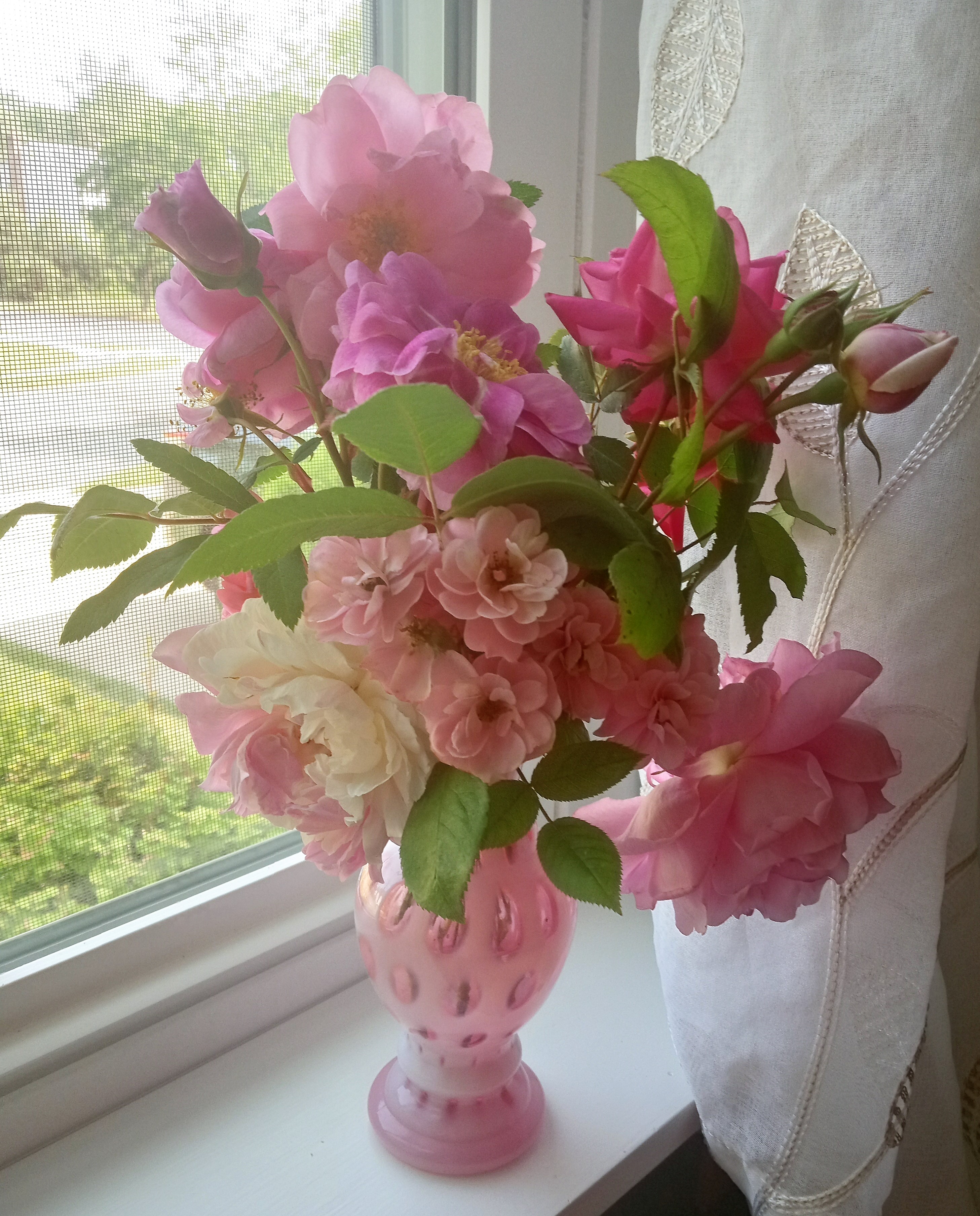
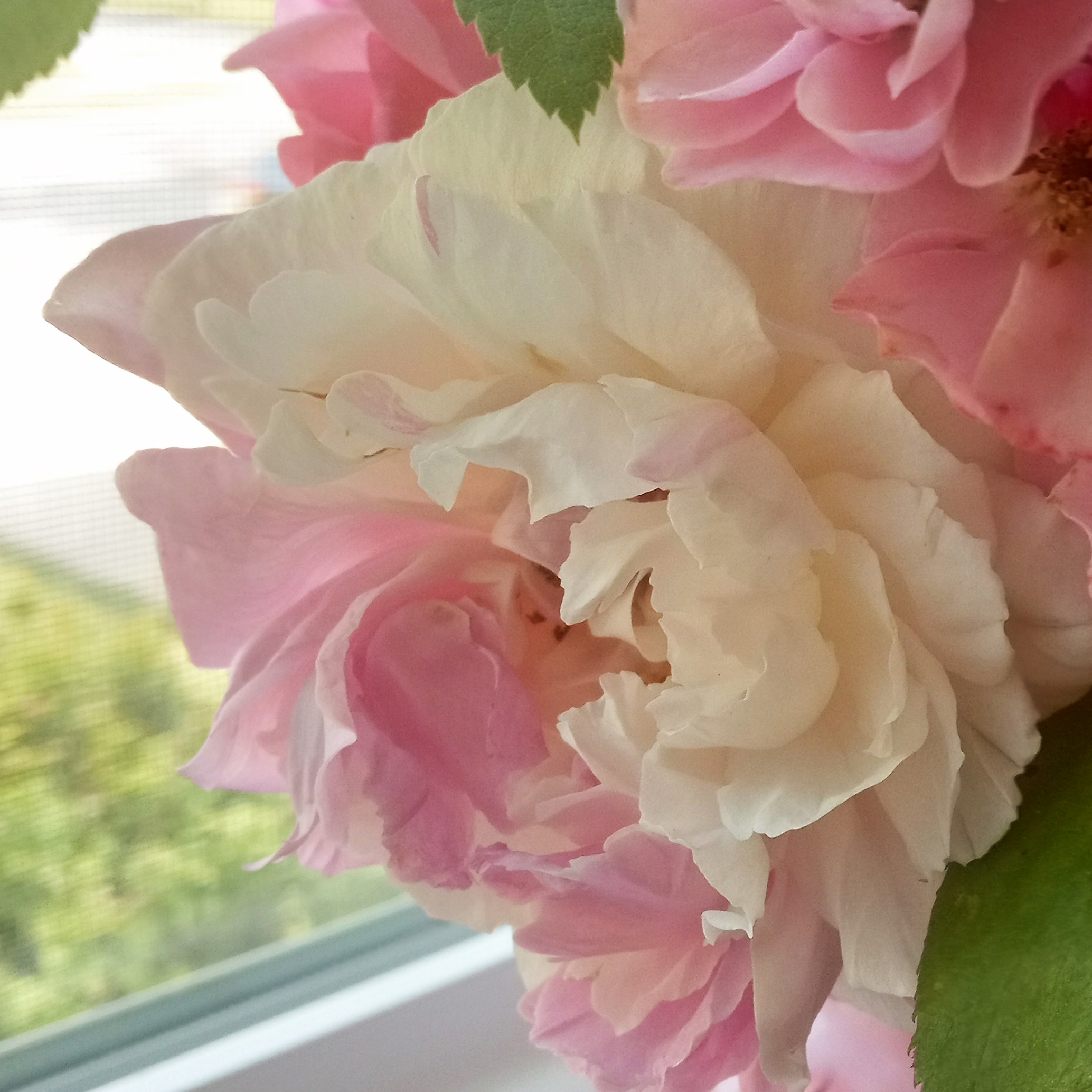
Pink roses are in abundance in my garden today. They look lovely in my grandmother’s Fenton coin-dot fluted vase. The roses within are Prosperity, a white rose that has one branch that occasionally blooms in a fluky bi-color. Fairy roses, Blue Lagoon a sweet lavender, a pink climber that is so old I don’t remember the name anymore, and the reliable pink Knockout.
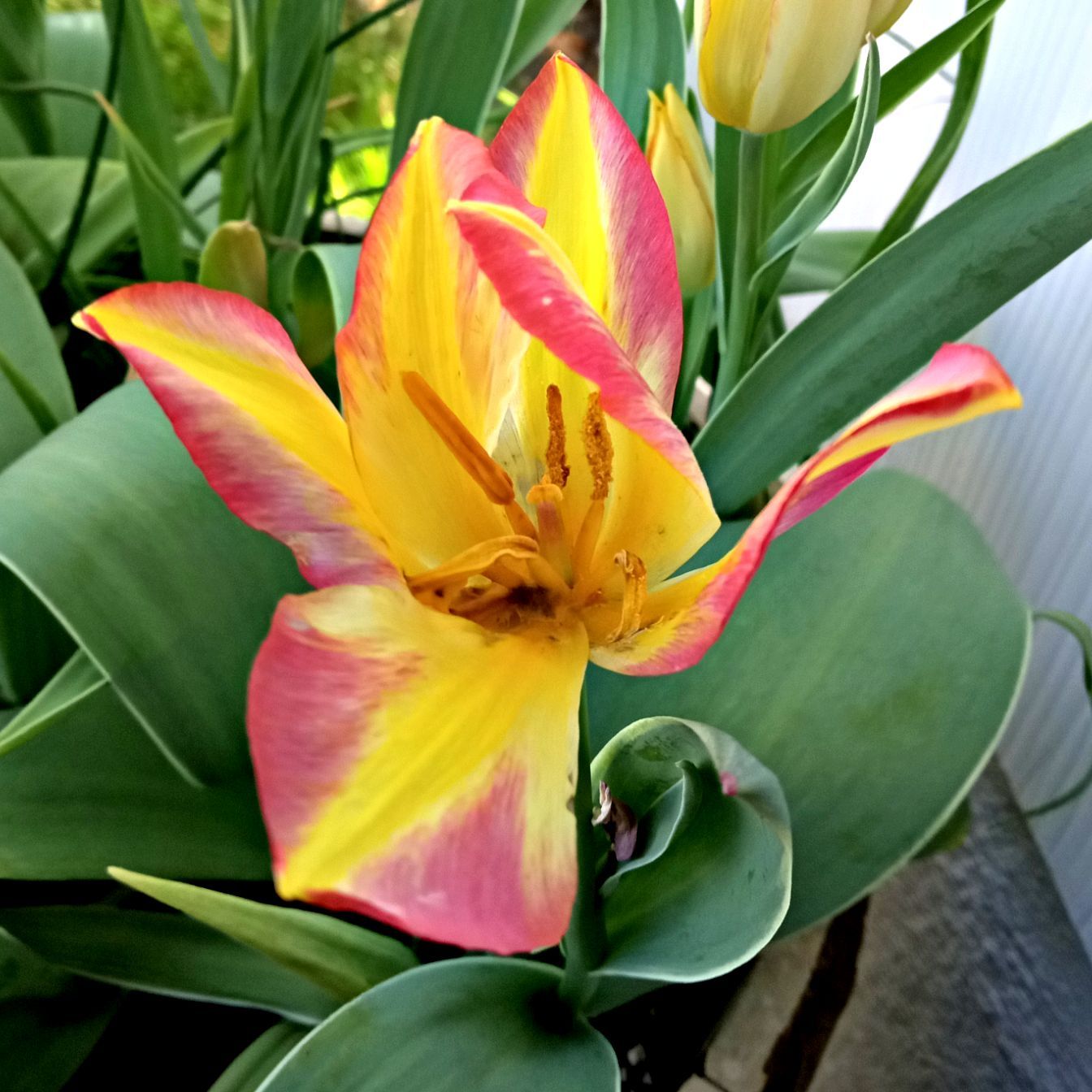
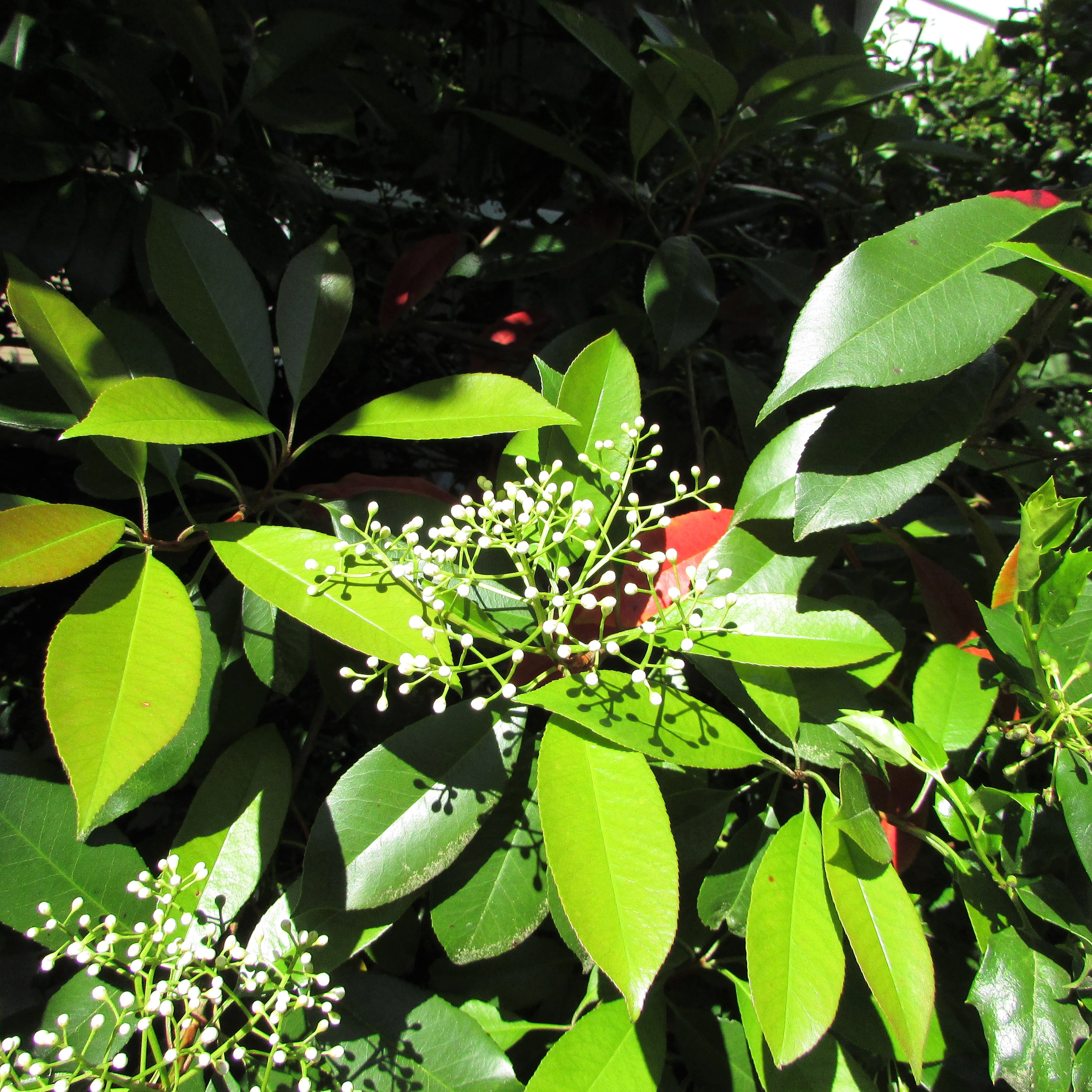
Such a busy time of year. I’ve been lax with blogging, but I so love taking part in the IAVOM challenge, I scurried around the yard cutting stems today before I began planting out seedlings. The little goldfinch is a reminder of my first glimpse of brilliant yellow goldfinches this past week. I’m so happy to see them in their summer colors. The bouquet is created with Japanese Photinia, yellow tulips edged in pinks, and a stem of comfrey.
As it matured, the colors of this yellow tulip became even brighter. Lovely! I think this tulip is worthy to be a part of Cee’s Flower of the Day.
The comfrey blooms once a year. I am going to save seeds to send to my sister who has begun a Flower Farm in North Carolina.
Not only is it an evergreen through the winter, it blooms in the spring. The new leaves are a gorgeous shade of blush pink/red. Japanese Photinia is a perfect choice for a garden tree/bush.
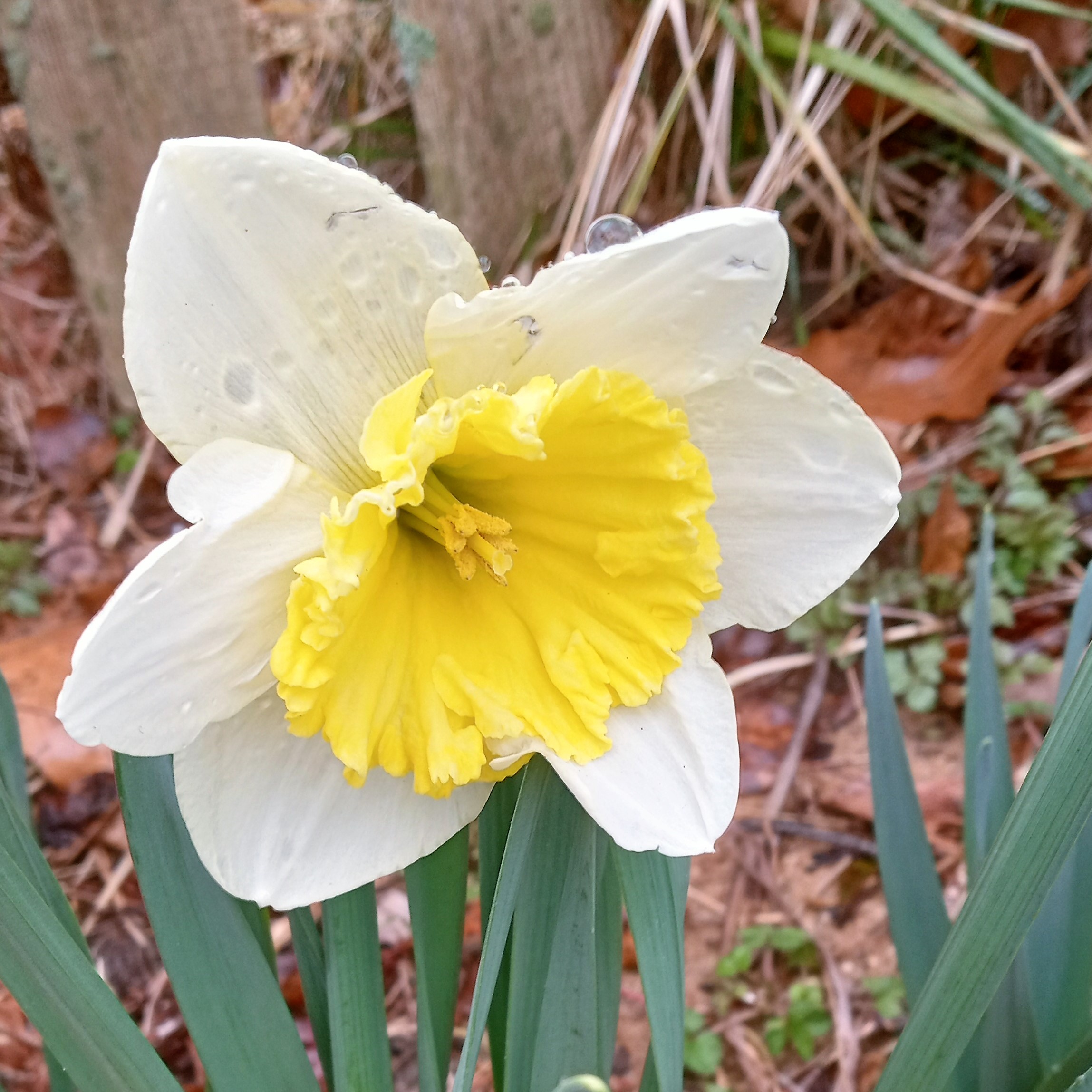
Daffodils are my entry for the In A Vase On Monday Challenge, hosted by Ramblings in the Garden. The yellow and orange variety is displayed within a Victorian Milk Glass Hand Posy Vase. A sprig of evergreen Japanese Photinia helps to keep the stems in place. My outdoor gardens are coming back to life with Spring bulbs appearing in every bed, making it easier to once again take part in this challenge.
I drape beaded garlands from small hooks beneath the mantel and hang simple cardstock Easter bunnies on the length. A cottonball is glued on for the fluffy tail. I keep Christmas tree hooks at the ready all year long. They come in handy for projects and decorations; I even use them in the gardens.
Hyacinths and Ivy in a green Mason jar, surrounded by a sprinkling of sea glass. I brought a few in to have an up close and personal encounter with not only the gorgeous lavender blooms, but also to enjoy the strong fragrance that fills the kitchen as they mature. I hope they will keep on blooming all through the week.
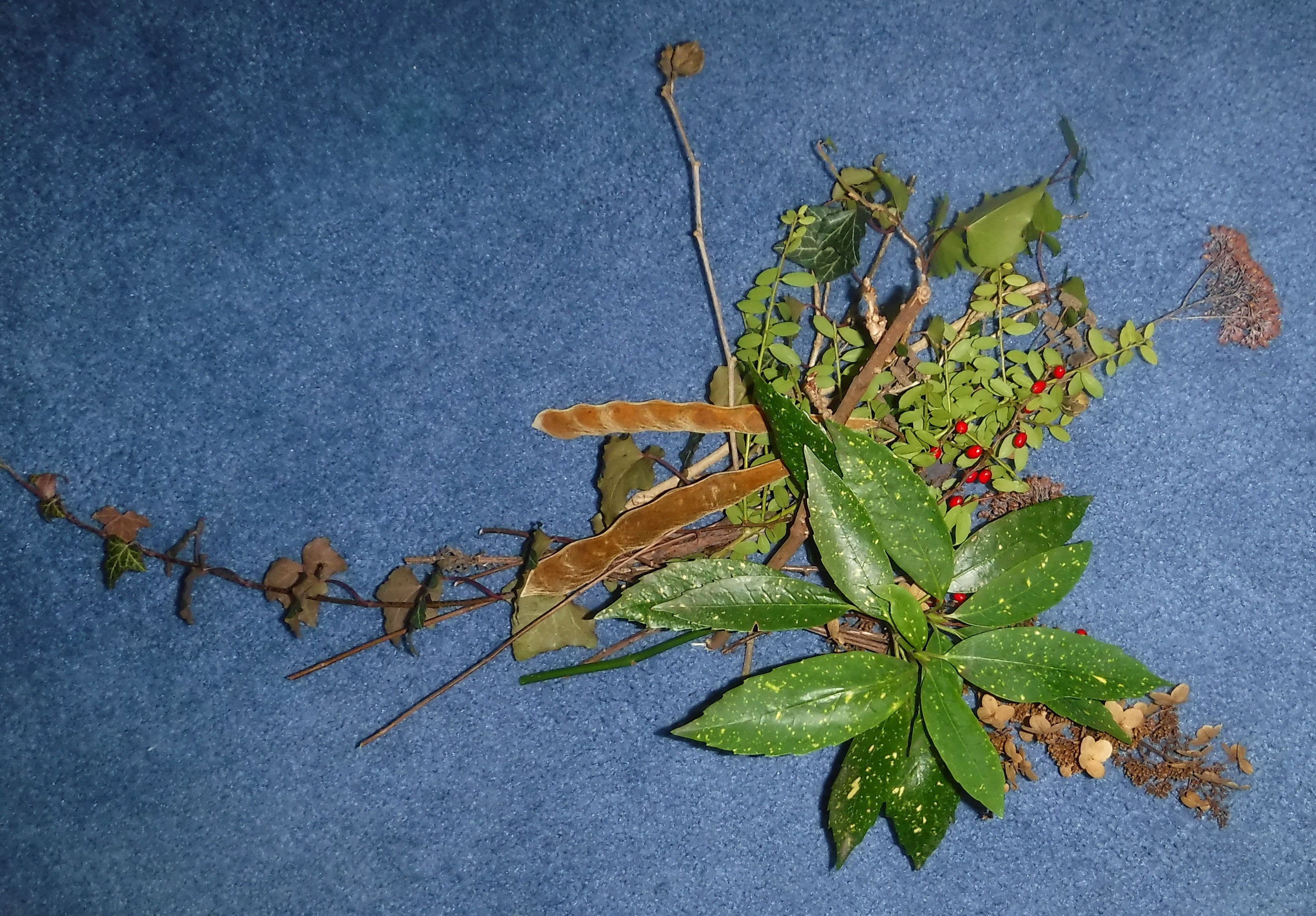
My first 2023, In A Vase on Monday bouquet is muted in color by Winter’s cold temperatures. Today, here in southern New Jersey, the weather is mild, though grey-tinged, but we had quite a preview of frigid temperatures in December. The greens, pods and berries I chose for the tall vase are the only choices to be had in my yard. My participation in this interesting challenge will probably be limited until Spring, but I will keep my eyes open when I’m outdoors, and perhaps inspiration will strike.
To be honest, I prefer the appearance of the stems tossed across the floor, pre-arrangement. They resemble the cascade of a Bride’s bouquet. I would have thought making a bouquet impossible at this time of year, but a walk-about in my yard yielded a few interesting pieces: dried hydrangea & sedum blooms, pods of Echinacea, velvety Wisteria, and Rose of Sharon. Barberry berries (ouch, very thorny), hoya & myrtle leaves, and ivy vines.
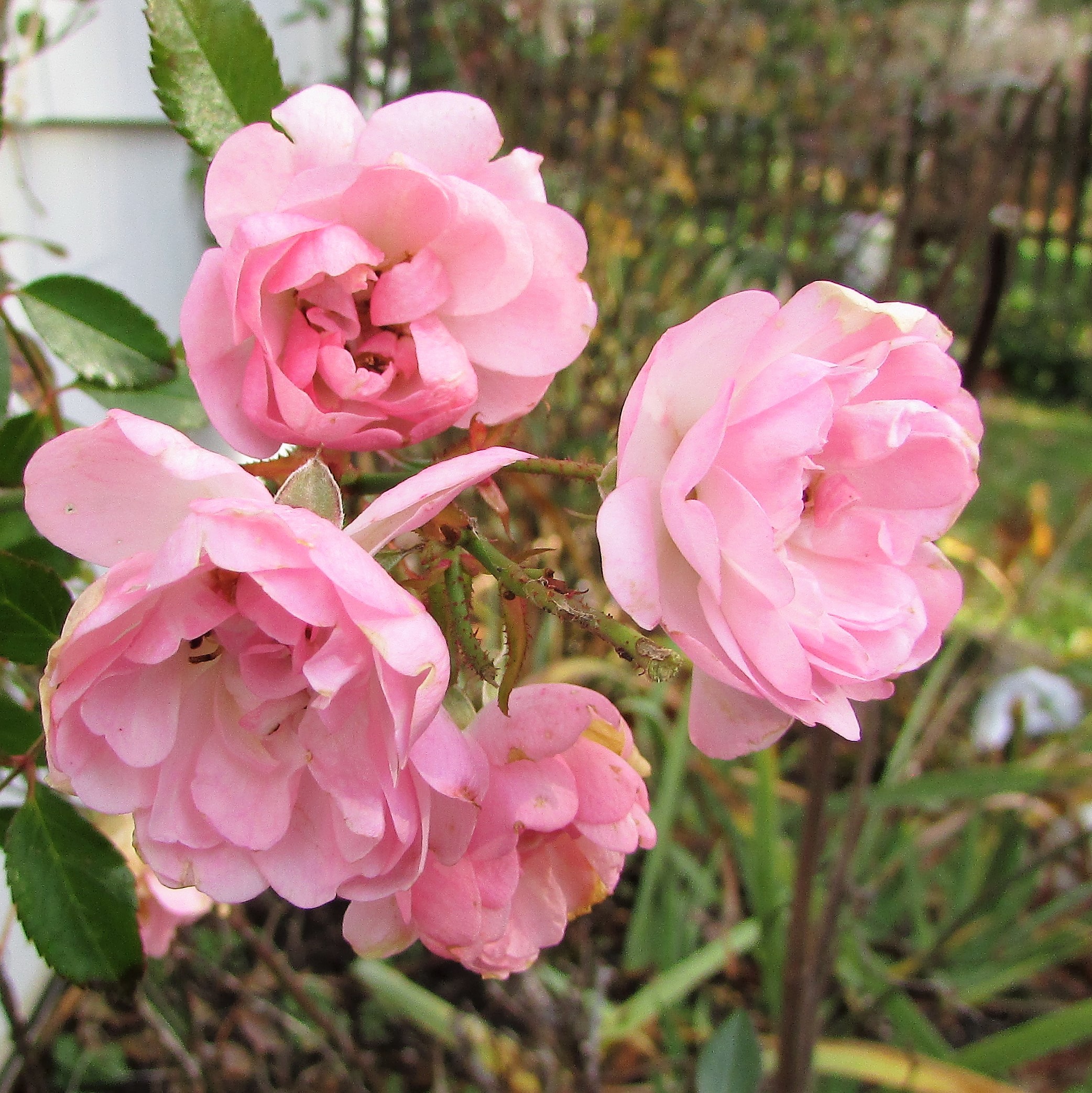
These are the last of my 2022 garden blooms. They are among the most delicate in appearance, but oh my, though small, they are still blooming in bunches. They are a bit worn and damaged by the cold, but they are still showing new buds along the stems.
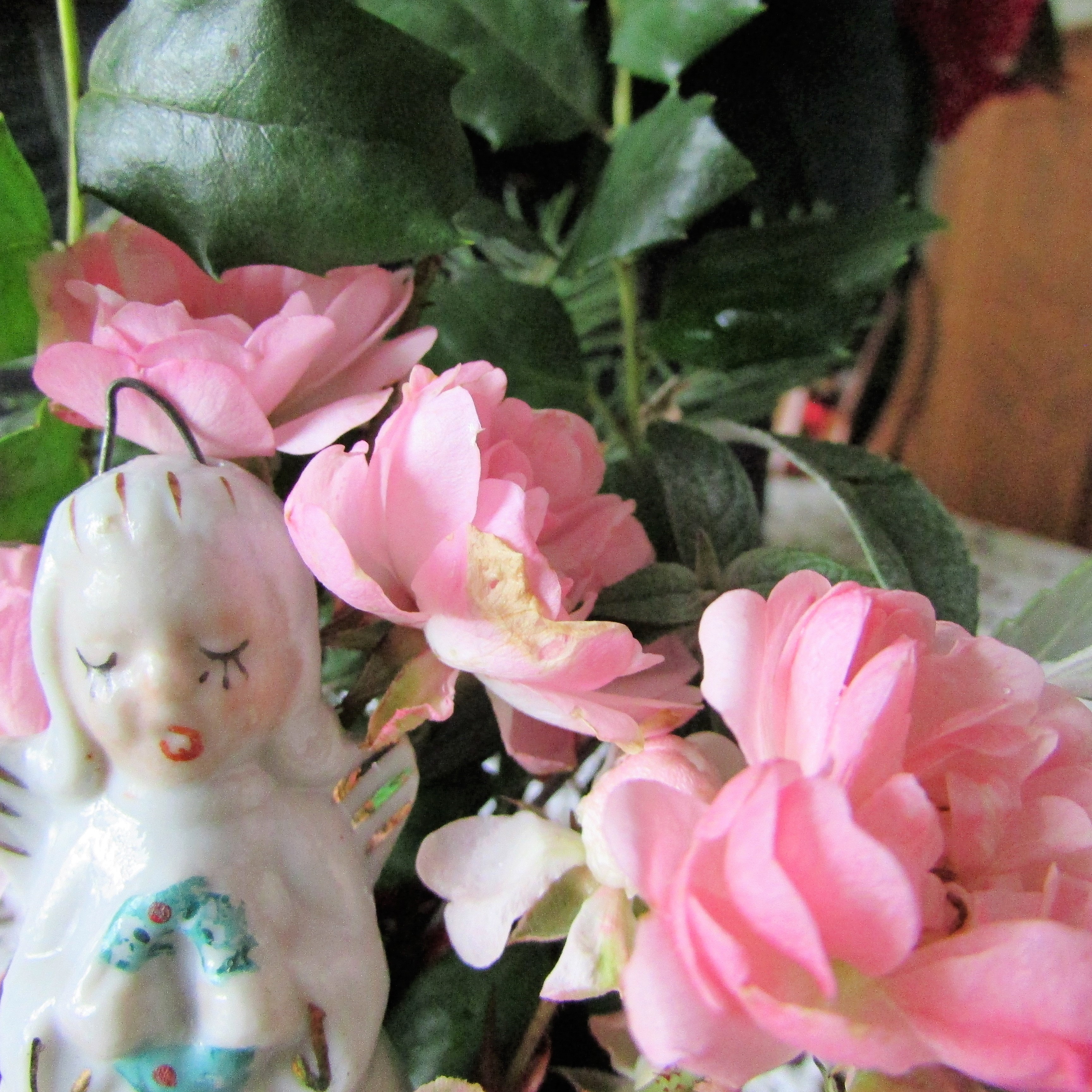
This small miniature rose is called ‘Fairy,’ and the name belies its resiliency. Fairy Rose is part of Cee’s Flower of the Day.
“The Fairy is a polyantha rose. Polyantha roses produce their flowers in sprays or bunches rather than as single flowers. Unlike a lot of heirloom roses that only bloom once a year in the spring, The Fairy blooms continuously from spring until fall.” Dengarden
The small angel was given to me when I was a baby. I don’t remember who, but I am so grateful to have this vintage remembrance of a time long past.
Another of my Christmas favorites showed up in my photo. Christmas is wonderful: Angels, Scrooge, The Grinch, Frosty, Rudolph, the list can go on and on. Of course, my favorite is the reason for this season, THE CHRIST CHILD. This is a good time to leave a link and reminder to watch THE NATIVITY during this special season. I am always thrilled to my core when the child is born and wish I could have been there to be in his presence. God is so good to us.
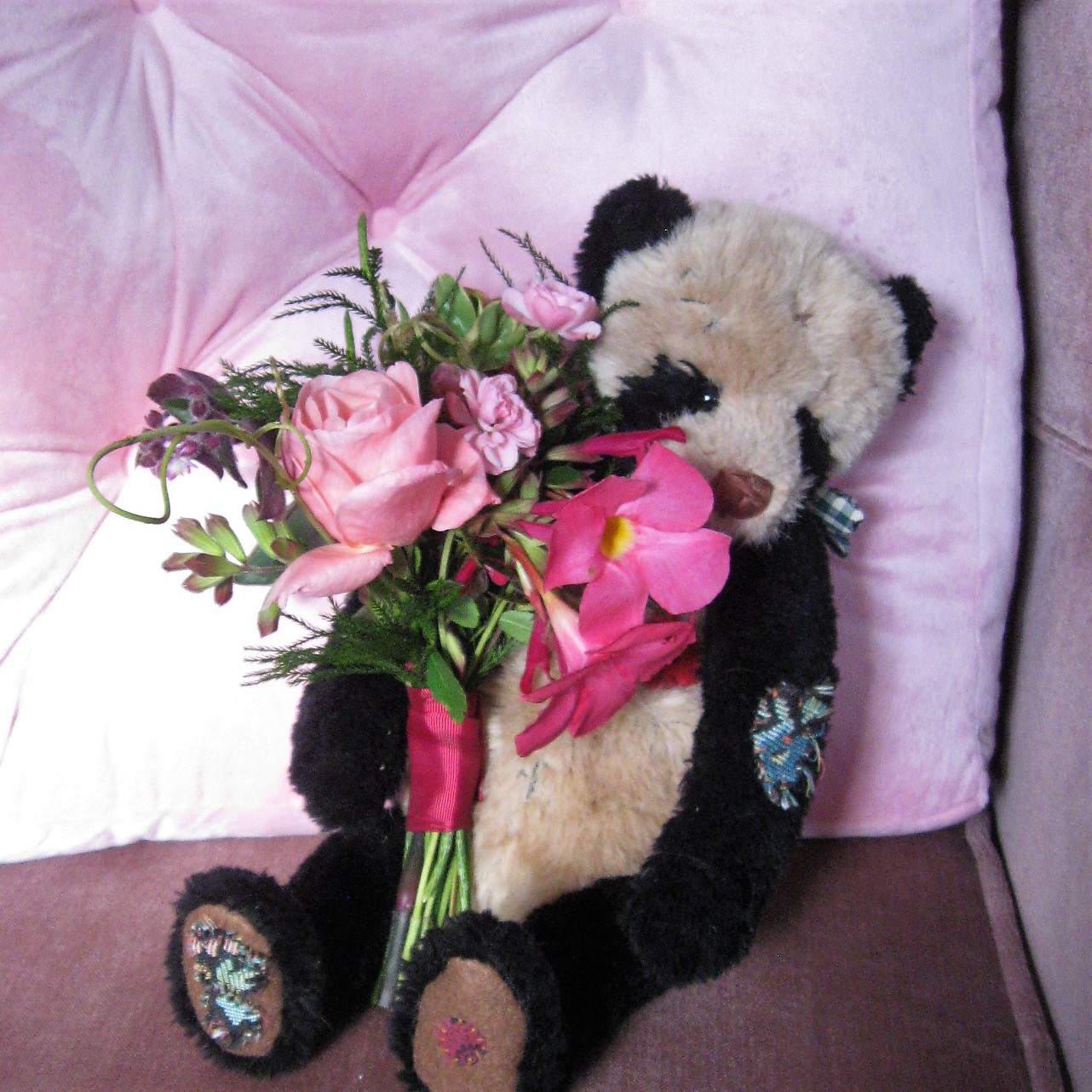
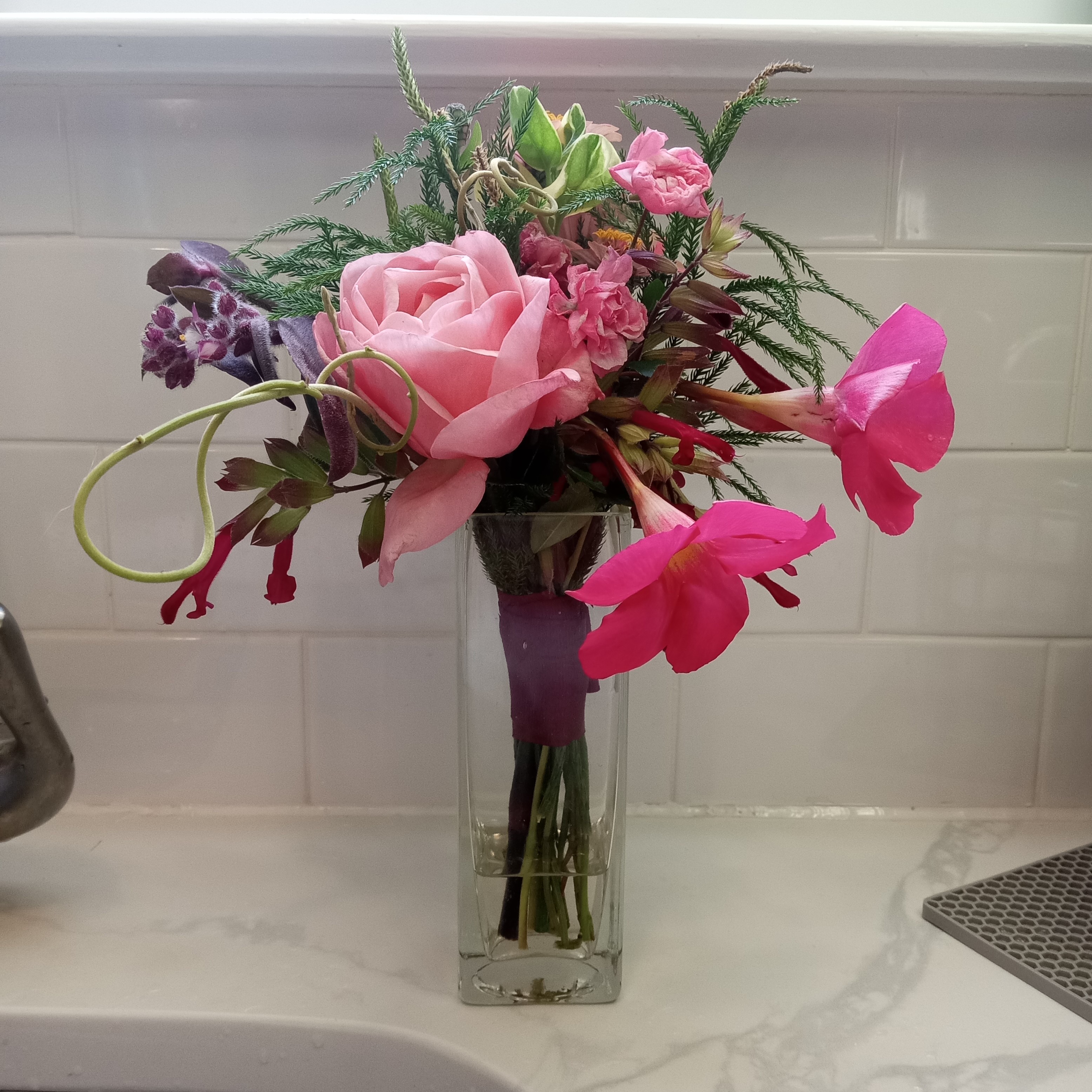
The In A Vase on Monday challenge for this week had a twist for the ninth anniversary. The host, Cathy, asked us to create a handheld posy bouquet. I wasn’t able to attend the Zoom meeting, but I’m happy I took part in the challenge. I love the bouquet the pink-hued flowers in my garden enabled me to create. I was surprised by how unblemished these blossoms were considering the cold, rain, and wind we have experienced in the last few days. The bouquet turned out pretty. My husband complimented me on the flowers as the bouquet sat on the kitchen counter for its photo shoot.
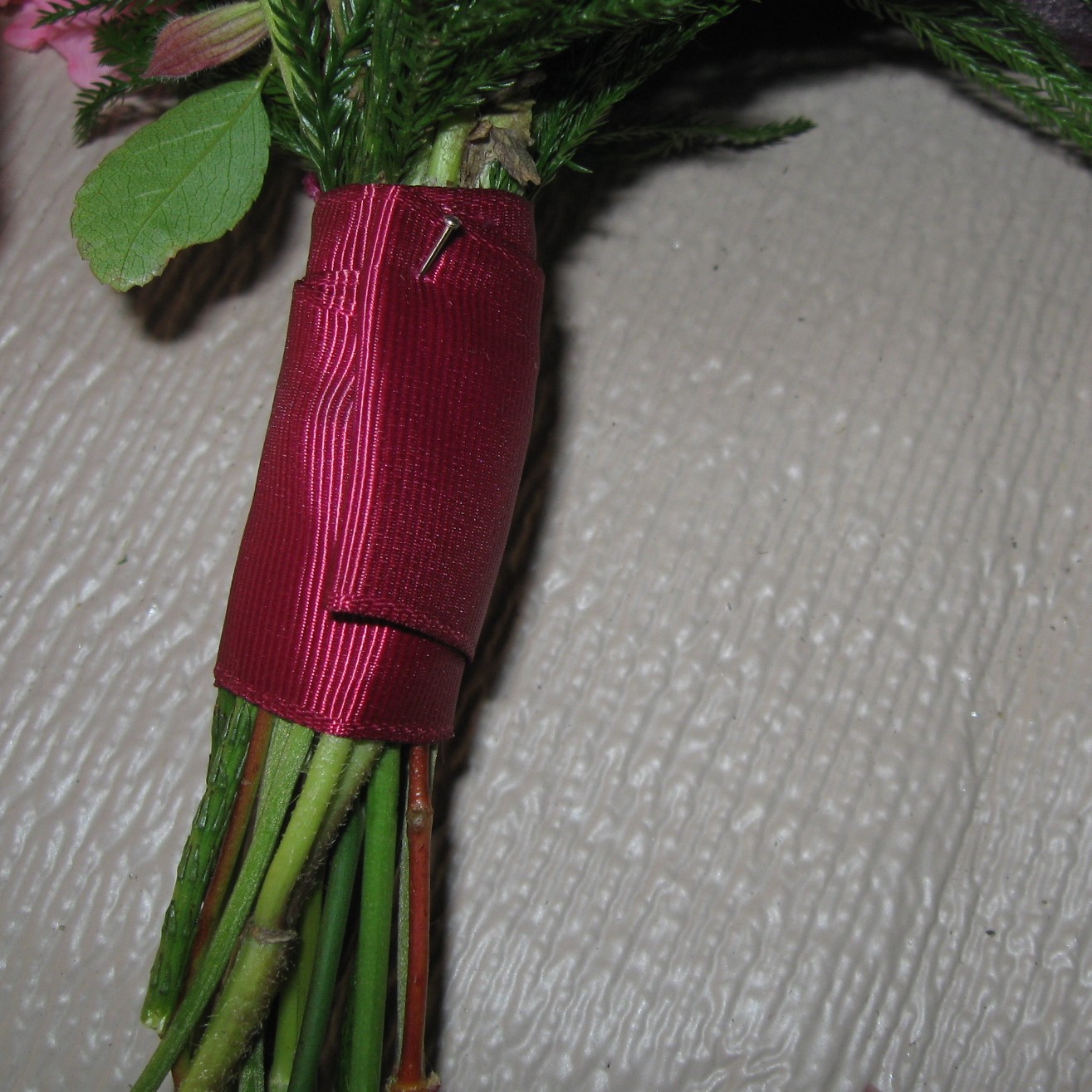
I worked in floral shops for years and created many hand-held bouquets for proms, weddings, etc. As I design handheld bouquets, I twist the gathered stems slightly in my hand each time I add a new bloom. This allows the stems to face outwards, and keeps each flower airy, surrounded by a bit of space, creating interest and dimension. I always have a chenille stem (pipe cleaner) handy and bent into a hairpin shape before I start putting the bouquet together. When every stem is in place, I twist the chenille tightly around the upper portion of the stems, an inch or two below the first flowers.
I cover the chenille with a bit of broad ribbon. A long pin in the ribbon, pushed straight down in the direction of the stems, will hold it in place. The pin will not prick the person holding the bouquet as the point is encased within a barrier of closely bunched stems.
A good tip to keep the flowers fresh until ready to use is to cut the bottom stems to all one length and let an inch or two of the stems stay in water until ready to wrap or use. The flowers I used in this handheld post are Queen Elizabeth rose, Fairy roses, cyanotis, magenta salvia, wisteria tendrils, Mandeville blooms, and ground pine gathered on a weekend walk in the woods.