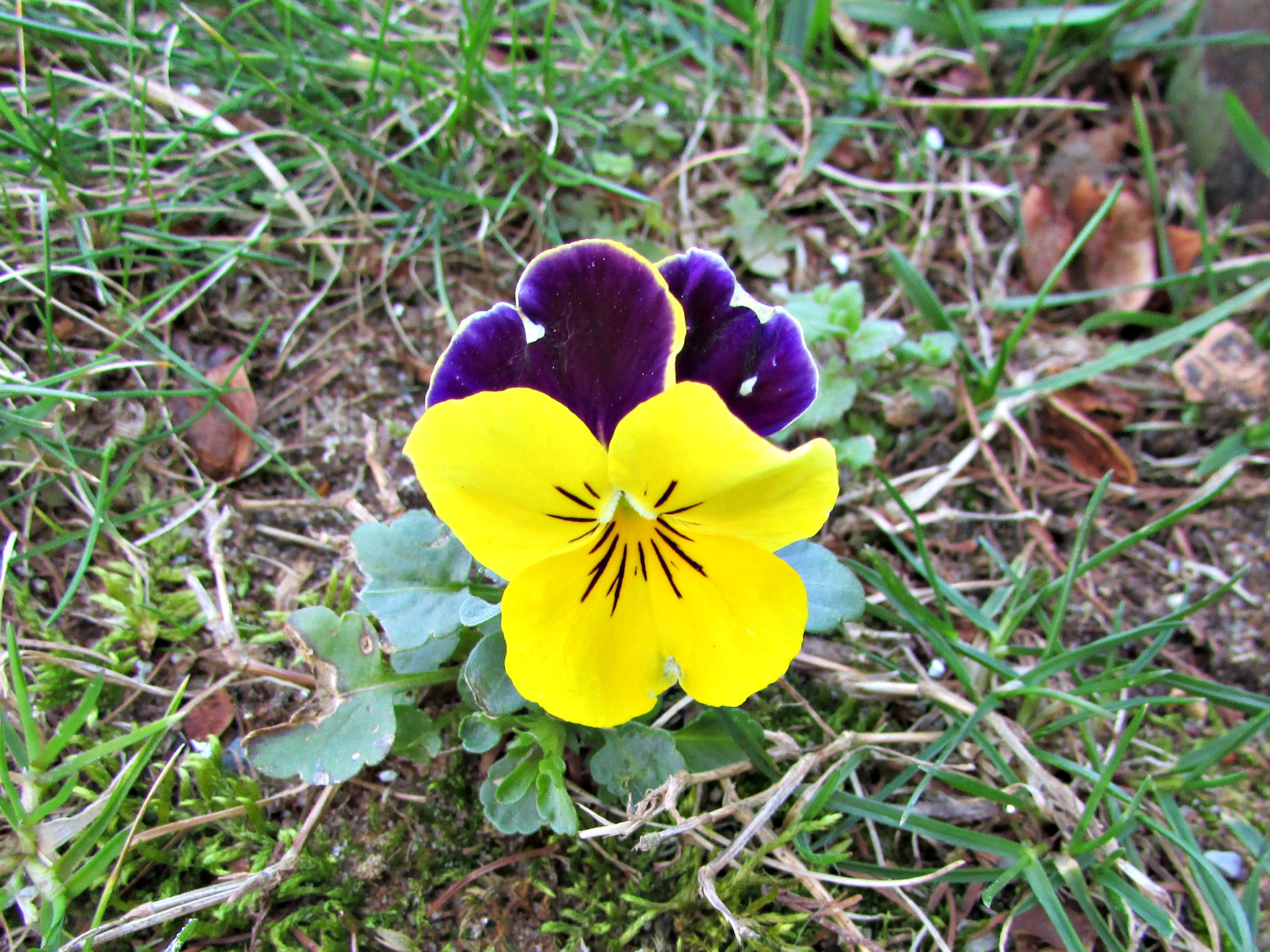
Oh the joy of a volunteer flower. This week as I was inspecting flowerbeds and dreaming of the coming blossoms, this perky little Johnny-Jump-Up surprised me growing in the grass near the mailbox. I love volunteers. I couldn’t leave him there; the lawnmower or the mailman’s boots would eventually do away with him. I scooped the flower out of the moist ground easily and he is now safely growing in a small terracotta pot.
There is nothing bashful about a Johnny-Jump-Up. Even better, they are among the best Spring blooms for flower pressing.
This post is part of The Day After blog – Spring Festival 2026 Week 2. Thanks to Dawn for hosting.
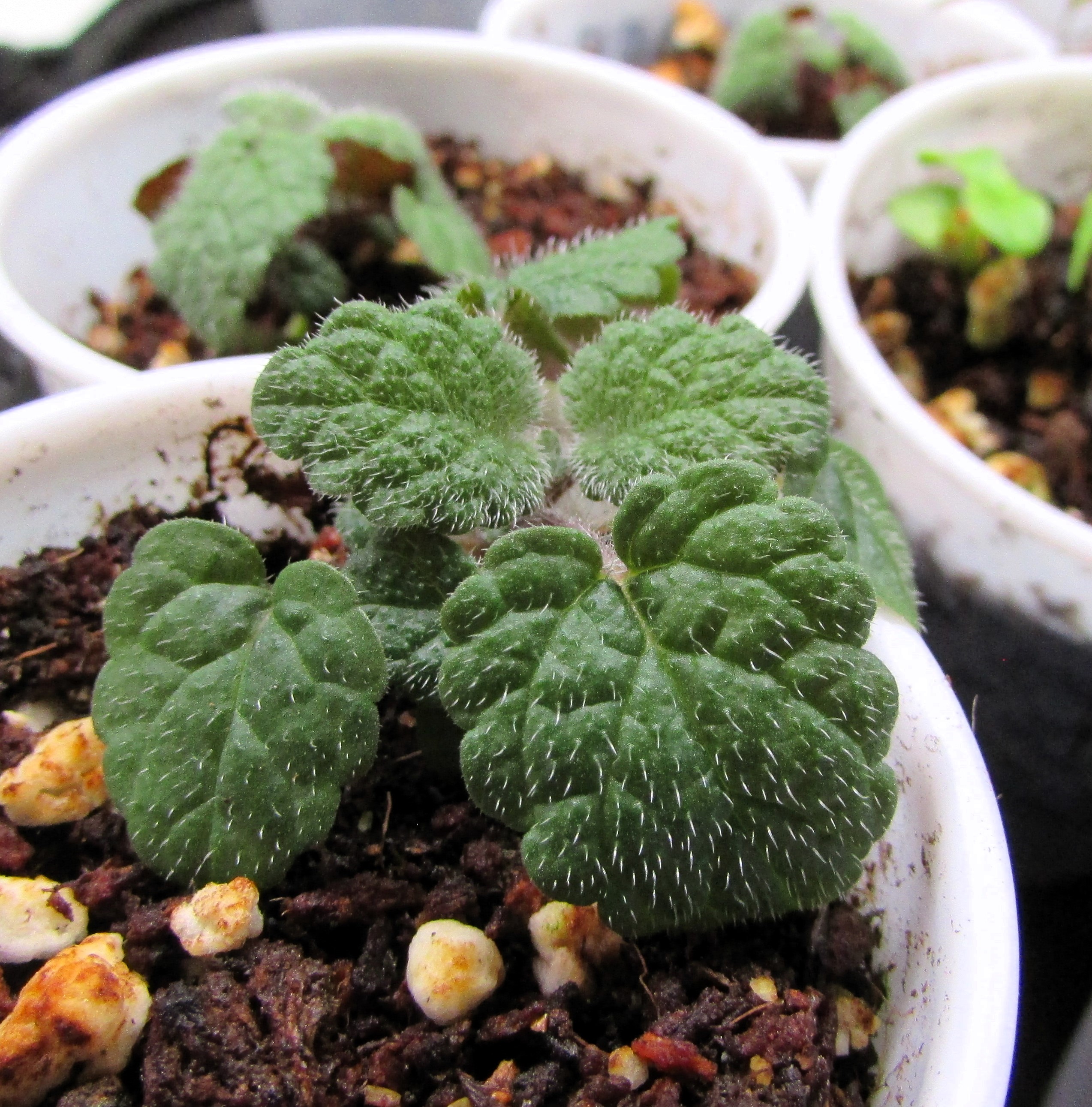
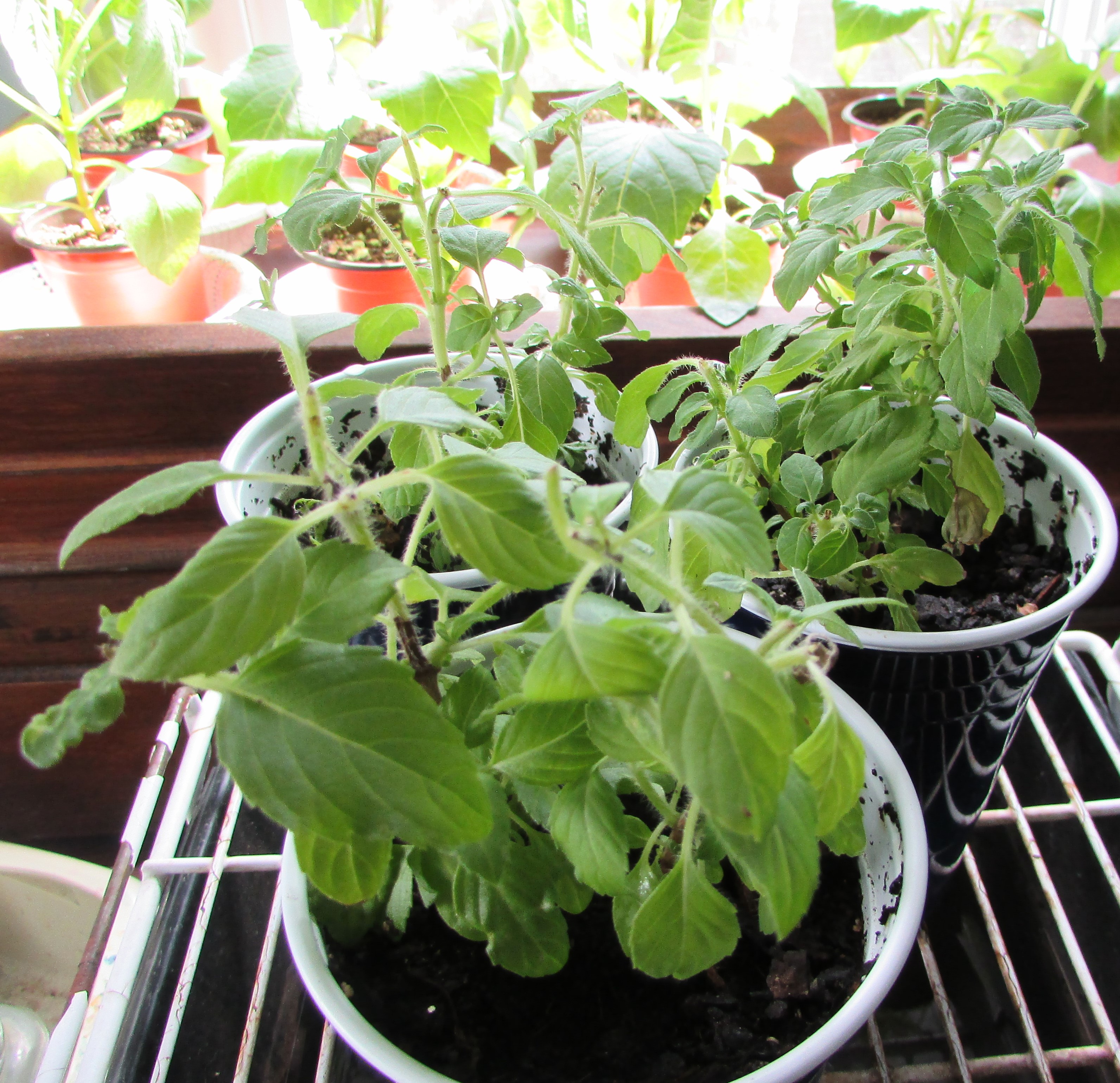
I love drinking teas concocted from my own fresh herbs. Lemon balm grows throughout my backyard garden, and it is one of my favorite herbs. The light, delicate taste of the tea reminds me of springtime. The leaves can be dried or frozen into cubes for winter use. Recently, I was excited to find another type of lemon balm called Mandarina. It is in the lemon balm family, but it has the scent/taste of Mandarin orange. The description in the Baker Creek Heirloom Seeds catalog said that it would add citrusy notes to tea. I was hooked by this description and haven’t been disappointed so far. The germination rate of the seeds was outstanding, and I have several small plants in Dixie cups growing on heat mats and under lights. I’m very excited about trying it. I haven’t pinched off a leaf yet to see if it has a mandarin orange scent, but they will soon be big enough to do just that. Within a month or two, I should be able to add the Mandarina leaves to my fresh teas.
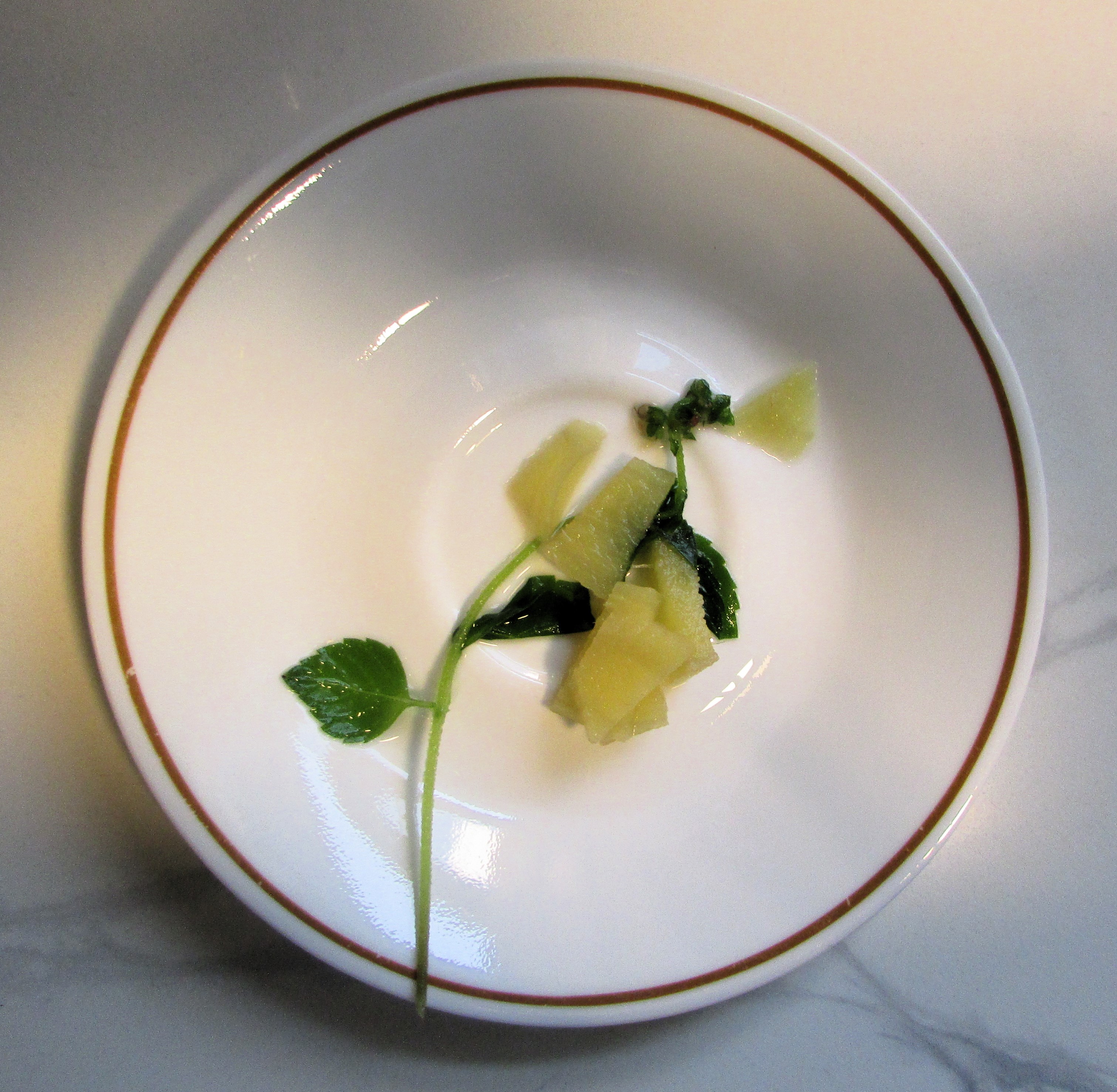
Another favorite tea combination I drink quite often is Tulsi (Holy Basil) with fresh-cut ginger root. This tea is uplifting and soothing to your spirit and digestive tract. I add a little honey to the bottom of the cup as it steeps, and the taste and brightness are delightful.
Tulsi is a wonderful plant, and it grows quite easily for me from seed. I have grown multiple plants in Dixie cups, the larger party size with drainage punched into the bottom, throughout the winter, and I pinch off a stem or a few leaves for my tea combined with fresh ginger. This plant grows well outdoors but blooms quickly. That isn’t a problem, though, because I also use the blooms and buds in my tea. Tulsi does have a few precautions to bear in mind if you take medications, so before you jump into growing and drinking it as a tea, double-check your medications against any cautions listed for Tulsi. I’ve included a great link with information on the health benefits and side effects of Tulsi.
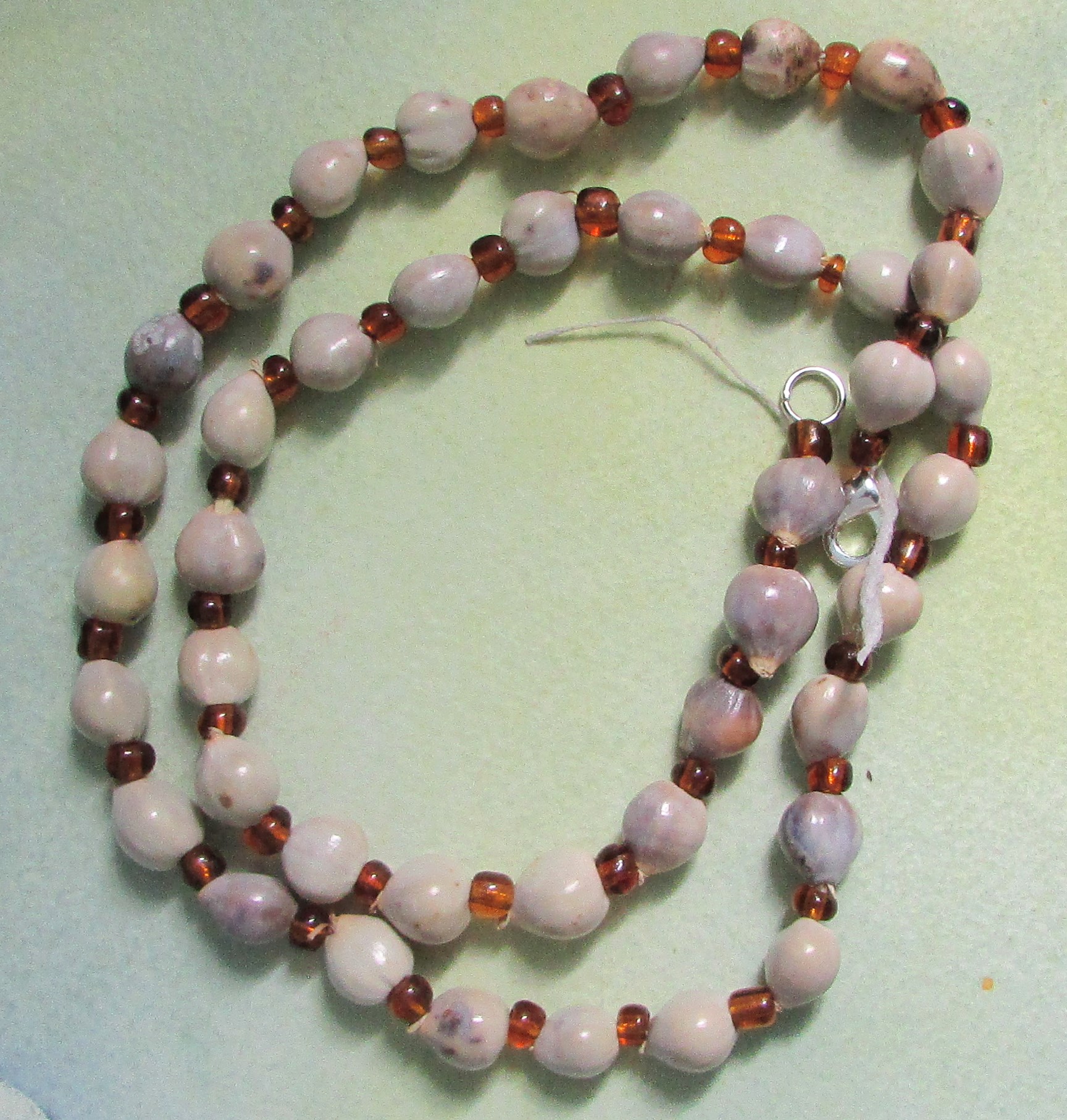
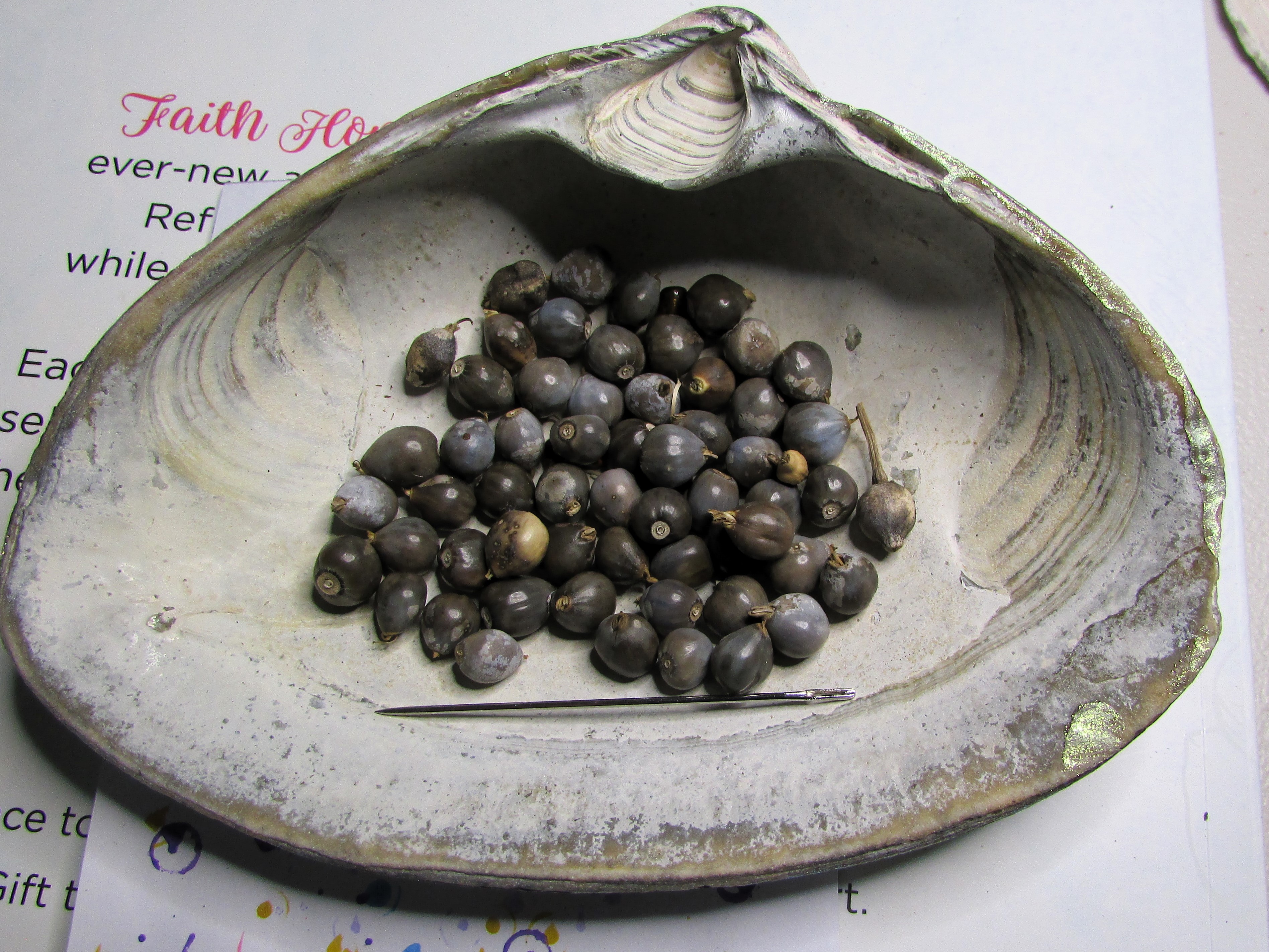
While searching through old project boxes, I found a necklace I started years ago but never finished. The necklace is made from the grain/seeds of a plant called Job’s Tears. This is a very unique plant and interesting to grow in the garden. I grew it in a pot, and it produced a good amount of seeds from just a few plants. I had enough to make the necklace and set aside some of the darker-colored pieces for other projects. I recently decided to try to finish the necklace. After all these years, I was still able to push through the top and inner grain with a very large sewing needle. I only stuck myself once, which amazed me. I used the hardness of my table to push the needle through the interior. Once it was lined up, it went through with no problem, and I was able to finish the necklace, well, almost finish the necklace, it is still waiting for a seashell, using a technique that several pieces of my Jamaica jewelry were created with. I’m hoping to update it later on in the year when I find a shell that I think will match the grains. Job’s Tears are still available from Baker Creek Heirloom Seeds, as I just ordered another packet for myself this year.
This grain was often used to make homemade rosaries.
You can find my original post on growing Job’s Tears through this link. There is no limitation on the many projects you can make with this grain, and there is also the added benefit that it is edible.
Winter has been a good time to read, and recently I found a 1946 biography, The Tale of Beatrix Potter at a vintage/antique store. I remember Peter Rabbit stories from my earliest childhood. How can anyone forget Flopsy, Mopsy, and Cottontail? The names are ensconced happily in that area of my mind that delights in old nursery rhymes and stories. Although this biography was published eighty years ago, the writing is wonderful and so easy to read. I never knew Beatrix kept a journal throughout her early life, written in a secret code. When I finish the book, I will watch the movie Miss Potter starring Renee Zellweger again. This movie is available for free on YouTube. Miss Potter I’ve included a glimpse through the trailer below.
Life Hacks by Keith Bradford is exactly what its title implies: good tips for everyday problems. I found several new recipes in 30 Minute Meals by Rachel Ray that look promising. I always like to add a new recipe or two to my files each month.
I have watercolored for several decades, but there is always room to improve, actually a lot of room, and after finding the YouTube videos of Anna Bucciarelli I knew I had to have her book 101 Watercolor Secrets. It did not disappoint me. Here’s a link to her YouTube channel. If you love watching artists in motion, you will enjoy her beautiful narration and techniques.
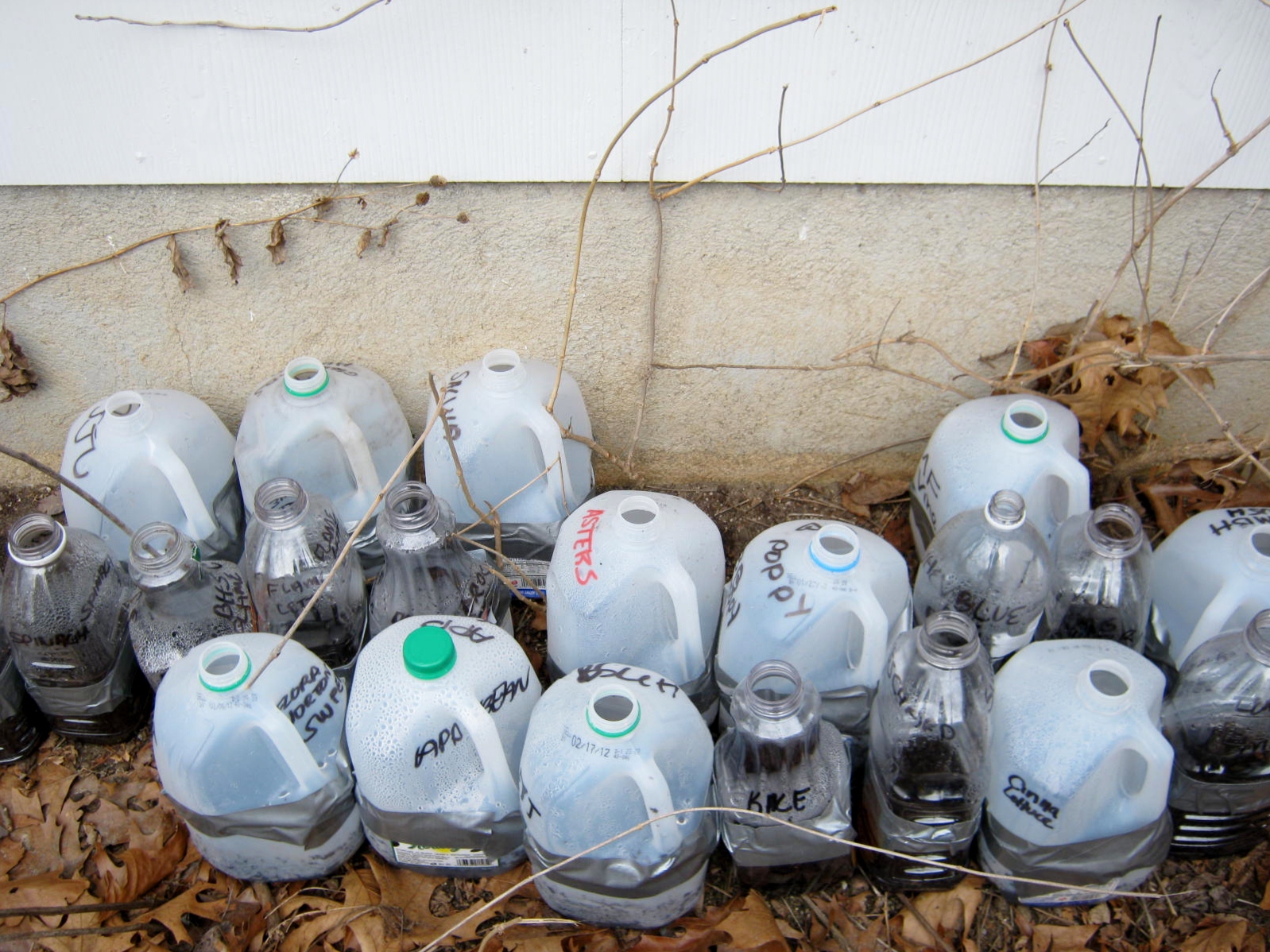
I’m planting seeds nearly every day. I never abide by the suggested weeks before the last frost date printed on the seed packets. I bump it up by 3 – 4 weeks to match the sizes and blooms available in local nurseries at planting time. I also plant in milk cartons and leave them outdoors to stratify in the cold. Many seeds do best with a period of cold before it gets warm enough to sprout. This method is called Winter Sowing and it will bring you amazing success. Give it a try.
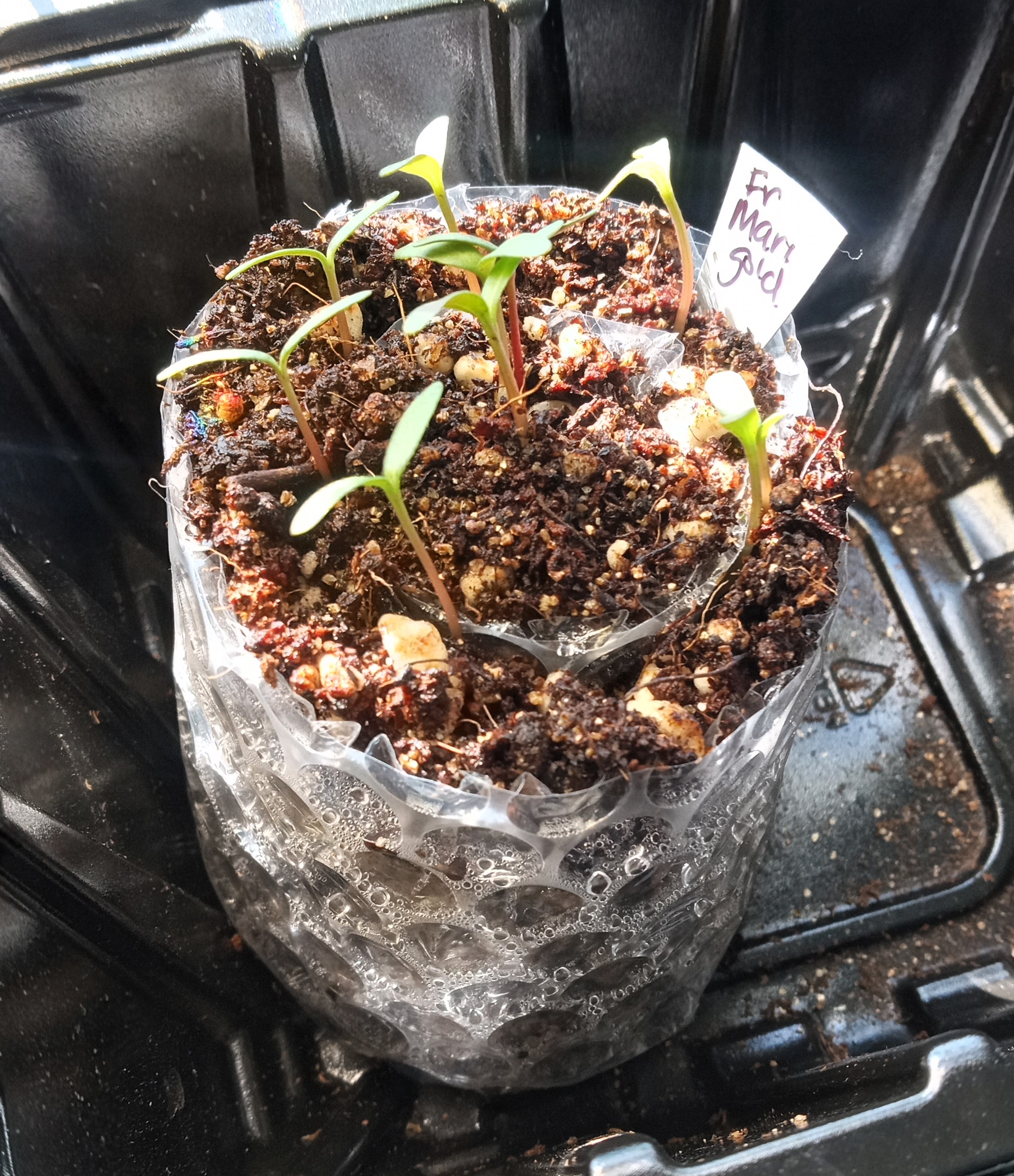
One new technique I’ve run across is a bubble wrap sprouting coil. Huh? (I can’t remember who or what or where I saw it so I can’t give proper credit here.) You take a strip of bubble wrap, add a smaller strip of paper towel, and then a layer of seed starter. You place the seeds you are planting at the top of the wrap and wind it up. I used tape to keep it shut, and it has worked fine. The moisture, the warmth of the insulating bubble wrap equals success. I have quite a few marigold sprouts growing. When they are larger, I will unwind the strip and plant them in separate containers. This was so much fun to try and is perfect for those of us who don’t have a lot of windowsill room. Search through boxes for old bubble wrap, or, as I did, buy a small roll at the dollar store.
Winter has been difficult this year. Ice on top of snow, snow on top of ice, making it hard to get around and causing injuries from falls and excessive shoveling. (One of my friends broke her ankle.) Local geese, starving due to a lack of food, fell victim to Bird Flu, causing lakes and parks to shut down. Still, there is beauty in the ice and snow, such as these color-reflecting icicles hanging from my gutter. This photo is part of Skywatch Friday.
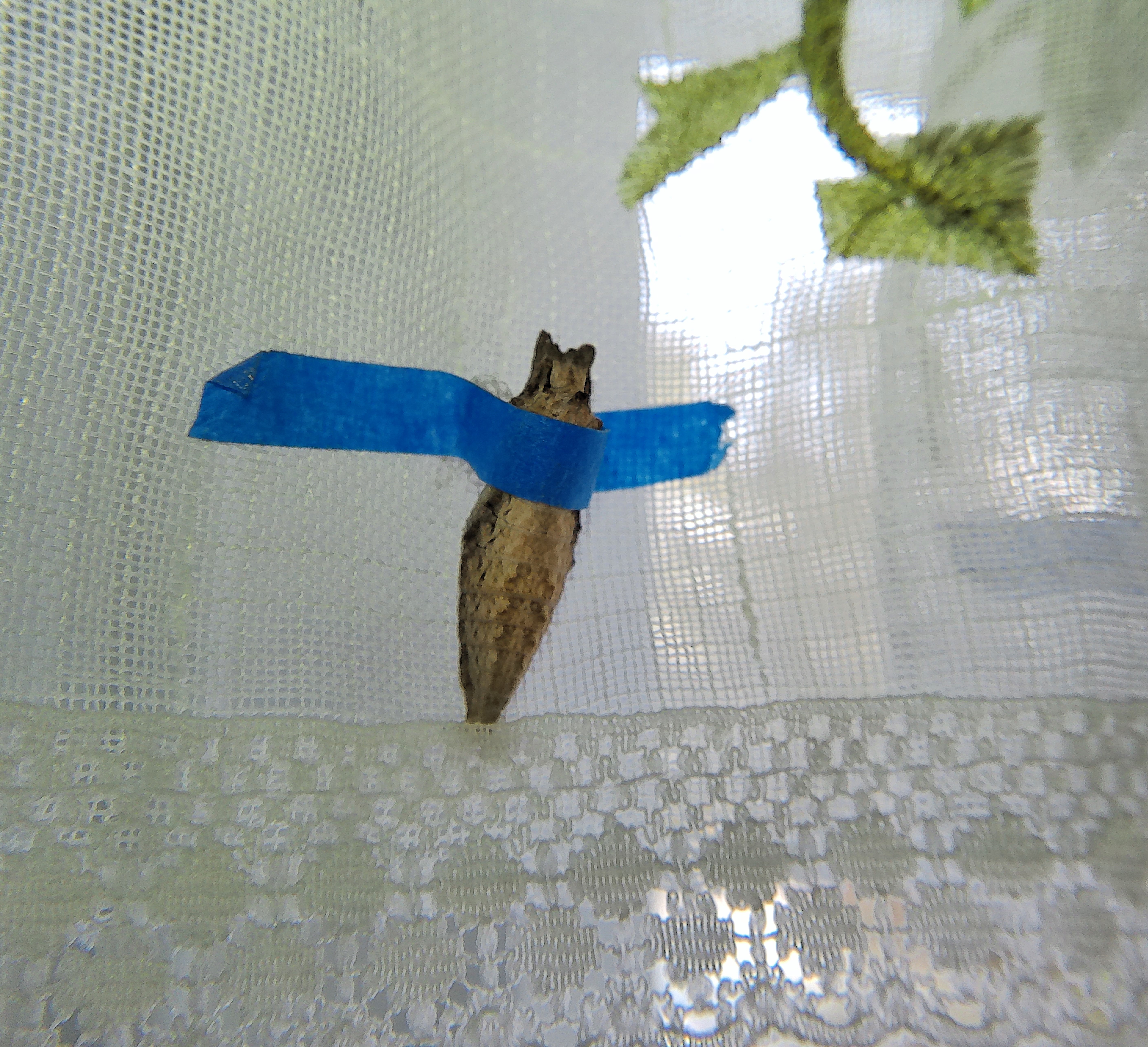
The snow cover and extra cold weather this year have been hard on songbirds too. I’ve thrown seed out onto the snow, and it is soon devoured. I stopped using my feeders when there were rumors of the Bird Flu and haven’t put out any more suet since then. We have a very smart wren who can swoop under our back porch door a bit like a cat slinking through a tight space. I suddenly noticed that four of the eight Black Swallowtail chrysalides that were over-wintering on the porch had disappeared. Nearby were bird droppings. We are assuming the wren feasted on the missing chrysalides. To save the four still on the porch, I brought them into the house and taped them to a curtain so they would get the proper amount of outside light. I am hoping they do not emerge too soon.
I’ve tuned into the Cornell Lab of Ornithology Bird Cams again. Panama is still vibrant with platform feeders and hummingbirds. I am hoping the Red-tailed Hawks thrive and nest this year. Take a look at this delightful glimpse into the world of birds.
I’ve found a new art show on Prime Video presented by the British television company Sky Arts. Landscape Artist of the Year and Portrait Artist of the Year have many seasons available to view. It is a joy to me to watch the artists paint a landscape or a portrait in four hours. If you enjoy art or are an artist yourself, this is a wonderful way to spend an hour.
We also watch quite a few of the old Amazing Race shows on Paramount+ and have begun watching Season 50 of Survivor. This will be the first Survivor we have watched in several seasons. We were appalled at the recent ‘wokeness’ of the show, with Jeff Probst not saying his usual, “Come on in, guys,” for fear of offending someone. We have had enough of that nonsense. Hopefully, they will realize that handling people with kid gloves in a survival situation is detrimental to the concept on which the show was based.
I researched the ratings, and the show’s viewers have plummeted. Perhaps Season 50, with a cast of characters from previous shows when ratings were high, will bring back a little of the magic.
This is one of my favorite Signposts in February.
March arrives in two days, I wonder what kind of fun and interesting events will surprise me over its weeks.
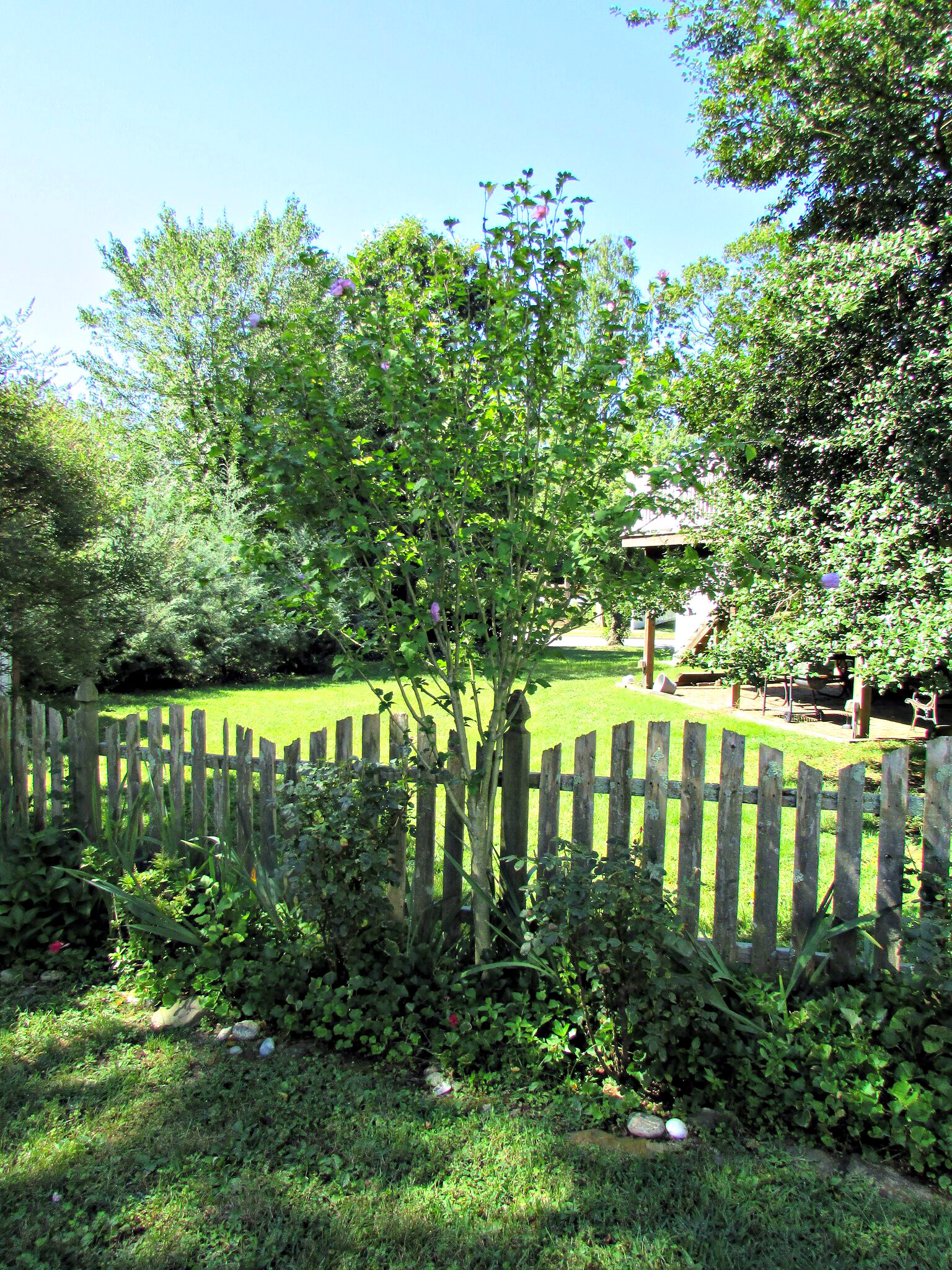
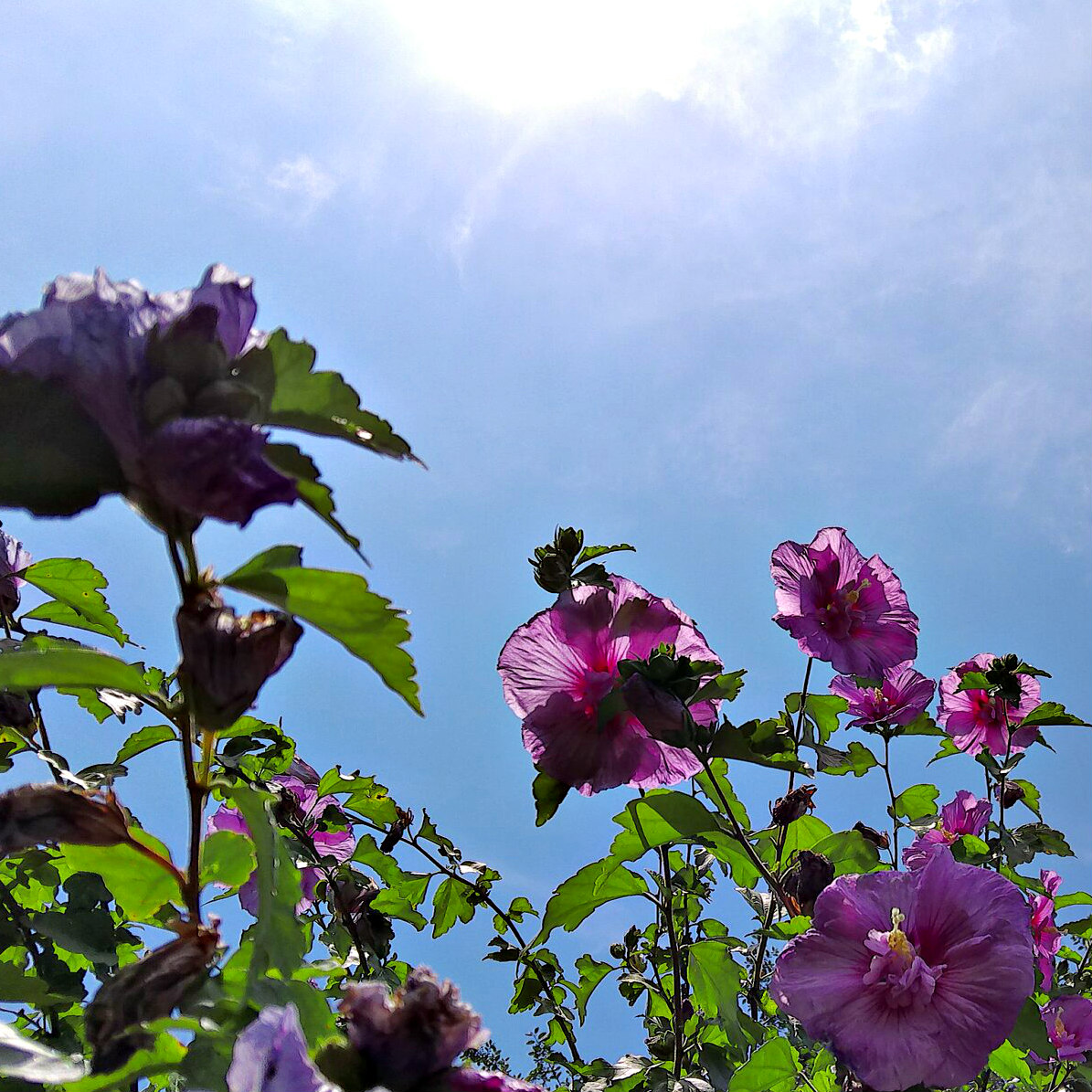
Years ago, a blogging friend sent me seeds from her Rose of Sharon. I nurtured one sprout for years and now it stands in our backyard garden border as a Rose of Sharon topiary.
Growing bushes that normally sprawl in many directions as a topiary saves the garden bed beneath the branches for annuals and perennials. In the vicinity of the Rose of Sharon grow vinca, violets, iris, gladiolus, and two Knockout rose bushes; all have enough room and sunlight to thrive.
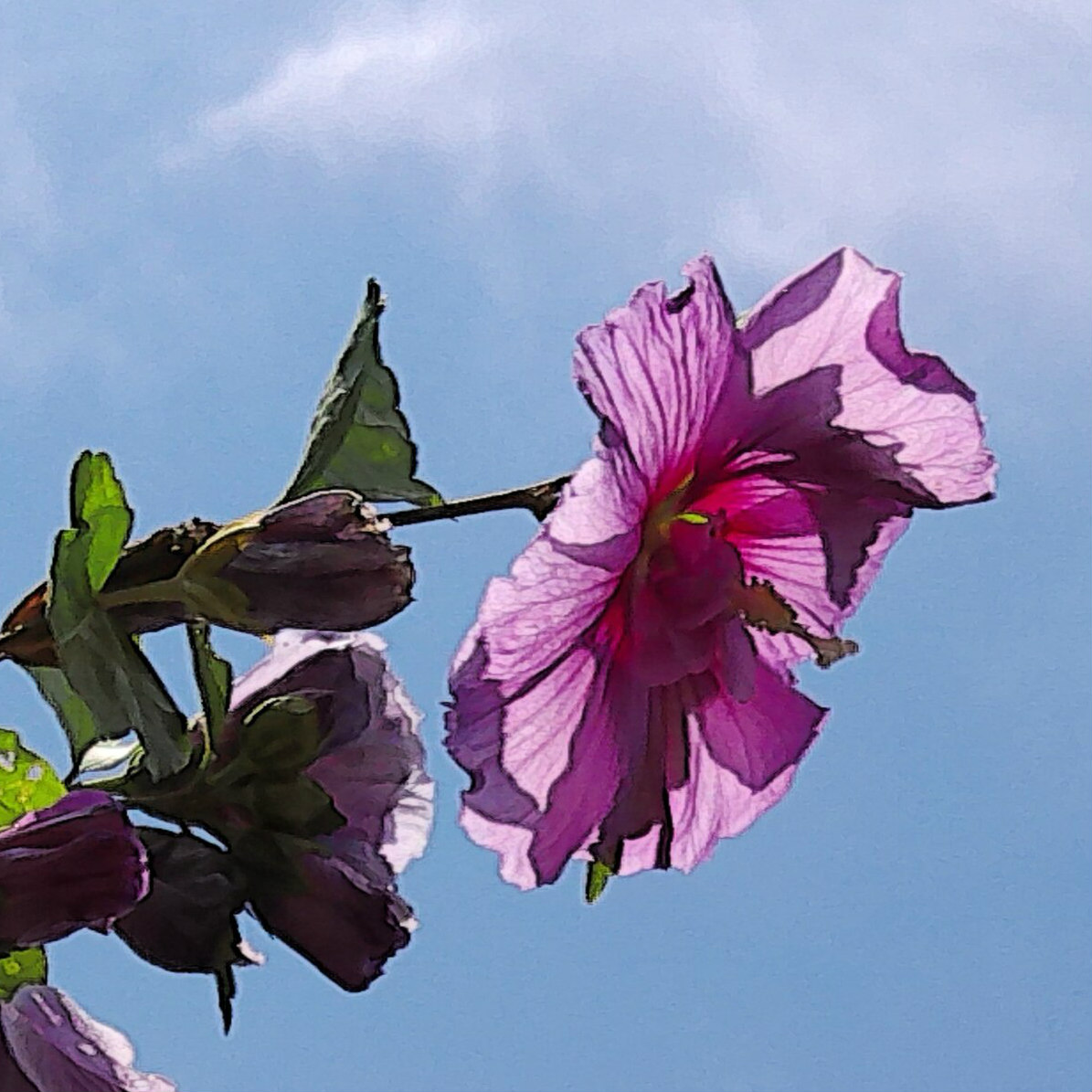
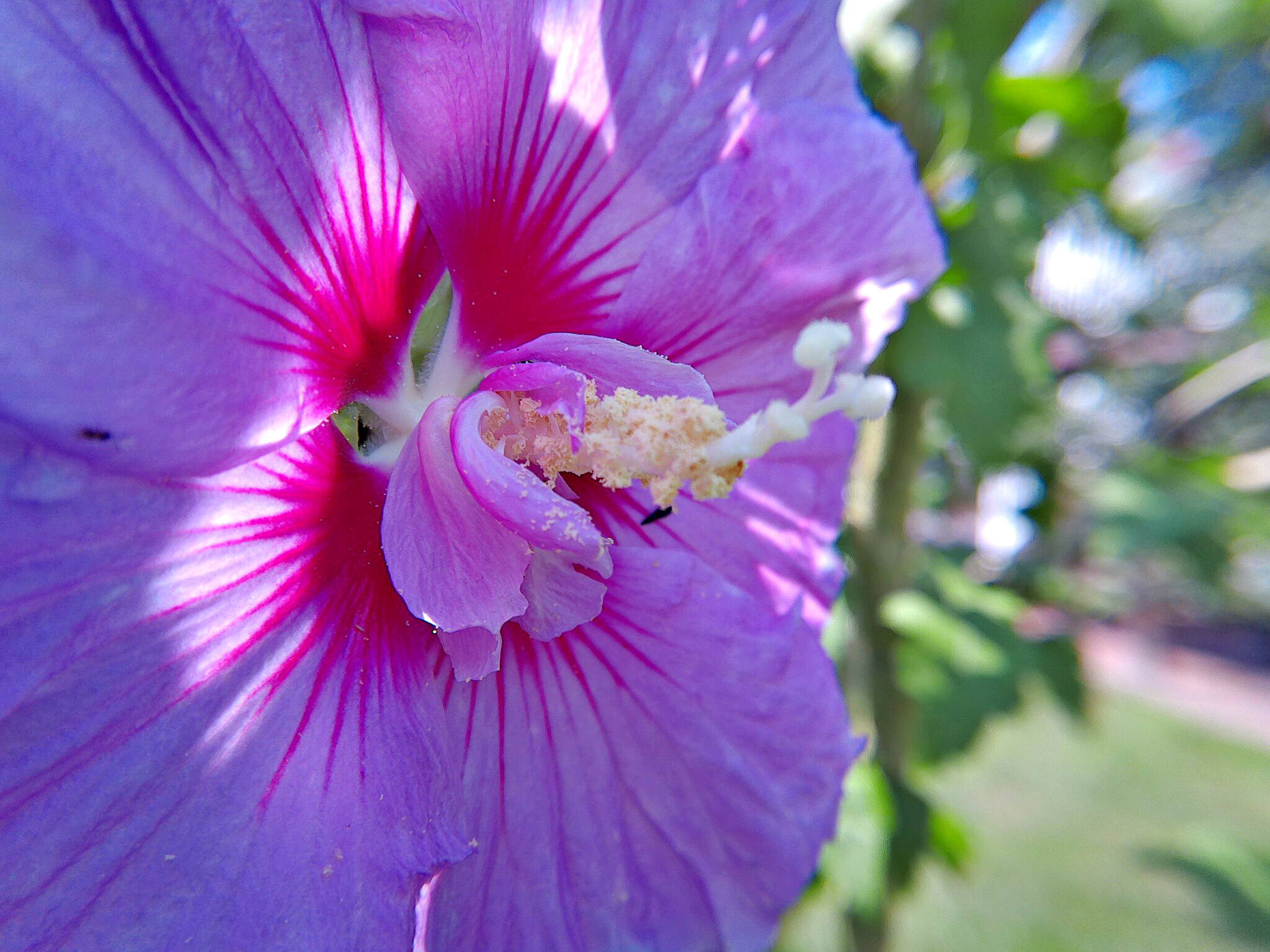
The color of the flowers is a lovely lavender accented with a band of red in the inner recesses of the petals. The stamen is interesting, and I have seen bees and hummingbirds dip into the center. One of the pests that can attack these flowers is Japanese beetles, but so far this year, the beetles have not appeared.
I love the way the petals glow when the sunlight illuminates them from above. I used this flower as my blog’s August header. Today’s photographs are part of Skywatch Friday and Floral Friday Fotos.
PS Another wonderful aspect of this plant is its ability to self-seed. On either side of the tree, and a bit further down the border, I have identified seedlings that are a year or two old and growing well. When it is time, I will bring them to topiary size too in the coming years.
I had hoped to start a year of Weekend Matinee posts on the first weekend of January, but I didn’t get my act together until today. Most of the films I recommend will be classics; I haven’t gone to many theater movies in the past years.
For television programming, I’m recommending The Way Home. I love time travel shows, and this sweet show on Hallmark+ has not disappointed me. The first five episodes were free, and they entranced me so much that I subscribed to the station. I hope to find more Hallmark programs and movies to enjoy when I finish this series. There was no filth whatsoever in The Way Home. Other than the concept of Time Travel, and I am midway through the second season, I have seen no supernatural scenes or dialogue. Hopefully, the program will continue in the same vein and be suitable for all ages.
I am a bit of an enthusiaist for a classic film released in 1951, The African Queen is a good choice for a weekend matinee. Katherine Hepburn and Humphrey Bogart make this movie a favorite of mine, even in my top ten vintage films. During Sunday Morning services, when we sing the hymn, Bread of Heaven, my husband and I will look at each other and smile secretly. Why? Because the song is part of the opening scenes of The African Queen. We always remember the movie when we sing it and, in our mind’s eye, see Katherine Hepburn pumping the organ with her feet. I feel the movie is suitable for all ages.
I didn’t know until researching the movie that a sequel starring Warren Oates and Mariette Hartley had been made in 1977. I’ll have to see if I can find this on cable or through YouTube.
My third choice is a more modern classic, Enchanted April. The first time I saw this movie, I liked it a bit but wasn’t entranced. Now, the total opposite is true, and I revisit the film several times a year. Rose, Lottie, Caroline, Mrs. Fischer, and Melarche have all become so familiar that I almost feel they are my friends. The movie is suitable for all ages.
The three programs/films I’ve listed are available through cable television, Public Libraries, and many online sources.
The word for today’s Ragtag challenge is Gobbledygook. I looked it up to ensure my take on the definition was correct; I was thinking foolishness, junk, etc. I was not far off. Some synonyms for Gobbledygook are bafflegab, double-talk, gibberish, rigamarole, song and dance. Most of these have to do with the spoken word.
I don’t know about your area, but I live near a major swing state and an important city for the upcoming election. I am across the river from Philadelphia, and our media stations are from the city. The commercials, at this point, are constant political GOBBLEDYGOOK. All of the candidates have gifts, talents, and flaws. Of course, I lean heavily toward one candidate, as most of us do now, but I am tired of ALL the negativity bombarding us.
Only a few more days until the election itself is behind us. To counteract, I hope, the possibility of the rampant fraud in the last election, I voted early this year. It was the first time I took advantage of this type of voting. I am in my 60s and have voted yearly for decades.
We thought we’d be one of a few voting early. Oh my! I knew that was a wrong assumption as soon as we pulled into the parking lot of the voting center. Inside, there were long lines, but the atmosphere was wonderful. Doesn’t that sound odd? Everyone seemed happy and lively, and no one complained, campaigned to, or criticized the person near them.
I felt happy to be utilizing my civic right and duty. I voted. I am glad to support the candidates I think are the best choice for the country, county, town, and school board. VOTE! Vote early or on election day. But for those in my country, please vote. Thanks!
Cardinal Climber Vine ((Ipomoea × multifida) is my post for Cee’s Flower of the Day. These vines and the beautiful trumpet-shaped flowers blooming on them are some of the best flowers for a hummingbird garden.
Most of my garden plants have blooms that are waning. I don’t obsess over the lack of bloom because I see few bees, butterflies, and hummingbirds in October. The Cardinal Climber Vines bloomed late for me this year. I thought they were in a slump until a few weeks ago when they burst into dozens of blossoms. There is nothing timid about these flowers when they bloom; they are brilliant in color, and the stamen almost seems to glow like a spotlight beckoning hummingbirds to dive in for the nectar they contain.
Yesterday, I had an experience that I hope will stay a treasure in my spirit forever. I was bent down, turning off the hose nozzle, and when I stood, inches from me, a hummingbird was sipping nectar from the Cardinal Climber blooms. It seemed unaware of me, or perhaps in fueling up to return to warmer climates, was willing to risk my presence. I stood for several minutes, holding my breath, wanting to jump for joy as I listened to the buzz of the small bird’s wings and had the closest view ever of a hummingbird sipping nectar. I will never forget that magical moment in the garden.
In spring, my garden is a blank slate as the daffodils push above the soil’s surface, where they have slept away in the summer, winter, and autumn. It’s never unexpected, but always still amazing when August displays a thick jungle of flowers in the place where blooming began sparsely in March.
I haven’t taken part in the Lens-Artist Challenge for quite a while. I was drawn in by the title of the challenge. I am a bit late, but still happy to take part in Challenge #311.
Today as I was photographing the flowers I was surrounded by Black Swallowtails sipping from the Butterfly Bush and other flowers in the yard. I decided, since they use my fennel as host plants, and I help them out by raising them in butterfly houses on the porch, they too are growing in my garden.
Cee’s Fun Foto Challenge for this week is a Single Flower. I chose this beautiful white Echinacea that grows in full sun near my patio. The identity of the seed source is Baker Creek Heirloom Seeds. Since I planted the seeds indoors sometime in Spring of 2022, it took two years for the plant to flower outside. As soon as I finish writing this post, I will follow the link to Baker Creek and purchase another packet. I plan to start the echinacea seeds now, in late summer, and grow themto blooming size by Spring.
I had many unusual colors grow from this variety: peach, deep coral, the typical pink, and this white flower. If you love the sturdy stems and reliable bloom of Echinacea plants, try growing this unique mixture.
Paradiso Echinacea loaded down with blooms in late July.
(Later) I did purchase the seeds and they are already shipped. At this slower time of the growing season Baker Creek Seed company is very fast with order fulfillment. Baker Creek is definitely in the upper echelon of best heirloom seed companies.
The Farmer’s Almanac has an excellent article on how to grow echinacea.
In my part of Southern New Jersey, the temperature is in the 90s. AccuWeather says the real-feel temperature is around 104°. The hot weather is helping the caterpillars thrive. I have an abundance of them in the Butterfly House and each is born with a ravenous appetite.
Inside the houses, I have Rue, a host plant, and a few sprigs of parsley. The dill in the garden is still only in the small sprout stage since I planted it late. The fennel is suffering a bit in the heat, and since that is where most of the eggs for the Black Swallowtail Butterflies are laid, I don’t want to use it all. My goal is to concoct the perfect caterpillar feast for strong butterflies.
Queen Anne’s Lace, a host plant, is in bloom now, and the tall umbrella spires grow in hedgerows near my home. I took a walk with my cutting sheers in the hottest part of the day in hopes of collecting the wildflowers.
Unfortunately, the Queen Anne’s lace was not where I expected it to be. The sprigs I had seen a week or two earlier had bloomed and gone, and my walk became longer than I had planned. I did find more growing along the edge of the woods and cut several stems. By the time I got home, they were significantly wilted, and I wondered if I could use them as I had planned for the IAVOM challenge and afterward as food for the caterpillars. The Queen Anne’s Lace stems drew up water and eventually recovered. I used a Coca-Cola bottle as a vase.
Butterfly tip: The Queen Anne’s Lace, though the blossoms become frail, has stems that stay firm even after drying out. They are perfect for a caterpillar to use to form its chrysalis.
I had a rude awakening to one of the perils butterflies and caterpillars face. In mid-spring, expecting the butterfly chrysalis to hatch at some point, I brought the butterfly houses out to the porch and hung them from the ceiling. One day, checking them, I saw a delicate wasp of some sort had gotten inside the house and was trapped. Being a bit of a bleeding heart, I shooed the wasp out and felt I had done my good deed for the day. Wrong.
Two more wasps, surprisingly to me, also found a way into the house. I let these out also. Afterwards, I looked at the seven chrysalis on the sides. What! There was some type of hole in the sides of a few. I knew some parasite had attacked them.
When another wasp suddenly appeared in the house, I knew that it would not appeal to my softheartedness; I squashed it.
Trogus Pennator Wasps eat the swallowtail caterpillars from the inside out and emerge from the chrysalis. I can attest to the truth of this remark. Three overwintered chrysalis have opened in the past week or two, and beautiful Black Swallowtails have taken wing after the long wait. I have seen them fluttering over the fennel plants, and sure enough, I found several of the tiny eggs on inspection.
This weekend, small caterpillars appeared. I have twelve safely in one of two, new butterfly houses. I have also kept the older one from last year. Now that I have seen one of the parasitical threats they face firsthand, I will redouble my efforts and save as many as I can manage.
I will be keeping a 2024 Butterfly Diary. The link is here: Butterfly Diary 2024. It can also be found at the top of the blog page in the bar beneath the title. I will try to create a sidebar link too. Thanks so much for following the butterflies with me.
This beautiful Torenia is also known as the Wishbone Flower. I have an easy time growing them. Plop them in the earth or a hanging basket, keep them watered when dry, and you will have blooms all summer. Once every few weeks, I cut away stems forming seeds. They don’t need as much deadheading as many other annuals. I’ve never been disappointed in my Torenia plants. I made one mistake last year: I put one plant in full afternoon sun. The flowers did fine, but the foliage burnt a bit.
The poem complements the plucky sunshine yellow of the flowers. Isaac Watts, (1674 -1748) is the author of this and hundreds of hymns still being sung around the world.
It’s a purple kind of day. It is not a gloomy deep purple mood, but instead, the bright lavender of the Boomerang Lilac that has put on quite a display in the side-yard. This is not a sprawling bush, but I hope it grows a few feet taller than the 3.5 to 4 feet it is now.
The flowers smell slightly of Lilac but do not envelop you in scent when you approach as I had hoped when I purchased it. This variety’s charm is that it is supposed to rebloom in the summer.
A few Iris buds, some Vinca Vine in a lovely shade of Periwinkle, and sprigs of Wisteria are included. The vase is a small watering can I bought years ago because I loved the sparrows on the front.
This post is part of this week’s In A Vase of Monday (IAVOM) hosted by Rambling in the Garden.
The antidote to the windy weather of yesterday was to take a morning walk around the yard and gather Spring flowers for IAVOM.
I have placed a few of the flowers blooming in my garden inside the vase. The inner petals of the tulip are gorgeous. What a sanctuary for a bee! If I were small and had wings, I would dive in after the pollen and buzz in delight. There is nothing ho-hum about these beautiful colors and forms.
Other flowers in the vase are Iris, Bleeding Heart, and Vinca.
I keep hearing the children’s chorus, This Little Light of Mine, as I gaze at the bright area around the tulip’s stigma and anthers.
Yesterday, I was able to text my son a photo of this beautiful puff of salmon. I told him it was a cutting grown from a Geranium he gave me on Mother’s Day two years ago. Plants given as gifts are especially dear to me.
Before frost arrived last year, I dipped a cutting of the geranium in honey and placed it in loose soil with a Ziplock bag over the plant to keep it humid. Not every cutting works, so I usually grow three for every plant I want to save.
I also tried bagging/boxing up a few bare-root geraniums, and the photo shows what I found just an hour ago when I opened the bag. I will continue to grow cuttings and, in the future, leave bare root storage to the experts.
I have some lavender plants on a windowsill near my desk. I love to stop what I am doing and brush them with my hands. The lovely, fresh scent of lavender fills the air and gives me a boost of energy amid mid-winter doldrums.
You can imagine my outcry when, out of the corner of my eye, I spotted movement on my lavender—spider mites. The tiny pests were fearless and having a marvelous time, creating webbing, feasting on the juices, and multiplying by the minute.
Running the plant under a heavy stream of water is always my first course of action. The spider mites are small and are quickly swept away by the deluge. So far, my initial treatment is working, and I’ve only seen one or two stray mites.
One of the problems with diagnosing spider mites on a houseplant is their size. The webbing and drying leaves are a clue to an infestation. Sometimes, as in my case, you can see them moving along their webs. To be sure I was aware of all the infested spots, I sprayed the lavender with water before washing the mites away. The side-by-side photo shows how much easier it is to see an infestation after spraying.
Unfortunately, I must be realistic; removing every spider mite from the lavender will most likely take several sessions under the faucet. This pest spreads quickly in the dry air of a heated house. I will check all my houseplants for infestation with water sprays throughout the week.
I have good luck with my white and blue nigella plants self-seeding in the front of the butterfly border. Each year, the initial sowing of plants brings forth a new generation. Today, at half price, I was thrilled to find seeds for a pink variety called Mulberry Rose. It’s always exciting to procure a new variety of a plant you love.
This small flower creates quite a dynamic seedpod. It blooms the size of a quarter, is low-growing, and has delicate foliage. Beautifully rounded and loaded with seeds, the pod dries beautifully for indoor winter arrangements.
The seed packet suggests making successive sowings for continuous bloom. My new Nigella seeds are from Renee’s Garden. I am content in the knowledge that this small blossom will grace my garden for years to come.
The beautiful moss spores are my choice for The Cosmic Photo Challenge/What’s Flowering Where You Are? Before the recent snowstorm, I grabbed my camera and took a woodland walk. I was amazed at the vivid green of the mosses and lichens. In places where the sun shone through the branches, I noticed some of the mosses had already sent up spore capsules. I’m going to stretch and say these are a type of bloom.
If I had to rate these moss spores for beauty between 1-10, they would receive a 10+ from me.
Skunk cabbage has also emerged in the dead of winter. Here are some of the ‘knobs’ before the snow covered them. I read an amazing fact on the PFEIFFER NATURE CENTER site: some skunk cabbage plants can be over 100 years old. Wow, I will feel a bit more awe over them when I take my next woods walk.
Next time when I become a bit winter-worn and weary over the cold weather, I’ll remind myself of those skunk cabbages never giving up.
As always, lichen on fallen branches are a welcome touch of green.
Whatsoever is Lovely? Definitely the small and delicate bits of green I found in the woods. I wish I could have a large garden plot filled with mosses and lichens in the winter.
Seven hundred days…that is how long the weather forecasters told us our area had not seen accumulating snowfall. This week, when the skies greyed and beautiful snowflakes began to descend, it created a swell of joy in many, especially children with new sleds and toboggans. It was a superb snowstorm, not so much as to cause a complete standstill, but enough to have a bit of fun in. Even the most winter-weary could not feel hostility toward it when they gazed at a landscape frosted with white.
There is little left in my yard to vase. I took advantage of an amaryllis that had grown so top-heavy it had to spend its last days in the garage. I found a basket instead of a vase. Anything glass or porcelain might have cracked in the freezing temperatures. I plucked a few stems of sedum that still had some dried flowers and placed them in the spring-green basket. The amaryllis mirrored the brilliant snow. It is a fun way to celebrate IAVOM (In a Vase on Monday) and the glorious snowfall.
The Farmer’s Almanac counts down how many days of winter are left. As of today, there are 63 days left until Spring. Whoo-hoo! I have some sprigs of daffodils showing above ground, and this week, when storms knocked over pots planted with tulip bulbs, I saw that beneath the soil, the bulbs had rooted and were beginning to send up shoots. I hope being overturned won’t stunt the growth.
I have no flowers or interesting dried-out sprigs left to display in a vase for Rambling in the Garden – IAVOM. Happily, I do have a few evergreen plants growing in the gardens. I have gathered sprigs of Nandina, English Ivy, Barberry, and Vinca vine inside today’s vase. I also added a dried-out tassels of a Bald Cypress. To add some interest, I plucked Wisteria pods off the bush and added those into the mix.
The bouquet is so-so, but the vase is a treasure I found this week. Searching for unique containers to craft into hanging planters, I stopped at the local Goodwill. Usually, I find junk, and a caution for other treasure hunters; I often have seen Dollar Store items in the Goodwill store marked at $1.99. To be blunt, this always annoys me. I am often tempted to point it out to the manager, but the earnings from Goodwill Industries go to non-profit groups. Many of the stores have very high rents to pay in the shopping centers they are located in. For this reason, I don’t say a word.
Back to the find in the Goodwill, though. I found treasure—two beautiful McCoy Swan Vases. One is pink, and the other is blue. I used the blue vase for today’s arrangement. I do not have an eye for antiques as some do, but I love McCoy pottery, and I am good at spotting that variety.
My beautiful McCoy vase twins are, Whatsoever is Lovely to me—a perfect choice for Xingfu Mama’s Week Two Challenge.