
Posies – Happy Mother’s Day


In the Mid-Atlantic States it is the season of the buttercup. I love these sweet yellow blooms. I thought the clump I photographed recently in a public park was a perfect specimen. I hope to paint it one day as a botanical watercolor. There is one problem with the photograph though. Buttercups reflect light so intensely off their petals, the details of the flower are a bit obscured in the brilliance. I found a great article that explains why buttercups reflect light. You can read it here: Why Buttercups Reflect Light.

Buttercups are one of the best pressed flowers for color retention. I have found I need to pinch away the hard green center before I press them in books. You can gently heat the book or just place it under weight for a few days. I have many flowers to use throughout the year if I am diligent in picking and pressing them in the few weeks they are in bloom. I like to press most with their stems intact. If I chose to use only the flower it is easy enough to snip the stem away. Buttercups combine well with blue lobelia and ferns.


I treasure my classic books: Little Women, Heidi, The Secret Garden, Grimm’s Fairy Tales and many others. Often, at yard sales, I will find copies of these tales, battered and dog-eared, but still holding promise. I can’t resist these old books. I buy them and take them home to use in craft projects. Recently, I bought a paperback copy of “Little Women.” A page describing Jo and Meg’s outing to a ball was the perfect background for a pressed flower arrangement of Verbena and Forget-Me-Nots.

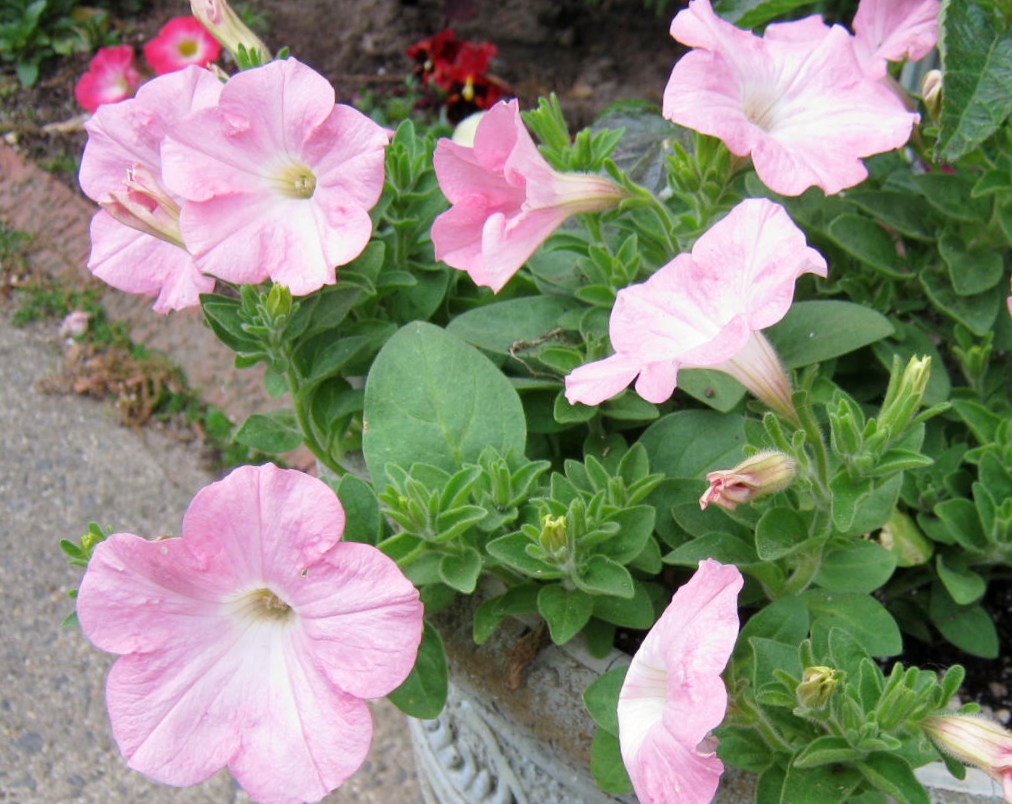
You can count on the variety of bedding plants called, “Proven Winners” to live up to the promise in their name. Wave petunias, proven winners, in a gorgeous shade of pink, grace the entry into my home. The soft glowing color reminds me of my Grandmother who loved this shade of pink. All summer, they will bloom and continue to cascade over the edge of their pot. I have planted these petunias near the front porch and in two hanging baskets in the front garden. They combine well with lantana and the chartreuse green shade of sweet potato vines.


I was walking in Alcyon Park when I noticed a fallen branch. Oh…not a branch at all…

…A long, rather large snake.
I thought at first he was not alive,
until I prodded him with the toe of my shoe. Yikes!

He didn’t appreciate that at all.

He continued to advance and coil, and I retreated…quickly.
He was at least four feet long.

Of course, I posted my pictures on Facebook.
Friends thought he might be a…
Rat snake, King Snake or a
Black Racer.
I am not sure, I just know he was a “BIG” snake.

He/she retreated back into the woods.
I won’t be walking in there anytime soon.
After googling the names my Facebook friend suggested, and checking out the photographs on the sites I found, I am convinced he/she was an Eastern Black Rat Snake. This means he is a very good snake to have around. I’d rather have hundreds of this fellow living in the woods nearby, than have hundreds of rats and other destructive, disease-carrying rodents.
My slithery friend didn’t fall under any category I use for my blog, so I used my blogger’s prerogative, and took some creative license when I created the new category of “Phascination.” (fascination)

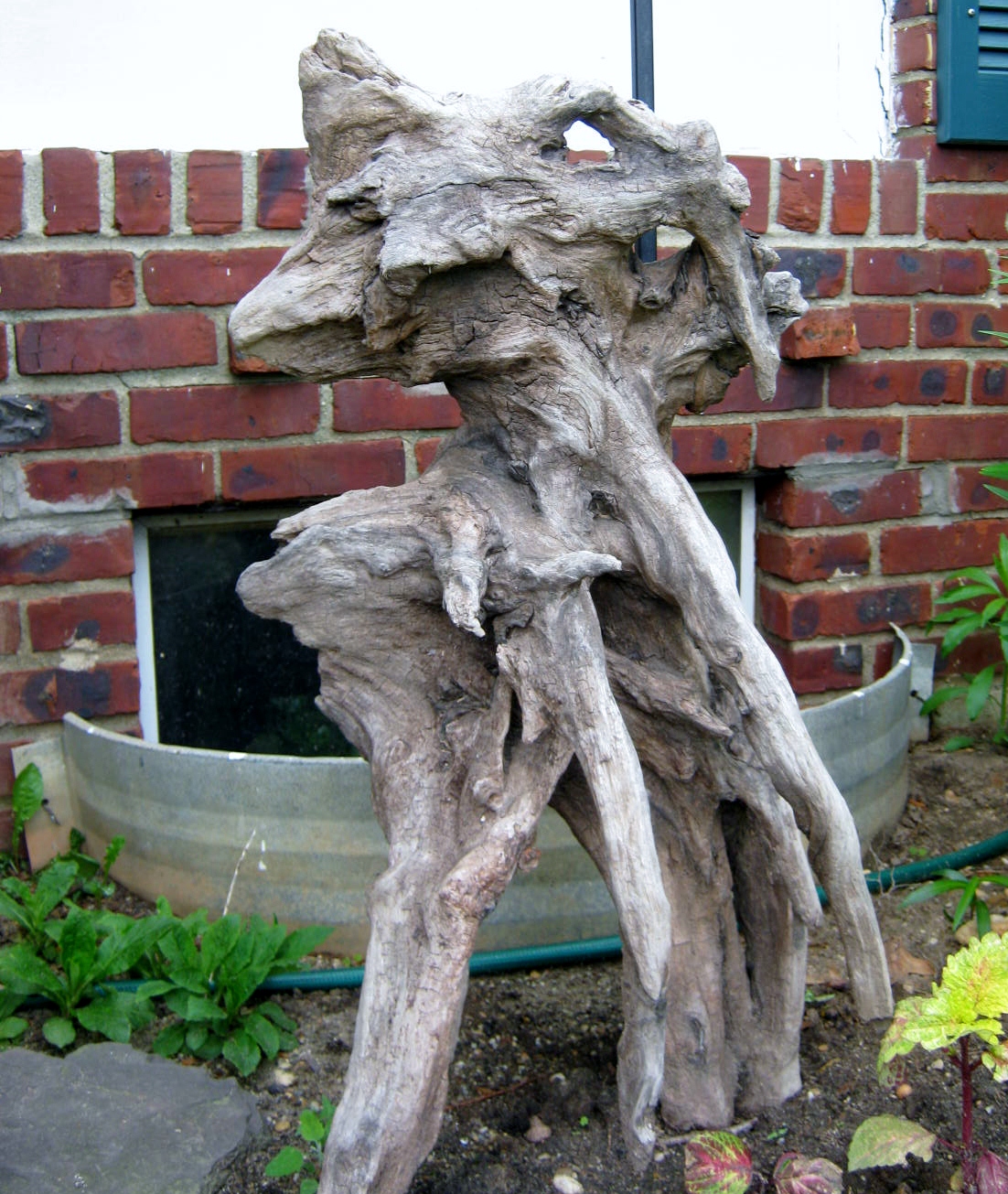
I love driftwood and the gnarled roots of trees, aged and weathered into God’s own art. This piece, which I think resembles an octopus, was found on the banks of the Chesapeake this spring. I haven’t found the perfect spot for it, but when I do, ever after, that garden will be known as the “Octopus’s Garden.” I have to credit the Beatles’ song of the same name for the inspiration.

Thy word is a lamp unto my feet, and a light unto my path. Psalm 119:105
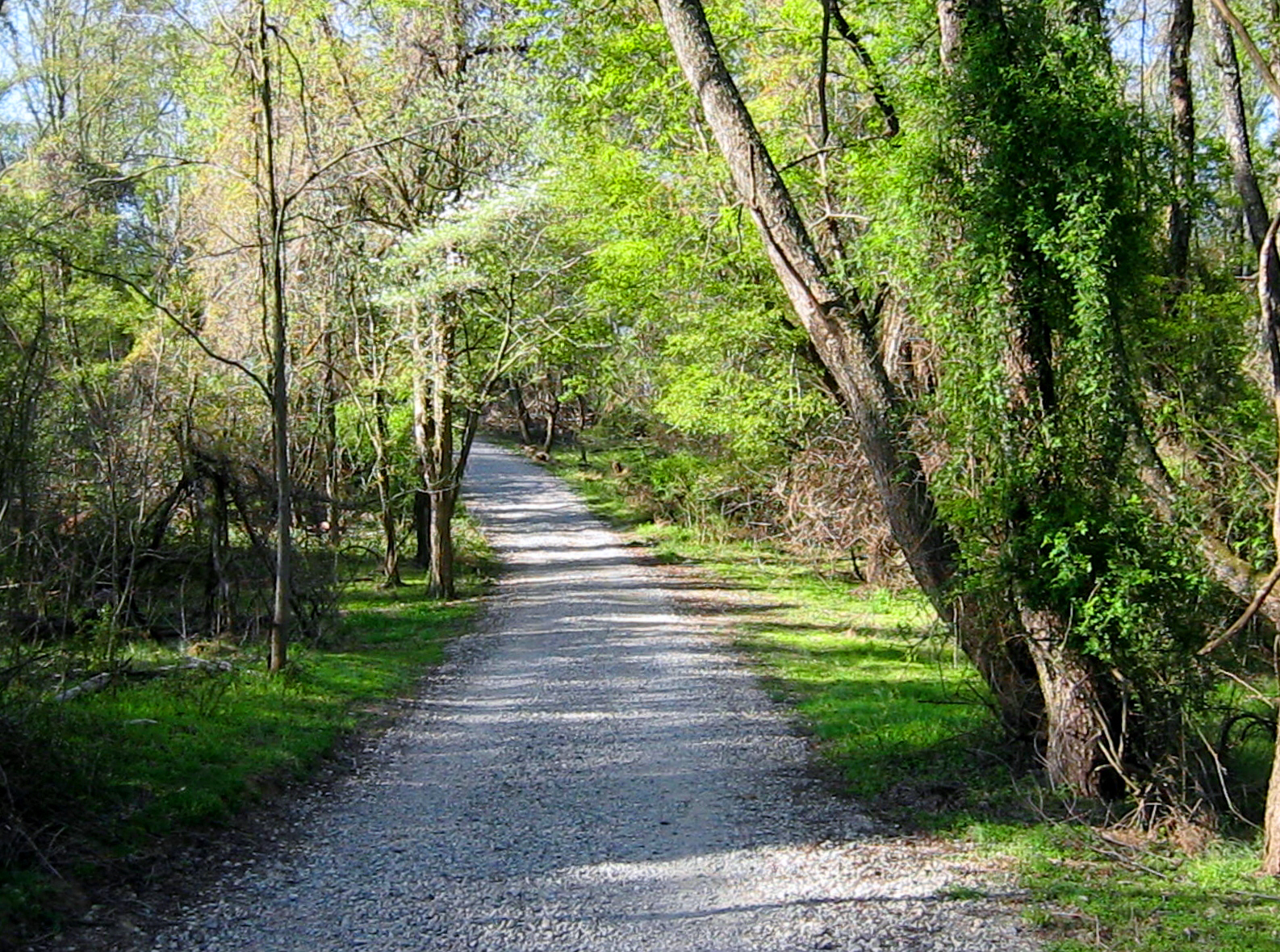
Path to Turkey Hill Lighthouse, Northeast, Maryland


Praying Mantis are a favorite of mine. They are unique and interesting in appearance. I have often carried praying mantis specimens around my yard and posed them on garden blossoms for photographs. What I love most though, is how efficiently they rid my garden of unwanted pest insects.
This past Autumn, two female praying mantises laid egg cases near my back window. I also was lucky enough to find a few pods in the fields near my home. Of course, I transported these lucky finds home. Two of these have been kept on my windowsill in a decanter. Yesterday the egg cases hatched.
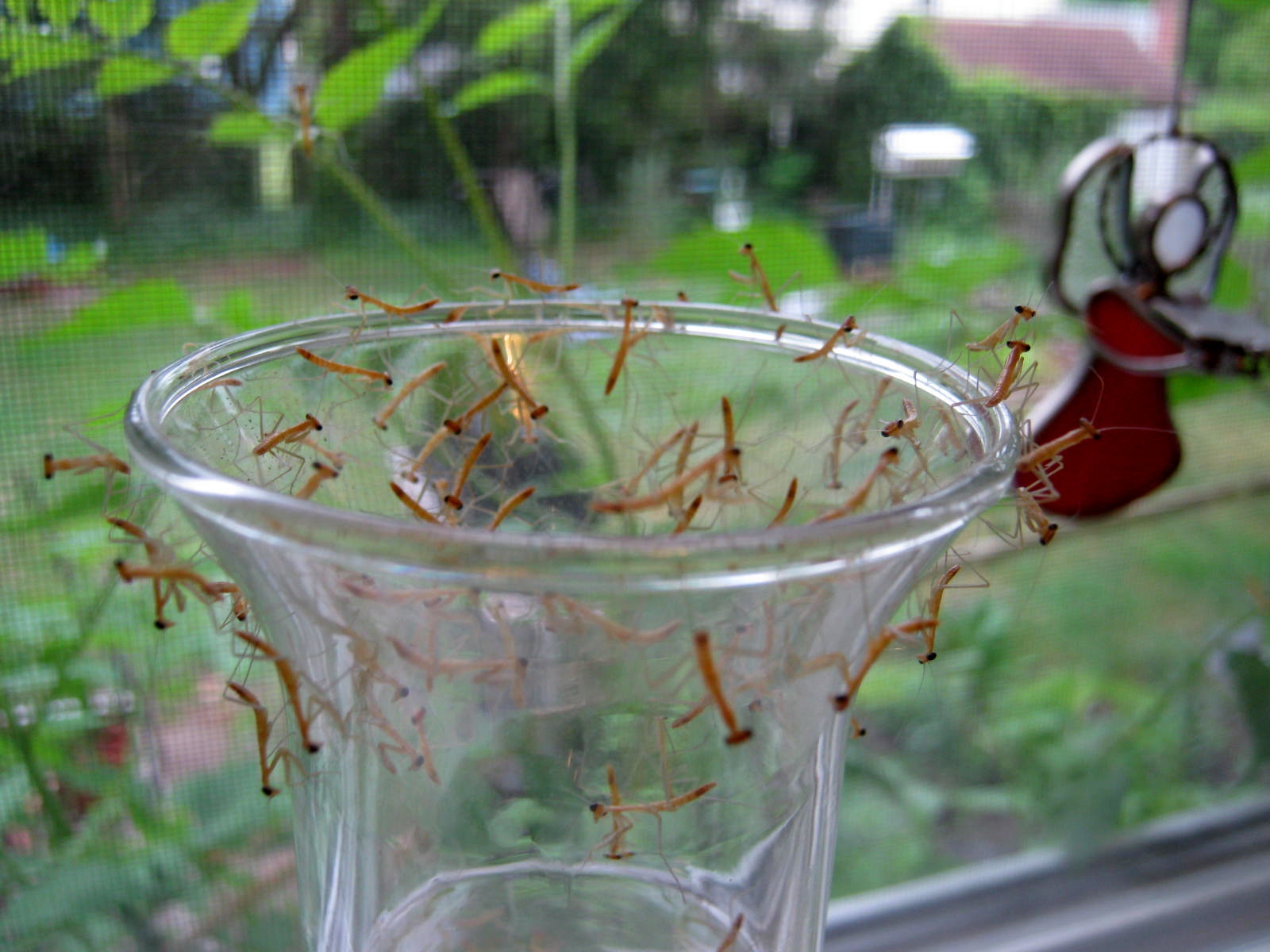
I don’t know exactly when the baby mantids began to emerge, but a hundred or more were born within a matter of an hour or two. Most stayed on, or near, the decanter, but several escaped into the house. After I took most into the garden, I spent a good half hour capturing as many as possible from the area near my kitchen sink. This morning, I noticed a few strays still walking on my ceiling.
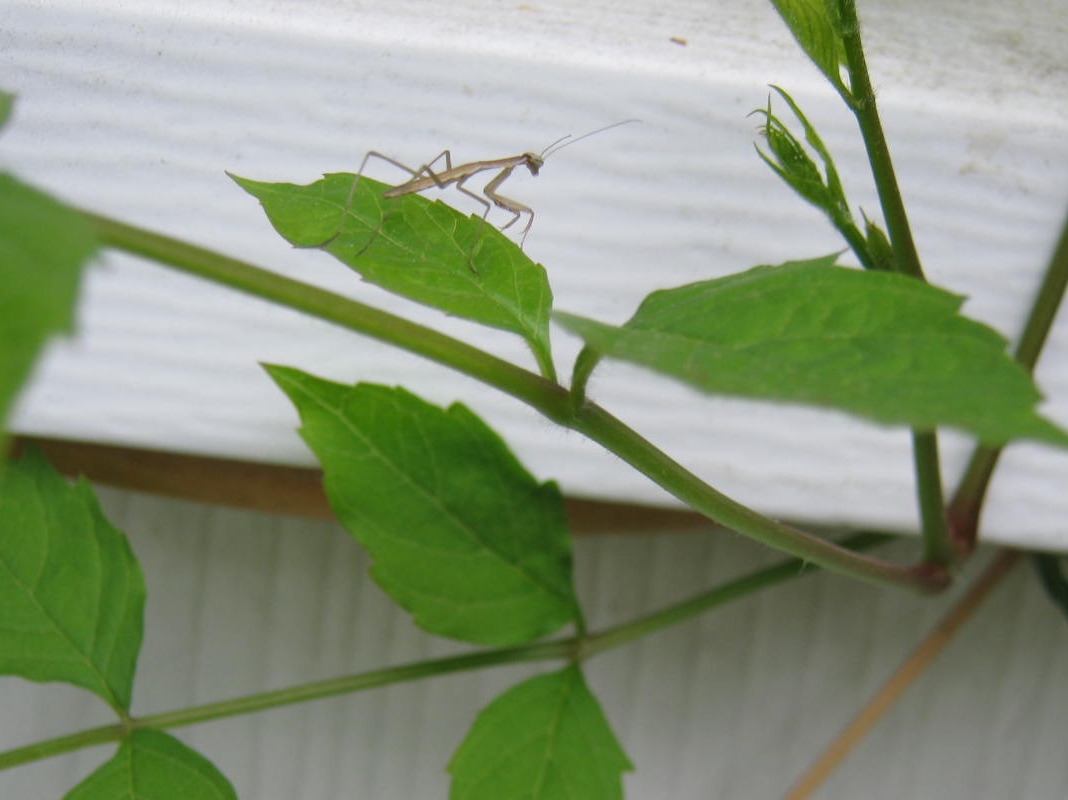
I think the outdoor pods hatched a day or two before those kept indoors. The babies I spotted in the garden are bigger, deeper in color, and quicker in movement than their newly hatched neighbors.
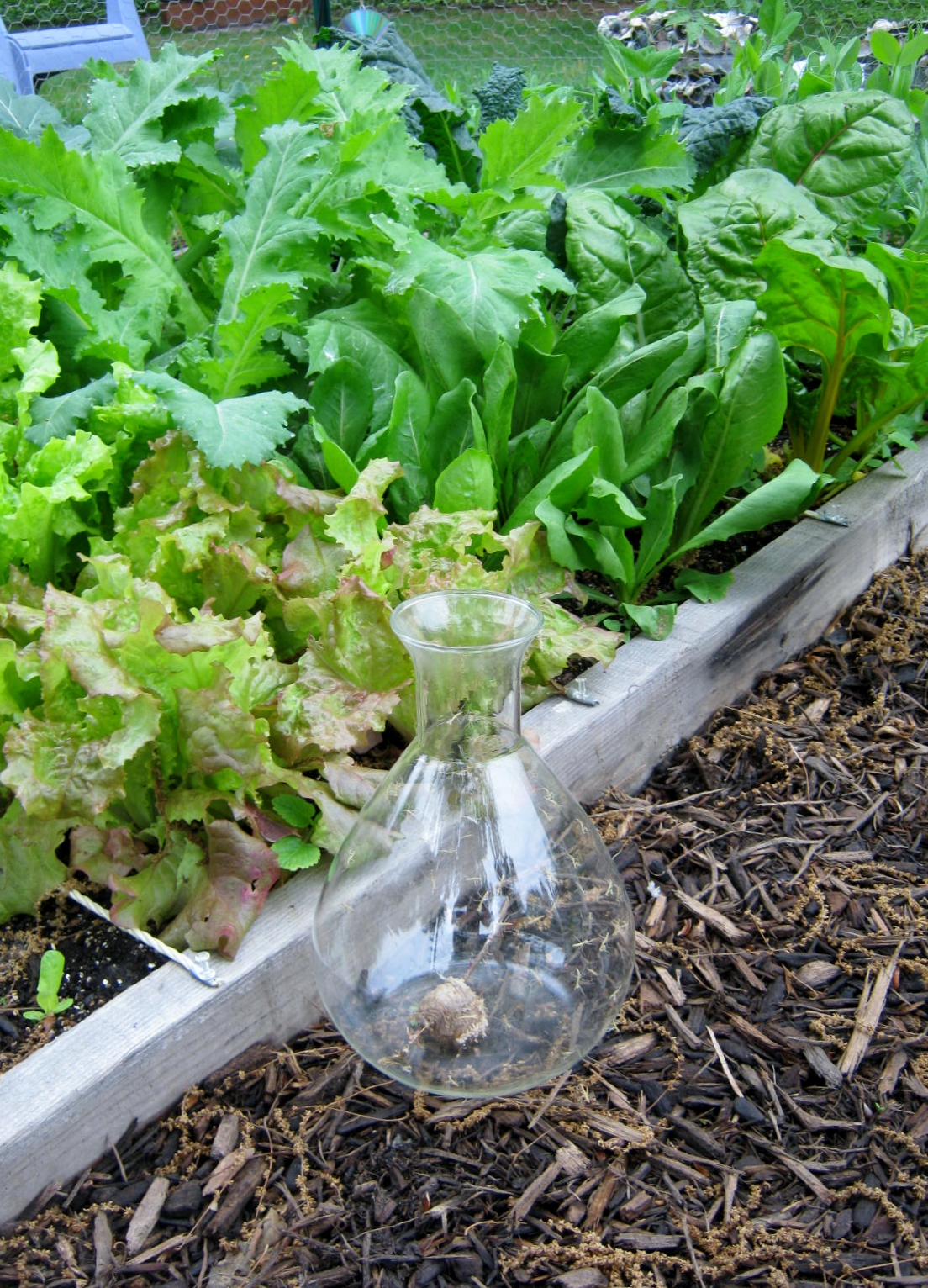
I shook several of the baby mantids out of of the decanter into my square foot gardens. I want to garden organically, and the mantis will help with pest control. Right now, aphids and other small insects will be their major food source, but in a few short weeks, no insect will be safe from the powerful arms and jaws of the juvenile and adult mantids.
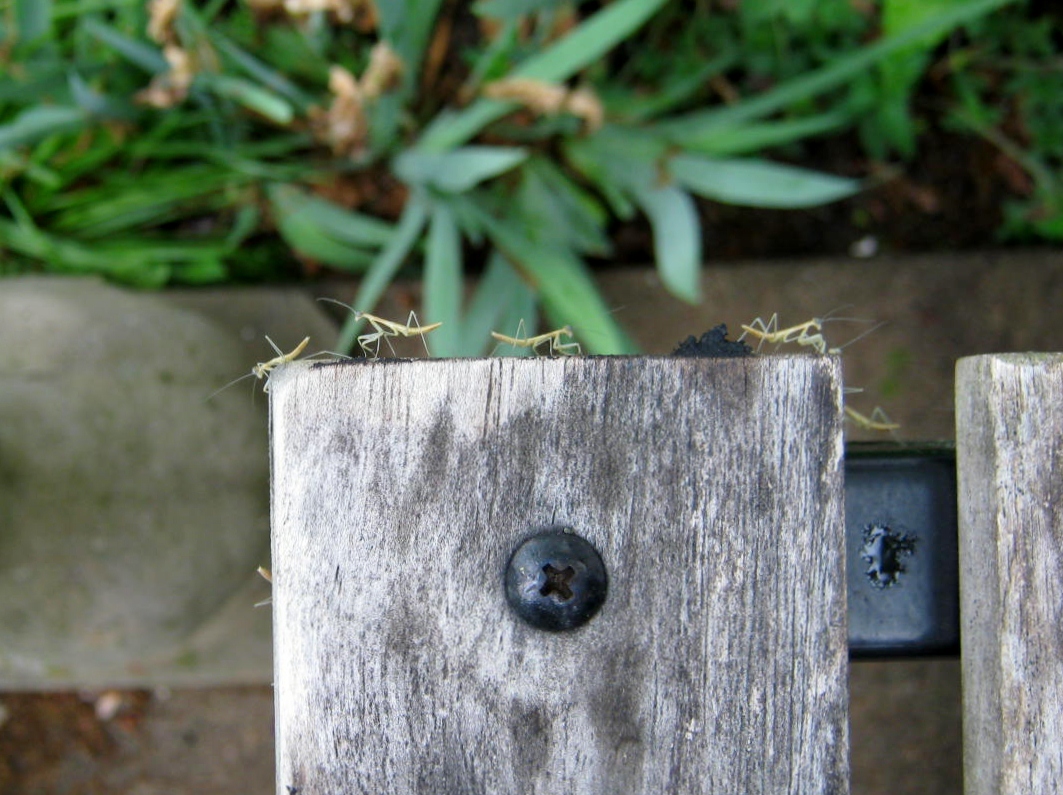
Here are a few walking about the patio, trying to find a new place to hide. I am sure, as they grow, I will find them and pose a few for photographs. I’ll keep their progress updated here on the blog.


My Square Foot Gardens are doing great. Except for a few empty squares in the second garden, most of the space is filled with seeds or plants and growing well. I have harvested many servings of lettuce already. In fact, I can’t eat it fast enough and have been taking handfuls to family whenever I visit. The lettuce comes in a wide array of greens, pinks and reds and pairs perfectly with the arugula and water cress I have growing in the herb garden. A new sowing of mesclun is thriving and will soon be ready to begin harvesting. The bread seed poppies are magnificent and I expect them to send up budding stalks any day now. The peas in the back of the garden are in need of quick staking, they are growing a few inches daily.

Here is a closeup of the earliest sown squares. Last week I sauteed a few pieces of kale with olive oil and garlic powder. Ah, so amazingly good; I wish I had begun this type of gardening years ago. This week I tried several leaves of the swiss chard. I chopped the stems and ribs and kept them separate from the leaves.


I gently boiled the chopped stems, and after about three minutes added the leaves along with a little Adobo spice mix, and gently simmered a few minutes longer.

Wow! The taste was beyond my highest expectations. I sprinkled the swiss chard with a squeeze of fresh lime, and “oohed” and “ahhed” with every mouthful. The best thing about both of these greens is they are still producing. I can’t wait to try my hand at cooking and eating them again.


I’ve been visited by a lone wild turkey once in the past few years. Yesterday, I looked out my back window, and there beneath my bird feeders, feasting on fallen seeds, was a flock of five of the big birds. Yikes! They are unique and a bit intriguing, but I was not going to stand at the window gawking and allow them to jump the chicken wire enclosing my Square Food Garden. I could envision all my gorgeous lettuce, bread seed poppies, peas and other sprouting vegetables quickly disappearing down their long throats. As I chased them out of the yard, their gobbling sounded like snarky laughter. I guess I did look a bit comical gallumphing around the yard in a big purple robe and floppy slippers. They sauntered away, unafraid, through a gap in the back fence. What, or should I say, who is next, in the constant backyard invasions of critters?


I love yard sale season. This past Saturday my husband and I browsed Wenonah, New Jersey’s, town-wide yard sale. We both found treasures: extra-large brandy snifters for terrariums, vases, coffee mugs, books, etc., what bounty, and so much fun for under 10.00. My favorite finds were solid brass giraffes for 50 cents apiece. I love the look of brass amongst ivy. The colors and simplicity of each complement the other. The brass figurines add a touch of the magical to the wide expanse of the ivy bordering our back yard.

Another favorite purchase was Donald Trump, the doll. He is a find for us since we enjoy watching “Celebrity Apprentice” every week. We were even more intrigued to discover that he can talk. Push a button on his back and all of “The Donald’s” best one-liners will play, and yes, he does say, “You’re fired.”

When my son and daughter-in-law were married on Colombia’s San Andres Island my husband and I were captivated by the lively beat of the island’s favorite song called “Ragga Ragga.” The video shows a few shots of the beautiful island and then shows the lyrics spelled phonetically.
The second video is an activities director giving directions on how to do the “Ragga Ragga.” The directions are in Spanish but it’s easy to follow his movements and dance along.


Johnny Jump Ups, moss, Vinca leaves, barberry leaf, violets & wild onion curls
I have several books of this seasons pressed flowers dried and ready to use. The batch of cards in this post is composed with spring-flowering pansies and wildflowers. I glue pressed flowers to white or eggshell cardstock with rubber cement. After they are dry I press the finished art inside a book with a weight for several hours or preferably overnight. I then check for any loose spots. If I find one or more I touch these up with rubber cement on the tip of a long floral pin, and after they are dry re-press in a weighted book. When they are completely dry I position them on a complementary piece of colorful cardstock cut into a standard greeting card size. Below each pressed flower photo I’ve listed the plant material I used.

Common celandine, johnny-jump-ups, honeysuckle leaves & wild onion curls

Butterfly: pansy petals, nandina leaf, maple bud, seaweed stems & unknown weed foliage

Wild rose leaflets, wild onion curl, wild mustard sprigs & johnny-jump-ups

Buttercups

Johnny-jump-ups, common celandine, honeysuckle leaves & wild onion curl

Wild onion curl, maple keys (seed pods) fern with fiddlehead, Vinca springs & unknown weed sprig
I thought this card has a definite heart shape, but my husband didn’t see it. He thought the maple keys looked more like wings. I guess it’s proof of that old cliché: “It’s all in the eyes of the beholder.” I like it though, it’s unique. I am going to try to make some dragonflies with the maple keys next. I’ll post the results soon. Here’s another maple key composition below.

Wild violet, fiddlehead fern, unknown weed foliage, common celandine bud maple keys & wild onion sprig

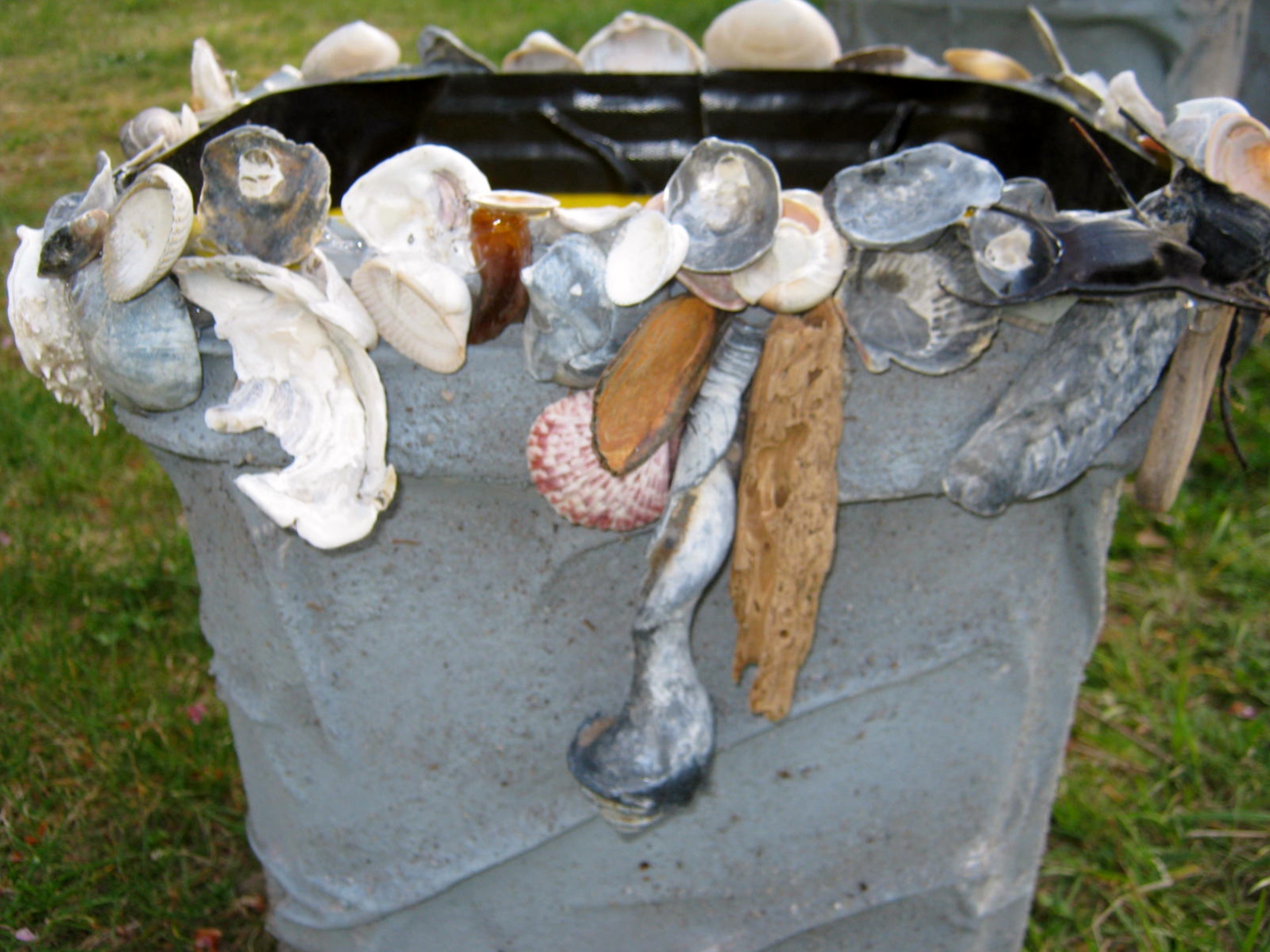
Wikipedia defines Upcycling as: “Upcycling is the process of converting waste materials or useless products into new materials or products of better quality or a higher environmental value.”
I have been setting large 35-pound kitty litter buckets aside for several months. They are too sturdy to throw away, and they are not the kind of plastic that I can put into the recycle bin. I decided to use them for container growing. Before I filled them with soil, I knew I needed to do something to make them look a little more presentable. I was determined to keep the project as low-cost as possible, and use things I already had around the house. Hmmm…what to do? Plastic is notoriously resistant to paint. Buying the special spray paint made for plastic was out of the question. It is expensive and I am not sure how well it works. I have a lot of fabric scraps on hand and wondered how I could glue them to the bucket and waterproof them at the same time. I came up with the idea of using old latex paint we have in the house. If you’ve ever touched a fabric dropcloth after paint has dried you know how stiff it becomes. It also will work like glue, and so my idea was born. Below are the easy steps to putting together a fabric covered kitty litter bucket that is durable and waterproof.
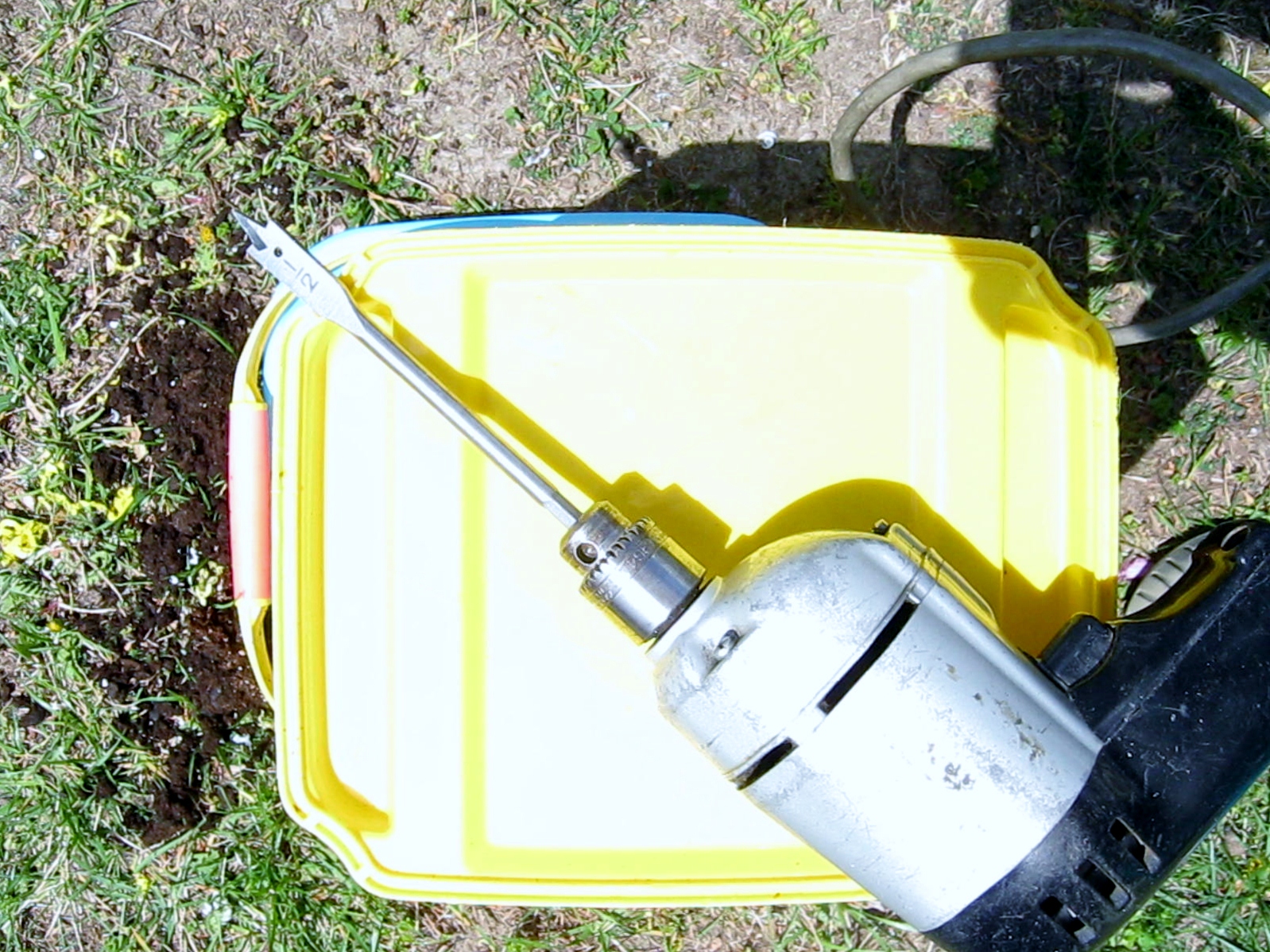
Step One: Wash bucket and let dry. Drill holes in the bottom of the bucket. I also bore holes in one of the buckets with a sharp pair of garden shears. It took forever, but if you don’t have drill it is an option.

Step Two: Gather together old latex paint you have around the house. I added whites to some reddish purples and greens. Red and green are opposite each other on the color wheel and this created exactly the color I wanted, a grey reminiscent of concrete.
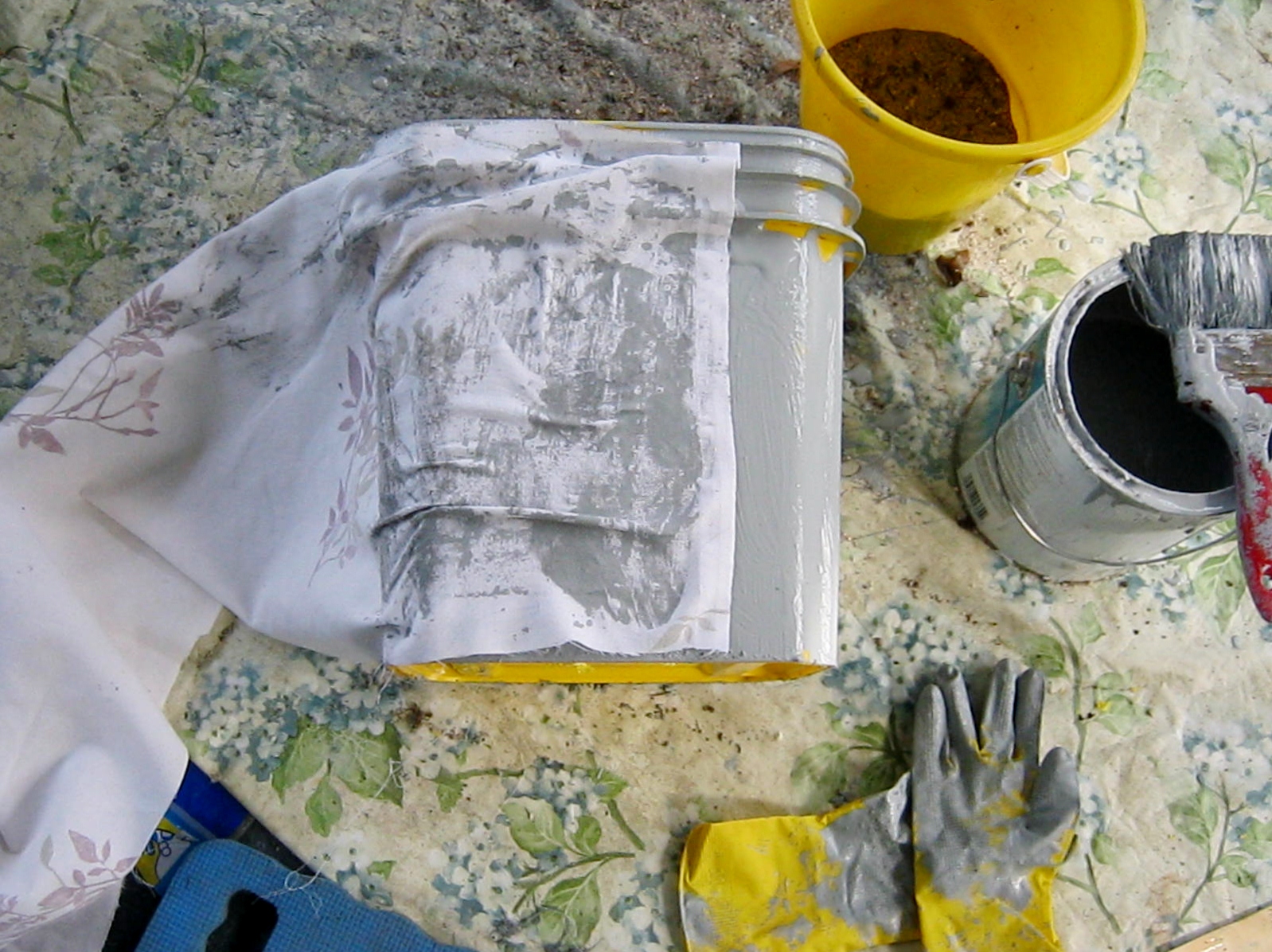
Step Three: I cut pieces of old sheets to size, making sure they wrapped around the bucket with about two inches of overlap. I then began to paint the buckets with an old paint brush. (Important Tip: It’s messy! Wear some disposable plastic gloves) After I covered a side with paint I pressed the sheet into the paint and then painted over it. I continued until the whole bucket was covered. I didn’t try to smooth out all the wrinkles as they added some interest. To add texture and make the bucket look like real concrete I threw play sand all over the wet paint. At this point I set the bucket aside to dry overnight. The next morning the painted/sanded fabric was dry, stuck fast to the sides, and waterproof.

I wanted to decorate the top in some way. I did not paint inside the bucket. I don’t know if growing food inside something painted with latex paint is safe. I know that some gardeners who are strictly organic will not grow food in plastic, but I have decided since I will be doing everything else organically, no pesticides, etc., I am not going to become fanatical about growing in plastic. There has to be a place you draw the line, and that is my line in the sand, but anyway back to the directions.
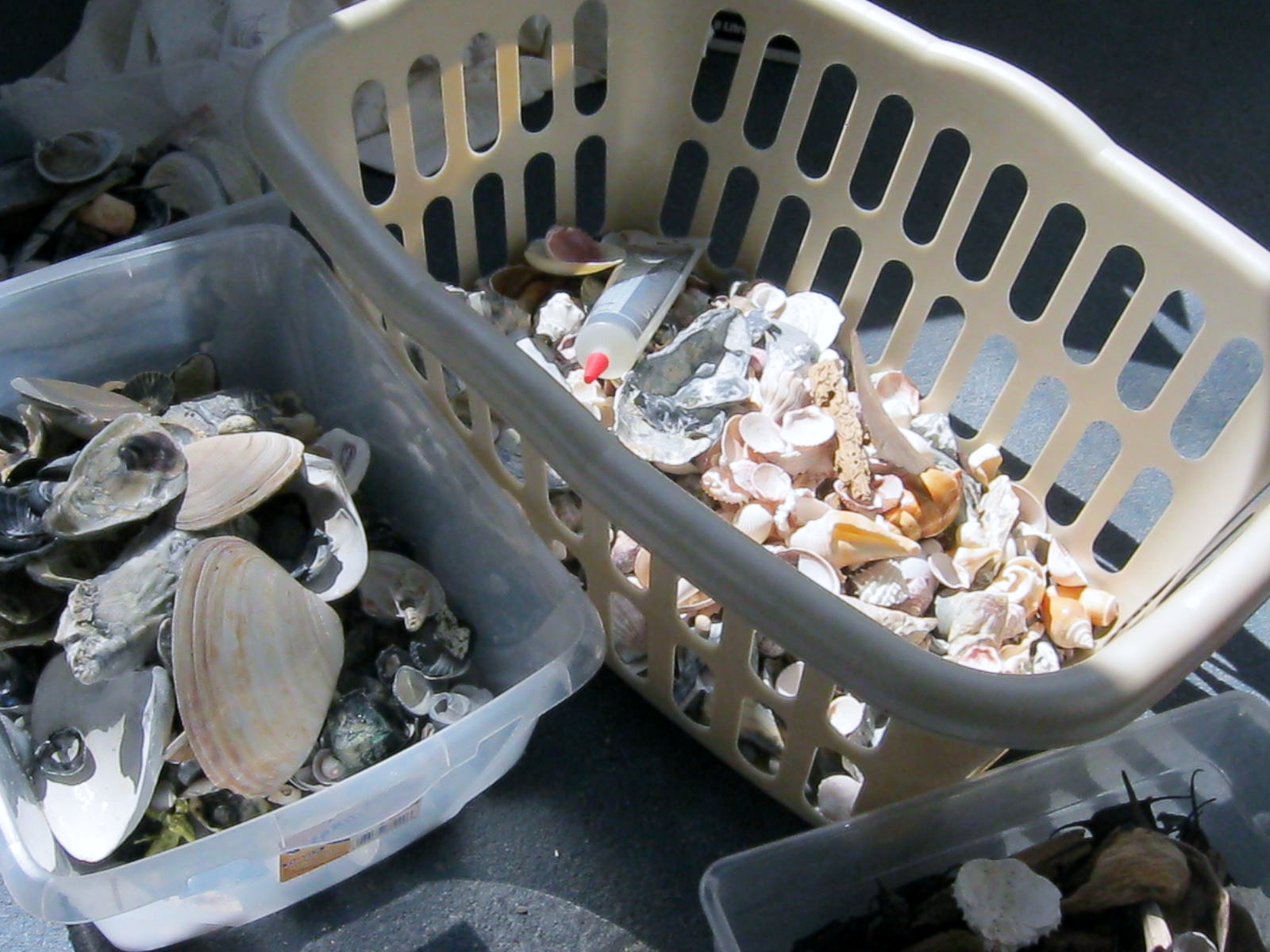
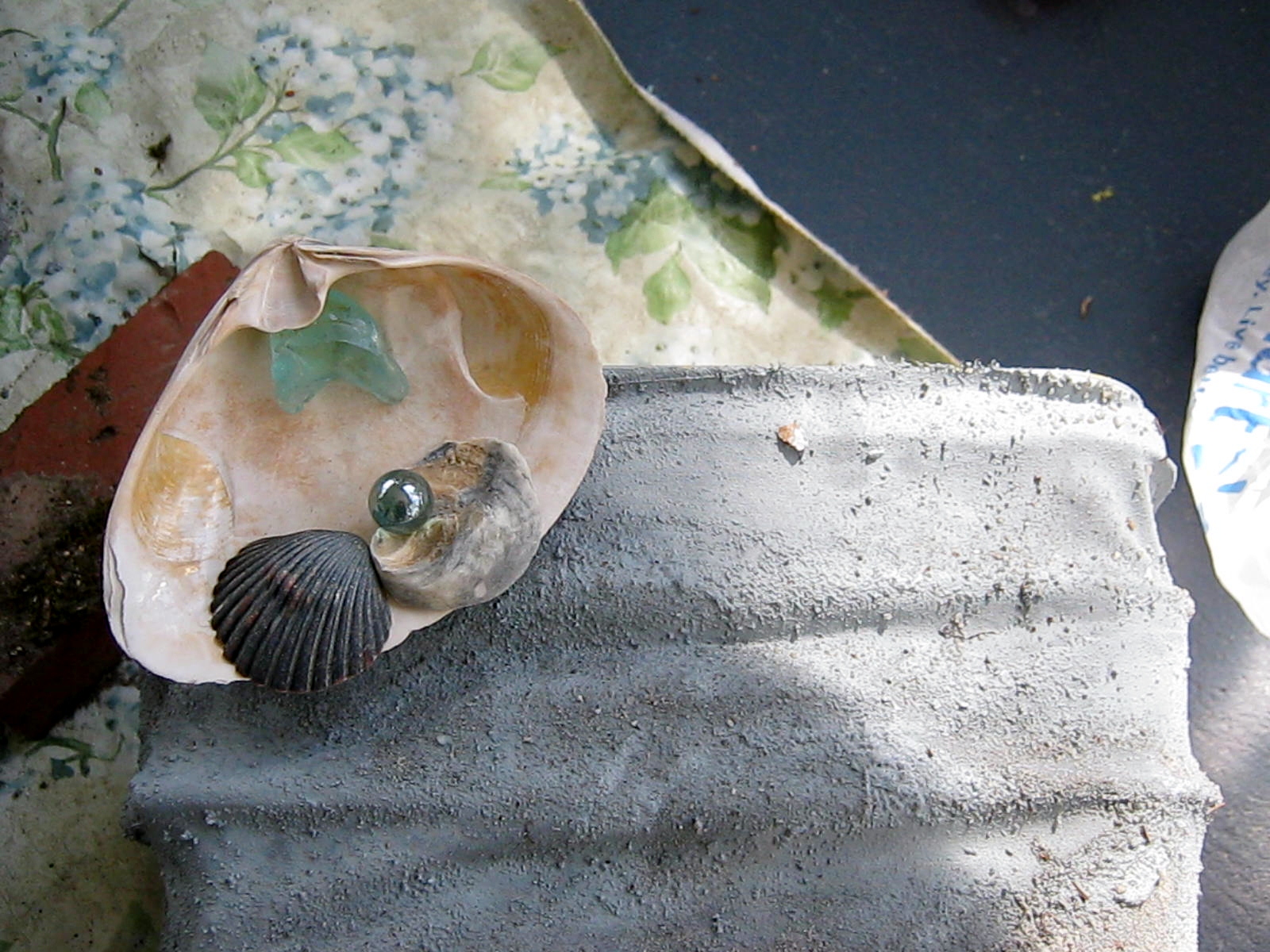
Step Four: I am an avid beachcomber and have many baskets of seashells, sea glass and driftwood. I had to put out a little money on the adhesive used to decorate the top borders. I used silicone caulk in a caulk gun and affixed shells to one side at a time. I let each side dry at least six hours before turning the bucket and proceeding with the next side. To put a border on all four sides of ten buckets I needed three tubes of silicone caulk. The safety seal on the silicone assured me it would be safe to use on items that would hold food. To add a double precaution I tried to keep it away from where water might pass over it and into the bucket.
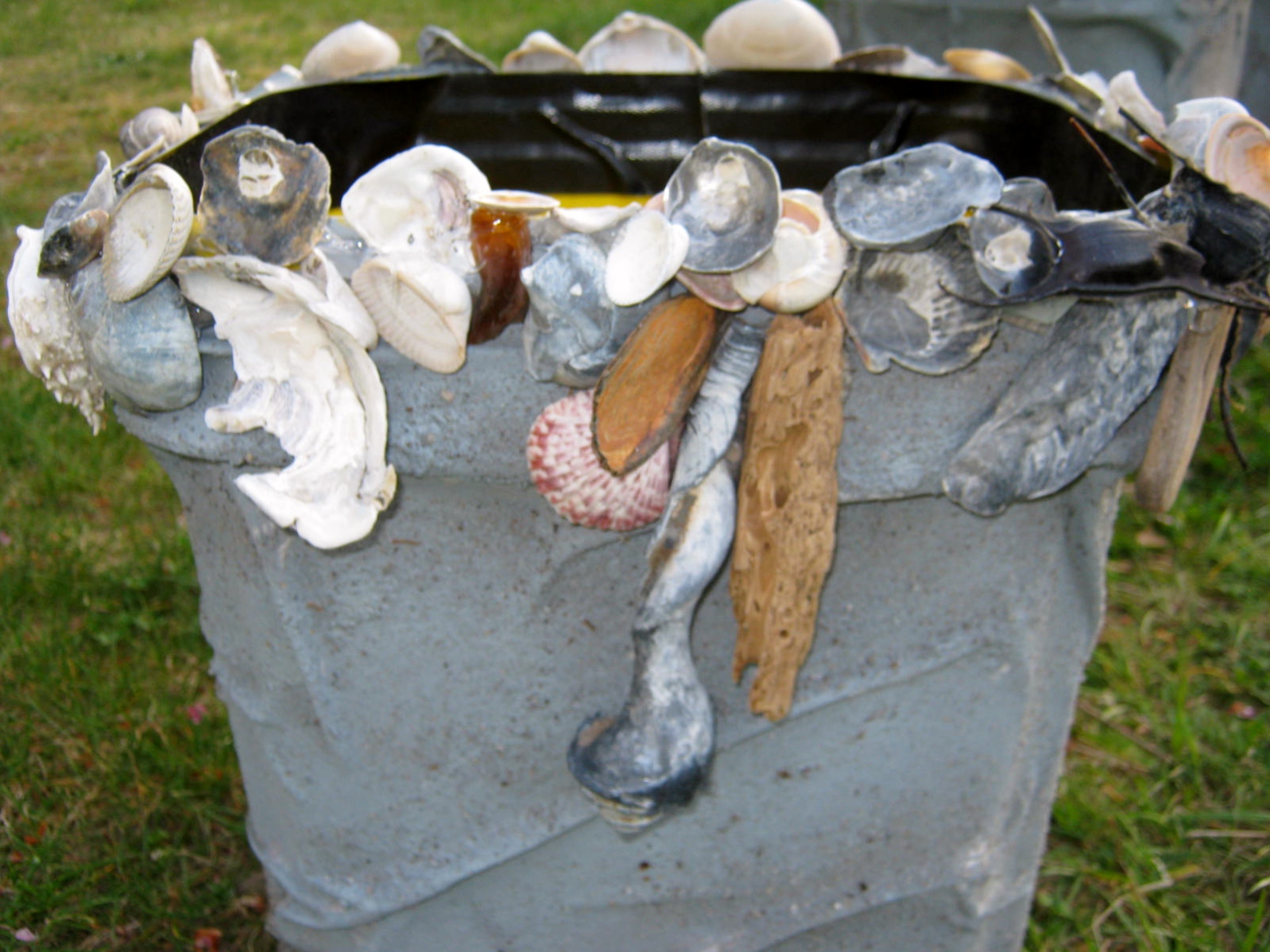
I’m pleased with the finished result. Mine are decidedly beachy, but they also wouldn’t look bad plain, or maybe dressed up with moss, sticks, vines, anything that would add a bit of the outdoors without costing much.


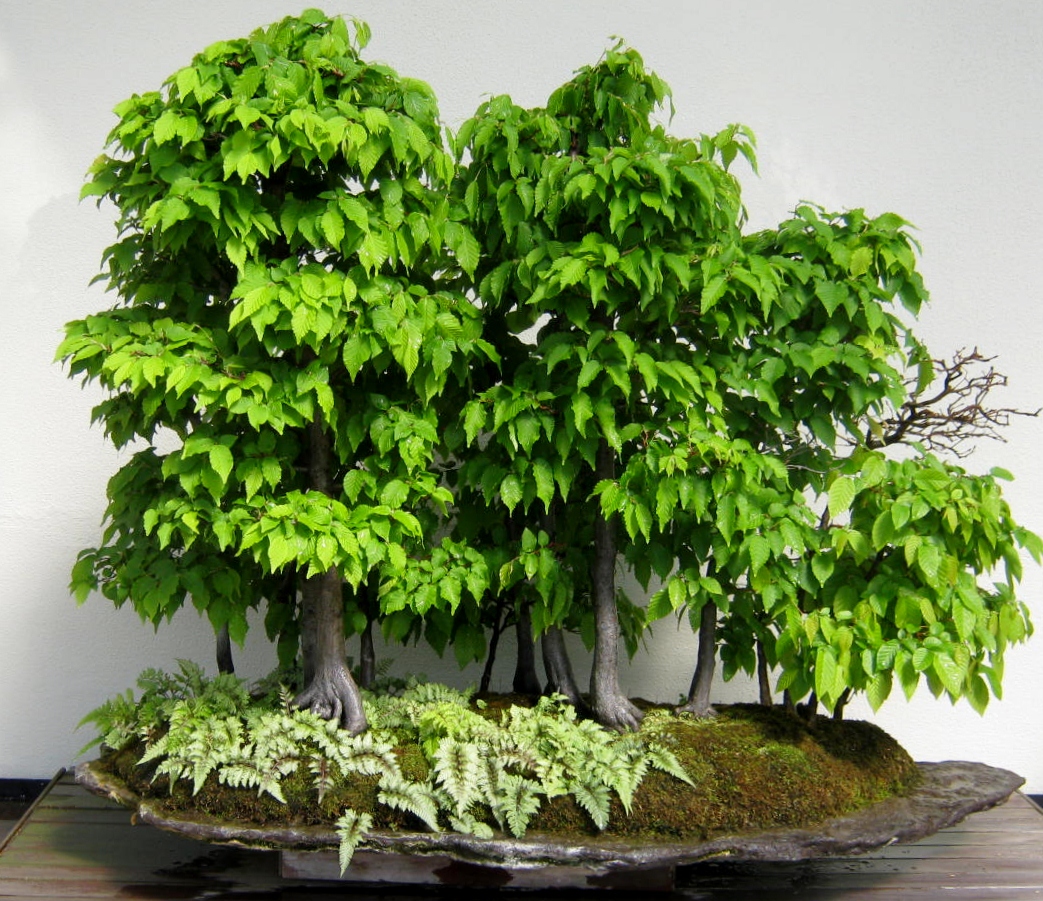
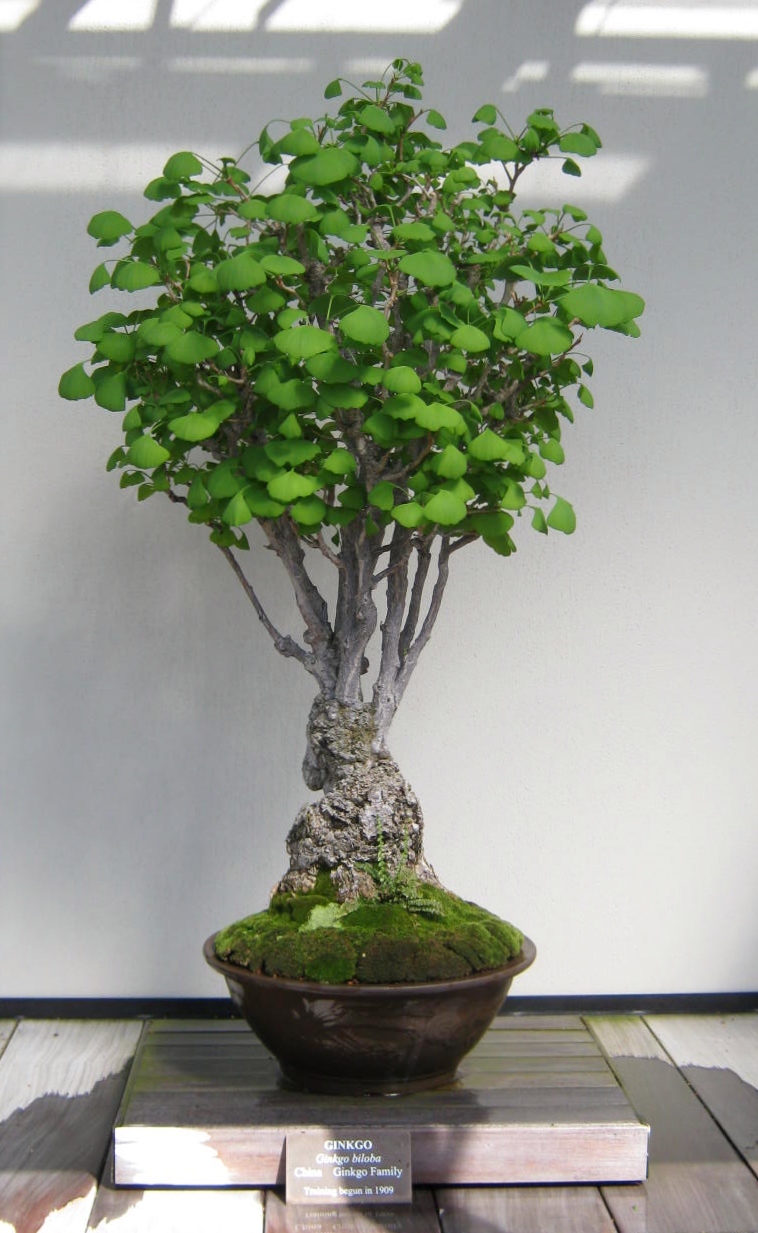
Longwood Gardens in Kennett Square, Pennsylvania has an excellent display of Bonsai Trees in their conservatory. I’ve included a few pictures of this beautiful art form on the blog today. My favorites are the plants trained to appear as a small grove of trees in a forest. Lovely!



I have been pressing hundreds of Maple seeds each day. The trees are at peak production at this time of year, although some varieties produce seed in the Autumn. The proper name for Maple seeds is Samara. They are also known as whirlybirds, helicopters and keys. I press Maple keys by cutting away the seed, and gently heating them in a book with porous pages.
Maple keys come in a large variety of sizes and colors. I pull some of the keys from the trees to capture their bright green, pink or apricot colors. The seeds quickly fade in color after their whirling flight from the mother tree, but these muted colors also have great uses in pressed flower compositions. Pictured below are a few ideas for using Maple Keys.

Two halves make a pretty heart shape.

Combined with other flowers and leaves, the keys create interesting effects as butterflies and dragonflies.

Maple keys make great fairy wings.
Maples are amazing trees. They provide us with many products. Maple is used for fine furniture, the sap makes amazing syrup, and new to me was the fact that you can actually eat the fruit of the tree. Remove the husks from the seeds and they can be boiled, roasted and even pounded into a flour. Amazing! God has given us so many beneficial trees in our world, and I am very grateful for the beauty and resource of the common Maple tree.
Preparedness Tip: How to use Maple seeds as a food source.

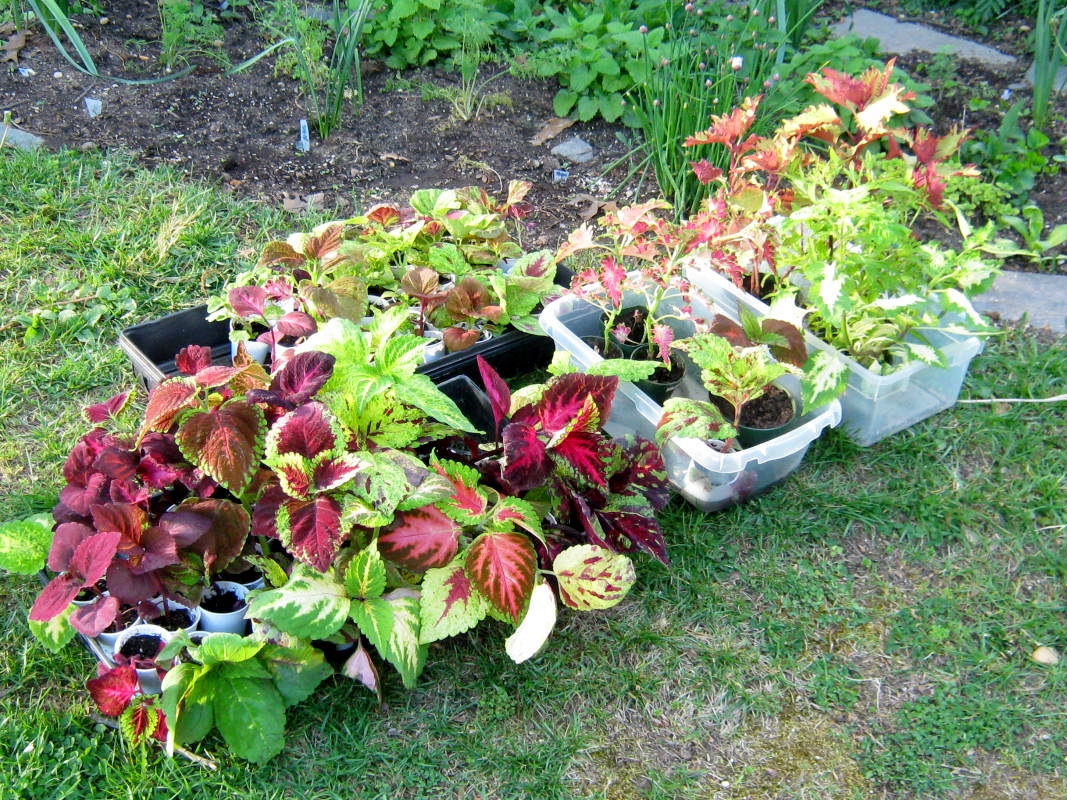
The Coleus started in January have grown into these gorgeous plants. Even though it seemed early, January was the best time to start my coleus seeds. I am planting them out this week. The roots have outgrown the small Dixie cup pots, and the soil they are planted in dries out in a day. It might be a tad chilly at night, but I doubt we will experience another freeze. I will have my bed sheets and tablecloths at the ready though, just in case.
Coleus Sprouts in January
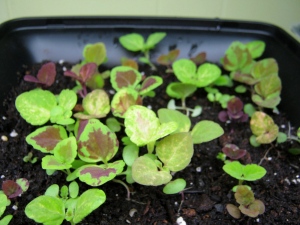
I was unhappy with the Rainbow Floral Strain of Coleus seeds I purchased. As they developed they showed no promise. I did not keep any of the plants beyond a few weeks.


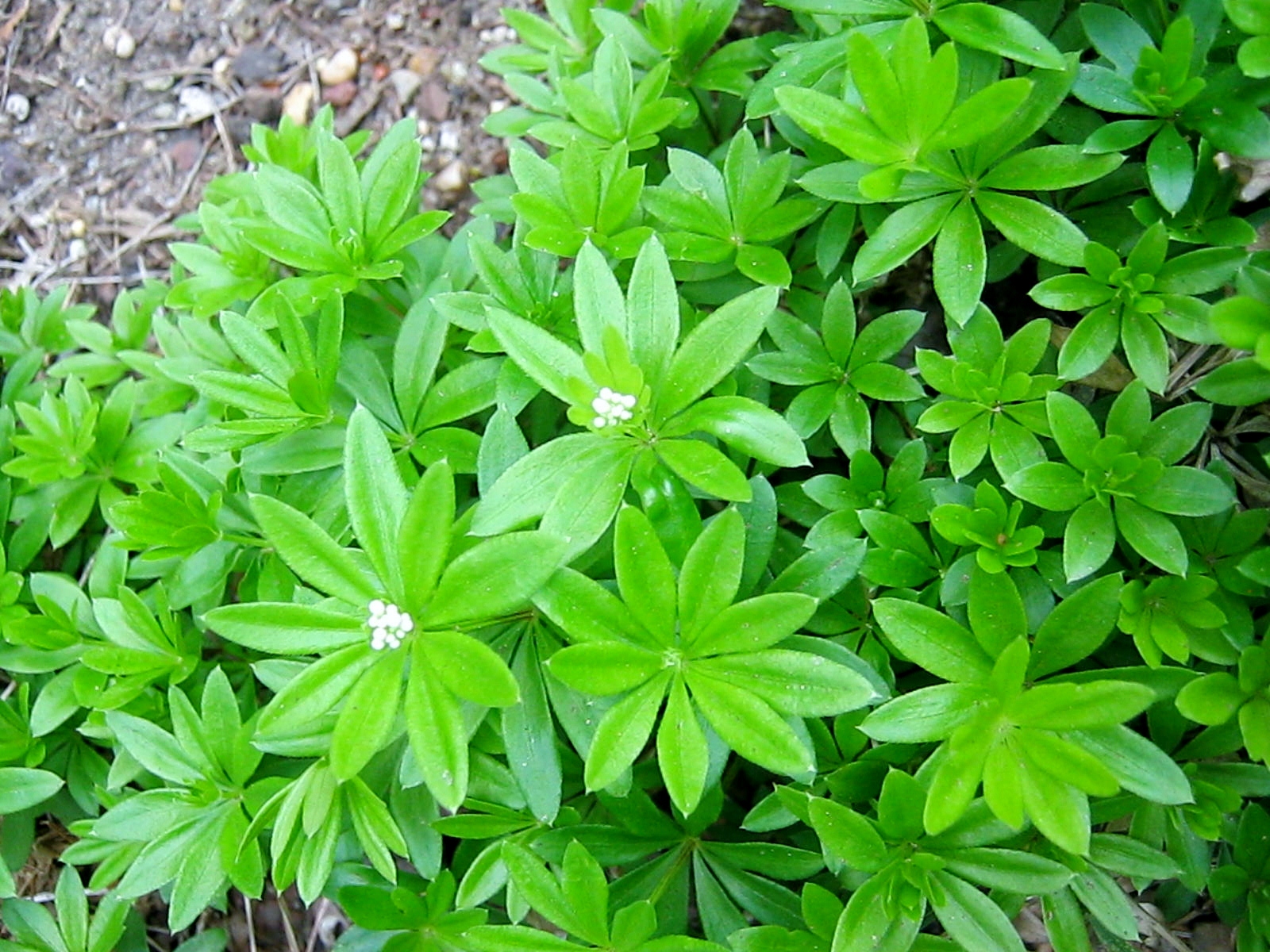
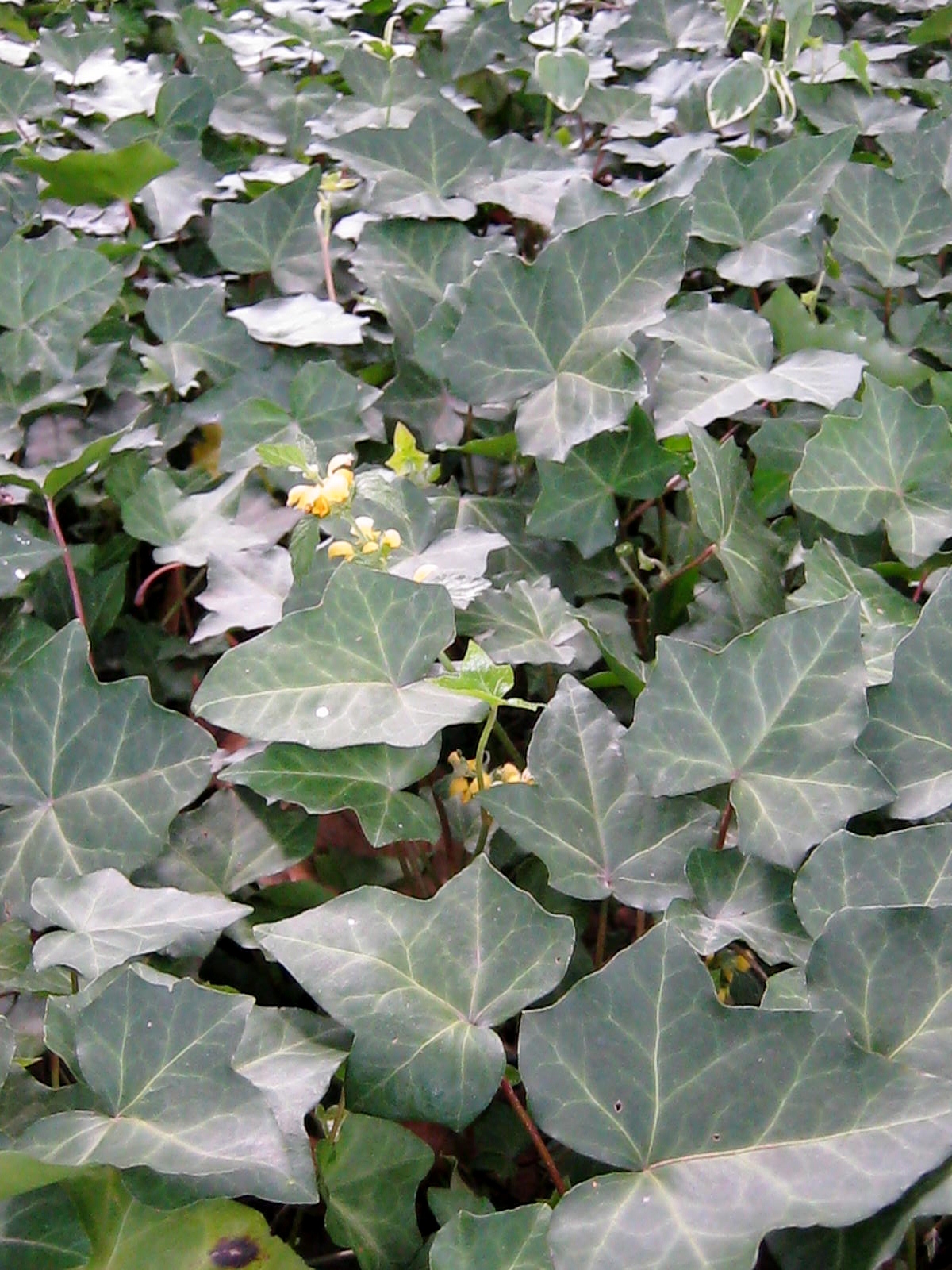
I love my groundcover plants. I have quite the assortment. I have found many of these in places people have dumped their lawn refuse. These include: ajuga, vinca, lamium (archangel variety) and ivy. I’ve purchased creeping jenny and sweet woodruff, and the small price I have paid for these has been well worth it as they have multiplied and covered areas that aren’t conducive to growing other garden plants.





My Winter Sowing has been a wonderful success. A few things did not come up, but I think the seeds I used in those instances can be called into question. The seeds that did not sprout were older, and some came from seed exchanges, and I wasn’t sure about their age or viability.

I am sure that I will winter sow every year from now on. I also will use only the larger sized milk gallons in the future. The juice and soda bottles also worked, but the seeds sown in the milk jugs sprouted and grew better. The stars of my winter sowing are the poppies and andrella asters. I’ve already transplanted the bread seed poppies into my Square Foot Garden. Even though they have taproots, they adjusted within a week, and are growing at a quick rate. The annual poppies I sowed are doing even better. I can’t wait to get them into my garden beds. The Andrella Asters are a huge surprise. The seed came from Baker’s Creek Heirloom Seeds. I’ve tried to grow asters in the past with minimal success. The winter sown aster plants are lush and covered with foliage already. I’m so excited about the beautiful asters I’ll have gracing my gardens in a few months from now.

My Square Foot Garden is producing a bounty of leaf lettuces. I am really pleased with the Black Seeded Simpson variety. This was also winter sown and has been planted out for a few weeks. It is a beautiful chartreuse green color and tastes heavenly in my salads. I am planning to mulch around the gardens soon. I am hoping that it will keep some of the critters at bay. This week there was a gang of five rabbits in my yard. Big rabbits, with big chewing teeth, thankfully feasting on the clover in the lawn rather than my garden plants. I am making up more water balloons today.


