Pots & Pans – Banana Bread

Did I mention in my first posting of this recipe that banana bread smells heavenly while baking? Yes, I see that I did…but it bears repeating, just as this recipe deserves a second time around on the blog.

Hmmm…What to do with overripe bananas?

Delicious. The aroma as it bakes is mouthwatering. An added bonus…it’s good for you.


Banana Nut Bread


3 Bananas, pureed or well mashed

2 eggs, lightly beaten

3/4 C sugar

2 C flour

1 tsp salt

1 tsp baking soda

1/2 C walnuts, chopped (optional)


Puree the bananas, add two lightly beaten eggs. Stir in sugar.

Sift flour with salt and baking soda.

Add to banana mixture. Mix until all ingredients are moistened. Do not over mix.

Pour into greased and floured bread pan.

Bake in a preheated 350 degree oven for 50 -60 minutes

Remove from pan after 15 minutes.

Cool…or if you can’t wait…eat it hot!!!


Pots & Pans – Quaker Oats Oatmeal Cookies

I’ll be making these for my Christmas Cookie Tray.

I’ve loved Quaker Oats oatmeal all my life. I often stir up a batch of it in the morning, dollop it with butter, brown sugar and a teaspoon of Polaner All Fruit Jelly, and enjoy.

I also love Oatmeal Raisin Cookies. The recipe for these delicious treats can be found on the bottom of the box lid. They are very easy to make.

If you want to make the cookies and don’t have the box lid you can find the recipe here. Quaker Oats Vanishing Oatmeal Raisin Cookies

Pressed Flowers – Pressing with a Heated Book

I love pressing flowers, and I hope some readers will give pressing flowers with a heated book a try. This is definitely a how-to that needed to be reposted. I also am implementing plans to offer month-by-month flower pressing E-pamphlets next year. More information will be on the way soon.

In the northeast we have had a very mild winter. Many of the area wildflowers are beginning to bloom. In my pile of foliage and flowers are blossoms of Birds-eye Speedwell, Vinca, and Celandine. It’s time to begin restocking my pressed flower supply. I love using wildflowers, they are often small and airy, perfect for pressed flower compositions. One caution though when using wildflowers, be sure that you are not using a plant that is protected as threatened and endangered in your state. To see a listing of your State’s Protected Wildflowers check out this site: US Government list of Threatened and Endangered Plants.

I have found that the best way to retain the colors of most flowers and foliage is to flash press them in a microwave. I don’t use the expensive microwave presses; I have found the best way is to use an old book. The book must have very porous paper, it must not have gold or silver leafing on the spine or page edges, and a smaller book works better. Most of the books I use are from the 1930’s and 1940’s. You can find books of this age at yard sales and thrift stores. They are usually very inexpensive.

1. Separate your flowers into thinner petaled flowers and foliage, and thicker varieties.

3. Lay the blossoms and foliage on the page. These vincas have a thick stem that will not press well behind the open faced blooms. After I lay them out on the page I cut off that stem. For the side pressed blossoms, I leave the stem intact. I also include several buds of the flower.

4. Shut the book and rubber band the edges. For thin varieties of flowers and foliage I microwave between 15 and 30 seconds. This provides the heat that speeds up the drying process. The book should not be hot, only gently warm to the touch. For thicker varieties of flowers and foliage I heat for 30 – 60 seconds. As with anything microwave temperatures vary, you will have to experiment to see what works best for you. After pressing, clean out any residue left behind in your microwave by heating a cup of water with lemon or citrus peel, and then wiping away the moisture from the sides.

5. Don’t open the book, leave the rubber bands in place and put your book under a heavy weight.

6. Your flowers should be dried and ready to use within 3 – 7 days. To remove them from the pages of the book, gently slide a soft paint brush beneath the edges.

I use large books to store my pressed flowers. I place them on acid free paper and label the sides, leaving the edges hanging over the book pages about 1/2 inch. This helps me find exactly the type of flower I want when I am composing a picture.

The flowers and foliage are ready to use. In coming days and weeks I’ll give more tips on how I compose, glue and use my pressed flower projects.

Plants – Himalayan Blue Poppy

poppy

Every year, usually during the first week of March, Longwood Gardens in Kennett Square, Pennsylvania, displays collections of Himalayan Blue Poppies. (Meconopsis betonicifolia ) These poppies are difficult to grow, but some instructions can be found here: How to grow Himalayan Blue Poppy . I love these flowers. They are truly sky blue with delicate and fragile petals. If you see them once they will be forever in your heart.

Problem-Solving – Mealy Bugs

I have also treated scale using this method.

While watering my succulents I noticed the dreaded white fluff of a Mealy Bug. Oh no. I have had experience with these pests in the past and know they can become a full-blown infestation. I wasted no time in treating the infested plant.

I like to use organic products and things I already have around the house. For Organic Mealy Bug Treatment Isopropyl Rubbing Alcohol is a good choice. Using a Q-tip I touched the saturated tip to the back of the mealy bug. As I checked the plant I saw a few more of his family residing along the stems and treated them too. Further down there were more, oh no, it was beginning to look like an infestation, time for more drastic measures. I filled an atomizer with some of the alcohol and sprayed the entire plant. I left it on for a few moments and then washed all the foliage in tepid water. Most organic pest control sites recommend watering the alcohol down first, but for a hardy succulent, straight out the bottle did no harm. If I was treating one of my african violets I would definitely water the solution down before using.

I knew I had to check all the plants that were in the same room with the infested succulent, and sure enough, on one coleus I found the beginnings of more mealy bugs. Hopefully the intervention with rubbing alcohol has eradicated the problem.

Plantings – Microgreens

In winter I love sprouting microgreens. The seed companies listed in this post are very reliable. The seeds I bought from them a year or two ago are still near 100 % viable. I have flats of microgreens growing in my sunniest windows at this time.

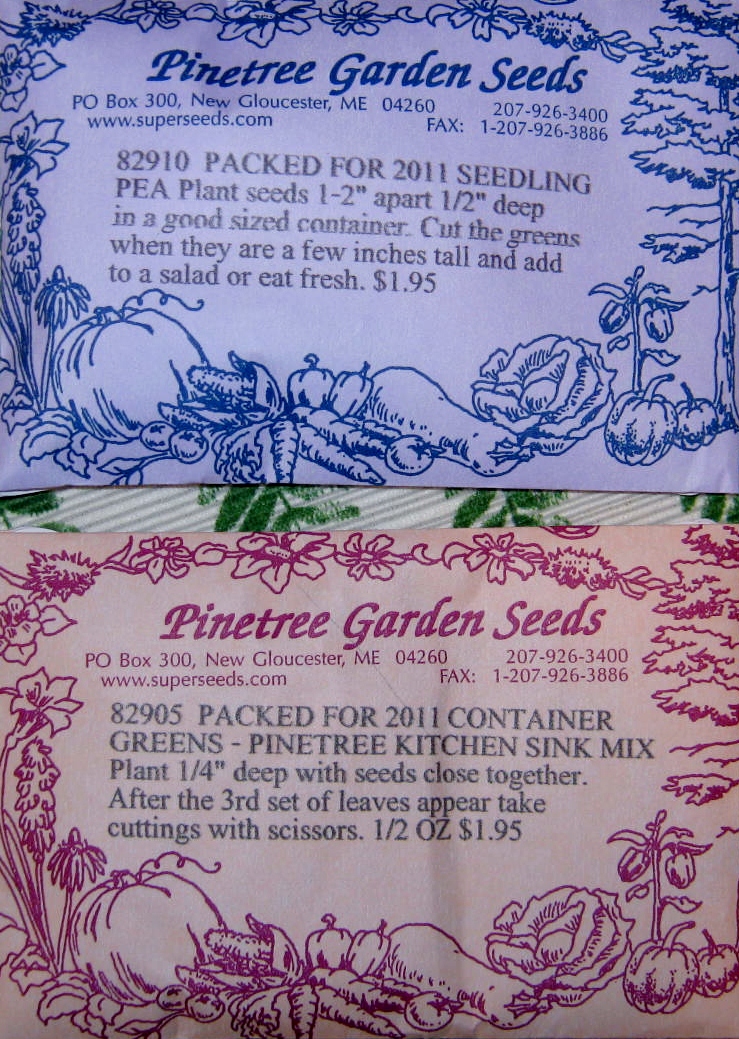
Sowing seeds and indoor gardening seem to be dominating my blog posts. I am starved right now for green, tired of the bare branches of trees silhouetted against the sky. I have been sowing seeds in hopes of harvesting Microgreens. Microgreens are harvested from seeds sprouted through the early leafing out stage. I am using seeds from Pinetree Garden Seeds. This is my first attempt at this type of gardening.

I am growing the Microgreens on my windowsill in plastic throwaway containers from cookies and other snacks. To see how I went about the process, check out the photos below this paragraph.

I gathered my supplies: antique pots to look pretty, throwaway plastic from cookie containers, corn holder for poking holes in the plastic.

I made sure the containers would fit inside my chosen pots before I added the dirt.

I poked holes for drainage in the plastic with the corn holder.

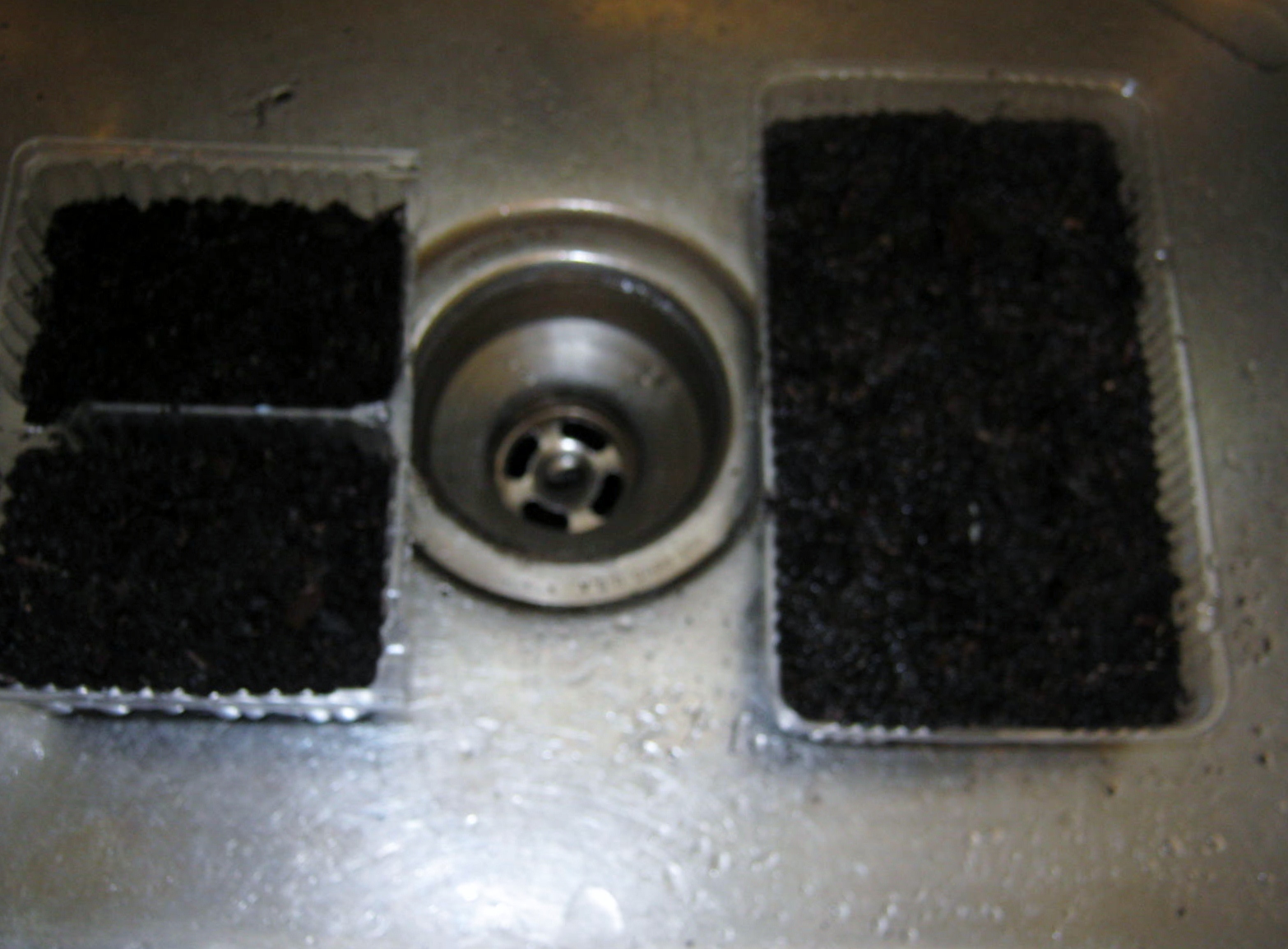
I filled the containers with organic soil.

I watered containers of soil and let them drain.

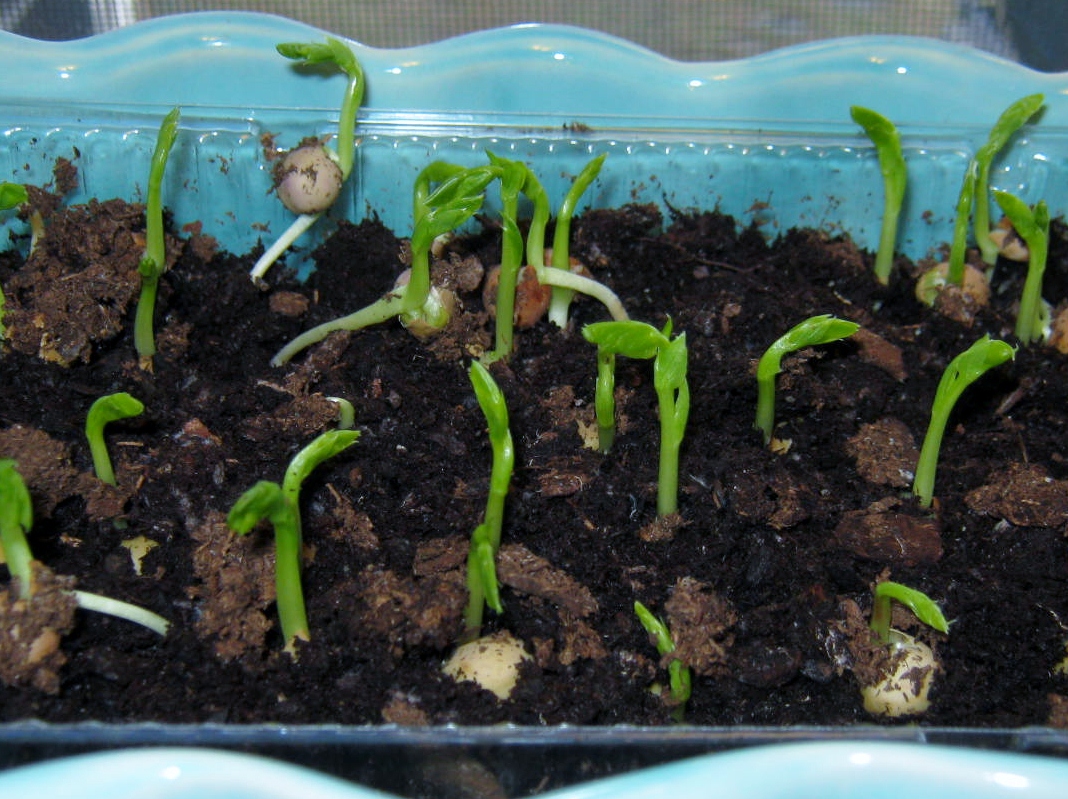
I spaced the pea seeds out in rows.

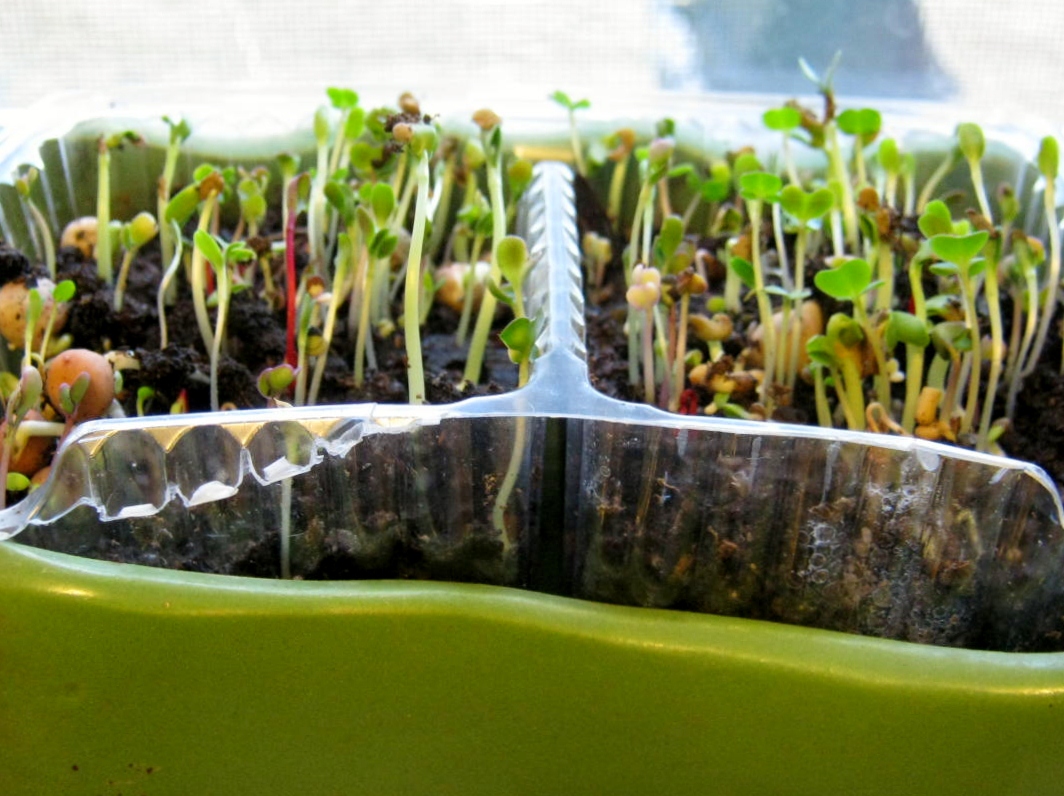
I sowed the Kitchen Sink Mix en masse.

I covered with one of my favorite kitchen tools, Glad’s Press ‘n Seal.

The seeds are already up…they sprouted in less than two days. I will post a Microgreens Part II later this week.


My Microgreens are up and growing fast. I can’t wait to try them in a salad.

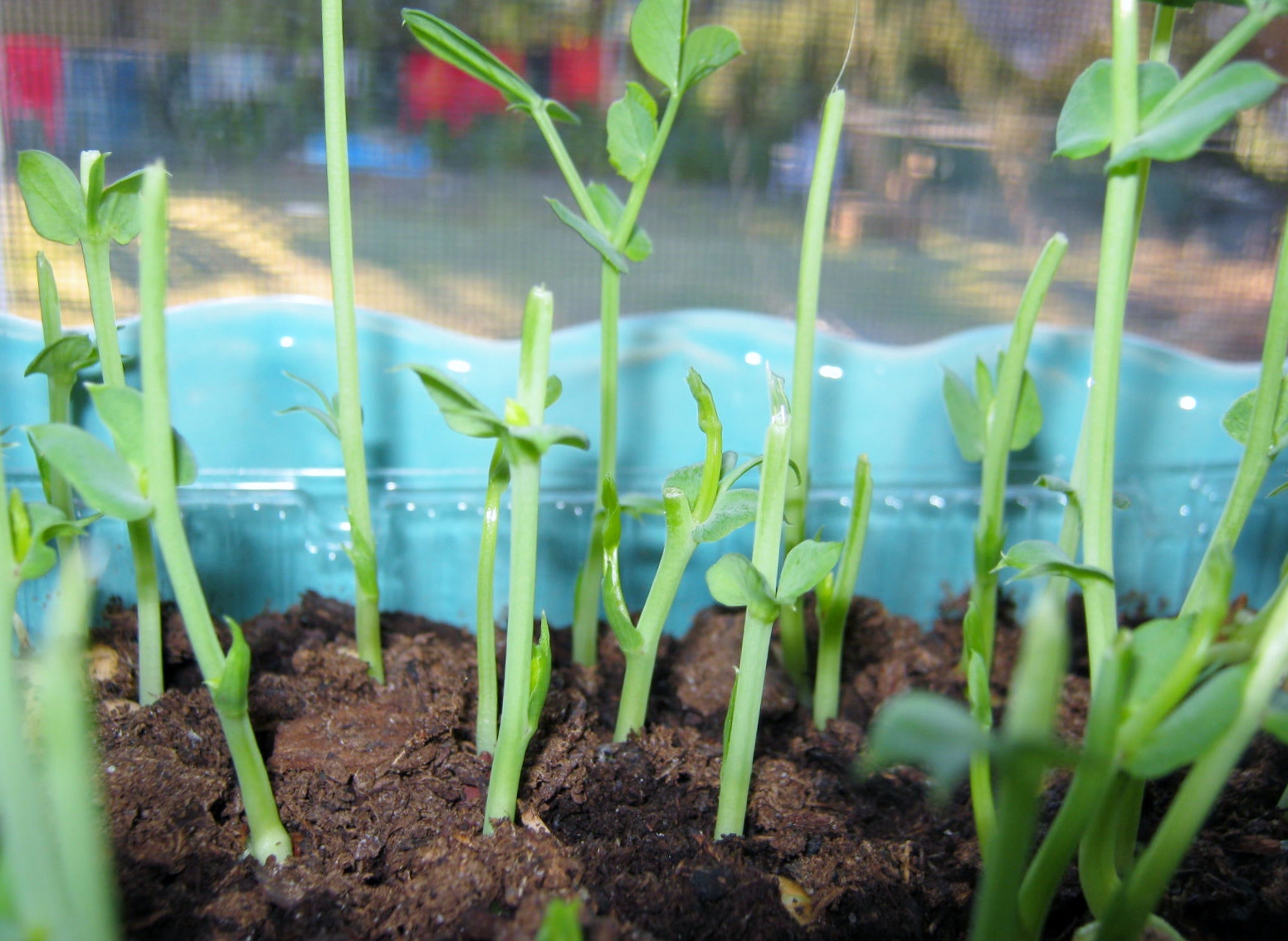
Oh My! The Microgreens look terrible…what happened to my lush crop? I’m afraid to say I have already eaten most of it. I pop off the tops of the pea sprouts and eat them like candy. This is reminiscent of the peas I grow outdoors in the Spring. They never make it to my table. Warm afternoons usually find me standing in the midst of the pea patch eating the fresh peas out of the pods. Actually, the microgreens are a complete success. I am really enjoying growing them and most of all eating them. The best use for them so far was garnishing my turkey and swiss cheese sandwich with a row of them. Oh Happy Day!

The kitchen sink variety is also thriving and perhaps today I will start grazing on them too. Moo!

Pots & Pans – Homemade Brown Sugar

This is still one of my favorite posts, and also one of the tips I use most in my cooking. Just this week I mixed up some brown sugar for a batch of Chocolate Chip Cookies. One way we use homemade brown sugar is on baked sweet potatoes. A little dab of butter, a sprinkling of brown sugar, maybe a touch of cinnamon…oh goodness…heavenly!

Nothing is worse than running out of an essential ingredient when you are in the middle of baking or cooking. Last week I was whipping up a batch of oatmeal cookies and realized I was out of brown sugar. No problem. I mixed up my own.

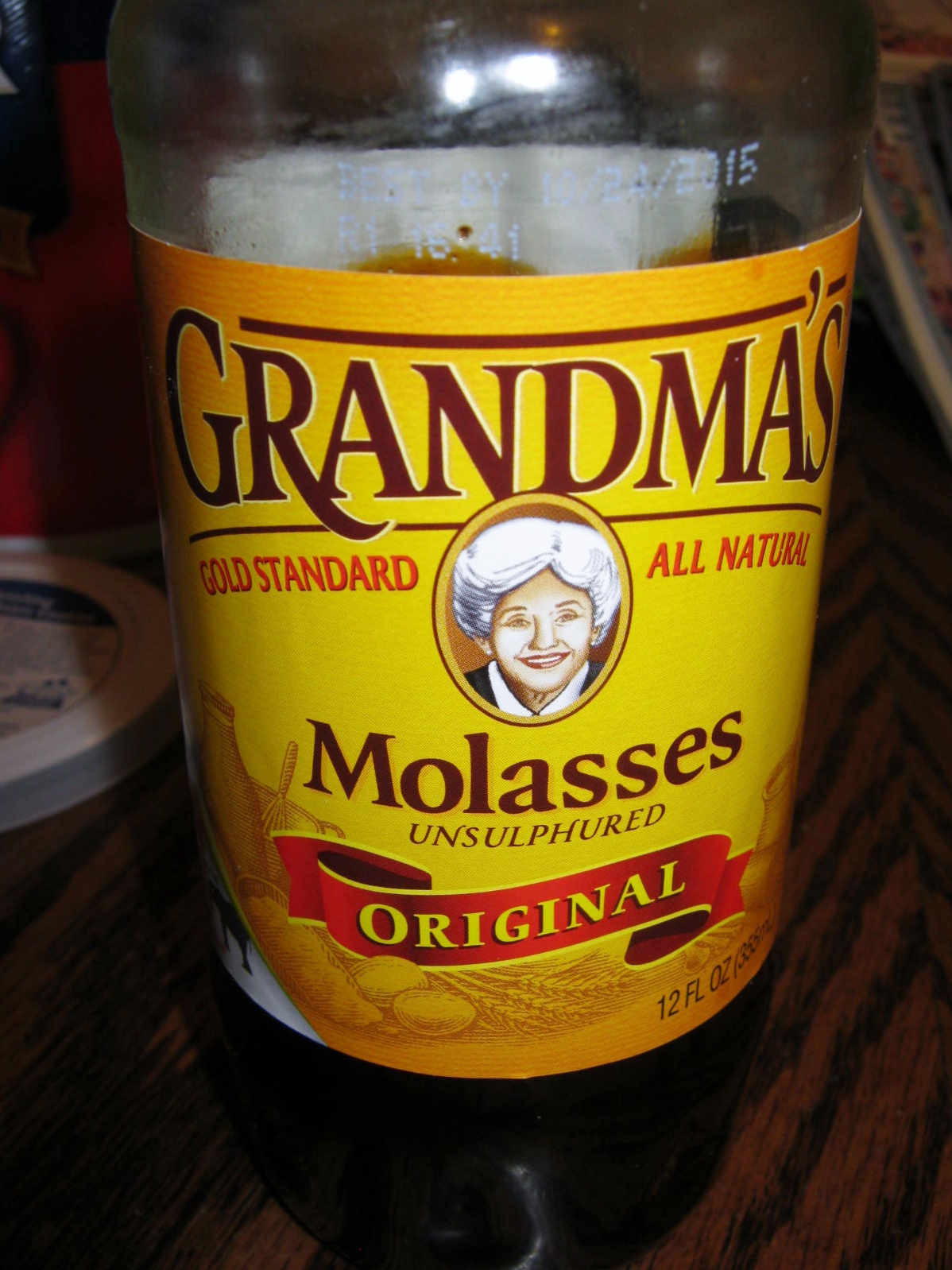
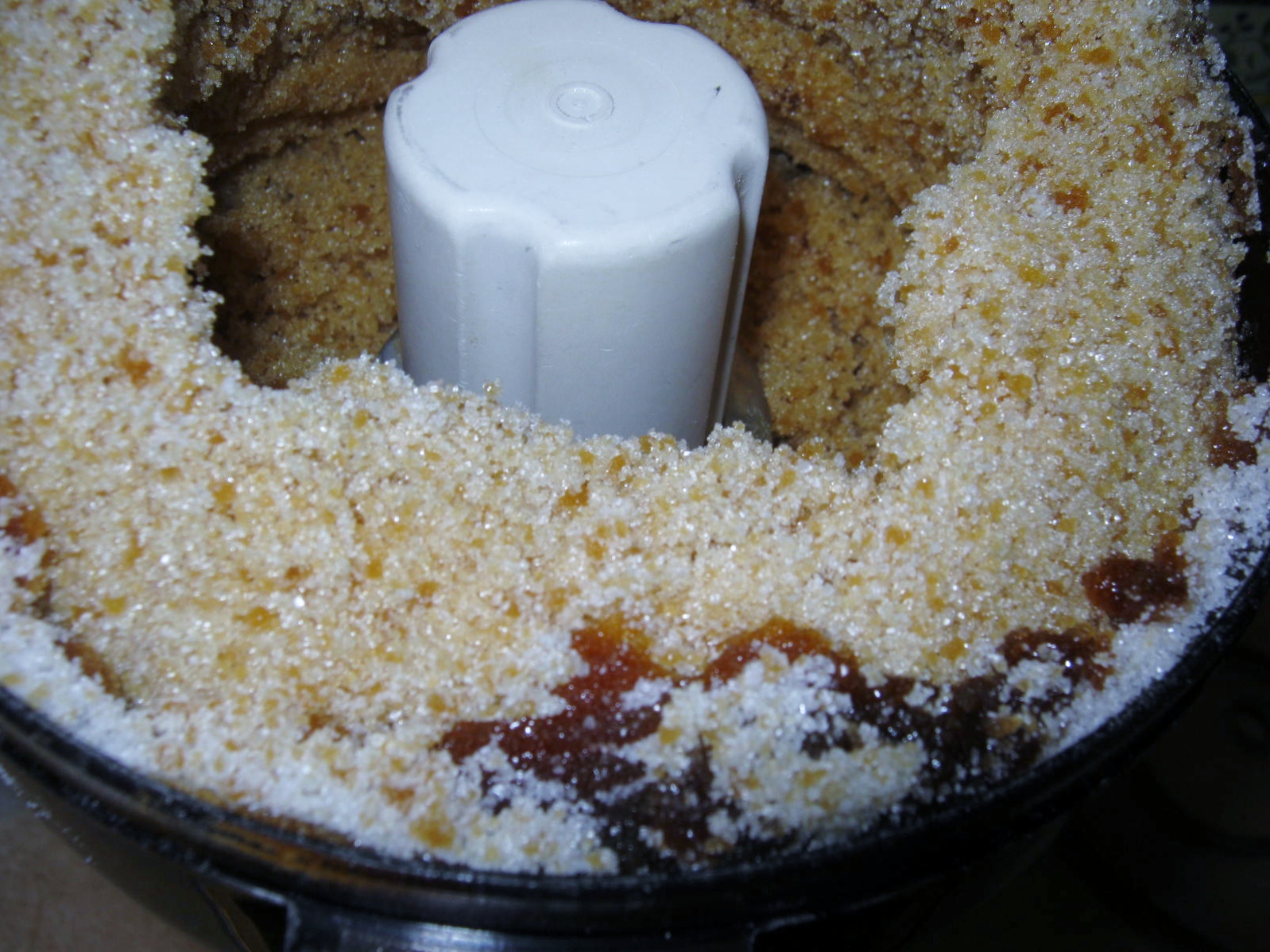
Add 1 tablespoon molasses to 1 cup of white sugar. Stir together…you have light brown sugar. Do you need dark brown sugar instead? Add 2 tablespoons of molasses to the sugar and mix.

After I tried this I realized I found the taste is heartier and much better than the store bought brown sugar. I’m hooked on making my own now.

Tip: Use your food processor for even faster results.

Plantings – Sowing Small Seeds

This method of planting small seeds might seem tedious, but I have tried many ways of sowing tiny seeds and feel this is the very best. So…here is a re-blogging of my small seed sowing method. I wish I could remember where I first heard of the process so I could give the proper source credit for the idea.

I have collected seeds from my coleus plants for well over ten years. Each year I plant the offspring of the previous year, the seedlings grow, are cross-pollinated by the bees, and new seeds are harvested in the late Autumn. I start my coleus very early, the seeds are small, quick to sprout, but slow to grow. I don’t sow them thickly into the flats. Seedlings sown too close together tend to get damp-off disease.

I found these great lidded containers made by Solo this year. They are the perfect coleus incubator/flat.

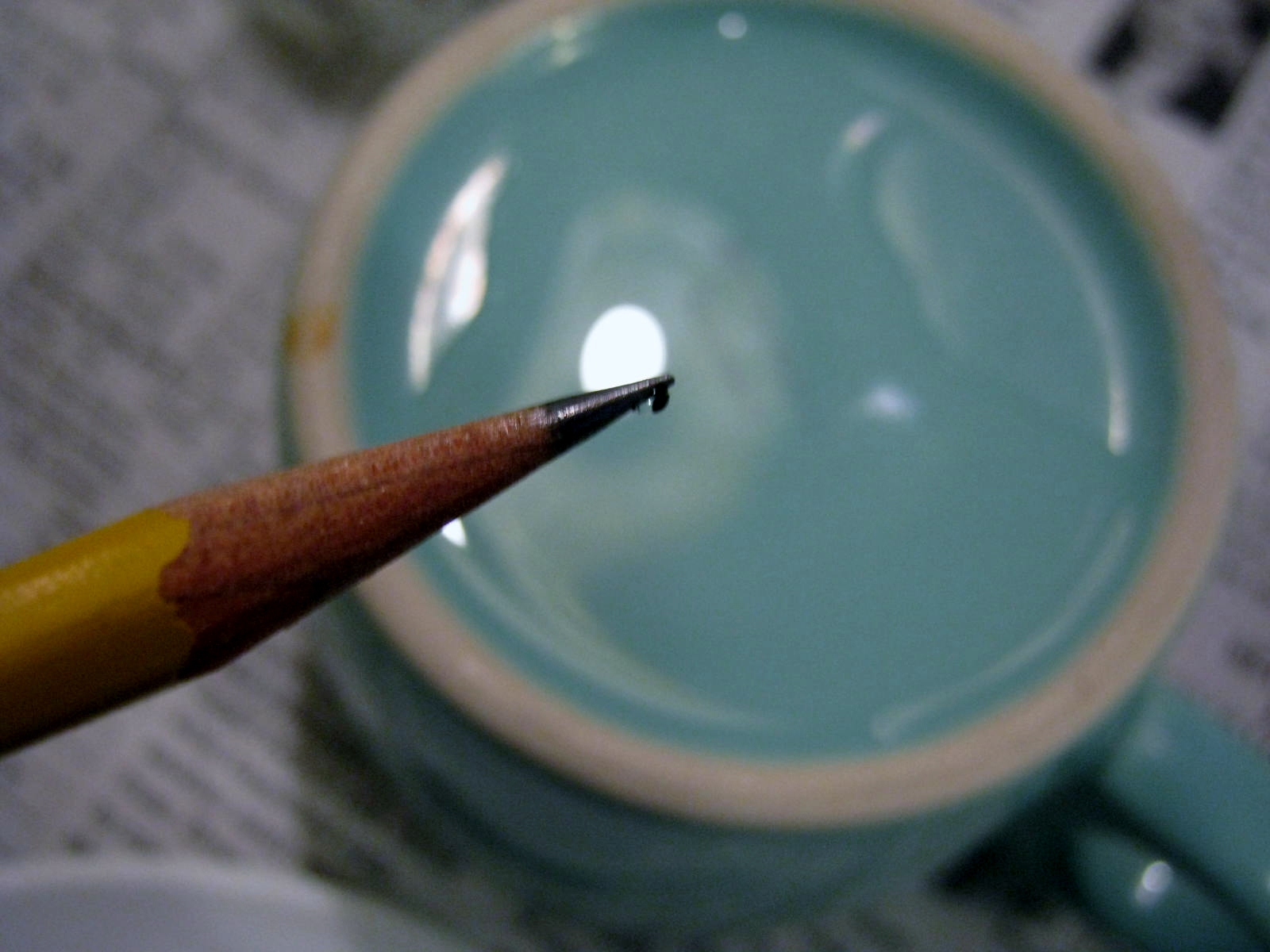
I sow the seeds sparingly using the sharpened point of a pencil. I dip the pencil point into water and touch it to one seed. The dampness grabs hold of the seed. I then touch the seed to the wet seed starter mix in the flat, and the seed adheres to the wet soil. I repeat this process between sixty and seventy times per flat.

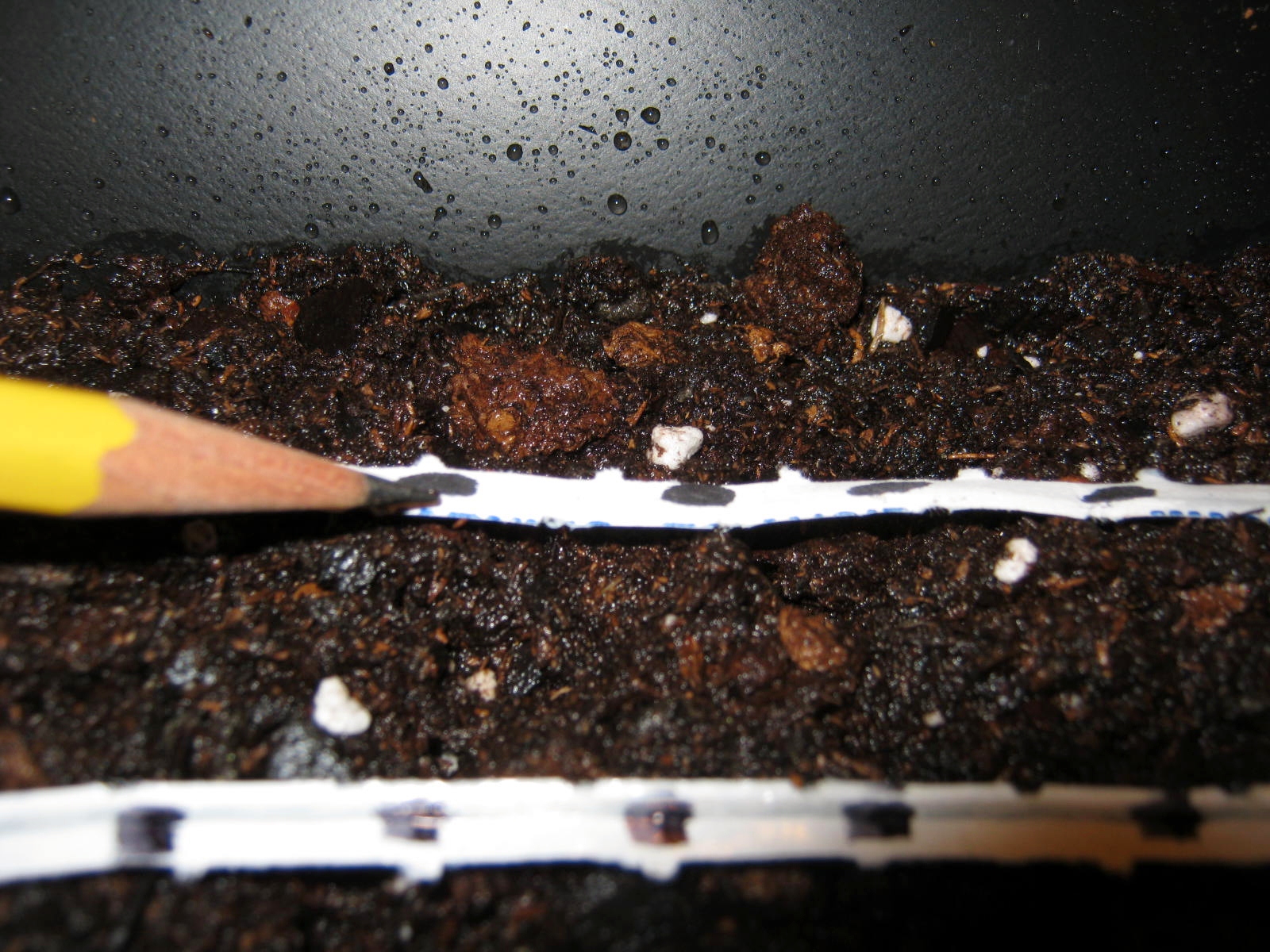
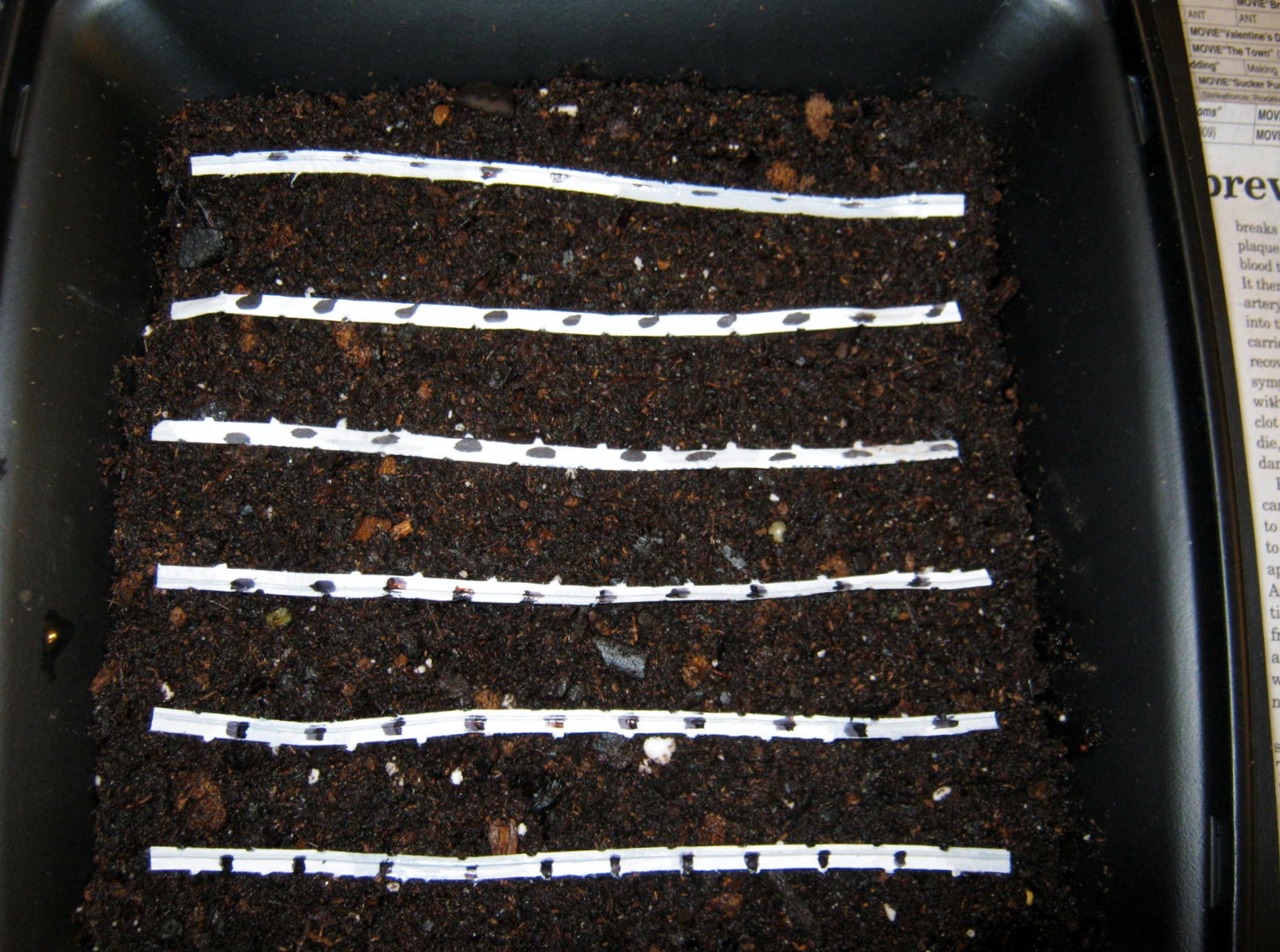
I use wire garbage bag ties, marked in segments with magic marker, to guide me in the placement of the seeds.

After I sow a row of seeds I remove the wire guide so I don’t double sow a row.

The next step is a gentle, all-over spray of water to seal the seeds to the wet soil.

I then cover the flat with the lid. It is gratifying to see it instantly steam up with warmth and humidity.

I have good luck with the sprouting by placing the planted flat of coleus seed on top of my refrigerator or near, but not on, a heating vent. I’ll update the progress as the seeds sprout and grow.


Follow Me on Pinterest

Proverbs – Painted Pebbles

I am once again posting these pebbles my sister Amy and nephew Abel painted for me. I love the story connected to them, and even better: there are more chapters to the story. In fact, the pebbles cause me to dream and hopefully the dreams will bear fruit soon in the future.

“In everything, do to others what you would have them do to you, for this sums up the law and the prophets.” Matthew 7:12

My sister Amy and my nephew Abel painted these pebbles for me. They remind me of Faberge Eggs. I love what Amy does with her painted pebbles. When she hikes in the mountains of North Carolina she leaves the pebbles along the trail to be found by other hikers. I enjoy picturing her placing her painted gems amid the tangled roots of trees or within a clump of grass or fern. I also enjoy imagining the happiness of those who find these sweet gems.

Potions – Amazing Dry Skin Cream

I have chosen to repost this recipe for a homemade hand/skin cream. It’s quick and easy to mix and the finished product makes a wonderful Christmas present.

As Sandra Lee says, “Semi-Homemade.”

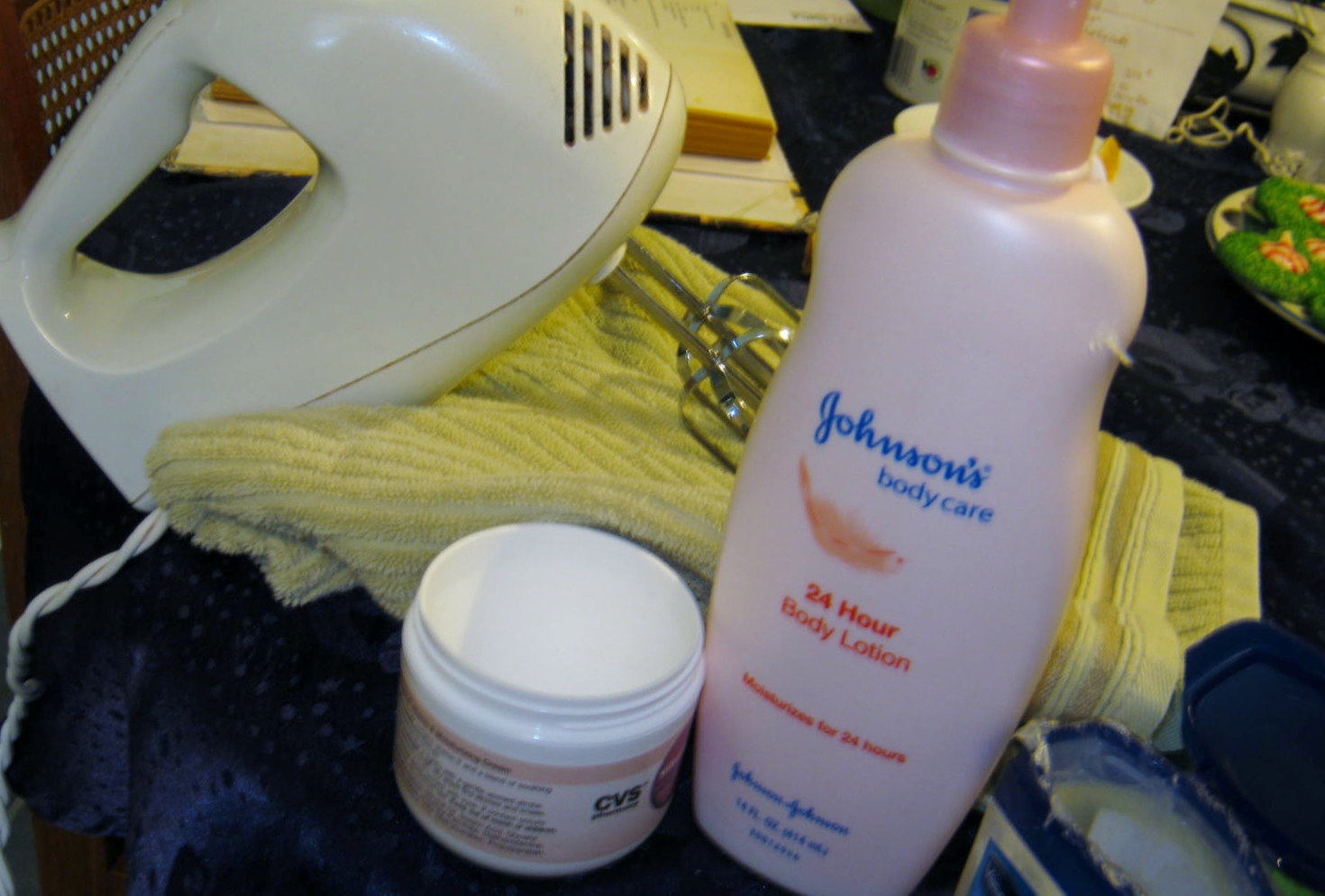
1. Gather Supplies: Big Mixing Bowl, Mixer, 8 oz Baby Lotion, 4 oz Vitamin E Cream, 4 oz Vaseline. (As you can see if you check out the blog recipe at bottom of post, I halved the ingredients they suggested)

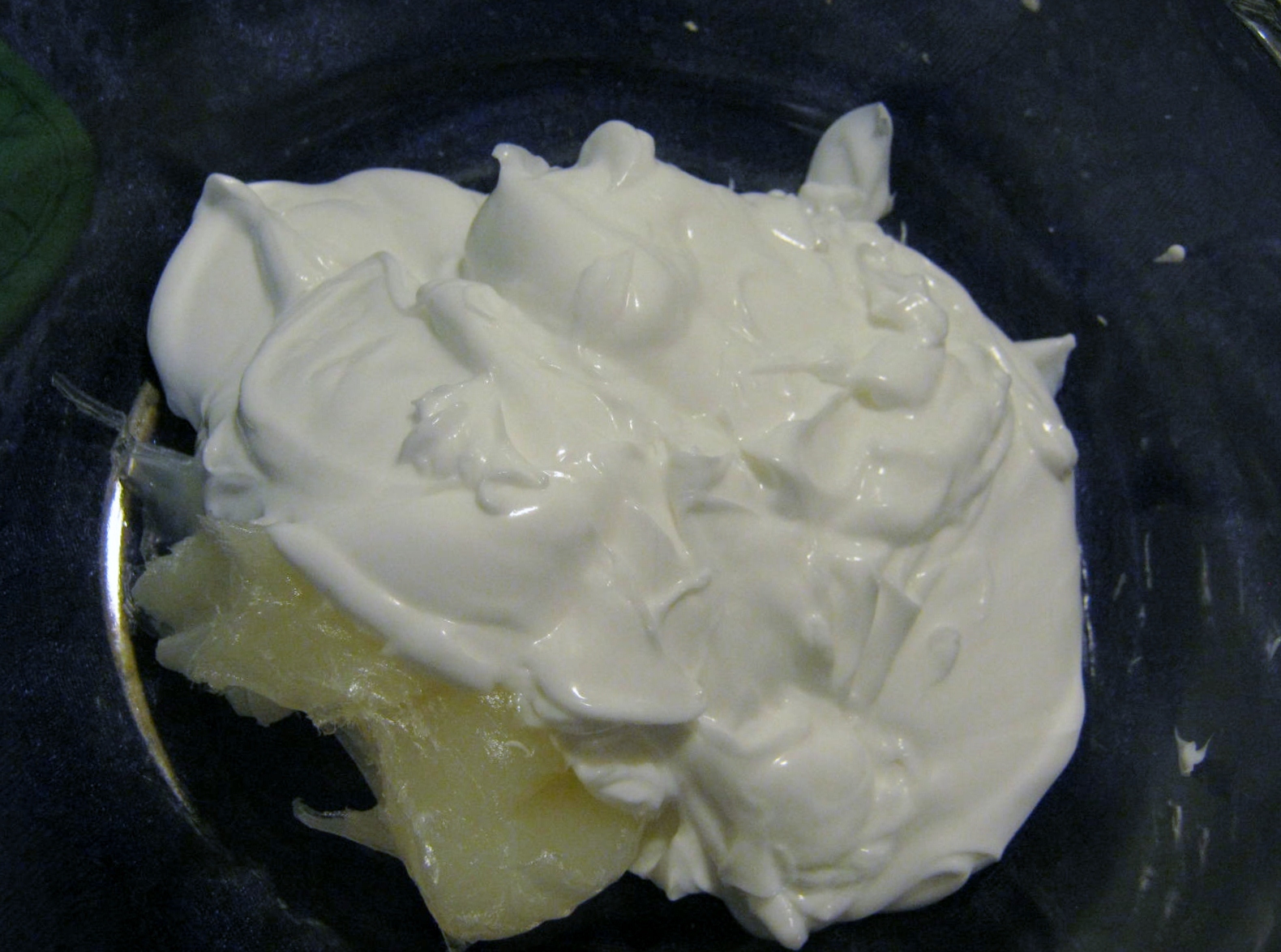
2. Scoop out Vitamin E Cream and Vaseline into mixing bowl. Measure out 8 oz of baby lotion.

3. Beat until the mixture resembles light whipped cream. (This step took less than a minute)

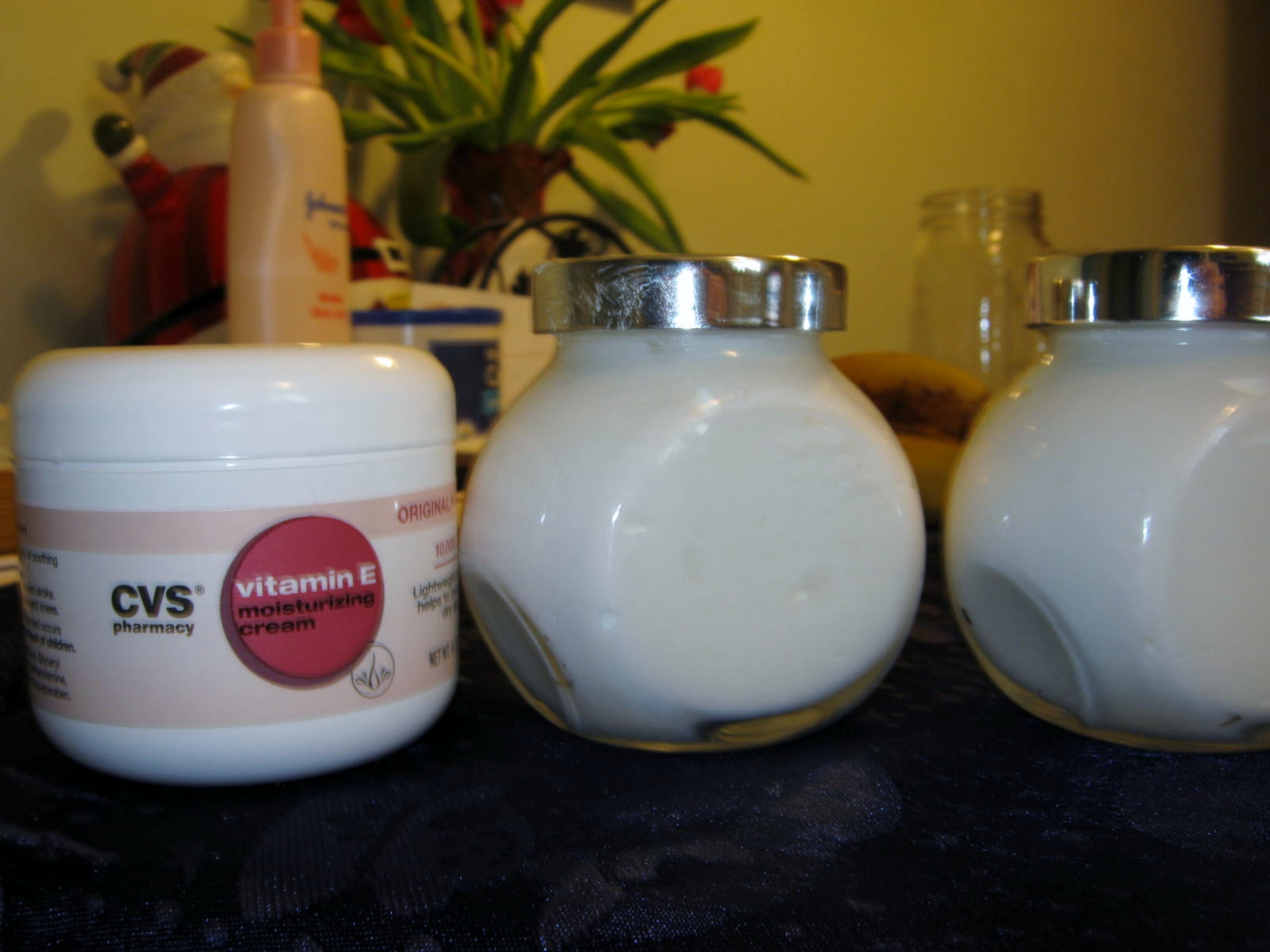
4. Scoop into jars.

5. Slather on dry heels and hands. Even Joe thought it felt great. I love it. Next time I will make the full batch. The hardest part of it all was gathering up the jars and getting it into the ones with the narrow mouth.

Here is the original blog recipe in case you want to check out this one too. Enjoy!

Blog Site For Homemade Handcream

This cream would make a TERRIFIC handmade Christmas gift.

Pots and Pans – Salt and Vinegar Roasted Potatoes

Here is another post definitely worth posting again. My family loves these potatoes. My grandsons enjoy helping me flatten them out after they are boiled. The oldest grandson can’t get enough of these…neither can I. A really yummy and satisfying side dish. Give them a try!

Oh my goodness! This was one of those recipes where you take a taste, and say, “Not bad,” and then suddenly…you become ravenous for more, More, MORE! These are scrumptious…a perfect side dish to just about anything. And…so very easy to make. Hooray!

I found the recipe in Martha Stewart’s Everyday Food Magazine.

It can be adapted to larger red potatoes, just cut the potatoes in quarters before smashing.

Salt and Vinegar Roasted Potatoes:

1 1/2 lbs small red skin potatoes (fingerling size) unpeeled and scrubbed

coarse salt

2 tbs extra-virgin olive oil

1/4 cup malt vinegar or apple cider vinegar (I used the apple cider variety)

Boil whole potatoes in gently rolling water until you can easily pierce them through with fork or barbecue skewer. (20 minutes)

Cool long enough to handle. For larger potatoes this is the time to cut them into quarters. The smaller potatoes are left whole. Place potatoes between a clean, non-fuzzy towel, or use a zip-lock bag (this was my choice) Only do a few at a time.

Next is the Fun part. Using the flat of your hand, or side of fist, punch the potato flat to about a 1/2 inch thickness. Don’t smash so hard that the potato separates, you want it to stay whole and intact, but flattened out. Do this with all the potatoes.

Preheat oven to 450 degrees. Brush rimmed cookie sheet with 1 tbs olive oil. Place potatoes on sheet and brush tops with remaining oil. Bake until crisp and golden. Halfway through baking time take out of oven and turn. When finished baking, toss with the vinegar and season lightly with the salt.

Potions & Problem-solving – Soap Scum Remover

I am re-blogging this terrific household hint because it WORKS! I had always been wary of the way shower scum remover made my lungs feel. This homemade solution works and does not cause terrible fumes. (Unless of course you dislike the smell of vinegar.)

I have found another great potion from the Pinterest site. It led me to this blog entry: Tub and Shower Magic by Bobbin.

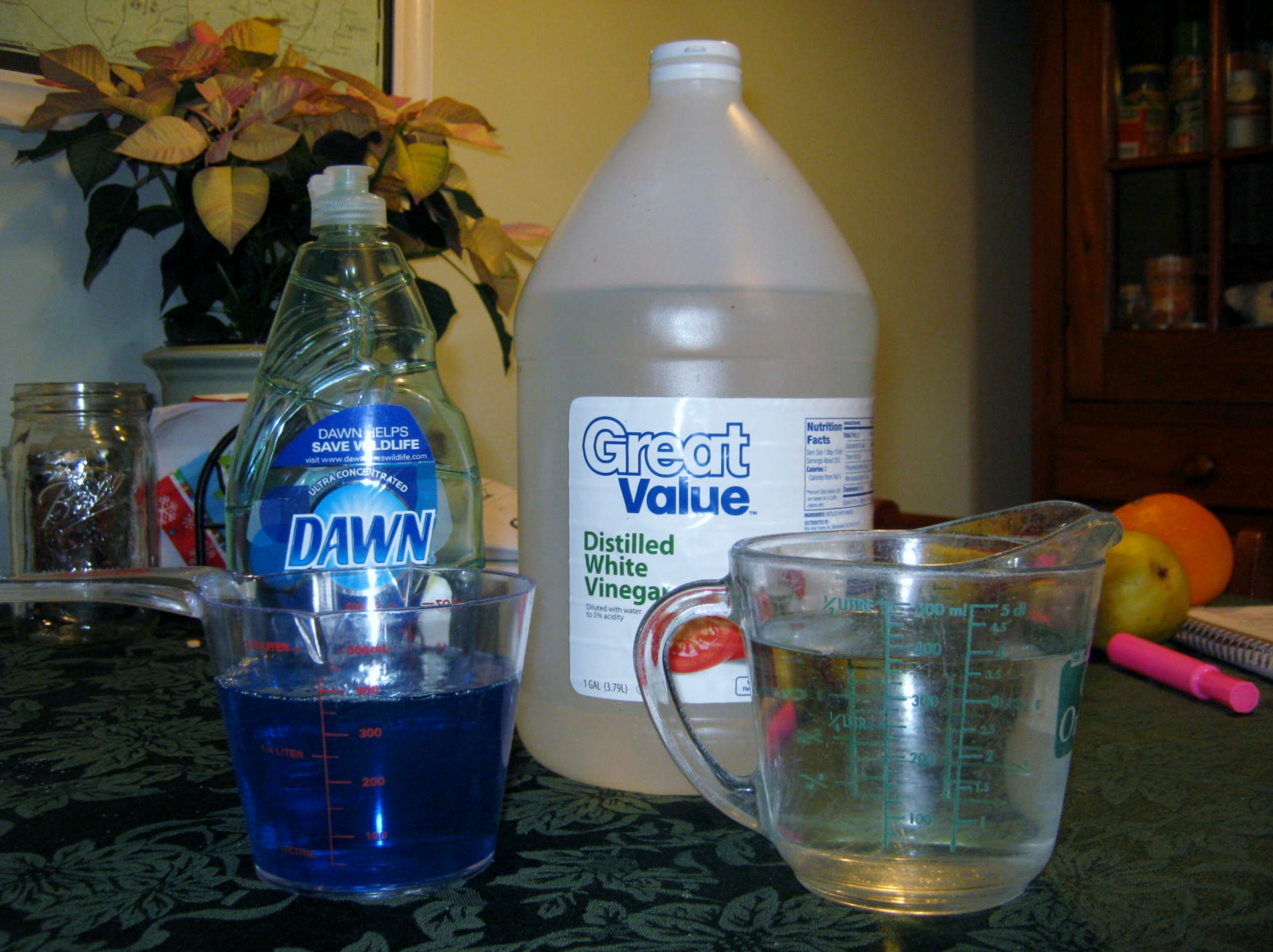
Gather together the articles in the picture: Dawn Dishwashing Detergent (original formula), Distilled White Vinegar, Measuring Cup or Cups, Spray Bottle & Funnel.

Heat Vinegar in Microwave or Stovetop.

Mix 12 ounces of Dawn and 12 ounces of hot white vinegar.

One tip I will add to the directions is to use a funnel if you have one. I am not good at pouring into a small opening and instantly spilled about an ounce of the Dawn down the side of the recycled spray bottle.

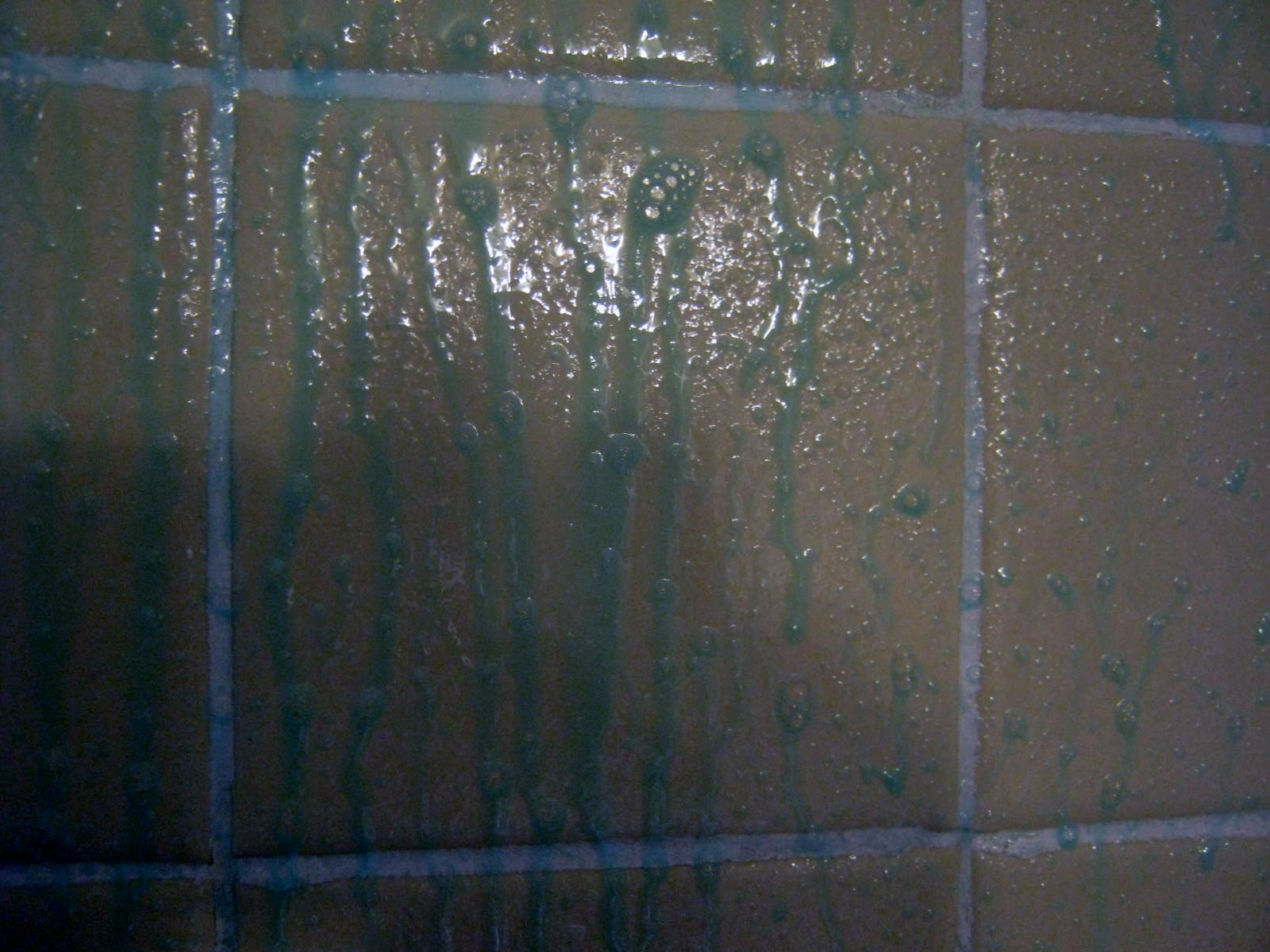
Shake until combined. They separate much like oil and vinegar. Spray on shower stall or anywhere with soap scum. The blue color makes it easy to coat every inch. Let sit for about five minutes. Wipe down with rag or sponge and rinse. Voila! Sparkling tile or doors.

The pluses of this potion:

No harsh chemical smell in my lungs, it is not expensive to make, and all the items used in this project were easily obtained.

“Voila”

Pots and Pans – Pumpkin Cookies

I’m re-blogging this great recipe for pumpkin cookies because it is simply one of the best bites at this time of year. Also…the cookies are healthier than many others because of the pumpkin included in the recipe. Enjoy.

My Grandmother Broadwell always baked these amazing pumpkin cookies for family and friends. I can’t bite into one without thinking of her. Every year, especially around the holidays, I bake up a batch or two. They are scrumptious, and best of all pumpkin is loaded with vitamins.

Pumpkin Cookies

Sift together:

2 Cups flour

1 teaspoon baking powder

1 teaspoon baking soda

1 teaspoon cinnamon

1/2 teaspoon salt

Cream together:

1 Cup shortening (I use butter)

1 Cup sugar

1 Cup pumpkin (canned)

1 egg

1 teaspoon vanilla

Optional:

1/2 Cup nuts, and/or 1/2 Cup raisins

Mix together. Add nuts or raisins if desired. Bake in a preheated oven at 350 degrees for 10 – 12 minutes.

While the cookies are baking make up your frosting.

3 Tablespoons butter

4 Tablespoons milk (2% is okay)

1/2 Cup brown sugar

Heat this and bring to a boil. Stirring constantly, cook for 2 minutes taking care not to burn. Cool. Add 1 Cup powdered sugar (add more if needed, icing should not be thick, but rather runny) Add 3/4 teaspoon of vanilla and spoon over cookies.

Follow Me on Pinterest

Projects – Milk Carton Greenhouse

I’m re-blogging this post because it was a successful project. The lettuce grew on all through the winter, and while I didn’t eat many sprouted leaves mid-winter, it grew luxuriantly in the early days of Spring. The leaves were ready to harvest and eat before any other lettuce I planted. Black-seeded Simpson is one of my all-time favorites. The flavor is excellent and the color is gorgeous, a beautiful lime green.

Today, as I washed out yet another milk carton I wondered if I should use it or recycle. Recycling lost out as an idea formed. I cut the bottom of the carton off and decided to use it as a cloche. I found some unused seed, Black Seeded Simpson Lettuce, and went out into the garden. I cleared away some leaves, set down a one layer square of a paper napkin as my guide, and lightly sowed the seed. I also added a bit of organic potting soil beneath the napkin and lightly covered the seed with the same. A little water, the carton pushed a few inches into the soil, and the project was complete. From idea start to finish less than a half hour spent.

I added a beautiful beach rock to the top to hold it steady. Now, we’ll see how it goes…hopefully in two weeks or so I can use the sprouted leaves in salad, and in a few weeks more harvest the larger leaves. I’ll keep the blog updated.

Pots and Pans – The Perfect Bite/Rollo Pretzel Bites

This remains one of my favorite recipes for a treat. Everyone loves the delicious bits of pretzel, chocolate and pecan. Try them…they are super-easy!

Rollo Pretzel Bites are a great recipe for the absolute perfect bite. There are only three ingredients involved: Square waffle type pretzels called “Snaps.”

Rollo candies, a bag or a roll. A bonus with the roll type is you do not have to unwrap each piece of candy.

The third ingredient is pecan halves.

I used my toaster oven set on a very low temperature, around 275. I arranged the pretzels on the pan.

A Rollo candy is placed on top of each pretzel…

Then I put the pan in the toaster oven and watched until the bottom of the Rollo began to spread out and melt. It only took a few minutes.

To finish them off I laid one pecan half on the top, smooshed it down gently, and there I had it…in just a few minutes…the perfect bite. Yum!

They are a bit pricey to make since pecans are so expensive right now, but definitely worth it.

Pleasures – Aurora Borealis

I am reblogging one of my favorite posts today. Take a look at this gorgeous two minute video of the Aurora Borealis, beautifully highlighted with the soundtrack of one of my favorite movies, “Gladiator.” (See my thoughts on this movie below) Enjoy!

Youtube video by: TESOPHOTOGRAPHY

I serve the Lord God, creator of the heavens and earth. He is an AWESOME God! He is the ONLY God. Hallelujah!

” ‘I am the Alpha and Omega, the Beginning and the End. To him who is thirsty I will give drink without cost from the spring of the water of life. He who overcomes will inherit all this, and I will be his God and he will be my son.’ ” Revelation 21:6-7 (NIV)

*”Gladiator” starring Russell Crowe. Even though this movie is filled with over-the-top violence, the story within is one of fortitude and integrity. The violence is jarring. From what I know of the era portrayed it is realistic and probably even less violent than the games were in truth. I wish the main character had prayed to God our Father, rather than his idols, but his actions and religion are also are a true portrayal of Roman life at that moment in time. When I watch this movie on DVD I am thankful for the fast forward button to get through the gory violence.

Pot’s and Pans – Rita’s Coffeecake

Here’s another pass at a post about an absolutely delicious coffeecake. Don’t judge it by the plain appearance in the picture. If you want to serve it for a special occasion a bit of powdered sugar on top would dress it up a bit. I like it plain. It is truly one of the moistest cakes I’ve ever eaten. I bake it over and over again, and it is a favorite of everyone in the family.

It might be a “Plain Jane” kind of cake, but the taste and moistness cannot be beat. It is super-easy since it uses a cake mix as its base. Add a box of instant pudding, a few extra ingredients and you have one of the best coffeecakes ever. A bonus: it freezes perfectly. The coffeecake can also be dolled up a bit with a simple powdered sugar and milk drip icing, but I prefer it plain. As with many baked items, it is better the second day. Enjoy!

Rita’s Coffeecake

1 pkg yellow cake mix (not butter)

1/2 Cup oil

1 Cup water

4 eggs

1 pkg INSTANT vanilla pudding

1/2 tsp baking powder

1 tsp vanilla (I’ve forgotten this and it tastes just fine)

Topping:

4 tsp sugar

2 tsp Cinnamon

1 Cup chopped nuts (optional)

Preheat oven to 350 degrees. Grease and flour sides of bundt or tube pan, or use Pam. Sprinkle 1/3 of topping in bottom of pan. Add half of the batter. Sprinkle on the remaining topping and then finish with adding the rest of the batter. Bake 50 – 60 minutes.

Problem-Solving – Poison Ivy in Winter or Beware Vines Without Leaves

It might seem funny to blog about poison ivy at this time of year, but I am doing so because a sister-in-law of mine once developed a nasty case of poison ivy pulling a stray, leafless vine out of her Christmas tree.

Even poison ivy puts on a coat of many colors in the cool of Autumn, but BEWARE…it still has the urishol oil and can give you a nasty rash. In our area, some poison ivy is so established, it almost mimics the look of the host tree it climbs on and seems to develop a bark.

I am one of those who does not develop a rash from the oil. But…I’ve also read that this tendency can change overnight, so I avoid all contact with the vines. Fels Naptha soap is one of the best remedies for removing the urishol oil from your skin.

I love Fels Naptha soap. I use it as a stain treatment too. I spray the spot with clear water, and then rub the Fels Naptha soap into the stain. Almost every spot comes out when treated this way. I also appreciate the fact that I am not inhaling caustic chemicals when I avoid the typical spray stain removers.

Fels Naptha can be difficult to find, but I was lucky enough to find it in my grocery store. If it is not available in your area you can order it from the internet. Check out the link below:

Fels Naptha Soap Distributor

Peace & Phavorites – The Nativity Story

Tomorrow I will unpack my manger scenes and watch “The Nativity Story” once more. Because it should be on everyone’s “must-see” list of Christmas movies to watch, I’m re-blogging this post.

Re-posted from December 2011

Years ago a friend gave us this gorgeous gift, a beautiful nativity scene carved from wood. Yesterday, after I had placed it upon the windowsill, the sun shone through the windows and backlit the scene with a glorious light.

A favorite Christmas Movie of mine:

Phavorite – Paper Stars Created With Old Atlas Maps

I saved these and will hang them this year also. Any type of paper would work with the instructions, but I think an old atlas has a unique look that can’t be duplicated.
Blog posts 12-18 015

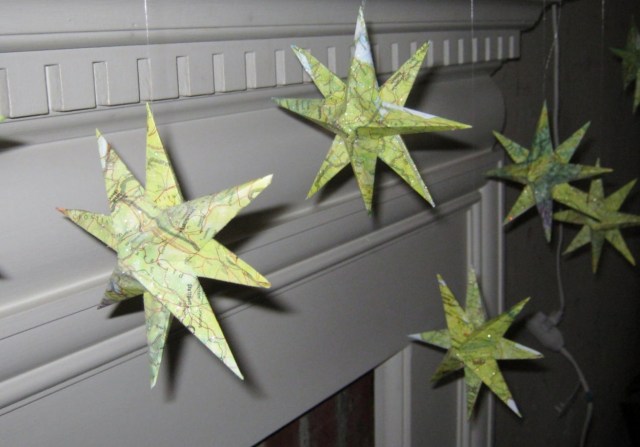
I had so much fun making paper stars at Christmastime. The stars can be used for any holiday…New Year’s, The Fourth of July, Easter, etc. They also could be created to hang from an indoor porch or ceiling for permanent decorations. Crafted out of glow in the dark paper, they would be a terrific non-electric night light for a child’s room.

I’ve included a link to the blog where I found perfect directions for this project. Paper Star Directions.
Blog posts 12-18 001

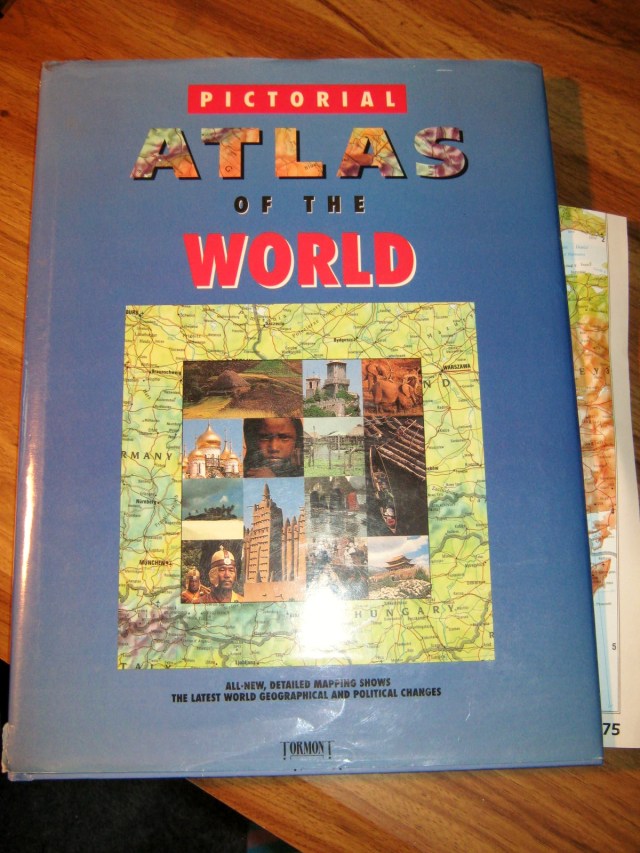
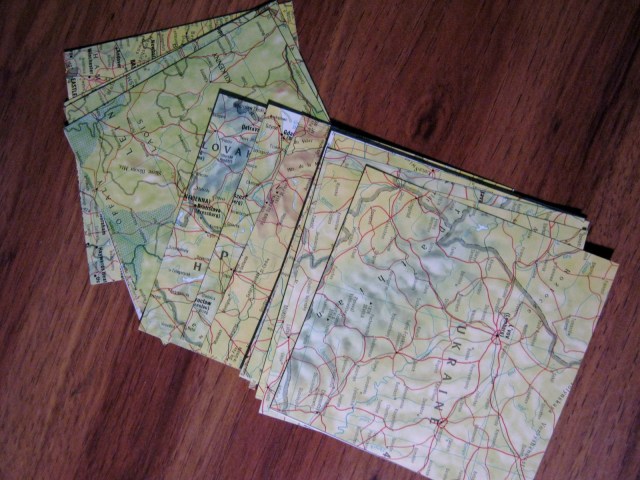
My paper stars were created out of pages from an old out of date Atlas. I love the colors and shadings of the maps, and also thought it appropriate that stars commemorating Christ Jesus’ birth included countries from all over the world. I also used pages from favorite childhood classic books to create smaller stars for my tiny Christmas tree.

Blog posts 12-18 012

Since these pages did not have any color to them, I gently watercolored them with pastel versions of primary colors.
Blog posts 12-18 004

I’ll give a quick description of the steps I followed to make the stars, but the directions are condensed. For isntructions with more detail visit the link I provided at the beginning of the post.

To start I cut the maps into four inch squares. For the smaller book page stars I cut two inch squares. Because the Atlas pages were heavier, smaller stars and squares would not have been easy to fold and glue.

Blog posts 12-18 006

The next step involves folding four times, twice on the diagonal, twice straight across the middle. Along the middle line on each side, snip a cut about 3/4 of an inch for the 4 inch star. For the smaller star you will make a smaller snip. Trial and error is the best way to judge how long to make the snip.

Blog posts 12-18 007

At this point you are going to turn the paper over on itself and glue the edge of the star point together. Hot glue made it quick and easy for me, but I have tough fingertips and am not too bothered by the heat. You want to use a glue that will grab hold quickly so you don’t have to hold the star tip too long.
Blog posts 12-18 010

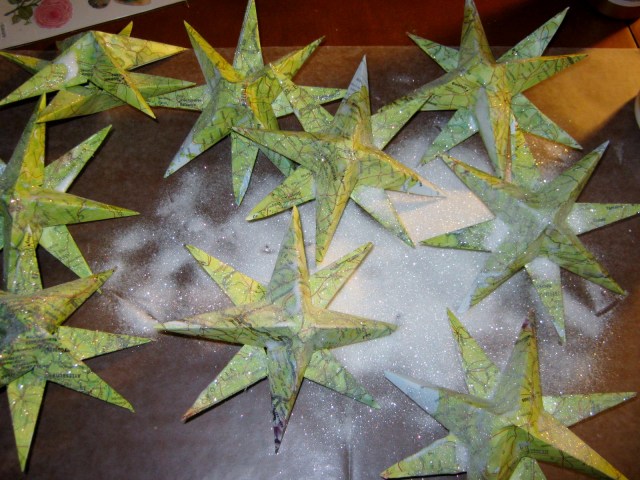
Glue four points from each square, then glue another square into four points. After gluing the middle of the star will have a raised dimension. Glue two of these stars together, string a piece of clear thread through the top, knot and hang.

Blog posts 12-18 018

Here is my star created from a page of one of my favorite books, Anne of Green Gables. I also used Mod-Podge on these and my atlas stars to add a coating of glittery crystal.

I use books I find at local thrift stores and yard sales for projects such as these. You could also photocopy pages of books you love, or copy old letters and photographs with a scanner or photocopier to use. Photographic stars would be great for a party with the person of honor’s image on stars hanging from the ceiling or light fixture. Have fun making your stars. I had a great time making mine. They are easy and inexpensive and are sure to please.