Pheathers – Color My World in Goldfinches

IMG_0909

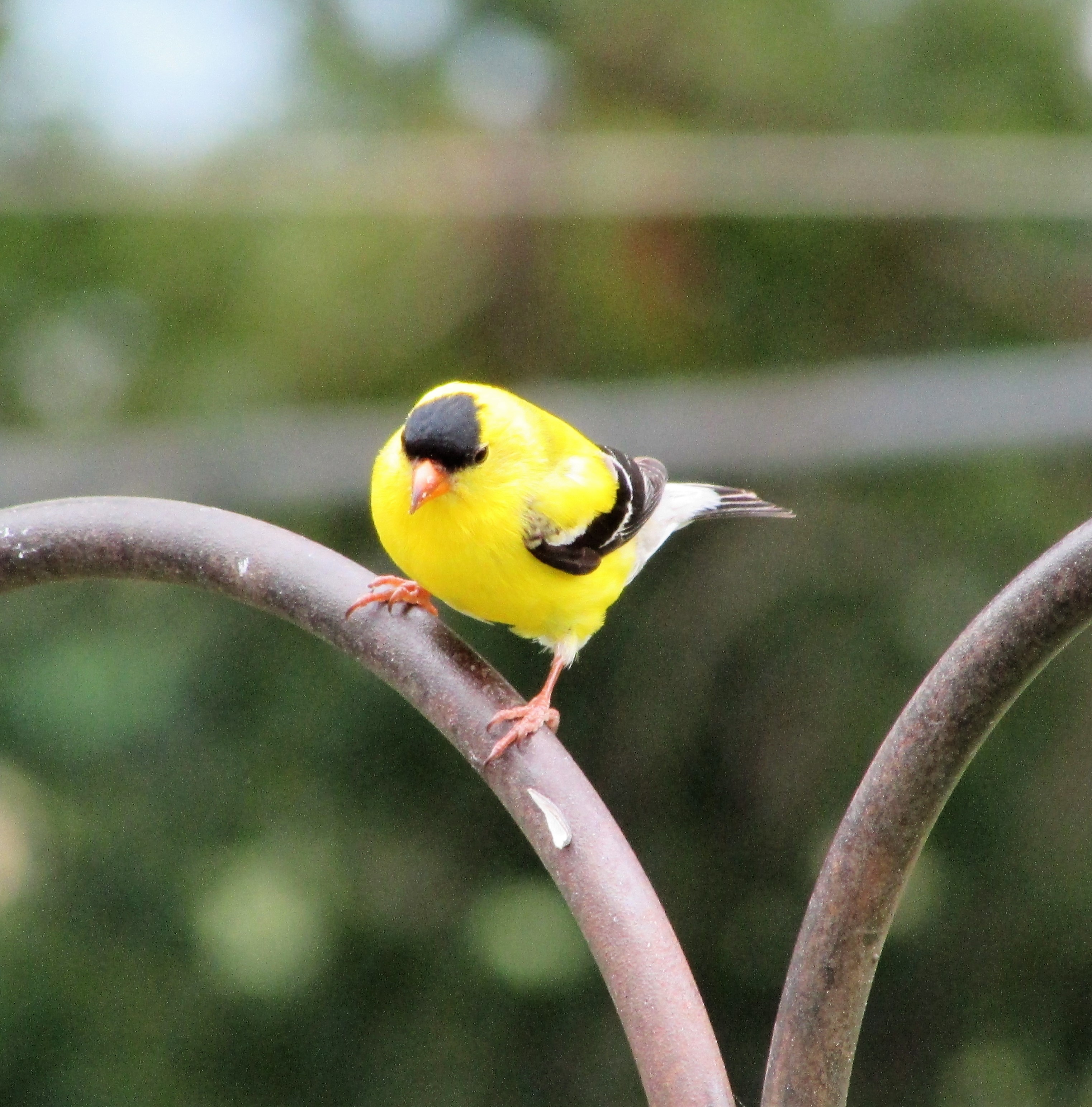
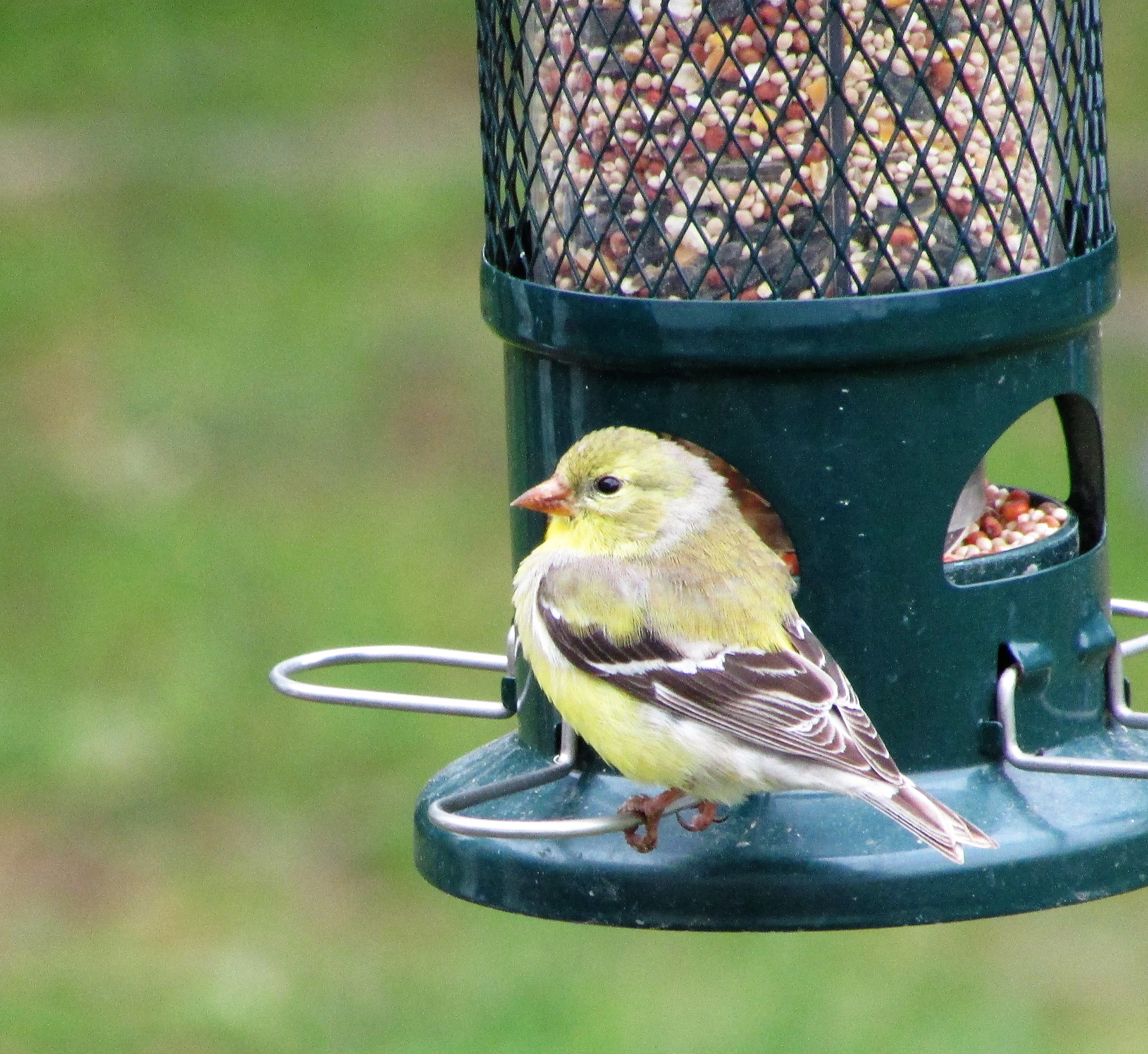
An American Goldfinch changes colors with the seasons. In autumn the male molts from summer’s gold to winter’s tan. In the spring, another change begins and the male goldfinch becomes bright yellow.

IMG_0907

Today was the first day I noticed the goldfinches sporting their summer feathers. I had two pairs visiting my yard and photographed this sweet couple having a snack at my feeder. These beautiful birds are the perfect choice for today’s Color Your World – 120 Days of Crayola Challenge – Yellow.

Pheathers & Phavorites – Barn Owl/Live Cam

I came upon this year’s nesting Barn Owl and realized it was time to repost the information for Cornell Bird Labs.

Take a look at the live-streamed “Bird Cams.” If you love birds you will love this site. To start the live cam click on the arrow. If it appears to be a still shot, look closely, you will see the soft movement of the owl’s breath. Thanks again to JaneM who shared this site with me.

Cornell Lab of Ornithology Bird Cam

Pheathers – Old Blue Eyes

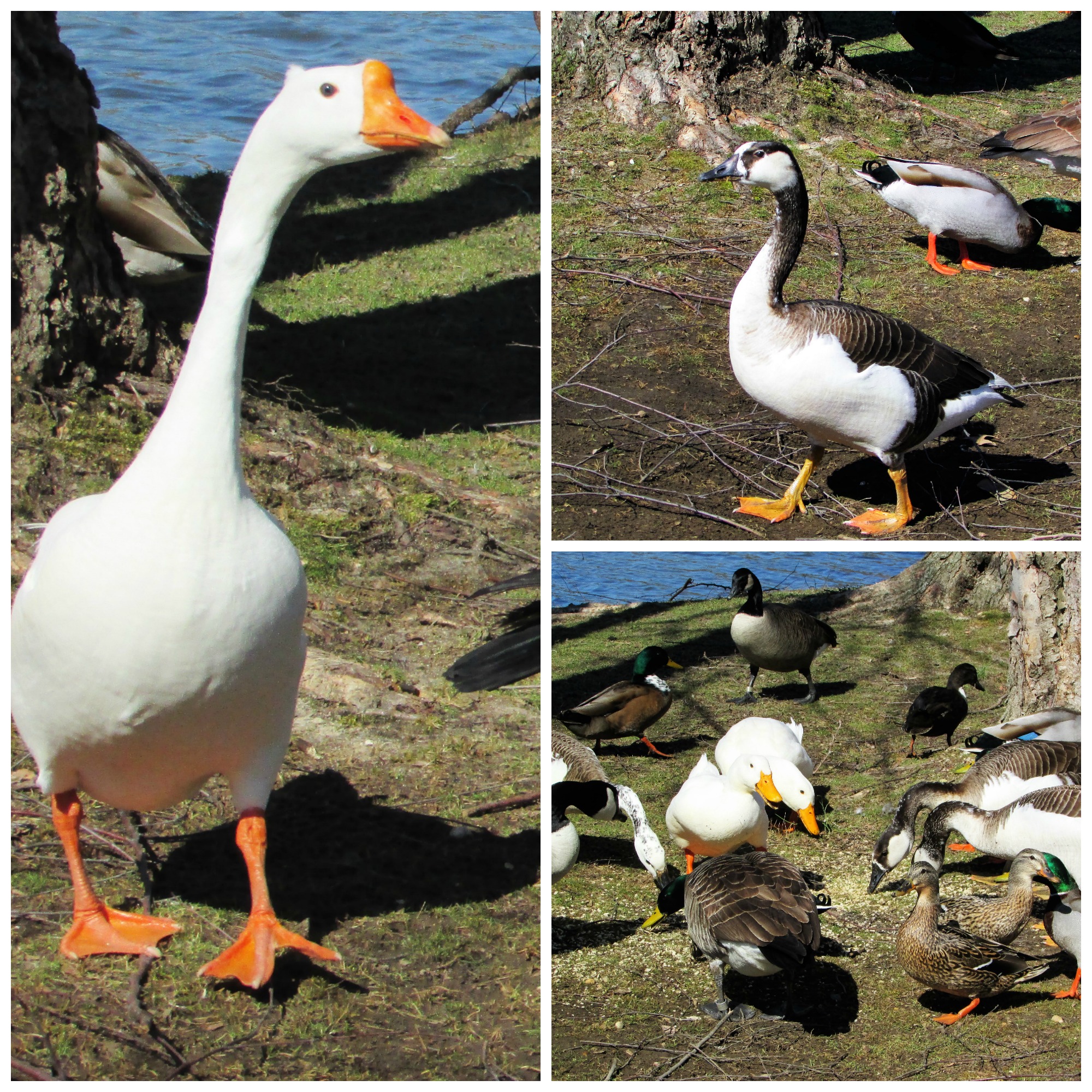
Near my home is a park I have visited since I was seven years old. I take my grandchildren to the same park, although now the “dangerous” playground equipment we adored has been replaced by a one-piece plastic structure. Yesterday, I took a bike ride, with a bag of old cereal strung across my handlebars. My destination was the park and the goose who rules there, the white goose with the blue eyes.

ducks 4

I call her Old Blue Eyes, but she responds to anyone carrying a bag that might be filled with goodies for geese and ducks. The moment I scattered the stale Rice Krispies on the ground a feeding frenzy began. Some of the wild geese/mallard ducks in the park have become domesticated because of injury. At this time of year, when food is scarce, a little grain in the form of cereal might help them survive.

Old Blue Eyes Collage

Old Blue Eyes 2

Pheathers & Quick Tip – Winter Bird Bath Solutions

“Bathing is especially important in cold weather in order to keep feathers in top condition. Research has shown that a chickadee with well-maintained feathers can sustain a 70 degree layer of insulation between the outside air and its skin”. Wild Birds Unlimited

bird bath

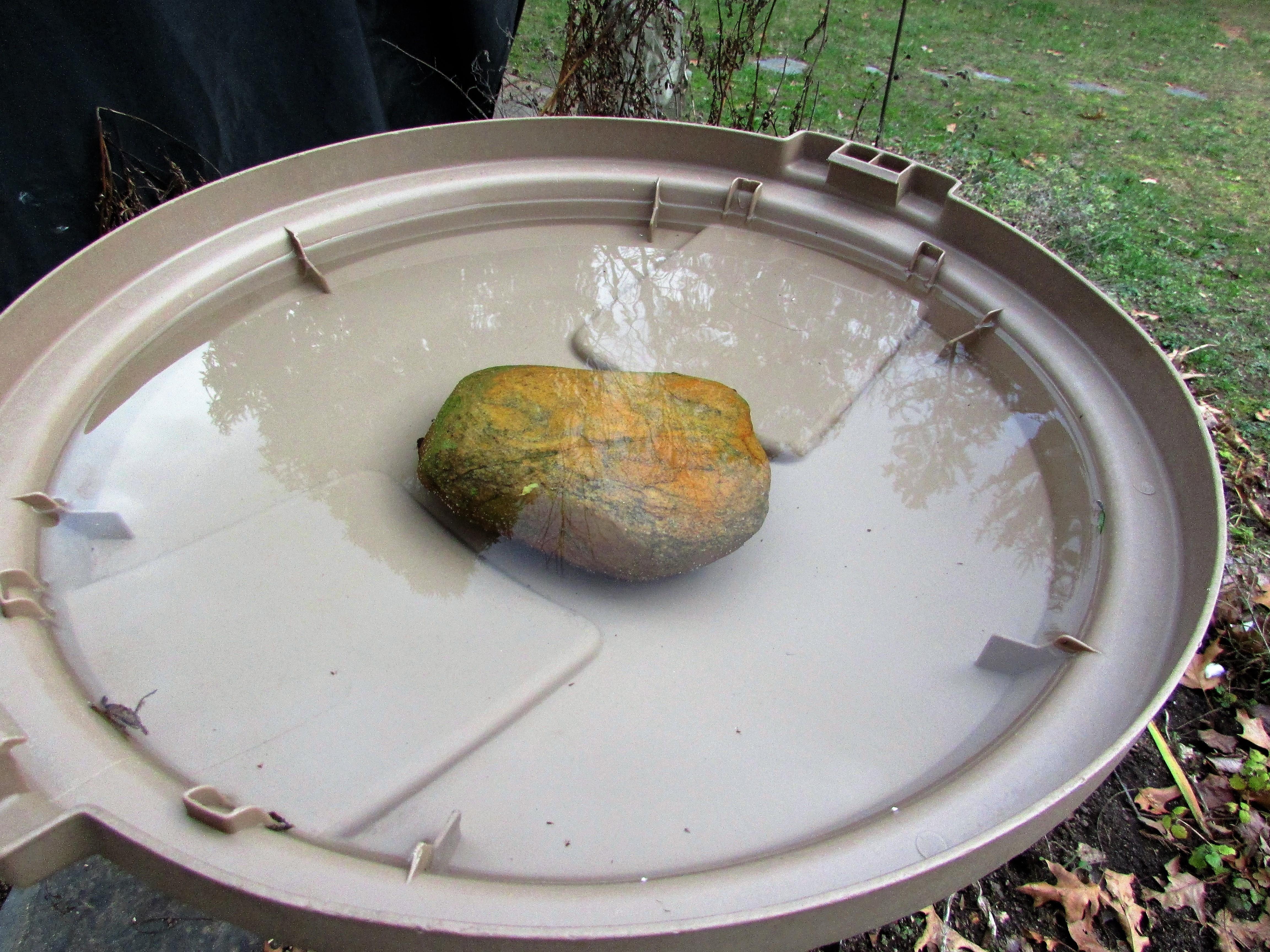
I have a bird bath that is over fifty years old. It once sat in the yard of my grandparents in McDonald, Pennsylvania. I remember peering into it, so small that my eyes were level with the rim, fascinated by the mirrored bottom. Leaving this heirloom outdoors in the cold is not an option. The constant freeze and thaw of winter weather would likely crack it. Still, birds need water in the winter as much as they do in summertime. I decided a solution would be to replace the bird bath with a Rubbermaid trashcan lid. The plastic should expand and contract during freezing weather without cracking. The lid is also very light and will be easy to empty out and change. When the water in the lid freezes, I can pour on a bit of hot water for thawing, without worrying about cracking.

The birds accepted the lid as a substitute for the fancier bird bath. Within a hour or two of setting up the bath  a little sparrow took a quick dip. Oh Happy Day

Pheathers & Product – White-Throated Sparrow

IMG_8958

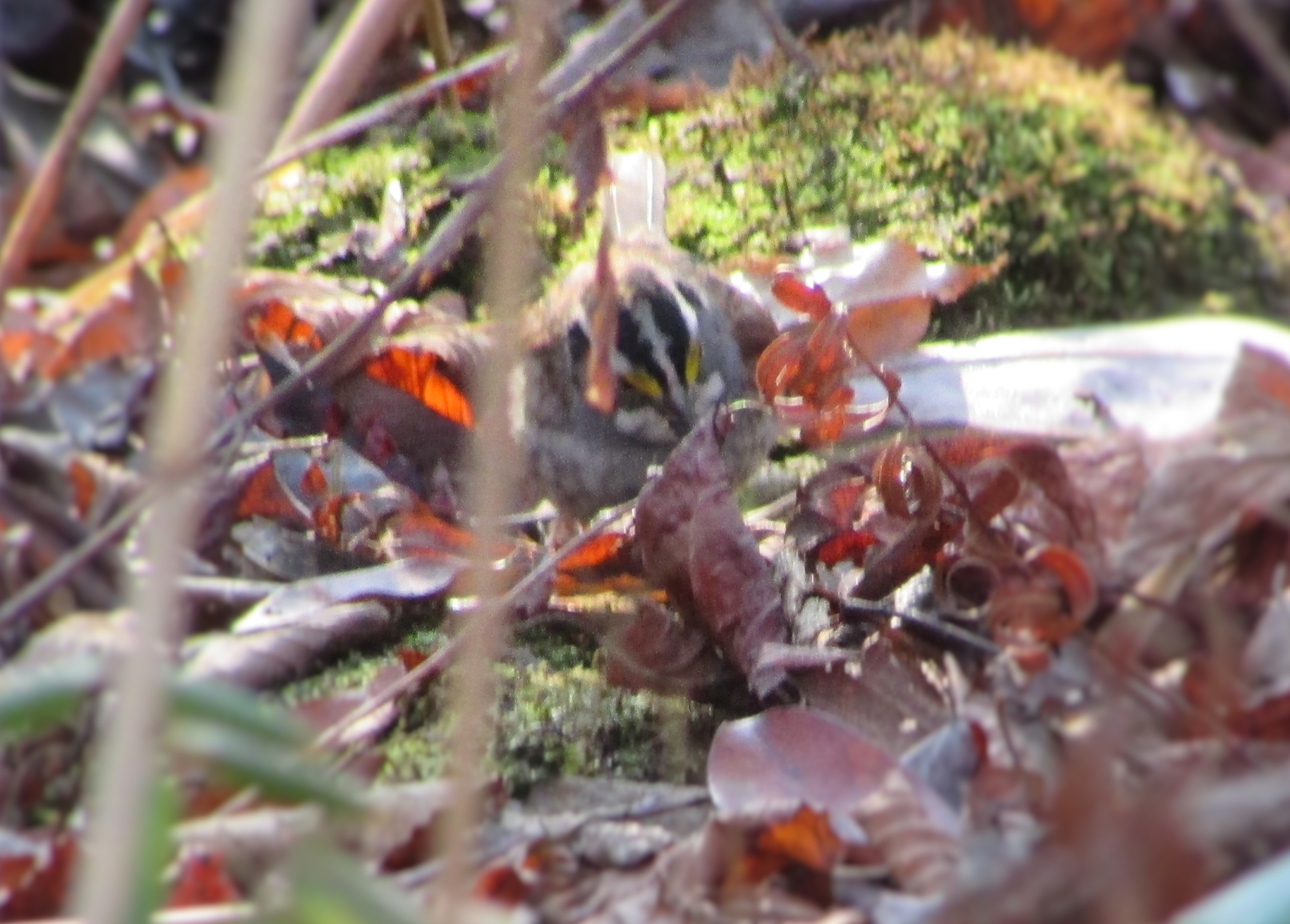
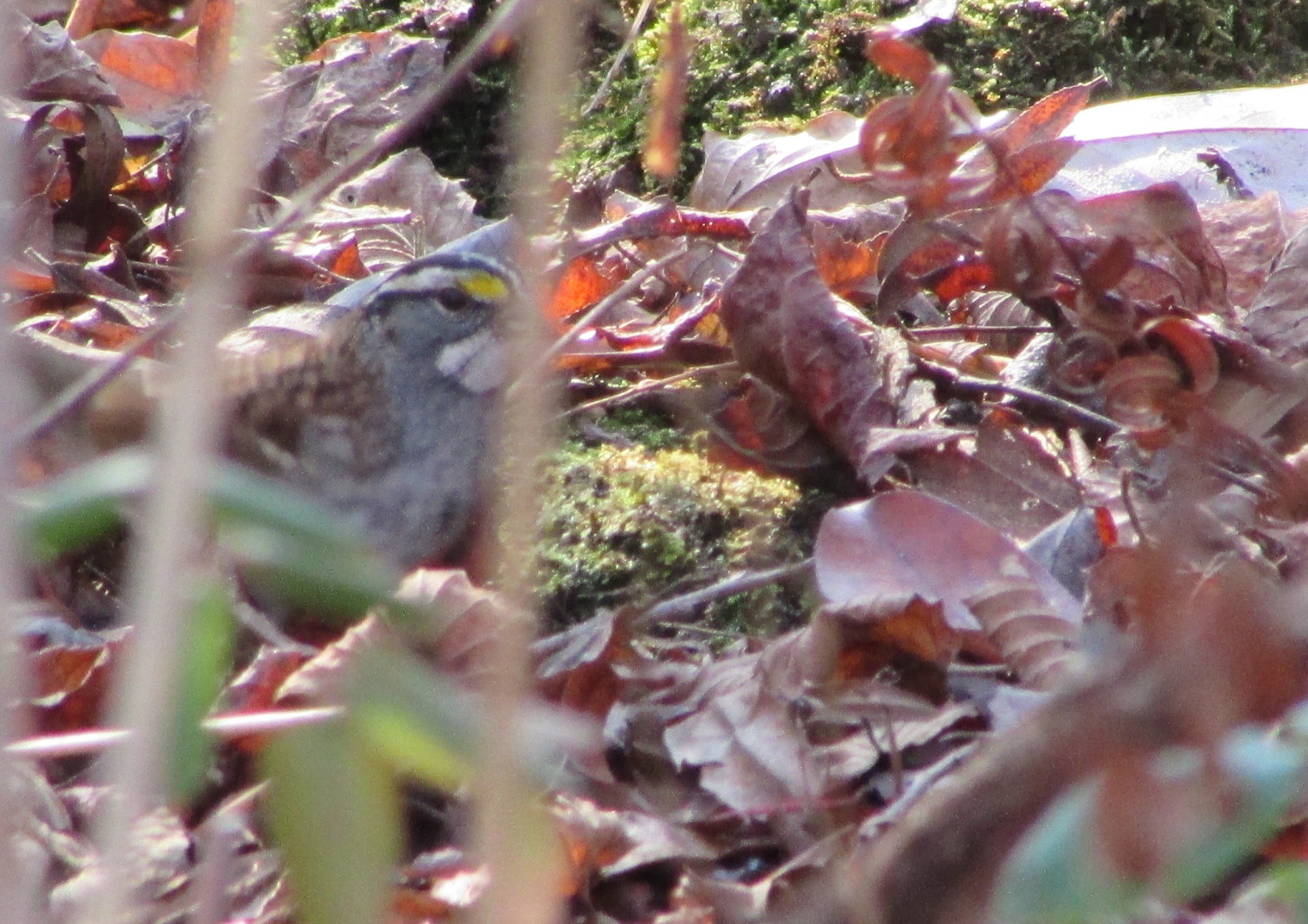
I heard loud rustling as I strolled a wooded path in the park yesterday. I was surprised to see a  fountain of leaves  exploding from the mossy ground. A couple of peeps alerted me to the presence of a bird beneath the cascade. He created quite a crackling ruckus as he foraged for insects. Aha, he was exactly my purpose for walking the path. I raised my camera, the new Canon with the super zoom feature, and clicked several shots.

IMG_9000

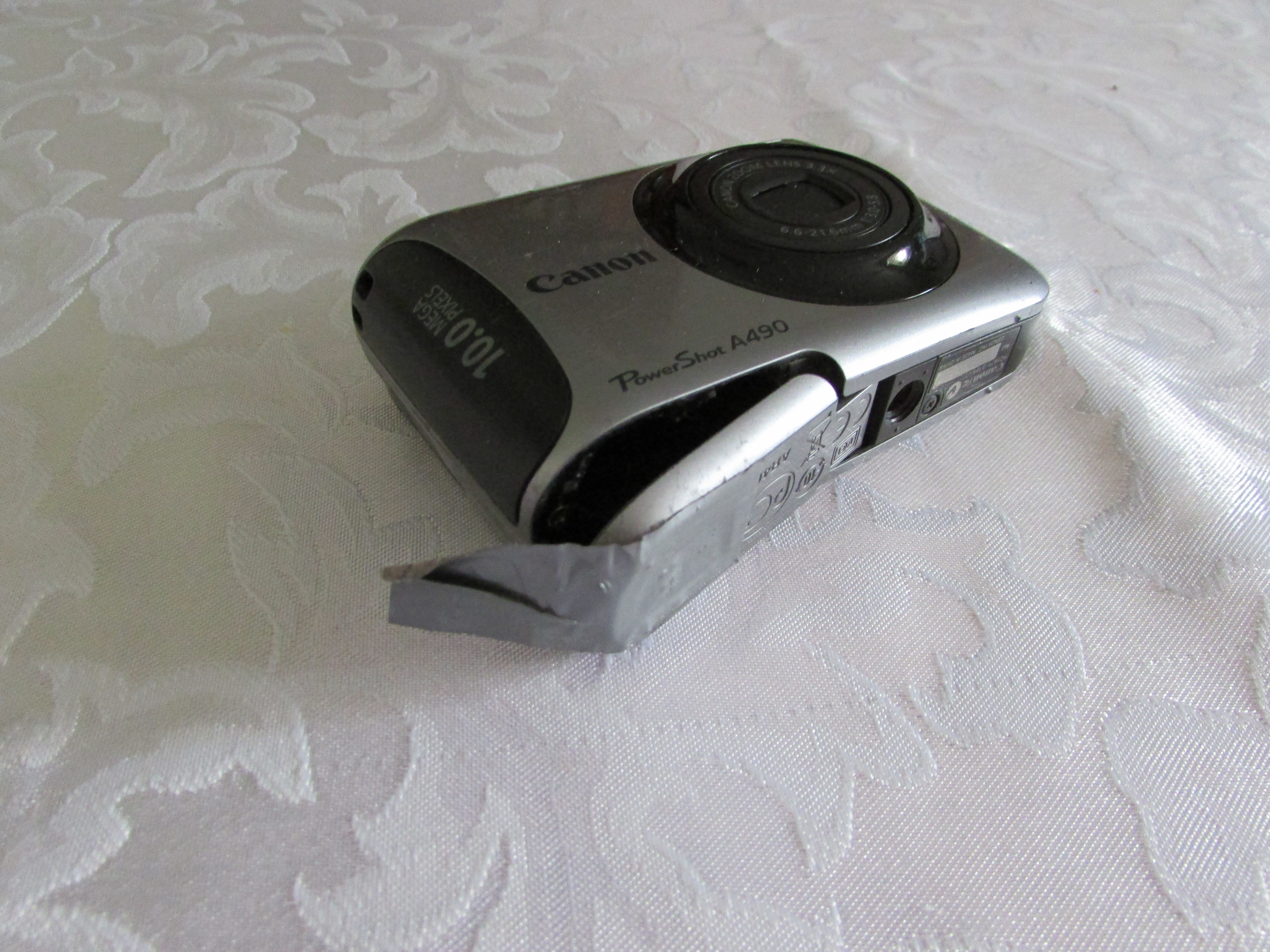
I have just replaced my old Canon Camera with a newer model. I wouldn’t have chosen any other brand. My old camera has taken thousands of photographs. It has traveled with me everywhere I have gone in the past few years. It has chronicled parties and family gatherings, holiday dinners and the goings-on in my gardens. Over the years, the camera has been dropped, been left outdoors, weathered drizzle and dew, and still…through it all has continued taking photographs.

After one of the more recent drops, the battery and SF card compartment stopped shutting correctly. No worries, and no replacing it right away, duct tape held it together for a time. Recently though, even the strongest tape, the addition of a rubber band, and the hardest grip of my thumb would not keep the batteries connected. It was time for a new camera. The brand  has performed for me so well, I knew another Canon was only choice. I replaced the old camera with a  PowerShot SX400 IS.

IMG_8962
Eye-Spy a White-Throated Sparrow.

Oh the joy of it. On my first outing I zoomed in on the foraging sparrow. Imagine my surprise when I downloaded the photographs and found that the sparrow was quite a fancy fellow. The yellow streaks and white ruff under his chin soon had me goggling, and I was able to identify him as a White-Throated Sparrow.

I have probably seen these birds over the years, but until I was able to zoom in close, I had no idea such beautiful little sparrows visited our area in the winter. Final thought: if you are in the market for a new camera check out Canon brand. They are reasonably priced,  set up easily, take amazing photographs, and best of all…last and last and last.

Pheathers – Creating Crystalline for Birds in Winter

IMG_8583

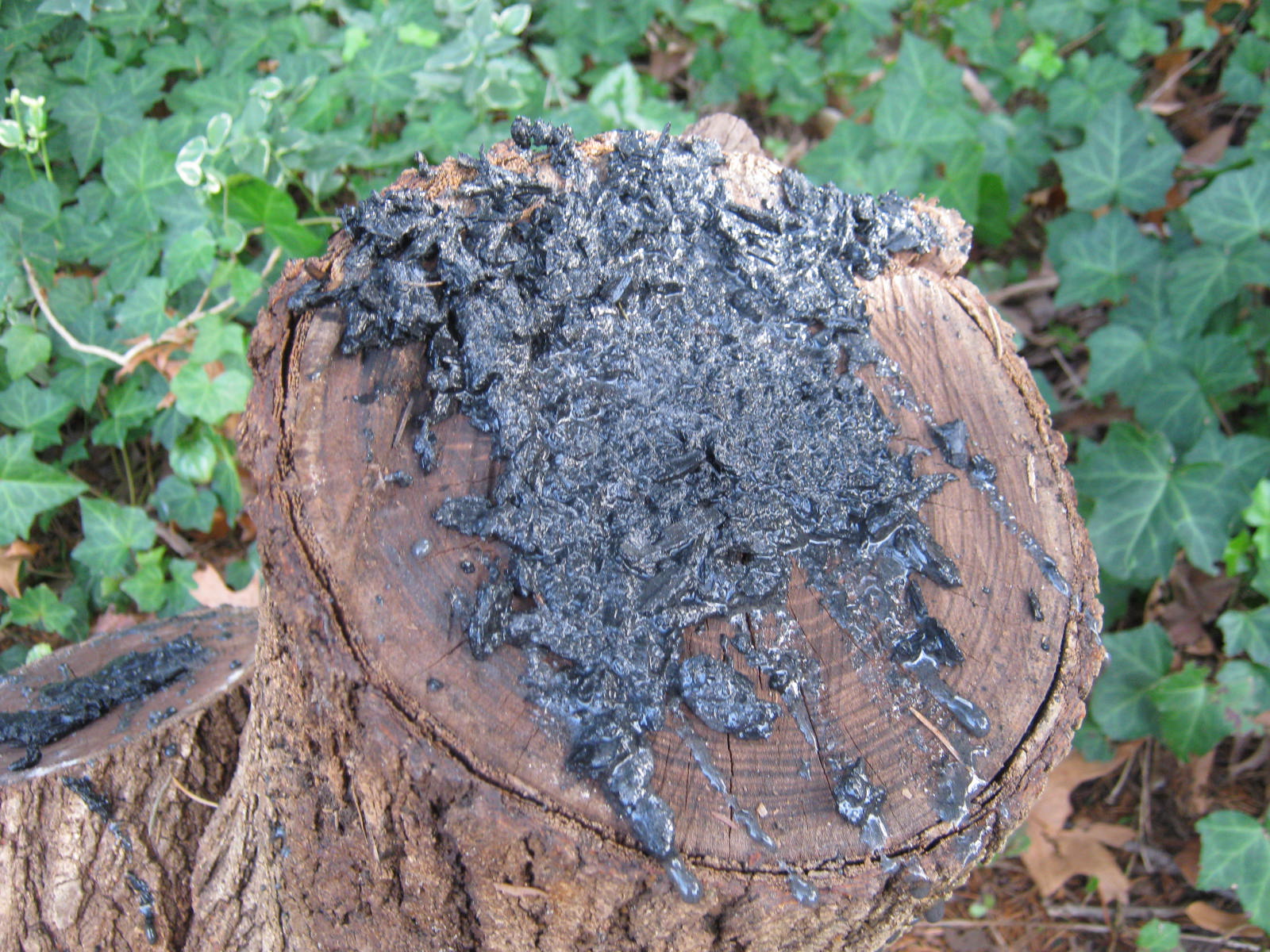
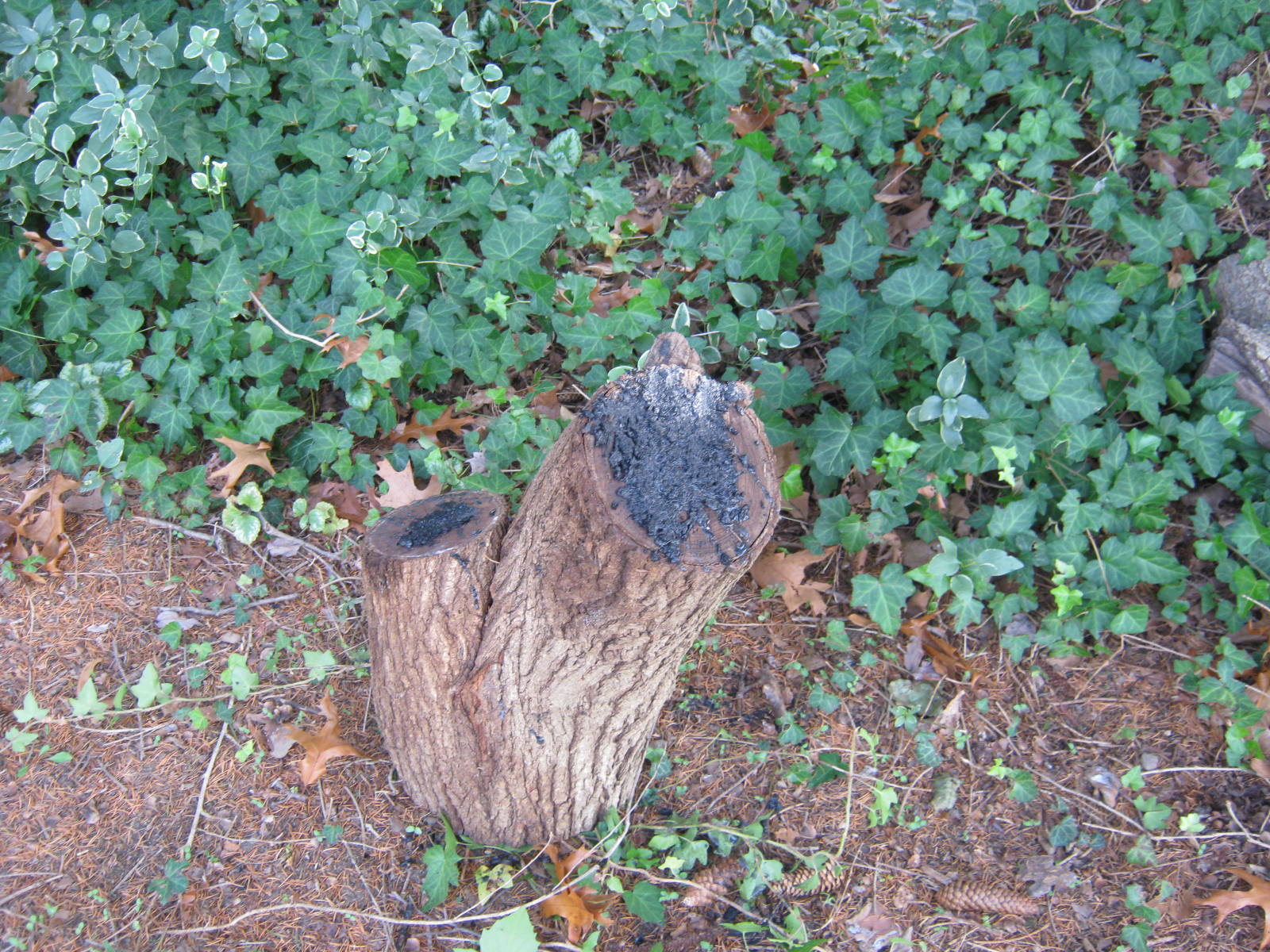
I am in the midst of creating layers of crystalline on a stump in the backyard. Placed near the border of ivy and pines, I am hoping the birds will flock to the stump and enjoy the salt crystals as they form. The crystalline should help ease their craving for salt and keep them from ingesting rock salt and ice melt when the ground is covered in snow.

Recipe for Crystalline
Salt
Wood ashes*
Mix salt and ashes with enough water to dissolve and pour over a large rock, stump or wood block. As the water evaporates, crystals form that attract mineral-hungry birds. (Be sure to keep the salt water away from areas that are planted with shrubs or near gardens ? salinating the soil can create problems for plant growth.) *These can be fireplace ashes as long as they do not contain residues from colored (especially red) or slick paper
~ Mother Earth News & “Country Wisdom and Know-How

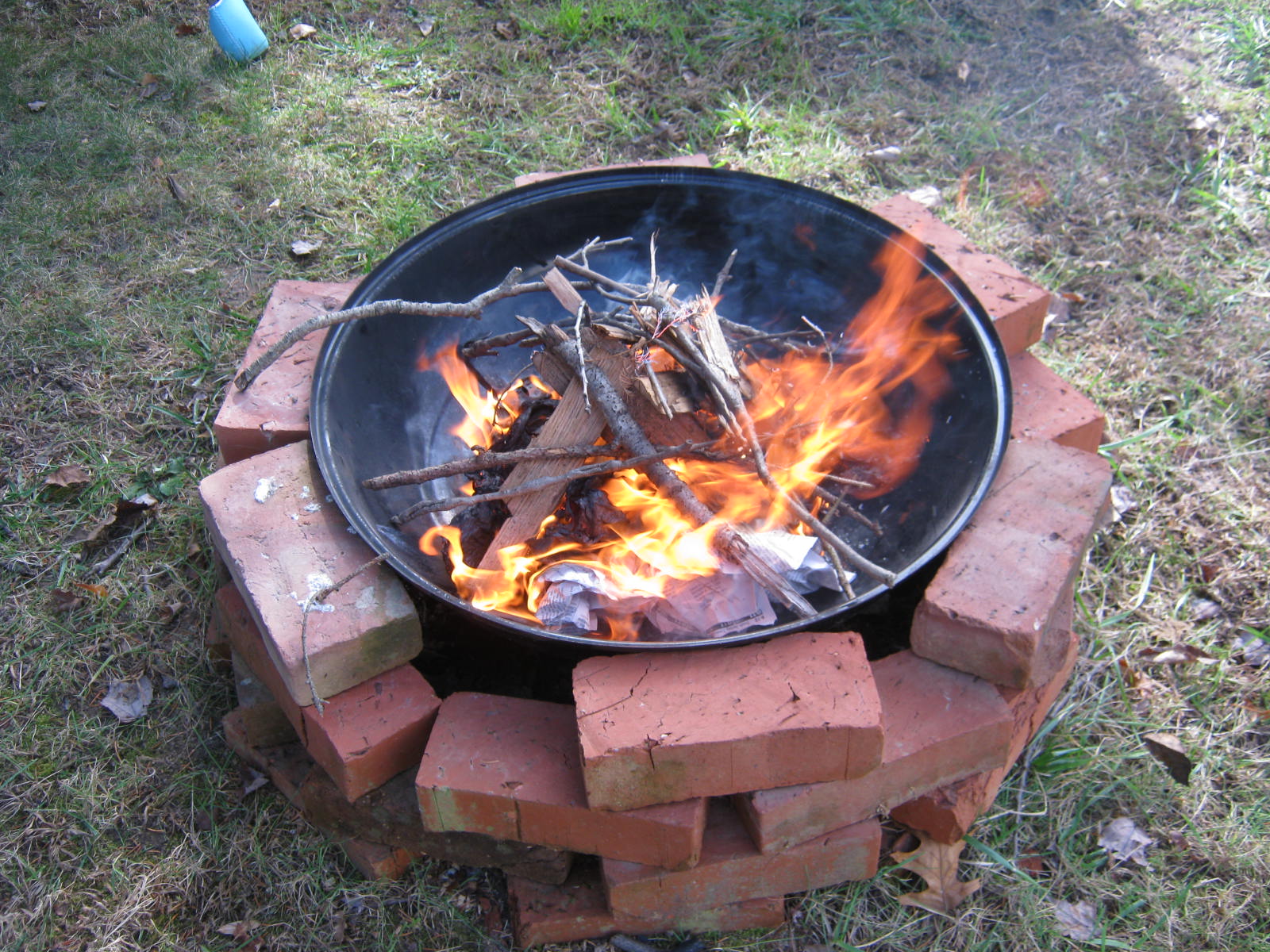
First I burned some small sticks and oak shavings. I used only natural wood and newspaper without colored ink to give it a quick start.

IMG_8576

I let the ashes cool down and then used a large tin can filled with a 1/4 cup of salt and 1/2 cup of water. I added all the small pieces of ashes I could scoop out of the fire pit. The recipe doesn’t give exact measurements so I am just guessing about quantities.

IMG_8584

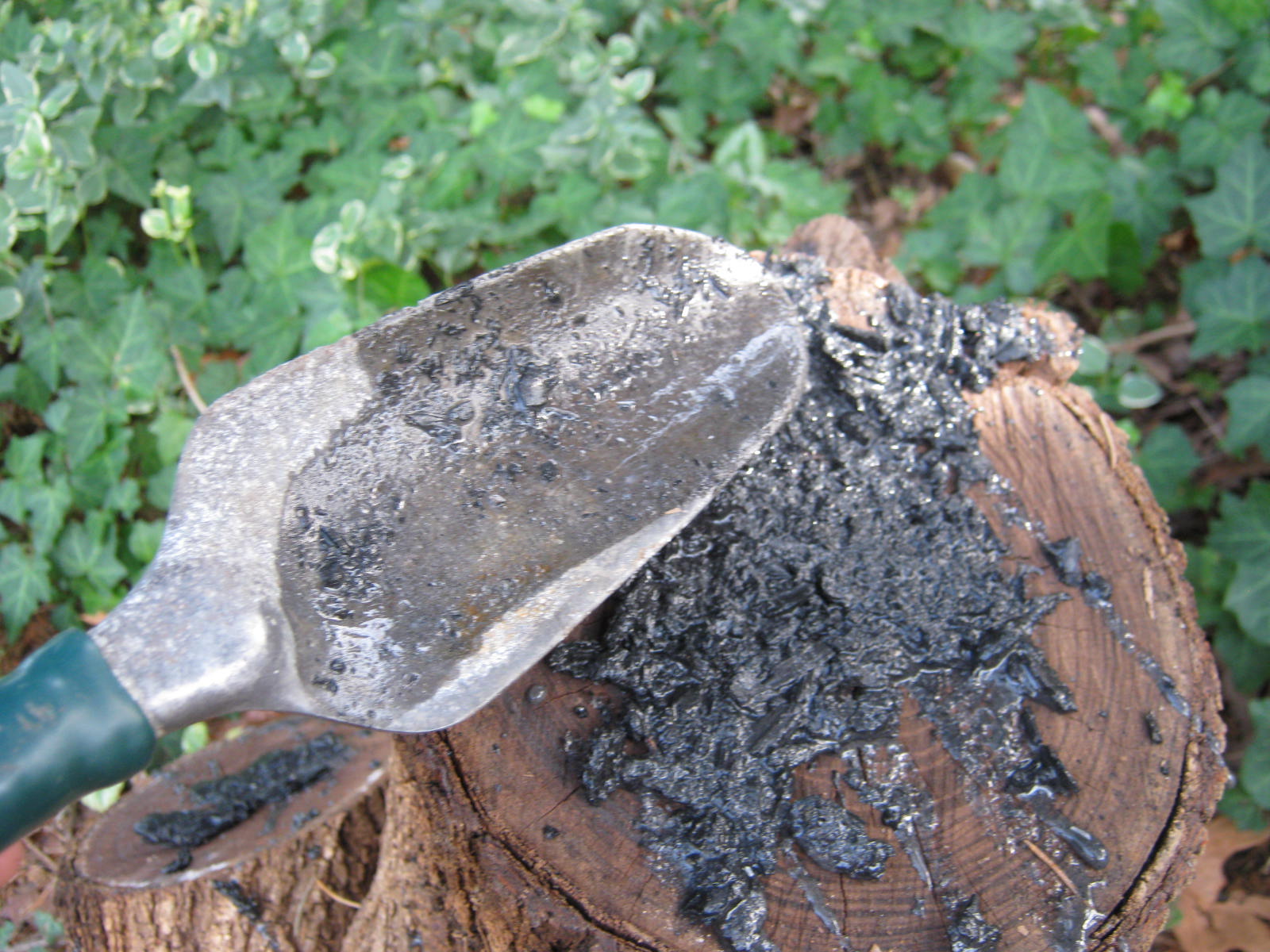
I poured the crystalline over the stump and  used the trowel I mixed with to batter down any lumps. The consistency resembled cement and easily stuck to the stump.

IMG_8585

I will continue mixing up the crystalline after campfires, and build up layers on the stump. In a few weeks, if the birds don’t notice the stump, I will scatter some bird seed and hopefully they will come and dine.

Crystals can also be formed by using mixing up plain saltwater.

SALT

“Many birds crave salt as an essential mineral, particularly in the winter when roads are regularly salted. Unfortunately, feeding on the side of the road can be deadly for birds, and offering salt crystals at your feeders will help keep them safe. Create a strong saltwater solution and let it evaporate in a shallow dish to make larger crystals, or pour it over a log or stump if there is no danger of freezing.

TIP: Salt can kill grass and make it difficult to grow plants, so keep the salt you’re offering the birds well away from gardens and other plantings.” ~ About Home / Birding

Providing bird grit (available in pet sections) in cleared out areas also helps with digestion when ground is covered with snow. As always, a water source is vital for birds in all weather.

Pheathers – The Junco

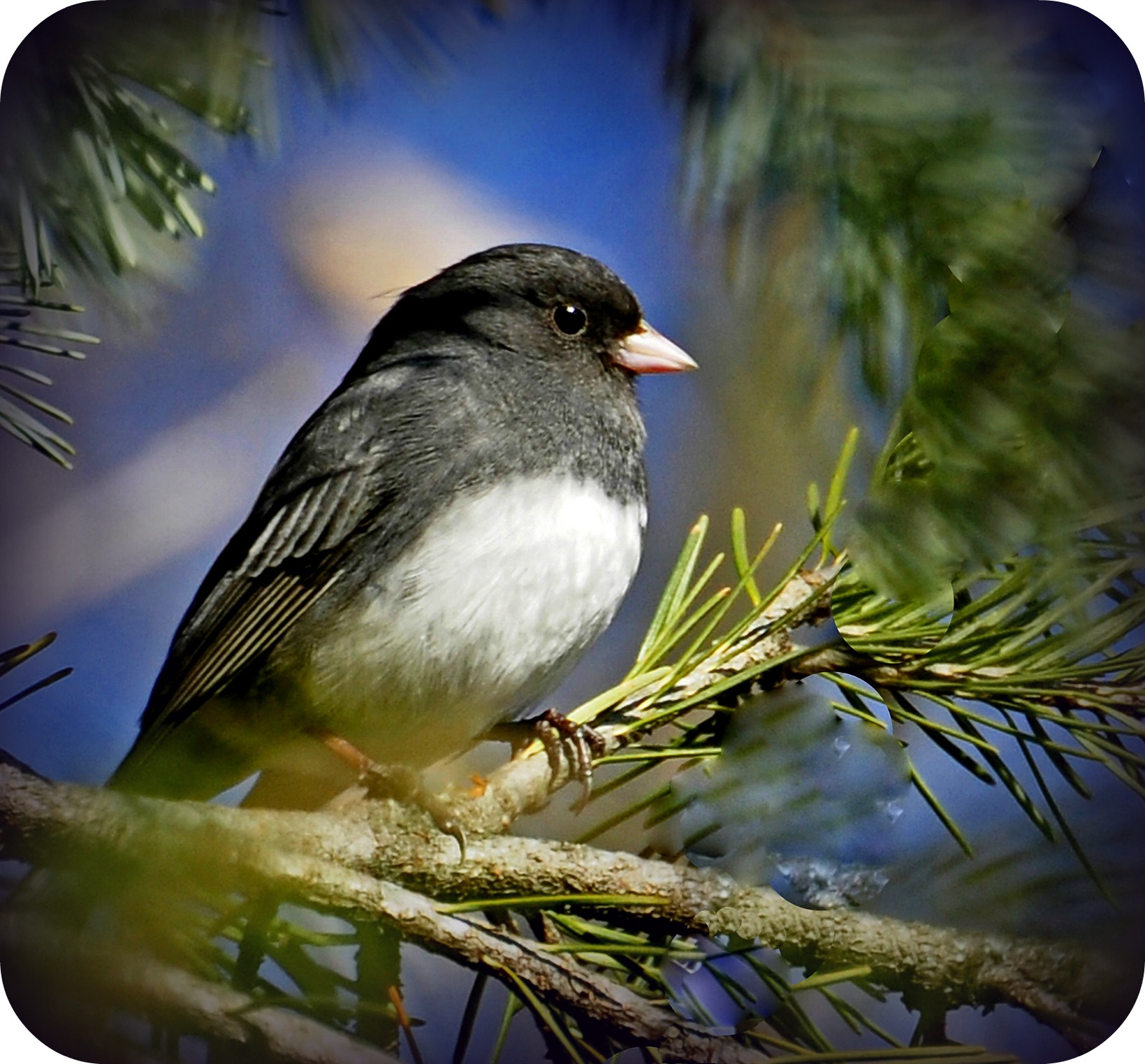
Photograph courtesy of Acrylic Artist on Morgue File

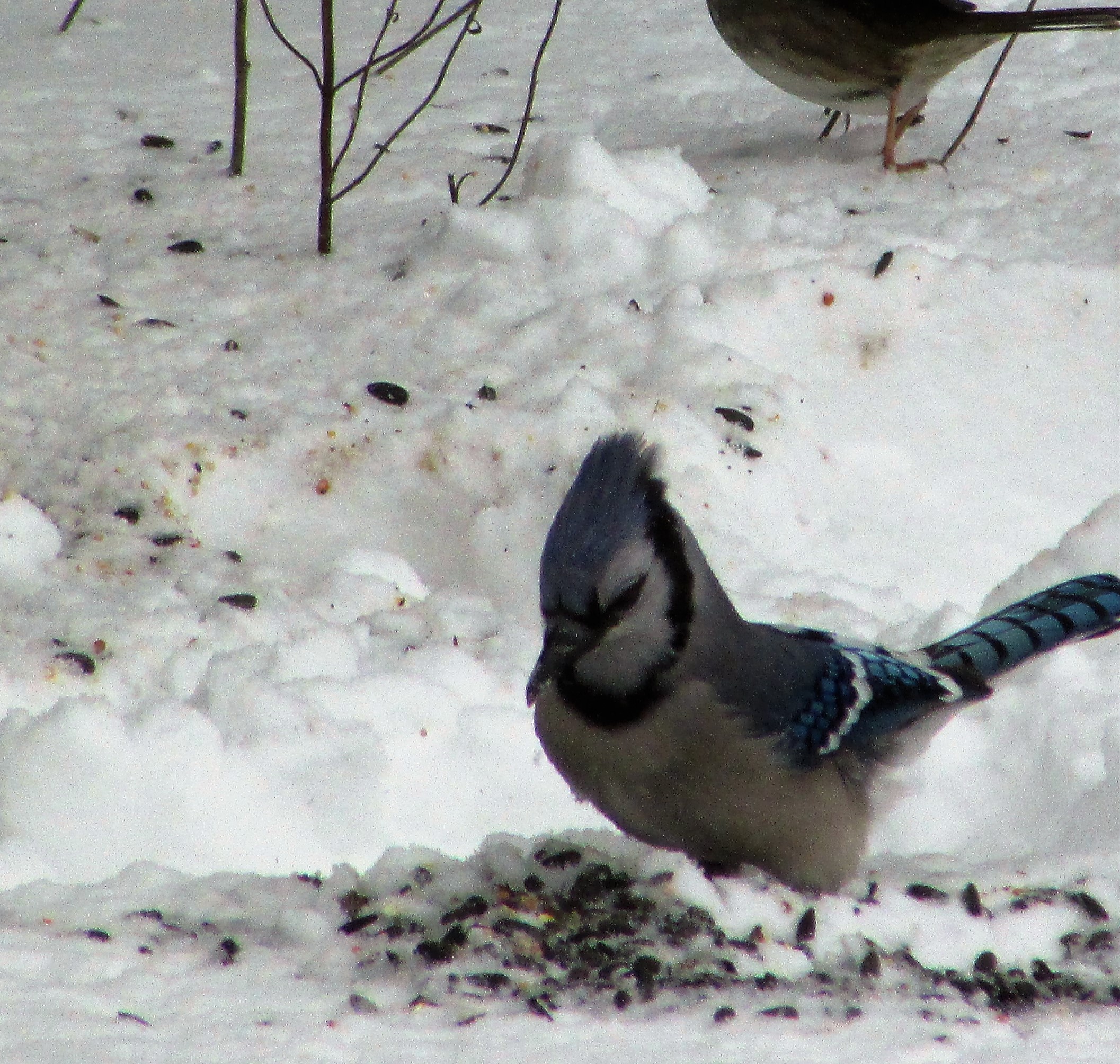
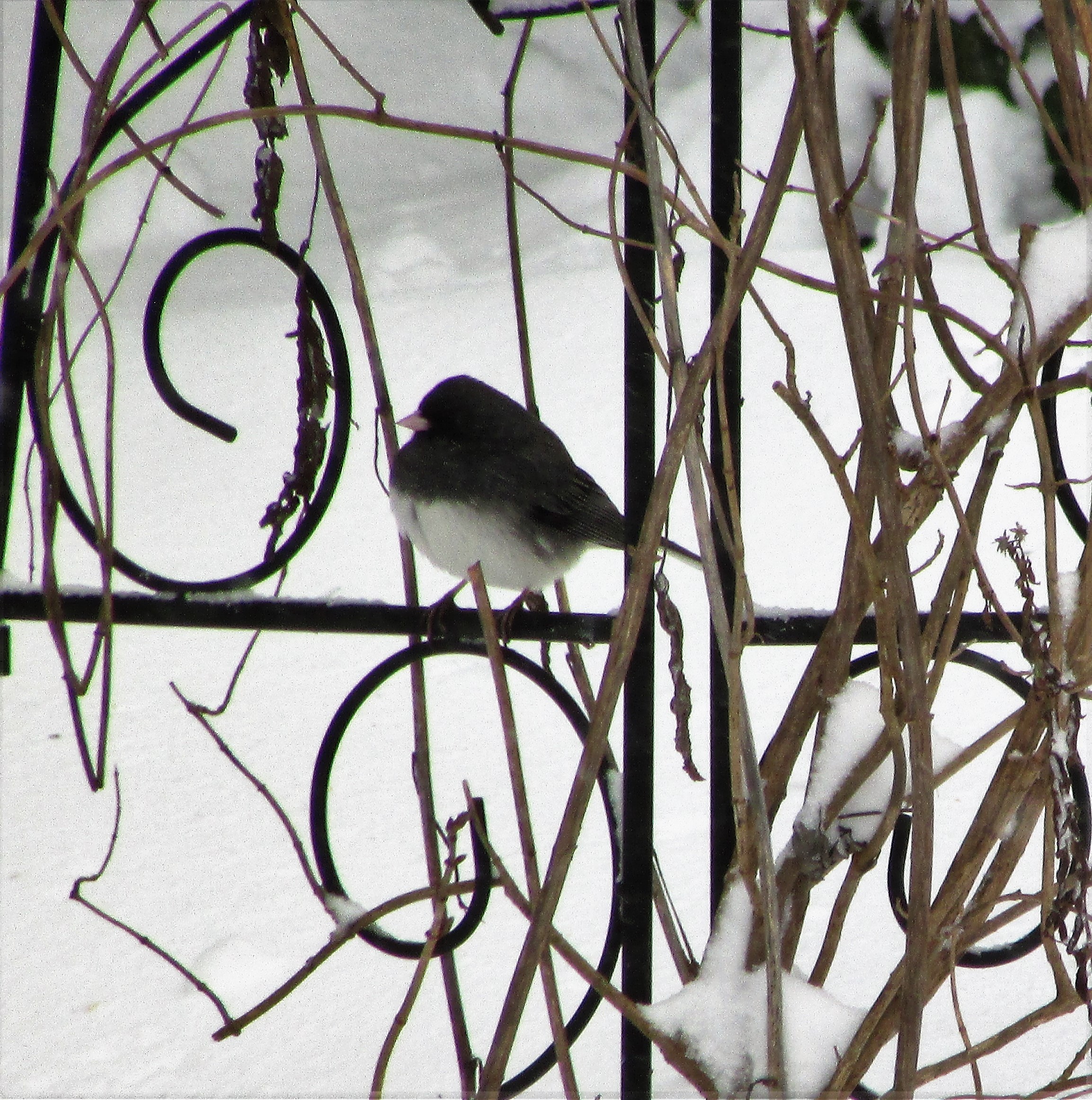
I know winter is approaching when the Juncos arrive at my bird feeder.

Dark-eyed Juncos are neat, even flashy little sparrows that flit about forest floors of the western mountains and Canada, then flood the rest of North America for winter. They’re easy to recognize by their crisp (though extremely variable) markings and the bright white tail feathers they habitually flash in flight. One of the most abundant forest birds of North America, you’ll see juncos on woodland walks as well as in flocks at your feeders or on the ground beneath them.
~ Cornell Lab of Ornithology

Project – Charcoal Sticks

IMG_7455

When straight wind storms blew through this year, they brought down hundreds of small sticks from the trees surrounding our yard. We collected these and used them in a campfire. Forgotten, the remains lay in the fire pit and weathered for a few weeks. Oh my! Imagine my surprise when perfect sticks of charcoal for artwork caught my eye.

IMG_7456

A quick autograph of my initials on the surrounding fire pit bricks assured me they were art-worthy.

IMG_7457

I collected a good amount and brought them into the house.

IMG_7500

Although I haven’t created art with charcoal in years, I’m eager to give the homemade sticks a try. There might be a bit of frustration involved since the thinner sticks break easily, but hey, it’s an endeavor that won’t cost me more than a sheet of paper.

A good example of charcoal art can be viewed in the following video:

Pheathers & Phun – Birdy, Birdy In the Tree

Birdy Birdy In the Tree jpg

Sometimes I am in the exact right place, at the exact right time, with camera in hand. This is the second brood of sparrow nestlings raised in our birdhouse this year. I have enjoyed watching the parents flit back and forth feeding the voracious young ones.

Pheathers & Photo – Say, “Ah…”

In response to The Daily Post’s writing prompt: “Motion.”
“This week, share your photographs that have captured motion, and tell us the stories behind the images” ~ WordPress Photo Challenge

IMG_2563

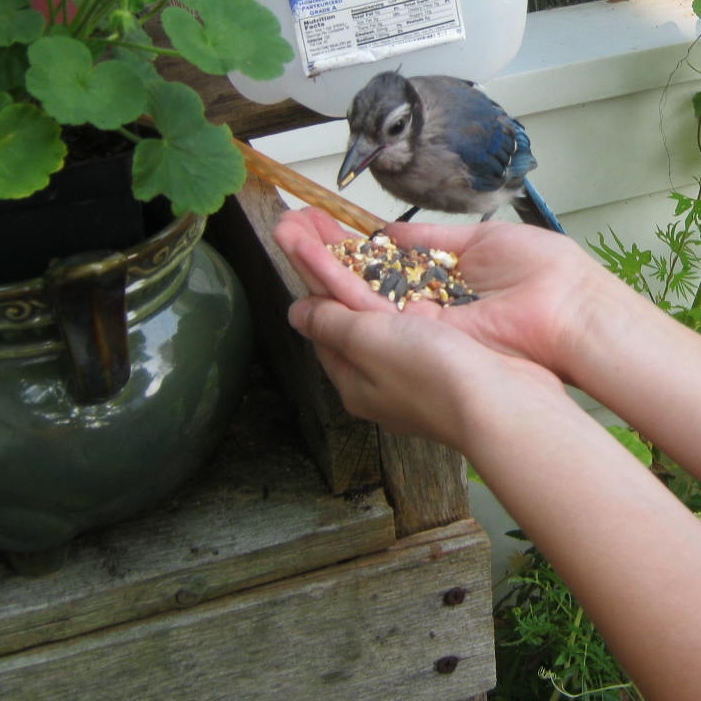
I’ve blogged a few times about my family’s encounter with a very tame Blue Jay Here’s a captured image of the Blue Jay, “in motion,” pecking my camera.

IMG_2567

Pheathers – Birds of the Caribbean Part II

egret

One of the joys of our days at the Royal Decameron in Montego Bay, Jamaica, was this inquisitive Cattle Egret who visited the snack bar. He seemed to be a frequent visitor for the staff had a name for him. He was completely unafraid and had an appetite for people food. I’m so glad I had my camera with me when he visited our table. Cattle Egrets are very common in Jamaica, but that did not make the interaction with him any less divine.

Pheathers – Birds of the Caribbean Part I

I love birds, and was totally captivated by the birds of Jamaica. Now and again, you find yourself in a close encounter with an inquisitive bird. My family’s close encounter with a blue jay last year is a good example of this unexpected blessing.

Doctor Bird

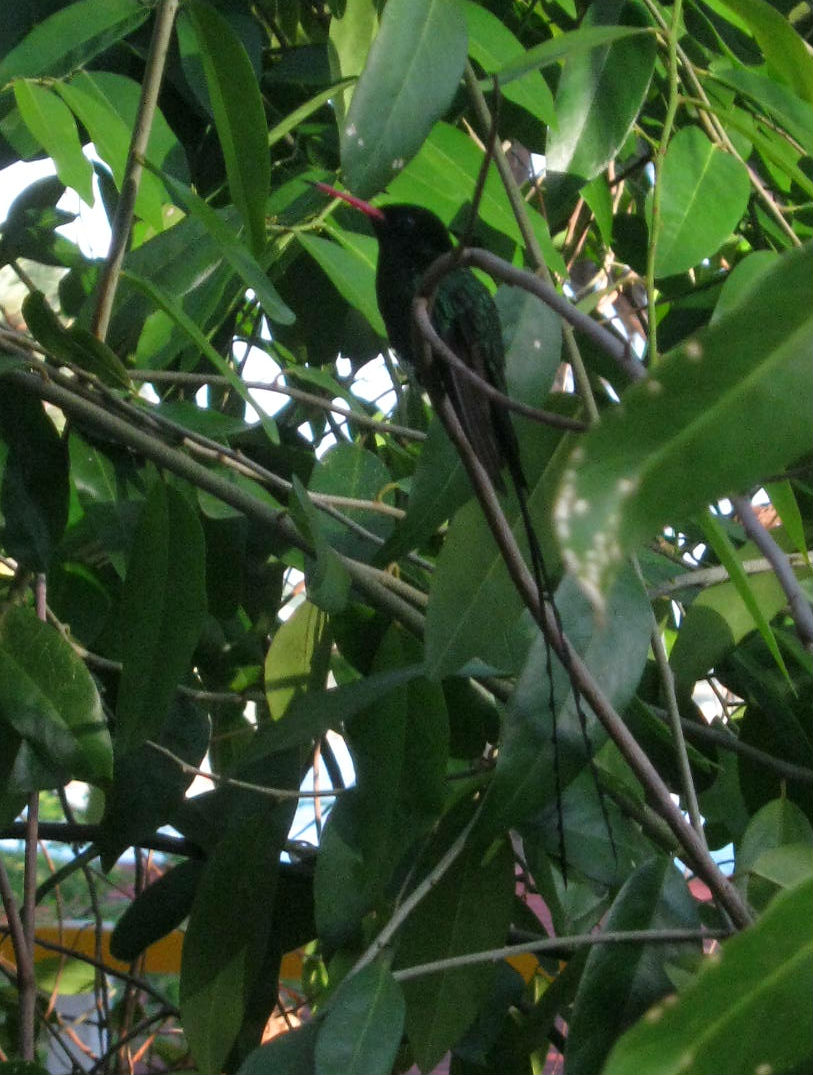
Treasure Beach, on the southern coast of Jamaica, was the scene of my first interaction with a bird. In this case I met a  Red-Billed Streamer Tail, or as it is better known, the Doctor Bird.

Hummingbird Nest in Cactus

I was walking along the paths of the Treasure Beach Hotel and spotted a small bird nest in the spines of a cactus. I thought the nest, and another I had seen earlier, might be hummingbird nests, but on researching when I arrived home realized they were more likely the nests of one of the other small birds filling the air with birdsong.

Hummingbird Nest

The sight of the nest in the cactus filled me with such joy…an unexpected sight for someone who watches birds most often in southern New Jersey. I did what I often do when I am happy, I began to sing as I walked not caring if anyone heard me or not.

Suddenly, I had an audience. A hummingbird feeding on a flower nearby must have liked my song, he buzzed close by me, perched on a branch, and began giving me a thorough looking-over. I continued to sing, and as I sang, he seemed to listen. Lucky me that I can do two things at once. My camera, dangling on my wrist, didn’t scare him away, and I took several photos of him as I serenaded him with my chirpy hymn of praise. (In the Sweet By and By)

Dr. Bird in tree

Amazingly, I tired of singing before he tired of listening. As I walked away, I took one more photograph of him perched on his branch enjoying the view of the Caribbean sea.

Silhouette Dr. Bird

Pheathers – Nesting Part II

Now is the time to check the hanging apparatus of your birdhouses and clean out those with removable bottoms. This winter, the wire loop hanging my birdhouse from a tree limb, rusted through, and allowed the birdhouse to fall to the ground. Thankfully, it didn’t have any occupants. This Spring I’ll be sure to use a wire that will not rust.

Broken wire
Broken wire

If you paint your own wooden birdhouses be sure to choose one that is made of durable wood and is screwed together rather than glued.

IMG_5124

I’ve mentioned this before, but it’s a good tip, and after my birdhouse has hung outside for two seasons, I know it works. To keep gnawing rodents, such as chipmunks and squirrels from breaking into your birdhouse, surround the hole with tacks, staples, or anything else indestructible that can be fastened tightly to the wood.

Staples surrounding birdhouse entrance.

The staples keep the pesky rodents from chewing through the wood.

Pheathers – Nesting Part I

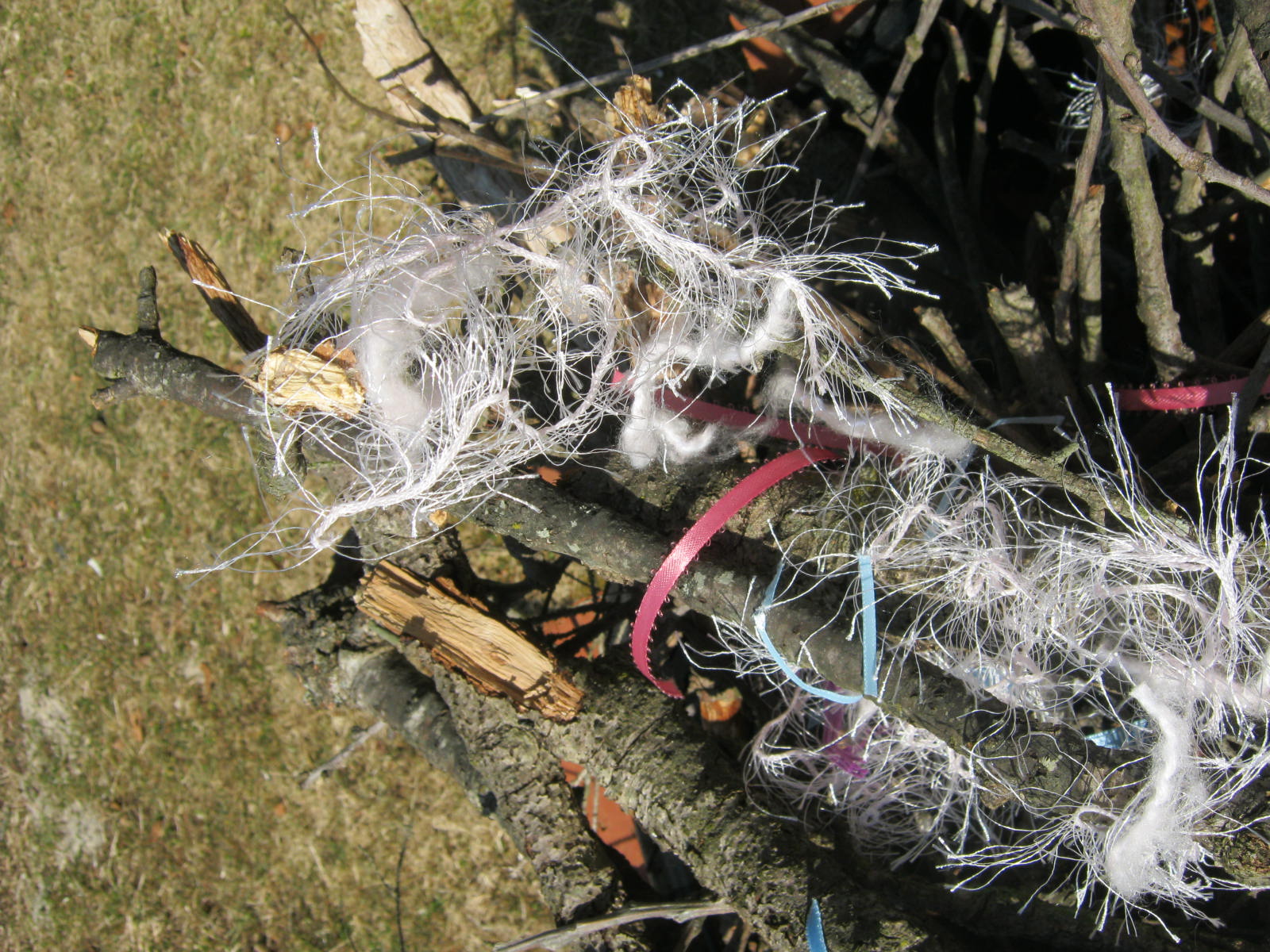
The birds are all a-twitter. Time to lay out some string and others soft materials for their nests. This is a great project for children to participate in.

Nesting material, cut short and scattered over twigs.

“HOW TO OFFER NEST MATERIAL

•Place nesting materials, such as twigs and leaves, in piles on the ground—other materials, too, if they won’t blow away.
•Put fluffy materials, hair, and fur in clean wire-mesh suet cages, or in string or plastic mesh bags. Attach them to tree trunks, fence posts, or deck railings. The birds will pull out the material through the mesh holes.
•Push material into tree crevices or drape it over vegetation.
•Put material into an open-topped, plastic berry basket (such as strawberries are sold in).
•Some manufacturers sell spiral wire hangers especially for putting out nest material. (One type looks like an oversized honey-dipper.)
~ The Cornell Lab of Ornithology

Don’t be too quick to clean all of winter’s debris from your yard.


Gather up some of these items in your yard into small concentrated piles:
•Dead twigs
•Dead leaves
•Dry grass (make sure the grass hadn’t been treated with pesticides)
•Human or animal hair (especially horse hair) (use short lengths—no longer than 4-6 inches long)
•Pet fur (Never use fur from pets that received flea or tick treatments)
•Sheep’s wool
•Feathers
•Plant fluff or down (e.g. cattail fluff, cottonwood down)
•Kapok, cotton batting, or other stuffing material
•Moss
•Bark strips
•Pine needles
~ The Cornell Lab of Ornithology

Pheathers – The Blue Jay

This is a re-posting of one of my favorite moments last summer. I can’t wait to see if we have any more close encounters with the blue jays.

IMG_2560

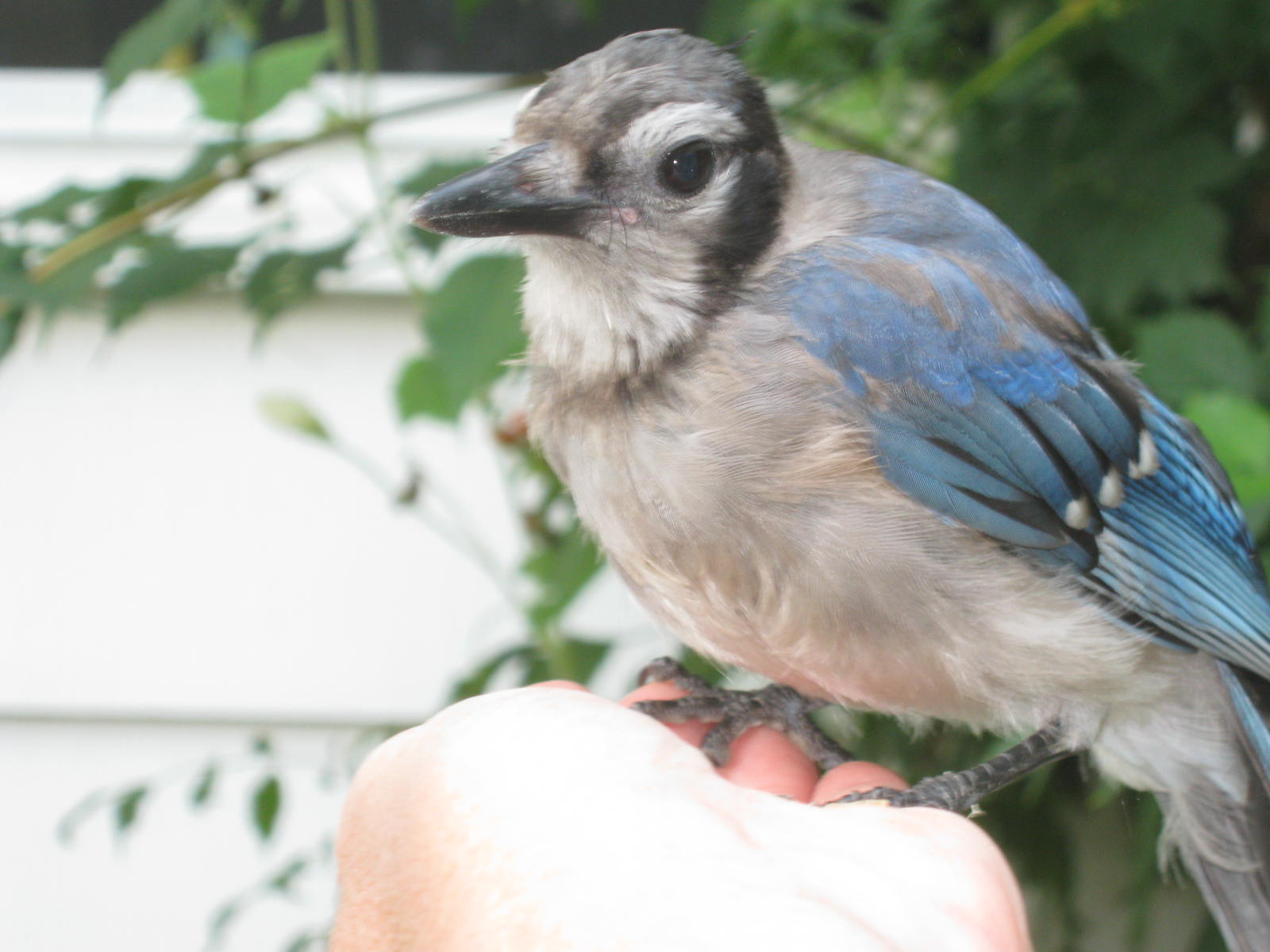
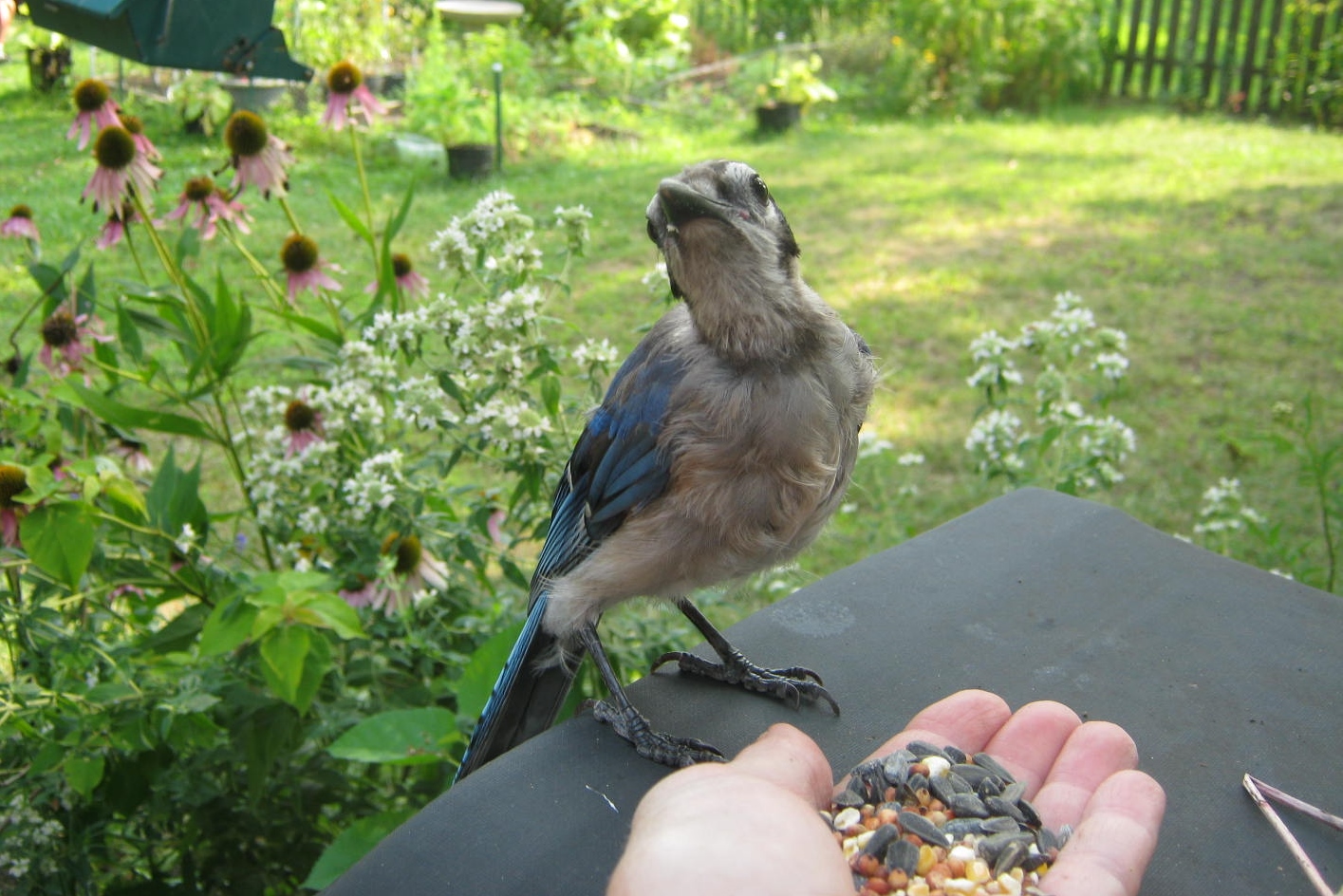
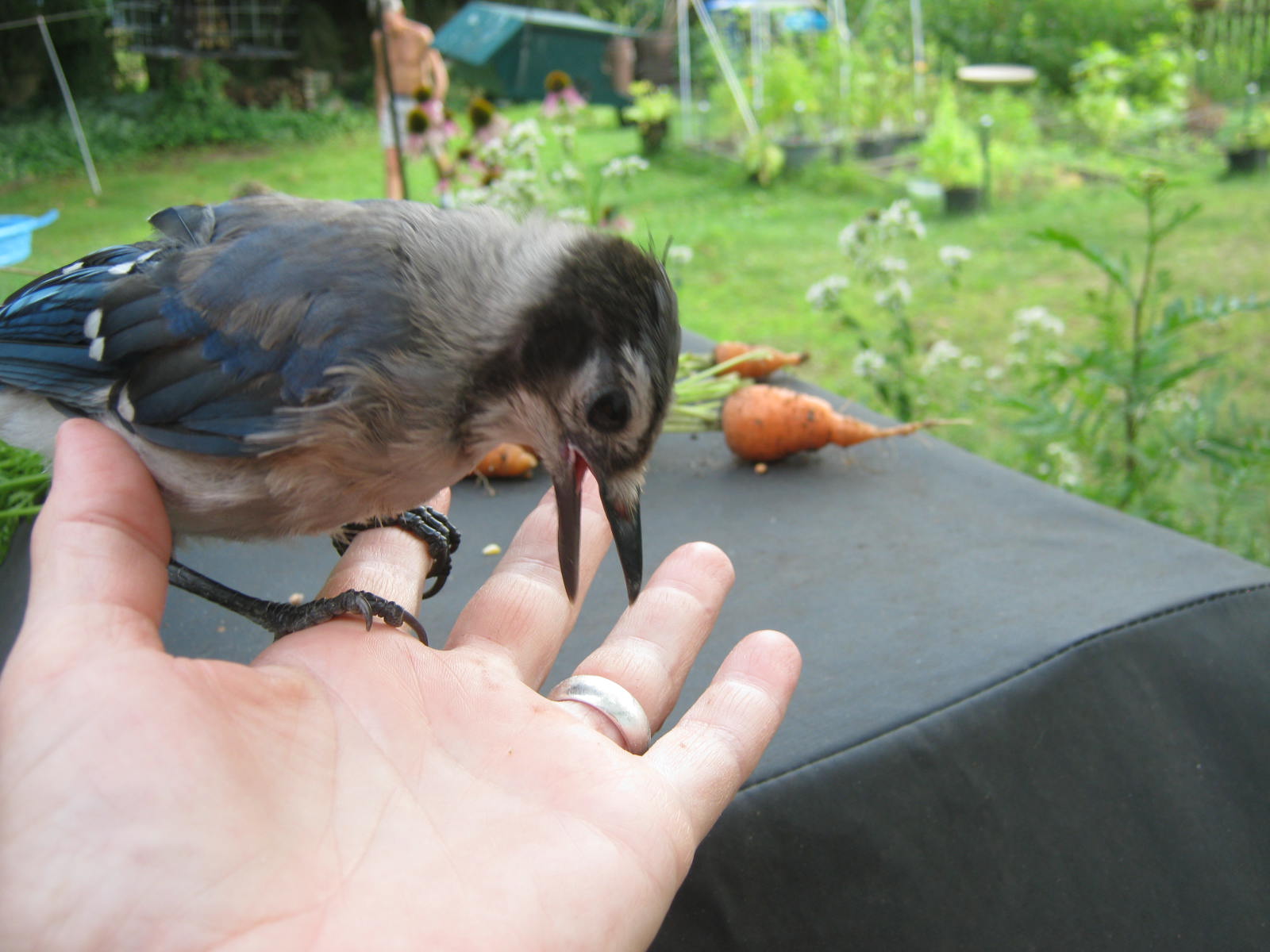
A “teenager” Blue Jay, wild and reckless, made friends with the ones his Mama told him were the wrong crowd. What an amazing experience this was for all of us.

IMG_2568

We gave him some bird seed. He gobbled up a bit, but seemed to like the attention he was receiving more than the food.

IMG_2574

He first captured our attention by bathing in a muddy puddle the grandboys had created with the hose. The two year old baby was excited and bold, he went right up to him and petted him on the back. We were amazed. No worries for those of you who might wonder if the bird was sick…no…just very young…feisty, strong, and bright-eyed. We wondered if perhaps someone had hand-raised him…he was that tame.

IMG_2580

As I took photographs he pecked the camera.

IMG_2587

He also took a liking to my wedding ring.

IMG_2593

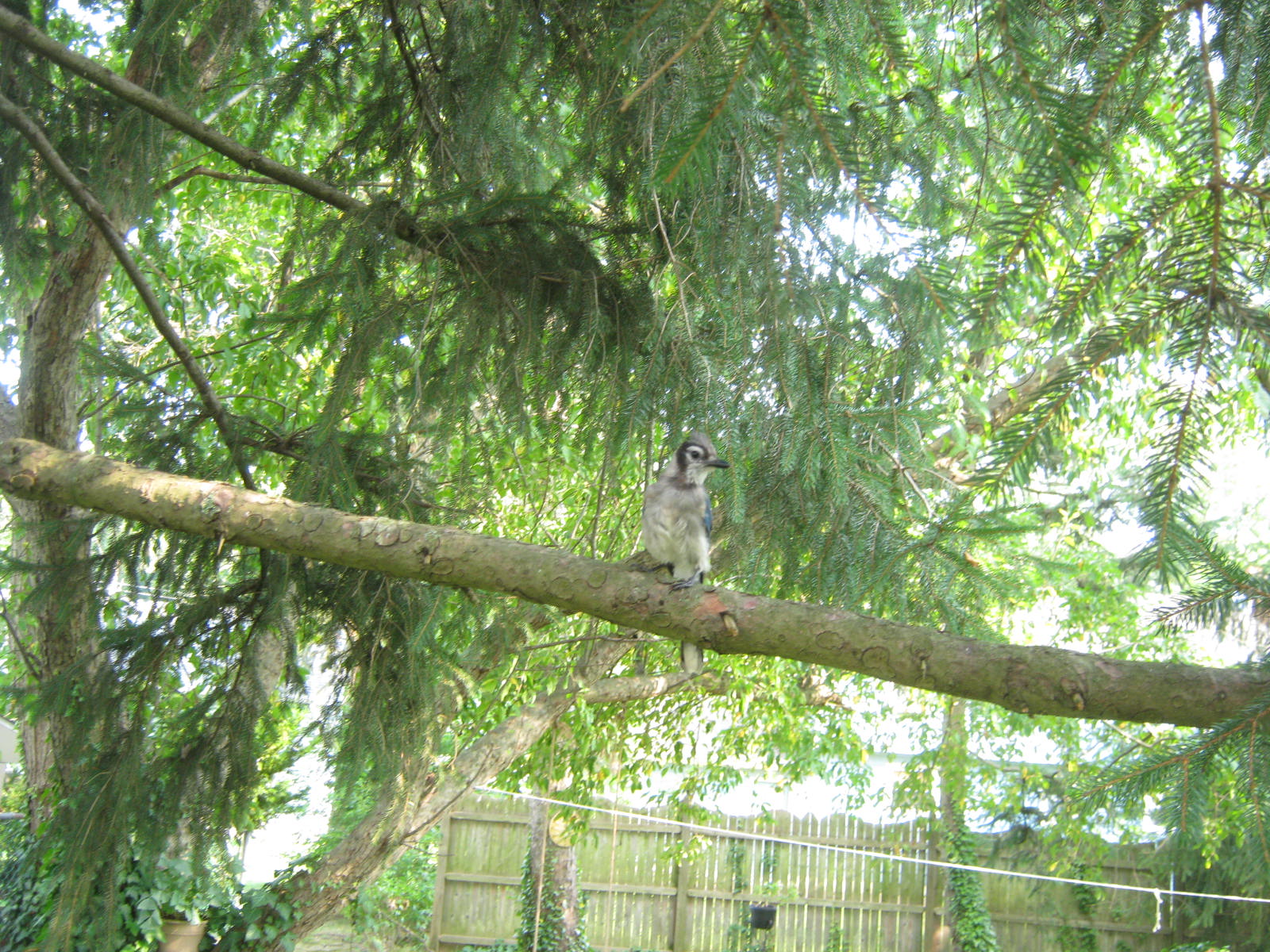
After a bit he flew to a perch in one of the pines bordering our back yard. Fly away home little bird…stay safe. Small miracles happen every day. Thank you God!

Preparedness & Pheathers – Self-Reliance and Feeding the Birds

Country Wisdom & Know-How

Every household needs to have a book on how to live off the land, either by choice, or in an emergency situation. Country Wisdom & Know-How is just such a guidebook. There are many other fine publications that also give terrific tips, numerous how-to blogs, and other resources easily available through a search on any search engine.

Country Wisdom & Know-How is an oversized, no-frills guide on ANIMALS of all kinds through HEALTH AND WELL-BEING and the HOME. In between these headings are: Cooking, Crafts and Gardening, with dozens of sub-topics in each one.

IMG_4982

On page ten, under the topic of “Seasonal Feeding of Birds,” a tip is given on how to build up calcium in songbirds for better reproduction capability in the Spring. Starting right about now add some crushed eggshells to your birdseed to provide additional calcium. This little boost for your “pheathered” friends is very easy to do. Save your broken eggshells, wash in hot water, let dry, grind up in a food processor or shatter in a plastic bag with a rolling pin. Mix these small pieces of eggshell into your birdseed and feed regularly through the Springtime months.

IMG_4983

IMG_4984

I love the songbirds that fill my yard with music throughout the year. Not only do they sing me a symphony, they also keep the bug situation in check. Going to a bit of trouble to provide them a little extra calcium is my pleasure. Happy Bird-watching!

Pheathers – The Bird Whisperer or Small Miracles

IMG_2560

A “teenager” Blue Jay, wild and reckless, made friends with the ones his Mama told him were the wrong crowd. What an amazing experience this was for all of us.

IMG_2568

We gave him some bird seed. He gobbled up a bit, but seemed to like the attention he was receiving more than the food.

IMG_2574

He first captured our attention by bathing in a muddy puddle the grandboys had created with the hose. The two year old baby was excited and bold, he went right up to him and petted him on the back. We were amazed. No worries for those of you who might wonder if the bird was sick…no…just very young…feisty, strong, and bright-eyed. We wondered if perhaps someone had hand-raised him…he was that tame.

IMG_2580

As I took photographs he pecked the camera.

IMG_2587

He also took a liking to my wedding ring.

IMG_2593

After a bit he flew to a perch in one of the pines bordering our back yard. Fly away home little bird…stay safe. Small miracles happen every day. Thank you God!

Pheathers – The Flicker

flicker

Photo Courtesy of: Flickr Photos and Shared through Creative Commons by Kenneth Cole Schneider

A bird exactly like the one in the photograph above visited my yard in the past week or two. I was thrilled when I first spotted him, and became even more enthralled when he whimsically jumped aboard my old-fashioned swing. He hopped around the yard a few minutes and then took to wing.

I immediately went to the computer and typed all his characteristic markings into Google. Larger sized bird, purple/black crescent on chest, spots, and a red stripe on head. I searched through images that came up and soon identified my “pheathered” visitor as a Flicker.

IMG_1708

I have had a large variety of birds in my yard this year. I think it is due in part to this new/old suet feeder my father gave to me. It is protected from marauding squirrels by an outer cage, and seems to have drawn many more woodpeckers, flickers and other nuthatch type birds to the yard.

IMG_1709

I have two small bird baths, but this large-sized bath in the back garden is a popular place. I can look out all through the day and see birds drinking and bathing. I’m having a good time bird-watching this summer.

Here’s an addition to this post that I am re-printing here from the comment section. Thanks James!

IDEA:

“I took a plastic birdbath & drilled 2 small holes in it….1 in the base, & 1 in the dish.

I then took 2 couplers*(I think that’s what they are called) & inserted them in the holes(there are nuts & washers on both ends to tighten against the plastic).

I then used a small rubber type hose, to run from the base to the dish…secured each end of the hose with a adjustable hose clamp.

On the base, I added a converter so that I could hook up a garden hose to the bird bath.

On the piece that protrudes from the dish, I found(at a garden store) nozzle that clamps onto that piece….

now in the summer, when the birds need it most, they have a constant “shower” in which to bathe….and I get the honor of watching them as they do..

footnote:
where the couplers go through the plastic, I added a clear silicone sealant to keep out the weather & to keep in the gravel that I added to the base for ballast weight.
With this extra weight in the bottom, the bird bath is not so apt to get blown over during storms.
~~~~~~~~~~~~~~~~~~~~~~~~~~~~~~~~~~~~~~~~~~~
This DIY project may seem complicated to some, but it really isn’t hard at all, and it doesn’t take a lot of time once you get everything you need. & it’s cheap too!
I had most of what I needed, so it didn’t cost much…I think I spent $4 or $5 on the whole thing…but like I said, I had most of what I needed already.

I’m thinking about $10 for everything but the bird bath….maybe less.

*the couplers I speak of are hollow threaded tubes with a washer & a nut on both ends. these are made of steel, brass, or stainless steel.

stainless steel…….most expensive type, but the best quality
steel………………….moderately priced but cheapest quality
brass…………………cheapest cost but 2nd best quality “