Project – Tin Can Upcycle Part I

I make a lot of spaghetti sauce to use and freeze. Each time I stir up a batch of sauce I clean and store the 29-ounce cans the crushed tomatoes come in. Ofttimes, when I upcycle the cans in projects I will need to add holes of some kind to them.

The easiest way I have found to do this is to fill the can with water and freeze it first.  This gives me a solid mass to punch into, but is also easily removed. (Melted in this case.)  The one drawback is the flat bottom of the can becomes curved by the pressure of the freezing water, lowering the level of the water several centimeters. The bottom is easily flattened back out with a hammer.
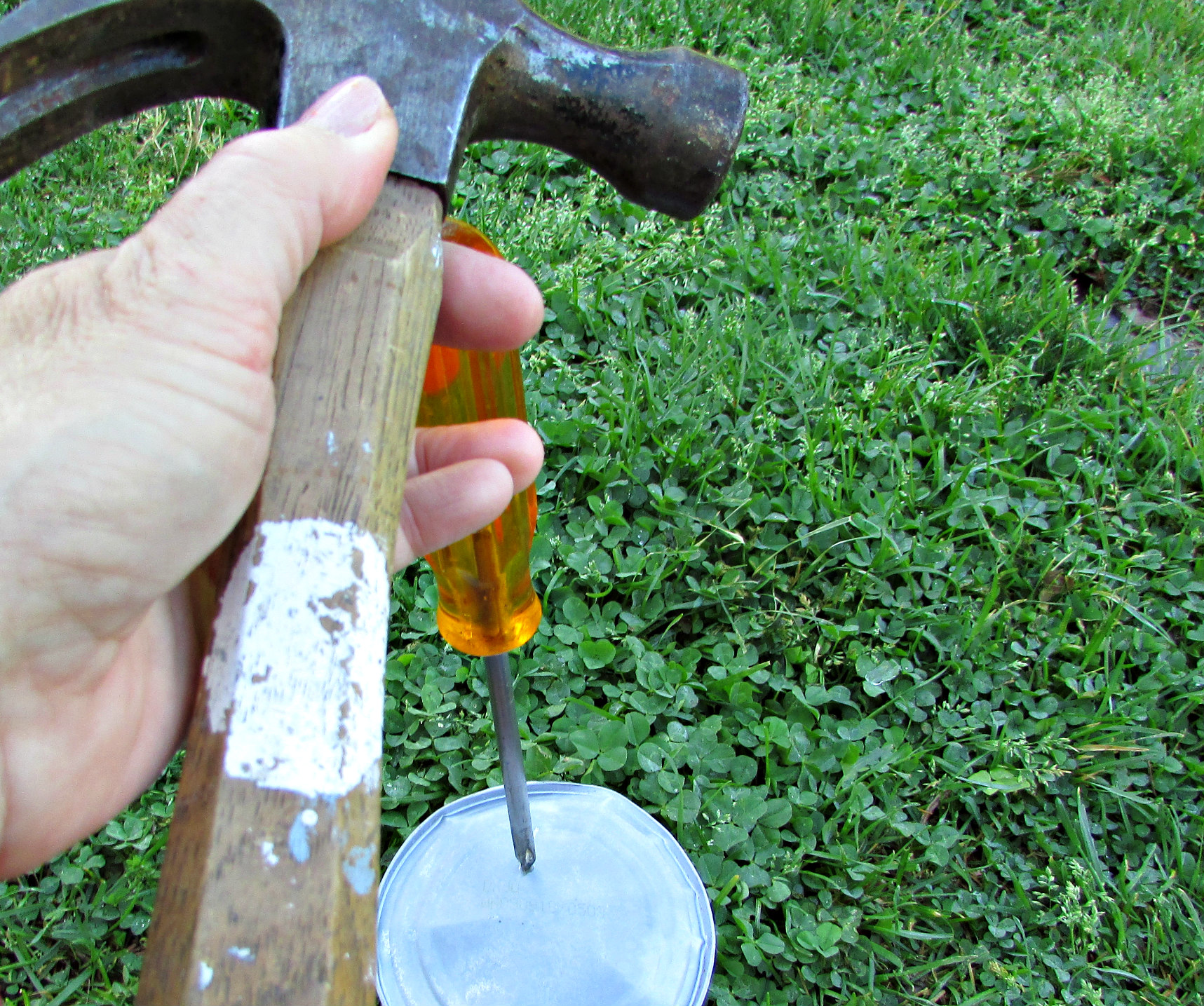
I am making a flower rack out of upcycled cans and some wire baskets I found at the local thrift store. I will need to punch at least four drainage holes in the bottom of each can, and also two side holes for a leather hanging strap.
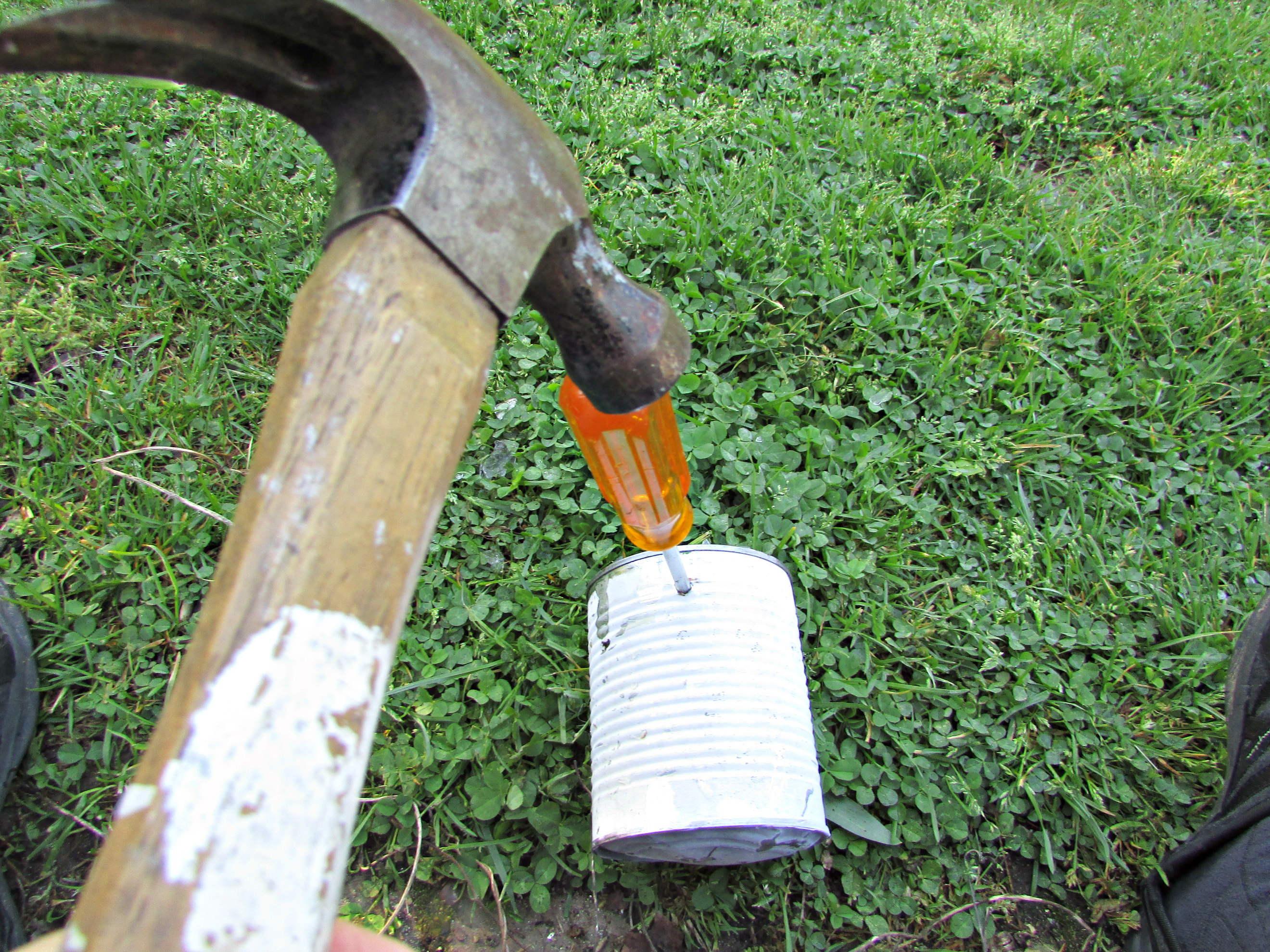
A common Philips screwdriver is perfect for punching the holes.
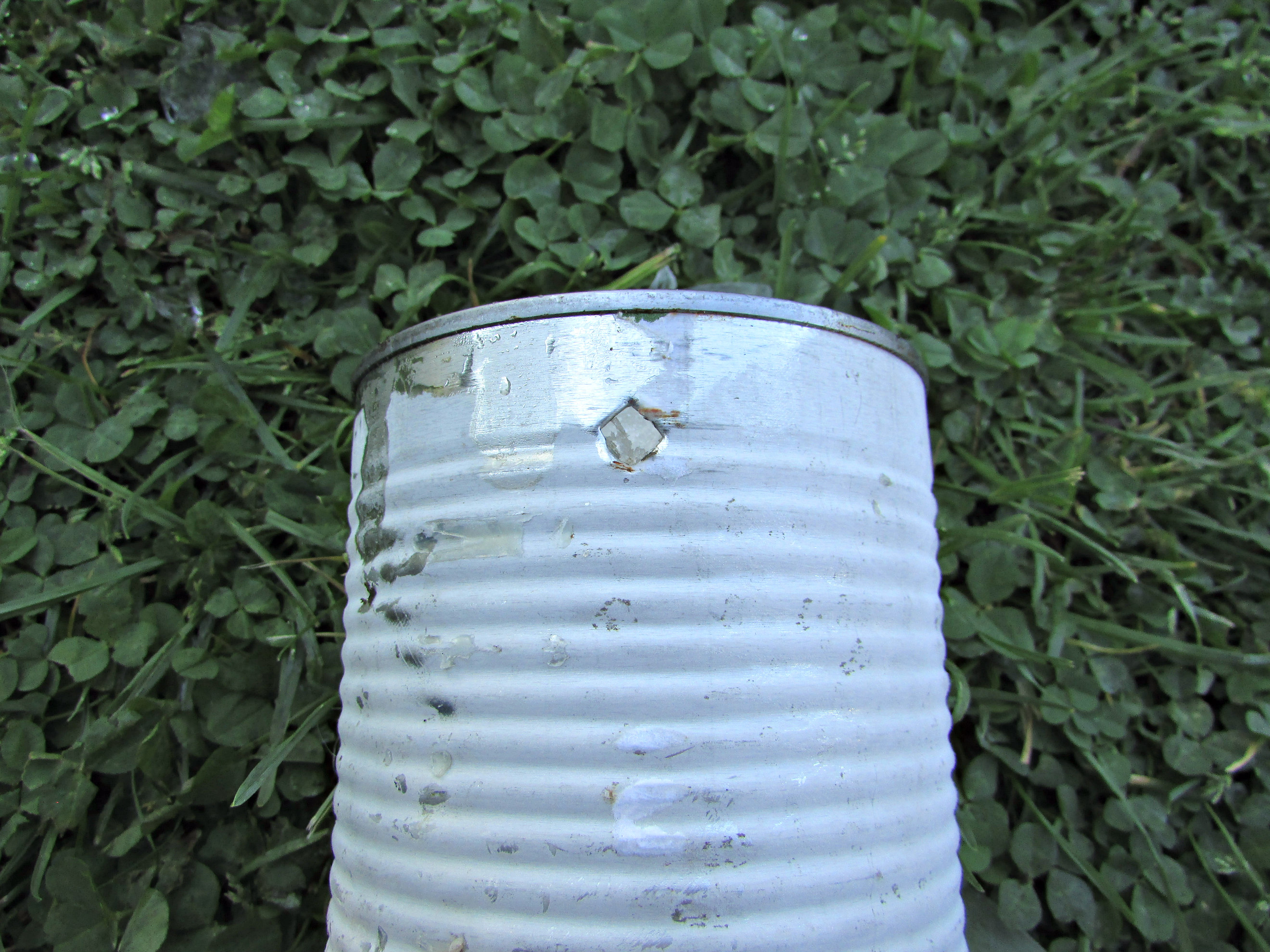
The bottom of the can is easy to puncture, the sides a little trickier because the round can is inclined to roll. I find grass the easiest grounding surface. Punching holes into the can with the screwdriver assures the sharp edges stay inside the can.

When I’m finished with the hole-punching I turn the cans upside down and let the ice melt and drain. Part II of my project will be posted tomorrow.

Perspective & Phlowers – Colors

“The wall was made of jasper, and the city of pure gold, as pure as glass. The foundations of the city walls were decorated with every kind of precious stone. The first foundation was jasper, the second sapphire, the third agate, the fourth emerald, the fifth onyx, the sixth ruby, the seventh chrysolite, the eighth beryl, the ninth topaz, the tenth turquoise, the eleventh jacinth, and the twelfth amethyst.” Revelation 21:18-20

I love to imagine the colors and beauty of heaven. I am so often reminded of what will come when I wander around my garden admiring the flowers of God’s creation. I get excited watching a flower bud form and then bloom. God has filled the earth with such wondrous colors and sights, oh my, what will heaven be like?

Yesterday, unsure of the direction we were driving, we accidentally found a new garden center. (Sometimes the best moments/places/friendships in life appear when we think we are lost.) I am always on the lookout for a type of small dahlia called harlequins. These dahlias come in an array of bright colors. The feature that really gets me excited about this type of dahlia is the collar of ruffles around the center. I can’t wait to grow and press these beauties this year. The Harlequin Dahlias are my Flower of the Day.

I came upon a great article with growing tips for dahlias while researching this post. If you grow dahlias you might enjoy reading Longfield Gardens: 8 Tips for Growing Better Dahlias.

Pheathers – Brown Thrasher

I saw this beautiful bird near my feeder this week. He is not a normal visitor to my yard. Once again I relied on my camera’s zoom feature to get a good look at him. I was able to identify him as a Brown Thrasher. Cornell Lab of Ornithology has good information on the Brown Thrasher and also has song recordings. Click on the link above for more on this beautiful bird.

Many of the Cornell Lab’s Bird Cams give you views into the newly-hatched baby birds. Here’s a link to the Red-tailed Hawks. Across the top of the page you can find more live bird cams to visit. Cornell Lab Bird Cams/Red-tailed Hawks.

Planting – Dahlia Tubers

I first published this dahlia collage in September of 2018. The passing months have not diminished my desire to plant several large dahlias in this year’s garden.

I purchased a few tubers in local garden centers, and decided to give them a head start for growing. I found several large pots, filled them with potting soil, and placed the tubers inside. Oh Happy Day! All of the tubers sprouted and grew. It’s time to plant them in the sunniest of garden beds.

Tall dahlias need stakes to stay upright in heavy rain. I read a great tip years ago that suggested putting a stake in place when you first plant the tubers. If you insert a stake after the dahlia tubers are planted and covered with soil you risk puncturing/tearing the tubers and killing the plant.

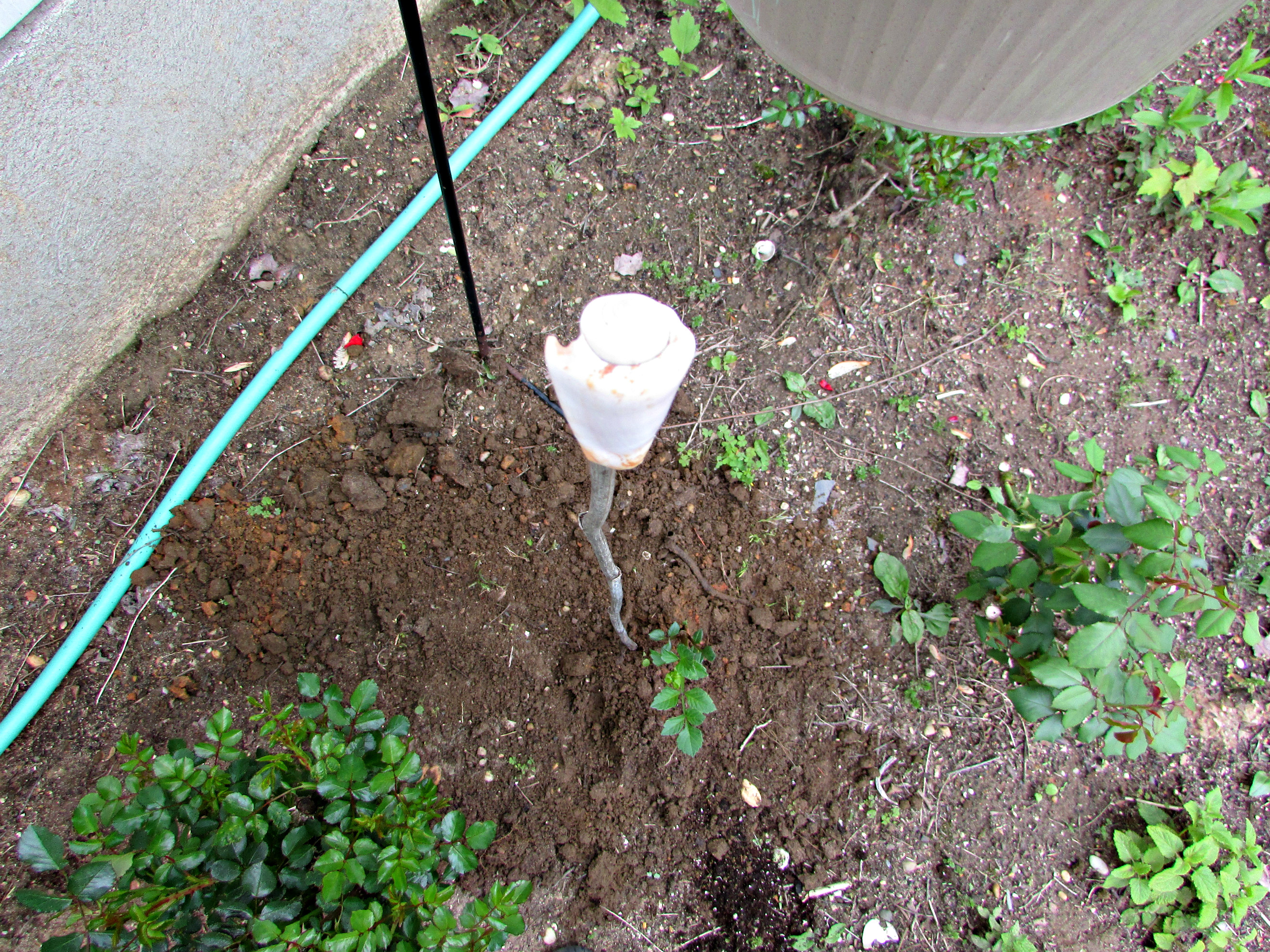
After I planted my dahlia and had my stake in place, I also took a precaution to protect my eyes. It’s so easy to forget about stakes and sticks jutting out of the ground when I weed or plant. I’ve had several close calls with my eyes, and have had stakes badly scrape my arms when weeding. To remind myself of their presence, and to add a bit of protection to the ragged ends, I place a seashell on the top of the stake.

I use seashells because I have boxes of them stored in the garage. All types of articles could be used to mark the top of the stakes, acorn tops, nuts, windmills, small cans painted in bright colors. The list is as endless as your imagination. Please do be careful with all types of stakes in the ground; I will always carry a scar on my leg from running into stake marking out a building site when I was a child. Sixteen stitches to close a wound leaves an impression that lasts a lifetime. Happy (and safe) gardening my friends!

Photo Challenge – The Last of the Vanes

Today I’m featuring a few of the weather vanes I have posted on #Weather Vane Wednesday. This will be my last weather vane post. I thank everyone who took part in the challenge. I enjoyed searching for weather vanes, but I think I have found almost everything in my area, and that means it’s time to end the challenge.

Thanks to everyone who has taken part. Here’s a link to last week’s entry:
Geriatri’x’fotogallery – Neptun in middelburg

A thank you also to Cee for posting the information on her photo challenge page.

People – Why I Blog & Buttercups

I’ve known many of you for years—friendships I would miss dreadfully, if the technology of the Internet, as we know it, should expire. Who you are though, your words, your lives, your posts and comments, are in my heart and thoughts for eternity. I’ve rejoiced that so many of you love God. Through your blogs I’ve visited most of the U.S., Qatar, India, The Philippines, Australia, Europe, Canada, Japan, The Caribbean and many more. I’ve walked with you in the morning and met your neighbors. I’ve loved your chickens…cats…and dogs…and even some donkeys and other assorted creatures. I’ve enjoyed glimpses into your homes and loved meeting your families. I’ve cooked your recipes, used your DIY tips, planted flowers you’ve recommended, admired your photos, commented on your posts, and enjoyed taking part in your blog challenges. In short, you’ve influenced my life for the better.

I have taken great delight in comments left on my blog. In fact, a recent comment was so beautifully worded it gave me the inspiration for this post. I knew I had to share it and leave a link to this lovely blog and the poetry of the author.

“…one of the marvelous things about blogging: people share golden new things, and still shimmering old things.” Leyda Bien/Poetic Heart Dregs

I thank Leyda for the lovely comment found on my post – Mirrors. Visit her blog by way of the link in the blockquote above.

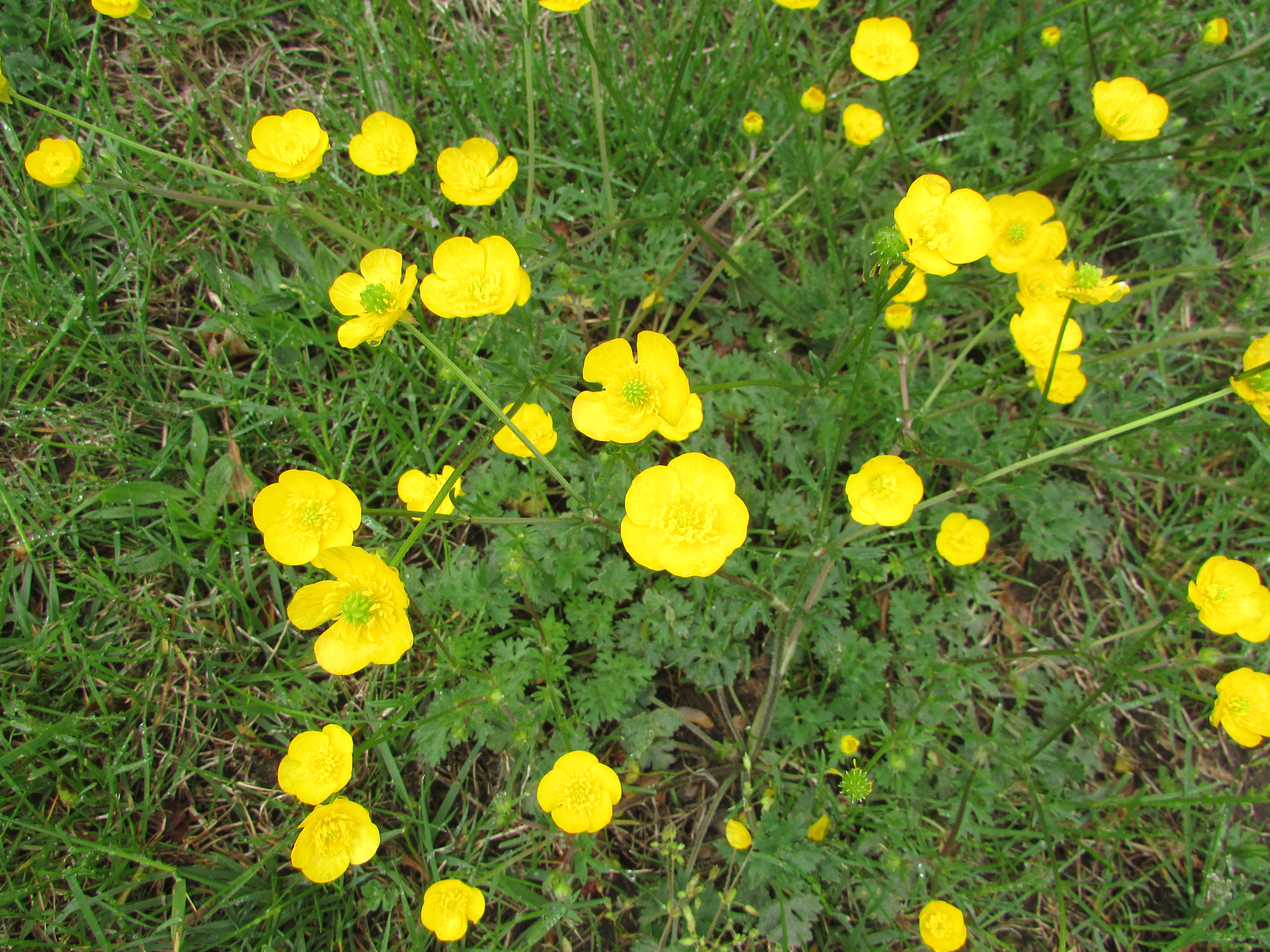
What connection do buttercups have with this post? Well, when they are newly blossomed there is no other flower quite so golden. When they are old, such as pressed between the pages of a book, they still retain a definite shimmer of the beauty they first exhibited. Live Science gives a wonderful explanation of how and why buttercups have a sheen like no other flower. You can read about it here: How Buttercups Get Their Yellow Gloss.

Buttercups reflect so much light it is hard to get a clear photograph of them. Even on an overcast, damp day, they caught the sun and shone it’s light back at me. Buttercups are my choice for today’s FOTD. These beauties are blooming in southern New Jersey this month.

Pressed buttercups are a perfect example of Leyda’s phrase, ‘shimmering old things.’ Even when pressed between the pages of a book for years, they retain their shimmer. Thank you everyone who blogs here and on other sites…I enjoy your lives and you have made mine very full.

For pressed flower tips visit: The Flower Ark.

Plants – Flower of the Day and Invasive Plants

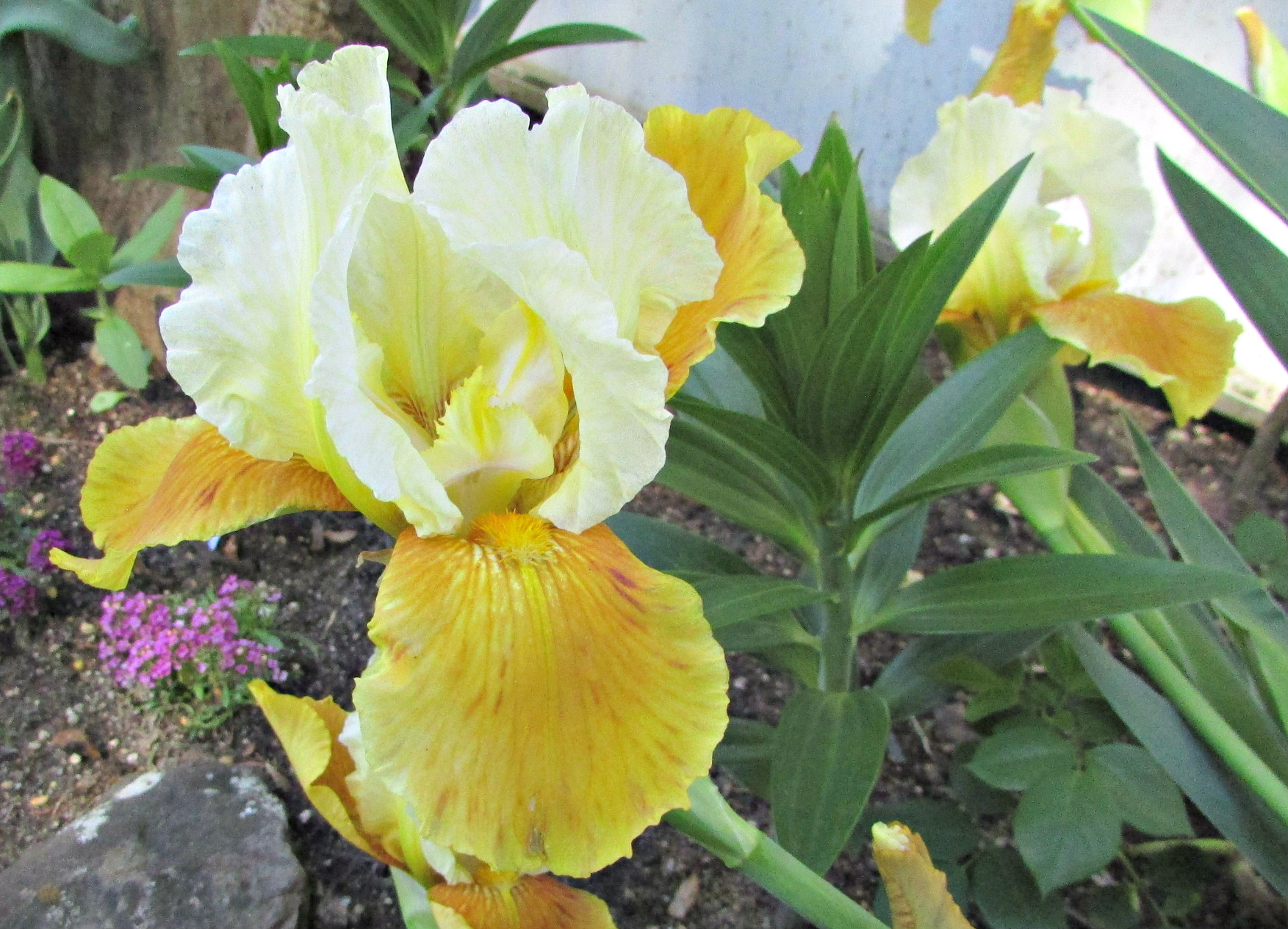
My flower of the day, part of Cee’s FOTD challenge, is this gorgeous yellow iris blooming in my garden. I love my iris plants. I also grow a deep purple and pink iris in my gardens.

Iris plants spread at a good rate, but they rarely become invasive, and are easy to dig out and share with friends when they take over too much room.

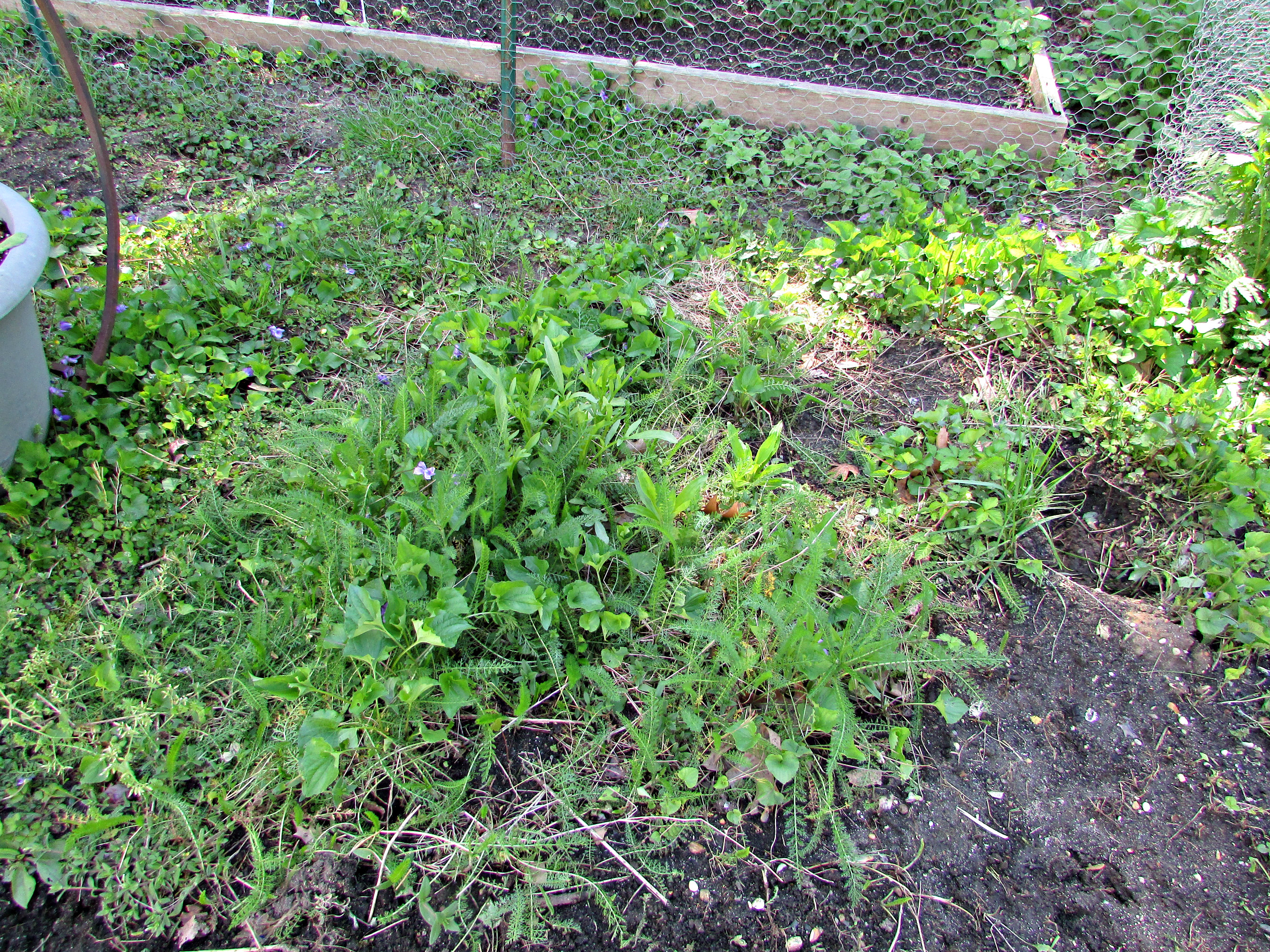
A plant I’m having trouble with this year is yarrow. I have this nice clump near the air conditioner. I appreciate its tenacity in this inhospitable dry soil. The plant spreads a bit each year, but for the most part is easy to control.

The flip side of this story is the yarrow sown last year via a pack of mixed wildflowers. These yarrow plants are not cooperative. They have returned and spread like a noxious weed. I am having a terrible time pulling the long tap roots out of the rich soil in the back yard plot. Yarrow is  a medicinal herb for muscle aches, but I certainly don’t need this much medicine, and if I keep yanking it up, it’s going to give me a backache. The moral of the tale: read the back of mixed wildflower packets and don’t plant any that contain yarrow.

I love my Rudbeckia Daisies,  but they also spread and can take over any plot they are in. Each year I end up pulling plants out of the beds and also seedlings out of the lawn. Still, I wouldn’t eradicate the Rudbecka altogether; I love the tall yellow stems of daisies they produce in mid-summer.

Pages – Becoming Mrs. Lewis and Hoopla

I’ve been planting in the garden like a madwoman, hence, not as much time as I’d like to blog and keep up with the never-ending housework. Happily though, I’ve been reading, or should I say listening, to a good book while I am tending to the weeds and seeds. Becoming Mrs. Lewis by Patti Callahan is a wonderful novel about the friendship and love of Joy Davidman and C.S. Lewis. As with the best of books, any nagging thought or worry I’m facing at the moment disappears when I’m listening to the story. You can read a good synopsis of the story on GoodReads/Becoming Mrs. Lewis. I’ve found that fiction based on true-life often prompts me to delve further into biographies and photo records of the subjects; this has been the case with Joy Davidman and C.S. Lewis, the main characters in the novel.

I’m listening to this book on a digital streaming service called Hoopla.

Hoopla Digital is a web and mobile library media streaming platform for audio books, movies, music, ebooks, comics, and TV. Hoopla allows library patrons to download or stream media content. Hoopla Digital is a division of the Holland, Ohio-based company Midwest Tape, and is housed in the same facility.” Wikipedia

I joined Hoopla free through my local library. Many libraries offer Hoopla. Check with yours to see if you can download and use this free service.

I am sometimes hesitant to use photo images of book jackets for my ‘pages’ reviews. Here’s a good article written by The Librarian Who Doesn’t Say Shhh, that puts most of my fears to rest over violating copyright laws when I use a book cover image on my blog: Book Cover Images.

Photo Challenge – Weather Vane Wednesday/North East, Maryland

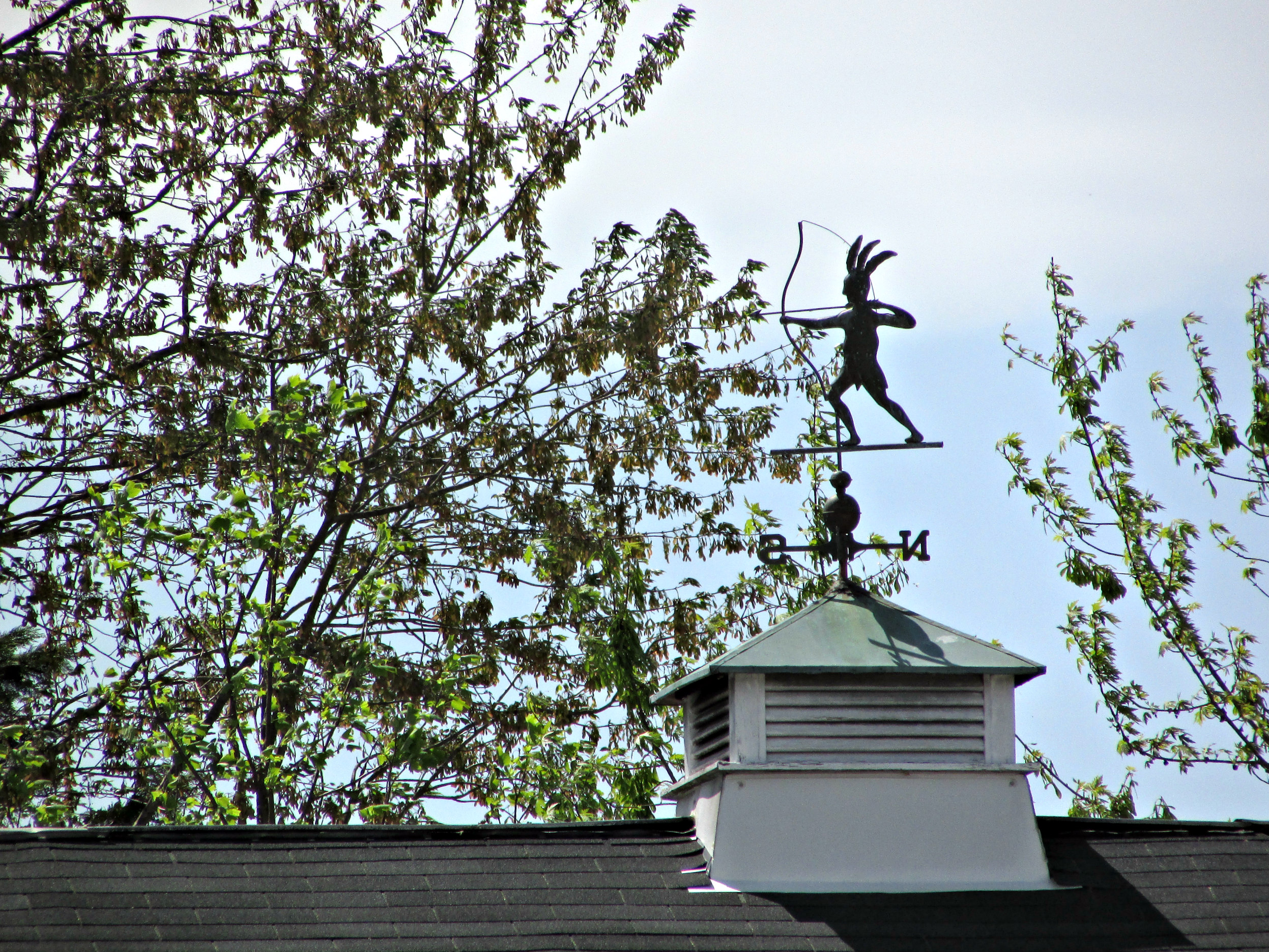
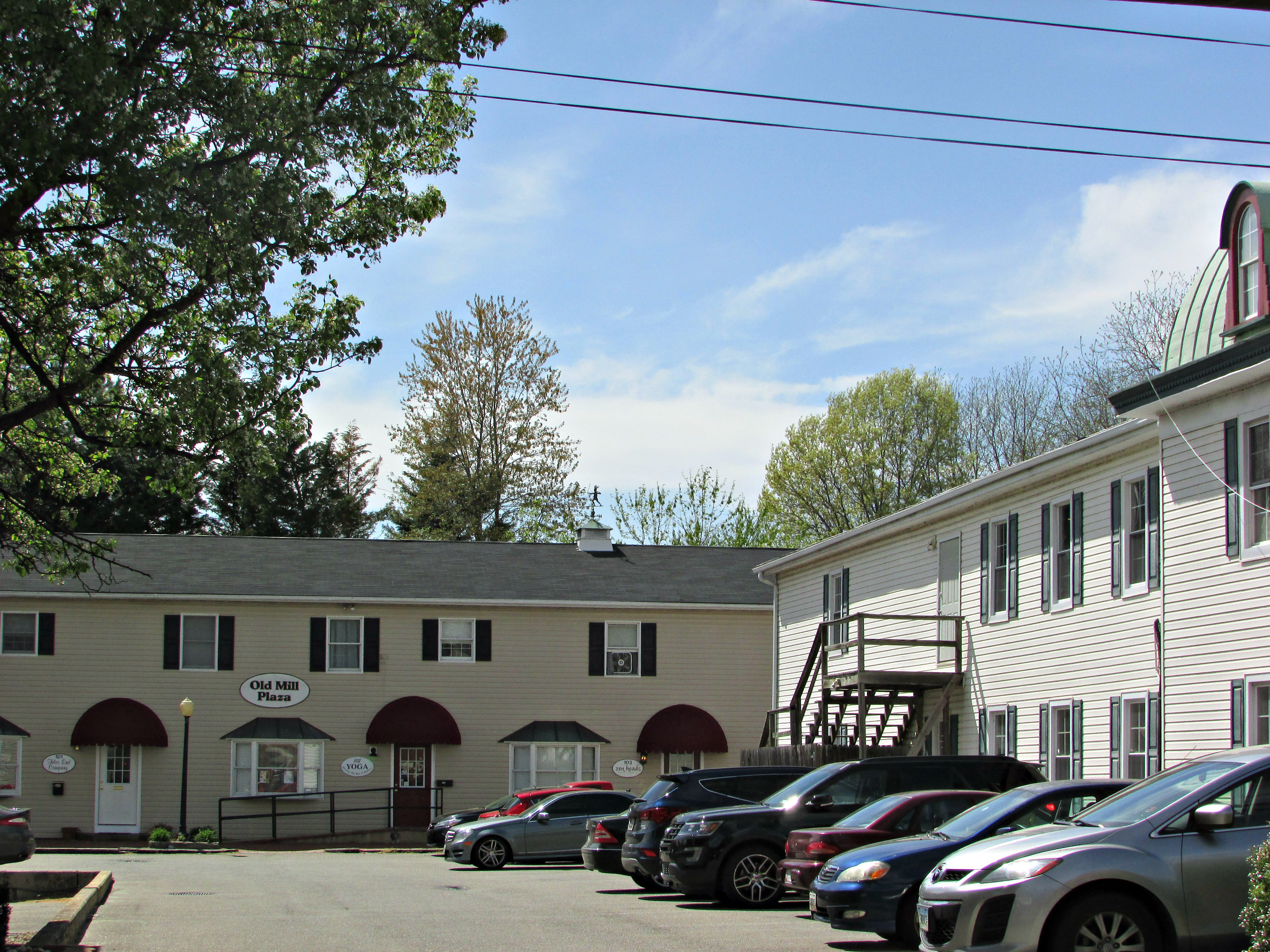
This Indian Weather Vane with his bow is on top of the Old Mill Plaza in North East, Maryland. 

North East is a great small town near the Chesapeake Bay and the Elk Neck River. It is just minutes away from Elk Neck State Park and the Turkey Point Lighthouse.

Take a quick walk with me to Turkey Point Lighthouse.

Geriatri’x’Fotogallery – Weather Vane Ship
The 59 Club – The Upper Deck

The Photo Challenge: Each Wednesday, I post a photograph of a Weather Vane with a short description of where it can be found and any history connected to it. The main focus of the challenge is the photo of the Weather Vane and the location. The challenge can be Wordless if that is what you choose. If you would like others to see your post leave a link to your blog in the comment box. You can also tag the post #weathervaneweds. If you place a link to my post in your post you will create a pingback that will appear in the comment section. The challenge is open all week for comments and posts. Thanks so much for taking part in my challenge.

Many thanks to Cee, of Cee’s Photography, for including this challenge in her listing of WordPress Challenges. If you love challenges take a look at this page and while you are there check out some of Cee’s terrific posts. Thanks Cee!

Photo Challenge – Slithering Orange

It was one of those idyllic sunshine days in April. I was with several of my family members on Easter weekend walking along the Chesapeake Bay in Elk Neck State Forest.

The girls were making sand castles with small shells and sticks, the guys were watching the sun on the water, I was looking for pieces of driftwood.  My husband eventually joined me and we walked further up the beach.

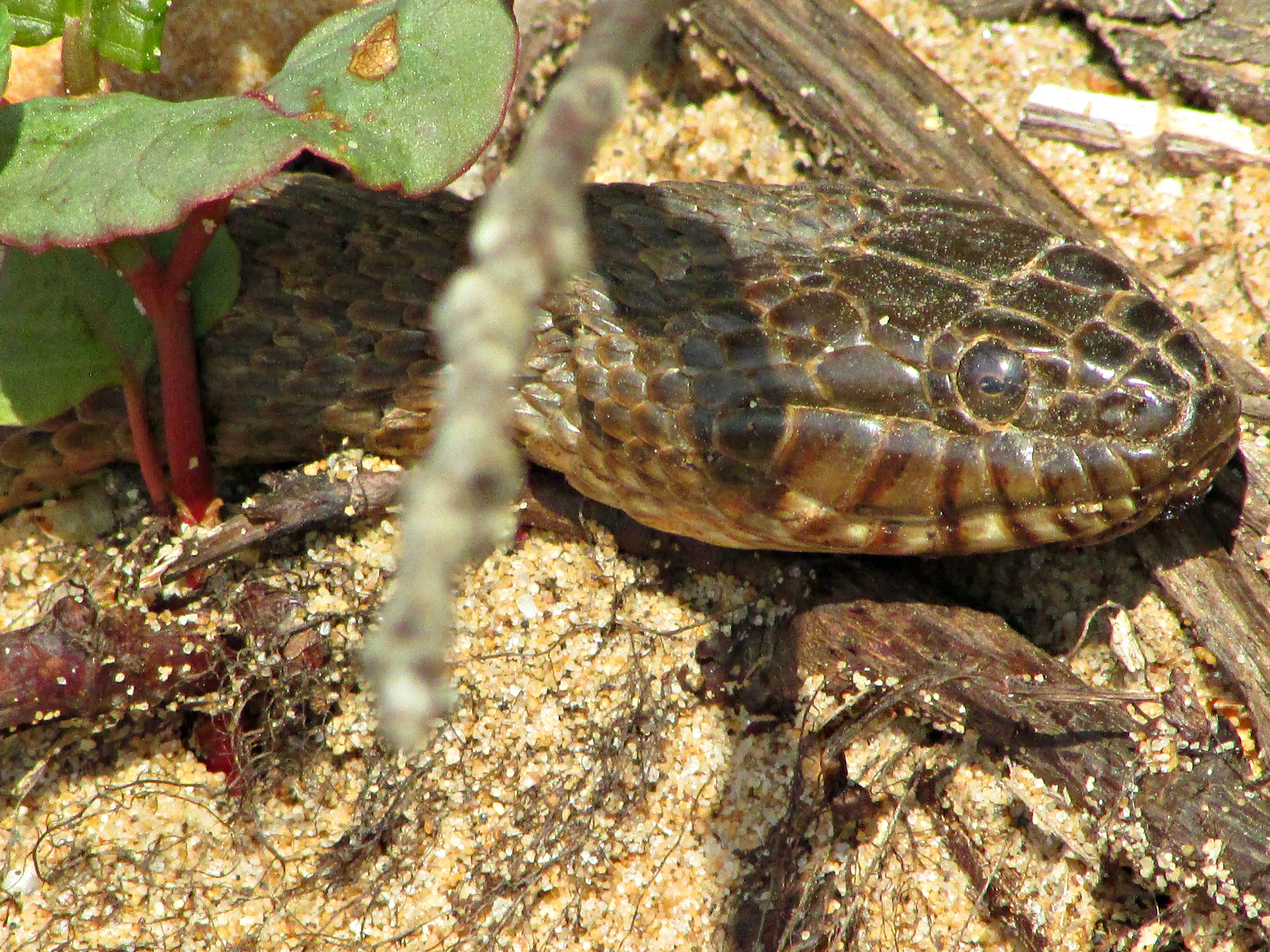
“There’s a snake.” my husband suddenly said. He dislikes snakes much more than I do, but let me tell you, when you hear the word snake, and don’t see it, you become very aware of the surroundings and your shoulders instinctively raise up toward your ears just a bit. It was a little eerie when I finally saw it lying motionless among the gnarled roots and pieces of debris. I wondered how long it had been watching us.

The Northern Water Snake species is harmless. It was probably an older snake. Its back was dark and the orange bands on the bottom of its body were faint.  The bands are brighter and much more pronounced when the snakes are young.

We went our way and I suppose he eventually went back to his den when the sun went down. The orange banding on the water snake is my entry in Traveling at Wit’s End Photo Challenge – Orange


Planting – Winter Sowing Update

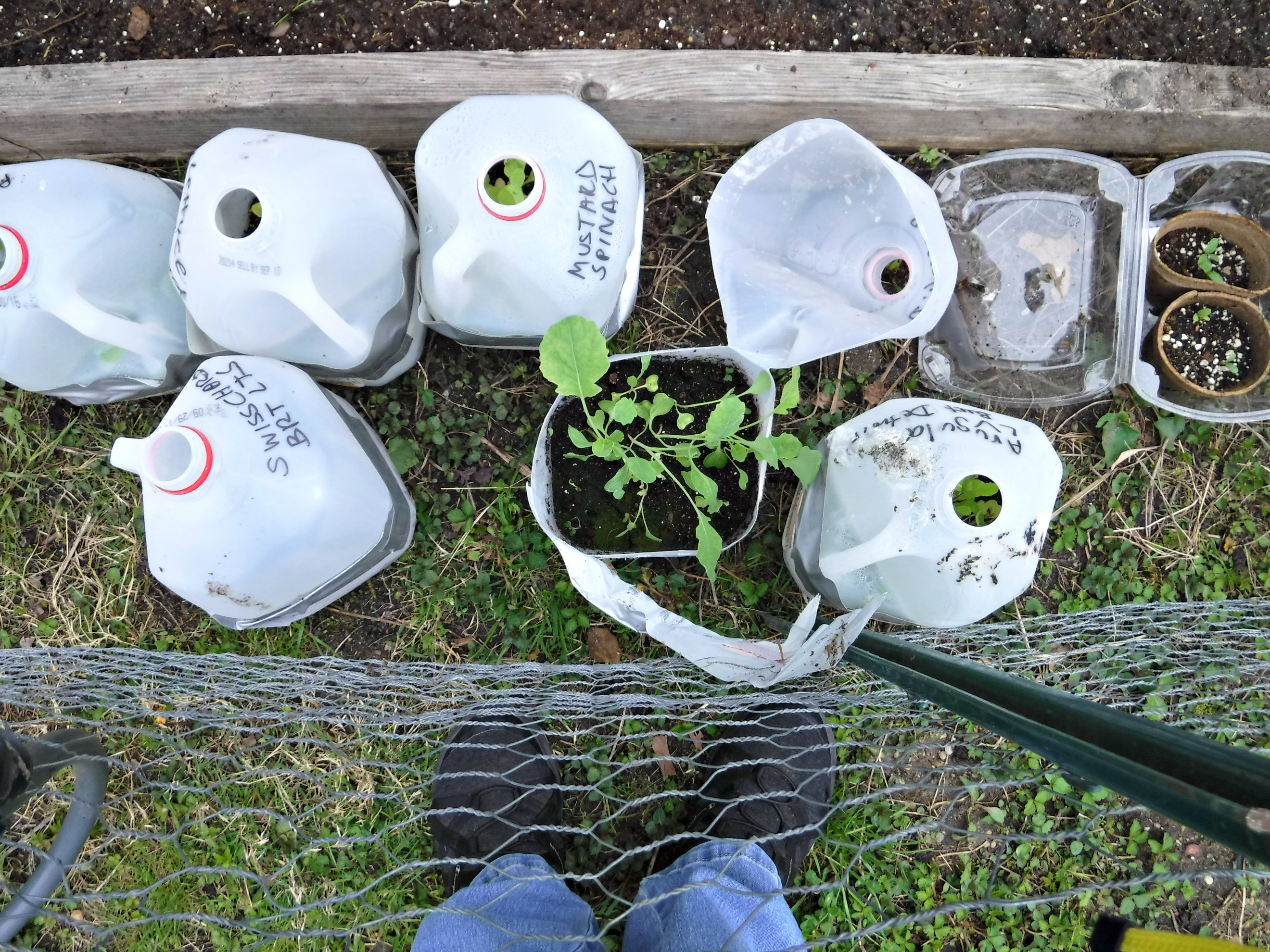
My winter sown vegetables are ready to plant. They have done well, developing good root systems as they slowly sprouted and grew. They do not need to be hardened off before planting as they have grown in cold temperatures since day one.

The plants look small, but they will quickly grow in the loose soil of the Square Foot Garden. In a week or two they will double, maybe triple in size.  Planted this week are Arugula, Bread-seed Poppies, Milkweed, Mesclun lettuce, Black-seeded Simpson lettuce, Prize-head lettuce, Giant Spinach, Swiss Chard, Kale, and several varieties of beets. I will also be sowing many of the same seeds directly into the soil for later harvests.

One problem I did have was a batch of arugula and mustard spinach had already begun to develop buds in the recent warm temperatures. I discarded these as they would have had a bitter flavor once they flowered.

Photo Challenge & Postcards – Pebbly Beach

For this week’s post I’m back to Block Island, RI. I believe this anchor, photographed from Pebbly Beach, is a wind vane of sorts.

Pebbly Beach was one of our favorite spots to visit on Block Island when we stayed in the Sea Breeze Inn.

Visitors to Block Island have enjoyed the Pebbly Beach for over 100 years.

This postcard is postmarked August 29, 1909, almost 110 years in the past. Here’s an easier to read view of what I think Kate wrote to Willie on that long ago day.

Block Island R.I. Aug 28/09
This is how it looks from
the beach in front of the
cottage. From the cottage
we can see over the
point-Tell Annie I’d
rather have ANY trip
than HERS. No more les-
sons at present. I am
where they can’t reach
me – Kate E. Post

I’m not sure of two words, these I printed in capitals. There seems to be some unspoken drama in this post. I wonder what Kate meant about not being reached??? Even today to visit Block Island requires a boat or plane ride. The mystery is a century old. I love old postcards with messages.

Thanks to these bloggers for taking part in last week’s challenge:
Geriatri’x’Fotogallery – Tuna Weather Vane
The 59 Club – Hunter Springs

The Photo Challenge: Each Wednesday, I post a photograph of a Weather Vane with a short description of where it can be found and any history connected to it. The main focus of the challenge is the photo of the Weather Vane and the location. The challenge can be Wordless if that is what you choose. If you would like others to see your post leave a link to your blog in the comment box. You can also tag the post #weathervaneweds. If you place a link to my post in your post you will create a pingback that will appear in the comment section. The challenge is open all week for comments and posts. Thanks so much for taking part in my challenge.

Many thanks to Cee, of Cee’s Photography, for including this challenge in her listing of WordPress Challenges. If you love challenges take a look at this page and while you are there check out some of Cee’s terrific posts. Thanks Cee!

Phlower & Perspective – Iris Cathedral

Purple Iris – Flower of the Day

“I have had more than half a century of such happiness. A great deal of worry and sorrow, too, but never a worry or a sorrow that was not offset by a purple iris, a lark, a bluebird, or a dewy morning glory.” ~ Mary McLeod Bethune

This regal flower reminds me today of beauty lost. How horrifying it was yesterday to witness Notre Dame in flames and realize there was nothing to be done to save it. A reminder to make the most of every moment, so much can change in just a matter of minutes or hours.

Quick Tip – Yard Walkabout/Storm Repair

Monday’s Yard Walkabout had me cringing as I checked all my garden beds. We had a spring rainstorm last night that rivaled a mid-summer downpour. I found my top-heavy hyacinths lying on their sides.

To the rescue, twigs from last year’s Rudbeckia daisies.

I rarely cut these tall stems down in Autumn. They retain seeds on the spent flower heads for a good part of the winter, a food source for birds, and in the spring and summer their tall stems, turned wood-like in the winter weather, are perfect stakes for zinnias and other tall border plants. I usually break off the smaller twigs and discard, this year they will come in handy; I’ll poke the end in the ground and let the branches hold the hyacinth up until time to cut the faded flower away.

My propped-up hyacinths are part of Cee’s Flower of the Day.

Phlutters – Small Miracles Part II

Part II of my small miracles day doesn’t have the beauty of the newly hatched Swallowtail butterfly, but it will help facilitate more miracles. I grow dill and other host plants for Swallowtail butterflies each year. This season I was determined to also grow plants for Monarchs.

I have managed to sprout some milkweed seeds by the winter-sowing method. Because I know the milkweed has a tap-root I chose to sow the seeds in peat pots and enclosed them in a recycled food container during the winter months. They have sprouted. I will get them in the ground as soon as possible so that the tap-root will not be disturbed and the plants will have a better chance at survival.

Asclepias syriaca: Common milkweed is the host plant for Monarch butterflies.

“Monarchs cannot survive without milkweed; their caterpillars only eat milkweed plants (Asclepias spp.), and monarch butterflies need milkweed to lay their eggs. With shifting land management practices, we have lost much milkweed from the landscape.” ~ Monarch Joint Venture

I know the assessment of Monarch Joint Venture is true. I can name three parcels of land within a mile or two of my home where I once saw milkweed. All three have been built upon, weed whacked, or decimated by the relentless need to clear land for business purposes. I’m sure this same problem is rampant across the country.

Due to the loss of habitat for monarchs, this year I collected a bit of seed from a milkweed patch to grow in my gardens. I’ll be planting the sprouts soon so that the long root can develop unhindered. I also have several milkweed seeds in my freezer. I’ll plant a few in my garden beds and also find some areas near me where they might have a chance to grow. If you want to participate in helping Monarch butterflies survive and thrive you can find some good tips here: Monarch Butterfly Garden.