In response to The Daily Post’s writing prompt: “Close Up.”
The Cicadas-are-a-thrumming! One of the unmistakable sounds of summertime. I found this newly hatched cicada on my holly tree.

The skins they shed are so interesting.


In response to The Daily Post’s writing prompt: “Close Up.”
The Cicadas-are-a-thrumming! One of the unmistakable sounds of summertime. I found this newly hatched cicada on my holly tree.
The skins they shed are so interesting.

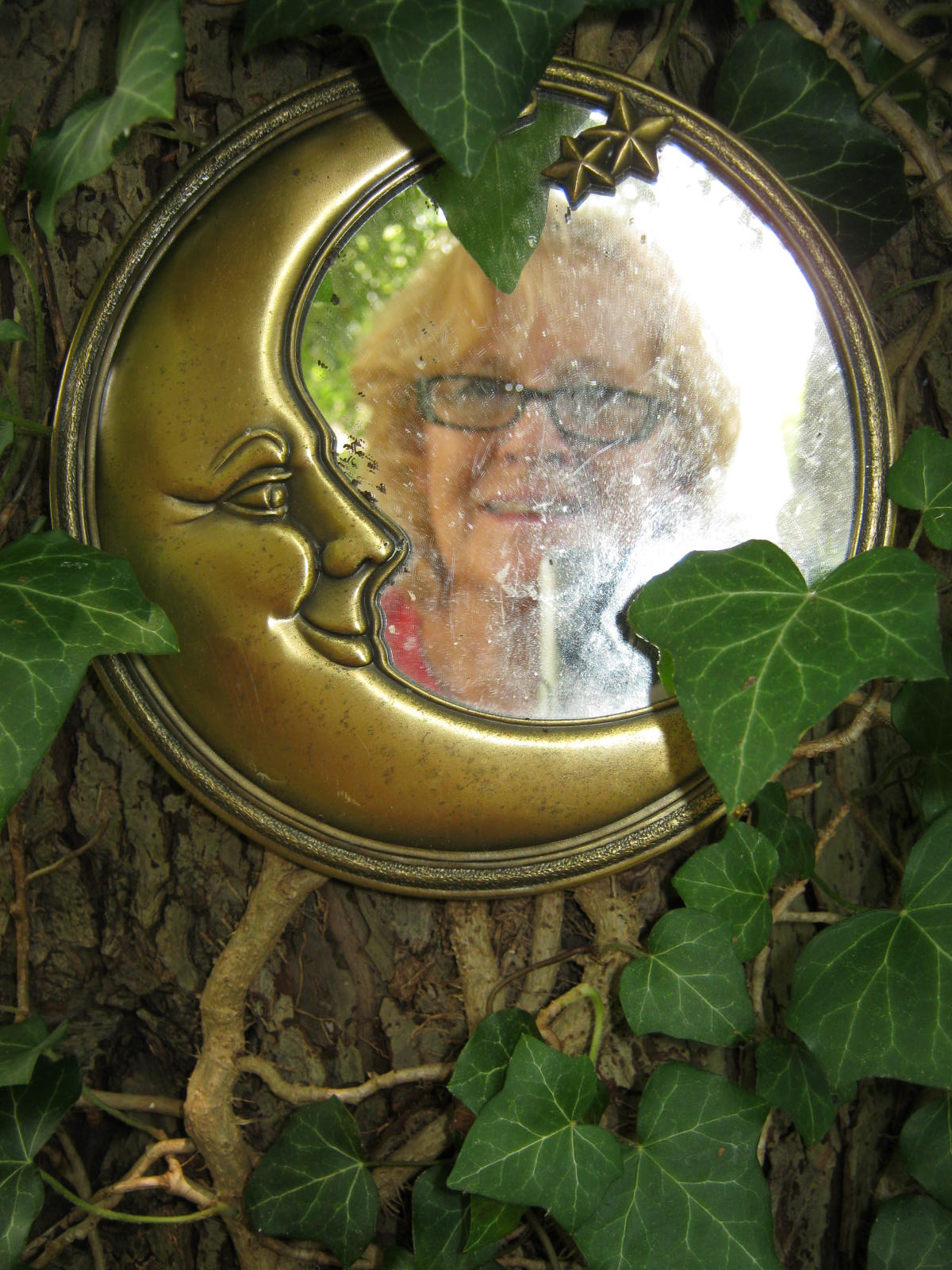
I have mixed feelings about “selfies.”
Definition. Selfie. “A picture taken of yourself that is planned to be uploaded to Facebook, Myspace or any other sort of social networking website.”
~ Urban Dictionary
At times “selfies” make me laugh, in other instances they seem the definition of self-absorption. Whatever the case may be they are a good way to convey your location and mood. This strange “selfie” of me was so true to who I am, I decided to post it. It is also a good way to show one of my favorite spots in my backyard. The small brass mirror, with its magical moon, is a constant draw, an inanimate pied piper if you will, for my grandchildren. I hope when they are grown they will remember gazing in this mirror and relive their surprise and fascinated joy as their own image looked back at them. Perhaps the experience could be called a “selfie” of their earliest memories.
Brass mirrors and other chachkis: (True spelling: tchotchke – trinkets or baubles of little value) are easy to work in amongst the ivy or can be hung on any tree with a small nail or tack. These little knickknacks are easy to find at flea markets, thrift stores and yard sales. Give it a try and make someone smile at their unexpected reflection.

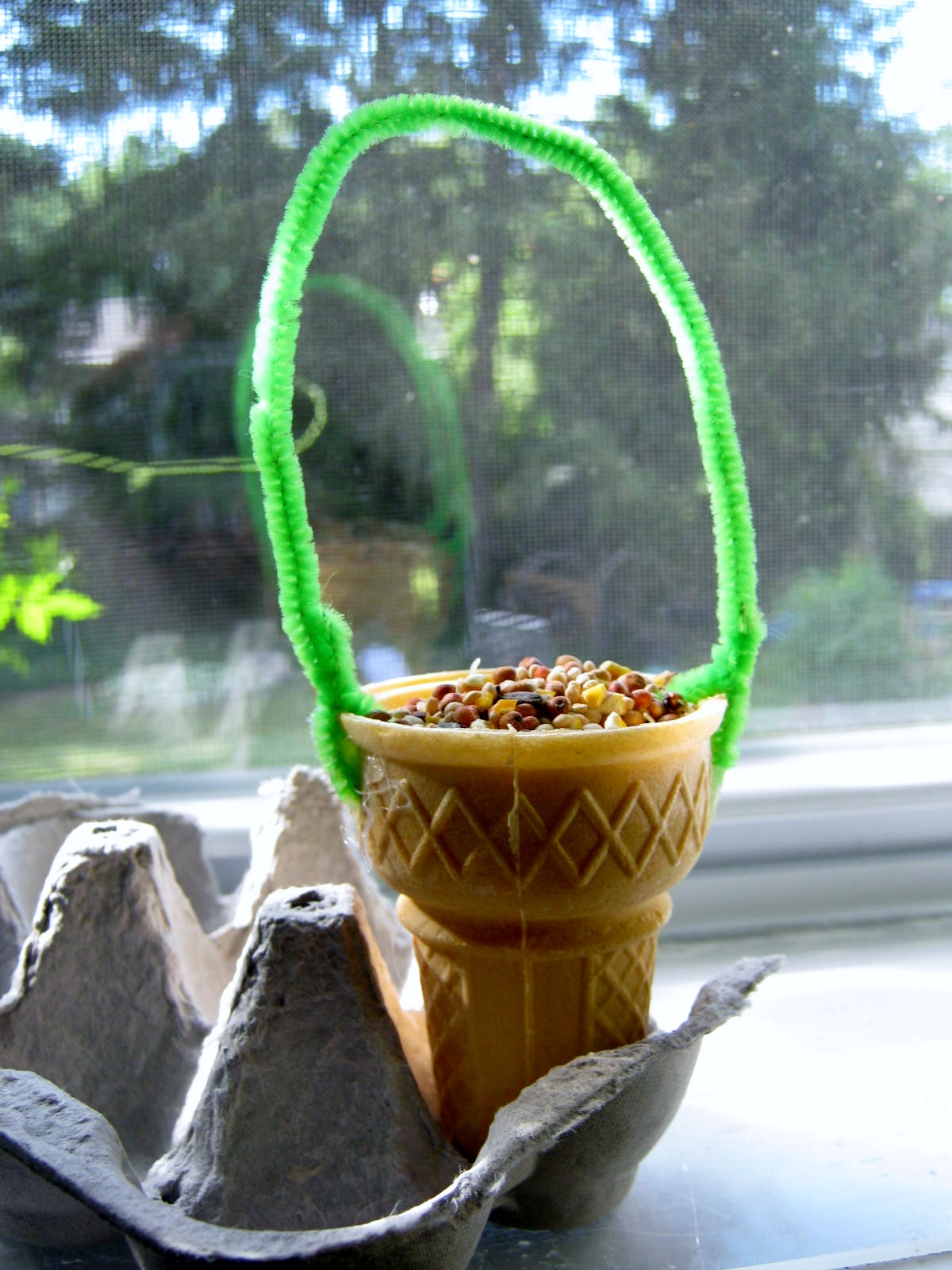
If you have leftover ice cream cones, thread them with a pipe cleaner or string, fill with bird seed, and place outdoors on a branch or hook. I added a bit of hot glue to the hole I punched in the side so that the hanger would not pull through. An egg carton makes a perfect tray to carry them home. This is a super-easy project to craft with toddlers or Pre-K children.


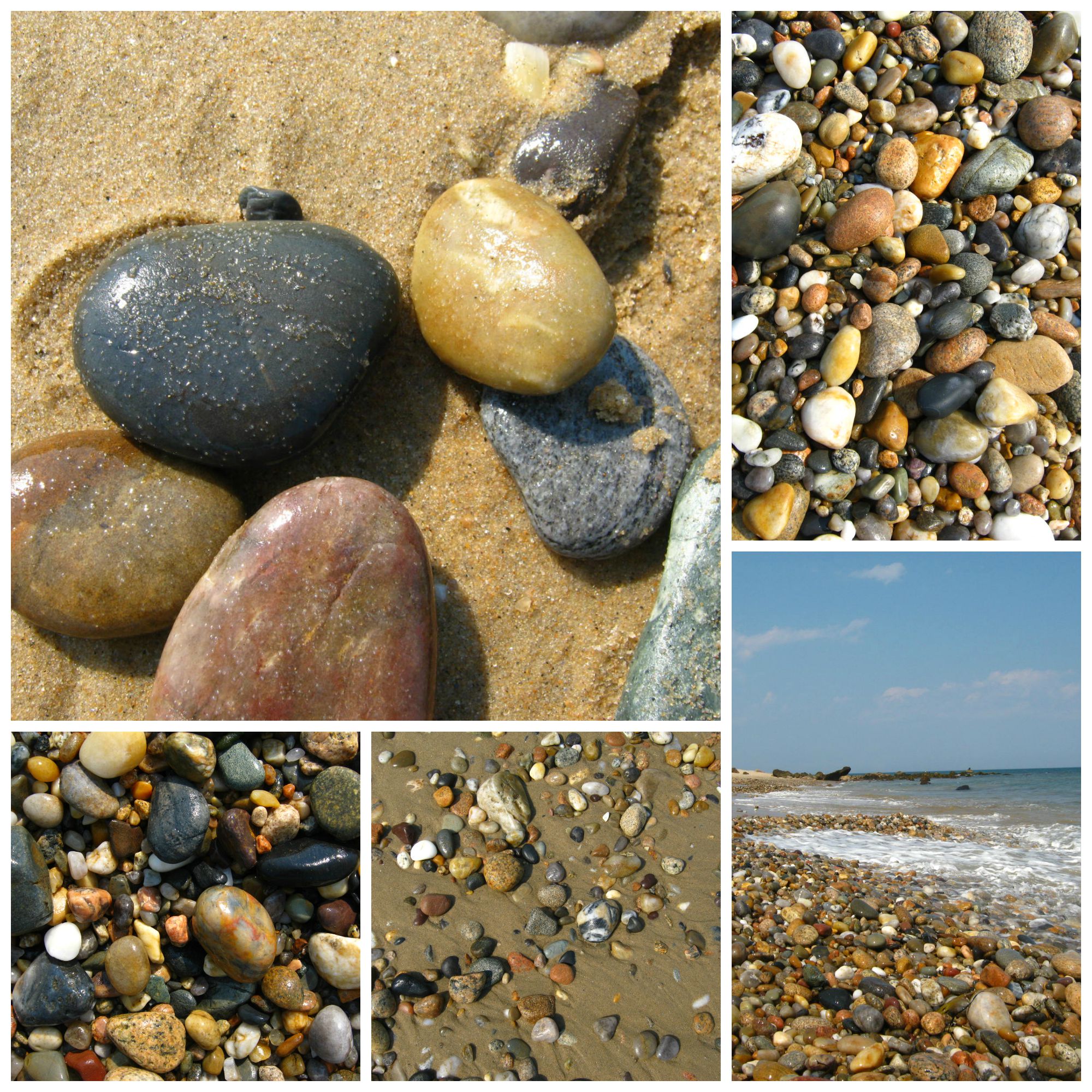
I recently composed a mantelscape using “beachy” items in honor of summer and the many seashore areas we have visited. I created a cairn (stacked rocks) with a few pebbles I brought home from Block Island, Rhode Island. I have created many a cairn on the Block Island beaches and admired hundreds more of these impromptu works of art built by the talented stone stackers who roam the bluffs, rocks and sand of this beautiful place.
“A cairn is a man-made pile (or stack) of stones. The word cairn comes from the Scottish Gaelic: càrn (plural càirn).” ~ Wikipedia
Here are a few of the cairns I have photographed over the years on Block Island. As you can see cairns can be stacked quite tall…

Or very small…

Some have a picturesque backdrop…

While others adorn the muddy clay at the base of the bluffs…

Some stand alone…

While others stand en masse in a madrigal choir of stone.

There are even a few who have gotten married! (See note about this photograph at end of post)

Block Island cairns are created with the beautiful rocks and pebbles found on Block Island Beaches.
I composed and photographed the bride and groom photograph on Block Island a few years ago. I have used it many times as a wedding or shower greeting card. Please feel free to copy and use the photograph for non-commercial uses. It looks terrific mounted on a piece of black cardstock and then double-mounted on a white 5 x 7 greeting card. The photo is a standard size and should be easy to have reproduced anywhere they print out digital photos. Better yet, try your hand at creating your own bride and groom photograph from natural items…so much fun!

In response to The Daily Post’s writing prompt: “Half and Half.”This week, let’s split our photos in two.
I enjoyed taking part in this photo challenge. Here’s a bit of a game, guess what the other half of my photographs might be, and then scroll down and see how close you were to the correct answer.
What is missing in the photo of a frog?

Why his frog buddy of course!


What will you find if you follow this railroad trestle bridge across a Southern New Jersey salt marsh?

A terrific waterway for crabbing.
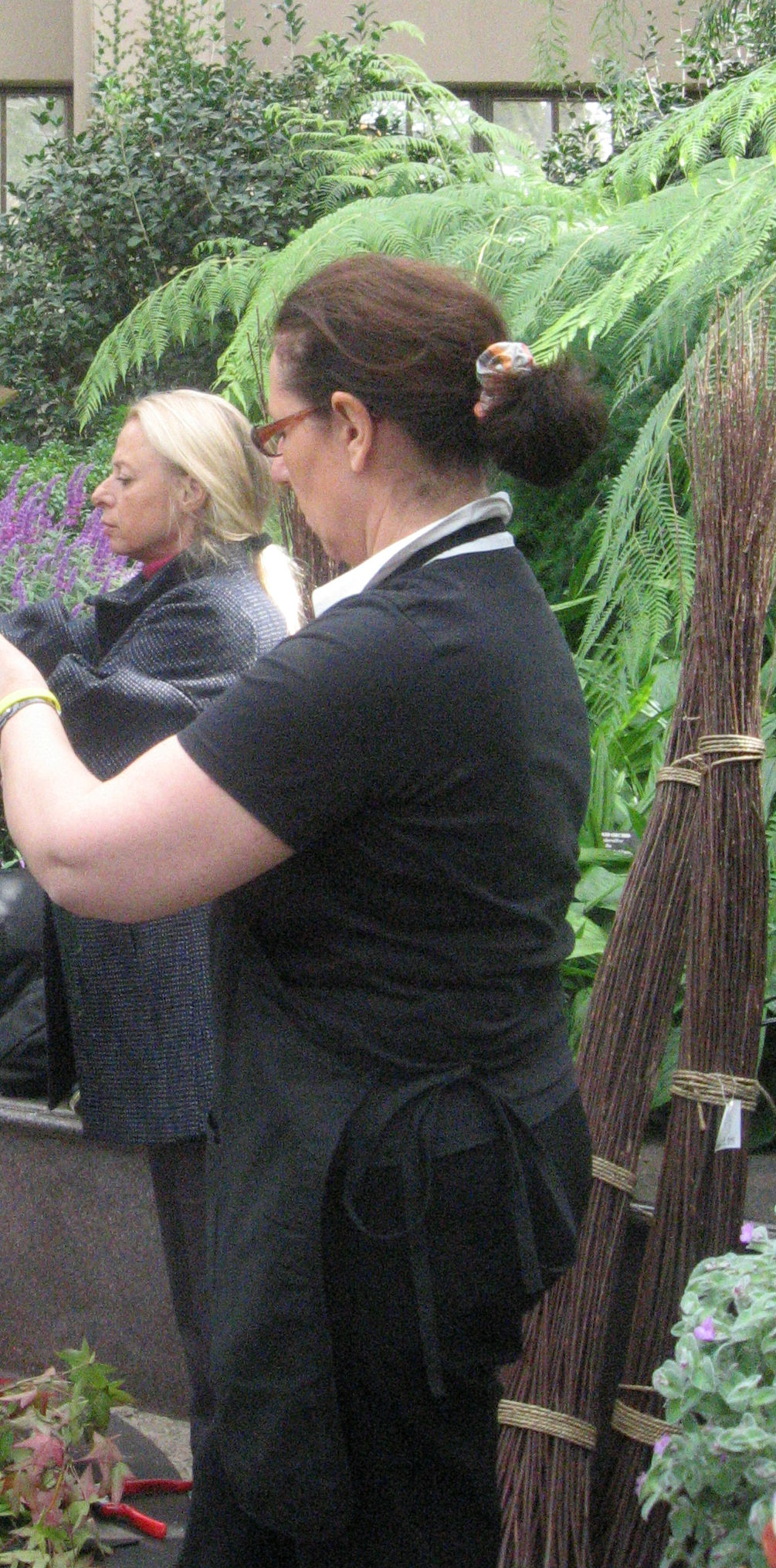
What are these two ladies creating that requires so much concentration?

They are creating a floral masterpiece in the Longwood Gardens Conservatory.

I’ve been enjoying Poldark on PBS. You can catch up through On Demand or view many clips and scenes on YouTube.


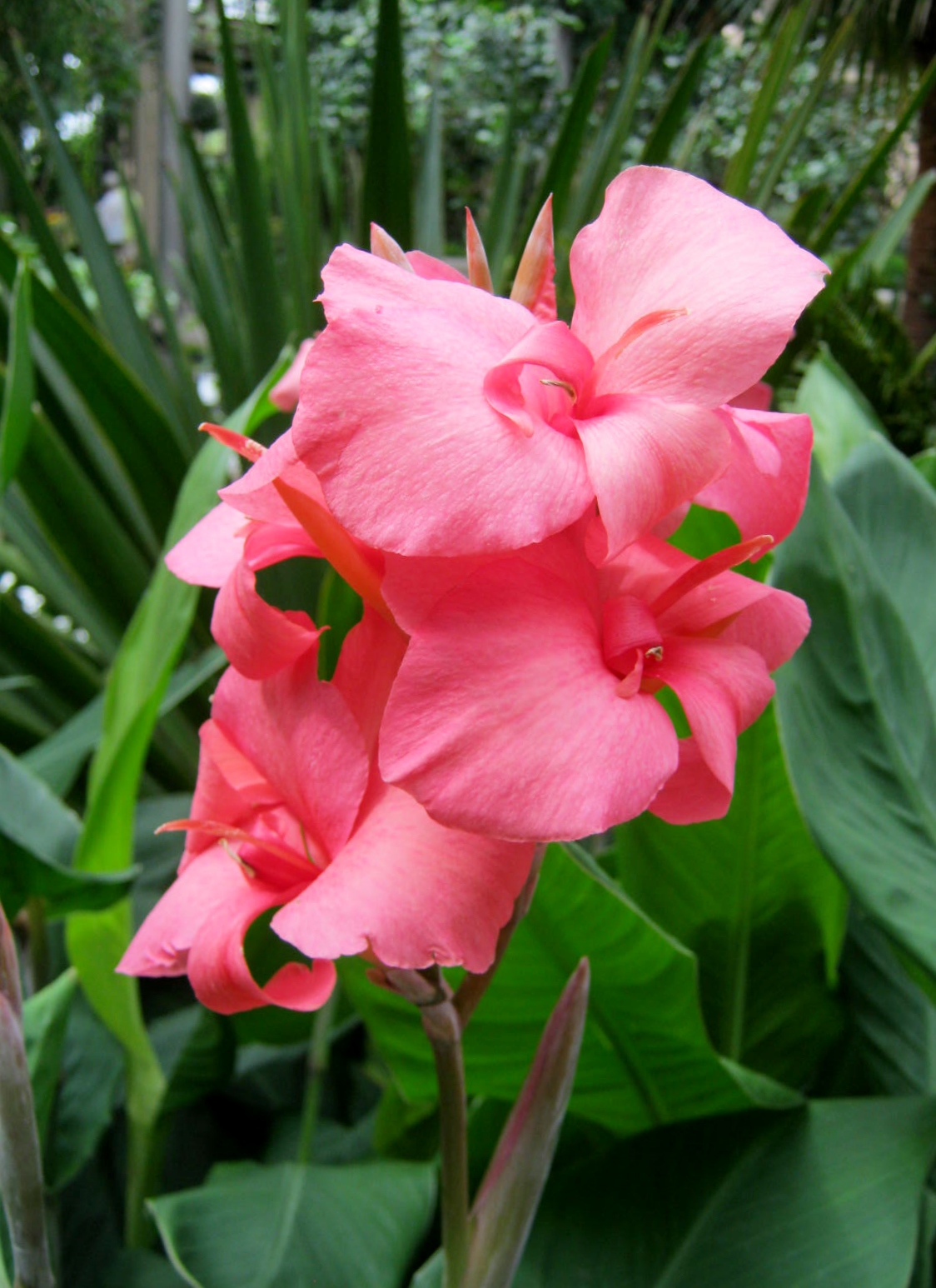
On a fine June day this year, my husband and I visited Longwood Gardens.

We enjoyed walking around the outdoor water gardens. The water lilies grown at Longwood are spectacular.
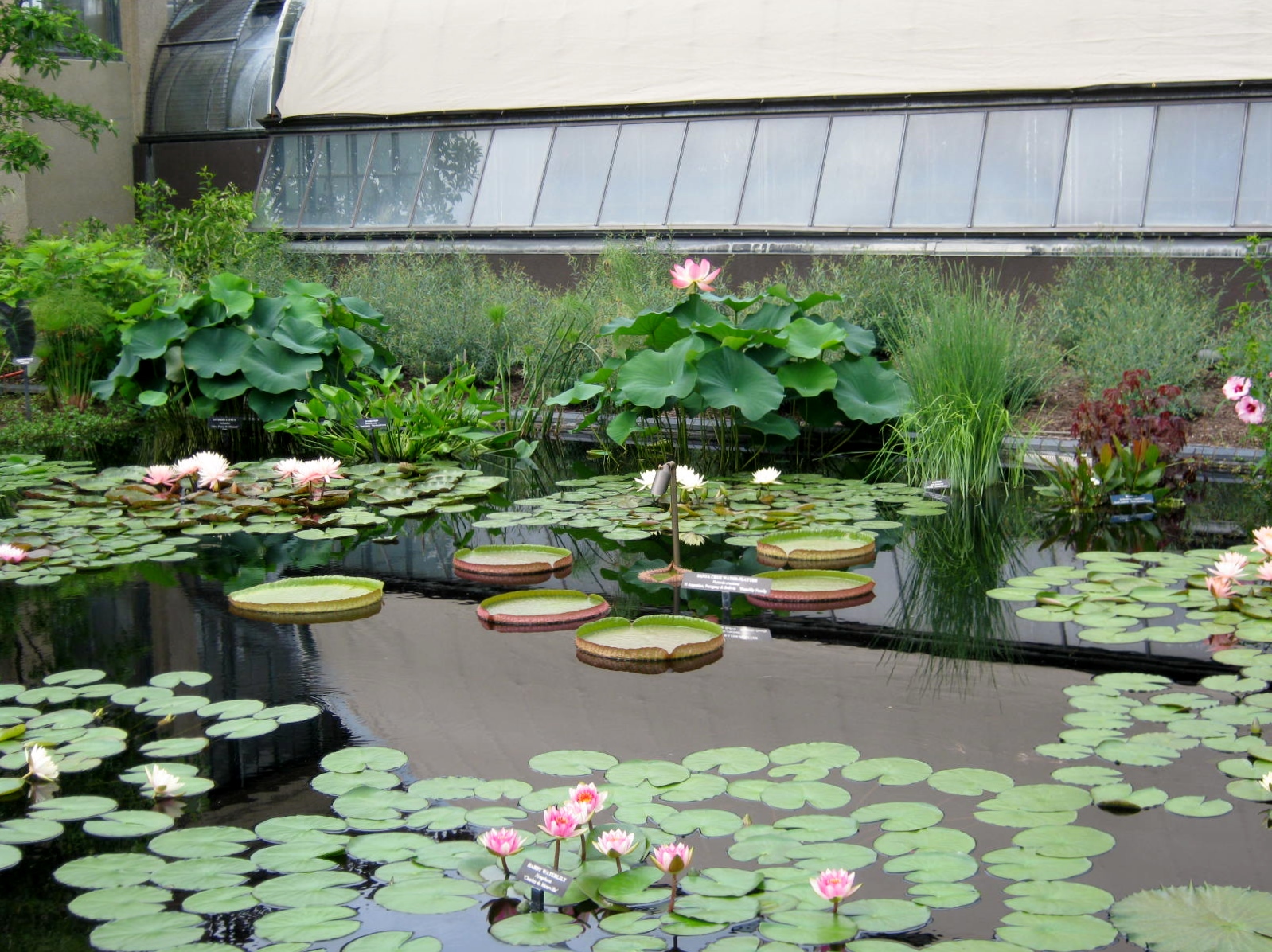
The large platter-like water lily pads are called Giant Victoria Water Lilies. The lily pads in the photograph are only beginning their growth. By the end of the growing season they will be six feet across.

While we admired the water gardens I noticed that the pond had cannas plants growing in the water. (The cannas are in the distance, the yellow plants in the background) Up to that point I didn’t know cannas would grow in water. I immediately envisioned them in my pond, and happily, found one on sale at a local fruit stand.
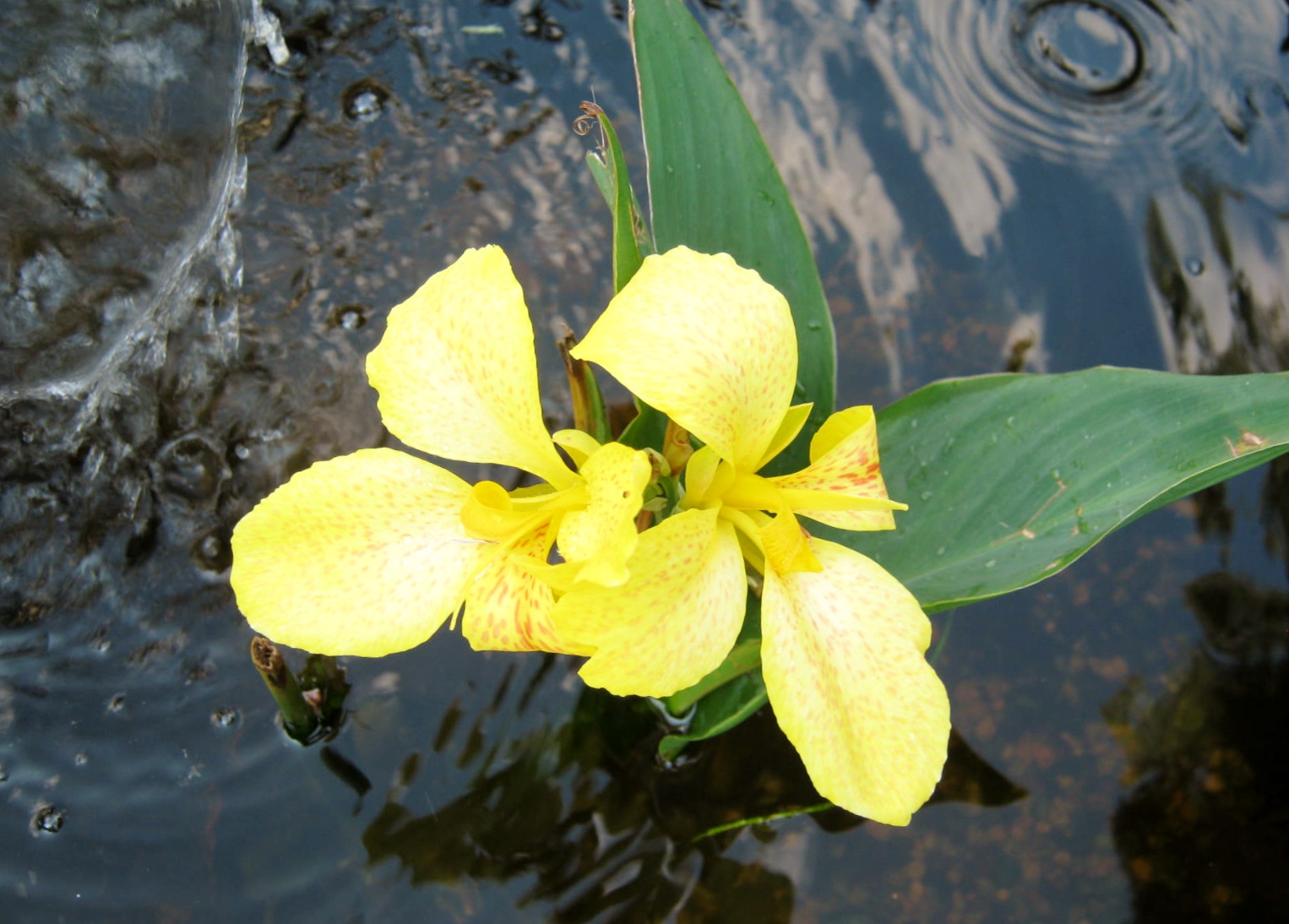
I took the canna home, weighed it down with rocks, and was delighted that all seemed well. My smile of success soon disappeared when I checked later in the day and found that the plant had overturned, fouling the water with dirt and perlite. I scooped out what I could and took the canna out of the water. I found all the dirt had floated away. I decided to give the canna a try anyway and completely filled the pot with small and medium rocks. My canna has thrived. The yellow flowers have been blooming non-stop for about two weeks now. If you have a water feature in your yard, consider planting a canna plant.
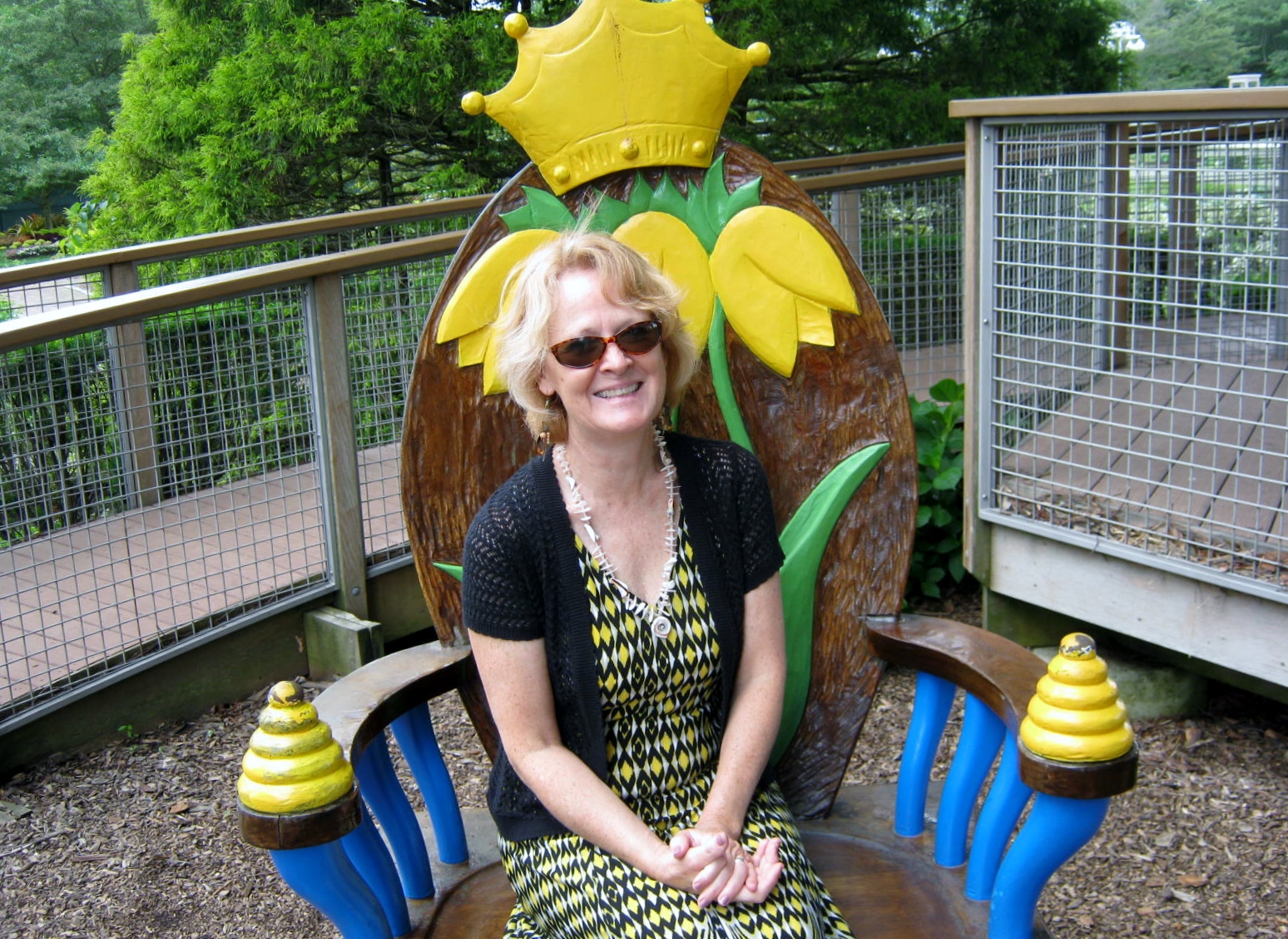
That’s me sitting on the Longwood Gardens Queen Bee Throne. Seriously, I did not plan my outfit and sunglasses to match the throne so perfectly. Funny! I must be a bee at heart…if not a queen.

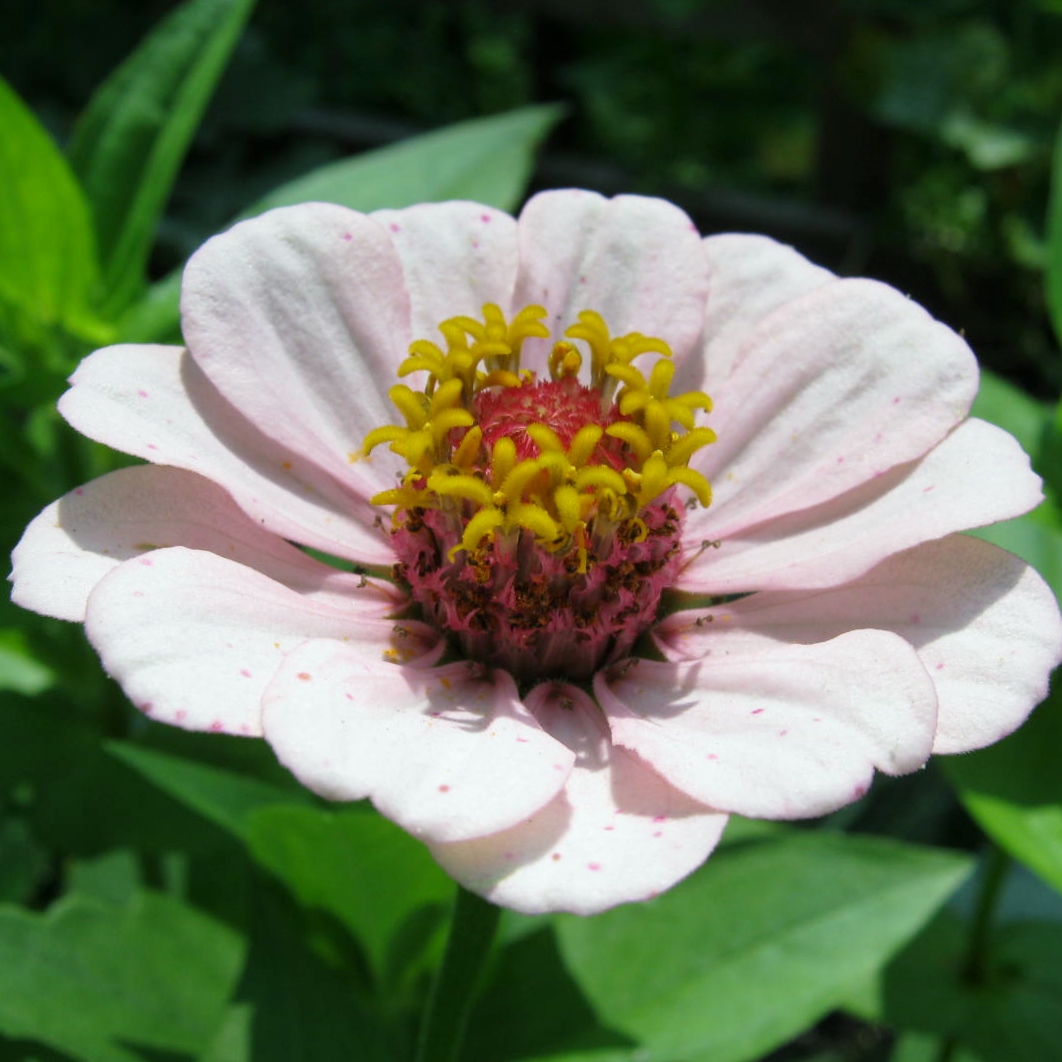
When I see my zinnia buds beginning to look like this…
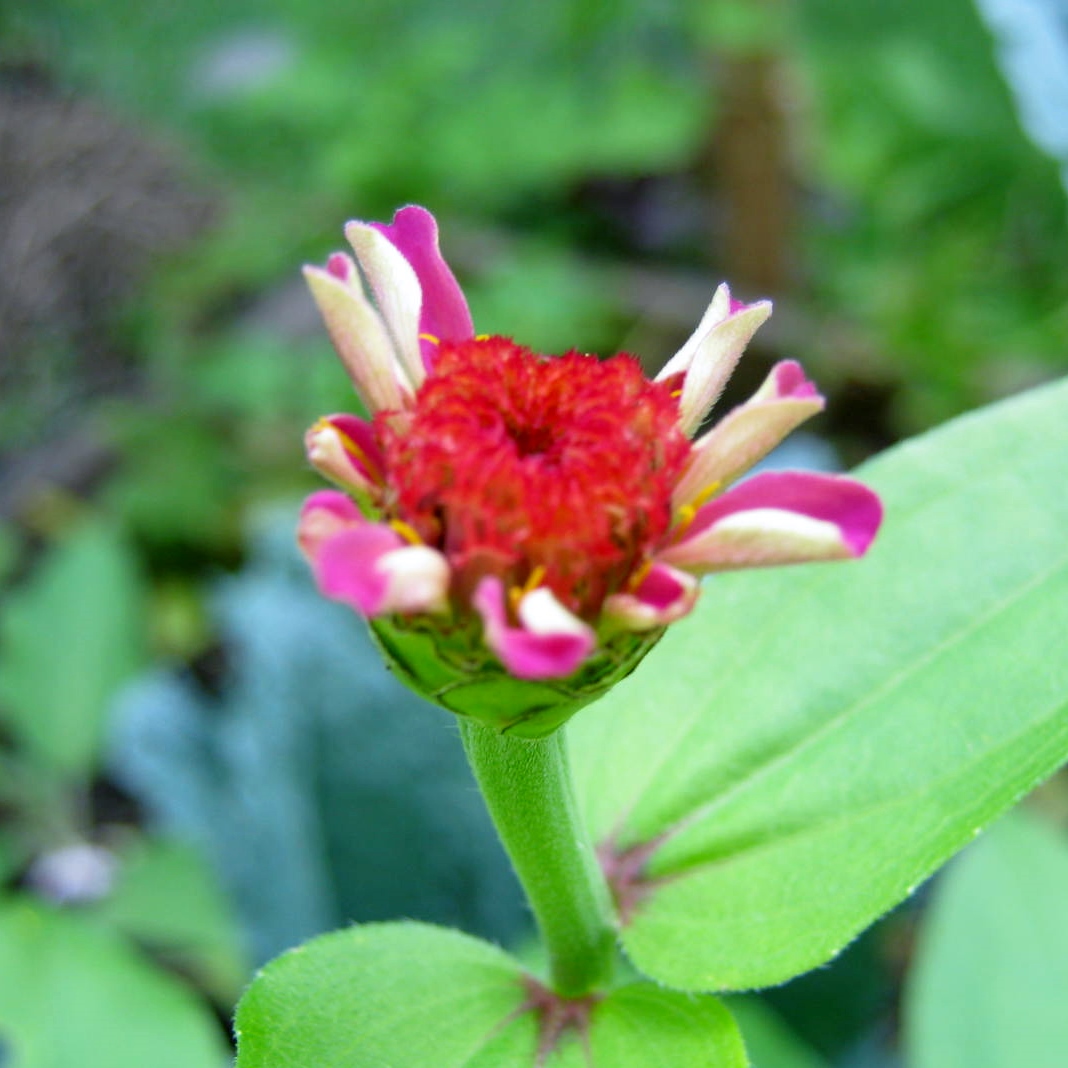
I get very excited, because…I know they will burst into full bloom within days.

I will finally know what color they will be and if they are single-petaled…

Or very full, resembling a pom-pom.
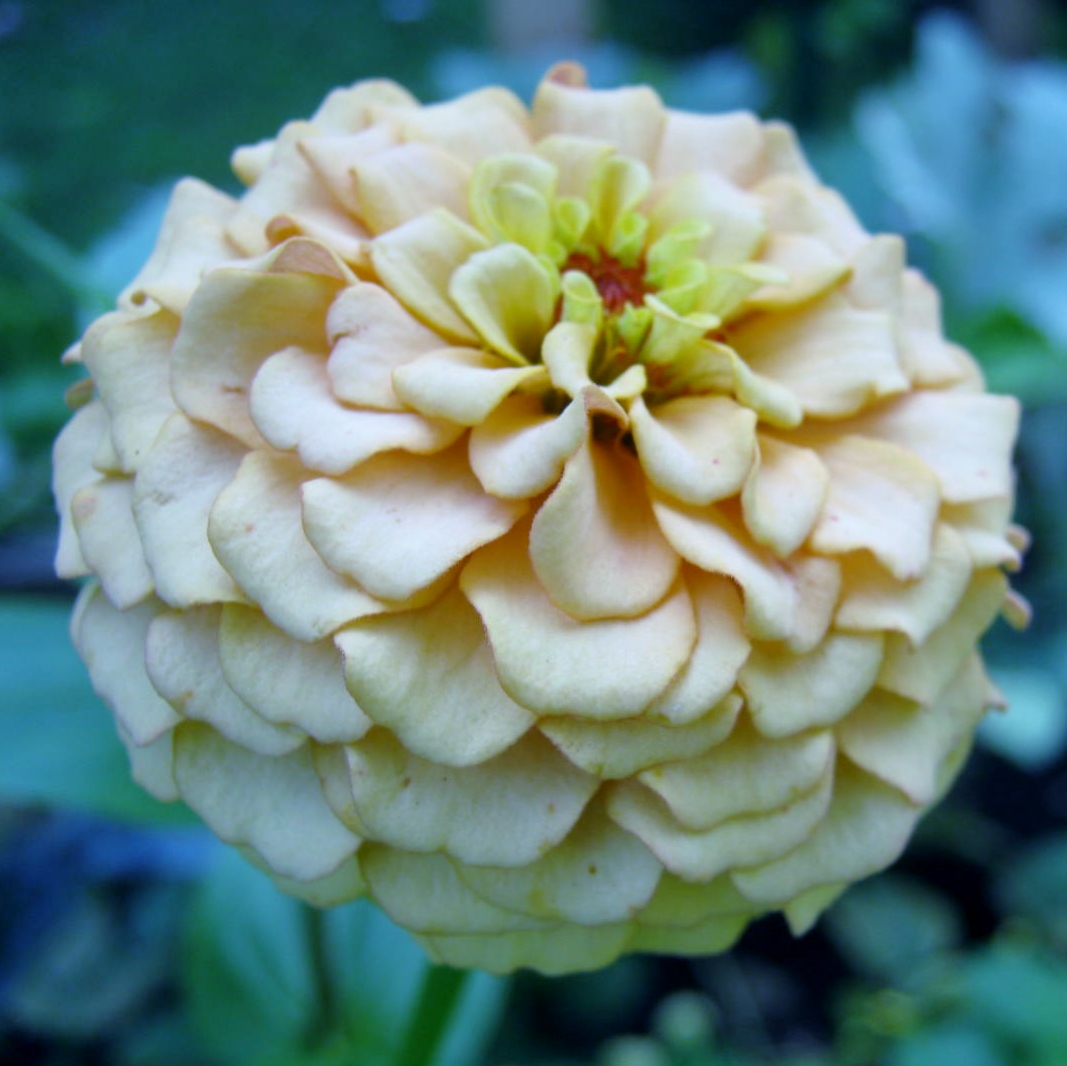
No matter the color…
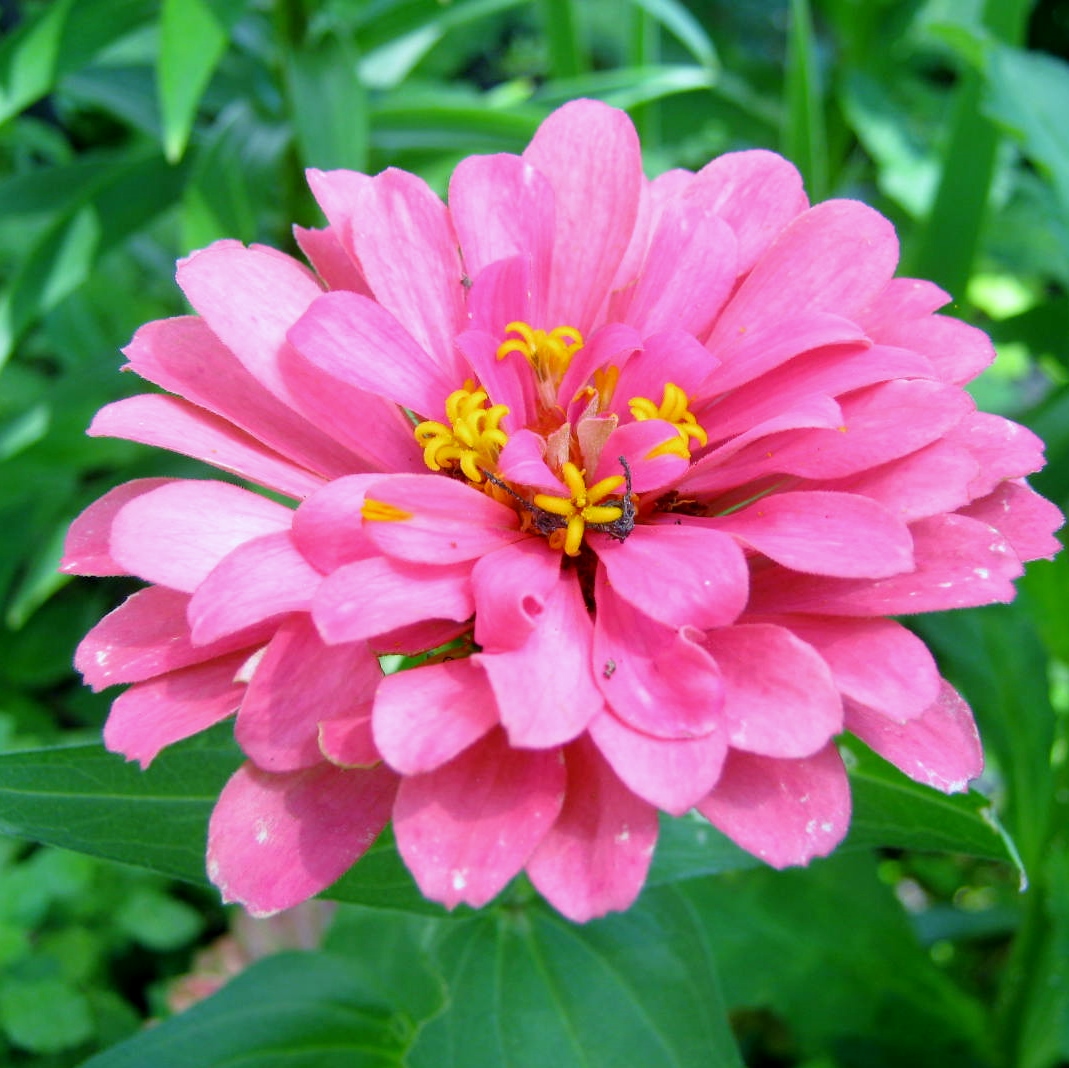
The shape or the size…
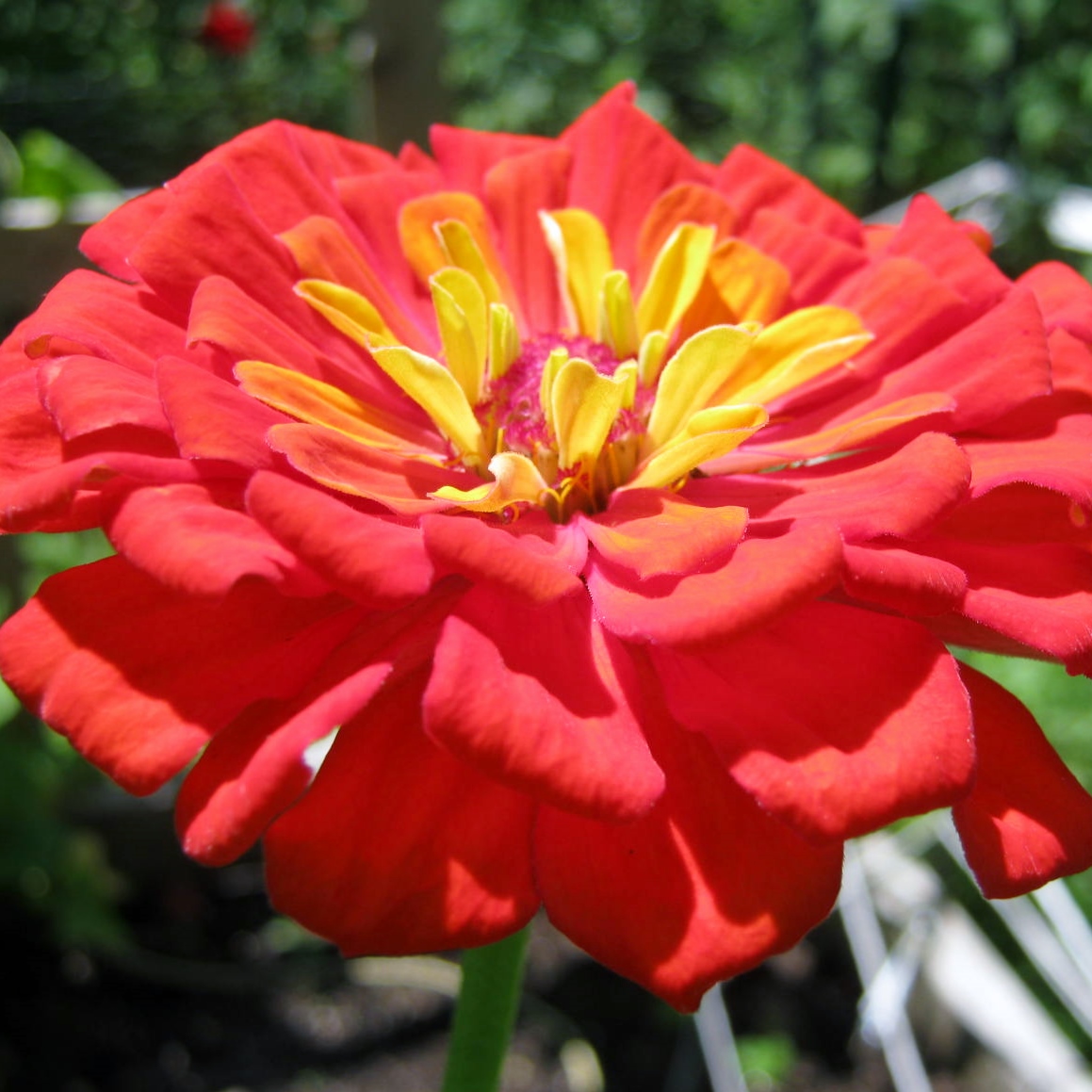
I LOVE zinnias!


I posted in the Spring on “Planting Straw Bales” with tomato plants. The technique has been more successful that I had even hoped. The tomato plants are soaring above my head and loaded with tomatoes of all types. Thus far, I have harvested many grape tomatoes, but so has the neighborhood chipmunk. Growl….

These little guys are adorable until they are ravaging your garden beds or digging dens under your concrete foundations and porches. One of the chipmunk gang in our yard has learned how to raid my suet cage and bird feeders. Double Growl…

I sprinkled chile powder in the chipmunks favorite dining area, but he just brushed it away and kept on feasting. Triple Growl…

One mistake I made with the Straw Bale Garden was placing the bales onto palettes instead of on newspaper. The palettes did keep the area neat at the start, but as the bales have decomposed they have sunk to low levels. I am hoping that somehow the roots of the tomatoes will find their way into the gaps of the palette and reach the ground underneath. I will update again further along in the season.

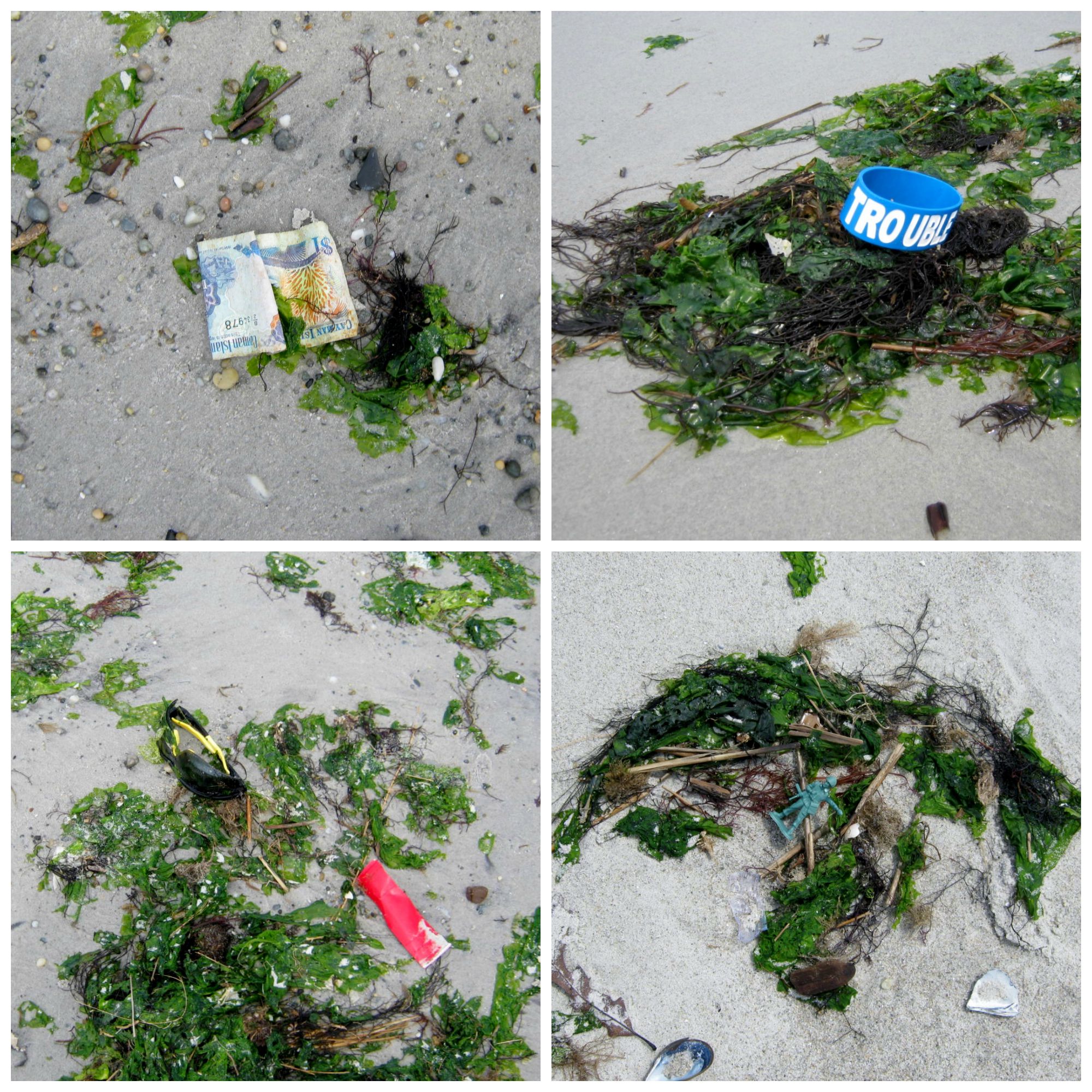
A bit of beach drift, natural and the not-so-naturals: Cayman Islands Dollar Bill, Trouble Bracelet, Sunglasses & An Army Man.


On a recent hot day I found a dragonfly, lifeless on my front sidewalk. I took it inside and laid it on a piece of paper, waiting to see if it might still be alive, but it was not. What beautiful wings and perfect body, I marveled at the intricacy of the insect. I left it where it lay for a few days knowing it would dry out. Preserving the dragonfly as a plant pick was my way of paying homage to its magical beauty.

A small dab of hot glue and a cloth covered floral wire was all it took to attach the dragonfly to the wire.

I wrapped the opposite end of the wire around a small toothpick and inserted it into a fern. Beautiful. If you are squeamish about bugs perhaps you don’t see the beauty of my craft, but I am filled with awe when I gaze at the perfection of the dragonfly. This technique will also worked on other beautiful winged creatures. I have found quite a few large butterflies and moths perfectly preserved on forest floors and fields. Keep your eyes open for a winged creature who has succumbed to old age and find a way to extend its beauty for a bit longer.

I had high hopes for this film and it did not disappoint. If you savor stories of victory over the establishment, if you feel we should all be reminded of the Holocaust to prevent the atrocities from happening again, and if you cheer for people who persevere even when all the odds are against them, you will LOVE this motion picture. “Woman in Gold” is widely available for home viewing at this time. I LOVED it.
A great article was written by the New York Times: The Woman in Gold.

Impartation: the ability to give unto others that which God has given to us … either sovereignly, or through other anointed vessels (messengers) of God.




In response to The Daily Post’s writing prompt: “Symbol.”
“This week, share a symbol with us, and tell us what it means to you.”
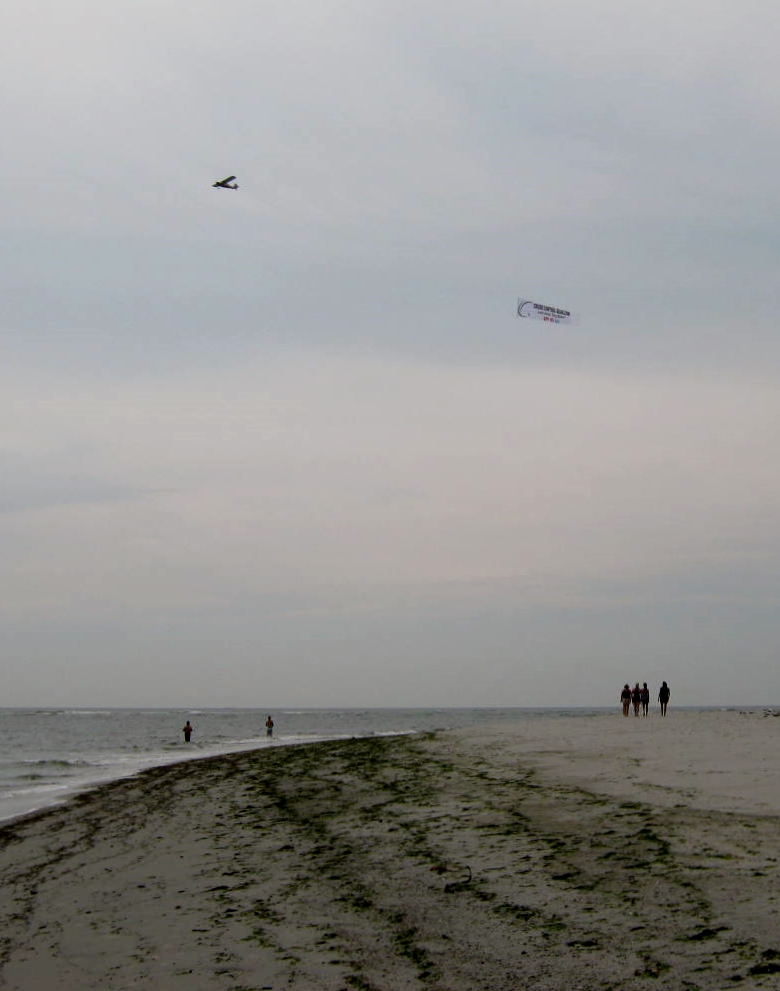
In my area of the world most of us who live within a hundred miles or closer to the coastline visit the local beaches at least once a season. My family is able to go quite frequently “down the shore.” Very symbolic of the season, and our summer skies, are the banner planes advertising anything and everything. Several flew by today, in fact at least a dozen or more, but one caught my eye…advertising for the Philadelphia Museum of Art: Discovering the Impressionists. Hmmm….that might be a banner plane that reels me in.

In response to The Daily Post’s writing prompt: “Memory on the Menu.”
“Which good memories are better — the recent and vivid ones, or those that time has covered in a sweet haze?”

A Sweet Memory: In the 1960’s, my sister and I were blessed to spend several weeks each summer in Hampton, Virginia, with my grandparents. One year, my amazing grandmother allowed us to have ice cream sundaes and watermelon every day for lunch. It sounds outrageous, but was really very nutritious, and it forged a love in me for watermelon and ice cream sundaes that will never wane. My grandmother told me when I reached adulthood that she gained ten pounds during the weeks we stayed with her that summer. Recently I’ve relived those moments and indulged in ice cream sundaes and watermelon for lunch. Oh my sweet Granny Davis…how I miss you!
This memory is forty-five years old, but it has not dimmed, nor needed to be covered in a sweet haze…it is as precious as those moments were so long ago, when I sat in my grandmother’s kitchen.


“Peter Marshall (May 27, 1902 – January 26, 1949[1]) was a Scots-American preacher, pastor of the New York Avenue Presbyterian Church in Washington, DC and twice appointed as Chaplain of the United States Senate.”

Even though it’s summertime, when the air conditioner cools the house to Autumn-like temperatures, I will get a hankering for soup. This was the case last night. I found a recipe for ‘Italian Pasta & Bean Soup’ tucked away in a stash of recipes. I have dozens upon dozens of these clipped out recipes in various places in my home. Every now and then I will pull one out and give it a try. I changed the recipe up a bit when the jar of chicken stock I was planning to use lost it’s bottom. (Don’t ask…a bit of broth leaked out, but it could’ve been much worse.) I had to choose between running to the store or making a broth of my own without any chicken thawed out. I decided to use some scraps of onion I had in the freezer, and a few stalks of fresh celery and carrots. I threw in a bouillon cube and ‘Voila,” I had a broth.
You can find the Woman’s Day recipe here: Woman’s Day Italian Pasta & Bean Soup

Here’s a photograph of mine and the changes I made to the recipe.
6 Cups of cold water
Onion, Celery and Carrot Scraps
1 -2 Beef or Chicken Bouillon Cubes
1 1/2 Cups Bowtie Pasta
1 15 oz can cannellini beans (drained and rinsed)
1 14.5 can diced tomatoes (I used Hunt’s Basil, Garlic & Oregano)
Several leaves of fresh parsley chopped/you can use a bit of dried if you don’t have fresh
Salt and Pepper to taste
Bring water and vegetable scraps to a boil. Simmer for about a 1/2 – 1 hour. Strain away all solids and discard. Add a bouillon cube/cubes to broth.
Bring broth to a boil once more, add bowtie pasta and simmer at medium until cooked al dente, about 8 minutes. Add beans, tomatoes and parsley. Heat through for about two minutes and serve. I sprinkled my soup with packaged grated 4 cheese pizza cheese. It was so delicious, I added a bit more cheese halfway through my meal.
QUICK TIP – The Woman’s Day recipe calls for cooking onion and garlic to add to the soup. I was able to skip that step by adding tomatoes flavored with herbs. This soup was light and had a bright flavor. Next time I might add a squeeze of lemon for an even brighter tasting broth.


