“But God demonstrates his own love for us in this: While we were still sinners, Christ died for us.”
~ Romans 5:8
“God proved His love on the Cross. When Christ hung, and bled, and died, it was God saying to the world, ‘I love you.’ ”
~ Billy Graham
“But God demonstrates his own love for us in this: While we were still sinners, Christ died for us.”
~ Romans 5:8
“God proved His love on the Cross. When Christ hung, and bled, and died, it was God saying to the world, ‘I love you.’ ”
~ Billy Graham


Today I conceded that WordPress Blogs are the most user-friendly, and paid the fee for my blog’s overabundant media library. This will give me another year blogging at WordPress. I suppose I should say…I’m back.
I’m sharing the Cornell Lab Bird Cams as a start-up post. I’ve been especially intrigued with the Hawk, Fruit Feeders, and Savannah Osprey Cams. I’ve included them in my post. The bird cams are one of my favorite places to visit online. Enjoy!



Over the last few months I’ve been collecting moss. A bit from here, a patch from there, I find it in places where motorcycles have created ruts on woodland paths, in deep holes dug by children for their games of war, in low places on the side of the roads I travel. Earth seems to heal her wounds in deep green moss.
I thought moss was a good entry in Cee’s Fun Foto Challenge for this week. CFFC: All One Color
Collecting mosses is easy. I always try to take a piece that is not in an area where people walk or gather. I don’t want to blight the beauty of the landscape by being greedy. Since I’ve collected only bits at a time, the moss garden has taken about eight weeks to complete. The area is shady, the main job in maintaining and nurturing the patch will be to water, water, and water. I must be diligent in this area if I want to have success. It will still be a long shot. When the summer weather nears one hundred degrees even the hardiest plants begin to wilt.

Most mosses have very shallow roots. To plant I use a trowel, rough up the soil a bit, lay the moss on the stirred up ground and water.

I isolated a few of the greens in the mosses, there are surely dozens more, but this is a good representation of some of the tones the moss contains. If you are interested in moss and growing a moss garden take a look at these sites.
Moss and Stone Gardens
Moss Gardening
Growing Moss

Here are a few quick garden tips. I have probably mentioned a few of them in previous posts, but they are worth repeating.
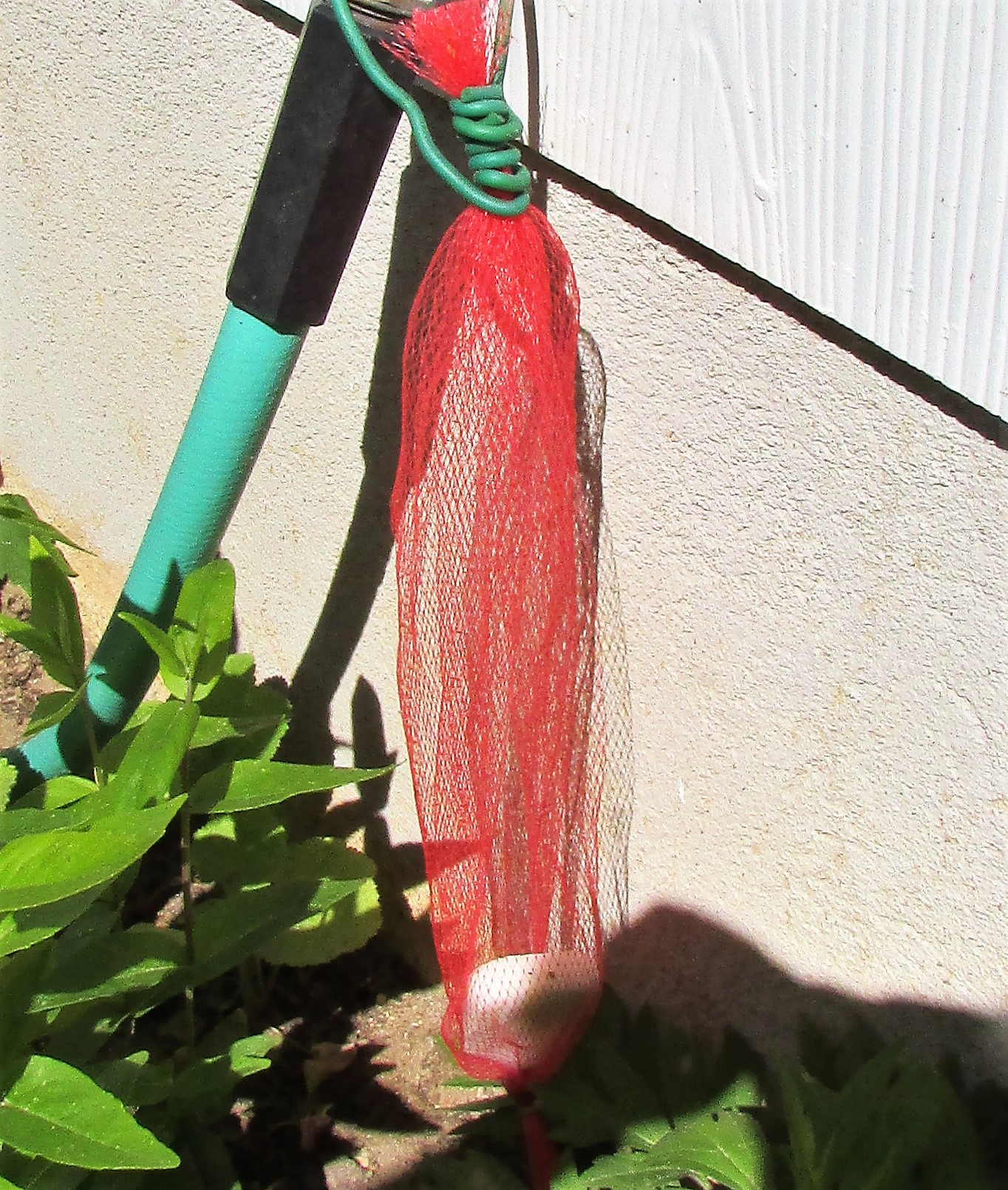
1. Are your hands too dirty to even touch the doorknob to get into the house? A net bag, think onions, potatoes etc., can be a terrific outdoor soap receptacle. I used some of my favorite flexible garden ties for this tip, wrapping the bag and attaching it to the hose spigot with the same tie.
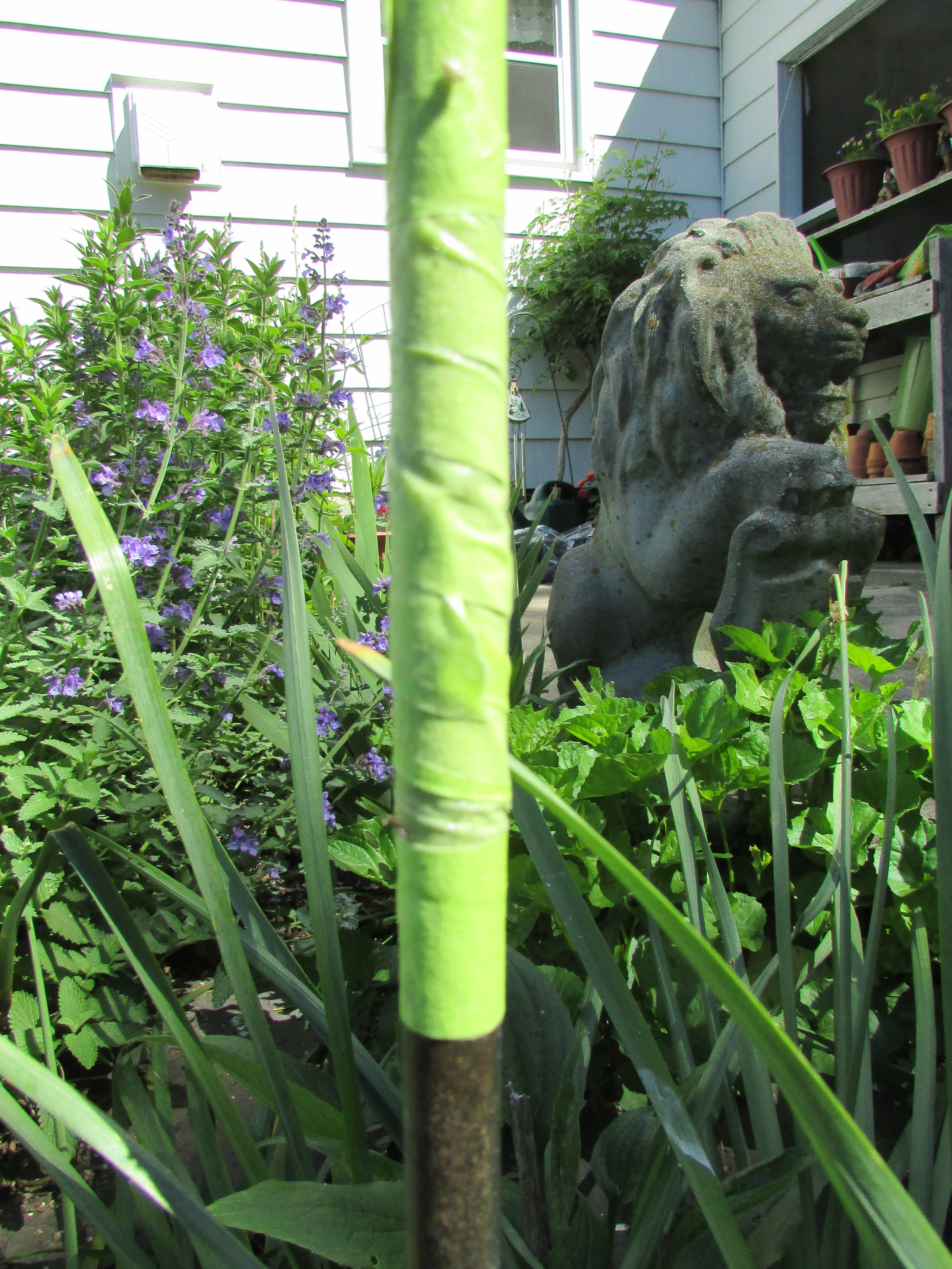
2. Are you having a problem with ants getting into your hummingbird feeder? Wrap tape sticky side out around the hook post.
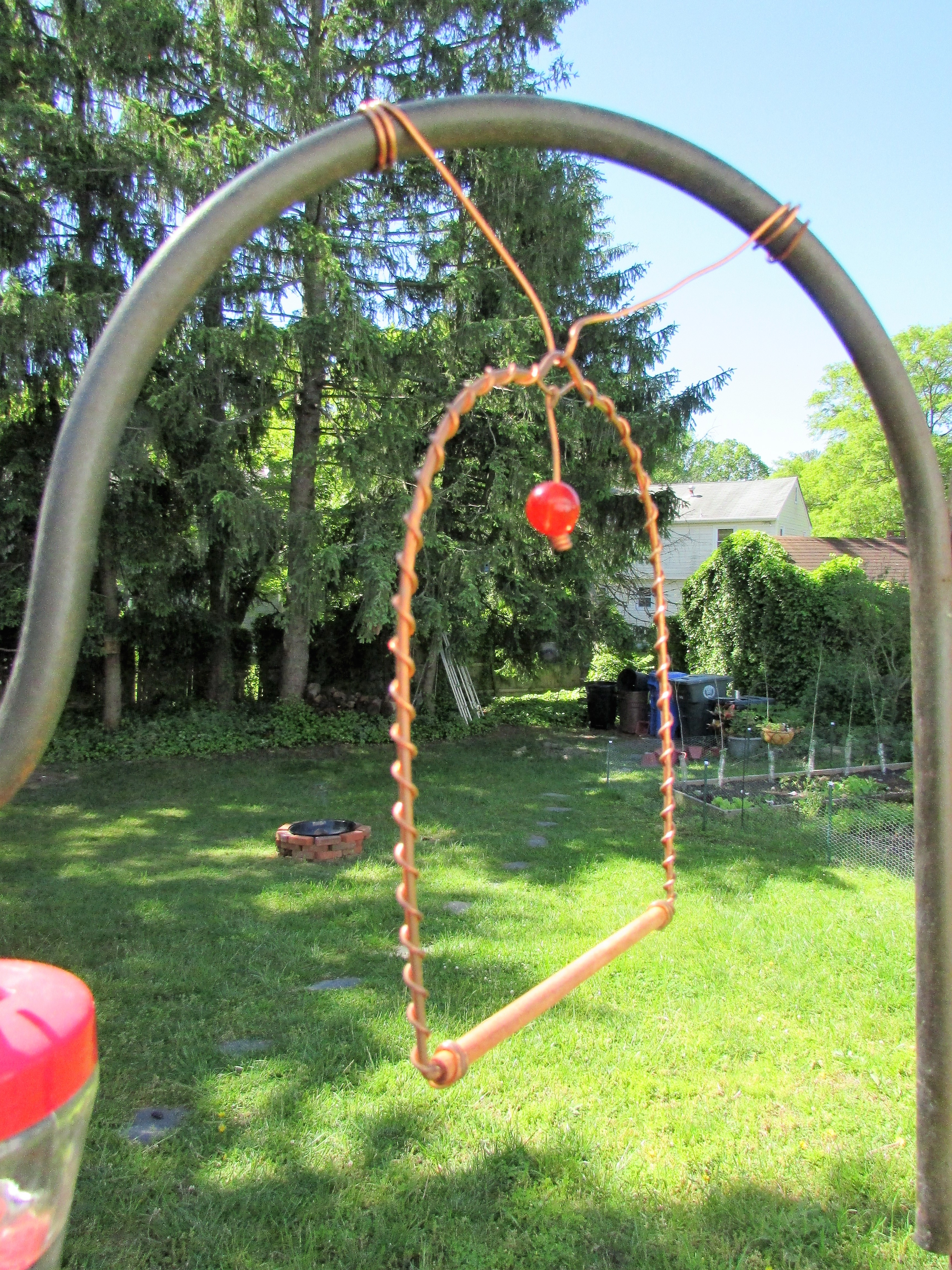
3. Are your hummingbirds tired? Just kidding—had to show this sweet hummingbird swing my husband gave me for Mother’s Day. Yes, I was thrilled with the gift!
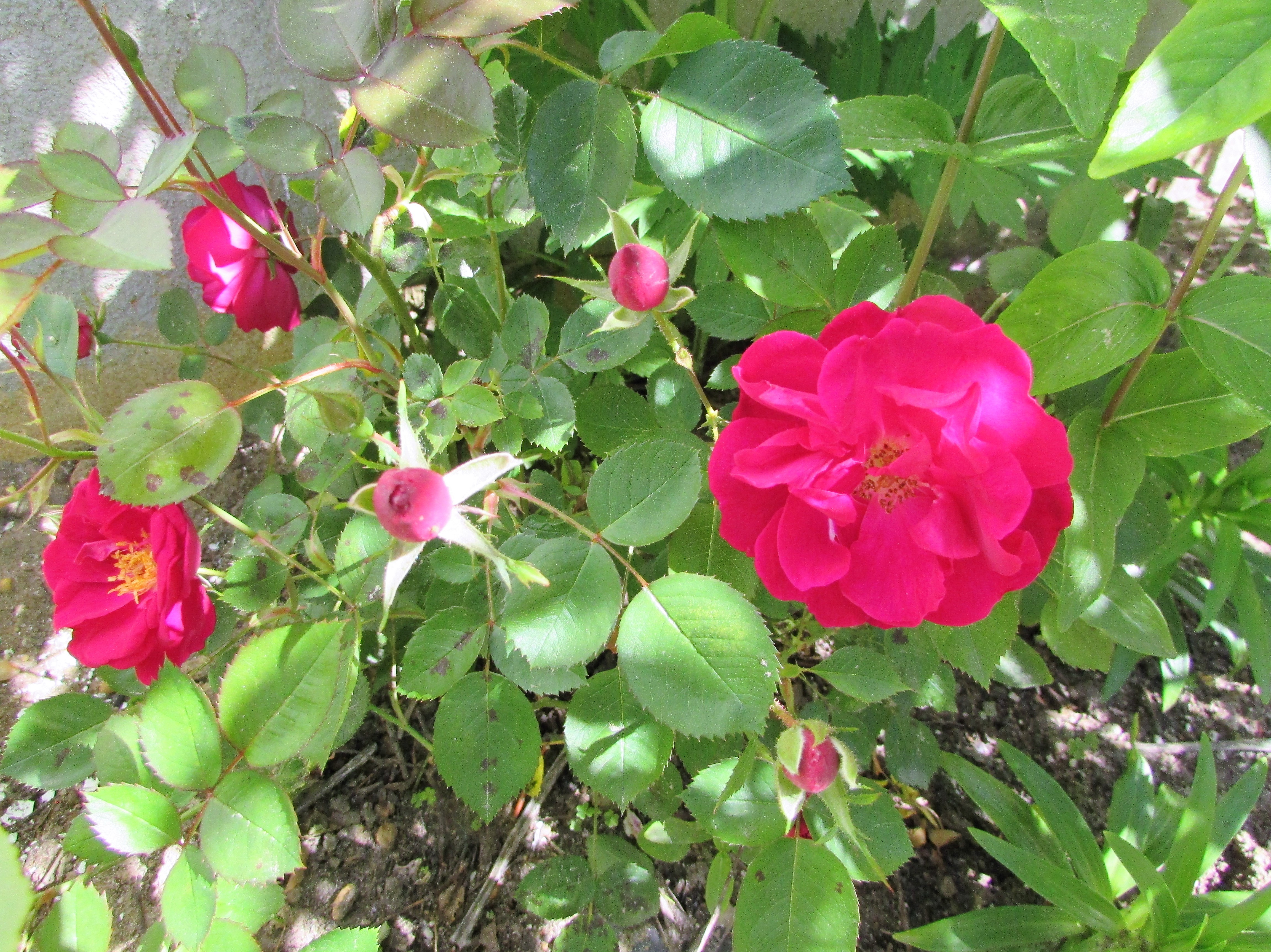
4. Have your gorgeous tea roses reverted back to a deep red flower? Your rootstock has lived and the grafted on hybrid rose is gone. Since I think these wild roses are pretty in their own way, I will allow them to grow until they begin to look scraggly. The hybrid rose will not regenerate on this root stock. The only solution you have if you dislike the wild rose is to dig it up and replant a new hybrid rosebush. I’ve decided I’m going to enjoy the wild rose this year.
“Grafted roses, commonly called budded plants, are plants where the desired rose is grafted or budded onto a rootstock of a different type. The point where the desired variety and the rootstock meet is called the bud union.” ~ Houzz.com
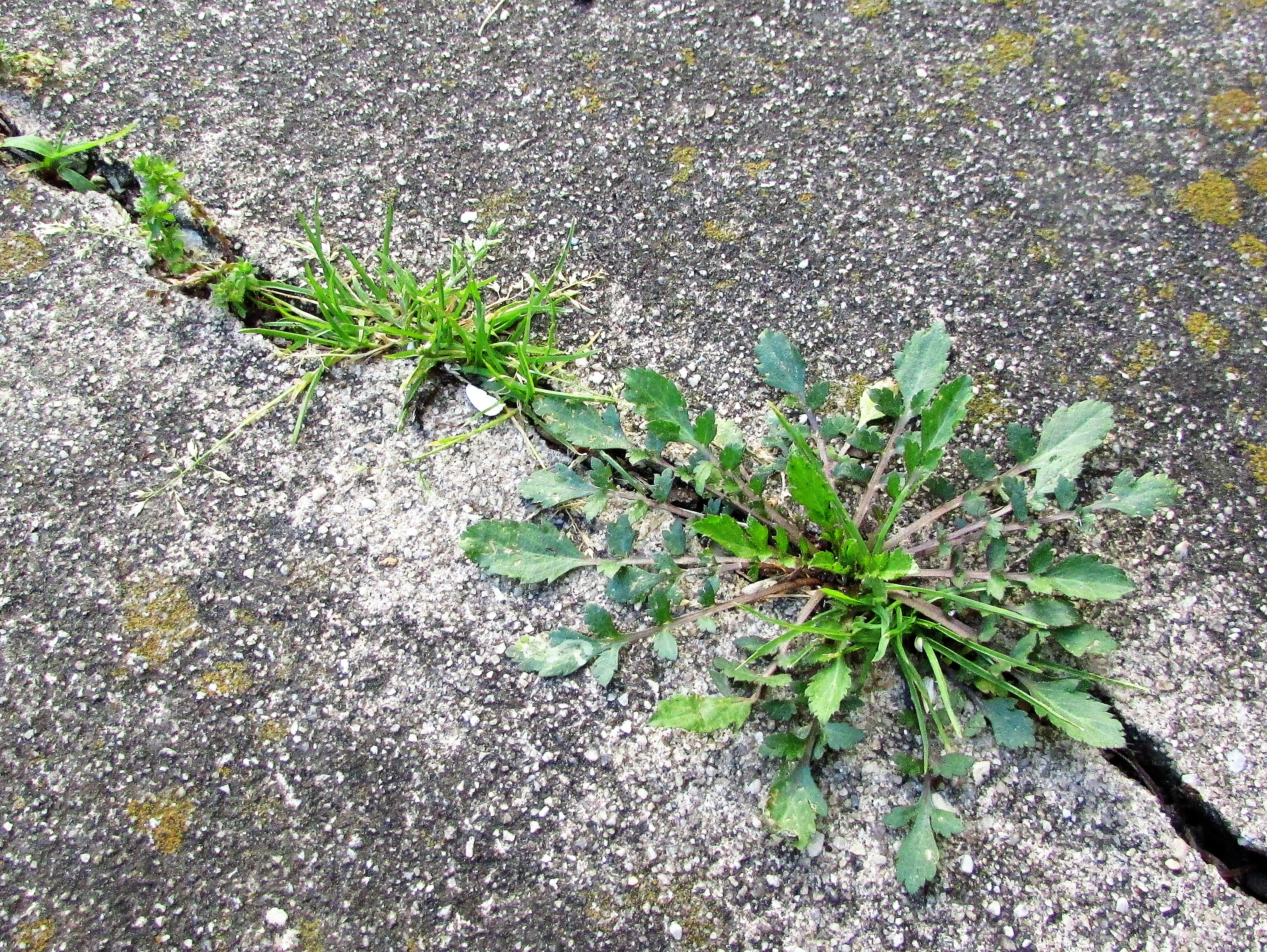
5. Are weedy plants growing in the cracked areas of your sidewalk and concrete? Boiling water will kill them just as quickly as chemical poison sprays and will keep our world safer for upcoming generations.


My daughter-in-law created this amazing ‘Nanny’ shirt for me for Mother’s Day. Do I need to say I LOVE IT? I’m saving it for a special occasion – a family barbecue. She sells through Etsy, and creates custom orders, and has a wide array of beautiful bows, baby items, jewelry, etc. You can reach the shop through this link – BooBooBean LLC, or through the icon located on the right-hand sidebar of this blog.


My great-grandmother, my grandmother, my mother, and the little one is me. This photo was taken about 55 years ago. Happy Mother’s Day!


I’ve lost count of how many years I’ve grown the herb lemon balm. I use it mainly for tea. The butterflies and bees love it for the delicious nectar in its tiny white flowers. I have near two dozen plants growing in several gardens surrounding my home. Why do I grow so many? Well they self-seed, make excellent tea, are linked to longevity, will grow where other plants would succumb to bad conditions, new sprouts are easily transplanted to a new location, and most important, I find the plants pretty.
The batch above is growing strong around my Square Foot Garden boundaries. In some areas it has inter-mingled with spearmint that has also run rampant and multiplied from one plant.

These two herbs, steeped in just-boiled water make a lovely, invigorating, yet calming tea. If you find these plants in a garden nursery and have room to grow them, give them a try.


Creating a large bouquet for special occasions (Hint – Mother’s Day is coming!) can be easy, if you choose the right flowers. I used hydrangeas and roses for this simple-to-assemble bouquet. You will need a large vase, 10 – 12 inches tall, for this arrangement. Remove all foliage from the stems that will fall below the water line. Fill the vase with water 3/4 full. Add flower food if your flowers come with a free packet.
Place your hydrangea stems in the vase first. These are heavy duty stems with beautiful leaves. Hydrangeas are temperamental. I didn’t do anything to condition mine and the blooms on one of them wilted overnight. A good way to condition hydrangeas is to burn the end with a candle. This seals the milky sap inside. A spray of water on the petals is also a good idea. I found an excellent in-depth post on how to condition these stems. If you are going to make the bouquet and use hydrangeas please check out this article first. Hydrangeas in the House-Tips for Making them Last!
The stems of the hydrangeas are strong. I used four and criss-crossed them within the vase to form a grid to hold the roses.
White roses are the next addition. They come packaged in packs of 12, but I used only eight in this arrangement. (I used the others for some corsages…the story of these will be told later in the week.) You could use any tall-standing flowers in place of the roses: lilies, carnations, spray roses, alstromeria, Dutch iris, etc. Cut all stems at an angle to allow them to draw up as much water as possible. Place the roses into arrangement within the criss-cross of the hydrangea stems. There you have it, an easy and beautiful bouquet for any special occasion.


It’s a day of heavy rain here in the Northeast. Before the drops came down too hard I snuck outside with my camera and quickly took a photograph of my prettiest blooming garden plant: a beautiful bunch of lavender pompom blooms topping my chives. I enjoy using fresh herbs in my daily cooking, and chives add a bit of pizazz to many dishes. This week I used a few of them in homemade cream of potato soup. It was delicious, and the chives added some pretty color to the rather bland appearance of the soup.
Chives are easy to grow. Even the potted herbs you find in grocery stores will grow all season if you plant them early enough. My bunch of chives returns without fail every year, bigger and better and with more blossoms.
I’ve read you can pick and dry these blossoms. I think I will give it a try. Updates will follow. 🙂 Chives fit perfectly into my gardening lifestyle.


Cinnamon Ferns (Osmunda cinnamomea) have unfurled during the warmth of the last few weeks. I love walking along woodland paths bordered by these feathery green plants. The fronds appear stately as they hold their spiky ‘cinnamon’ spores high; a scepter covered with the possibility of new life.

Quite often I will find Cinnamon Ferns and Skunk Cabbage growing in the same area.
“The Osmundastrum cinnamomeum fern forms huge clonal colonies in swampy areas. These ferns form massive rootstocks with densely matted, wiry roots. This root mass is an excellent substrate for many epiphytal plants. They are often harvested as osmunda fiber and used horticulturally, especially in propagating and growing orchids. Cinnamon Ferns do not actually produce cinnamon; they are named for the color of the fertile fronds.”
~ Wikipedia
Cinnamon ferns are called fiddleheads in the beginning stages of their unfurling. Here are a few photos of the stages of their growth.
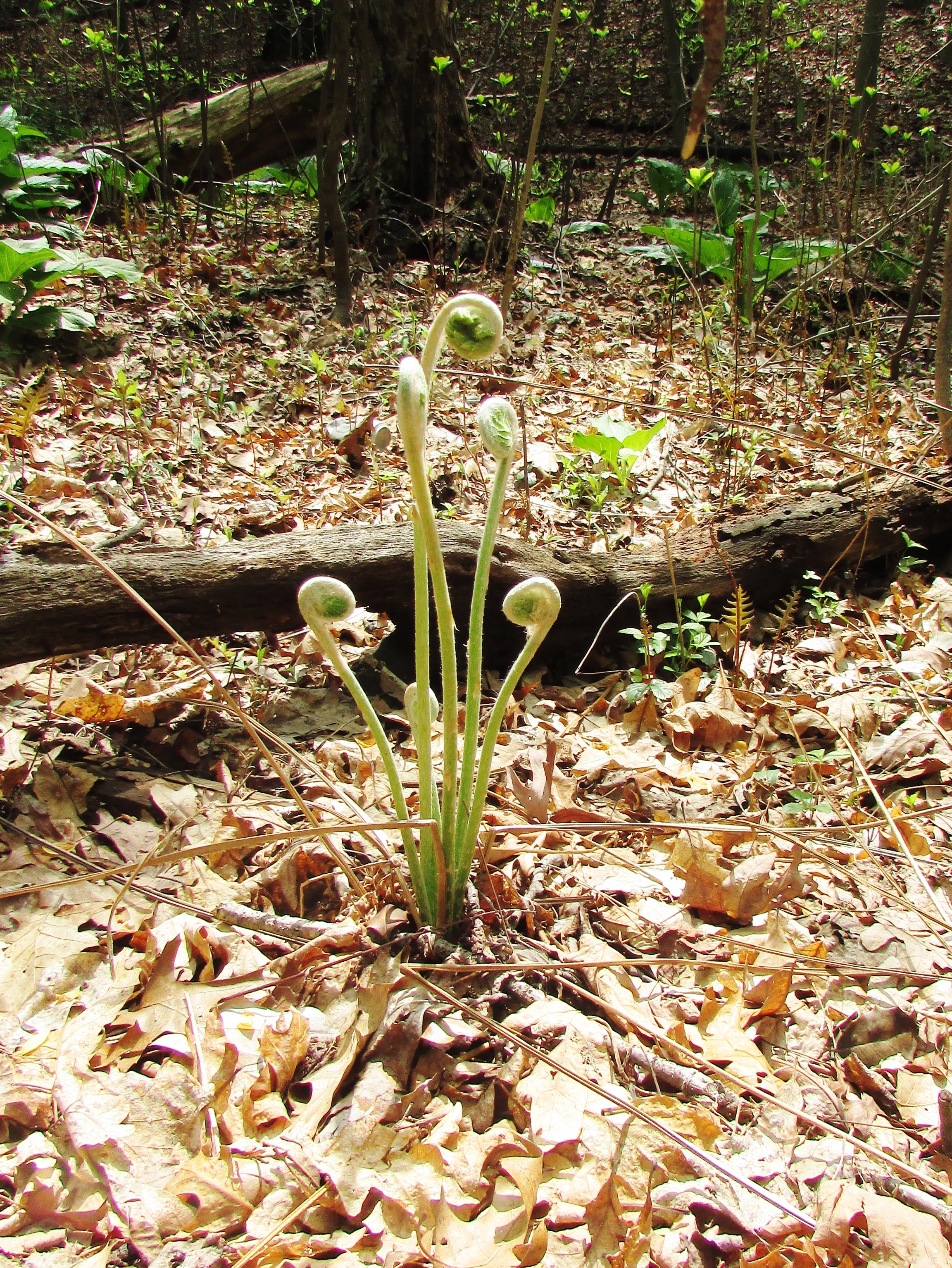

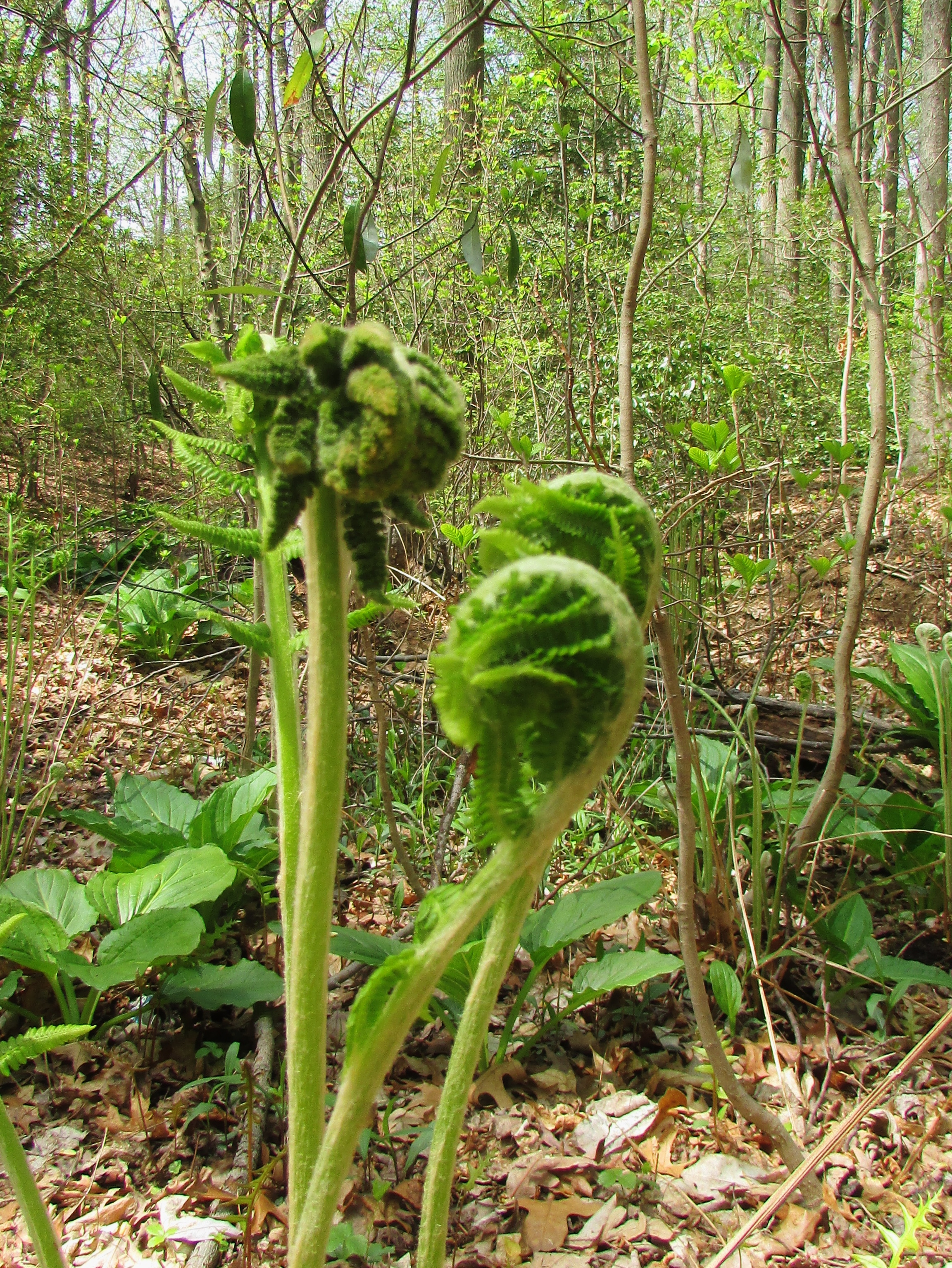
Chefs can create gourmet dishes out of fiddleheads. I’m not sure which variety of fern they use, but think it must be a well-remembered dining experience by anyone who tries this culinary treat.


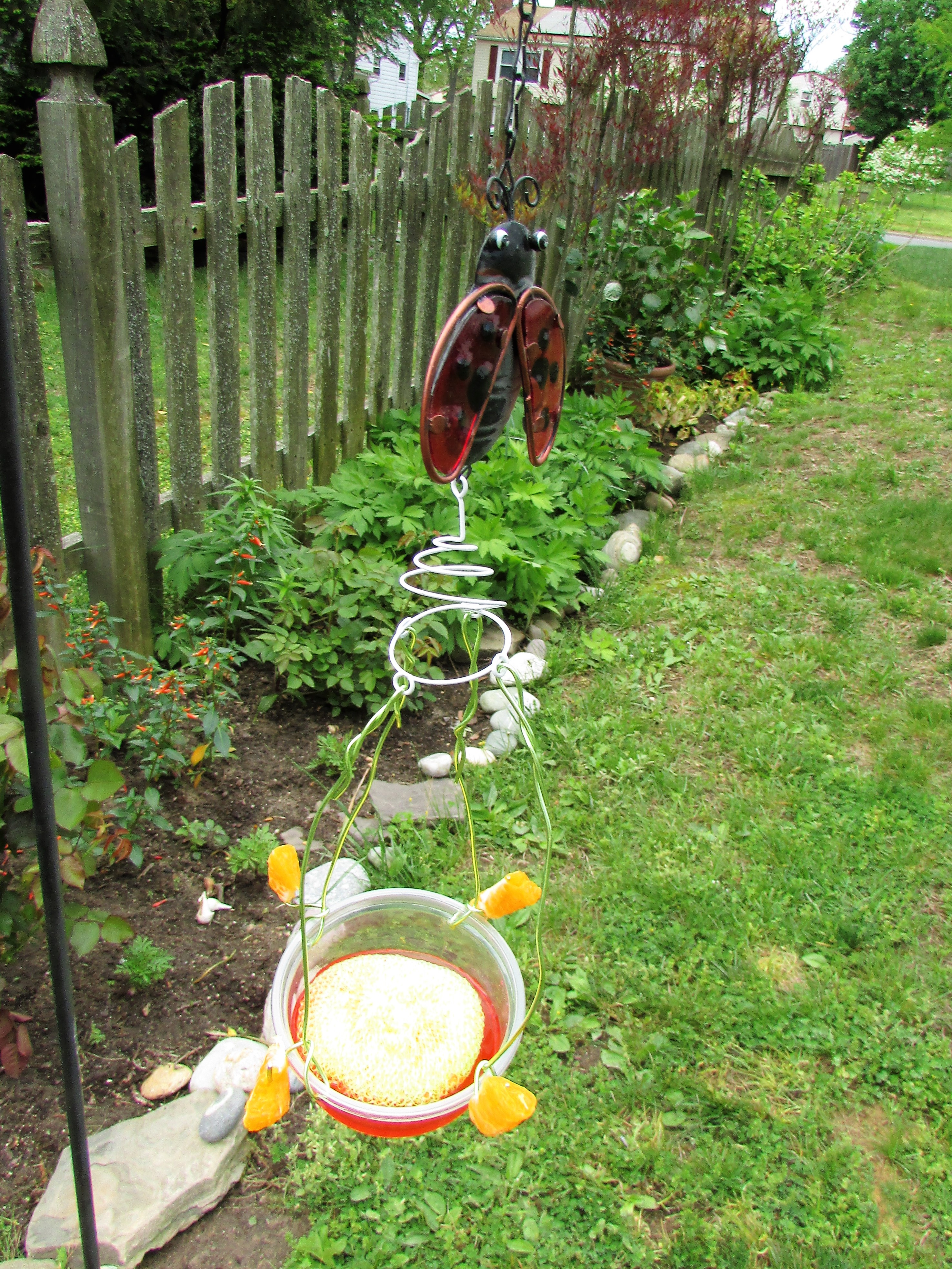
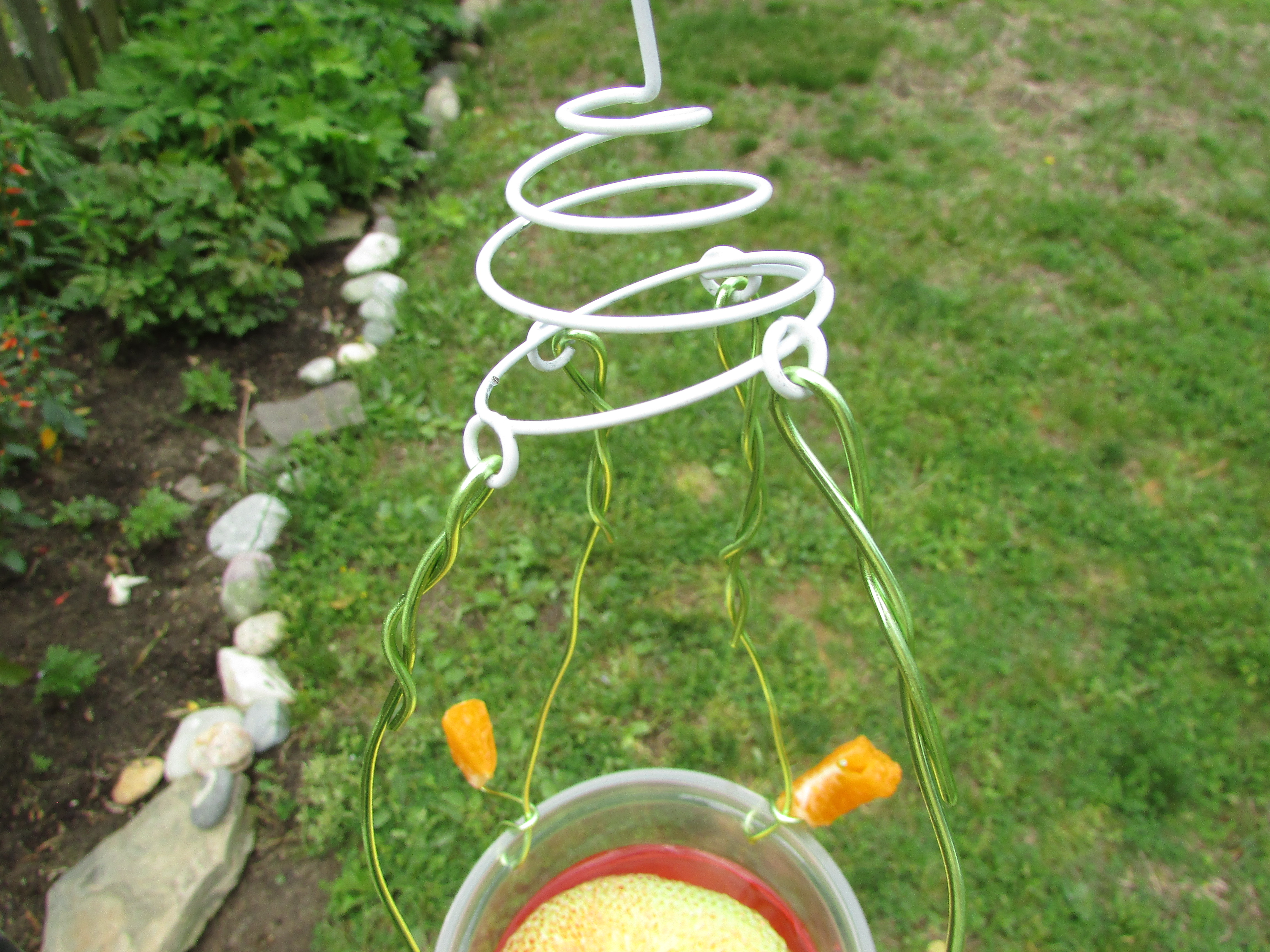
Creating my butterfly feeder was quick, easy and inexpensive. I had much of what I needed on hand. A dollar store windchime with four attachments where the chimes hung was the perfect piece of mechanics for hanging a shallow container filled with Gatorade or boiled sugar water. (4 parts water to 1 part sugar)

No instructions needed, use what you have on hand. The secret lies in the wire and plastic container: a plastic dish scrubber. The butterfly can land on this and use his long proboscis to dine on the nectar. I created holes in the plastic dish with a hot ice pick.
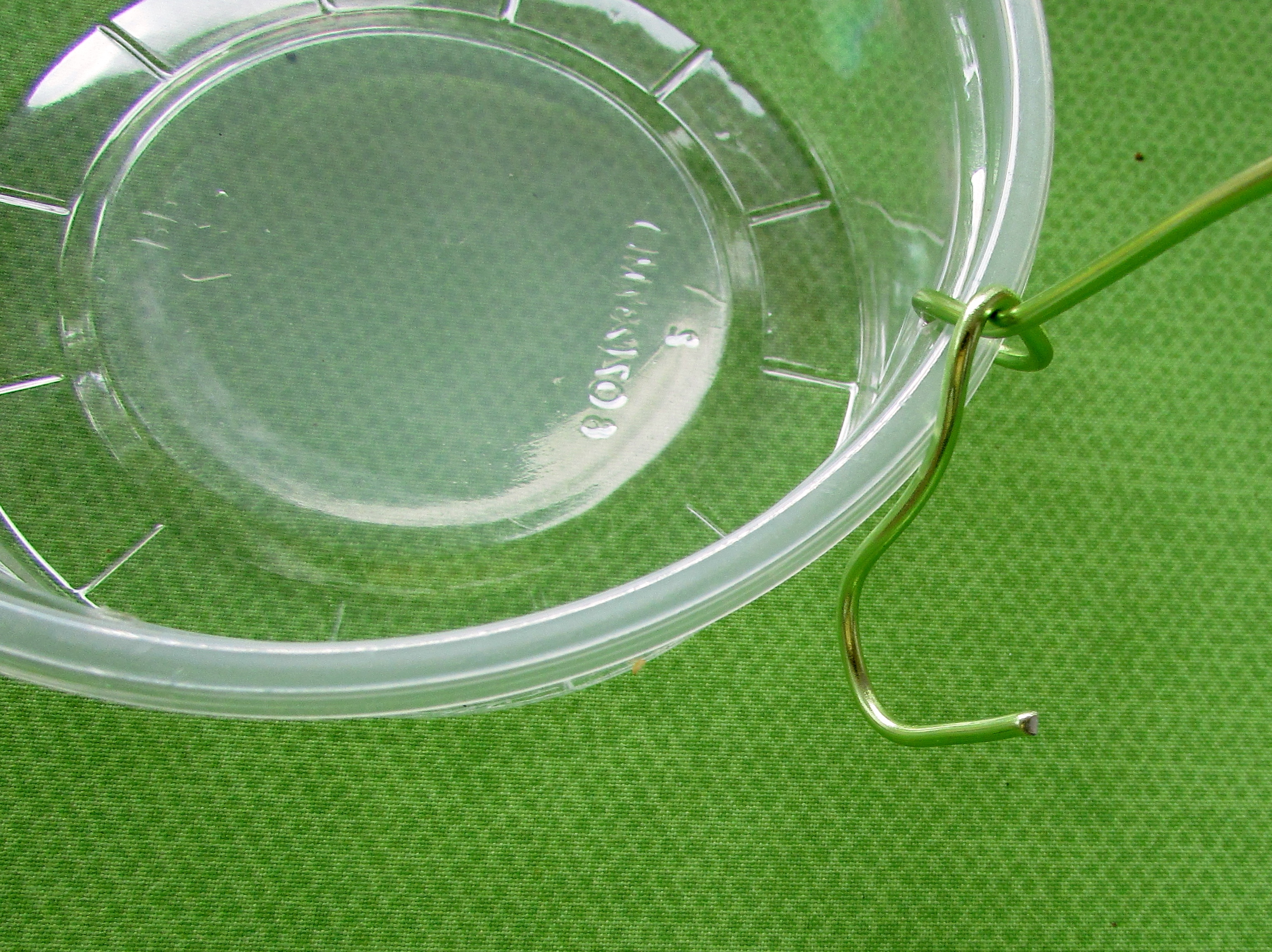
When I added the wire for hanging I let the end curl upward. These make the perfect spear for rotting/old fruit. I was going to use a strawberry, but remembered they are heavily sprayed with insecticide. It is better to use fruit that is within a peel unless it is organic.

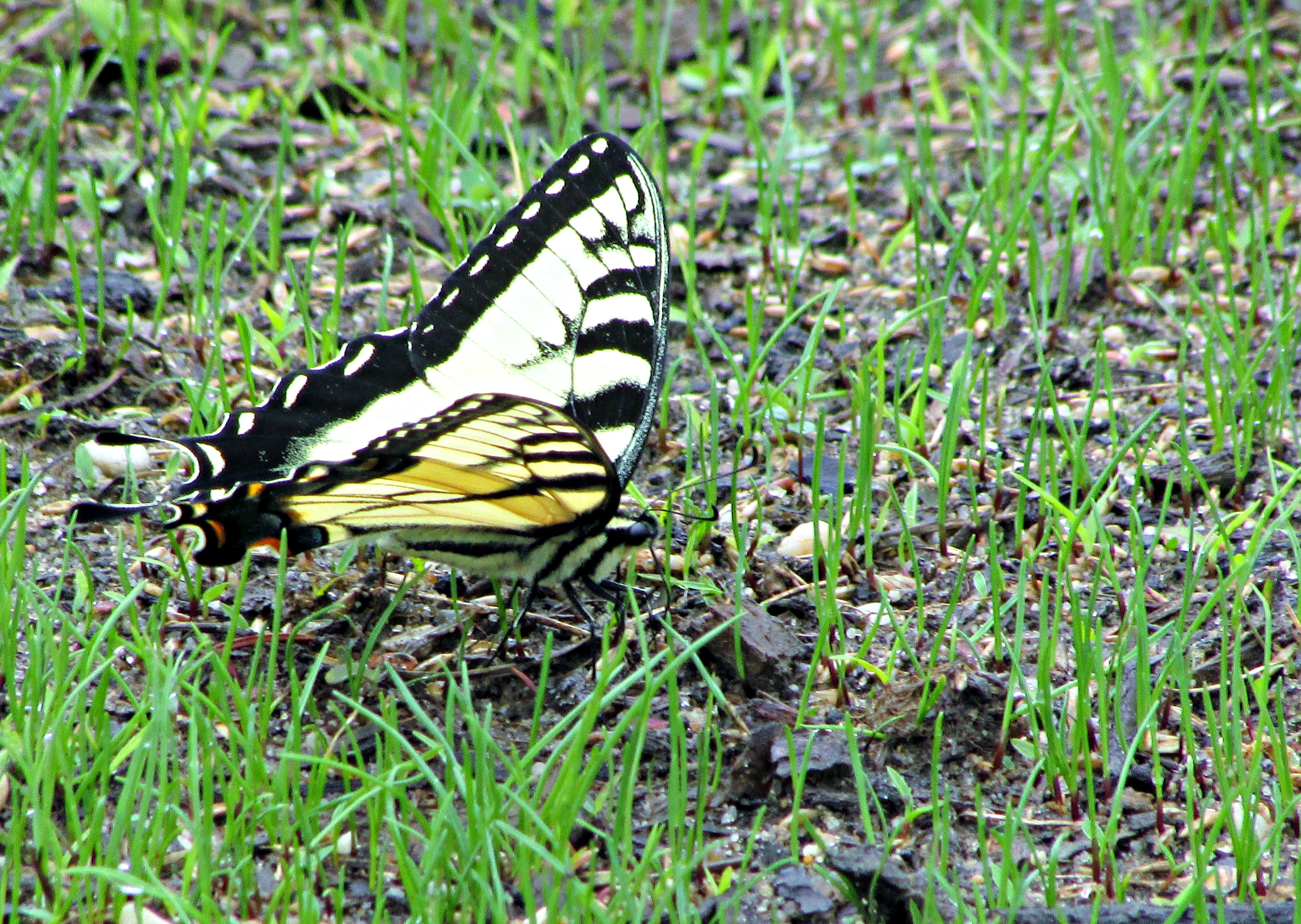
I watered a patch of newly planted grass yesterday, and was delighted when I saw the first yellow swallowtail butterfly of 2017 ‘puddling‘ in the dampness.
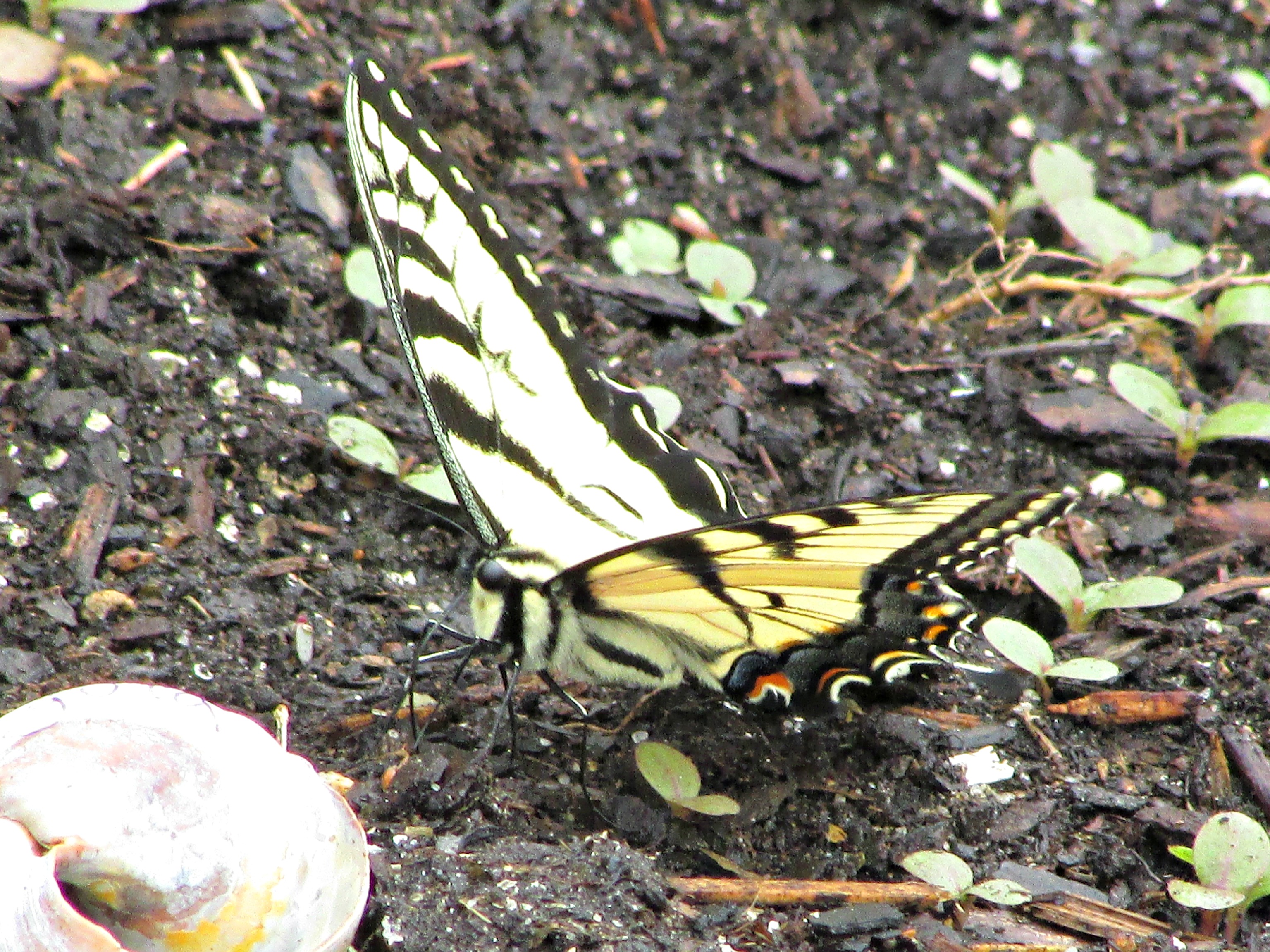
He fluttered around the yard searching out more patches of damp earth for sipping, making use of the nutrients, salts and amino acids the earth contains. I was surprised upon searching the Internet to find products to purchase for ‘puddling’ butterflies. These butterfly feeders are easy to make yourself. Today, I’ll gather up some materials and post my creations tomorrow.


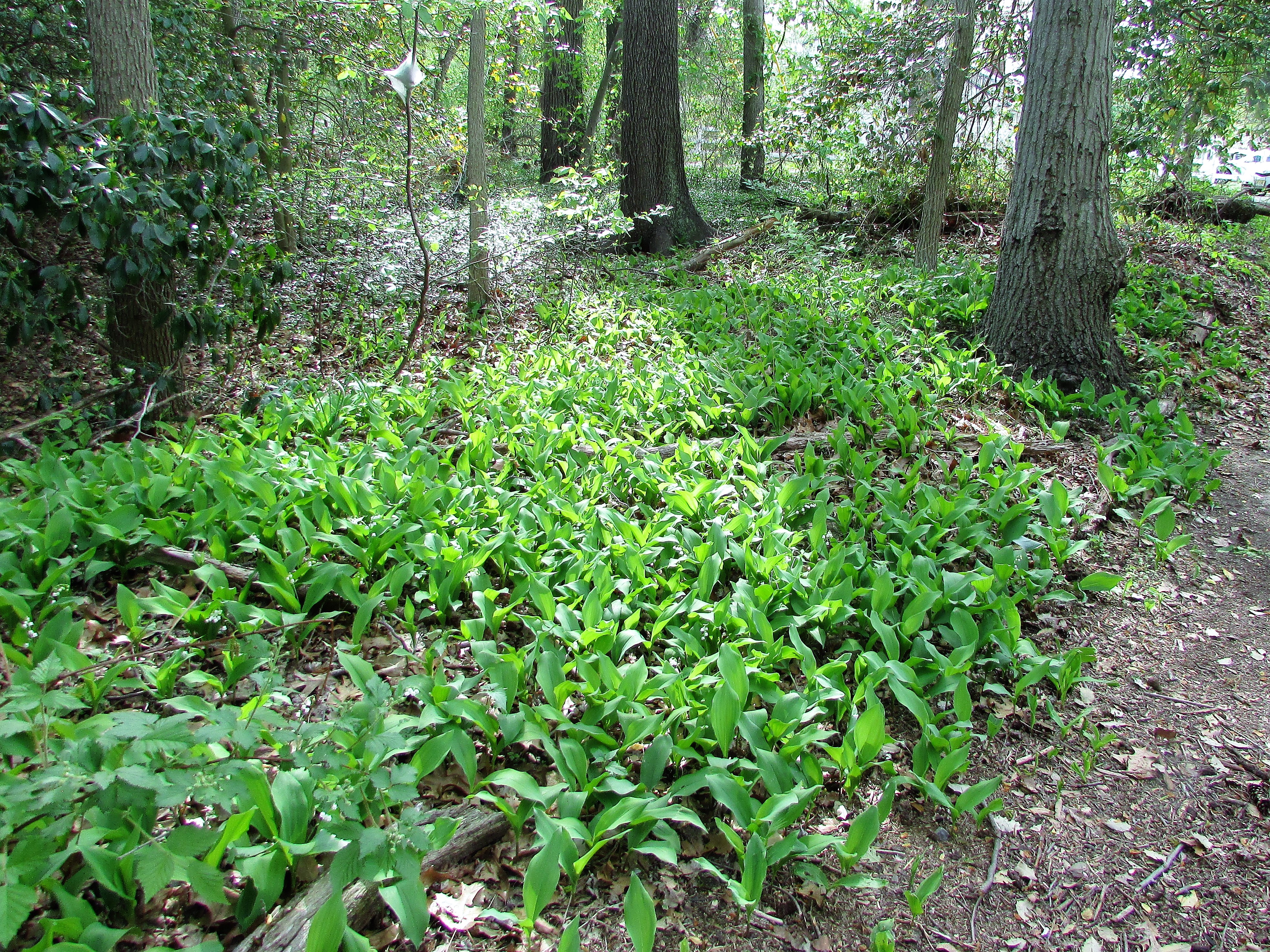
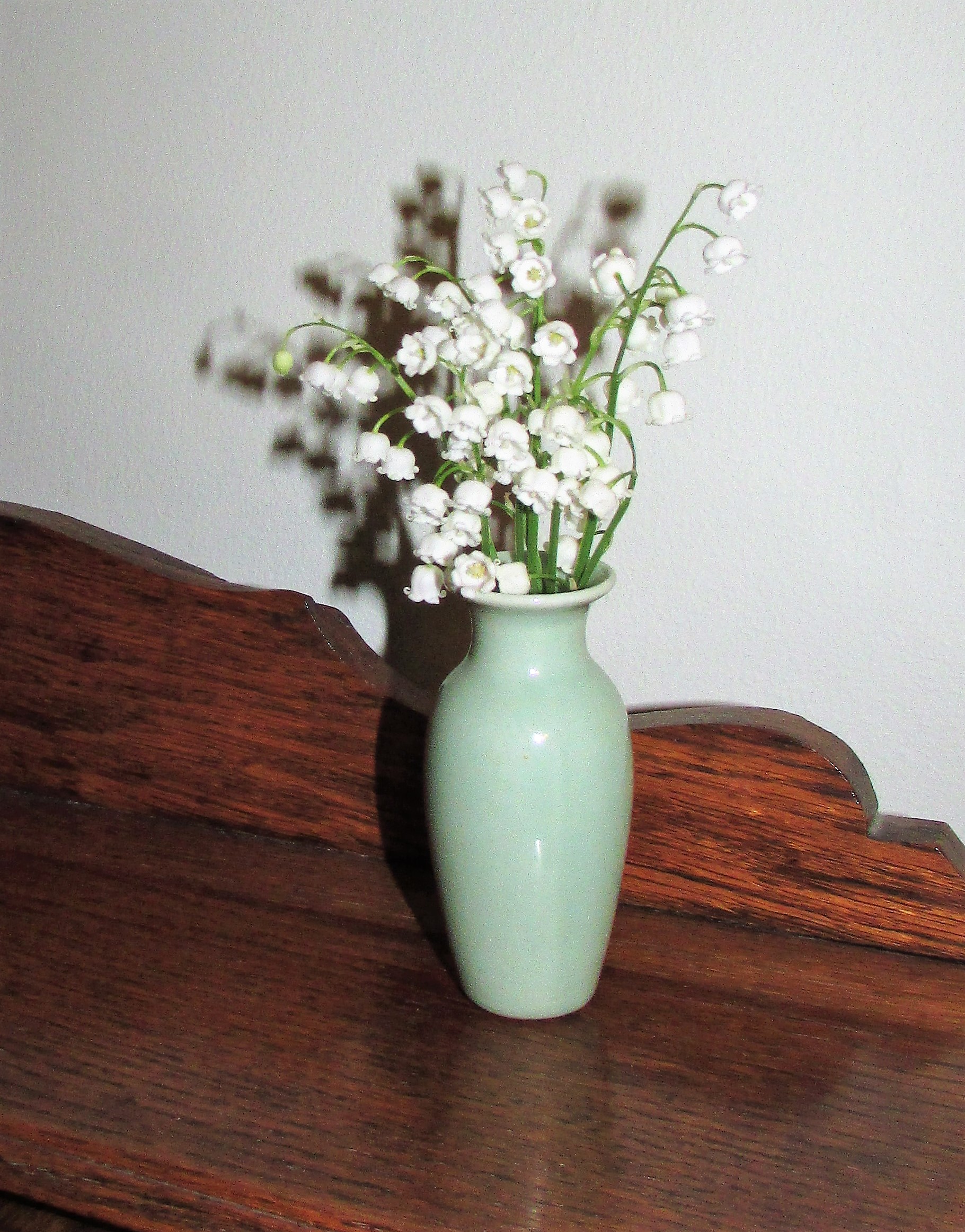
I love this beautiful old hymn. Yesterday, I was reminded of this description of Jesus, and the Bible verse it was based on, when I noticed the first flowers blooming in a nearby patch of naturalized Lily of the Valley. Years ago, I first noticed sprigs of it that had taken hold after someone dumped their garden clippings at the edge of the woods. Those small sprigs have multiplied over the years into a large swathe of plants. As is so often the case, persistence wins the day, and the Lily of the Valley has thrived.
The hymn was written in 1881 by Charles W. Fry
“I’ve found a friend in Jesus, He’s everything to me,
He’s the fairest of ten thousand to my soul;
The Lily of the Valley, in Him alone I see
All I need to cleanse and make me fully whole.
In sorrow He’s my comfort, in trouble He’s my stay;
He tells me every care on Him to roll. Refrain:
He’s the Lily of the Valley, the Bright and Morning Star,
He’s the fairest of ten thousand to my soul.”
~ Charles W. Fry 1881“I am the rose of Sharon, and the lily of the valleys.”
~ Song of Solomon 2:1
This Bluegrass rendition of the hymn is by The Cluster Pickers.

This morning I spied him/her for the first time. The hummingbird circled around the shepherd’s hook where the hummingbird feeder hung last year. I shouted out the happy news to my husband. When I’m finished this post I’ll take my feeder off the garage shelf, soak in hot sudsy water, rinse it well, fill it with boiled sugar water, and place it back on the hook. Oh Happy Day…the hummers have returned.
While I’m readying my yard for hummingbirds, take a look at the Cornell Lab West Texas hummingbird feeders in Live time.


I’ve planted like a whirlwind this week. It’s been rainy, but I’ve mustered on, wearing a large-brimmed hat to keep the raindrops out of my eyes. I’m hoping my sprouts will develop strong roots before the heat gets too high.
You might wonder what the strange towers and sticks are in the back of my garden. These are my sunflower towers created with soda bottles. They worked well last year, and I was able to grow sunflowers in several gardens. I’m hoping they will protect my young sunflower plants from rodents large and small.
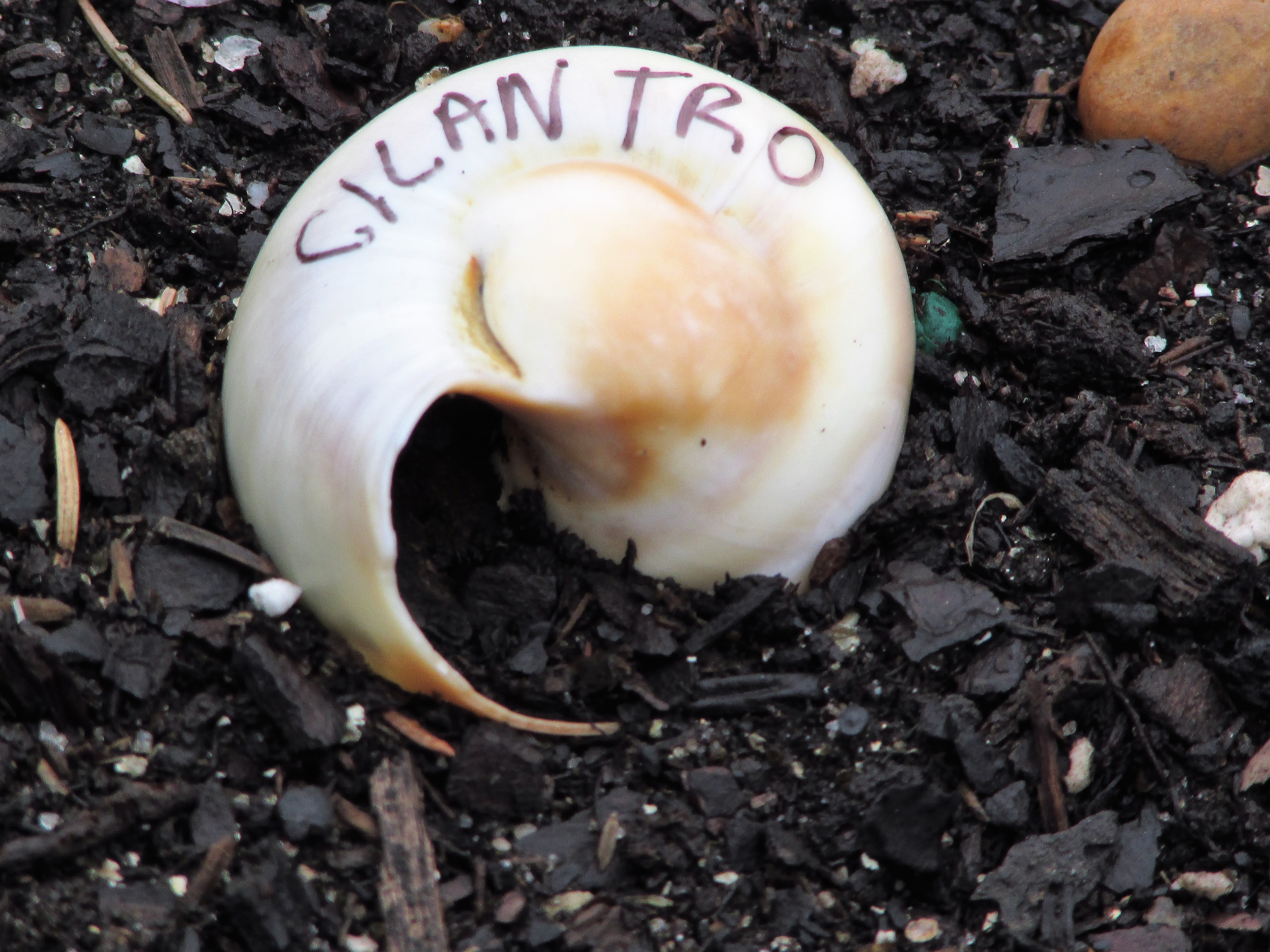
I used some of the shells I have on hand for labeling plants. The shells are doing double duty for me and work as rodent repellents. I added a few drops of eucalyptus essential oil inside the inner recesses of each shell. I’m hoping this strong fragrance will discourage four-legged varmints of all sizes.
I’ve already had to replant some seedlings chipmunks and squirrels unearthed in their constant quest for seeds. Last week, I saw my nemesis for the first time this season, that dastardly groundhog who mows down my beautiful plants like a John Deere tractor. He was wary though, I think he remembers his close encounter with the marbles I sent his way last year with my trusty slingshot. Or does he remember the time I chased him yelling like a crazy person and swinging a broom? When I saw him this time I yelled, “GROUNDHOG!” He heard me and ran before I could chase him down. I ended up laughing at myself, when did I start hollering like Granny of Beverly Hillbillies fame? I sounded just like her when she used to get aggravated with Jethro and yell his name.
Oh my! Granny once looked like an old, old woman to me. How did she grow so young, and how did I grow so old? Life…it goes so fast. Now, back to chasing that groundhog…that will keep me young!

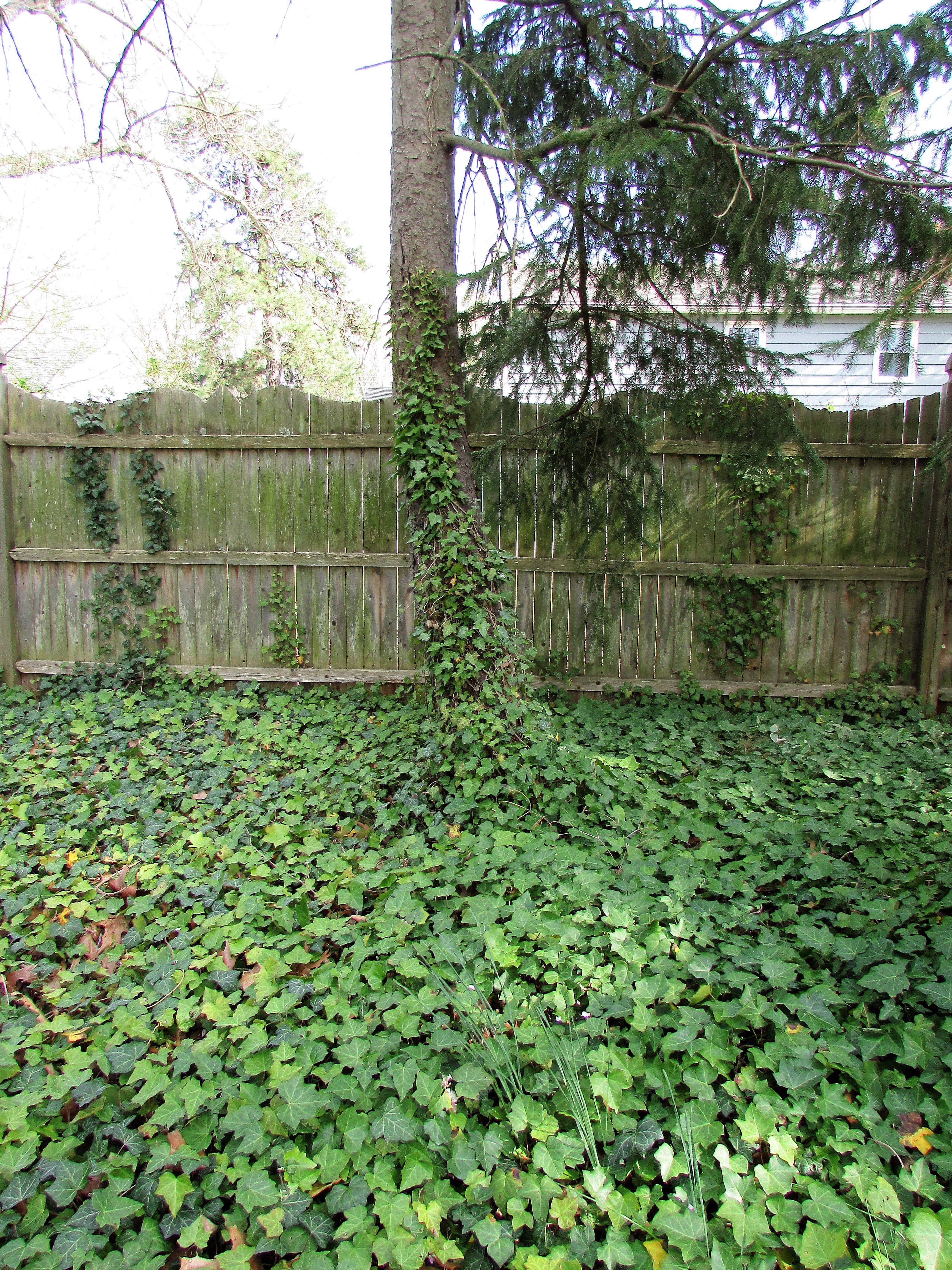
One thing I have in abundance is ivy. My backyard has a dry area of ground beneath the pine trees and the only thing that will grow there is ivy…so ivy it is. Good thing I like ivy. Each year, two or three times during spring, summer and autumn, I must pull the ivy climbing the tree trunks away from the bark. This year I found a good use for the long strands.
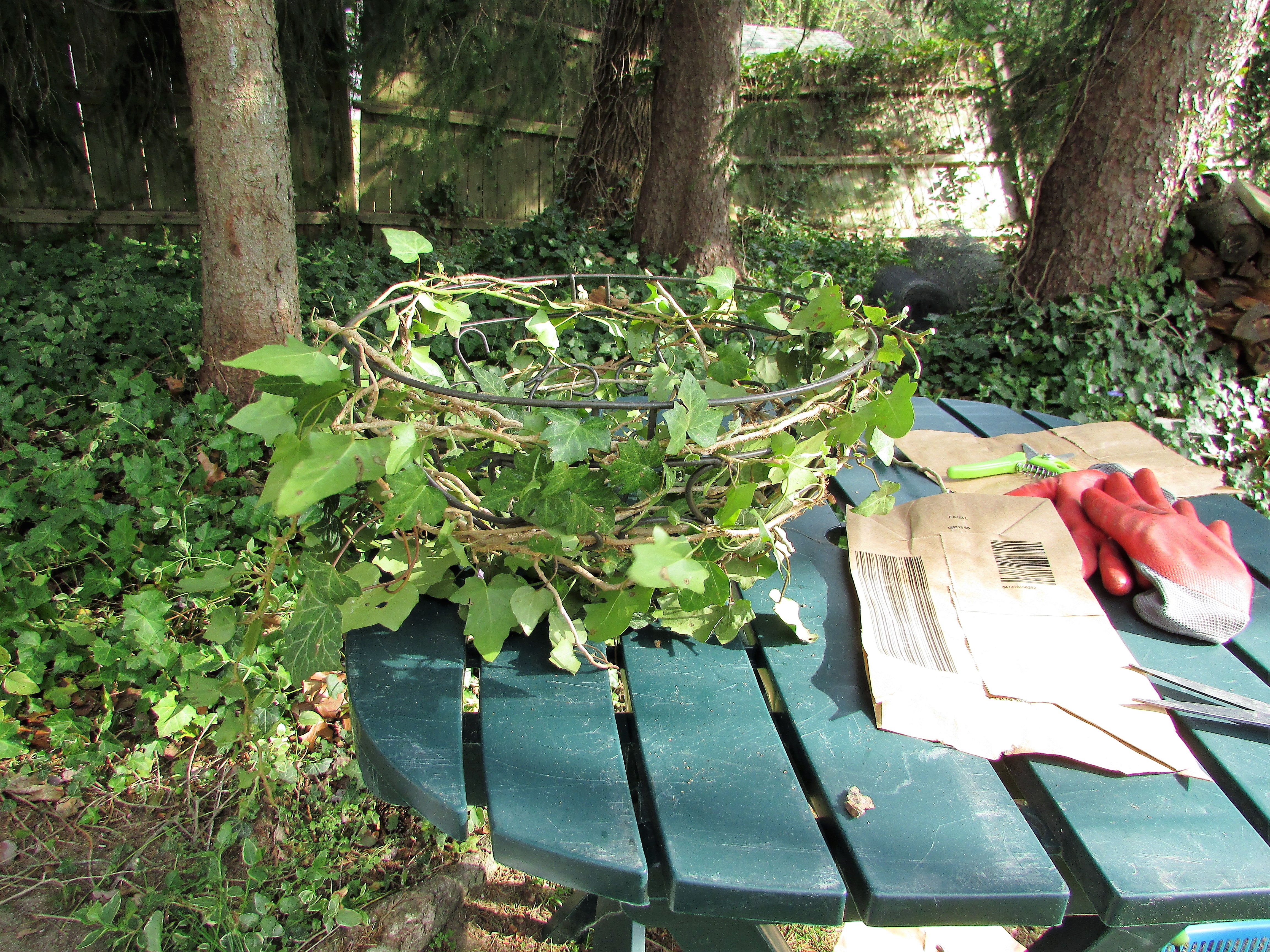
I saved the cuttings and used the longer pieces to create a living hanging basket. I wove the ivy through the wire mesh of the basket, tucking the ends to the inside.
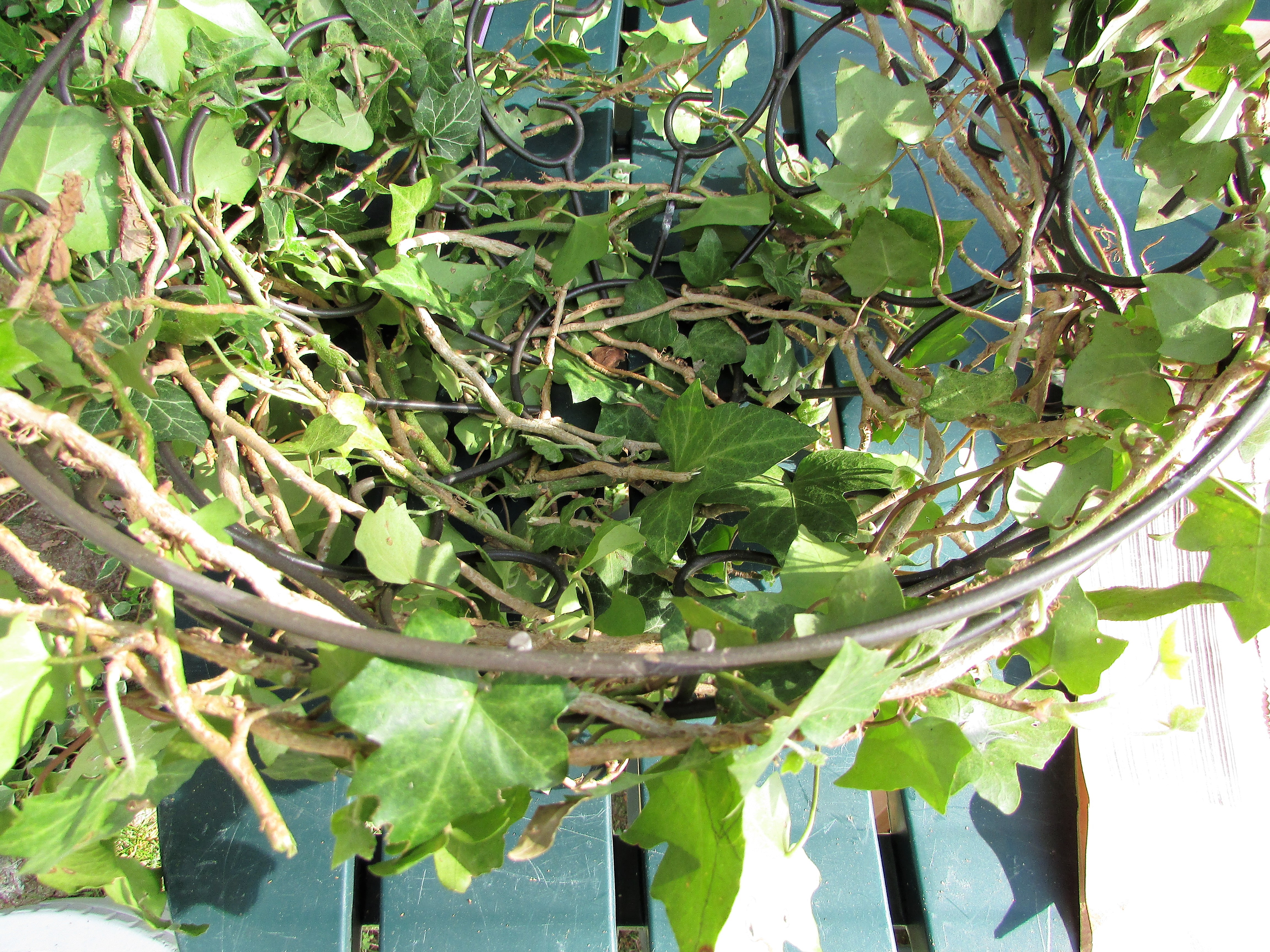
I cut the bottom off of two brown paper bags and lined the basket with them, carefully trimming away the excess paper level with the top of the basket.
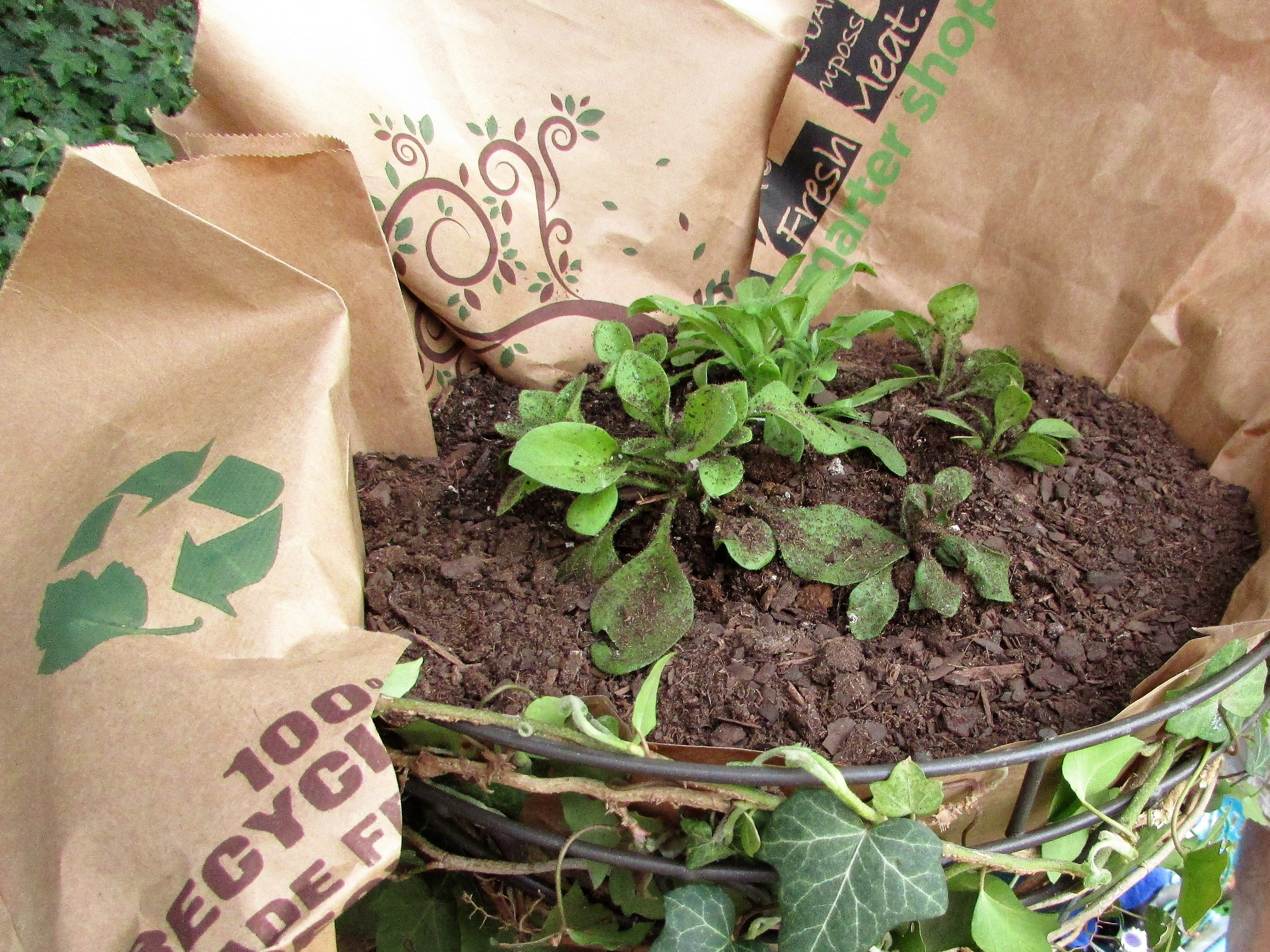
A few petunias finished off the project. I gave it all a good watering and hung the basket from a hook beneath the crabapple tree.
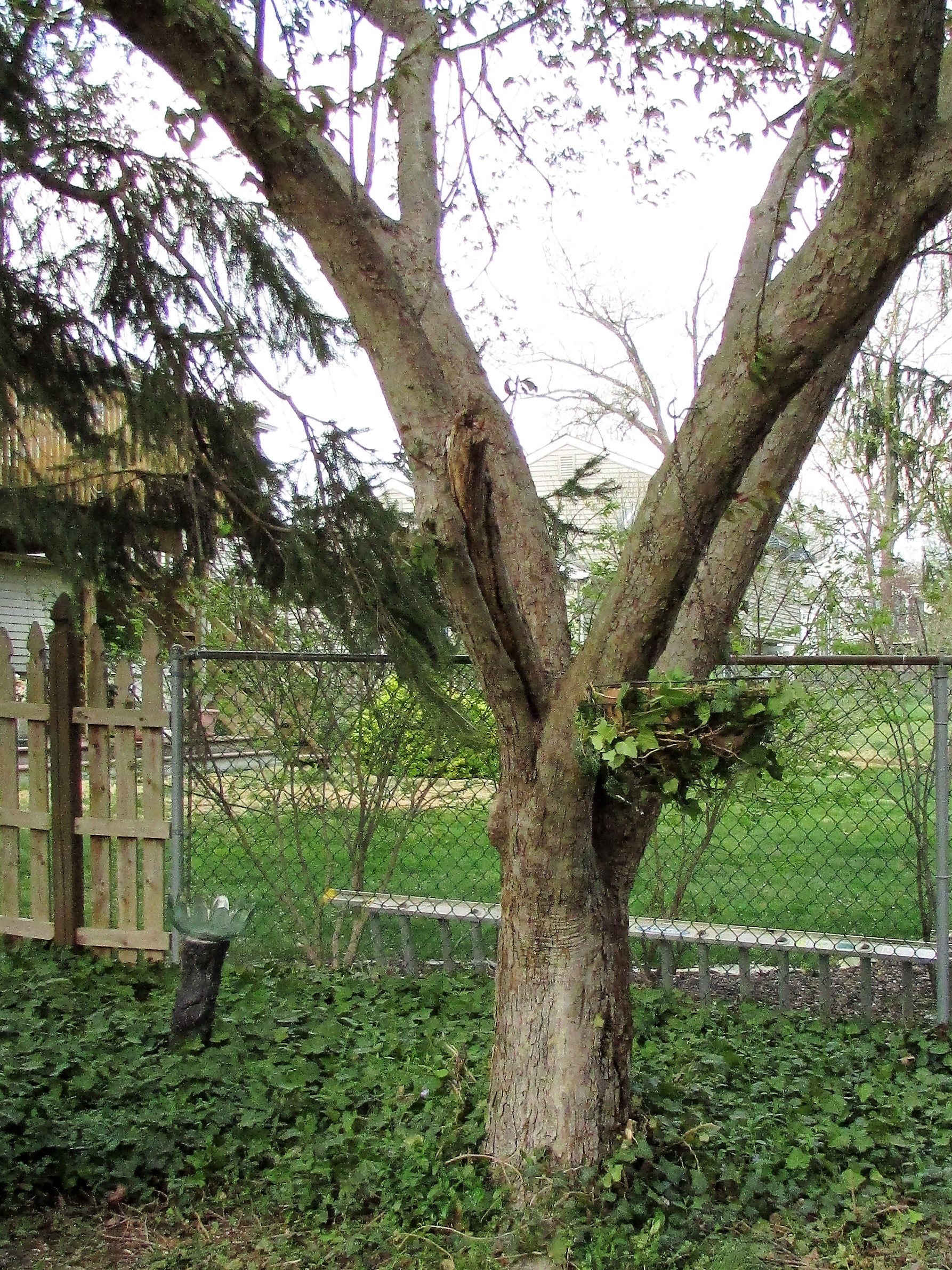
The cooler weather and frequent misting with the hose has kept the ivy alive. I’m hoping the roots will eventually pierce the paper bag and the ivy will begin to grow again. I’ll update in a month or two.